Pelvic Pain & Painful Sex Physiotherapy
Physiotherapy for pelvic pain, painful sex, and pelvic floor tension in Oakville
Home > Conditions We Treat > Pelvic Pain & Painful Sex Physiotherapy
Pelvic pain and pain or discomfort with sex are far more common than most women realise, and they are very treatable. If intimacy has become something you brace for, or you feel a deep ache, burning, or tightness in the pelvis, you are not imagining it and you are not alone. This is one of the concerns women bring to women’s health physiotherapy at Wellmax in Oakville, and for most women a focused plan makes a real difference. Pelvic pain physiotherapy in Oakville at Wellmax calms an overactive pelvic floor and eases pain.
Painful sex, known clinically as dyspareunia, affects a large share of women at some point, with estimates ranging from about 10 to 20 percent at any given time and up to 28 percent over a lifetime. Yet many women never raise it, and one older study found that of those with long-standing severe pain, only about a quarter had ever spoken to a clinician about it. The good news is that pelvic floor physiotherapy is recognised as an effective, evidence-based treatment, and most women improve without medication or surgery.
- What Counts as Pelvic Pain and Painful Sex?
- Why Does Sex Hurt? Common Causes
- What Is an Overactive or Tight Pelvic Floor?
- Can a Pelvic Floor Physiotherapist Help With Painful Sex?
- How Physiotherapy Treats Pelvic Pain and Painful Sex
- Painful Sex After Childbirth
- Painful Sex During and After Menopause
- What to Expect at Your First Visit
- How Long Until I See Results?
- Is Pelvic Pain Always About the Muscles?
- Related Women's Health Care at Wellmax
- Book Your Pelvic Pain Assessment in Oakville
- Frequently Asked Questions
What Counts as Pelvic Pain and Painful Sex?
Pelvic pain is any discomfort felt in the lower abdomen, pelvis, or between the hips, and it can be there all the time, come and go, or show up only with certain movements. Pain with sex usually falls into two patterns, and noticing which one fits you helps guide the plan:
- Entry or surface pain: burning, stinging, rawness, or a sense that the opening is too tight or “blocked” at first contact, with tampons, or during a pelvic exam.
- Deep pain: a deeper ache or sharp pain felt further inside, often with deeper penetration or certain positions.
Many women also describe a constant heaviness, a feeling of tightness they cannot release, or pain that lingers for hours afterward. These patterns are clues, not labels. We never diagnose you from a symptom alone, and the point of an assessment is to find out exactly what is driving your pain rather than to guess.
Why Does Sex Hurt? Common Causes
Pain is the body’s way of protecting an area, so the real question is always what it is protecting against. The most common contributors we see at Wellmax include:
- An overactive, tight pelvic floor that cannot relax and lengthen properly
- Recovery after childbirth, including perineal tears, episiotomy scars, and tissue that needs gentle retraining
- Hormonal changes in perimenopause and menopause that leave tissues drier, thinner, and more sensitive
- A protective fear and tension cycle, where the anticipation of pain makes the muscles guard even harder
- Conditions such as endometriosis, bladder, or bowel issues that need a coordinated, whole-body plan
- Scar tissue or tension after pelvic or abdominal surgery
Often it is a mix of more than one of these, which is exactly why a careful assessment matters more than a single quick answer.
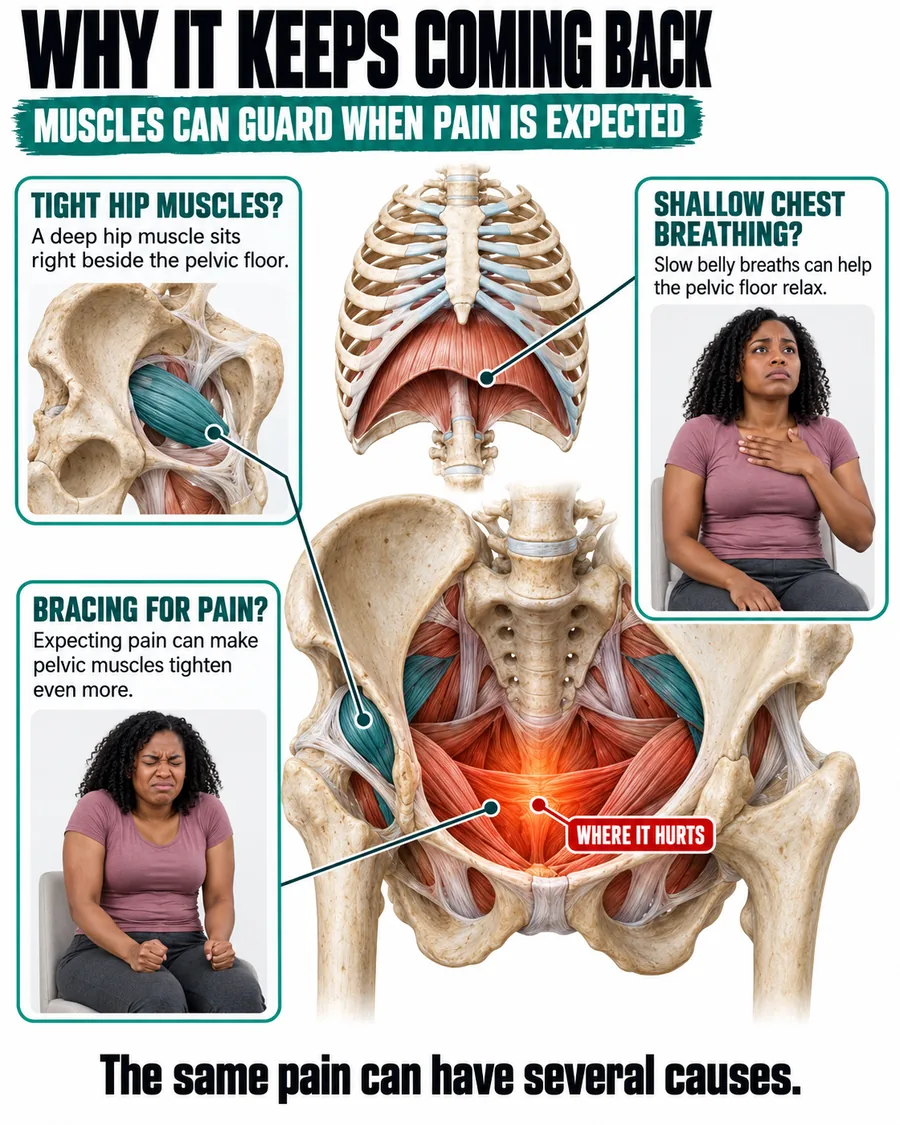
What Is an Overactive or Tight Pelvic Floor?
The pelvic floor is a group of muscles that sits inside the pelvis like a supportive sling. Most people hear that these muscles can be weak, but they can also become too tight, overactive, and unable to fully relax. When that happens, the muscles can stay in a low-grade clench that makes penetration painful, contributes to a constant ache, and even affects the bladder and bowel.
This matters because the usual advice to “do your Kegels” can make a tight pelvic floor worse. Research shows up to half of women doing pelvic floor exercises from a pamphlet do them incorrectly, and squeezing an already overactive floor adds to the problem. When tension is the issue, the goal is the opposite of squeezing. It is learning to release, lengthen, and let go, which is something a pelvic health physiotherapist can teach you step by step.
Can a Pelvic Floor Physiotherapist Help With Painful Sex?
Yes, for most women. Pelvic floor physiotherapy has strong evidence as a first-line treatment for pelvic floor related pain, and the results are encouraging. Reviews of vaginismus, the involuntary tightening that can make penetration feel impossible, report success rates around 85 percent with pelvic floor physiotherapy. For provoked vestibulodynia, a common cause of entry pain, the majority of women achieve a meaningful reduction in pain with physiotherapy and supportive care. Pelvic floor dysfunction is found in roughly 9 in 10 women with that condition, which is why hands-on, muscle-focused care works so well.
Our pelvic floor physiotherapy begins with a confidential assessment to understand how your pelvic floor and surrounding muscles are working, then builds a plan around your goals and your comfort. The aim is simple: to calm the pain, release the tension, and help you return to intimacy and daily life without bracing.
How Physiotherapy Treats Pelvic Pain and Painful Sex
There is no single fix, so your plan is built for you. Depending on what the assessment finds, it may include:
- Education about why the pain is happening and how to settle the fear, tension, and pain cycle
- Down-training and relaxation, teaching the pelvic floor to release and lengthen rather than clench
- Breathing strategies that use the diaphragm to release pelvic floor tension
- Hands-on manual therapy to ease tight muscles, trigger points, and tender areas, including gentle scar work after childbirth or surgery
- Graded desensitisation and, when helpful, the guided use of dilators or a pelvic wand at a pace you fully control
- Biofeedback to help you feel the difference between tensing and truly relaxing
- A simple home program plus practical guidance on lubricants, positioning, and pacing
When the picture points to something that needs a doctor’s input, such as suspected endometriosis or hormonal changes in menopause, we coordinate your care so nothing is missed and you are supported from every angle.
Painful Sex After Childbirth
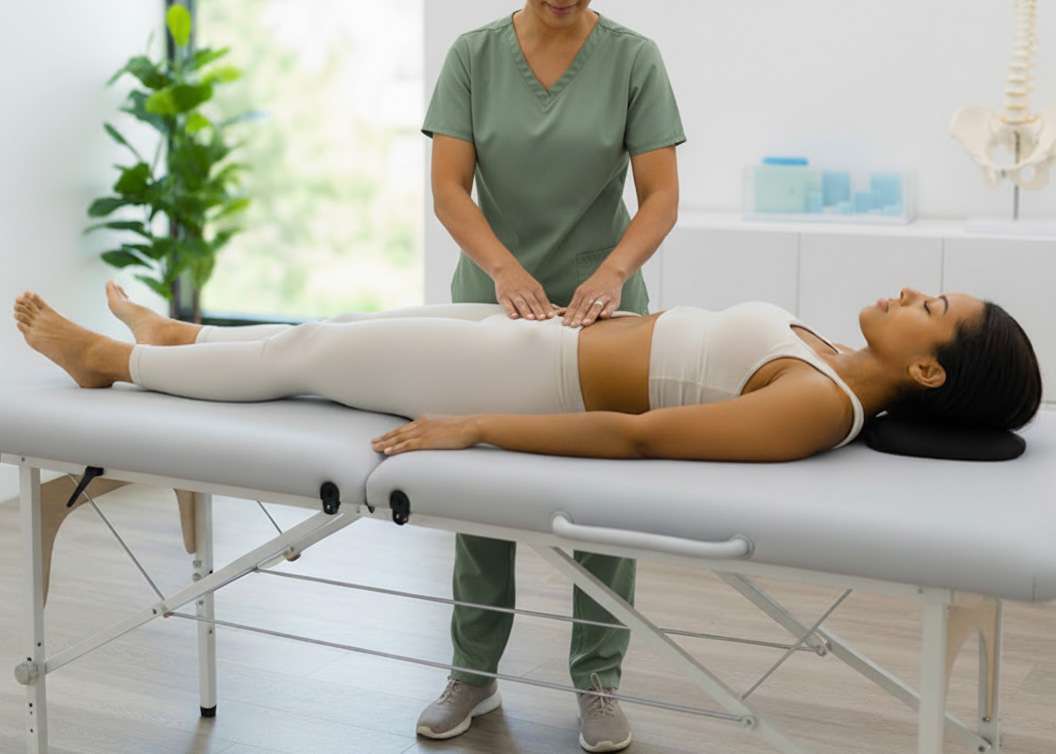
Pain with sex after having a baby is extremely common, with some studies finding more than 4 in 10 women report it around three months postpartum. Perineal tears, an episiotomy scar, breastfeeding-related dryness, and a core and pelvic floor that have not been guided back to strength can all play a part. Postpartum physiotherapy addresses these directly with gentle scar mobilisation, pelvic floor retraining, and a graded return to comfort and confidence, often alongside core recovery for abdominal separation. It is never too late to start, even years after birth.
Painful Sex During and After Menopause
As estrogen falls in perimenopause and menopause, the tissues of the vagina and pelvic floor can become thinner, drier, and less elastic, a change known as genitourinary syndrome of menopause. Around half of postmenopausal women experience pain or discomfort with sex for this reason. Physiotherapy helps by improving pelvic floor flexibility, blood flow, and comfort, and we work alongside your physician or our naturopathic doctor when the hormonal side also needs support, including low-dose vaginal options your doctor may suggest.

Level 3 Pelvic Health Certified
 Advanced training with
Pelvic Health Solutions
Pelvic pain and painful sex are personal topics, so the first conversation moves at your pace. Gurmeet listens first, then checks muscle tension, breathing and how the pelvic floor relaxes, and nothing is examined without your clear consent. She tells you what she notices as she goes, and care is built in small steps so you stay in control of what happens and when.
What to Expect at Your First Visit
Your first appointment is private, unhurried, and respectful, and nothing happens without your understanding and consent. We start with a detailed conversation about your history, your symptoms, and your goals. An internal pelvic floor assessment can give valuable information, but it is always optional, fully explained, and done only when and if you are comfortable. You can pause or stop at any time. From there you receive a clear explanation of what we find and a personalised plan you can begin right away. Care is led by Gurmeet Rai, a Registered Physiotherapist and rostered pelvic health practitioner, in a trauma-informed setting.
How Long Until I See Results?
Many women feel a shift early, sometimes within the first few sessions, as they learn to release tension and understand what is happening in their body. Milder situations often respond within about six to eight sessions, while more complex pain takes a little longer and steadier work. Consistency with your home program is the biggest factor, and your physiotherapist gives you a clear plan and timeline at your first visit, adjusting it as you progress.
Is Pelvic Pain Always About the Muscles?
Not always, and that is why a thorough assessment matters. The pelvic floor muscles are involved in most cases of persistent pelvic pain and painful sex, which is why physiotherapy helps so often, but pain can also be driven or worsened by conditions such as endometriosis, bladder or bowel issues, or hormonal change. Part of a good assessment is recognising when something needs your doctor’s input as well, so you get the full picture rather than a single label. We work alongside your physician and, when helpful, our naturopathic doctor, so nothing falls through the cracks.
What Our Patients Say
Jolean L.“Do not hesitate to book an appointment if you are pregnant and are experiencing any pelvic pain. The team was able to help me improve my ambulation quality of life in a very short time. Highly recommend!!”
Shamaila R.“Gurmeet Rai is not only an amazing physiotherapist, but also a truly wonderful person. Her smiling face and unique approach to treatment completely set her apart from other therapists. I first came to her with severe lower back and leg pain, and after her treatments, I experienced massive relief. When my younger sister visited from the UK suffering from pelvic floor issues, I immediately recommended Gurmeet. After just a few sessions, she is already feeling so much better! The clinic staff are also incredibly welcoming and helpful. Thank you, Gurmeet Rai, for your exceptional therapy and care!”
Marilyn’s E.“If you are looking for expert physiotherapy, look no further than Gurmeet Rai, who has just opened her own clinic, Wellmax Physiotherapy, in East Oakville. The space is freshly decorated and designed and the staff are welcoming. Treatment rooms are relaxing with calming colours and soft lighting. But the real bonus is the quality of the treatment and care you’ll receive. I began with pelvic floor therapy, but have continued on with Gurmeet to address some life-long postural issues. Gurmeet is a very experienced and highly skilled practitioner and I have no reservations in recommending her whatever your needs.”
Verified Patient“After my second baby I was dealing with leakage every time I coughed, sneezed, or tried to exercise. I put off getting help for almost a year because I felt embarrassed and thought it was just something that happens after kids. The pelvic floor assessment at Wellmax was private, respectful, and way less uncomfortable than I expected. Gurmeet explained exactly what was happening with my pelvic floor muscles and gave me a program that was nothing like the generic Kegels my doctor had suggested. Four sessions in and the leakage had improved significantly. I can actually jump with my kids again without worrying.”
Emily C.“I can confidently say this is the best physiotherapy clinic in Oakville for postpartum care. After having my baby, I was experiencing pelvic floor discomfort and lower back pain that was making daily life very difficult. I booked an appointment with Gurmeet, and she made me feel completely comfortable and heard right from the start. She asked detailed questions about my daily routine and explained how pelvic health physiotherapy could help rebuild my core strength safely. The hands-on treatment and tailored home exercises made a massive difference in just a few weeks. The atmosphere is welcoming and professional, and they truly focus on long-term results rather than just a quick fix.”
Farrah S.“I saw Gurmeet for Pelvic Floor Therapy, before and after my Hysterectomy. She always made me feel comfortable and is very knowledgeable, helpful, and educated me during the whole process and at each visit. The front desk staff are always inviting and professional. I would recommend Wellmax to my friends and family.”
Amara W.“I can’t recommend Gurmeet enough for post-partum recovery. She has been incredibly supportive, knowledgeable, and attentive throughout my healing journey. An incredible pelvic floor physio she is. From week 1 Postpartum I am seeing Gurmeet and thats the best decision I ever made!”
Victoria D., Oakville“Within just a handful of sessions, Gurmeet took issues I had been struggling with for months (and honestly, years after my first birth) and had me feeling like myself again. She’s the reason I went from debilitatingly painful periods to completely manageable ones — something I didn’t think was possible!”
See all our Google reviewsRead more patient storiesLeave a review
Frequently Asked Questions
Is it normal for sex to hurt?+–
Pain with sex is common, but it is not something you simply have to accept as normal. It is a signal that something needs attention, often an overactive pelvic floor, hormonal change, or recovery after childbirth. Most women improve a great deal with the right care, so it is worth getting assessed rather than living with it.
Can a pelvic floor physiotherapist help with painful sex?+–
Yes, for most women. Pelvic floor physiotherapy is an evidence-based, first-line treatment for pelvic floor related pain. Reviews report success rates around 85 percent for vaginismus, and the majority of women with entry pain see meaningful improvement. Treatment uses hands-on therapy, relaxation training, breathing, and graded desensitisation rather than medication or surgery.
What is a tight or overactive pelvic floor?+–
It is when the pelvic floor muscles stay too tense and cannot fully relax or lengthen. This can make penetration painful, cause a constant ache, and affect the bladder and bowel. Because the muscles are already overworking, the usual advice to do Kegels can make it worse. The goal instead is learning to release and lengthen, which a physiotherapist teaches step by step.
Will the assessment involve an internal exam, and does it hurt?+–
An internal pelvic floor assessment can give useful information, but it is always optional and only done with your consent and at your comfort level. Your physiotherapist explains each step, works gently, and you can pause or stop at any time. It should not be painful, and nothing happens without your agreement.
Why does sex hurt after having a baby?+–
Painful sex after childbirth is very common, with more than 4 in 10 women reporting it around three months postpartum. Perineal tears, episiotomy scars, breastfeeding-related dryness, and an unrecovered core and pelvic floor can all contribute. Postpartum physiotherapy treats this with gentle scar work, pelvic floor retraining, and a graded return to comfort. It is never too late to start.
Why is sex painful after menopause?+–
As estrogen falls, the tissues of the vagina and pelvic floor become thinner, drier, and less elastic, a change called genitourinary syndrome of menopause. Around half of postmenopausal women experience pain with sex for this reason. Physiotherapy improves pelvic floor flexibility, blood flow, and comfort, and we coordinate with your doctor when hormonal support is also needed.
Do vaginal dilators actually work?+–
For many women, yes. Used gradually and entirely at your own pace, dilators help the body relearn that penetration can be comfortable, and they work best as part of a guided program rather than on their own. Research shows combining them with biofeedback and physiotherapy improves results. Your physiotherapist guides the right size, timing, and technique for you.
Can painful sex really be fixed?+–
For most women, it improves significantly and often resolves. Pain with sex is treatable, not something you are stuck with. The key is finding the cause, whether it is muscle tension, hormonal change, scar tissue, or a fear and tension cycle, and treating it directly. A pelvic health assessment is the first step toward intimacy and daily comfort without bracing.
Do I need a referral or a diagnosis before I come in?+–
No. You do not need a referral to see a physiotherapist in Ontario, and you do not need a diagnosis first. Part of what the assessment does is help make sense of your symptoms and guide the right next step. Physiotherapy is covered by most extended health plans, and Wellmax direct bills most major insurers.
Related Women’s Health Care at Wellmax
Pelvic pain often overlaps with other pelvic floor concerns. You may also find these helpful:
- Pelvic floor physiotherapy, the foundation of this care
- Overactive bladder and urinary urgency
- Pudendal neuralgia, nerve pain that is worse with sitting
- Postpartum recovery and diastasis recti
- Perimenopause and menopause care
Book Your Pelvic Pain Assessment in Oakville
Pain with sex or in the pelvis is common, but it is not something you have to live with or feel embarrassed about. Book a free consultation or an assessment with our women’s health team at Wellmax Physiotherapy in Oakville, or call (905) 829-1100. No referral is needed in Ontario, and we offer direct billing to most major insurers.
Registered & Regulated
Regulated & Recognized Across Every Discipline
Wellmax is in good standing with the regulatory colleges and leading associations for physiotherapy, chiropractic, massage therapy, and naturopathic medicine in Ontario.