
Tennis Elbow Treatment in Oakville
Evidence-based treatment for lateral elbow pain, tendon overload, and repetitive strain.
Home > Conditions We Treat > Tennis Elbow Treatment in Oakville
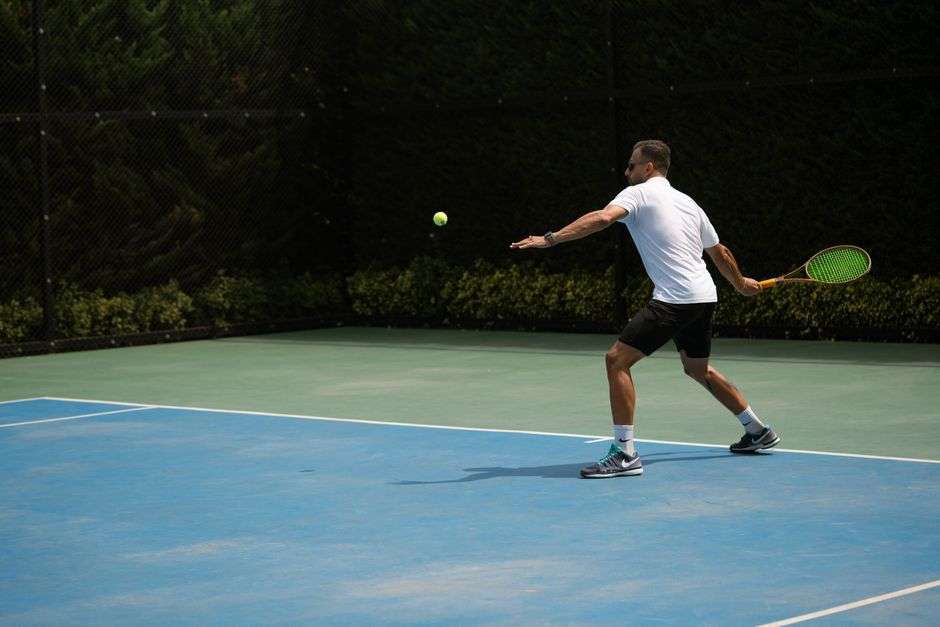
It starts with a twinge on the outside of the elbow. Gripping a coffee mug. Turning a doorknob. Shaking someone’s hand. At first it’s annoying but manageable. Then it gets worse. The grip weakens. Picking up a milk carton becomes painful. Typing all day makes the forearm ache from wrist to elbow. A backhand on the tennis court sends a sharp jolt through the arm. And the thing that makes it maddening is that nothing looks wrong, no swelling, no bruising, no obvious injury. Just pain that won’t go away. Tennis elbow treatment in Oakville at Wellmax rebuilds the tendon instead of just resting it.
That’s lateral epicondylalgia. Most people know it as tennis elbow. But here’s the thing most people don’t know: fewer than 5% of tennis elbow cases have anything to do with tennis. It’s a tendon overload condition caused by repetitive gripping, wrist extension, and forearm rotation, activities that happen at desks, in kitchens, on assembly lines, in workshops, and in gyms far more often than they happen on a tennis court.
And here’s the other thing: rest doesn’t fix it. The natural instinct is to stop using the arm and wait for it to heal. But tennis elbow isn’t an inflammatory condition in the traditional sense. The tendon has failed to adapt to the load being placed on it, and the cellular structure has changed in ways that don’t resolve with rest. The tendon needs to be loaded, carefully, progressively, and specifically, to rebuild its capacity. That’s what physiotherapy does. And for cases that have been lingering for months without improvement, shockwave therapy can restart the healing process where exercise alone has plateaued.
At Wellmax Physiotherapy, we see tennis elbow from both populations: racquet sport players from Ontario Racquet Club, Joshua Creek Tennis, and Wallace Park courts who develop it from repetitive backhand loading, and workers from the Winston Park offices, Clarkson business district, Royal Windsor manufacturing corridor, and Southdown retail area who develop it from repetitive gripping, typing, tool use, or manual handling. The condition is the same. The contributing factors differ. The assessment identifies both.
We’re at 1148 Winston Churchill Blvd, Unit B3, Oakville, just south of the QEW. Clarkson, Clearview, Sheridan Park, Maple Grove, Lorne Park, and south Mississauga are all under 10 minutes away.
- What Is Tennis Elbow and Why Does It Happen?
- How We Assess Tennis Elbow at Wellmax
- How We Treat Tennis Elbow at Wellmax
- Tennis Elbow Recovery: What to Expect and When
- What Results to Expect
- Why Patients in Oakville Choose Wellmax for Tennis Elbow
- Tennis Elbow Treatment for Oakville and South Mississauga
- Related Services and Conditions
- Get Your Tennis Elbow Assessed and Treated
- Frequently Asked Questions
What Is Tennis Elbow and Why Does It Happen?

The Tendon That Takes the Beating
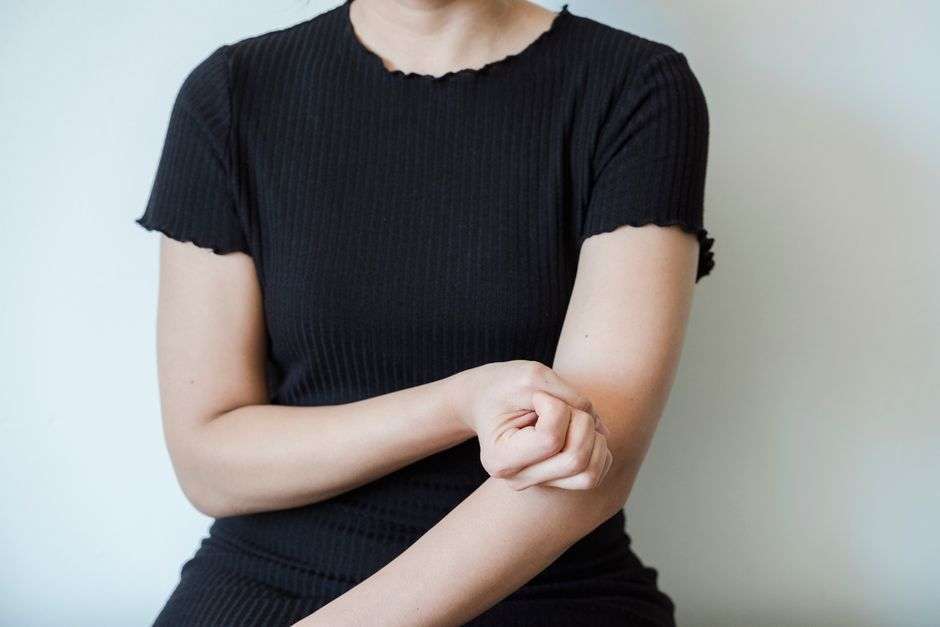
Tennis elbow involves the common extensor tendon, a shared tendon where several forearm muscles attach to the lateral epicondyle, the bony bump on the outside of the elbow. These muscles control wrist extension (bending the wrist backward), gripping, and forearm rotation. Every time the hand grips something, lifts something, twists something, or stabilizes the wrist during a movement, these muscles contract and pull on that tendon attachment point.
When the load through that tendon exceeds its capacity to recover, either from a sudden increase in activity or from sustained repetitive strain over weeks and months, the tendon structure begins to break down. The collagen fibres that give the tendon its strength become disorganized. Blood vessels grow into areas where they normally don’t exist. The nerve supply in the area becomes sensitized. And the tendon loses its ability to tolerate the loads that it used to handle without any problem.
This is not inflammation in the way a sprained ankle swells up. It’s a degenerative tendon change, technically called tendinopathy. That distinction matters because treatment strategies that target inflammation (rest, ice, anti-inflammatory medications) provide temporary pain relief but don’t address the structural tendon problem. What the tendon actually needs is mechanical loading to stimulate new collagen production and tendon remodelling.
Who Gets Tennis Elbow?
Tennis elbow affects roughly 1-3% of the general population and peaks between ages 35 and 55. It’s slightly more common in the dominant arm. The common thread among all cases is repetitive or sustained gripping and wrist activity that exceeds the tendon’s tolerance.
In the communities around Oakville and south Mississauga, we see tennis elbow most commonly in these groups:
Office and desk workers, sustained mouse use, keyboard work, and gripping pens or devices for hours. The loads are low but the repetition is enormous. Workers in the Winston Park Drive offices, Clarkson business district, and those commuting through Clarkson GO Station often describe symptoms that started gradually and worsened over months before they sought treatment.
Manufacturing, warehouse, and trades workers, repetitive gripping of tools, assembly components, and materials. Workers along the Royal Windsor Drive manufacturing corridor, the Ford Oakville Assembly Plant, and warehouse operations in the area develop tennis elbow from sustained grip loading on the job. These cases are often eligible for WSIB coverage if the condition is work-related.
Racquet sport players, tennis, badminton, squash, and pickleball players from Ontario Racquet Club, Joshua Creek Tennis, Wallace Park Tennis Club, and the growing pickleball community at Iroquois Ridge and Shell Park courts. The backhand stroke loads the extensor tendon with high force on every hit, and technique issues (leading with the wrist rather than the shoulder and trunk) amplify the strain.
Gym and fitness enthusiasts, pulling exercises (rows, pull-ups, deadlifts), barbell gripping, and kettlebell work load the forearm extensors heavily. Athletes from CrossFit Radix, Vive Fitness, Element Movement, Anytime Fitness, and LA Fitness Erin Mills present with tennis elbow when training volume or grip demands increase faster than the tendon adapts.
Home and garden activities, painting, pruning, hammering, scrubbing, wringing, and carrying heavy bags. These are the cases that seem to appear out of nowhere after a weekend renovation project or a seasonal garden cleanup.
Pain on the inside of the elbow instead? That is usually golfer’s elbow, which has its own page. Not sure which one you have? Our elbow assessment tells you.
How We Assess Tennis Elbow at Wellmax
Tennis elbow is usually straightforward to diagnose. Pain on the outside of the elbow with gripping, wrist extension, or forearm rotation is the hallmark. But a proper assessment goes deeper than confirming the diagnosis, it identifies why the tendon became overloaded in the first place, how severe the structural change is, and whether other structures are contributing to the symptoms.
Ruling Out Other Causes of Elbow Pain
Not all lateral elbow pain is tennis elbow. The assessment differentiates between several conditions that can mimic or coexist with lateral epicondylalgia. Radial tunnel syndrome (nerve entrapment) can produce similar pain but in a slightly different location and with different provocation tests. Cervical radiculopathy (a pinched nerve in the neck at C5-C6) can refer pain to the lateral elbow and forearm. Elbow joint pathology (loose bodies, osteoarthritis, ligament instability) produces pain with different movement patterns. Referred trigger points from the upper trapezius, infraspinatus, or supinator muscles can mimic tennis elbow. The assessment includes cervical spine screening, neurological testing, joint integrity tests, and specific tendon provocation tests to distinguish between these possibilities. If wrist or hand symptoms are also present, see our Wrist and Hand Pain page.
Determining Tendon Severity, Reactive vs. Degenerative
Tennis elbow exists on a continuum. On one end, there’s acute reactive tendinopathy, the tendon has been suddenly overloaded (a weekend of painting, a spike in training volume) and is irritable but structurally intact. These cases respond quickly to load management and progressive exercise. On the other end, there’s degenerative tendinopathy, the tendon has been overloaded chronically for months, the collagen structure has deteriorated, and the tendon’s capacity is significantly reduced. These cases take longer, may benefit from shockwave therapy, and require patient, graduated loading over several months. The assessment determines where on this continuum the tendon sits, which directly influences the treatment plan and realistic timeline.
Identifying Contributing Factors
The tendon didn’t fail randomly. Something about the loading pattern exceeded the tendon’s tolerance. The assessment examines grip strength (often reduced by 30-50% on the affected side), wrist extensor endurance, shoulder and scapular strength (weakness here shifts more load to the forearm), cervical spine mobility and nerve tension, forearm muscle flexibility, and, critically, the specific activities that provoked and maintain the condition. For a desk worker, the ergonomic setup matters. For a tennis player, the stroke technique and racquet specifications matter. For a trades worker, the tool use patterns and repetition frequency matter. Treating the tendon without addressing the contributing factors means it comes back.
What to Expect at the First Appointment
The initial assessment is 60 minutes. You’ll be asked about when the pain started, what activities aggravate it, what you’ve already tried (bracing, rest, cortisone injection, etc.), and what your daily work and activity demands look like. The physical exam includes cervical spine screening, elbow joint assessment, specific tendon provocation tests, grip strength measurement, shoulder and scapular strength assessment, and neural tension testing. By the end of the appointment, you’ll know exactly what’s causing the pain, how severe it is, what the treatment plan looks like, and how long recovery is expected to take. Treatment begins during the first session.
How We Treat Tennis Elbow at Wellmax
Tennis elbow treatment at Wellmax follows the evidence. The foundation is progressive tendon loading, the single most supported intervention in the tendinopathy research. Everything else supports that foundation.
Progressive Tendon Loading: The Core of Treatment
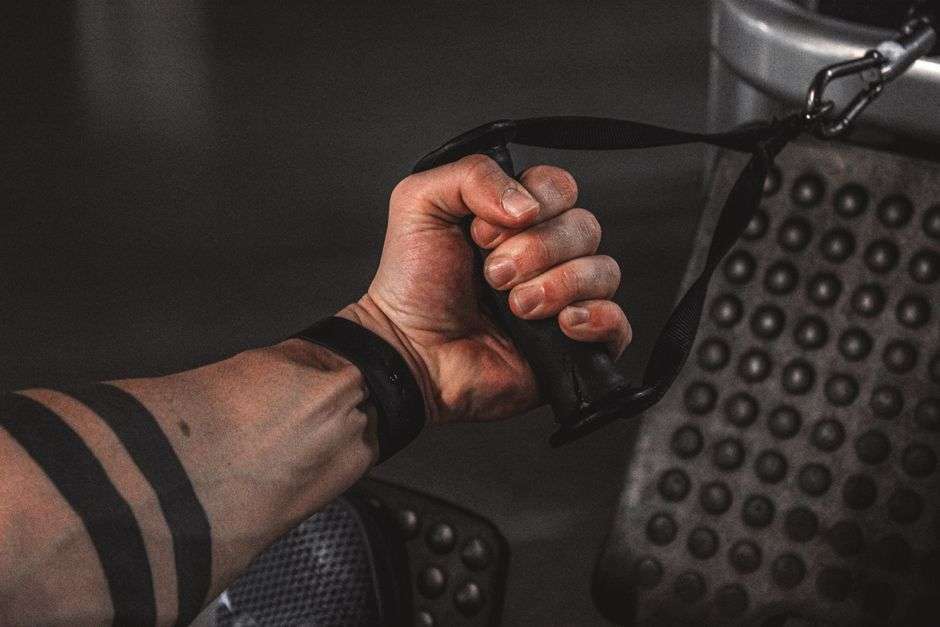
The tendon needs load to heal. Not rest. Not stretching. Not ultrasound. Load. But the type, intensity, and progression of that loading matters enormously. Treatment begins with isometric exercises (muscle contraction without movement) which produce an analgesic effect and start stimulating tendon remodelling without aggravating the condition. Over the following weeks, the program progresses through isotonic strengthening (controlled movement with resistance), eccentric loading (slowly lowering a weight, the gold standard for tendinopathy rehabilitation), and finally heavy slow resistance training and sport or work-specific loading. This progression typically spans 8-12 weeks, though some patients progress faster and some require longer. The key principle is that load increases are based on the tendon’s response, not a fixed schedule.
Manual Therapy for Pain Relief and Mobility
Manual therapy addresses the secondary consequences of tennis elbow: muscle guarding in the forearm extensors, reduced forearm and wrist mobility, cervical spine stiffness that amplifies the elbow symptoms, and trigger points in the forearm and shoulder girdle muscles. Specific techniques include soft tissue release of the extensor muscle group, lateral elbow joint mobilization, cervical spine mobilization (particularly C5-C6 when nerve tension is present), neural mobilization techniques, and myofascial release of the forearm, upper arm, and shoulder girdle. Manual therapy provides faster pain relief than exercise alone in the early stages, which allows the loading program to begin sooner and progress more smoothly.
Shockwave Therapy for Chronic Cases
Extracorporeal shockwave therapy is indicated when tennis elbow has been present for more than 3 months and hasn’t responded adequately to progressive loading alone. Research supports shockwave for chronic lateral epicondylalgia, it stimulates blood flow to the tendon, triggers cellular repair processes, and reduces the sensitized nerve supply that perpetuates pain in chronic cases. At Wellmax, shockwave is integrated into the physiotherapy program, typically 4-6 sessions over 3-6 weeks alongside the loading program. It accelerates progress in chronic cases but doesn’t replace the strengthening work. See our Shockwave Therapy page for more detail on how shockwave works and what conditions it treats.
Deep Tissue Laser Therapy for Acute Flares
When the tendon is acutely irritable, significant pain with light gripping, disturbed sleep, pain at rest, deep tissue laser therapy reduces the neural sensitivity and local tissue irritability faster than manual therapy alone. It’s particularly useful in the first 2-3 weeks of treatment for reactive tendinopathy, or during acute flare-ups in chronic cases. Like shockwave, laser is a tool within the treatment plan, not the treatment itself.
Activity Modification and Ergonomic Guidance
This is where the workplace crowd and the sports crowd need different conversations. For desk workers: mouse positioning, keyboard angle, monitor height, grip pressure on writing implements, and frequency of micro-breaks. For trades workers: tool grip diameter (a thicker grip handle reduces tendon loading), task rotation, and workload distribution. For racquet sport players: string tension, grip size, stroke mechanics (particularly the backhand), and training volume management. For gym athletes: grip modification (straps or hooks for pulling exercises during recovery), exercise substitution, and load management. The goal isn’t to stop doing the activity. It’s to modify the loading pattern so the tendon can recover while staying active.
Bracing: When and Why
A counterforce brace (the strap worn just below the elbow) can reduce pain during activity by shifting the load away from the irritated tendon attachment. It’s a useful short-term tool for reducing symptoms during work or sport, but it’s not a treatment. The brace doesn’t fix the tendon, the loading program does. We prescribe bracing selectively for patients who need to continue working or playing while the rehabilitation program progresses, with the understanding that the brace is a bridge, not a solution. See our custom braces page for more.
What About Cortisone Injections?
Cortisone injections provide excellent short-term pain relief for tennis elbow, the research is clear on that. The problem is what happens after. Multiple studies now show that cortisone injections for lateral epicondylalgia are associated with higher recurrence rates and worse long-term outcomes compared to physiotherapy alone. The injection suppresses pain and allows premature return to full loading before the tendon has structurally recovered, which sets up the cycle of re-injury. We don’t perform cortisone injections at Wellmax, and we’d recommend discussing the evidence with your doctor before pursuing one. If you’ve already had an injection and the pain has returned, physiotherapy is still the most effective path forward.
Tennis Elbow Recovery: What to Expect and When
Phase 1: Pain Reduction and Early Loading (Weeks 1-3)
What we’re doing: Comprehensive assessment. Manual therapy for immediate pain reduction, forearm soft tissue release, lateral elbow mobilization, cervical spine treatment if indicated. Isometric wrist extensor exercises to begin tendon loading without aggravating symptoms. Activity modification guidance for work and sport. Bracing prescription if needed. Deep tissue laser for acutely irritable cases.
What you’ll notice: Grip pain decreasing. Able to complete daily tasks with less discomfort. Morning stiffness improving.
Your homework: Isometric exercises 3-5 times per day (takes under 5 minutes each time), activity modification as discussed, ergonomic changes implemented.
Phase 2: Tendon Strengthening and Capacity Building (Weeks 3-8)
What we’re doing: Progression from isometric to isotonic and eccentric loading. Increasing resistance as the tendon tolerates it. Continued manual therapy, shifting focus from pain management to mobility and tissue quality. Shockwave therapy introduced for chronic cases that haven’t progressed as expected. Shoulder and scapular strengthening if contributing weakness was identified.
What you’ll notice: Significant improvement in grip strength. Able to perform most daily and work tasks without pain. Sport-specific activities becoming tolerable at reduced intensity.
Your homework: Structured exercise program 4-5 times per week, progressive loading that advances every 1-2 weeks.
Phase 3: Return to Full Activity (Weeks 8-12+)
What we’re doing: Heavy slow resistance training for the extensor tendon. Sport-specific or work-specific loading at full intensity. Grip endurance training. Return-to-sport or return-to-work progression. Final strength testing comparing to the unaffected side. Maintenance program to prevent recurrence.
What you’ll notice: Full grip strength. Able to play racquet sports, lift at the gym, or work full shifts without symptoms.
Your homework: Maintenance strengthening 2-3 times per week ongoing to sustain tendon capacity and prevent recurrence.
Important timeline note: Acute reactive cases (symptoms for less than 6 weeks, triggered by a clear sudden increase in activity) often resolve in 4-6 weeks. Chronic degenerative cases (symptoms for 3+ months, multiple failed treatments, possible cortisone injection history) can take 12-16 weeks or longer. Your physiotherapist gives you an honest timeline at the first visit based on the severity and chronicity of your specific case.
What Results to Expect
| Tennis Elbow Presentation | Expected Outcome | Typical Timeline |
|---|---|---|
| Acute reactive tendinopathy (recent onset, clear trigger) | Full resolution, return to all activities | 4 to 6 weeks |
| Moderate tendinopathy (2-3 months, no prior treatment) | Significant pain reduction, restored grip strength | 6 to 10 weeks |
| Chronic tendinopathy (3+ months, failed previous treatment) | Progressive improvement, return to full loading | 10 to 16 weeks |
| Post-cortisone recurrence | Tendon rebuild, sustained resolution | 12 to 16+ weeks |
| Work-related repetitive strain (WSIB) | Pain resolution, return to full work duties | 6 to 12 weeks |
| Return to racquet sport after tennis elbow | Full return to match play pain-free | 8 to 14 weeks |
These timelines are based on adherence to the loading program and activity modification. Tennis elbow that recurs is almost always due to one of two things: the loading program was stopped before the tendon had rebuilt adequate capacity, or the contributing factors (workplace ergonomics, training errors, technique issues) were not addressed. The goal at Wellmax is resolution that lasts, not temporary pain relief that cycles back.
Why Patients in Oakville Choose Wellmax for Tennis Elbow
We Treat the Condition Properly, Not Just the Symptom
Tennis elbow treatment that works requires more than ultrasound, a strap, and a sheet of exercises. It requires identifying the tendon’s position on the reactive-to-degenerative continuum, matching the loading program to that stage, addressing the contributing factors that overloaded the tendon, and progressing the rehab based on the tendon’s response. Most clinics treat tennis elbow the same way regardless of severity or chronicity. At Wellmax, the assessment drives the treatment plan.
Shockwave Therapy for Stubborn Cases
Chronic tennis elbow that’s been present for months and hasn’t responded to exercise alone is a common presentation in our clinic. These patients have often been through several other physiotherapy clinics, tried bracing, tried rest, sometimes had a cortisone injection that helped temporarily before the pain returned. Shockwave therapy gives us an additional evidence-based tool for these cases, stimulating the tendon repair process where exercise alone has plateaued. Not every tennis elbow case needs shockwave. But having it available means we can treat the full severity spectrum.
Expert Care, Every Visit
Tendon loading programs require precise progression. The therapist needs to know how the tendon responded to last week’s loading increase, whether the grip strength has improved, whether the cervical spine contribution has settled, and when to push the progression forward versus hold steady for another week. That is why every visit at Wellmax includes a reassessment before the load is changed.
We Understand Both Populations
The tennis player with lateral elbow pain from a tournament weekend and the assembly line worker with gradual-onset elbow pain from months of repetitive gripping are dealing with the same tendon condition, but the contributing factors, the activity modification strategies, and the return-to-activity progressions are completely different. We have experience with both and tailor the plan accordingly.
Honest Timelines
Tennis elbow doesn’t resolve in two weeks. Anyone who promises that is setting you up for frustration. We tell patients what the evidence says about their specific presentation, including the cases where recovery takes 3-4 months, so expectations are realistic and the treatment plan makes sense.
Tennis Elbow Treatment for Oakville and South Mississauga
Wellmax Physiotherapy is at 1148 Winston Churchill Blvd, Unit B3, in the Winston Park Plaza. We’re right on the Oakville-Mississauga border just south of the QEW, making us accessible from both sides.
We treat tennis elbow patients from across the local community: tennis and pickleball players from Ontario Racquet Club, Joshua Creek Tennis, Wallace Park, and the growing number of pickleball courts at Iroquois Ridge, Shell Park, and Bronte Athletic Park. Gym athletes from CrossFit Radix, Element Movement, Vive Fitness, CORTEN, and Iron 24 who develop elbow pain from gripping and pulling work. Office workers in the Winston Park Drive business district, Clarkson business district, and those commuting through Clarkson GO Station. Manufacturing and warehouse workers along the Royal Windsor Drive corridor. Golfers from Oakville Golf Club, Deerfield Golf Club, Credit Valley Golf and Country Club, and Glen Abbey.
If tennis elbow developed from workplace activities, it may qualify as a WSIB claim.
Repetitive strain injuries from work are covered by WSIB at no cost to the worker. We handle all the paperwork.
The clinic has ground-level entry, free parking, and private treatment rooms. We’re open Monday to Friday 9am to 7pm, Saturdays 9am to 2pm, and Sundays 9am to 2pm by appointment. Same-day appointments are often available.
What Our Patients Say
Rahul K.“Highly recommended. I was suffering from tennis elbow for over an year and Gurmeet helped me to fix it like a magic. I was back at the court in less than 4 months.”
Robert K.“Wellmax is truly the best physiotherapy clinic in Oakville. I developed a bad case of tennis elbow from working with my hands, and my grip strength was completely gone. Dhrushi took her time during the initial visit to explain the healing process for tendons. My personalized plan included hands-on therapy, shockwave treatments, and a practical exercise routine I could easily do at home. The inflammation went down faster than I expected, and my arm feels strong again. The front desk staff is always welcoming, and my appointments always started right on time. Highly recommend this place to anyone in pain.”
Farwah R.“Gurmeet deeply cares about her patients and her work, and it is rare to find such Healthcare providers. I went to her for physio after suffering with terrible shoulder & right hand pain. Doctors continued to gaslight me and after 2 years when the pain got unbearable, I finally went for physio. The pain immediately started getting better. Cannot recommend her enough.”
Sunny D.“I have had a great experience. Gurmeet was so helpful with my osteoarthritis thumb pain. The place is so clean and professional. I would so recommend it”
Morenita Z.“I came to see Gurmeet and Dhrushi at wellmax after my thumb and wrist injury at work under wsib. They took time to assess and explain everything to me and time i started with wellmax, I am feeling so much better and pain is less. Gurmeet’s hands on technique and manual therapy is amazing and knowledgeable. I see big difference in my condition and movement. Clinic is very clean and very positive that makes me comfortable every time I come here. I truly appreciate work they do and recommend it everyone who is looking for real physio treatment and manual therapy.”
Seamus D.“Great physio, very helpful and knowledgeable, would recommend to anyone. Will definitely return when I need it”
See all our Google reviewsRead more patient storiesLeave a review
Frequently Asked Questions
How long does tennis elbow take to heal with physiotherapy?+–
It depends on severity and how long the condition has been present. Acute cases (under 6 weeks) often resolve in 4-6 weeks with proper treatment. Moderate cases (2-3 months) typically take 6-10 weeks. Chronic cases (3+ months, especially with prior cortisone injection) can take 12-16 weeks. The loading program must be sustained long enough for the tendon to structurally rebuild, stopping early because pain has decreased is the most common reason for recurrence. Your physiotherapist provides a realistic timeline at the first visit based on your specific assessment findings.
Should I rest my arm if I have tennis elbow?+–
Complete rest is not recommended. Tennis elbow is a tendon that has failed to adapt to load, resting it reduces pain temporarily but doesn’t rebuild the tendon’s capacity. When activity resumes, the pain returns because nothing has changed structurally. What’s needed is relative rest from aggravating activities combined with a progressive tendon loading program. The loading starts at a level the tendon can tolerate and gradually increases over weeks, rebuilding the tendon’s strength and capacity. Activity modification (not elimination) is the goal.
Is shockwave therapy effective for tennis elbow?+–
Yes, for chronic cases. Research supports extracorporeal shockwave therapy for lateral epicondylalgia that has been present for more than 3 months and hasn’t responded adequately to exercise-based physiotherapy. Shockwave stimulates tendon repair at the cellular level and desensitizes the pain nerve supply. At Wellmax, shockwave is integrated into the physiotherapy program, typically 4-6 sessions alongside the progressive loading program. It’s not needed for all tennis elbow cases, but it’s a valuable tool for stubborn, chronic presentations.
Are cortisone injections a good treatment for tennis elbow?+–
Cortisone provides short-term pain relief but is associated with higher recurrence rates and worse long-term outcomes compared to physiotherapy. The injection suppresses pain, which allows premature return to full activity before the tendon has structurally healed. Multiple research studies have confirmed this pattern. If you’ve already had an injection and the pain has returned, physiotherapy with progressive tendon loading is the evidence-based path forward. Discuss the research with your doctor if a cortisone injection has been suggested.
Can I still play tennis (or golf, or pickleball) while treating tennis elbow?+–
In most cases, yes, with modifications. The goal isn’t to stop the activity entirely but to modify the loading so the tendon can recover while you stay active. This might mean reducing match frequency, adjusting string tension, using a larger grip size, focusing on technique correction, or limiting the duration of play during the early phases of treatment. Your physiotherapist provides specific return-to-sport guidance based on where your tendon is in the recovery process.
Can I still work while being treated for tennis elbow?+–
Yes. Activity modification at work is part of the treatment plan, not stopping work entirely. For desk workers, this means ergonomic adjustments (mouse position, keyboard height, grip pressure). For manual workers, this may mean task rotation, grip modifications, or temporary load reduction. If tennis elbow is work-related and covered by WSIB, modified duties may be arranged with your employer as part of the return-to-work plan.
Why hasn't my tennis elbow improved with rest and a brace?+–
Because rest and bracing address symptoms, not the structural tendon problem. Rest reduces pain by removing load, but the tendon doesn’t rebuild without being loaded. The brace redistributes force away from the irritated attachment, which helps during activity but doesn’t change the tendon’s capacity. When the brace comes off and normal activity resumes, the tendon is no better than it was before. Effective treatment requires a structured, progressive loading program that gradually rebuilds the tendon’s tolerance to the demands being placed on it.
Do I need imaging (X-ray, ultrasound, or MRI) for tennis elbow?+–
In most cases, no. Tennis elbow is a clinical diagnosis made through physical assessment. Imaging rarely changes the treatment plan for straightforward presentations. Ultrasound or MRI may be recommended if the presentation is atypical, if there’s suspicion of a different condition (nerve entrapment, joint pathology, tendon tear), or if the condition hasn’t responded to a thorough physiotherapy program. Your physiotherapist will recommend imaging only if it would meaningfully change the treatment approach.
Is tennis elbow covered by insurance?+–
Physiotherapy for tennis elbow is covered by most extended health insurance plans. We direct bill to most major providers, no upfront payment required in most cases. If your tennis elbow is work-related, it may be covered by WSIB at no cost to you. If it resulted from a motor vehicle accident, it may be covered under your auto insurance (SABS). No doctor’s referral is needed to start physiotherapy in Ontario, though some insurance plans may require one for reimbursement. Call us at (905) 829-1100 and we can help you sort out your coverage before booking.
What's the difference between tennis elbow and golfer's elbow?+–
Tennis elbow (lateral epicondylalgia) is pain on the outside of the elbow at the common extensor tendon, the muscles that bend the wrist backward and control grip. Golfer’s elbow (medial epicondylalgia) is pain on the inside of the elbow at the common flexor tendon, the muscles that flex the wrist and fingers. Both are tendon overload conditions caused by repetitive use. Treatment principles are the same: progressive tendon loading, manual therapy, activity modification, and addressing contributing factors. We assess and treat both conditions at Wellmax.
Can a physiotherapist diagnose tennis elbow without a scan?+–
Yes. Tennis elbow is a clinical diagnosis, which means a physiotherapist can confirm it through a hands-on assessment without any imaging. The pattern is recognizable: tenderness over the lateral epicondyle, pain reproduced with resisted wrist extension and gripping, and a reduced pain-free grip strength on the affected side. Specific provocation tests (such as Cozen’s test and the middle-finger extension test) help confirm the common extensor tendon is the source. We only refer for a scan when the presentation is unusual or another structure is suspected, so most patients start treatment the same day they are assessed.
Will tennis elbow go away on its own?+–
Some mild, recent cases settle on their own once the aggravating activity is reduced, but many do not, and the longer the tendon has been overloaded the less likely it is to resolve without help. Studies that followed a wait-and-see approach found that a meaningful number of people still had symptoms a year later. The tendon needs progressive loading to rebuild its capacity, and addressing the activity or technique that caused the overload prevents it from returning. Getting it assessed early usually shortens the whole recovery.
How should I sleep to reduce tennis elbow pain?+–
Avoid sleeping on the affected arm or with the elbow fully bent, as this loads the lateral forearm tendons and increases morning stiffness. Back sleeping with the arm resting at your side is generally most comfortable. A wrist splint worn at night can prevent unconscious gripping and keep the forearm muscles at rest. Warmth before bed is more helpful than ice at this stage, as it supports blood flow and tissue recovery overnight.
What are eccentric exercises and why are they used for tennis elbow?+–
Eccentric exercises involve slowly lowering a weight while controlling the lengthening of the muscle. For tennis elbow, this typically means lifting the wrist up and then slowly lowering it under the power of the affected arm. This type of loading is highly effective for tendon rehabilitation because it stimulates collagen remodelling and builds tissue strength. A physiotherapist will guide the right load and progression so you do not aggravate symptoms.
Is a counterforce elbow brace worth wearing?+–
A counterforce elbow brace can reduce the strain placed on the tendon during activity by dispersing load across the forearm. It is most useful as a short-term aid during activities you cannot avoid, not as a standalone cure. Worn alongside a proper exercise program it can make daily tasks more manageable. A physiotherapist can advise when wearing it helps and when it can be reduced as the tendon strengthens.
Can tennis elbow come back after it heals?+–
Yes, recurrence is common if the underlying cause is not addressed. Tennis elbow often develops from a combination of overuse, technique issues, and equipment problems. A physiotherapist will assess your movement patterns, equipment, and load management to identify contributing factors. Returning to full activity too quickly or without adequate tendon strength is the most common reason it comes back. Book an assessment to make sure the root cause is resolved before resuming full training.
Related Services and Conditions
- Elbow Pain: The full range of elbow conditions we assess and treat, including tennis elbow and golfer’s elbow.
- Golfer’s Elbow: Medial epicondylalgia, the inside-of-the-elbow counterpart to tennis elbow.
- Wrist and Hand Pain: For forearm, wrist, and hand symptoms that can accompany or mimic tennis elbow.
- Shoulder Pain: Shoulder and scapular weakness frequently contributes to tennis elbow by shifting excess load to the forearm.
- Sports Physiotherapy: Sport-specific rehabilitation and return-to-play for racquet sport athletes with elbow injuries.
- Sports Injury Physiotherapy: Condition-focused treatment for sports-related injuries including tendinopathies.
- Shockwave Therapy: Evidence-based treatment for chronic tendon conditions including lateral epicondylalgia.
- Deep Tissue Laser Therapy: For acute tendon irritability and pain reduction during the early stages of treatment.
- WSIB Workplace Injury Rehab: If tennis elbow developed from work activities, WSIB may cover all treatment costs.
- Chronic Pain: When tennis elbow has persisted for months and the nervous system has become sensitized.
- Massage Therapy: Complementary treatment for forearm muscle tension and upper body tightness contributing to elbow symptoms.
- All Conditions We Treat: Full list of conditions treated at Wellmax Physiotherapy.
Get Your Tennis Elbow Assessed and Treated
If gripping has become painful, if the outside of your elbow flares up every time you type, lift, or swing a racquet, or if you’ve rested and braced it for weeks without improvement, get it assessed properly. Your physiotherapist will identify where the tendon sits on the reactive-to-degenerative continuum, find the contributing factors that overloaded it, and build a progressive loading plan that rebuilds the tendon so the pain resolves and stays resolved. Wellmax offers a free consult so you can understand your options before committing to treatment.
Wellmax Physiotherapy
1148 Winston Churchill Blvd, Unit B3, Oakville, ON L6J 0A3
Phone: (905) 829-1100
Email: info@wellmaxphysiotherapy.ca
Proudly Serving Our Local Communities: We are conveniently located just minutes from the QEW and Winston Churchill Blvd, making us the clinic of choice for:
- East Oakville (Our Neighbours): Winston Park, Clearview, and the QEW/403 Corridor.
- South Oakville: Eastlake, Maple Grove, and Old Oakville.
- North Oakville: Joshua Creek, Falgarwood, and Upper Middle Road.
- Mississauga Border: Clarkson, Sheridan Park, and Sheridan Homelands.
Insurance: Direct billing to most major providers. WSIB and MVA claims accepted. No referral needed. See our insurance and direct billing page for details.
Hours: Monday to Friday: 9am to 7pm | Saturday: 9am to 2pm | Sunday: 9am to 2pm (by appointment only)
Registered & Regulated
Regulated & Recognized Across Every Discipline
Wellmax is in good standing with the regulatory colleges and leading associations for physiotherapy, chiropractic, massage therapy, and naturopathic medicine in Ontario.