
Pelvic Organ Prolapse Physiotherapy
Non-surgical support for prolapse in Oakville
Home > Conditions We Treat > Pelvic Organ Prolapse Physiotherapy
Pelvic organ prolapse is when one or more of the pelvic organs, such as the bladder, uterus, or bowel, lowers from its normal position and presses against the wall of the vagina. It often feels like heaviness, pressure, or a dragging sensation, especially by the end of the day. It is very common, particularly after childbirth and around menopause, and for many women it can be managed well with women’s health physiotherapy in Oakville. Pelvic organ prolapse physiotherapy in Oakville at Wellmax strengthens the pelvic floor to better support the bladder, bowel, and uterus.
If you have been told you have a prolapse, or you feel a bulge or pressure and are not sure what it is, an assessment is the right first step. We will explain clearly what is happening and what can help, without alarm and without rushing toward surgery.
What Is Pelvic Organ Prolapse?
Your pelvic organs are held in place by the pelvic floor muscles and connective tissue. When that support weakens or stretches, an organ can descend into the vaginal space. The common types are:
- Bladder prolapse (cystocele): the most common type, where the bladder presses into the front wall of the vagina
- Uterine prolapse: the uterus drops downward into the vagina
- Bowel prolapse (rectocele): the rectum bulges into the back wall of the vagina
Prolapse is also graded by how far the organ has descended, from mild (grade 1) to more advanced. Grade and symptoms together guide the plan, which is why an individual assessment matters more than a label.
Signs and Symptoms
Prolapse can feel different for everyone, but women commonly notice:
- Heaviness, pressure, or a dragging feeling in the vagina, often worse by the end of the day or after standing
- A visible or felt bulge at the vaginal opening
- Bladder changes such as leakage, urgency, or a sense of incomplete emptying
- Bowel changes, including difficulty emptying fully
- Discomfort or reduced confidence with exercise or intimacy
Can Prolapse Be Treated Without Surgery?
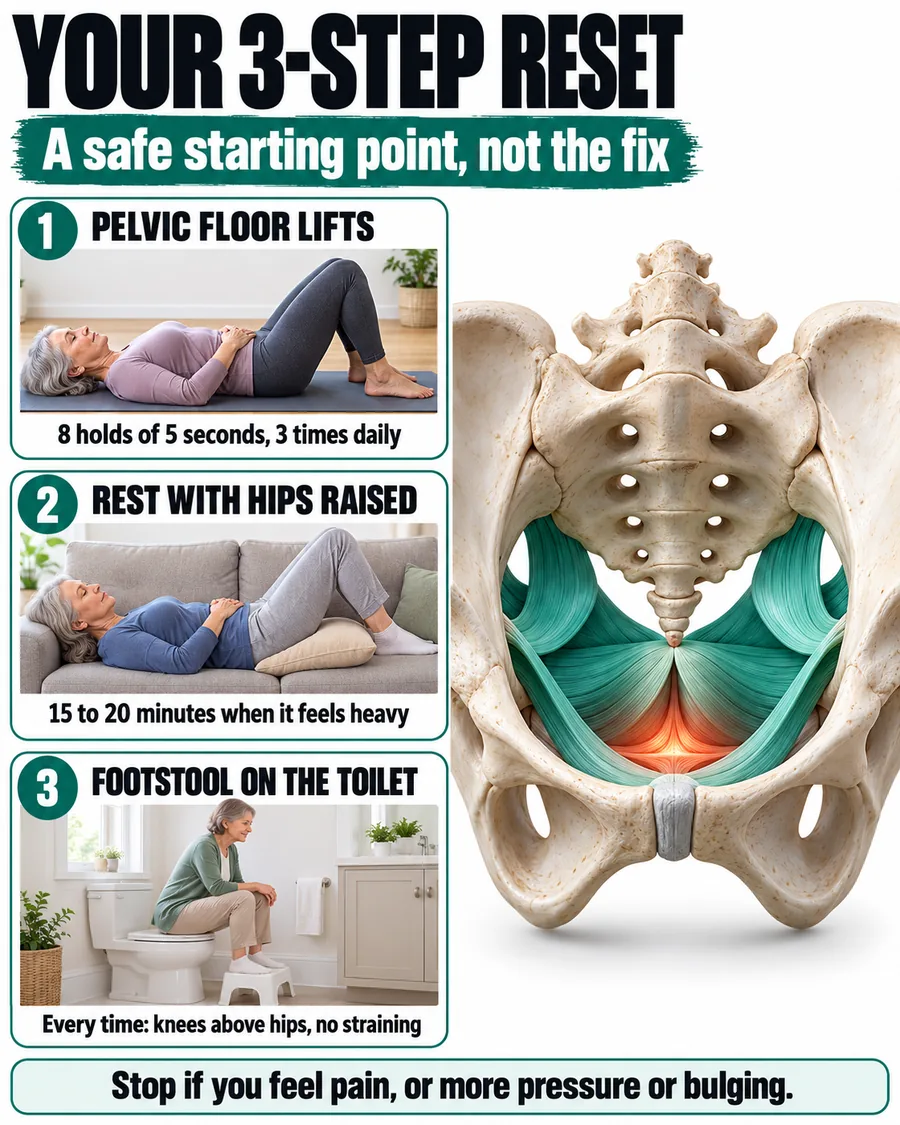
For many women, yes. Grade 1 and grade 2 prolapse often respond well to pelvic floor physiotherapy, with no pessary or surgery required. Physiotherapy will not lift an organ back to its original position, but by strengthening and coordinating the pelvic floor and the muscles around it, it can reduce symptoms, improve support, and help prevent further progression. More advanced prolapse may also benefit from a pessary, a small support device fitted by a clinician, or in some cases surgery, and we will guide you on when to involve your doctor.
How Physiotherapy Helps Prolapse
- Targeted pelvic floor strengthening and coordination to improve support
- Pressure management, so everyday tasks and exercise do not bear down on the pelvic floor
- Strengthening the hips, glutes, and deep core that work with the pelvic floor
- Posture and breathing strategies, plus practical advice on lifting and constipation
- A safe, graded return to exercise and the activities you enjoy
What Raises the Risk of Prolapse
Pregnancy and vaginal delivery, menopause and lower estrogen, chronic constipation and straining, heavy lifting, a chronic cough, a higher body weight, and a family history can all play a role. Many of these are things we can help you manage, which is why prolapse care works best alongside postpartum recovery and bladder care for incontinence, which often occurs alongside prolapse.
Daily Habits That Protect Your Pelvic Floor
Alongside your program, a few habits reduce the load on your pelvic floor:
- Avoid straining on the toilet by managing constipation with fibre, fluids, and good posture
- Exhale and gently engage your core before lifting, rather than holding your breath and bearing down
- Break heavy tasks into smaller loads where you can
- Treat a lingering cough, and keep generally active at a comfortable level
These are general suggestions, not a diagnosis. Your physiotherapist will tailor them to your prolapse and goals.

Level 3 Pelvic Health Certified
 Advanced training with
Pelvic Health Solutions
Many women with pelvic organ prolapse describe a heaviness or dragging feeling by the end of the day. In a private room, Gurmeet assesses how your pelvic floor handles pressure from lifting, coughing and standing, with an internal or external exam only if you agree to it. Care then focuses on support strategies, strength work and practical ways to manage load in daily life.
What to Expect at Your First Visit
Your appointment is private, respectful, and trauma-informed, and you are always in control of the assessment. We take a full history, talk through your symptoms and goals, and assess how your pelvic floor and surrounding muscles are working. You leave with a clear explanation and a personalized plan. Care is led by Gurmeet Rai, a registered pelvic health physiotherapist.
Book Your Assessment in Oakville
Heaviness and pressure do not have to be your normal. Book a free consultation or an assessment at Wellmax Physiotherapy in Oakville, or call (905) 829-1100. No referral is needed, and we offer direct billing to most major insurers.
What Our Patients Say
Jolean L.“Do not hesitate to book an appointment if you are pregnant and are experiencing any pelvic pain. The team was able to help me improve my ambulation quality of life in a very short time. Highly recommend!!”
Marilyn’s E.“If you are looking for expert physiotherapy, look no further than Gurmeet Rai, who has just opened her own clinic, Wellmax Physiotherapy, in East Oakville. The space is freshly decorated and designed and the staff are welcoming. Treatment rooms are relaxing with calming colours and soft lighting. But the real bonus is the quality of the treatment and care you’ll receive. I began with pelvic floor therapy, but have continued on with Gurmeet to address some life-long postural issues. Gurmeet is a very experienced and highly skilled practitioner and I have no reservations in recommending her whatever your needs.”
Verified Patient“After my second baby I was dealing with leakage every time I coughed, sneezed, or tried to exercise. I put off getting help for almost a year because I felt embarrassed and thought it was just something that happens after kids. The pelvic floor assessment at Wellmax was private, respectful, and way less uncomfortable than I expected. Gurmeet explained exactly what was happening with my pelvic floor muscles and gave me a program that was nothing like the generic Kegels my doctor had suggested. Four sessions in and the leakage had improved significantly. I can actually jump with my kids again without worrying.”
Emily C.“I can confidently say this is the best physiotherapy clinic in Oakville for postpartum care. After having my baby, I was experiencing pelvic floor discomfort and lower back pain that was making daily life very difficult. I booked an appointment with Gurmeet, and she made me feel completely comfortable and heard right from the start. She asked detailed questions about my daily routine and explained how pelvic health physiotherapy could help rebuild my core strength safely. The hands-on treatment and tailored home exercises made a massive difference in just a few weeks. The atmosphere is welcoming and professional, and they truly focus on long-term results rather than just a quick fix.”
Farrah S.“I saw Gurmeet for Pelvic Floor Therapy, before and after my Hysterectomy. She always made me feel comfortable and is very knowledgeable, helpful, and educated me during the whole process and at each visit. The front desk staff are always inviting and professional. I would recommend Wellmax to my friends and family.”
Amara W.“I can’t recommend Gurmeet enough for post-partum recovery. She has been incredibly supportive, knowledgeable, and attentive throughout my healing journey. An incredible pelvic floor physio she is. From week 1 Postpartum I am seeing Gurmeet and thats the best decision I ever made!”
Victoria D., Oakville“Within just a handful of sessions, Gurmeet took issues I had been struggling with for months (and honestly, years after my first birth) and had me feeling like myself again. She’s the reason I went from debilitatingly painful periods to completely manageable ones — something I didn’t think was possible!”
Verified Patient“I was referred to pelvic health physio after having bladder urgency issues for months. I was nervous about the internal assessment but the therapist at Wellmax explained every single step before doing anything and I never felt rushed or uncomfortable. The treatment room was completely private. By the end of my treatment plan I went from running to the bathroom every 30 minutes to being able to hold comfortably for hours. I wish I had done this sooner instead of just assuming I had to live with it.”
See all our Google reviewsRead more patient storiesLeave a review
Frequently Asked Questions
Can pelvic organ prolapse be fixed without surgery?+–
Mild to moderate (grade 1 and 2) prolapse often responds well to pelvic floor physiotherapy without surgery or a pessary. Physiotherapy does not lift the organ back into place, but it improves support, reduces symptoms, and helps prevent progression. Advanced prolapse may also need a pessary or surgery.
What does pelvic organ prolapse feel like?+–
Most women describe heaviness, pressure, or a dragging or bulging sensation in the vagina, often worse by the end of the day or with lifting. Some also notice bladder or bowel changes. A confidential assessment can confirm what is happening.
What is a pessary?+–
A pessary is a small support device placed in the vagina to hold the pelvic organs in position and ease symptoms. It does not repair the prolapse but can work very well, and we can guide you on when it is worth discussing with your doctor.
Will my prolapse get worse?+–
Not necessarily. Strengthening the pelvic floor, managing pressure and constipation, and avoiding heavy straining can reduce symptoms and slow or prevent progression for many women.
What exercises should I avoid with a prolapse?+–
Avoid breath-holding and bearing down during heavy lifting, and ease off high-impact or very heavy loading until your pelvic floor can manage the pressure. Most exercise can be modified rather than stopped, and your physiotherapist will show you how.
Can prolapse improve after menopause?+–
Yes. While menopause can worsen symptoms as estrogen falls, pelvic floor physiotherapy still helps reduce pressure, build support, and improve quality of life. Some women also discuss low-dose vaginal estrogen with their doctor as an addition.
Registered & Regulated
Regulated & Recognized Across Every Discipline
Wellmax is in good standing with the regulatory colleges and leading associations for physiotherapy, chiropractic, massage therapy, and naturopathic medicine in Ontario.