
Running Injury Treatment in Oakville
Shin splints, IT band syndrome, runner's knee, Achilles tendinopathy and more, treated at the source.
Home > Conditions We Treat > Running Injury Treatment in Oakville
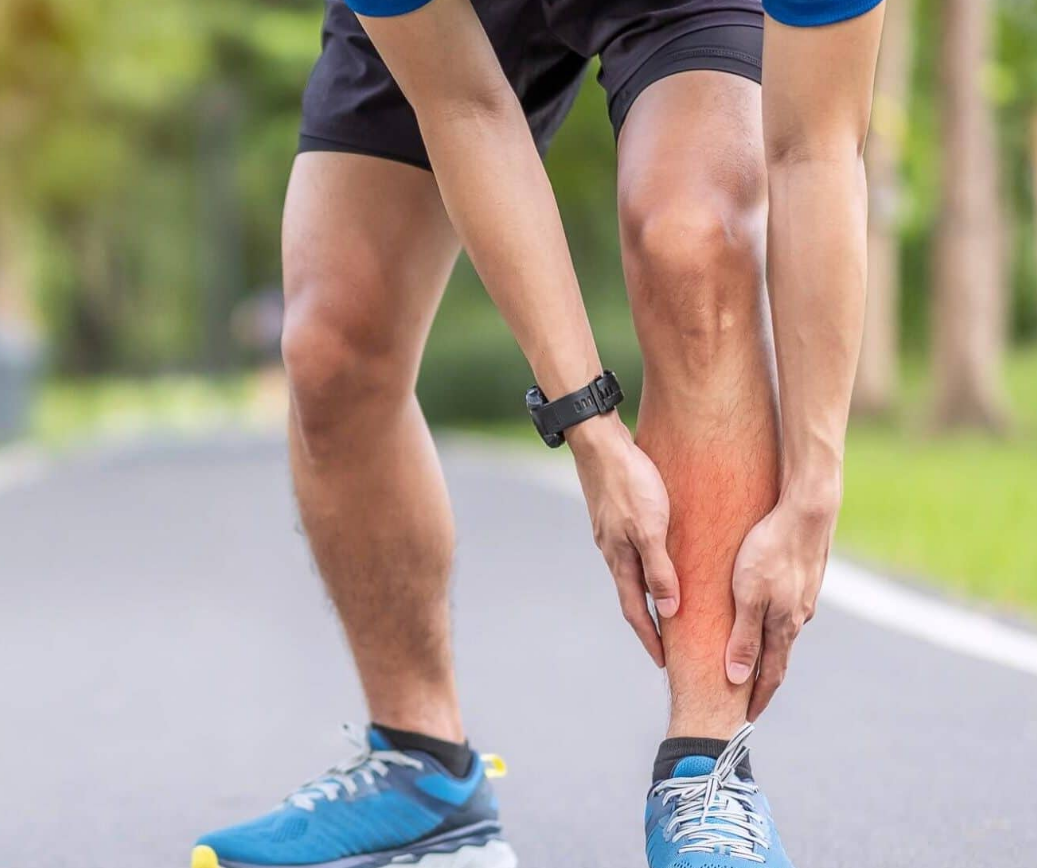
You’ve been building up your mileage for the spring season. Things were going well for a few weeks. Then that dull ache showed up in the shin after your long run. Or the outside of your knee started getting sore at the same point in every run. Or your Achilles was stiff every morning and took a kilometre to warm up. Running injuries don’t announce themselves with a dramatic moment. They build quietly until they can’t be ignored.
Running injury treatment in Oakville at Wellmax Physiotherapy addresses the full range of overuse and acute running injuries, from shin splints and IT band syndrome to Achilles tendinopathy, plantar fasciitis, and stress fractures. The common thread is this: running injuries are load management problems. The tissue was asked to do more than it was currently capable of, and it broke down. The solution is not simply rest. It’s identifying the specific tissue involved, understanding why it failed, and building a treatment plan that addresses the load, the weakness, and the biomechanics.
Running injuries are among the most treatable conditions in physiotherapy, but they require proper treatment. Most runners don’t get proper treatment because they either rest until the pain goes away (then it returns when they resume running) or they keep running through it until the condition becomes chronic and takes months to fix instead of weeks. Getting assessed and treated early changes the outcome significantly.
We’re located at 1148 Winston Churchill Blvd, Unit B3, Oakville. Runners from the Waterfront Trail, Sixteen Mile Creek paths, Bronte Creek Provincial Park, and Lions Valley Park trails come to us for running injury treatment. Clarkson, Clearview, Sheridan Park, Maple Grove, and south Mississauga are all under 10 minutes away.
Common Running Injuries We Treat
1. Shin Splints (Medial Tibial Stress Syndrome)
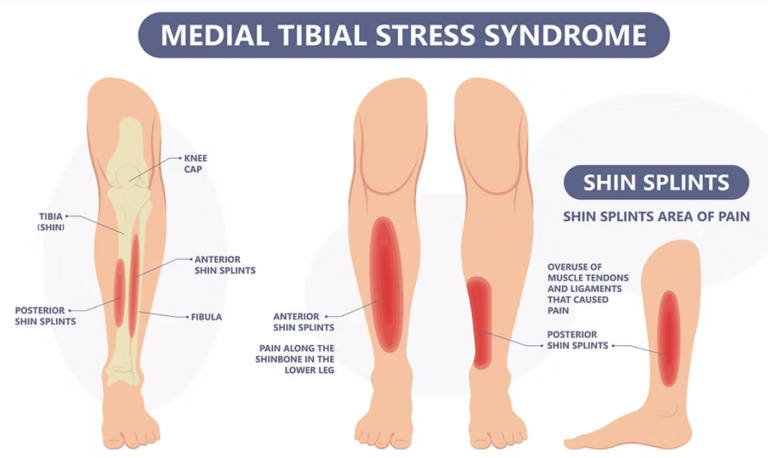
That aching pain along the inner edge of the shinbone that gets worse as the run goes on. Shin splints (medial tibial stress syndrome, or MTSS) are the most common running overuse injury and are almost always a load management problem. The tibial bone and the muscles that attach to it are being asked to absorb more impact than they can currently handle.
Common causes include sudden mileage increases, running on harder surfaces, worn-out running shoes, weakness in the calf, and poor hip strength that changes how the foot lands and loads the shin. Treatment involves relative rest (not a complete stop), progressive calf strengthening (soleus loading is the priority), load management to keep running within tolerance, and addressing any contributing factors.
One red flag to know: if shin pain is very localized to one spot (rather than spread along the shin), doesn’t ease with warmup, and hurts with hopping, a stress fracture needs to be ruled out. This requires imaging, typically a bone scan or MRI, and means a period off running. For a deeper look at why shin splints happen and how to stop them coming back, read our shin splints recovery guide.
2. IT Band Syndrome (Runner’s Knee, Lateral)
Sharp pain on the outside of the knee that typically comes on at a predictable distance or time into the run. Contrary to popular belief, the problem isn’t that the IT band is “tight” and needs to be stretched or foam rolled. The IT band can’t meaningfully lengthen. What actually happens is compression of the fat pad and tissue underneath the band at the lateral femoral condyle, driven by hip weakness (gluteus medius), poor running mechanics (crossover gait, excessive hip drop), and training load errors.
Treatment focuses on hip strengthening (gluteus medius and maximus are the primary targets), gait modification if a crossover pattern is present, and load management. For a deeper dive, see our dedicated IT band syndrome treatment page.
3. Runner’s Knee (Patellofemoral Pain Syndrome)
Dull, achy pain around or behind the kneecap that worsens with running (especially downhill), stairs, squatting, and prolonged sitting. Patellofemoral pain syndrome is the single most common knee problem in runners. The patella (kneecap) isn’t tracking properly in its groove, usually because of quad weakness (particularly the VMO), hip weakness, or altered foot mechanics.
Treatment involves quad and hip strengthening, gait analysis to identify any patterns that increase kneecap loading, and load management to keep training stress within the tissue’s current tolerance. See our knee pain treatment page for full details.
4. Achilles Tendinopathy
Stiffness and pain in the Achilles tendon, usually worst in the morning and at the start of a run, that warms up after 10-15 minutes and may flare again the following morning. Achilles tendinopathy is a degenerative condition, not an inflammatory one (despite the outdated name “Achilles tendinitis”). The tendon has accumulated more cumulative load than it could repair, and its internal structure has become disorganized.
Treatment is progressive loading through heavy slow resistance calf raises (the Alfredson or Silbernagel protocol), with shockwave therapy added for chronic cases. Rest makes it worse, not better, because the tendon needs mechanical stimulus to reorganize. See our full Achilles tendinopathy treatment page.
5. Calf Strains
Sudden sharp pain in the calf during a run, often described as feeling like someone kicked you or threw a stone at the back of the leg. Calf strains are increasingly common in recreational runners over 35, particularly in the soleus muscle (the deeper calf muscle that absorbs the majority of running load). The gastrocnemius, the more superficial muscle, is more commonly strained at faster speeds and during hill running.
Treatment depends on severity. Grade 1 strains (mild) typically allow a return to jogging within 2-3 weeks. Grade 2 strains (partial tears) require 4-8 weeks of progressive loading before returning to full running. Skipping rehabilitation and returning too early is the most common cause of re-injury.
6. Plantar Fasciitis
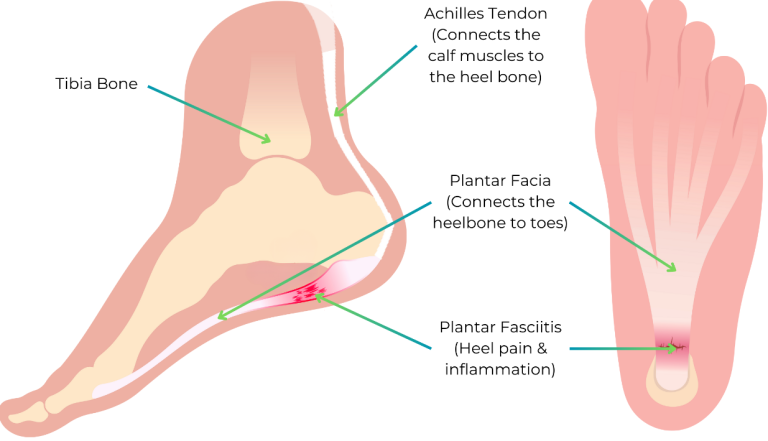
Stabbing heel pain first thing in the morning and after rest periods, that eases with walking but comes back after running. Plantar fasciitis is one of the most common running complaints we see at the clinic. The plantar fascia (the thick band of tissue that runs along the bottom of the foot from the heel to the toes) becomes overloaded from repetitive impact, tight calves, and often insufficient foot intrinsic muscle strength.
Treatment involves intrinsic foot strengthening, progressive calf loading, shockwave therapy for chronic cases, and load management. For the full approach, see our plantar fasciitis treatment page. For related ankle and foot pain conditions, we have a comprehensive resource as well.
7. Hamstring Strains and Proximal Hamstring Tendinopathy
Two different presentations that share the same anatomy. Acute strains are sudden pain during a sprint or hill effort, with immediate weakness and difficulty running. Chronic proximal hamstring tendinopathy produces deep buttock pain that worsens with speed work, hills, and sitting (particularly on hard surfaces). These two conditions require different treatment approaches. Acute strains need graduated loading from rest to walking to jogging to running. Proximal hamstring tendinopathy requires progressive eccentric and heavy slow resistance loading, with compression avoided in the early stages (no deep hip flexion, no prolonged sitting on hard surfaces).
8. Hip Flexor Strains
Pain in the front of the hip during or after running, especially with hills and faster paces. The hip flexors (primarily the iliopsoas) are heavily loaded during running, particularly with longer strides and uphills. Strains are often graded 1-2 and respond well to relative rest, progressive loading, and hip flexor and core strengthening. For comprehensive hip pain treatment, we assess the full hip complex to identify contributing factors.
9. Stress Fractures and Stress Reactions
Localized bone pain that worsens with running and doesn’t ease with warmup. Common sites include the tibia (shin), metatarsals (foot), and navicular (midfoot). Stress fractures represent the failure of bone to keep up with the loading demands placed on it. Unlike shin splints (which are diffuse), stress fracture pain is localized to a spot and painful with direct palpation.
Stress fractures require imaging to confirm (bone scan or MRI, as they are often invisible on X-ray), and a period of no running until the bone heals. The duration depends on the bone and severity: tibial stress fractures typically take 6-12 weeks, metatarsal fractures 4-8 weeks. Physiotherapy during this period focuses on maintaining fitness through non-impact training and addressing the factors (bone loading, nutrition, training errors) that led to the fracture.
Why Running Injuries Happen
Training Load Errors
Too much, too soon is the most common cause of running injury. This includes:
- Increasing weekly mileage by more than 10-15% per week
- Adding speed work before the aerobic base is built
- Running back-to-back hard days without recovery
- Jumping back to full volume after illness, injury, or a break
- Stacking races or events without adequate recovery between them
Weakness in Key Muscle Groups
The calf complex (gastrocnemius and soleus) absorbs the majority of impact forces during running. The soleus alone generates forces up to 6-8 times body weight during each stride. If the calf isn’t strong enough, the load gets transferred to the Achilles, the plantar fascia, the shin, and the knee. This is why calf strengthening is part of almost every running injury treatment plan we build.
The hip also plays a central role. The gluteus medius and maximus stabilize the pelvis during the single-leg stance phase of running. When these muscles are weak, the pelvis drops, the knee tracks inward, and the load pattern through the entire lower leg changes. This contributes to IT band syndrome, patellofemoral pain, and medial tibial stress syndrome.
Biomechanical Factors
Running mechanics that increase tissue loading include:
- Overstriding (landing with the foot too far ahead of the body’s centre of mass increases braking forces)
- Crossover gait (running with feet landing close to or across the midline increases IT band compression)
- Excessive pronation (increases medial tibial stress)
- Stiff ankles that alter the loading pattern through the entire leg
- Excessive hip drop during the stance phase
- Low cadence that increases impact forces at the knee and hip
Recovery Deficit
Not enough sleep. Not enough nutrition. Not enough easy days between hard sessions. Running is a tissue-breakdown activity. Adaptation happens during recovery, not during the run. When recovery is insufficient, the tissue breaks down faster than it rebuilds, and injury follows. This is especially relevant for athletes training for half-marathons and marathons, where total weekly volume is high and easy runs aren’t always easy enough.
Previous Injury
A history of the same injury is the strongest predictor of recurrence. If the underlying factors (weakness, biomechanics, load management) weren’t addressed the first time, the injury will return when the same conditions are recreated. This is why simply resting until pain resolves produces such high recurrence rates. The pain goes away, but nothing that caused it has changed.
How We Treat Running Injuries at Wellmax
Load Management: Keep Running When Possible
Our default approach is to keep you running if the injury allows it. Complete rest is rarely the best option for running injuries because the tissue deconditions and you lose fitness, making the return harder. Instead, we modify the load: reduce distance, slow the pace, avoid hills, switch to softer surfaces, or reduce frequency to a level the tissue can tolerate while it heals. The goal is finding the “sweet spot” where the tissue is loaded enough to stimulate repair but not so much that it gets worse.
Strength Training: The Real Fix
Every running injury treatment plan at Wellmax includes a strength program. This isn’t optional. It’s the single most effective intervention for both treating current injuries and preventing future ones. Research consistently shows that runners who do regular strength training have significantly lower injury rates than those who only run. Common elements of our running injury strength programs include:
- Soleus and gastrocnemius strengthening (calf raises, single-leg progressions)
- Gluteus medius and maximus strengthening (bridges, single-leg work, lateral band walks)
- Quad strengthening for patellofemoral issues (step-downs, Spanish squats)
- Hamstring loading (Nordic curls, Romanian deadlifts)
- Intrinsic foot muscle training (short foot exercises, toe spreads)
Gait Assessment
When biomechanical factors are contributing to the injury, we assess running gait to identify patterns that increase tissue loading. We look at cadence (steps per minute), stride length, foot strike pattern, knee tracking, hip drop, trunk lean, and arm mechanics. Where gait retraining is warranted, it’s introduced gradually and systematically so the change is durable, not just a temporary cue that disappears when the runner isn’t thinking about it.
Manual Therapy
Hands-on treatment for the calf complex, ankle joint, hip, and lumbar spine. Joint mobilization to restore ankle dorsiflexion, which is often restricted in runners with Achilles and shin problems. Soft tissue work for the calf, hamstring, and hip flexor muscles. Manual therapy doesn’t fix running injuries on its own, but it creates the mechanical conditions that make the loading program more effective.
Modalities for Stubborn Cases
For chronic cases that haven’t responded to loading alone, we offer shockwave therapy (strong evidence for Achilles tendinopathy and plantar fasciitis) and deep tissue laser therapy (for acute inflammation that limits the loading program). Most running injuries respond to load management and strength training alone. Modalities are reserved for cases where the tissue needs additional stimulus beyond what loading provides.
Return-to-Run Programming
When a period of reduced running or complete rest was needed, the return is structured and progressive. Walk-jog intervals building to continuous running. Gradual distance increases (no more than 10% per week). Re-introduction of intensity (pace work, hills) only once base mileage is re-established and the injury is fully resolved. A return to running plan that is too aggressive is the most common cause of re-injury after a running-related setback.
For a detailed week-by-week protocol, see our blog post on return to running after injury.
Running Injury Recovery Timelines
| Injury | Typical Recovery | Can You Run During Rehab? |
|---|---|---|
| Shin splints (MTSS) | 3-6 weeks | Often yes, with reduced volume and intensity |
| IT band syndrome | 4-8 weeks | Often yes, below symptom threshold distance |
| Runner’s knee (patellofemoral pain) | 4-8 weeks | Usually yes, with pace and hill modifications |
| Achilles tendinopathy | 8-12 weeks | Usually yes, with load management |
| Calf strain (Grade 1-2) | 3-8 weeks | No initially, progressive return from week 2-3 |
| Plantar fasciitis | 6-12 weeks | Often yes, with modified volume and footwear |
| Hamstring strain (acute) | 3-8 weeks | No initially, graduated return from week 2-4 |
| Proximal hamstring tendinopathy | 8-16 weeks | Often yes, avoid speed work and hills initially |
| Tibial stress fracture | 6-12 weeks | No running until cleared, then gradual return |
These timelines assume structured physiotherapy rehabilitation and compliance with the load management and strength program.
Why Oakville Runners Choose Wellmax for Running Injury Treatment
We Keep You Running When Possible
Our philosophy is to keep you training at whatever level the injury allows. Running injuries are load management problems. If you can run at 60% of your usual volume without increasing pain, then running at 60% is part of the treatment plan. Complete rest is prescribed only when the tissue genuinely needs it (stress fractures, acute calf strains). For everything else, we modify the load and keep you moving.
Load Management Is the Foundation
Running injuries are load management problems. The solution is load management plus strength. Every plan we build at Wellmax includes a specific and individualized load management strategy: what you can run this week, at what pace, for how long, on what surface. This is based on your current presentation, your goals, and what the injured tissue can tolerate. Load management is not “rest.” It’s precision.
Strength Training Is Part of Every Program
No running injury treatment plan at Wellmax is complete without a strength program. Strength is the single biggest modifier of injury risk in runners. We prescribe specific protocols for each injury type, progressed systematically based on your response. You’ll know exactly what to do, how to progress it, and why it matters for your specific injury.
Expert Care, Knows Your Running
We track your weekly mileage, your pace, your training plan, and your injury response session to session. This matters for running injuries because the decisions change week to week. Load that was appropriate at week 2 needs to be adjusted at week 4, and you get honest guidance at every step.
Oakville’s Running Community
We see runners from across Oakville and south Mississauga: recreational runners from the Waterfront Trail and Sixteen Mile Creek paths, Couch-to-5K runners at the 4-6 week mark when overuse injuries peak, half-marathon and marathon trainers building to Toronto or Hamilton races, trail runners from Bronte Creek and Lions Valley, and high school and university athletes with cross-country and track injuries. We understand the training structures, the common pressure points, and what it means to have a race on the calendar when you’re injured.
We’re at 1148 Winston Churchill Blvd, Unit B3, Oakville. Just south of the QEW in the Winston Park plaza. Free parking, ground-level access, private treatment rooms.
What Our Patients Say
Michael R.“If you are dealing with sports injuries, this is easily the best physiotherapy clinic in Oakville. I was struggling with Achilles tendinopathy from running, and the pain in my heel was getting worse every week. Dhrushi was my physiotherapist and she was absolutely fantastic. She did not just look at my ankle but assessed my entire walking and running mechanics. She explained exactly why the tendon was inflamed and built a personalized treatment plan with manual therapy and specific eccentric exercises for me to do at home. The clinic always runs on time and the entire team is so friendly. I am finally back to running pain-free and I will not hesitate to return if I ever need care again.”
Jeff B.“I’m a new client suffering from a sports-related injury. Gurmeet was quick to diagnose the issue and, along with her colleagues, Nav and Janvi, has me back on the road to recovery. Coupled with a very friendly environment and loads of free parking, my experience has been top-notch!”
Gurjit M.“Great Practice, I have seen Gurmeet a number of times for various injuries and sports related issues over the years. She is a great Physiotherapist and took great care and attention to treating me. Definitely recommend Wellmax!”
Steven S.“I have been to many different physiotherapists for various sport related, I wish I would have found her sooner! She and her staff are always warm and welcoming. Very knowledgeable in what she does and always goes above and beyond with her treatment. You can tell she really cares about her patients and not just the paycheque like other physiotherapists. I highly recommend going to see her!”
Zakaria S.“I came in with a locked and sore ankle and Gurmeet was able to identify the root cause very quickly. The soft tissue release, electrical therapy, manual manipulation and assigned stretches have all been beneficial for my situation. They’ve got a customer for life. Gurmeet and her team are friendly and knowledgeable.”
Hazel V.“I was suffering from plantar fasciitis. I went to other physio, shockwave nothing helped. Until I found Wellmax Physiotherapy. This is a great place!”
Christopher N.“Gurmeet and her team are awesome 🙂 They really helped me to recover from my ankle sprain. Thanks team Wellmax. Highly Recommended!”
Tia D.“My experience with Gurmeet and her team was truly wonderful. I arrived with a painful ankle sprain and a lot of uncertainty about how well I would heal. After just a few sessions with her, I already felt more hopeful and confident again. I was able to walk more comfortably, the swelling went down significantly, and they helped me manage the pain so much better. Gurmeet and her team are incredibly caring, supportive, and knowledgeable. They made sure I felt looked after not only during my visits but also gave me everything I needed to continue healing well at home. I trusted them completely, and I still feel so grateful that I did. I would wholeheartedly recommend them to anyone.”
See all our Google reviewsRead more patient storiesLeave a review
Frequently Asked Questions
Should I stop running if something hurts?+–
Not necessarily. Many running injuries can be managed while continuing to run at a modified volume and intensity. The general rule: if pain is under 3-4 out of 10 during and after the run, and doesn’t get progressively worse over the following days, you can likely continue running with modifications. Exceptions include stress fractures and acute calf strains, which require a period without running. A physiotherapy assessment will clarify exactly what you can and can’t do safely.
What is the most common running injury?+–
Patellofemoral pain (runner’s knee) and medial tibial stress syndrome (shin splints) are the two most common running injuries by volume. IT band syndrome and Achilles tendinopathy are close behind. All four are load management and strength problems rather than structural damage in most cases, which means they respond very well to physiotherapy when treated early.
Why does my IT band keep getting tight?+–
The IT band isn’t actually tight in the way a muscle gets tight. It can’t meaningfully lengthen regardless of how much you stretch or foam roll it. IT band pain is driven by hip weakness (the gluteus medius isn’t controlling pelvic stability during running), which increases compression of the tissue underneath the IT band at the knee. The fix is hip strengthening and, where present, gait modification to reduce crossover pattern. Stretching the IT band provides temporary symptom relief at best and doesn’t address the underlying cause.
Do I need orthotics for running injuries?+–
Not everyone who gets a running injury needs orthotics. Many running injuries respond fully to strength training, load management, and gait retraining without any footwear intervention. Orthotics are appropriate for specific cases where altered foot mechanics are contributing to the injury and where conservative treatment alone hasn’t resolved it. At Wellmax we assess foot mechanics as part of the full running injury evaluation and only recommend orthotics when the evidence supports it for your specific presentation.
How quickly can I return to running after a calf strain?+–
Grade 1 calf strains (mild, no significant loss of strength) typically allow a return to jogging within 2-3 weeks and full running within 4-6 weeks. Grade 2 strains (partial muscle tear with strength loss) require 4-8 weeks before returning to jogging, and 8-12 weeks before full training volume. The most common mistake is returning too early, which causes re-injury. A structured return-to-run program that progressively increases load is essential.
Is it normal for Achilles pain to come and go during a run?+–
Yes, and this is actually a hallmark of Achilles tendinopathy. The tendon is stiff and painful at the start of a run, warms up after 10-15 minutes, and then may flare again the next morning. This warm-up effect can be misleading, as runners often feel fine mid-run and continue training at full volume, which keeps the tendon in a chronic overload state. The morning stiffness and post-run soreness are the more reliable indicators of how the tendon is responding to load.
What is a stress fracture and how do I know if I have one?+–
A stress fracture is a partial or complete crack in a bone caused by repetitive loading beyond the bone’s ability to repair. Unlike shin splints (which cause diffuse pain along the shin), stress fracture pain is localized to a single spot, is painful with direct palpation, and often hurts with hopping. Common running sites include the tibia, metatarsals, and navicular. Stress fractures are often invisible on X-ray; a bone scan or MRI is required for diagnosis. If you have these features, get assessed before continuing to run.
Can strength training really prevent running injuries?+–
Yes. The evidence is strong and consistent. Runners who do regular strength training, particularly calf, hip, and quad exercises, have significantly lower injury rates than runners who only run. The mechanism is straightforward: stronger muscles absorb more of the impact forces during running, reducing the load transferred to tendons, fascia, and bone. Twice-weekly strength training during running seasons is the single most effective injury prevention strategy for recreational runners.
How soon should I see a physiotherapist for a running injury?+–
As soon as the pain doesn’t resolve within a week of modified training. Running injuries that are treated early, within the first 2-3 weeks, typically resolve in weeks rather than months. Waiting until the injury is severe or has been present for months significantly increases recovery time. If you have localized bone pain, sudden calf pain during a run, or pain that prevents you from weight-bearing, get assessed immediately.
Is running injury physiotherapy covered by insurance?+–
Yes. Treatment at Wellmax is billed as physiotherapy and covered by most extended health plans. WSIB covers work-related injuries. We direct bill to Sun Life, Manulife, Canada Life, Green Shield, Great-West Life, Blue Cross, Desjardins, and most other major providers. No referral needed.
What does a gait analysis for running injuries involve?+–
A running gait analysis at Wellmax involves observing your running pattern, typically on a treadmill, to identify mechanics that may be contributing to your injury. We assess cadence (steps per minute), stride length, foot strike location relative to your centre of mass, knee tracking, pelvic drop during stance, trunk lean, and arm swing. Where a gait pattern is contributing to injury, we introduce specific cues and drills to modify it. Gait retraining is introduced gradually so changes are durable, not just temporary during the assessment.
Related Conditions and Services
- Sports Injury Rehabilitation
- Sports Physiotherapy
- IT Band Syndrome
- Achilles Tendinopathy
- Plantar Fasciitis
- Ankle and Foot Pain
- Knee Pain
- Hip Pain
- Shockwave Therapy
Book Your Running Injury Assessment
If you have a running injury that isn’t resolving, that keeps returning when you resume training, or that’s preventing you from running at all, get it assessed properly. Running injuries that are treated early and correctly resolve in weeks. Running injuries that are mismanaged or ignored become chronic problems that take months. Wellmax offers a free consult, and we see runners from across Oakville and south Mississauga. Come in, get assessed, and get a plan that keeps you running.
Wellmax Physiotherapy
1148 Winston Churchill Blvd, Unit B3, Oakville, ON L6J 0A3
Phone: (905) 829-1100
Email: info@wellmaxphysiotherapy.ca
Proudly Serving Our Local Communities:
- East Oakville: Winston Park, Clearview, and the QEW/403 Corridor.
- South Oakville: Eastlake, Maple Grove, Lorne Park, and Old Oakville.
- North Oakville: Joshua Creek, Falgarwood, Iroquois Ridge, and Upper Middle Road.
- Mississauga Border: Clarkson, Sheridan Park, Sheridan Homelands, and Southdown.
Insurance: Direct billing to most major providers. WSIB and MVA claims accepted. No referral needed. See our insurance and direct billing page for details.
Hours: Monday to Friday: 9am to 7pm | Saturday: 9am to 2pm | Sunday: 9am to 2pm (by appointment only)
Registered & Regulated
Regulated & Recognized Across Every Discipline
Wellmax is in good standing with the regulatory colleges and leading associations for physiotherapy, chiropractic, massage therapy, and naturopathic medicine in Ontario.