
Wrist and Hand Pain Treatment in Oakville
Targeted treatment for RSI, tendon, thumb and nerve pain, assessed from the neck down so you get your grip back.
Home > Conditions We Treat > Wrist and Hand Pain Treatment in Oakville
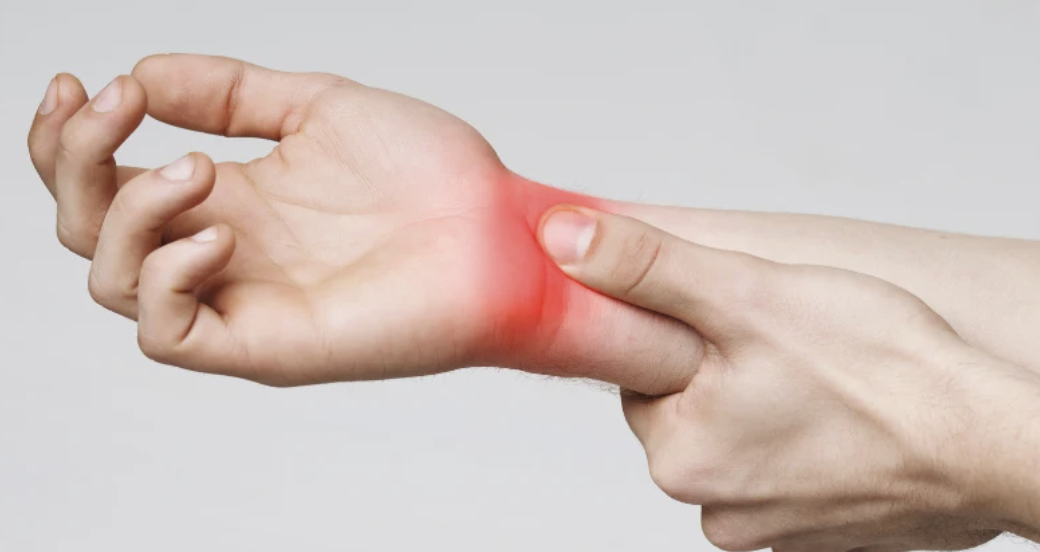
If you searched for wrist and hand pain treatment in Oakville, you already know how much your hands run your day. You used to open jars without thinking about it. Turn a doorknob, grip a barbell, type an email, lift your child out of the car seat. Now one of those movements makes your wrist catch, ache, or give you a sharp stab of pain that stops you mid-motion. Or your thumb has been sore for weeks and it’s getting harder to pinch, grip, or twist anything without wincing.
Wrist and hand problems are frustrating because you use your hands for almost everything. The pain doesn’t just affect one activity. It ripples through your entire day. Cooking. Driving. Working. Exercising. Picking up your phone. Buttoning a shirt. When the wrist or hand hurts, everything takes longer and requires workarounds.
Here’s what makes wrist and hand conditions tricky: the anatomy is incredibly dense. 27 bones, 14 joints in the fingers alone, a web of tendons that control fine motor movements, and nerves that can be compressed at multiple points along their path from the neck all the way down to the fingertips. A lot of wrist pain that gets labelled as “just a sprain” or “probably carpal tunnel” turns out to be something more specific when properly assessed. And the treatment for de Quervain’s is different from the treatment for a TFCC tear, which is different from a ganglion cyst, which is different from a cervical radiculopathy that’s referring pain to the hand.
At Wellmax Physiotherapy, Gurmeet assesses the full upper limb chain: the neck, the shoulder, the elbow, and the wrist and hand. A surprising number of patients who come in with “wrist pain” actually have a cervical spine problem contributing to or causing their symptoms. Getting the diagnosis right the first time is the difference between targeted treatment that works and months of generic wrist exercises that don’t.
We’re at 1148 Winston Churchill Blvd, Unit B3, Oakville, just south of the QEW. Patients from Clarkson, Clearview, Sheridan Park, Maple Grove, and south Mississauga come to us for wrist and hand pain treatment in Oakville.
- Wrist and Hand Conditions We Treat
- Why Wrist and Hand Pain Treatment in Oakville Always Starts at the Neck
- Wrist and Hand Condition Recovery Timelines
- Why Patients Choose Wellmax for Wrist and Hand Pain Treatment in Oakville
- Related Conditions and Services
- Book Your Wrist and Hand Pain Assessment in Oakville
- Frequently Asked Questions
Wrist and Hand Conditions We Treat
De Quervain’s Tenosynovitis
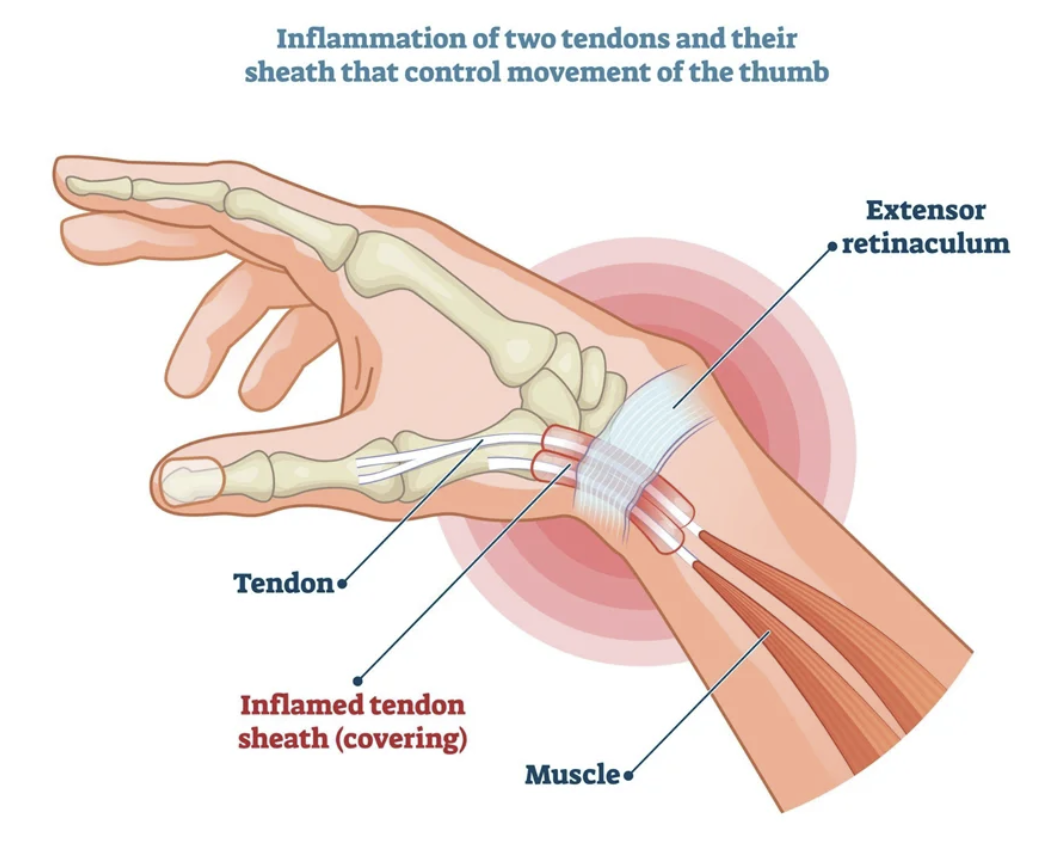
Pain on the thumb side of the wrist, especially with gripping, twisting, or lifting. The tendons that control thumb movement become irritated where they pass through a tight tunnel at the wrist. De Quervain’s is extremely common in new parents (the repetitive motion of lifting a baby with thumbs-under grip), people who use their phones excessively (the scrolling thumb), office workers, and anyone whose work involves repetitive thumb and wrist movements. The Finkelstein test (tucking the thumb into a fist and bending the wrist toward the pinky side) typically reproduces the pain sharply.
Treatment involves activity modification (changing how you grip and lift), splinting to rest the tendons in the acute phase, progressive loading of the thumb extensors and abductors as pain allows, and manual therapy to the thumb, wrist, and forearm. Most cases resolve in 4-8 weeks with proper treatment.
TFCC Injury (Triangular Fibrocartilage Complex)
Pain on the pinky side of the wrist, often with a clicking or catching sensation when rotating the forearm (like turning a key or twisting a lid). The TFCC is a cartilage and ligament structure that stabilizes the wrist on the ulnar (pinky) side. It can be injured from a fall on an outstretched hand, from repetitive loading in sports (gymnastics, CrossFit, racquet sports), or from degenerative wear. TFCC injuries are commonly missed or misdiagnosed as a “wrist sprain” because the symptoms can be vague and the structure is deep.
Treatment depends on the severity. Mild TFCC tears and degenerative changes respond well to wrist strengthening, grip training, manual therapy, and activity modification. More severe tears may require bracing or surgical consideration. We assess TFCC integrity with specific clinical tests and refer for MRI when the diagnosis needs confirmation.
Trigger Finger (Stenosing Tenosynovitis)
A finger that catches, locks, or clicks when you try to bend or straighten it. In severe cases, the finger gets stuck in a bent position and needs to be manually straightened with the other hand. Trigger finger happens when the tendon sheath at the base of the finger becomes inflamed and thickened, causing the tendon to catch as it glides through. It’s most common in the ring finger and thumb, and more prevalent in people with diabetes, rheumatoid arthritis, and occupations involving repetitive gripping.
Physiotherapy treatment includes splinting, gentle tendon gliding exercises, manual therapy to the tendon sheath and surrounding structures, and activity modification. Many cases resolve conservatively. Persistent cases may benefit from a cortisone injection (one of the few areas where cortisone has a good evidence base) or surgical release.
Wrist Sprains and Ligament Injuries
Wrist sprains typically occur from falling on an outstretched hand (FOOSH injuries). The scapholunate ligament is the most commonly injured wrist ligament and, if missed, can lead to chronic wrist instability and early arthritis. Not all wrist sprains are minor. A wrist that’s still painful 3-4 weeks after a “sprain” needs proper assessment to rule out ligament tears and occult (hidden) fractures, particularly scaphoid fractures which are notoriously missed on initial X-rays.
Treatment for stable sprains involves early mobilization, progressive strengthening, proprioception training, and taping or bracing during return to sport or work. Unstable ligament injuries may require surgical consultation.
Post-Fracture Rehabilitation
After a wrist fracture (distal radius fracture is the most common), the wrist is typically immobilized in a cast for 4-6 weeks. When the cast comes off, the wrist is stiff, weak, and the surrounding muscles have wasted. Physiotherapy restores range of motion, rebuilds grip strength and wrist stability, and addresses the stiffness that develops in the fingers, thumb, elbow, and shoulder during the immobilization period. Early intervention after cast removal produces significantly better outcomes than waiting to see if things improve on their own.
Thumb Arthritis (CMC Joint Osteoarthritis)
Pain at the base of the thumb, especially with pinching, gripping, and twisting. The carpometacarpal (CMC) joint is where the thumb meets the wrist and it’s one of the most mobile joints in the hand. It’s also one of the most commonly affected by osteoarthritis, particularly in women over 50. Treatment focuses on strengthening the thumb stabilizer muscles, manual therapy to maintain joint mobility, splinting during aggravating activities, and activity modification. See our Arthritis page for more on osteoarthritis management.
Ganglion Cysts
A firm, round lump near a wrist joint or tendon sheath, most commonly on the back of the wrist. Ganglion cysts are fluid-filled and can fluctuate in size. They’re usually painless but can cause discomfort if they press on a nerve or restrict movement. Most ganglion cysts don’t require treatment unless they’re painful or functionally limiting. When treatment is needed, physiotherapy focuses on symptom management, maintaining wrist mobility, and strengthening. Aspiration (draining) by a physician is an option for persistent, symptomatic cysts.
Repetitive Strain Injuries (RSI)
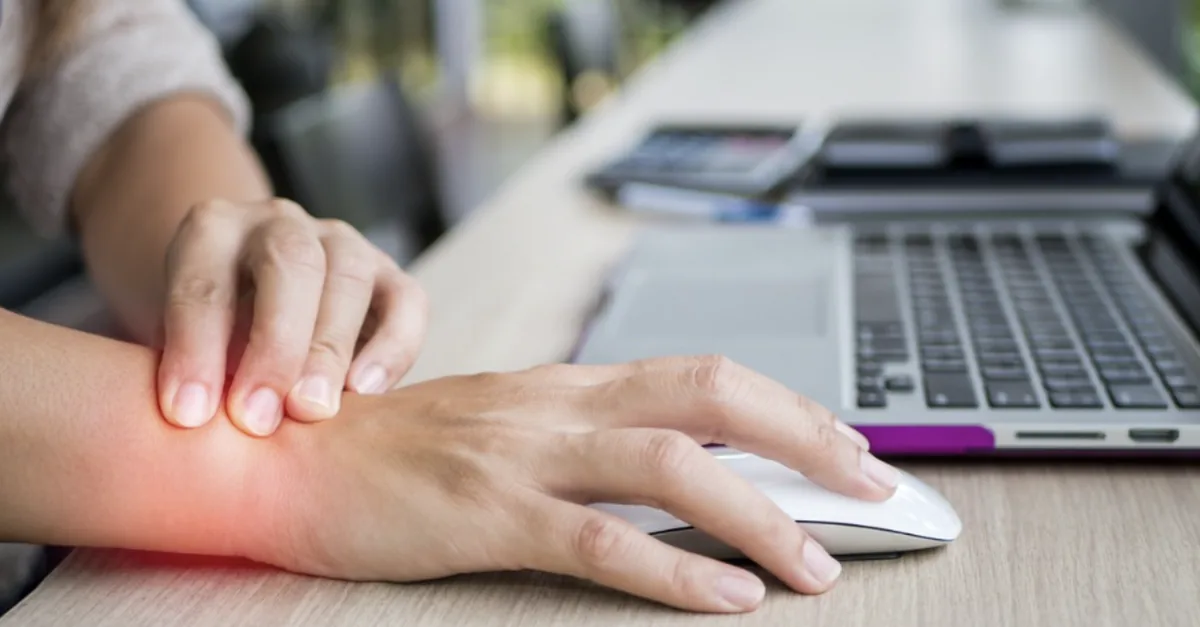
Wrist and hand pain from prolonged computer use, assembly work, manufacturing, or any occupation involving repetitive hand motions. RSI is common in the Winston Park office workers, Clarkson commercial area employees, and Royal Windsor Drive manufacturing and trades workforce. Treatment involves ergonomic assessment (how the workstation is set up), activity modification (changing the repetitive pattern), progressive strengthening, and nerve gliding exercises if compression is contributing. See our Carpal Tunnel page for specific median nerve compression treatment.
Why Wrist and Hand Pain Treatment in Oakville Always Starts at the Neck
This is the part many clinics miss, and it’s the reason a lot of wrist and hand treatment fails. The nerves that supply sensation and motor control to the wrist and hand (median, ulnar, and radial nerves) all originate from the cervical spine in the neck. They travel through the shoulder, down the arm, through the elbow, and into the hand. At any point along that path, these nerves can be compressed, irritated, or sensitized.
Cervical radiculopathy (a pinched nerve in the neck) can cause pain, numbness, and tingling in the hand that looks identical to carpal tunnel syndrome. Double crush syndrome occurs when a nerve is compressed at two points (for example, in the neck AND at the wrist), making the hand symptoms worse than either compression alone would produce. Thoracic outlet syndrome can compress the nerves and blood vessels between the neck and shoulder, causing hand symptoms.
At Wellmax, every wrist and hand assessment includes a cervical spine screen. If the neck is contributing to the hand symptoms, treating only the wrist won’t fully resolve the problem. This is one of the most common reasons patients come to us after failed treatment elsewhere. Nobody looked at the neck. See our Neck Pain and Headache page for how we treat the cervical spine.
Wrist and Hand Condition Recovery Timelines
| Condition | Typical Recovery | Treatment Approach |
|---|---|---|
| De Quervain’s tenosynovitis | 4-8 weeks | Splinting, progressive loading, manual therapy, grip modification |
| TFCC injury (mild-moderate) | 6-12 weeks | Strengthening, manual therapy, bracing, activity modification |
| Trigger finger (conservative) | 4-8 weeks | Splinting, tendon gliding, manual therapy, activity modification |
| Wrist sprain (Grade 1-2) | 2-6 weeks | Early mobilization, strengthening, taping, proprioception |
| Post-fracture rehab (after cast removal) | 6-12 weeks | ROM restoration, grip strengthening, functional retraining |
| Thumb arthritis (CMC joint OA) | Ongoing management | Strengthening, splinting during activities, manual therapy, flare management |
| Carpal tunnel syndrome | 4-12 weeks | Nerve gliding, splinting, ergonomic modification, cervical spine assessment |
| Repetitive strain injury (RSI) | 4-10 weeks | Ergonomic correction, strengthening, nerve glides, workstation modification |
These timelines depend on the severity and duration of symptoms, contributing factors, and consistency with the treatment plan. Gurmeet provides specific guidance based on your assessment findings and activity goals.
Why Patients Choose Wellmax for Wrist and Hand Pain Treatment in Oakville
We Assess the Full Chain, Starting from the Neck
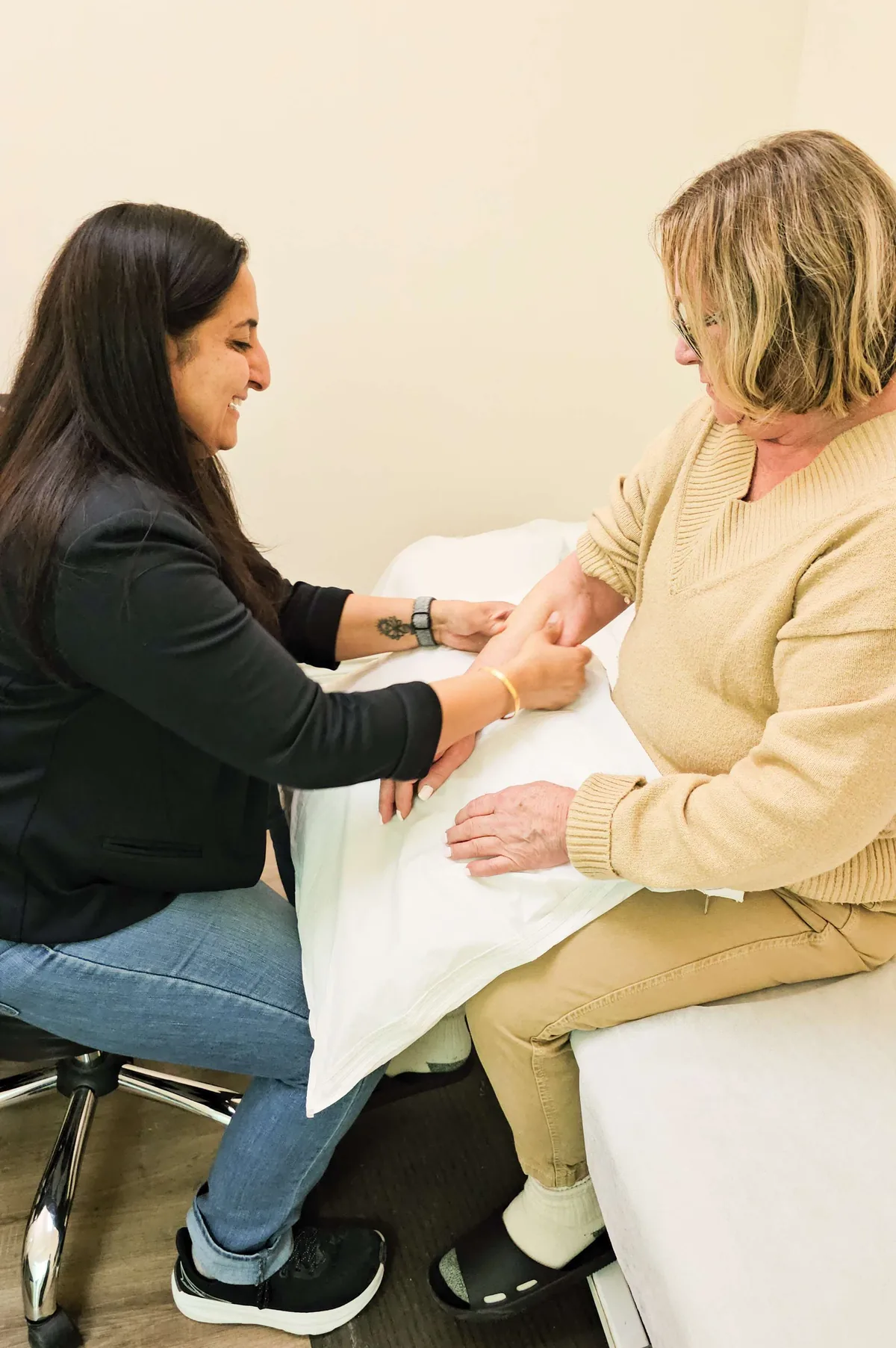
A lot of wrist treatment fails because nobody looks above the wrist. At Wellmax, every wrist and hand assessment includes the cervical spine, shoulder, and elbow because the nerves supplying the hand originate in the neck. If cervical spine pathology is contributing to your hand symptoms, treating the wrist alone won’t resolve the problem.
Specific Diagnosis, Not Generic “Wrist Pain” Treatment
De Quervain’s, TFCC tears, scapholunate instability, trigger finger, and carpal tunnel all cause “wrist pain” but require completely different treatment approaches. Gurmeet identifies the specific structure involved at the first assessment so the treatment plan is targeted from day one.
Expert Care, Knows Your Wrist
Wrist and hand conditions often involve fine-tuned exercise progression and splinting adjustments. Your care at Wellmax runs from first assessment through discharge, with grip strength, range of motion, and functional progress tracked week to week.
Local Wrist and Hand Pain Patients
We treat wrist and hand problems across Oakville’s community. New parents in Maple Grove and Clearview with de Quervain’s from repetitive baby lifting. Office workers in the Winston Park business district with RSI from years of typing. Tradespeople and manufacturing workers along Royal Windsor Drive with overuse injuries from tools and equipment. Gym athletes from CrossFit Radix and local studios with TFCC injuries from heavy cleans, snatches, and push-ups. And people across the area who fell on an outstretched hand and need structured rehab after their wrist comes out of a cast.
We’re at 1148 Winston Churchill Blvd, Unit B3, Oakville. Just south of the QEW in the Winston Park plaza. Free parking, ground-level access, private treatment rooms. Patients come from Clarkson, Clearview, Sheridan Park, Maple Grove, River Oaks, and south Mississauga.
What Our Patients Say
Farwah R.“Gurmeet deeply cares about her patients and her work, and it is rare to find such Healthcare providers. I went to her for physio after suffering with terrible shoulder & right hand pain. Doctors continued to gaslight me and after 2 years when the pain got unbearable, I finally went for physio. The pain immediately started getting better. Cannot recommend her enough.”
Sunny D.“I have had a great experience. Gurmeet was so helpful with my osteoarthritis thumb pain. The place is so clean and professional. I would so recommend it”
Morenita Z.“I came to see Gurmeet and Dhrushi at wellmax after my thumb and wrist injury at work under wsib. They took time to assess and explain everything to me and time i started with wellmax, I am feeling so much better and pain is less. Gurmeet’s hands on technique and manual therapy is amazing and knowledgeable. I see big difference in my condition and movement. Clinic is very clean and very positive that makes me comfortable every time I come here. I truly appreciate work they do and recommend it everyone who is looking for real physio treatment and manual therapy.”
Rahul K.“Highly recommended. I was suffering from tennis elbow for over an year and Gurmeet helped me to fix it like a magic. I was back at the court in less than 4 months.”
Robert K.“Wellmax is truly the best physiotherapy clinic in Oakville. I developed a bad case of tennis elbow from working with my hands, and my grip strength was completely gone. Dhrushi took her time during the initial visit to explain the healing process for tendons. My personalized plan included hands-on therapy, shockwave treatments, and a practical exercise routine I could easily do at home. The inflammation went down faster than I expected, and my arm feels strong again. The front desk staff is always welcoming, and my appointments always started right on time. Highly recommend this place to anyone in pain.”
Mosaab T.“I highly recommend Wellmax Physiotherapy! The team is professional, caring, and truly understands my needs. Special thanks to Gurmeet for her kindness, patience, and professionalism. I’m so happy with the care I receive here, and I hope to continue with this amazing team. Highly recommended❤️ thanks!”
See all our Google reviewsRead more patient storiesLeave a review
Frequently Asked Questions
What causes pain on the thumb side of my wrist?+–
The most common cause is de Quervain’s tenosynovitis, an irritation of the tendons that control thumb movement. It is especially common in new parents, phone users, and people who do repetitive thumb and wrist motions at work. Other causes include thumb CMC arthritis, scaphoid fractures, and radial nerve irritation. A clinical assessment differentiates between these conditions.
My wrist clicks when I rotate it. Should I be worried?+–
Clicking on the pinky side of the wrist during rotation often indicates a TFCC injury (triangular fibrocartilage complex). If it is painless and has always been there, it is likely benign. If the clicking is new, painful, or accompanied by weakness, it should be assessed. TFCC injuries respond well to physiotherapy when caught early but can become chronic if left untreated.
Can wrist pain actually come from the neck?+–
Yes, and it is more common than most people realize. The nerves that supply the hand originate in the cervical spine. A disc bulge, nerve root irritation, or thoracic outlet compression can cause pain, numbness, and tingling in the hand that is indistinguishable from local wrist conditions like carpal tunnel. This is why we assess the neck with every wrist and hand problem. If the neck is contributing, treating only the wrist won’t resolve the symptoms.
How is de Quervain's treated?+–
Treatment involves a thumb spica splint to rest the irritated tendons in the acute phase, activity modification (particularly how you grip and lift), progressive strengthening of the thumb and wrist extensors as pain allows, and manual therapy. Most cases resolve in 4-8 weeks. For stubborn cases, a cortisone injection can be considered as a bridge to allow the exercise program to progress.
When should I start physiotherapy after a wrist fracture?+–
As soon as the cast or splint is removed. The sooner you start, the faster you regain range of motion and strength. Waiting weeks or months after cast removal allows the stiffness to set in further and the muscles to waste more. Some exercises (finger, thumb, elbow, and shoulder movements) can even begin while the wrist is still in the cast to prevent stiffness in the surrounding joints.
Is my trigger finger going to need surgery?+–
Not necessarily. Many trigger finger cases improve with splinting, tendon gliding exercises, and manual therapy. If conservative treatment doesn’t resolve the catching and locking within 6-8 weeks, a cortisone injection is often effective. Surgery (tendon sheath release) is reserved for persistent cases that don’t respond to conservative measures and injection.
Can I still exercise with a wrist injury?+–
Usually yes, with modifications. Lower body training can continue normally. Many upper body exercises can be modified to avoid loading the wrist (for example, using dumbbells instead of barbells, avoiding push-up positions, modifying grip). Cardiovascular exercise is rarely limited by wrist injuries. Your physiotherapist will advise which exercises are safe and which need to be modified or temporarily avoided.
How much does wrist and hand pain treatment in Oakville cost, and do I need a referral?+–
An initial physiotherapy assessment at Wellmax is 120 dollars and no doctor’s referral is required to book. Most extended health plans cover physiotherapy, and we direct bill to Sun Life, Manulife, Canada Life, Green Shield, Blue Cross, Desjardins, and most other major insurers, so you usually pay little or nothing out of pocket. Work-related wrist injuries are covered under WSIB and injuries from a car accident are covered under your MVA claim. We also offer a free consult if you are not sure physiotherapy is right for your wrist or hand problem.
What can I do at home to relieve wrist and hand pain right now?+–
For an acute flare, settle the irritated tissue first: relative rest from the aggravating grip or motion, a wrist or thumb splint for the worst few days, and short bouts of ice if there is swelling. Set up your workstation so the wrist sits in a neutral position rather than bent up or down, and take a 30 second break from typing or scrolling every 20 to 30 minutes. Gentle, pain-free range of motion and nerve glides keep things moving without flaring the area. These steps calm symptoms, but they do not fix the underlying driver, so get assessed if the pain has lasted more than two to three weeks or keeps coming back.
Is wrist and hand physiotherapy covered by insurance?+–
Yes. Treatment at Wellmax is billed as physiotherapy and covered by most extended health plans. WSIB covers work-related wrist and hand injuries. We direct bill to Sun Life, Manulife, Canada Life, Green Shield, Great-West Life, Blue Cross, Desjardins, and most other major providers. No referral needed. See our insurance page for details.
What is the difference between carpal tunnel syndrome and wrist tendinopathy?+–
Carpal tunnel syndrome involves compression of the median nerve as it passes through the wrist, causing tingling, numbness, or burning in the thumb, index, and middle fingers. Wrist tendinopathy involves the tendons themselves becoming irritated from overuse, typically producing localised pain with gripping or resisted wrist movements but no tingling or numbness. Both can occur in the same person. A physiotherapy assessment including clinical nerve and tendon tests distinguishes them accurately and guides the correct treatment for each.
Can a wrist or hand injury cause numbness in the fingers?+–
Yes, but the cause matters. Numbness following a wrist injury can come from nerve compression at the wrist (carpal or Guyon’s canal), swelling pressing on nearby nerves, or referred symptoms from the neck or elbow. The pattern of fingers affected helps identify which nerve is involved. Median nerve compression typically causes tingling in the thumb, index and middle finger; ulnar nerve compression affects the ring and little fingers. A thorough assessment traces the source so treatment addresses the right structure.
How do I know if my wrist pain needs imaging?+–
Imaging is warranted after a fall or direct impact with wrist pain at specific bony points, particularly the scaphoid bone (at the base of the thumb), as scaphoid fractures can be missed on initial X-ray. Imaging is also useful for diagnosing ligament tears, TFCC injuries, or arthritis. For overuse-related wrist pain without trauma, imaging often adds little and physiotherapy assessment is a more useful starting point. A physiotherapist will identify when imaging is likely to change management and can communicate this to your physician.
Can physiotherapy help after a broken wrist?+–
Yes, and it is strongly recommended after cast removal or surgical fixation. Distal radius fractures (the most common wrist fracture) reliably result in stiffness, weakness, and swelling after weeks in a cast. Physiotherapy restores wrist flexion, extension, forearm rotation, and grip strength through progressive movement and loading. Scar tissue management and oedema reduction are also part of early rehabilitation. Most people recover significantly within eight to twelve weeks of starting physiotherapy, depending on the severity of the fracture and their age.
Why does my wrist or hand hurt more in the morning?+–
Morning stiffness and pain are common with both inflammatory conditions such as rheumatoid arthritis and non-inflammatory conditions such as carpal tunnel syndrome and tendinopathy. In inflammatory arthritis, the joint lining is active overnight and produces stiffness that typically eases within 30 to 60 minutes of movement. In carpal tunnel syndrome, the wrist is often held in a bent position during sleep, increasing pressure on the median nerve. Tendinopathy can cause morning stiffness because the tendon is relatively cold and tight before being warmed up with movement. An assessment identifies which pattern applies to you.
Related Conditions and Services
- Carpal Tunnel Syndrome: Median nerve compression, nerve gliding, and non-surgical carpal tunnel management.
- Tennis Elbow: Lateral elbow tendinopathy that frequently co-exists with wrist extensor problems.
- Golfer’s Elbow: Medial elbow tendinopathy linked to gripping and wrist flexor overload.
- Elbow Pain: Complete elbow assessment for the joint above your wrist and hand.
- Rotator Cuff Injury: Shoulder tendinopathy that can alter how the whole arm loads the wrist.
- Neck Pain: Cervical nerve root compression that refers pain, numbness, and tingling to the hand.
- Arthritis: Thumb CMC arthritis, wrist arthritis, and hand joint management.
- Chronic Pain: When wrist or hand pain has persisted for months and involves central sensitization.
- Orthotics and Braces: Wrist splints, thumb spica braces, and custom bracing for wrist support.
- Sports Injury Rehabilitation: Wrist injuries from gym, racquet sports, and contact sports.
- Pre and Post-Surgical Rehab: Post-fracture and post-surgical wrist and hand rehabilitation.
Book Your Wrist and Hand Pain Assessment in Oakville
If your wrist catches when you turn a key, your thumb aches every time you grip, or your hand has been numb and tingling for weeks, get it assessed properly. Your physiotherapist will identify the exact structure involved, screen the neck and full arm, and build a wrist and hand pain treatment plan that targets the real driver. If you are not sure physiotherapy is right for you, book a free consult first.
Wellmax Physiotherapy
1148 Winston Churchill Blvd, Unit B3, Oakville, ON L6J 0A3
Phone: (905) 829-1100
Email: info@wellmaxphysiotherapy.ca
Proudly Serving Our Local Communities:
- East Oakville: Winston Park, Clearview, and the QEW/403 Corridor.
- South Oakville: Eastlake, Maple Grove, Lorne Park, and Old Oakville.
- North Oakville: Joshua Creek, Falgarwood, Iroquois Ridge, and Upper Middle Road.
- Mississauga Border: Clarkson, Sheridan Park, Sheridan Homelands, and Southdown.
Insurance: Direct billing to most major providers. WSIB and MVA claims accepted. No referral needed. See our insurance and direct billing page for details.
Hours: Monday to Friday: 9am to 7pm | Saturday: 9am to 2pm | Sunday: 9am to 2pm (by appointment only)
Registered & Regulated
Regulated & Recognized Across Every Discipline
Wellmax is in good standing with the regulatory colleges and leading associations for physiotherapy, chiropractic, massage therapy, and naturopathic medicine in Ontario.