
Pudendal Neuralgia Physiotherapy
Physiotherapy for pudendal nerve pain and pain with sitting in Oakville
Home > Conditions We Treat > Pudendal Neuralgia Physiotherapy
Pudendal neuralgia is pain caused by irritation of the pudendal nerve, the main nerve that supplies sensation to the area between the sit-bones, the perineum, the genitals, and the rectum. It often shows up as a burning, aching, or sharp pain that is worse when sitting and eases when you stand or lie down. It is not well known, so many people live with it for a long time before it is named, but it is a recognised condition, and conservative care led by a pelvic health physiotherapist helps many people. It is one of the concerns we treat through women’s health physiotherapy at Wellmax in Oakville. Pudendal neuralgia physiotherapy in Oakville at Wellmax settles pudendal nerve irritation with gentle, targeted care.
Because pudendal neuralgia is frequently missed or mistaken for other problems, getting a clear understanding of what is happening is often the biggest relief of all. The earlier it is addressed, the better the outlook tends to be, and most people improve with the right, sequenced plan rather than jumping straight to surgery.
- What Is Pudendal Neuralgia?
- What Are the Symptoms?
- Why Is It Worse When I Sit?
- What Causes Pudendal Neuralgia?
- How Is Pudendal Neuralgia Diagnosed?
- Can Physiotherapy Help, or Do I Need Surgery?
- How Physiotherapy Treats Pudendal Neuralgia
- Sitting, Cushions, and Daily Habits
- Is Pudendal Neuralgia Permanent? How Long Does Recovery Take?
- Conditions Pudendal Neuralgia Is Often Confused With
- Related Women's Health Care at Wellmax
- Book Your Pelvic Assessment in Oakville
- Frequently Asked Questions
What Is Pudendal Neuralgia?
The pudendal nerve runs from the lower part of the spine, formed from the sacral nerve roots S2, S3, and S4, and travels deep through the pelvis to reach the perineum, genitals, and rectum. It is a mixed nerve, which means it carries sensation, helps control some muscles, and plays a role in bladder, bowel, and sexual function. When it becomes irritated, compressed, or overly sensitised, the result is neuralgia, which simply means nerve pain in the area that nerve supplies. The irritation often happens where the nerve passes between two pelvic ligaments or through a narrow tunnel called Alcock’s canal.
What Are the Symptoms?
Pudendal neuralgia can feel different from person to person, but the patterns people most often describe include:
- Burning, shooting, stabbing, or aching pain anywhere in the area from the sit-bones to the genitals and rectum
- Pain that is clearly worse when sitting and better when standing or lying down
- A feeling of sitting on a lump, a golf ball, a rock, or a fold in the fabric that is not there
- A sense of fullness or a foreign object in the rectum or vagina
- Pain with sex, and sometimes bladder urgency or discomfort with bowel movements
- Pain that usually does not wake you at night
These are patterns to notice, not a diagnosis. Several other conditions can feel similar, which is exactly why a careful assessment matters.

Why Is It Worse When I Sit?
Sitting puts direct pressure on the area the pudendal nerve travels through, and it also loads the pelvic floor muscles that can squeeze or tether the nerve. That is why so many people with pudendal neuralgia feel worse the longer they sit and find relief when they stand, walk, or lie down. A telling clue many people notice is that sitting on a toilet seat hurts less than sitting on a firm chair, because the pressure falls on the sit-bones rather than the soft tissue in between. Understanding this is the first step toward managing it.
What Causes Pudendal Neuralgia?
It is usually the result of the nerve being irritated, stretched, or compressed over time. Common contributors include:
- Prolonged sitting, especially on hard surfaces or with long desk-based or driving hours
- Cycling and horseback riding, where the saddle presses on the nerve’s path
- Childbirth, which can stretch the pelvic floor and the nerve
- Pelvic or abdominal surgery and other direct injury, such as a fall onto the tailbone or pelvis
- Chronic constipation and repeated straining
- A tight, overactive pelvic floor that compresses or tethers the nerve
Often more than one of these is involved, and the muscle tension piece is one of the most treatable with physiotherapy.
How Is Pudendal Neuralgia Diagnosed?
There is no single scan that confirms it, so clinicians use a recognised set of clues called the Nantes criteria. The five core features are: pain in the area supplied by the pudendal nerve, pain that is worse with sitting, pain that does not wake you at night, no loss of feeling on examination, and pain that is relieved by a diagnostic pudendal nerve block. A physiotherapy assessment looks for the muscle and movement patterns that fit this picture and rules out other causes, and we coordinate with your physician when a nerve block or imaging is the right next step.
Can Physiotherapy Help, or Do I Need Surgery?
For most people, conservative care comes first, and surgery is reserved for the minority who do not respond. The recommended starting point is a combination of activity and seating changes, pelvic floor physiotherapy, and, when needed, medication or a nerve block managed by a physician. Surgical decompression exists for refractory cases, but it is not the first move. Our pelvic floor physiotherapy focuses on calming the nerve, releasing the muscles around it, and changing the daily loads that keep irritating it, while we coordinate the rest of your care.
How Physiotherapy Treats Pudendal Neuralgia
Your plan is built around your assessment, and it may include:
- Pelvic floor down-training: the priority is teaching the often tight, guarding muscles to relax and lengthen, not to strengthen
- Manual therapy: gentle hands-on release of muscle spasm, trigger points, and tension in the pelvic floor and nearby muscles
- Nerve mobilisation: careful, gentle movements that help the nerve glide and reduce its sensitivity
- Sitting and posture changes: cushion choice, position changes, and ergonomics to take pressure off the nerve
- Activity modification: temporarily easing off cycling, heavy squats, running, and long sitting, with gentle options such as walking or swimming instead
- Breathing and pain education: calming the nervous system, reducing the guarding response, and pacing your day
One important note: Kegels and other squeezing exercises often make pudendal neuralgia worse, because the muscles are already too tight. Strengthening is avoided unless your physiotherapist specifically clears it. The early focus is on release and calming, not clenching.
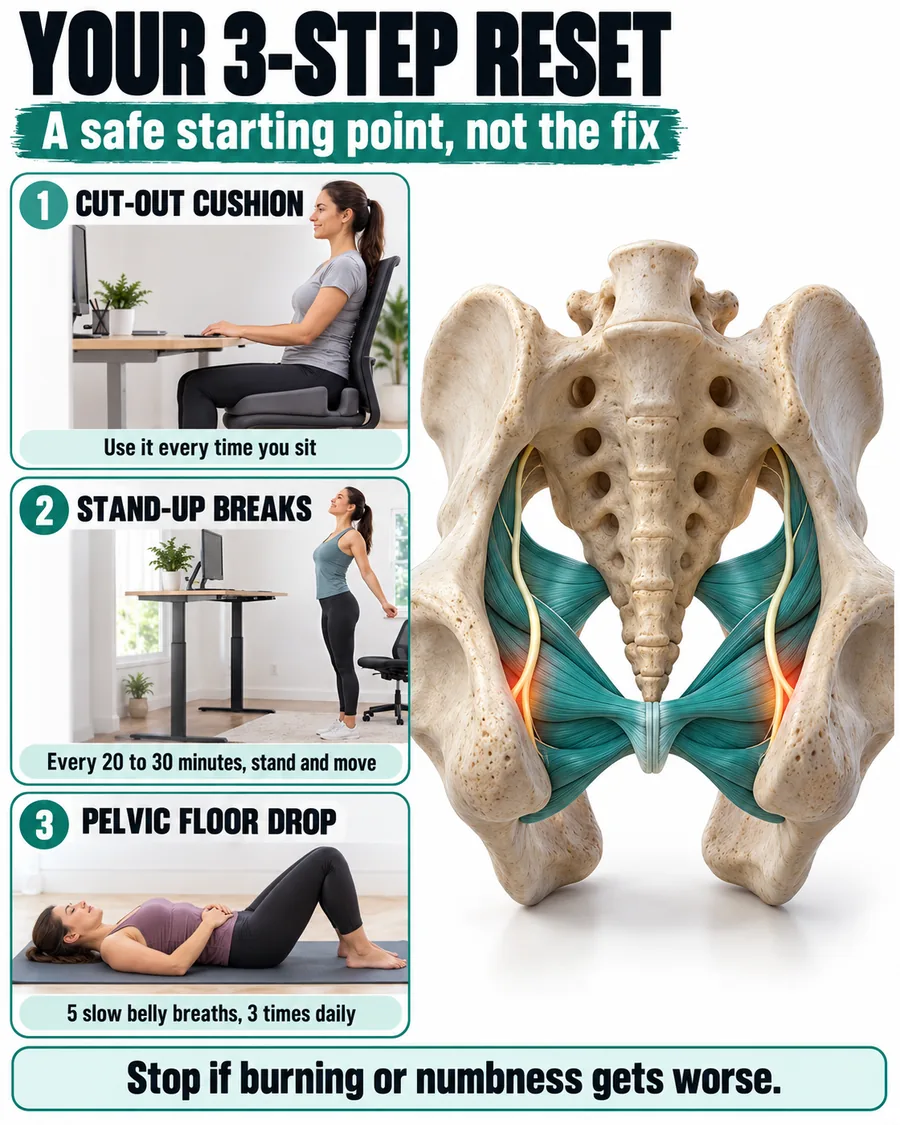
Sitting, Cushions, and Daily Habits
Small daily changes can take real pressure off the nerve while it settles:
- Use a wedge or U-shaped cushion with a cut-out that offloads the perineum. These are usually better than a ring or donut cushion, which can pull the tissue into the gap and add tension
- Change position often, ideally every 20 to 30 minutes, and use a standing desk or short standing breaks
- Keep your knees slightly below your hips when seated, and avoid perching on hard edges
- Reduce constipation and straining with fibre, fluids, and relaxed toilet posture
- Choose gentle movement such as walking over high-pressure activities like cycling for now
These are general strategies. Your physiotherapist tailors them to your symptoms and your daily routine.
Is Pudendal Neuralgia Permanent? How Long Does Recovery Take?
For most people it is not permanent, especially when it is addressed early. Nerves heal slowly, so recovery is usually measured in weeks to months rather than days, and steady, consistent care matters more than quick fixes. Many people see meaningful improvement over a course of pelvic floor physiotherapy, typically in the range of six to twelve weeks for the muscle and habit side, with continued gains as the nerve calms. Some need the added help of a physician-managed nerve block or medication along the way, which we coordinate. The key message is that this is treatable, and you do not have to simply accept it.
Conditions Pudendal Neuralgia Is Often Confused With
Because pelvic pain can have several sources, pudendal neuralgia is often mistaken for other problems, and other problems are sometimes mistaken for it. It can overlap or be confused with bladder pain conditions, ongoing pelvic floor tension, tailbone pain, and nerve pain referred from the lower back. The reverse is also true, so part of a careful assessment is sorting out which structures are actually driving your pain. This is why a single quick label is rarely helpful, and why we assess the whole picture before settling on a plan.
What Our Patients Say
Victoria D., Oakville“Within just a handful of sessions, Gurmeet took issues I had been struggling with for months (and honestly, years after my first birth) and had me feeling like myself again. She’s the reason I went from debilitatingly painful periods to completely manageable ones — something I didn’t think was possible!”
Verified Patient“I was referred to pelvic health physio after having bladder urgency issues for months. I was nervous about the internal assessment but the therapist at Wellmax explained every single step before doing anything and I never felt rushed or uncomfortable. The treatment room was completely private. By the end of my treatment plan I went from running to the bathroom every 30 minutes to being able to hold comfortably for hours. I wish I had done this sooner instead of just assuming I had to live with it.”
Jolean L.“Do not hesitate to book an appointment if you are pregnant and are experiencing any pelvic pain. The team was able to help me improve my ambulation quality of life in a very short time. Highly recommend!!”
Shamaila R.“Gurmeet Rai is not only an amazing physiotherapist, but also a truly wonderful person. Her smiling face and unique approach to treatment completely set her apart from other therapists. I first came to her with severe lower back and leg pain, and after her treatments, I experienced massive relief. When my younger sister visited from the UK suffering from pelvic floor issues, I immediately recommended Gurmeet. After just a few sessions, she is already feeling so much better! The clinic staff are also incredibly welcoming and helpful. Thank you, Gurmeet Rai, for your exceptional therapy and care!”
Marilyn’s E.“If you are looking for expert physiotherapy, look no further than Gurmeet Rai, who has just opened her own clinic, Wellmax Physiotherapy, in East Oakville. The space is freshly decorated and designed and the staff are welcoming. Treatment rooms are relaxing with calming colours and soft lighting. But the real bonus is the quality of the treatment and care you’ll receive. I began with pelvic floor therapy, but have continued on with Gurmeet to address some life-long postural issues. Gurmeet is a very experienced and highly skilled practitioner and I have no reservations in recommending her whatever your needs.”
Verified Patient“After my second baby I was dealing with leakage every time I coughed, sneezed, or tried to exercise. I put off getting help for almost a year because I felt embarrassed and thought it was just something that happens after kids. The pelvic floor assessment at Wellmax was private, respectful, and way less uncomfortable than I expected. Gurmeet explained exactly what was happening with my pelvic floor muscles and gave me a program that was nothing like the generic Kegels my doctor had suggested. Four sessions in and the leakage had improved significantly. I can actually jump with my kids again without worrying.”
Emily C.“I can confidently say this is the best physiotherapy clinic in Oakville for postpartum care. After having my baby, I was experiencing pelvic floor discomfort and lower back pain that was making daily life very difficult. I booked an appointment with Gurmeet, and she made me feel completely comfortable and heard right from the start. She asked detailed questions about my daily routine and explained how pelvic health physiotherapy could help rebuild my core strength safely. The hands-on treatment and tailored home exercises made a massive difference in just a few weeks. The atmosphere is welcoming and professional, and they truly focus on long-term results rather than just a quick fix.”
Farrah S.“I saw Gurmeet for Pelvic Floor Therapy, before and after my Hysterectomy. She always made me feel comfortable and is very knowledgeable, helpful, and educated me during the whole process and at each visit. The front desk staff are always inviting and professional. I would recommend Wellmax to my friends and family.”
See all our Google reviewsRead more patient storiesLeave a review

Level 3 Pelvic Health Certified
 Advanced training with
Pelvic Health Solutions
Pudendal neuralgia often shows up as burning or aching pain that gets worse with sitting. Gurmeet considers your hips, pelvic floor tension, posture and the way you sit, drive and work, because these can add load around the nerve. Her plan is paced, starting with seating changes and moving to gentle mobility and relaxation work, with a clear reason for each step.
Frequently Asked Questions
What is pudendal neuralgia?+–
Pudendal neuralgia is pain caused by irritation of the pudendal nerve, the main nerve supplying the area between the sit-bones, the perineum, the genitals, and the rectum. It usually feels like burning, aching, or sharp pain that is worse when sitting and eases when standing or lying down. It is a recognised condition, and conservative, physiotherapy-led care helps many people.
Why is the pain worse when I sit?+–
Sitting puts direct pressure on the area the pudendal nerve travels through and loads the pelvic floor muscles that can squeeze or tether it. Many people notice that sitting on a toilet seat hurts less than a firm chair, because the pressure falls on the sit-bones rather than the soft tissue in between. Standing and lying down usually bring relief.
Can pelvic floor physiotherapy help pudendal neuralgia, or do I need surgery?+–
For most people conservative care comes first, and surgery is reserved for the minority who do not respond. The recommended starting point combines seating and activity changes, pelvic floor physiotherapy to release the muscles around the nerve, and, when needed, a physician-managed nerve block or medication. Many people improve well without surgery.
Can Kegels make pudendal neuralgia worse?+–
Often, yes. The pelvic floor in pudendal neuralgia is usually already too tight and guarding, so Kegels and other squeezing exercises can increase the pressure on the nerve and worsen symptoms. The early focus is on down-training, release, and calming the muscles. Strengthening is avoided unless your physiotherapist specifically clears it.
What cushion is best for pudendal nerve pain?+–
A wedge or U-shaped cushion with a cut-out that offloads the perineum is usually best. These are generally better than a ring or donut cushion, which can pull the tissue into the gap and add tension on the nerve. Changing position every 20 to 30 minutes and using standing breaks also helps take pressure off.
How is pudendal neuralgia diagnosed?+–
There is no single scan that confirms it, so clinicians use a recognised set of clues called the Nantes criteria: pain in the pudendal nerve area, pain worse with sitting, pain that does not wake you at night, no loss of feeling on examination, and pain relieved by a diagnostic nerve block. A physiotherapy assessment looks for matching patterns and coordinates with your physician.
What exercises should I avoid with pudendal neuralgia?+–
While the nerve is irritated, it usually helps to ease off cycling, horseback riding, deep or weighted squats, running and jumping, heavy lifting, and prolonged sitting. Gentle options such as walking or swimming are usually better tolerated. Your physiotherapist guides which activities to modify and when to reintroduce them.
Is pudendal neuralgia permanent?+–
For most people it is not permanent, especially when addressed early. Nerves heal slowly, so recovery is usually measured in weeks to months and steady care matters more than quick fixes. Many people see meaningful improvement over a course of pelvic floor physiotherapy, with continued gains as the nerve calms. It is treatable, not something you simply have to accept.
Is pudendal neuralgia often misdiagnosed?+–
Yes. Because it is not widely known, it is frequently mistaken for other pelvic conditions, and many people live with it for a long time before it is named. Getting a clear understanding of what is happening is often a relief in itself, and earlier treatment is generally linked to better outcomes.
Related Women’s Health Care at Wellmax
Pudendal neuralgia frequently overlaps with other pelvic floor concerns. You may also find these helpful:
- Pelvic floor physiotherapy, the foundation of this care
- Pelvic pain and painful sex
- Overactive bladder and urinary urgency
- Women’s health physiotherapy overview
Book Your Pelvic Assessment in Oakville
If sitting hurts and you have been told there is nothing to be done, it is worth getting a proper pelvic assessment. Book a free consultation or an assessment with our women’s health team at Wellmax Physiotherapy in Oakville, or call (905) 829-1100. No referral is needed in Ontario, and we offer direct billing to most major insurers. Care is led by Gurmeet Rai, a registered pelvic health physiotherapist.
Registered & Regulated
Regulated & Recognized Across Every Discipline
Wellmax is in good standing with the regulatory colleges and leading associations for physiotherapy, chiropractic, massage therapy, and naturopathic medicine in Ontario.