Spinal Stenosis Treatment in Oakville
Walk further with less leg pain by treating the modifiable factors behind spinal canal narrowing, not just the MRI.
Home > Conditions We Treat > Spinal Stenosis Treatment in Oakville
Walking used to be easy. Now after 5 or 10 minutes, the legs start to ache, feel heavy, or go numb. Leaning on a shopping cart helps. Sitting down for a few minutes makes it better. Then you stand up and the clock starts again. Spinal stenosis treatment in Oakville at Wellmax helps you walk further with less leg pain.
This pattern, leg symptoms that worsen with walking and standing, improve with sitting and bending forward, is the hallmark of lumbar spinal stenosis. The spinal canal has narrowed, and when you stand upright or extend your back, the already-narrowed canal gets slightly smaller, compressing the nerves. When you sit or lean forward, the canal opens slightly and the nerves get relief. Spinal stenosis physiotherapy in Oakville at Wellmax targets exactly this mechanism, restoring the movement and strength that let you walk further before symptoms start.
The diagnosis can sound alarming. “Narrowing of the spinal canal” and “nerve compression” make it sound like the spine is collapsing and surgery is inevitable. But here’s what the imaging reports don’t emphasize: the correlation between how much narrowing shows on MRI and how much you’re actually limited is weak. Some people with severe stenosis on imaging walk 5km without symptoms. Others with mild stenosis can barely manage a block. The difference isn’t the canal, it’s the surrounding factors: core strength, hip mobility, spinal flexibility, posture, activity levels, and body weight. These are all modifiable through physiotherapy.
Research shows that physiotherapy produces outcomes comparable to surgery for many stenosis patients, without the risks of an operation. Surgery is reserved for cases with progressive neurological deficits or symptoms that haven’t responded to quality conservative treatment.
We’re at 1148 Winston Churchill Blvd, Unit B3, Oakville, just south of the QEW. Clarkson, Clearview, Sheridan Park, Maple Grove, and south Mississauga are all under 10 minutes away.
Understanding Spinal Stenosis

What Spinal Stenosis Is
Spinal stenosis is narrowing of the spaces within the spine, either the central canal (where the spinal cord or cauda equina sits) or the foramina (the side openings where individual nerve roots exit). This narrowing can be caused by disc bulging into the canal, thickening of the ligamentum flavum (a ligament inside the spinal canal that thickens with age), bone spur (osteophyte) formation from spinal arthritis, or a combination of all three. It’s an age-related process, most people over 60 have some degree of stenosis on imaging, whether they have symptoms or not.
Lumbar Stenosis (Lower Back)
The most common type and the one that causes the classic walking limitation. Lumbar stenosis compresses the nerve roots of the cauda equina (the bundle of nerves at the bottom of the spinal cord). The hallmark symptom is neurogenic claudication: leg pain, heaviness, numbness, or weakness that develops during walking or prolonged standing and is relieved by sitting or bending forward. The “shopping cart sign” is classic, patients walk comfortably leaning on a cart because the forward-bent posture opens the spinal canal. This presentation overlaps with back pain and sciatica, which is why an accurate assessment matters.
Lumbar stenosis symptoms are posture-dependent. Extension (arching the back) narrows the canal and worsens symptoms. Flexion (bending forward) opens the canal and provides relief. This biomechanical relationship is the foundation of exercise-based treatment.
Cervical Stenosis (Neck)
Narrowing in the cervical spine is less common but potentially more serious because the spinal cord itself (not just nerve roots) passes through the cervical canal. Cervical stenosis can cause myelopathy, compression of the spinal cord causing hand clumsiness, balance problems, gait changes, and in severe cases, bowel or bladder dysfunction. Cervical myelopathy requires careful monitoring and may require surgical decompression. Cervical stenosis causing nerve root symptoms (arm pain, tingling, weakness) is managed similarly to lumbar stenosis, conservatively first, surgery if needed. See our neck pain and headache page for related cervical spine care.
The MRI Doesn’t Tell the Whole Story
This is worth emphasizing because it changes how you should think about your diagnosis: MRI studies of people with zero symptoms consistently show spinal stenosis in a significant percentage of older adults. The degree of narrowing on imaging does not reliably predict the degree of symptoms or functional limitation. Your walking distance, leg symptoms, and daily function are determined by a combination of the structural narrowing AND the modifiable factors surrounding it, core strength, hip mobility, spinal flexibility, body weight, and activity levels. Physiotherapy targets the modifiable factors.
How Spinal Stenosis Treatment in Oakville Works at Wellmax
Flexion-Based Exercise Program
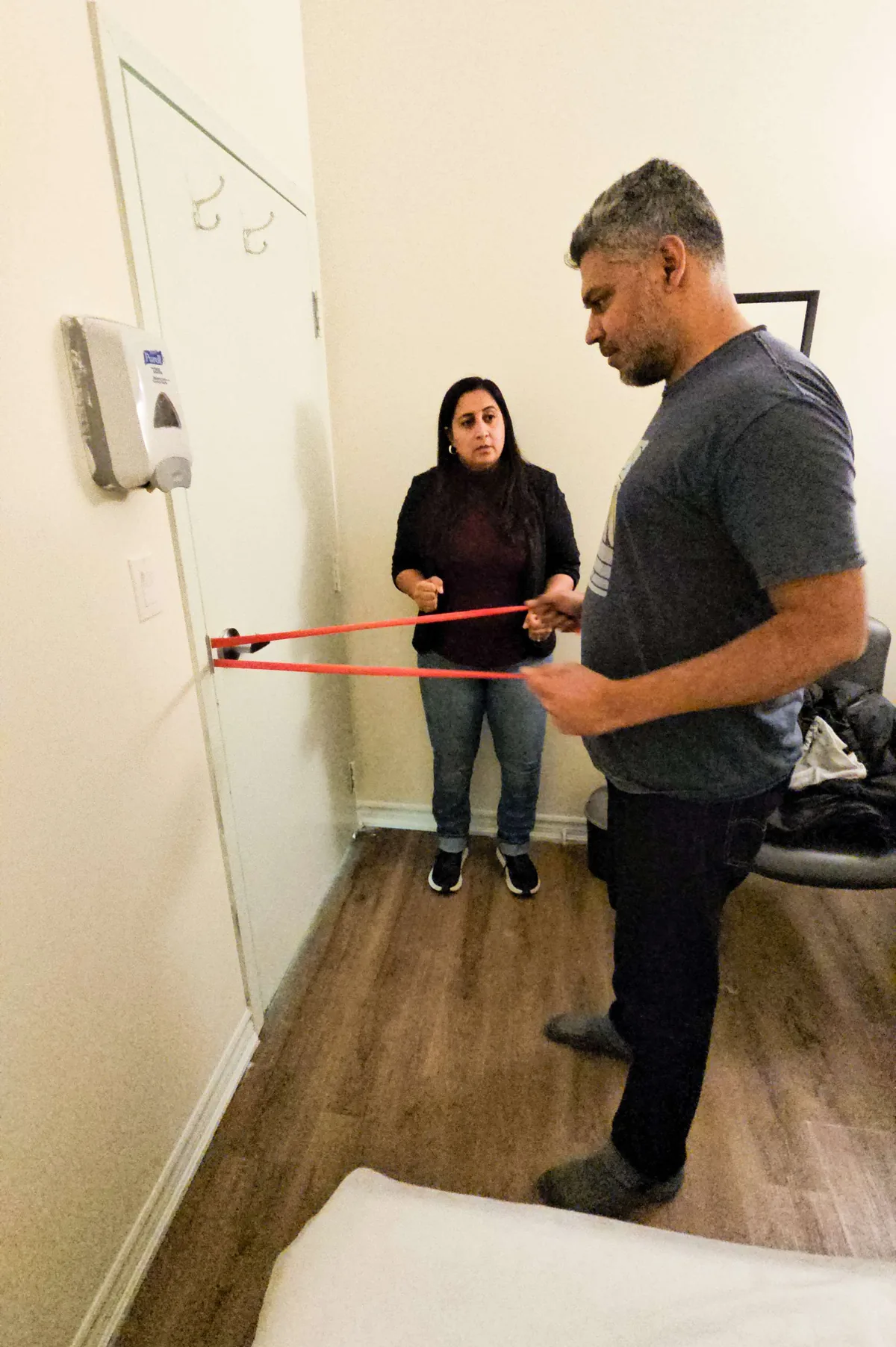
Because lumbar stenosis symptoms are posture-dependent (extension narrows the canal, flexion opens it), the exercise program emphasizes flexion-based movements and positions. Posterior pelvic tilts, knee-to-chest stretches, lumbar flexion in sitting and standing, and cycling (which places the spine in a flexed position) all open the spinal canal and reduce nerve compression. The exercises are comfortable for most stenosis patients because they work WITH the body’s natural preference for flexion, not against it.
Core Strengthening
Strong core muscles (deep abdominals, multifidus, pelvic floor) improve spinal stability and help maintain postures that keep the canal open during walking and standing. Core strengthening for stenosis focuses on activating these muscles in flexion-biased positions rather than the extension-based exercises (like back extensions or prone exercises) that would narrow the canal.
Hip Mobility and Strengthening
Hip stiffness, particularly in extension and rotation, is extremely common in stenosis patients and forces the lumbar spine to compensate during walking. When the hip can’t extend properly during the push-off phase of gait, the lumbar spine extends instead, narrowing the canal. Restoring hip mobility and strengthening the gluteal muscles takes pressure off the spine during walking and can significantly extend walking distance before symptoms appear. See our hip pain page for how we assess and treat the hips.
Walking Endurance Training
Structured walking programs that gradually increase your tolerance. This may involve interval walking (walking to the point of mild symptoms, sitting briefly, then continuing), using a walking aid like trekking poles (which encourage a slight forward lean, opening the canal), or uphill walking (which naturally flexes the spine). The goal is to progressively extend your symptom-free walking distance over weeks.
Manual Therapy
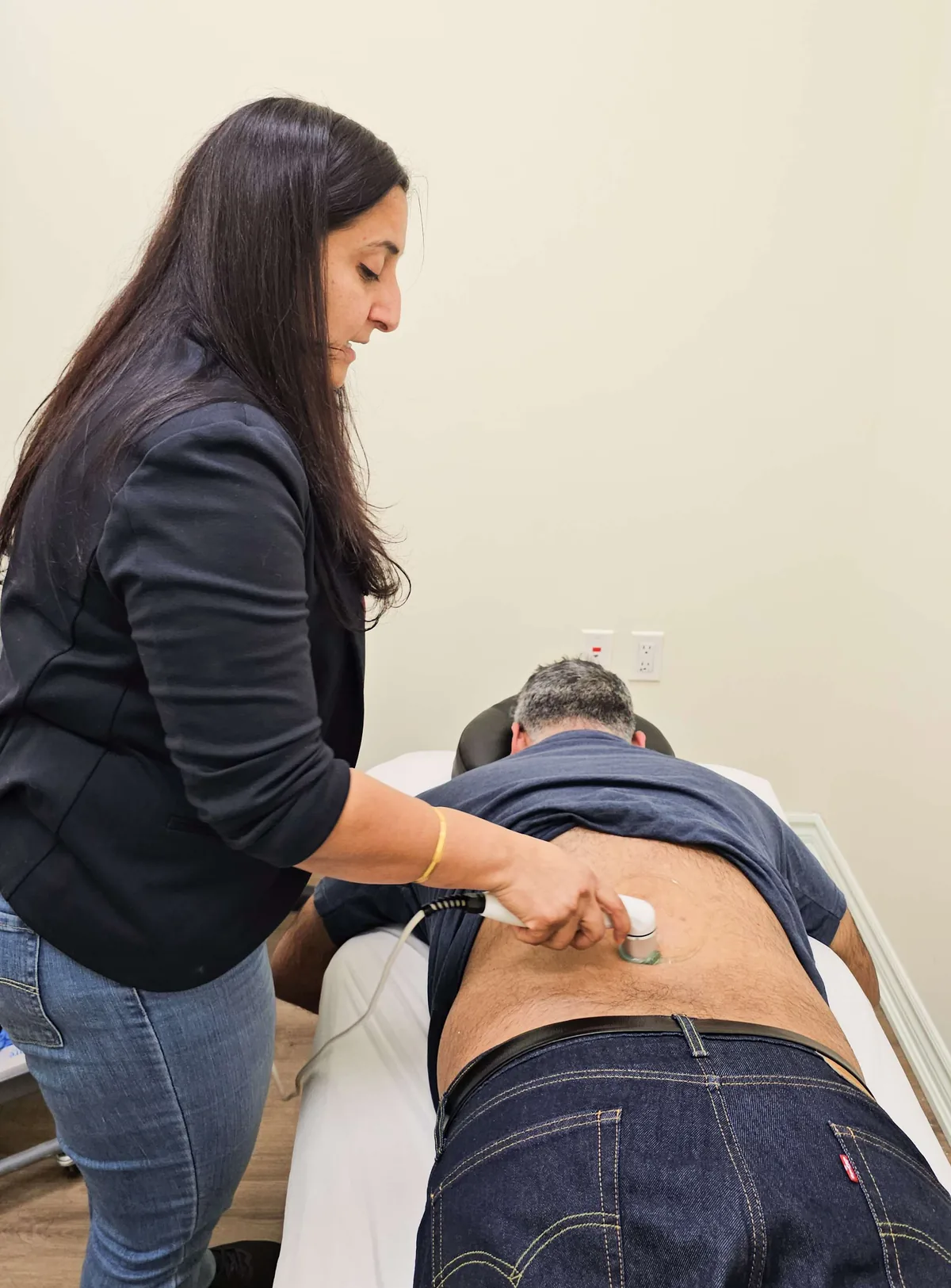
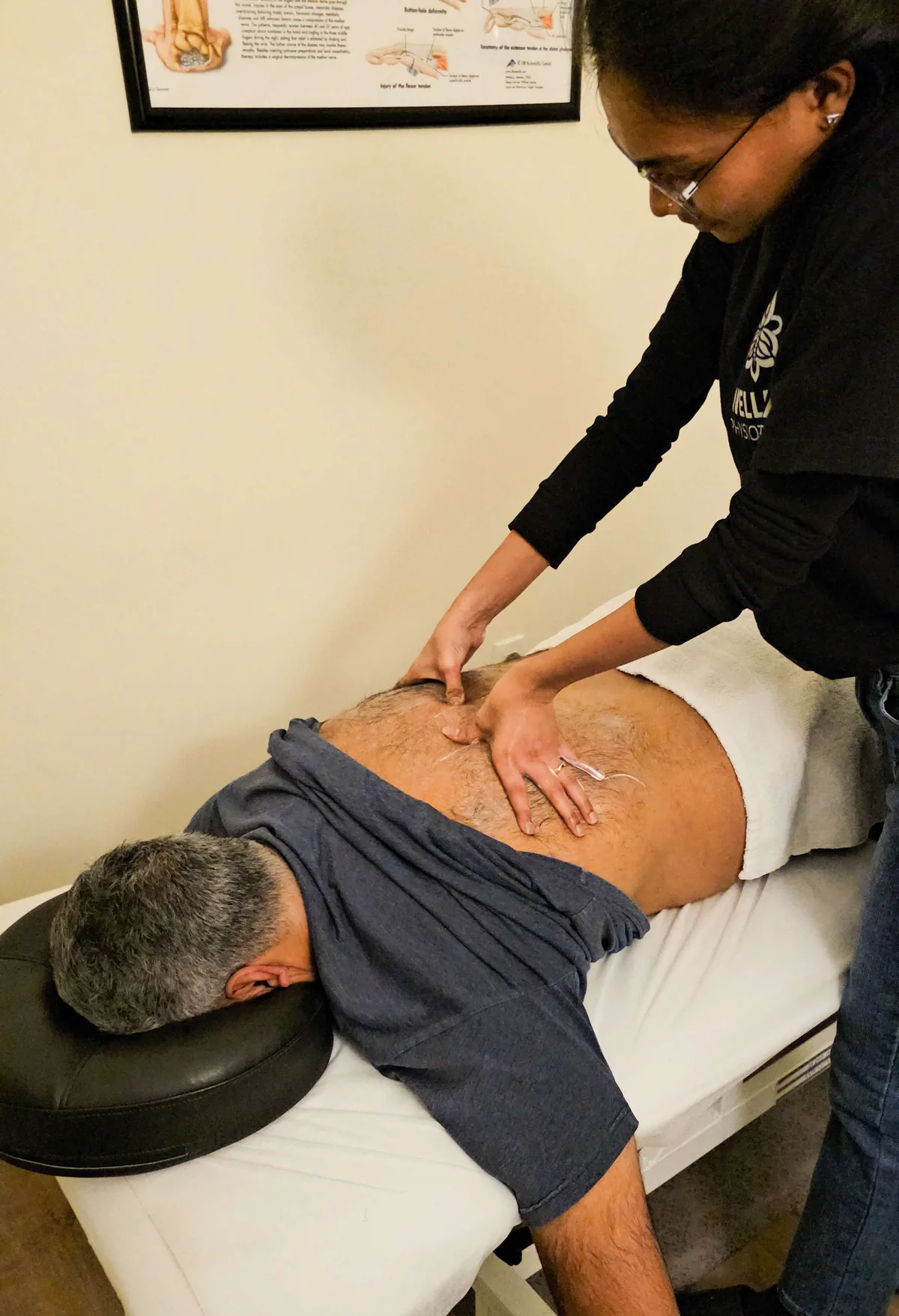
Lumbar spine mobilization in flexion to improve segmental mobility, hip joint mobilization for restricted hip extension and rotation, soft tissue release for lumbar paraspinal muscles and hip flexors, and thoracic spine mobilization to improve upper back extension (reducing the demand on the lumbar spine to extend). Manual therapy provides immediate symptom relief and improves movement quality for the exercise program. For patients with persistent canal-related leg symptoms, we may also combine this with spinal decompression therapy.
Activity Modification and Self-Management
Understanding which positions and activities aggravate versus relieve symptoms allows you to manage daily life more effectively. Standing workstations can be modified with a foot rail (placing one foot up flexes the lumbar spine slightly). Sleep positioning with a pillow between or under the knees maintains a flexed lumbar position. Walking strategies (slight forward lean, trekking poles, choosing routes with benches for rest stops) extend your functional walking distance.
Your Spinal Stenosis Management Timeline
Phase 1: Symptom Reduction and Education (Weeks 1-4)
What we’re doing: Manual therapy for hip and spine mobility, flexion-based exercise introduction, core activation, walking tolerance assessment, activity modification education.
What you’ll notice: Walking distance starts to improve, standing tolerance increases, understanding of which positions help and which don’t.
Your homework: Flexion exercises daily (10-15 minutes), modified walking program, posture adjustments at home and work.
Phase 2: Strengthening and Functional Improvement (Weeks 4-10)
What we’re doing: Progressive core and hip strengthening, structured walking endurance program, manual therapy continuation, functional task training.
What you’ll notice: Meaningful increase in walking distance, reduced leg symptoms during daily activities, improved confidence with standing tasks.
Your homework: Strengthening exercises 3-4 times per week, progressive walking program most days, continuing flexion-based mobility work.
Phase 3: Long-Term Self-Management (Weeks 10+)
What we’re doing: Transition to independent maintenance, final exercise program refinement, long-term activity planning.
What you’ll notice: Sustained improvements in walking and function, ability to self-manage flare-ups, knowledge of how to maintain gains long-term.
Your homework: Maintenance exercise program 3-4 times per week permanently. Like arthritis, stenosis is a chronic condition that responds to ongoing exercise.
What Results to Expect
| Scenario | Expected Outcome | Typical Timeline |
|---|---|---|
| Mild lumbar stenosis | Significant walking distance improvement | 6 to 10 weeks |
| Moderate lumbar stenosis | Meaningful functional improvement | 8 to 16 weeks |
| Severe lumbar stenosis (non-surgical candidate) | Maximized function within structural limits | 10 to 20 weeks |
| Cervical stenosis (nerve root symptoms) | Arm symptom reduction | 8 to 16 weeks |
| Post-decompression surgery rehabilitation | Full functional recovery | 8 to 16 weeks post-op |
Individual results depend on stenosis severity, number of levels affected, hip and core strength at baseline, adherence to the exercise program, and overall health. Your physiotherapist provides a realistic assessment at your first visit.
Why Patients Choose Wellmax for Spinal Stenosis
We Address the Modifiable Factors
The canal narrowing on your MRI is structural and can’t be changed without surgery. But the factors that determine how much that narrowing actually limits you, core strength, hip mobility, spinal flexibility, walking mechanics, body weight, are all modifiable. We focus treatment where it makes a difference.
We Treat the Hips, Not Just the Spine
Hip stiffness is one of the most overlooked contributors to stenosis symptoms. When the hips can’t extend during walking, the lumbar spine compensates by extending, narrowing the canal and triggering symptoms sooner. Restoring hip mobility often produces immediate improvement in walking tolerance.
Expert Care, Every Visit
Stenosis management involves tracking walking distance, symptom patterns, exercise tolerance, and hip and core strength over weeks to months. Your therapist knows your baseline and progress and adjusts the program accordingly.
Ground-Level Accessible Clinic
No stairs. Free parking at the door. Important when walking is limited and getting to the clinic needs to be as easy as possible.
Direct Insurance Billing
We direct bill to Sun Life, Manulife, Canada Life, Green Shield, Great-West Life, Blue Cross, Desjardins, and most other major providers. WSIB and MVA claims accepted. No referral needed. See our insurance and direct billing page for details.
What Our Patients Say
Linda G.“I have spinal stenosis in my lower back. Today I asked to use the decompression table and was put on it. I was also given a tissue massage and ultrasound. The physiotherapist is very knowledgeable and professional and the rooms are very clean. I would recommend this physio place for sure.”
James A.“This is easily the best physiotherapy clinic in Oakville for anyone working a desk job. I had terrible upper back pain and stiffness that was not going away. Dhrushi did a fantastic job explaining how my work setup was impacting my posture and causing the muscles to overwork. The treatment sessions included deep manual therapy and some cupping, which released months of built-up tension. She also taught me exactly how to correct my posture throughout the day. The clinic is very well organized, the staff is incredibly friendly, and they genuinely care about fixing the root cause of your pain.”
R. Singh.“I had an incredible experience with Gurmeet at Wellmax Physio, she is highly skilled and takes the time to explain everything in a way that makes you feel informed and confident in your treatment. Her techniques are effective, and you can tell she’s very knowledgeable in what she does. What stood out most was her attentiveness, she really listens and tailors the treatment to what your body needs. If you’re dealing with back pain or need physiotherapy, I would absolutely recommend her without hesitation.”
Kelly H.“So happy I decided to go here, my back is finally better! I wrecked it shovelling snow and nothing was helping until I came to Wellmax. Amazing service, got me moving again. Everyone working there is so nice; Gurmeet is amazing and I love her ha ha. I highly recommend!”
Danuta K.“After struggling with my SI joint pain for long time, Gurmeet and manual therapy techniques made a huge difference. She gave me personalized exercise plan. Now I can move freely and feel a huge difference”
Bashar F.“I came to Wellmax for neck and back pain, Saw Gurmeet, she did detailed assessment and her hands on treatment, manual therapy, customised treatment plan and exercises with 2 sessions only I am feeling big difference. Her PTAs Janvi and Minahil are good at their job.”
Tanzy R.“I had an excellent experience at Wellmax physiotherapy clinic with Gurmeet for my back problem. Gurmeet was extremely knowledgeable, patient, and took the time to clearly explain the cause of my pain and the recovery plan. The treatment and exercises were very effective, and I noticed significant improvement within 2-4 weeks. I truly appreciated the constant support and personalized care throughout my recovery. Highly recommend Gurmeet and WellMax Clinic to anyone dealing with back pain.”
Richard B.“Excellent, My lower back is better than ever after seeing Gurmeet, and the team at Wellmax Physiotherapy”
See all our Google reviewsRead more patient storiesLeave a review
Frequently Asked Questions
Can spinal stenosis be treated without surgery?+–
Yes. Research shows that physiotherapy produces outcomes comparable to surgery for many stenosis patients. Exercise-based treatment focusing on flexion exercises, core strengthening, hip mobility, and walking endurance significantly improves symptoms and function. Surgery is reserved for progressive neurological deficits (increasing weakness, bladder or bowel changes) or symptoms that don’t respond to quality conservative treatment over 3-6 months.
Will spinal stenosis get worse over time?+–
The structural narrowing may progress slowly with age, but symptoms don’t necessarily worsen at the same rate. Many patients maintain stable or improved function for years with regular exercise and activity. The modifiable factors, strength, mobility, activity levels, have a greater influence on your symptoms than the gradual structural changes. Staying active and maintaining your exercise program is the best strategy for long-term management.
Why does leaning forward help my stenosis symptoms?+–
Leaning forward (flexion) opens the spinal canal and neural foramina, giving the compressed nerves more space. Standing upright and arching backward (extension) narrows these spaces further. This is why walking with a shopping cart, cycling, or sitting provides relief, all these positions flex the lumbar spine slightly. Exercise-based treatment uses this principle by emphasizing flexion-based exercises and positions.
Is walking good or bad for spinal stenosis?+–
Walking is good, but it needs to be managed intelligently. Interval walking (walking until mild symptoms start, sitting for 1-2 minutes, then continuing) is more effective than pushing through worsening symptoms. The goal is to gradually extend the symptom-free walking window over weeks through exercise, hip mobility work, and walking strategy modifications. Avoiding walking altogether leads to deconditioning that makes symptoms worse.
What exercises should I avoid with spinal stenosis?+–
Exercises that extend the lumbar spine (arching backward) tend to narrow the canal and worsen symptoms. This includes prone back extensions, standing back bends, and some yoga poses (cobra, upward dog). High-impact activities (running, jumping) can also aggravate symptoms. Flexion-based exercises (knee to chest, pelvic tilts, cycling) and hip-focused exercises are typically well-tolerated and beneficial. Your physiotherapist designs a program specific to what your spine tolerates.
My MRI shows severe stenosis. Does that mean I need surgery?+–
Not necessarily. MRI severity doesn’t reliably predict symptom severity. Some people with severe imaging findings function well, while others with mild findings are significantly limited. Surgery is based on your symptoms, functional limitations, and response to conservative treatment, not on MRI appearance alone. Physiotherapy should be tried first unless you have progressive neurological deficits.
Can cycling help with spinal stenosis?+–
Yes. Cycling is often the best-tolerated aerobic exercise for stenosis patients because the forward-leaning position opens the spinal canal. Many people who can barely walk a block can cycle for 20-30 minutes comfortably. Stationary cycling is a core component of many stenosis exercise programs and provides excellent cardiovascular fitness without aggravating spinal symptoms.
What's the difference between spinal stenosis and a herniated disc?+–
Both can compress spinal nerves and cause leg symptoms, but the patterns differ. Spinal stenosis causes leg symptoms that worsen with walking and standing and improve with sitting (neurogenic claudication). Herniated discs typically cause leg symptoms that may worsen with sitting and bending forward and may improve with standing. Stenosis is a gradual, age-related narrowing process. Disc herniations are typically acute events. Treatment approaches differ based on these patterns.
How often should I come for stenosis physiotherapy?+–
Typically 1-2 times per week for 8-12 weeks, then periodic check-ins. The daily home program (flexion exercises, core strengthening, walking program) drives most of the improvement. Clinic visits provide manual therapy, exercise progression, and monitoring. Long-term maintenance exercise is recommended permanently, similar to arthritis management.
Will my insurance cover spinal stenosis physiotherapy?+–
Most extended health plans cover physiotherapy. We direct bill to most major providers. No referral needed in Ontario.
Is spinal stenosis physiotherapy in Oakville suitable for older adults with balance concerns?+–
Yes. Many spinal stenosis patients are over 60 and managing reduced walking tolerance, so we build programs that protect balance and confidence on the move. Flexion-based exercise, hip strengthening, and structured walking are gentle and low-impact, and our clinic is ground-level with free parking at the door. Where unsteadiness is a concern, we integrate balance and fall prevention work so you can keep walking safely while your stenosis symptoms improve.
Why does my pain feel better when I lean forward or sit down?+–
When you lean forward or sit, the spinal canal opens slightly, reducing pressure on the compressed nerves. This is a hallmark feature of lumbar stenosis. Upright or backward-leaning postures close the canal and worsen symptoms. Physiotherapists use this positional pattern to guide your exercise program and posture training. An assessment will confirm whether this pattern applies to you and how to work with it.
Can posture changes and ergonomics actually make a lasting difference?+–
Yes. Learning how to position your spine during everyday tasks, such as walking, standing, and lifting, can meaningfully reduce nerve irritation over time. A physiotherapist will assess your movement habits and teach you specific posture strategies. Combined with core and hip strengthening, these changes reduce load on the narrowed canal and often reduce pain without surgery.
What is spinal traction and does it help with stenosis?+–
Manual or mechanical traction gently stretches the spine to decompress the vertebrae and relieve pressure on the nerves. Some people with lumbar stenosis respond well to it as part of a broader physiotherapy program. It is not effective in isolation or for everyone. A thorough assessment will determine whether traction is appropriate for your presentation and how it fits alongside exercise and education.
How does core strengthening help if the problem is in the bone?+–
Stenosis narrows the spinal canal, but strong abdominal, hip, and back muscles take load off the spine and reduce the degree of nerve compression with movement. You cannot change the bone structure without surgery, but you can control how much stress passes through it. This is why physio-guided strengthening produces real symptom relief even when the structural narrowing remains on imaging.
Related Conditions and Services
- Back Pain & Sciatica: Lower back pain and sciatica from causes other than stenosis.
- Sciatica: Targeted treatment for leg pain, numbness, and tingling along the sciatic nerve.
- Herniated Disc: Disc herniations that can coexist with or be confused for stenosis.
- Spinal Decompression Therapy: Traction-based treatment that can ease nerve compression in the lower back.
- Arthritis: Spinal arthritis is a primary contributor to stenosis development.
- Chronic Pain: When stenosis symptoms become persistent and complex.
- Hip Pain: Hip stiffness is a common contributor to stenosis symptoms.
- Balance and Fall Prevention: Safe walking and stability for older adults with reduced tolerance.
- Pre & Post-Surgical Rehab: Rehabilitation after spinal decompression surgery.
- Physiotherapy Services: Overview of all services at Wellmax.
Book Your Spinal Stenosis Assessment
If walking has become limited, if your legs ache or go heavy after a few minutes on your feet, or if an MRI report has you worried about surgery, get it assessed properly. Your physiotherapist will identify the modifiable factors driving your symptoms and build a treatment plan that helps you walk further with less discomfort. Wellmax offers a free consult so you can ask questions before you commit to a plan.
Wellmax Physiotherapy
1148 Winston Churchill Blvd, Unit B3, Oakville, ON L6J 0A3
Phone: (905) 829-1100
Email: info@wellmaxphysiotherapy.ca
Proudly Serving Our Local Communities: We are conveniently located just minutes from the QEW & Winston Churchill Blvd, making us the clinic of choice for:
- East Oakville (Our Neighbours): Winston Park, Clearview, and the QEW/403 Corridor.
- South Oakville: Eastlake, Maple Grove, and Old Oakville.
- North Oakville: Joshua Creek, Falgarwood, and Upper Middle Road.
- Mississauga Border: Clarkson, Sheridan Park, and Sheridan Homelands.
Insurance: Direct billing to most major providers. WSIB and MVA claims accepted. No referral needed.
Hours: Monday to Friday: 9am to 7pm; Saturday: 9am to 2pm; Sunday: 9am to 2pm (by appt. only)
Convenient Location + Free Parking: Simple, stress-free access for busy professionals and families.
Registered & Regulated
Regulated & Recognized Across Every Discipline
Wellmax is in good standing with the regulatory colleges and leading associations for physiotherapy, chiropractic, massage therapy, and naturopathic medicine in Ontario.