Golfer’s Elbow Treatment in Oakville
Medial Epicondylalgia Treatment for Golfers, Lifters, Racquet Players & Manual Workers
Home > Conditions We Treat > Golfer’s Elbow Treatment in Oakville
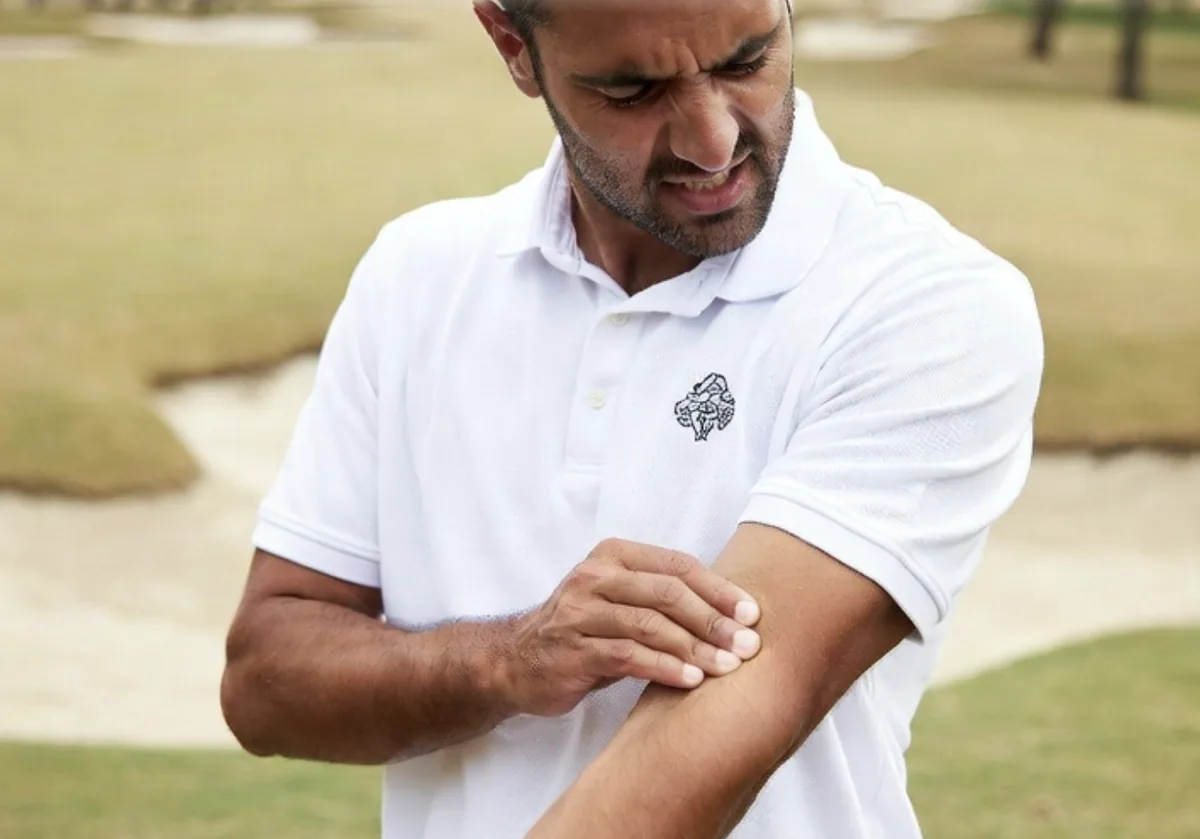
You felt it during your last round. A nagging ache on the inside of the elbow when gripping the club. The next morning, twisting a doorknob made it worse. By the end of the week, even shaking hands or lifting a coffee cup feels uncomfortable. You ice it. You rest it for a few days. The pain dulls but never quite leaves. The moment you swing again, it flares right back up. Golfer’s elbow treatment in Oakville at Wellmax loads the flexor tendon at the right dose to heal it.
That’s golfer’s elbow. The clinical name is medial epicondylalgia (sometimes still called medial epicondylitis), and it’s a tendinopathy of the common flexor tendon where it attaches to the inside of the elbow. It causes pain on the inner side of the elbow, often radiating down the forearm toward the wrist. And here’s the part most people don’t realize: you don’t have to be a golfer to get it. We treat far more medial epicondylalgia in lifters, racquet players, manual trades, and office workers than we do in actual golfers.
Most cases respond well to physiotherapy when the loading is matched to the stage of the tendon. The hard part is that golfer’s elbow doesn’t respond to rest the way most people expect. Tendons need controlled load to heal, not avoidance. The right exercises at the wrong intensity make it worse. The right intensity at the wrong stage stalls progress. Getting the dose right is what separates a six-week recovery from a six-month problem. That is exactly what golfer’s elbow physiotherapy in Oakville at Wellmax is built around.
At Wellmax, our physiotherapists assess the specific tendons involved, screen for ulnar nerve irritation (which often coexists with medial elbow pain), and build a progressive loading program that fits your sport, job, and current capacity. See our Elbow Pain page for the broader range of elbow conditions we treat.
We’re at 1148 Winston Churchill Blvd, Unit B3, Oakville, just south of the QEW. Clarkson, Clearview, Sheridan Park, and south Mississauga are all under 10 minutes away.
- What's Actually Causing Your Golfer's Elbow
- Golfer's Elbow vs. Tennis Elbow
- Who Gets Golfer's Elbow (It's Not Just Golfers)
- How We Treat Golfer's Elbow at Wellmax
- Recovery Timelines
- When Imaging or Surgery Becomes the Conversation
- Why Oakville Patients Choose Wellmax
- Related Conditions & Services
- Book Your Assessment
- Frequently Asked Questions
What’s Actually Causing Your Golfer’s Elbow
It’s a Tendon Problem, Not a Joint Problem
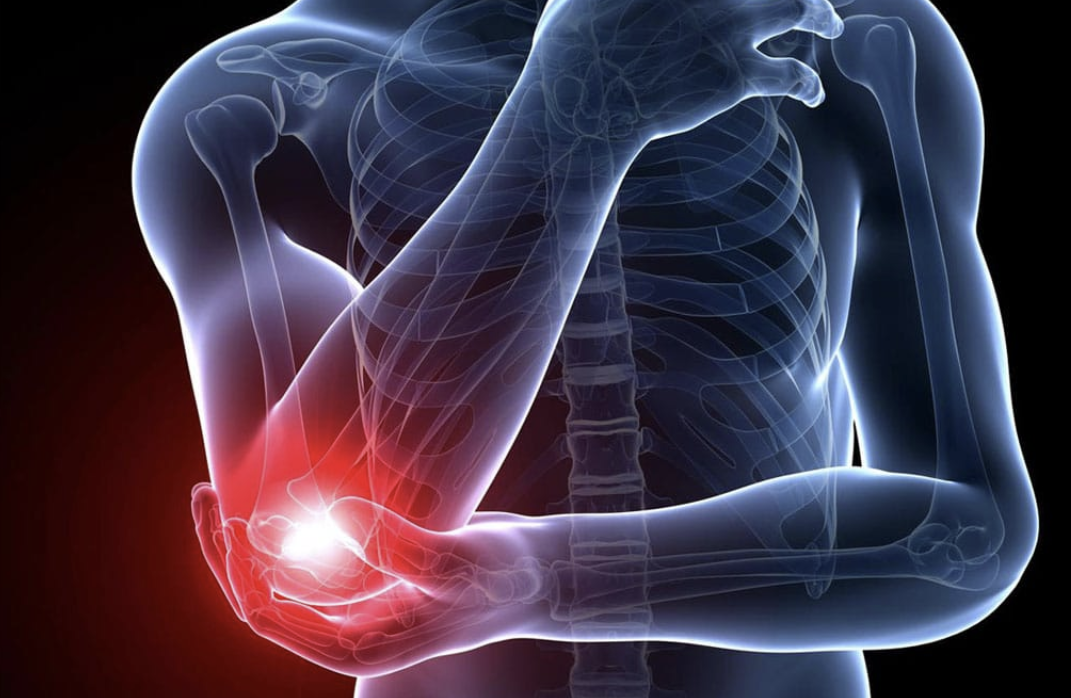
The medial epicondyle is the bony bump on the inside of the elbow. The muscles that flex your wrist and rotate your forearm inward (pronator teres, flexor carpi radialis, flexor digitorum superficialis, flexor carpi ulnaris, and palmaris longus) all share a common tendon that anchors at this point. When the load on these muscles exceeds what the tendon can recover from, the tendon develops microscopic disorganization in its collagen structure. That disorganized tendon hurts when loaded and feels stiff in the morning.
The older term “medial epicondylitis” implied inflammation, but research has consistently shown that chronic tendon pain is a degenerative tendinopathy rather than an inflammatory tendinitis. This matters because anti-inflammatory treatments (ice, NSAIDs, cortisone) only address inflammation, which usually isn’t the main problem. Progressive loading is what restores tendon capacity. That’s the central treatment.
Why It Happens
Three factors typically combine to produce golfer’s elbow. First, a sudden increase in load (more swings per week, heavier weights, longer hours of repetitive gripping). Second, a baseline weakness or stiffness somewhere up the chain (tight wrist flexors, weak grip endurance, poor shoulder or thoracic mobility forcing the elbow to compensate). Third, insufficient recovery time between bouts of loading. The tendon doesn’t fail from a single event. It fails from accumulated load it didn’t get the chance to adapt to.
The Ulnar Nerve Connection
The ulnar nerve runs through the cubital tunnel directly behind the medial epicondyle. When the medial elbow is inflamed or irritated, the nerve often gets caught in the cross-fire. This can produce tingling or numbness in the ring and little fingers, weakness in grip strength, or a buzzing feeling that runs down the inside of the forearm. Screening for ulnar nerve involvement at the first visit is essential, because nerve-related symptoms change the treatment approach. Aggressive stretching of an irritated nerve makes things worse.
Golfer’s Elbow vs. Tennis Elbow
Both are elbow tendinopathies. Both are caused by overload to a tendon at the elbow. But they involve different tendons and require different exercises. Mixing up the diagnosis means doing the wrong rehab.
Tennis elbow (lateral epicondylalgia) affects the extensor tendons on the outside of the elbow. The pain is on the lateral (outer) side. Gripping, lifting with the palm down, and shaking hands all aggravate it. See our Tennis Elbow page for the full breakdown.
Golfer’s elbow (medial epicondylalgia) affects the flexor and pronator tendons on the inside of the elbow. The pain is on the medial (inner) side. Gripping, lifting with the palm up, twisting a key, and resisting wrist flexion all aggravate it.
Tennis elbow is roughly 5 to 7 times more common than golfer’s elbow, but golfer’s elbow tends to be more stubborn. The flexor tendons are loaded constantly throughout the day (every grip, every lift, every reach forward), so the tendon rarely gets a chance to fully unload. This is one reason why timelines for medial elbow recovery can be longer than lateral elbow.
Who Gets Golfer’s Elbow (It’s Not Just Golfers)
Golfers
Golfers from Oakville Golf Club, Glen Abbey Golf Club, Deerfield Golf Club, and Credit Valley Golf & Country Club account for a portion of our medial elbow caseload, but not the majority. The classic mechanism is gripping the club too tightly, taking deep divots, hitting fat shots that decelerate the club abruptly, or sudden volume increases (a winter break followed by 18 holes three days a week in spring). For right-handed golfers, the trail arm (right elbow) is more commonly affected. Treatment integrates swing review when relevant, but most golfers’ elbows respond to load management and tendon loading without major swing changes.
Gym & CrossFit Athletes
Athletes from CrossFit Radix, Vive Fitness, Iron 24, CORTEN, Element Movement, and Anytime Fitness are the most common medial elbow presentations we see. Heavy pulling movements (deadlifts, rows, pull-ups, kettlebell work) load the flexor tendons hard. Olympic lifting (cleans, snatches) puts the medial elbow under enormous tension during the catch position. CrossFit programming with high-volume kettlebell swings, heavy farmers carries, or muscle-up progressions is a common trigger. Treatment includes a programming review (volume, frequency, exercise selection) alongside the loading protocol.
Racquet Sport Players
Players from Ontario Racquet Club, Joshua Creek Tennis, Wallace Park Tennis Club, and Iroquois Ridge courts develop golfer’s elbow from heavy topspin forehands, serving with internal rotation, and (increasingly) pickleball. The two-handed backhand also loads the medial side of the dominant elbow. Treatment includes grip size review, string tension considerations, and progressive return to match play. For lateral elbow pain in racquet players, see our Tennis Elbow page.
Office Workers & Manual Trades
The Winston Park business corridor brings us a steady stream of medial elbow cases that have nothing to do with sport. Prolonged keyboard and mouse use, repetitive gripping, vibration tools, hammering, and trades work (carpenters, plumbers, electricians, mechanics) all load the flexor tendons. People often write off the pain as “just from typing” until it stops them from carrying groceries or holding a coffee cup. Treatment includes ergonomic review and workplace activity modification. We also handle medial elbow cases that arise as WSIB workplace injury claims.
Other Common Triggers
Baseball pitchers and throwers (the medial elbow is the classic site of overuse in throwing athletes), rock climbers, gardeners, new parents (carrying car seats, lifting babies in awkward positions), and musicians who grip an instrument for long sessions. The common thread is repeated loading of the flexor and pronator tendons without enough recovery between bouts.
How We Treat Golfer’s Elbow at Wellmax
Phase 1: Settle the Tendon and Identify the Driver
The first step is reducing the irritation enough to load the tendon productively. That means modifying the activities that are aggravating it (not stopping them entirely), screening the wrist, shoulder, and neck for contributing factors, and addressing any ulnar nerve involvement. What you’ll notice: daily pain decreases, gripping a coffee cup becomes tolerable again, the morning stiffness shortens. Your homework: activity modification (specific to your sport or work), gentle isometric loading at low intensity, and ergonomic adjustments where relevant.
Phase 2: Progressive Tendon Loading
This is the central phase and the one most home-treatment plans skip. Heavy slow resistance and eccentric loading are the most strongly evidence-supported interventions for medial epicondylalgia. We progress wrist flexion, pronation, and grip strengthening week by week, increasing load as the tendon adapts. The tendon needs to be loaded into mild discomfort during exercise (not pain that lingers afterward), which is counterintuitive for patients used to “stop if it hurts” advice. What you’ll notice: grip strength returns, daily activities stop flaring it, you can do progressively heavier work without next-day pain.
Phase 3: Sport or Work-Specific Loading
Once the tendon has rebuilt baseline capacity, we add the specific demands of your sport or job back in. Golfers progress from short irons to full swings to full rounds. Lifters return to deadlifts and rows with progressive load. Racquet players progress from drills to controlled rallies to match play. Manual workers progressively add their work tasks back without flare-ups. What you’ll notice: you can return to the activity that caused the problem without the pain returning.
Manual Therapy in Every Phase
Hands-on treatment runs through all phases. Soft tissue release of the flexor and pronator muscles, joint mobilization of the elbow and wrist when stiffness limits movement, and neural mobilization for cases with ulnar nerve involvement. Manual therapy works alongside the loading program rather than replacing it. The combination is more effective than either alone.
Counterforce Bracing When Helpful
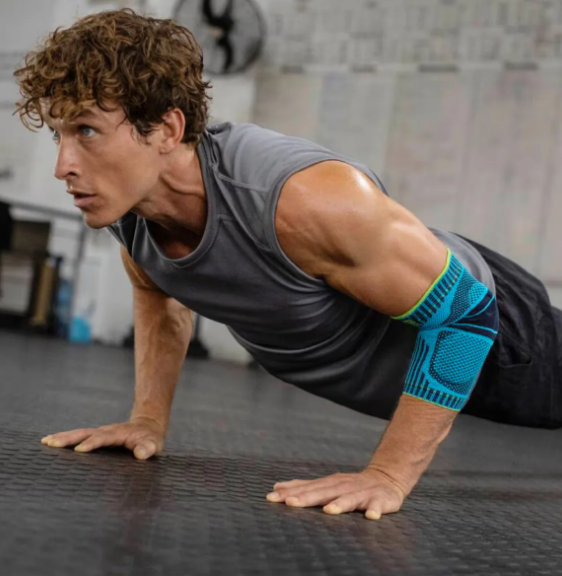
A counterforce brace (worn just below the elbow) can offload the tendon during work or sport while you rebuild capacity. It’s not a fix on its own. Patients who rely on the brace alone without the loading program find their symptoms return the moment they stop wearing it. Used as a temporary tool alongside rehab, it can let you stay active during the rebuild phase. Counterforce braces are in stock or ordered in, and we fit them during a free 30-minute consult with your physiotherapist.
Adjunct Modalities for Stubborn Cases
For cases that have been present for more than 3 months and aren’t responding to loading alone, we have additional tools. Shockwave therapy has reasonable evidence for chronic tendinopathies and can be added when loading has plateaued. Deep tissue laser therapy can be useful when there’s an inflammatory flare-up or significant pain limiting your ability to complete the exercise program. These are adjuncts to the loading program, not replacements for it. Our preference is always to start with hands-on care and progressive loading first, and add modalities only when the case warrants it.
Recovery Timelines
| Stage | Typical Recovery | What to Expect |
|---|---|---|
| Acute (under 6 weeks of symptoms) | 4 to 8 weeks | Faster response to loading, lower risk of recurrence with proper rehab |
| Subacute (6 to 12 weeks of symptoms) | 8 to 12 weeks | Tendon needs more progressive loading, return to full activity is gradual |
| Chronic (more than 3 months) | 12 to 16+ weeks | May benefit from adjunct shockwave or laser alongside loading |
| With ulnar nerve involvement | 10 to 16 weeks | Treatment includes nerve mobilization, slower progression of grip work |
| Post-surgical (rare) | 4 to 6 months | Structured post-op protocol, gradual return to sport or trade |
These timelines assume consistent participation in the loading program 3 to 4 times per week and reasonable activity modification during the rebuild. The single biggest predictor of recovery time is how long the symptoms have been present before starting evidence-based treatment. Early treatment shortens the timeline significantly.
When Imaging or Surgery Becomes the Conversation
Most golfer’s elbow does not require imaging. The clinical assessment is enough to start effective treatment in the majority of cases. Imaging is considered when symptoms include progressive numbness or weakness in the hand (suggesting significant ulnar nerve involvement), a sudden popping or tearing sensation at injury onset (suggesting a possible tendon avulsion), or a case that hasn’t responded to 12 weeks of proper conservative treatment. Ultrasound and MRI can both visualize the tendon when imaging is warranted, and your physiotherapist will coordinate the referral if needed.
Surgery for medial epicondylalgia is uncommon and is reserved for cases that have failed at least 6 to 12 months of structured conservative treatment, or for significant tendon tears confirmed on imaging. The vast majority of golfer’s elbow patients we see at Wellmax recover fully with physiotherapy. If your case is heading toward surgical consultation, we coordinate referral and provide pre and post-surgical rehabilitation when needed.
Why Oakville Patients Choose Wellmax
Diagnosis Before Treatment
Medial elbow pain isn’t always medial epicondylalgia. It can be ulnar nerve entrapment at the cubital tunnel, ulnar collateral ligament strain (the “Tommy John” ligament in throwers), referred pain from the cervical spine, or a combination. The treatment for each is different. We assess thoroughly at the first visit and tell you what’s actually going on, rather than treating every medial elbow case the same way.
We Get the Loading Dose Right
Tendons heal with load, but the dose has to match the stage. Too little and the tendon doesn’t adapt. Too much and you flare it. Most home programs (and most clinics that hand out generic exercise sheets) get this wrong. We adjust the loading week by week based on how the tendon is responding, which is the difference between recovering in 8 weeks and frustrating yourself for 8 months.
Expert Care Tracking Your Tendon
Your physiotherapist manages your case from assessment through return to sport or work. Tendon rehab requires noticing subtle changes in load tolerance, morning stiffness, and grip strength week to week, so every visit starts with a reassessment and the loading progression is informed by the previous session every time.
Integrated Care Under One Roof
If your medial elbow case needs shockwave for chronic tendinopathy, deep tissue laser for an acute flare, a counterforce brace, or eventual surgical consultation, you get all of it from the same clinic with coordinated care. No referrals to multiple practices. No re-explaining your history. Your physiotherapist communicates with our naturopathic doctor or massage therapist when adjunct care is part of the plan.
Oakville’s Medial Elbow Patients
We treat golfer’s elbow from across the local area. Office workers in Winston Park whose mouse hand has slowly built up an irritated flexor tendon. Lifters from CrossFit Radix and Iron 24 whose deadlift volume jumped too fast. Tennis and pickleball players from Ontario Racquet Club who feel it on every forehand. Carpenters and electricians whose trade work loads the forearm all day. And actual golfers from Glen Abbey, Deerfield, Oakville Golf Club, and Credit Valley who want their elbow ready before the next season.
We’re at 1148 Winston Churchill Blvd, Unit B3, Oakville. Just south of the QEW in the Winston Park plaza. Free parking, ground-level access, private treatment rooms. Patients come from Clarkson, Clearview, Sheridan Park, Maple Grove, River Oaks, and south Mississauga.
What Our Patients Say
Rahul K.“Highly recommended. I was suffering from tennis elbow for over an year and Gurmeet helped me to fix it like a magic. I was back at the court in less than 4 months.”
Sunny D.“I have had a great experience. Gurmeet was so helpful with my osteoarthritis thumb pain. The place is so clean and professional. I would so recommend it”
Farwah R.“Gurmeet deeply cares about her patients and her work, and it is rare to find such Healthcare providers. I went to her for physio after suffering with terrible shoulder & right hand pain. Doctors continued to gaslight me and after 2 years when the pain got unbearable, I finally went for physio. The pain immediately started getting better. Cannot recommend her enough.”
Robert K.“Wellmax is truly the best physiotherapy clinic in Oakville. I developed a bad case of tennis elbow from working with my hands, and my grip strength was completely gone. Dhrushi took her time during the initial visit to explain the healing process for tendons. My personalized plan included hands-on therapy, shockwave treatments, and a practical exercise routine I could easily do at home. The inflammation went down faster than I expected, and my arm feels strong again. The front desk staff is always welcoming, and my appointments always started right on time. Highly recommend this place to anyone in pain.”
Morenita Z.“I came to see Gurmeet and Dhrushi at wellmax after my thumb and wrist injury at work under wsib. They took time to assess and explain everything to me and time i started with wellmax, I am feeling so much better and pain is less. Gurmeet’s hands on technique and manual therapy is amazing and knowledgeable. I see big difference in my condition and movement. Clinic is very clean and very positive that makes me comfortable every time I come here. I truly appreciate work they do and recommend it everyone who is looking for real physio treatment and manual therapy.”
Guramrit K.“I had a great experience at Wellmax Physiotherapy. The staff were friendly, welcoming, and professional from the moment I walked in. The physiotherapist took the time to understand my concerns, explained everything clearly, and created a treatment plan that made me feel confident and comfortable.”
See all our Google reviewsRead more patient storiesLeave a review
Frequently Asked Questions
What exactly is golfer's elbow?+–
Golfer’s elbow (medial epicondylalgia) is a tendinopathy of the common flexor tendon on the inside of the elbow. The tendon develops microscopic disorganization from repeated overload, which causes pain on the medial side of the elbow that often radiates down the forearm. It’s the medial-side counterpart to tennis elbow.
How is it different from tennis elbow?+–
Tennis elbow affects the extensor tendons on the outside of the elbow. Golfer’s elbow affects the flexor and pronator tendons on the inside. The pain location is the most reliable difference. Tennis elbow hurts on the outer bony bump. Golfer’s elbow hurts on the inner bony bump. Both are tendinopathies, but the rehab exercises are different because different muscles and tendons are involved. See our Tennis Elbow page for the lateral version.
Do I have to be a golfer to get golfer's elbow?+–
Not at all. Despite the name, most of the medial epicondylalgia we treat has nothing to do with golf. Lifters, CrossFit athletes, racquet and pickleball players, baseball throwers, carpenters, electricians, mechanics, office workers, climbers, gardeners, and new parents all develop it. The common thread is repeated loading of the wrist flexor and forearm pronator tendons without enough recovery between bouts, not the sport itself.
How long does golfer's elbow take to heal?+–
It depends mostly on how long the symptoms have been present before treatment starts. Acute cases (under six weeks of symptoms) often settle in four to eight weeks. Cases that have been there for a few months can take twelve to sixteen weeks or longer, and ones with ulnar nerve involvement progress more slowly. Consistent progressive loading three to four times a week and sensible activity modification are the biggest drivers of a faster recovery.
Should I rest it or keep moving?+–
Complete rest is usually the wrong approach. Tendons need controlled load to rebuild their capacity, and prolonged avoidance tends to deconditon them further so the pain returns the moment you go back to your sport or job. The right plan modifies the specific activities that flare it while progressively loading the tendon into mild, tolerable discomfort. Getting that loading dose right is what separates a six-week recovery from a six-month problem.
Will I need an X-ray or MRI?+–
Most golfer’s elbow does not require imaging. A clinical assessment is enough to start effective treatment in the majority of cases. Imaging is considered when there is progressive numbness or weakness in the hand, a sudden popping or tearing sensation at onset, or a case that has not responded to about twelve weeks of proper conservative care. Ultrasound and MRI can both visualize the tendon when scanning is genuinely warranted.
Do I need a brace?+–
A counterforce brace worn just below the elbow can offload the tendon during work or sport while you rebuild capacity, but it is not a cure on its own. Patients who rely on the brace without doing the loading program find their symptoms return as soon as they take it off. Used as a temporary tool alongside rehab, it can keep you active during the rebuild phase. Common braces may be in stock and others are ordered in, and we fit them in-clinic.
Is shockwave therapy useful for golfer's elbow?+–
It can be, for the right case. Shockwave therapy has reasonable evidence for chronic tendinopathies and is most useful when a case has been present for more than three months and has plateaued despite a good loading program. It is an adjunct that works alongside progressive loading, not a replacement for it. Our preference is to start with hands-on care and loading first, then add shockwave or laser only when the case warrants it.
Is golfer's elbow physiotherapy covered by insurance?+–
Yes. Treatment at Wellmax is billed as physiotherapy and covered by most extended health plans. We direct bill to Sun Life, Manulife, Canada Life, Green Shield, Blue Cross, Desjardins, and most other major providers. WSIB covers work-related cases (common in trades and repetitive gripping jobs) and MVA claims are accepted. No referral is needed to start. See our insurance and direct billing page for details.
Why does my golfer's elbow keep coming back?+–
Recurrence almost always means the tendon never rebuilt enough capacity before the load went back up. Short courses of rest, ice, or a brace calm the symptoms without changing what the tendon can tolerate, so the pain returns the moment gripping, lifting, or swinging resumes. Lasting resolution comes from progressive loading that restores strength, plus a graded return that matches the demands of your specific sport or job.
Can I keep golfing or lifting while it heals?+–
In most cases yes, with modifications rather than a full stop. We adjust volume, grip, and technique so you stay active without flaring the tendon, then progressively reintroduce full swings, deadlifts, rows, or trade tasks as capacity returns. Pushing through sharp or lingering pain sets recovery back, so your physiotherapist will set clear thresholds for what to continue, what to scale back, and when to add load.
How should I sleep to reduce golfer’s elbow pain?+–
Sleeping on your back with the affected arm resting at your side or gently across your chest tends to cause the least irritation. Avoid sleeping on the affected side or tucking the arm under your body, as this compresses the tendons and restricts circulation. Some people benefit from wearing a soft brace at night to prevent the elbow from bending fully. A physiotherapist can advise on the best position for your situation.
Will my grip strength come back after golfer’s elbow?+–
Yes, grip strength typically recovers with proper rehabilitation. The forearm flexor tendons responsible for grip are the same ones affected by golfer’s elbow, so they need a progressive loading program to rebuild strength and tissue tolerance. Isometric and then eccentric exercises are usually introduced in a graded way. Most people regain full grip strength, though it can take several months depending on how long the condition has been present.
What daily activities make golfer’s elbow worse?+–
Repetitive gripping, wrist flexion, and forearm rotation are the main aggravators. Common culprits include typing, carrying bags, using hand tools, cooking, and any gripping sport. Even scrolling on a phone with the wrist bent can irritate the tendon. A physiotherapist will help identify which activities are loading the tendon most and guide modifications so you can keep functioning while the tendon heals.
Can physio help if I have had golfer’s elbow for over a year?+–
Yes. Chronic tendinopathy lasting more than three months responds to the same progressive loading approach as acute cases, but recovery takes longer. The tendon tissue undergoes a repair process that needs structured exercise to guide it. Shockwave therapy may also be recommended alongside exercise for stubborn cases. A full assessment helps identify what has been missed and builds an updated plan specific to how long the condition has been present.
Related Conditions & Services
Elbow Pain -> The full range of elbow conditions including biceps tendon issues, joint stiffness, and post-fracture rehab.
Tennis Elbow -> Lateral epicondylalgia, the sister condition affecting the outside of the elbow.
Wrist & Hand Pain -> Wrist and forearm conditions that often coexist with medial elbow pain.
Carpal Tunnel -> Median nerve compression that can mimic or coexist with elbow tendinopathy.
Sports Physiotherapy -> Return-to-sport programs for golfers, racquet players, lifters, and throwers.
Sports Injury Rehabilitation -> Comprehensive sports injury care across all body regions.
Shockwave Therapy -> Adjunct treatment for chronic tendinopathies that haven’t responded to loading alone.
Deep Tissue Laser Therapy -> Useful for acute flare-ups and pain that’s limiting exercise tolerance.
Custom Braces & Orthotics -> Counterforce braces fitted in-clinic.
WSIB Workplace Injury Rehab -> Work-related medial elbow injuries with direct billing.
Pre & Post-Surgical Rehab -> For the small number of cases that progress to surgery.
Chronic Pain -> When medial elbow pain has been present for many months and involves central sensitization.
Book Your Assessment
If gripping has become uncomfortable, if the inside of the elbow flares up every time you swing, lift, or work, or if you’ve been resting it for weeks and it keeps coming back, get it assessed properly. Your physiotherapist will identify whether it’s medial epicondylalgia, ulnar nerve involvement, or something else entirely, and start a loading program built around your specific sport, job, and current capacity.
Wellmax Physiotherapy
1148 Winston Churchill Blvd, Unit B3, Oakville, ON L6J 0A3
Phone: (905) 829-1100
Email: info@wellmaxphysiotherapy.ca
Proudly Serving Our Local Communities: We are conveniently located just minutes from the QEW & Winston Churchill Blvd, making us the clinic of choice for:
- East Oakville (Our Neighbors): Winston Park, Clearview, and the QEW/403 Corridor.
- South Oakville: Eastlake, Maple Grove, and Old Oakville.
- North Oakville: Joshua Creek, Falgarwood, and Upper Middle Road.
- Mississauga Border: Clarkson, Sheridan Park, and Sheridan Homelands.
Insurance: Direct billing to most major providers. WSIB and MVA claims accepted. No referral needed. See our insurance and direct billing page for details.
Hours: Monday to Friday: 9am to 7pm; Saturday: 9am to 2pm; Sunday: 9am to 2pm (by appt. only)
Registered & Regulated
Regulated & Recognized Across Every Discipline
Wellmax is in good standing with the regulatory colleges and leading associations for physiotherapy, chiropractic, massage therapy, and naturopathic medicine in Ontario.