Concussion Treatment in Oakville
Active, evidence-based concussion treatment in Oakville for post-concussion syndrome, headaches and dizziness.
Home > Conditions We Treat > Concussion Treatment in Oakville
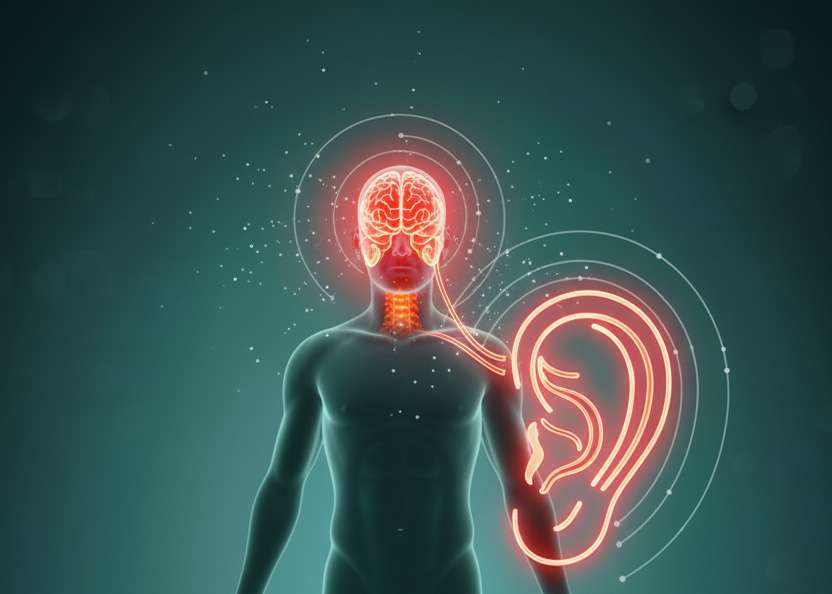
Concussion treatment in Oakville at Wellmax Physiotherapy is active, evidence-based rehabilitation for post-concussion syndrome, headaches, dizziness and brain fog, not a generic “rest and wait” plan. Our concussion clinic assesses the cervical spine, vestibular system, oculomotor function, exercise tolerance and cognition, then targets exactly what is driving your symptoms.
The impact happened weeks ago but the headaches haven’t stopped. Screens are uncomfortable. Busy environments, grocery stores, restaurants, the office, feel overwhelming. Concentration takes effort that it never used to. And well-meaning people keep saying “just rest” but you’ve been resting and it doesn’t seem to be helping anymore.
Concussion treatment has changed dramatically in the past decade. The old approach, sit in a dark room and wait until symptoms go away, has been replaced by active, supervised rehabilitation that addresses the specific systems affected by the concussion. Current evidence clearly shows that prolonged rest beyond 24-48 hours actually delays recovery. Controlled, graduated activity produces faster and more complete recovery.
The challenge with concussion is that every case is different. Some people have primarily neck-driven symptoms (headaches and dizziness originating from cervical spine dysfunction caused by the same impact that caused the concussion). Others have vestibular dysfunction (the balance and spatial orientation systems in the inner ear were disrupted). Others have oculomotor problems (the eye movement control systems aren’t coordinating properly, making reading and screens difficult). Many have a combination. Effective treatment requires identifying which systems are driving YOUR symptoms and targeting those specifically.
At Wellmax, we assess the cervical spine, vestibular system, oculomotor function, exercise tolerance, and cognitive function to build a treatment plan specific to what’s actually causing your symptoms, not a generic “rest and wait” approach.
We’re at 1148 Winston Churchill Blvd, Unit B3, Oakville, just south of the QEW. Clarkson, Clearview, Sheridan Park, and south Mississauga are all under 10 minutes away.
Understanding Concussion
What a Concussion Actually Is
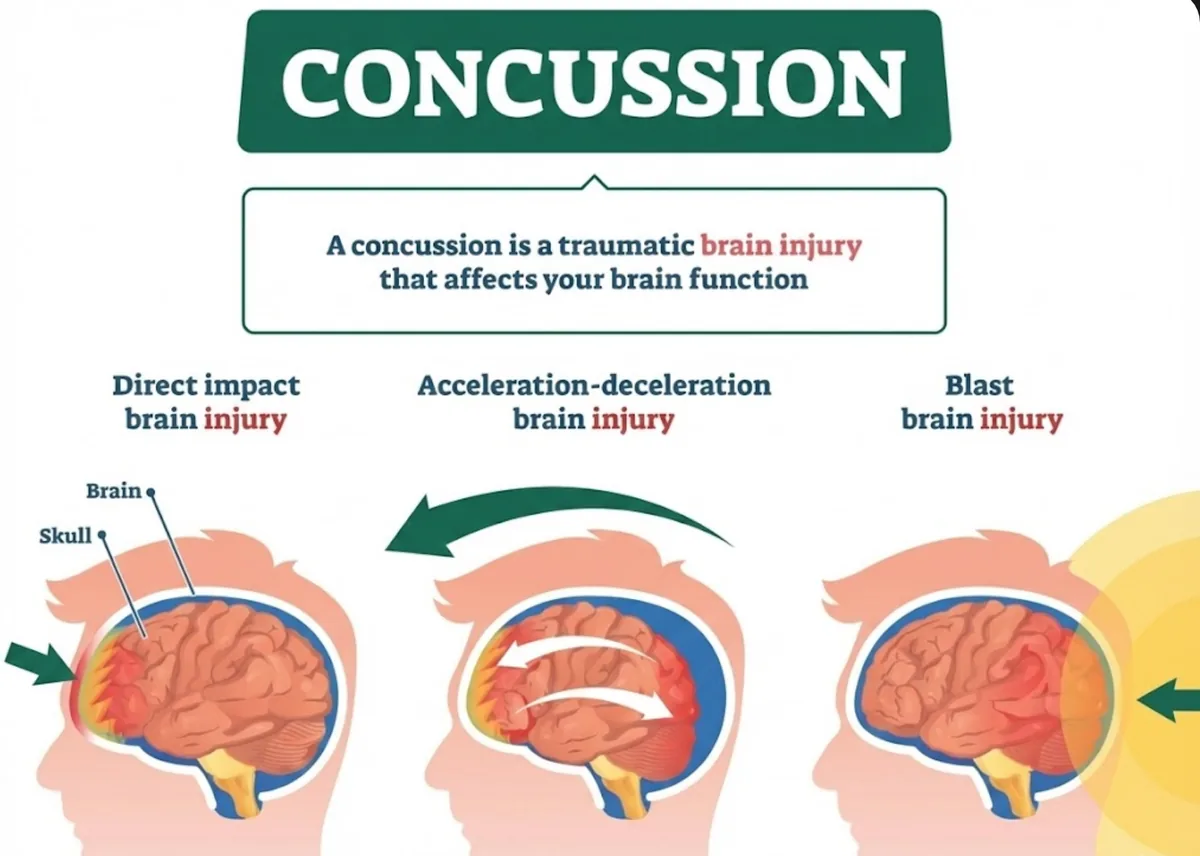
A concussion is a mild traumatic brain injury caused by a force transmitted to the head, either a direct blow or an indirect force (like whiplash, where the brain moves within the skull due to rapid acceleration-deceleration). The brain undergoes a temporary disruption in its normal chemical and metabolic function. This isn’t structural damage visible on CT or MRI (concussion imaging is typically normal). It’s a functional disturbance, the brain’s physiology is temporarily altered, affecting how it processes information, regulates blood flow, and coordinates the systems that rely on it.
Why Symptoms Vary So Much
Concussion affects people differently because the injury impacts multiple interconnected systems and the pattern of disruption varies from person to person. The main symptom drivers are:
Cervical spine (neck) dysfunction: The same mechanism that concusses the brain also injures the neck. Cervical spine dysfunction causes headaches (cervicogenic headaches), dizziness, and concentration difficulties that are identical to concussion symptoms. Research suggests that cervical spine dysfunction is an underrecognized contributor in the majority of concussions, particularly those from whiplash mechanisms. This is important because neck-driven symptoms respond well to manual therapy, they’re treatable.
Vestibular dysfunction: The vestibular system (inner ear balance organs and their connections to the brain) is frequently disrupted by concussion. This causes dizziness, balance problems, motion sensitivity (feeling worse in busy visual environments), and nausea. Vestibular rehabilitation is highly effective for these symptoms.
Oculomotor dysfunction: The eye movement control systems are among the most complex brain functions and are vulnerable to concussion disruption. This causes difficulty tracking moving objects, problems with screen use and reading, visual fatigue, blurred vision, and headaches triggered by visual tasks.
Autonomic dysfunction: Concussion can disrupt the autonomic nervous system’s ability to regulate blood flow to the brain during physical activity. This causes exercise intolerance, symptoms worsen with physical exertion because the brain doesn’t receive adequate blood flow to match the increased metabolic demand.
Cognitive fatigue: The metabolic disruption in the brain means that cognitive tasks (concentration, memory, multitasking) require more energy than usual. This creates mental fatigue that limits work, school, and daily cognitive performance.
Post-Concussion Syndrome
Most concussions resolve within 2-4 weeks. When symptoms persist beyond this, typically defined as beyond 4 weeks in adults and beyond 4 weeks in children, the condition is called persistent post-concussion symptoms (previously called post-concussion syndrome). Roughly 15-30% of concussion patients develop persistent symptoms. These patients particularly benefit from active physiotherapy because there are usually identifiable, treatable drivers maintaining the symptoms (neck dysfunction, vestibular deficits, deconditioning from prolonged rest, oculomotor problems).
How We Treat Concussion at Wellmax
Comprehensive Initial Assessment
The assessment evaluates all the systems that could be contributing to your symptoms:
- Cervical spine examination: Joint mobility, muscle function, provocation testing for cervicogenic headache and dizziness, upper cervical ligament screening.
- Vestibular screening: Positional testing (for BPPV, benign paroxysmal positional vertigo, which commonly co-occurs with concussion), vestibulo-ocular reflex testing, balance assessment, motion sensitivity evaluation.
- Oculomotor assessment: Smooth pursuit, saccades, convergence, accommodation, and visual motion sensitivity testing.
- Exercise tolerance testing: Graduated aerobic assessment (Buffalo Concussion Treadmill Test or similar) to identify the exercise threshold at which symptoms are provoked.
- Symptom profiling: Identifying which symptoms are dominant, what triggers them, and how they impact daily function.
This assessment identifies which systems are driving your symptoms and allows us to build a targeted treatment plan rather than a generic approach.
Cervical Spine Treatment
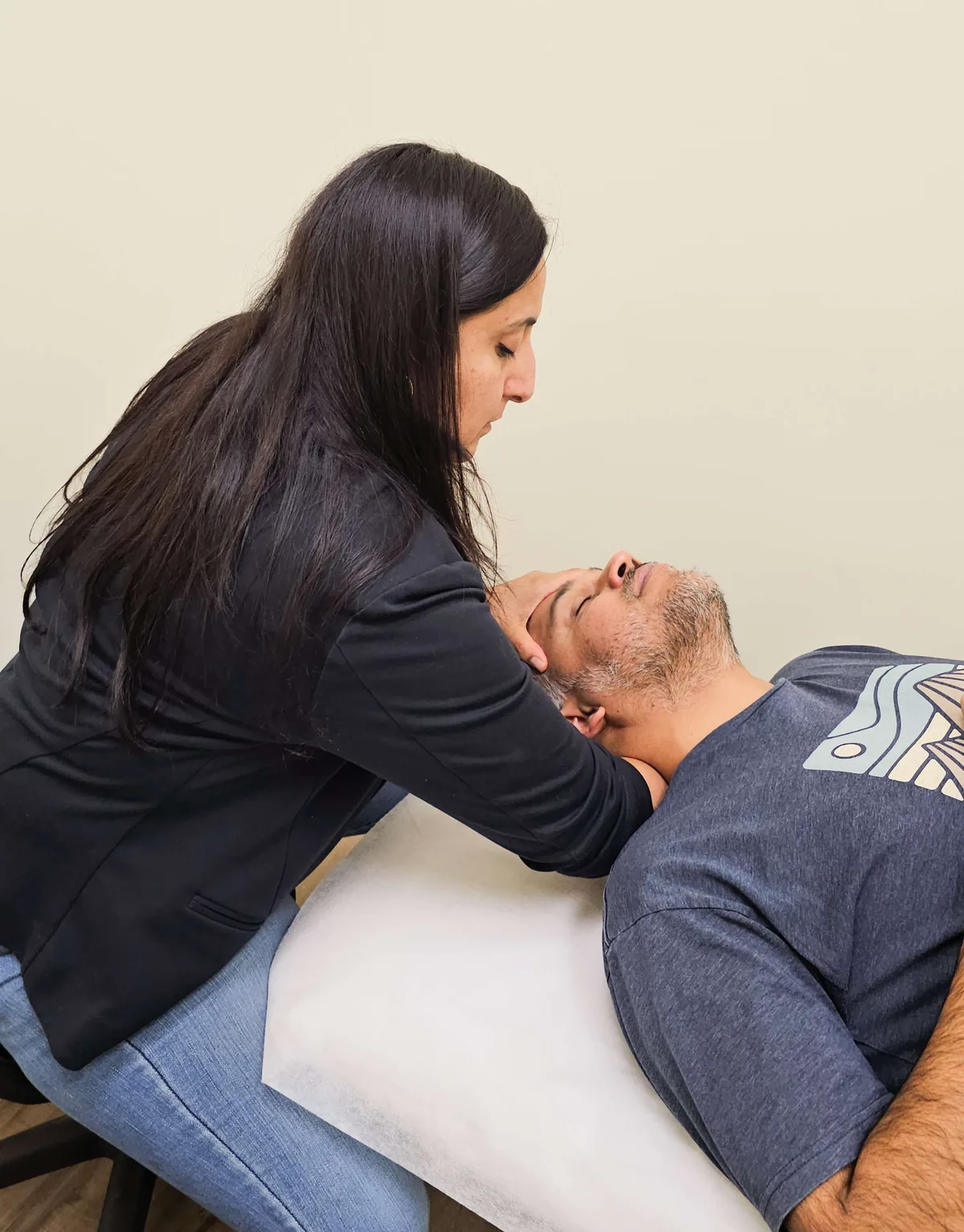
Neck dysfunction is present in the majority of concussion patients, particularly those with whiplash mechanisms. Treatment includes manual therapy (joint mobilization, soft tissue release), deep neck flexor strengthening, cervicogenic headache management, and progressive cervical loading. When the neck is a primary symptom driver, cervical spine treatment often produces rapid improvement in headaches and dizziness.
Vestibular Rehabilitation
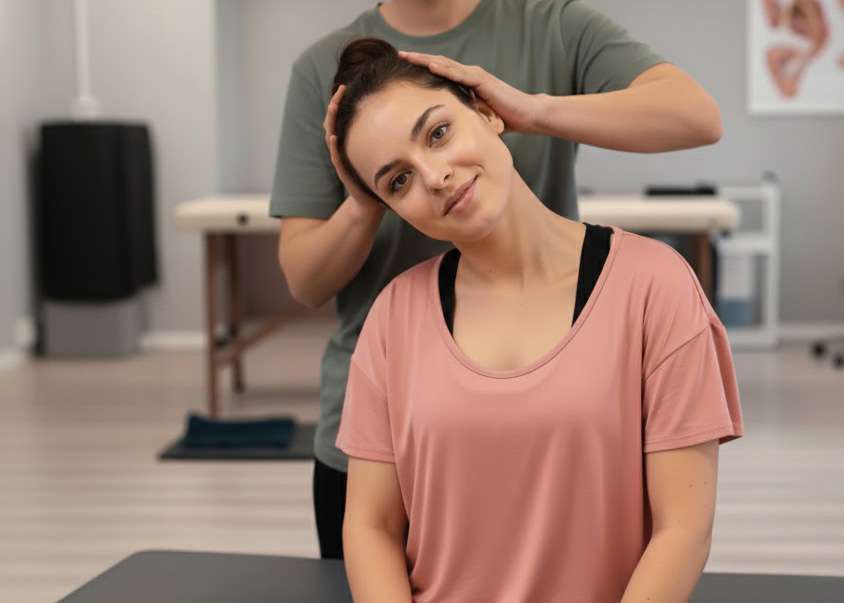
For patients with vestibular-driven symptoms (dizziness, balance problems, motion sensitivity). Treatment includes gaze stabilization exercises, habituation exercises for motion sensitivity, balance retraining, and BPPV repositioning maneuvers (Epley maneuver) when positional vertigo is present. See our Vestibular Physiotherapy page for more detail.
Oculomotor Rehabilitation
Exercises targeting smooth pursuit, saccades, convergence, and visual processing. These address difficulty with screen use, reading, driving, and functioning in busy visual environments. Oculomotor rehabilitation is often combined with vestibular exercises because the two systems are intimately connected.
Sub-Symptom Threshold Aerobic Exercise
Current evidence strongly supports controlled aerobic exercise as a treatment for concussion, not just a return-to-activity goal. Exercise below the symptom threshold improves cerebral blood flow regulation, promotes neuroplasticity, and accelerates recovery. The Buffalo Concussion Treadmill Test identifies your individual symptom threshold, and your exercise prescription is set below this level and progressed as tolerance improves.
Return to Sport / Return to Work / Return to School Protocols
Structured, stage-based progression through increasingly demanding activities with clear criteria for advancement at each stage. For athletes, this follows established return-to-sport guidelines (graduated from light aerobic exercise to sport-specific training to full contact). For students, graduated return to cognitive load (screen time, homework, exam accommodation). For workers, graduated return to job-specific demands. Each progression step requires 24 hours symptom-free before advancing.
Your Concussion Recovery Timeline
Acute Phase (Days 1-3)
Relative rest for 24-48 hours (NOT complete sensory deprivation). Light walking, gentle daily activities, limited screen time. This is the only period where rest is the primary recommendation.
Active Recovery Phase (Days 3 onwards)
Weeks 1-2: Assessment, sub-symptom threshold aerobic exercise begins, cervical spine treatment if indicated, initial vestibular and oculomotor exercises if relevant.
Weeks 2-4: Progressive exercise intensity, targeted rehabilitation for specific deficits, return to light cognitive activities.
Weeks 4-8: Return-to-sport/work/school protocol progression, strengthening, advanced vestibular and oculomotor work if persistent.
Typical Recovery Timelines
- Most concussions (70-85%): Resolve within 2-4 weeks with active management.
- Persistent symptoms (15-30%): Require targeted rehabilitation over 6-12 weeks.
- Prolonged recovery (<5%): Complex cases requiring multidisciplinary management over 3-6+ months.
Children and adolescents may take slightly longer to recover than adults. Prior concussion history, history of migraine, and pre-existing mood disorders are associated with longer recovery times.
What Results to Expect
| Scenario | Expected Outcome | Typical Timeline |
|---|---|---|
| Acute concussion (standard recovery) | Full recovery | 2-4 weeks |
| Concussion with cervicogenic component | Significant improvement with neck treatment | 3-6 weeks |
| Concussion with vestibular dysfunction | Progressive improvement | 4-8 weeks |
| Persistent post-concussion symptoms | Meaningful symptom reduction | 6-12 weeks |
| Return to contact sport (post-concussion) | Full medical clearance | 3-6 weeks (from symptom resolution) |
Why Patients Choose Wellmax for Concussion Physiotherapy in Oakville
We Assess All the Systems
Many clinics assess concussion as a single entity. We assess the five systems that could be driving your symptoms, cervical spine, vestibular, oculomotor, autonomic (exercise tolerance), and cognitive, because effective treatment requires knowing which systems are involved. A patient with primarily cervicogenic symptoms needs different treatment than a patient with primarily vestibular symptoms.
Active Rehabilitation, Not Just Rest
The era of “sit in a dark room until you feel better” is over. Current evidence supports active, supervised rehabilitation with sub-symptom threshold exercise. We apply this evidence-based approach to accelerate your recovery.
Cervical Spine Expertise
The neck is the most underrecognized contributor to concussion symptoms. The same mechanism that concusses the brain injures the cervical spine. Neck-driven headaches and dizziness respond well to manual therapy and targeted exercise. When the neck is addressed, many patients experience rapid improvement in symptoms that had been attributed entirely to the brain.
Structured Return-to-Activity Protocols
Whether you need to return to contact sport, school, or work, we provide clear, stage-based protocols with specific criteria at each step. No guessing about when it’s safe to advance.
Expert Care, Every Visit
Concussion recovery involves tracking multiple symptom domains across multiple systems. Consistency in assessment is critical for detecting improvement, identifying setbacks, and making appropriate progression decisions.
Direct Insurance Billing
We direct bill to most major providers. Sports concussions are covered under extended health. MVA-related concussions are billed through auto insurance. WSIB covers work-related concussions. No referral needed.
What Our Patients Say
Verified Patient“I had been dealing with jaw clicking and pain on the left side for over a year. My dentist made me a night guard which helped a bit with the grinding but the clicking and tightness never went away. A coworker mentioned that physiotherapy can treat TMJ problems, which I honestly did not know. Gurmeet assessed my jaw, neck, and posture in the first session and explained how everything was connected. After about five sessions the clicking had almost completely stopped and I could eat without that constant ache. I had no idea physiotherapy could make that much of a difference for jaw pain.”
Jessica T.“Finding the best physiotherapy clinic in Oakville was a game changer for my jaw pain. I had been dealing with TMJ issues, jaw clicking, and terrible tension headaches for months. I honestly did not even know physiotherapy could help with this until I found Wellmax. The assessment was incredibly thorough. Gurmeet took the time to explain the mechanics of my jaw and how my neck posture was contributing to the problem. The hands-on release techniques provided relief almost immediately. The whole team is genuinely invested in your recovery, and the clinic is spotless. I have already recommended them to several family members.”
Verified Patient“I was having dizzy spells that came out of nowhere. My doctor ran tests and said it was BPPV and to see a physiotherapist who does vestibular rehab. Wellmax was one of the few clinics in Oakville that offers it. The first visit Gurmeet did specific head positioning manoeuvres and the vertigo improved immediately. She also assessed my neck and found that some of the residual dizziness was actually coming from tightness in my upper cervical spine. After three sessions the dizziness was completely gone. I had been dealing with it for two months and it was resolved in under two weeks of treatment.”
Ahmad“This is a great place for physiotherapy, chiropractic and massage therapy. I had very bad pain in my neck and back but Gurmeet helped me to recover this pain. She is a great professional therapist. I love her!! Everyone is great and professional team members!!! 😊❤️”
Amanda S.“I’ve had very tight trap muscles greatly impact my neck, causing pain and limited flexibility/rotation for a very long time. Gurmeet has been a huge help between her education, several different exercise/stretch techniques, deep tissue massage, ultrasound and IFC sessions. My pain has subsided immensely and made huge progress in range of flexibility and rotation. Thank you!”
Rolando F.“I had vestibular treatment with Dhrushi Bhatt, my therapist. I was handled professionally and with care. My symptoms started to disappear right away from the start of the sessions. I would highly recommend this clinic with this awesome performance and service! Thank you.”
Bashar F.“I came to Wellmax for neck and back pain, Saw Gurmeet, she did detailed assessment and her hands on treatment, manual therapy, customised treatment plan and exercises with 2 sessions only I am feeling big difference. Her PTAs Janvi and Minahil are good at their job.”
Verified Patient“Woke up one morning and could barely open my mouth. My doctor said it was TMJ dysfunction and suggested physio. Gurmeet worked on the muscles around my jaw and into my neck and upper back. She also gave me exercises I could do at home between sessions. Within three weeks my jaw was opening normally again and the headaches I had been getting every afternoon stopped too. Turns out the jaw and the headaches were related the whole time.”
See all our Google reviewsRead more patient storiesLeave a review
Frequently Asked Questions
How long does it take to recover from a concussion?+–
Most concussions (70-85%) resolve within 2-4 weeks with active management. About 15-30% develop persistent symptoms requiring targeted rehabilitation over 6-12 weeks. Prior concussion history, history of migraine, and younger age (children/adolescents) are associated with longer recovery. Active rehabilitation consistently produces faster recovery than prolonged rest.
Should I rest in a dark room after a concussion?+–
Only for the first 24-48 hours, and even then, complete sensory deprivation isn’t necessary. After the initial rest period, gentle activity, light walking, and gradual return to daily tasks are recommended. Prolonged rest beyond 48 hours actually delays recovery by causing deconditioning, social isolation, and disruption of normal brain function. Controlled, graduated activity promotes recovery.
When should I start physiotherapy after a concussion?+–
As soon as possible after the initial 24-48 hour rest period. Early active rehabilitation (within the first week) produces better outcomes than waiting for symptoms to resolve on their own. The assessment identifies which systems are affected and establishes baseline measurements for tracking recovery. You don’t need to be symptom-free to start physiotherapy.
Why do I still have headaches weeks after my concussion?+–
Persistent headaches after concussion often have a cervical spine (neck) component. The same mechanism that concussed the brain also injured the neck, and cervical spine dysfunction causes headaches that are identical to concussion headaches. This distinction matters because cervicogenic headaches respond well to manual therapy and targeted neck rehabilitation. If the neck hasn’t been assessed and treated, persistent headaches may be coming from the neck rather than (or in addition to) the brain.
Can I exercise after a concussion?+–
Yes, and current evidence says you should , at the right intensity. Sub-symptom threshold aerobic exercise (exercise below the level that provokes your symptoms) improves cerebral blood flow regulation and accelerates recovery. The Buffalo Concussion Treadmill Test identifies your individual threshold, and your exercise program is prescribed below this level and progressively increased as tolerance improves.
When can I return to contact sports after a concussion?+–
Return to contact sport follows a graduated protocol: light aerobic exercise, sport-specific exercise, non-contact training drills, full-contact practice, and return to competition. Each stage requires 24 hours symptom-free before advancing. The minimum timeline is typically 1 week from symptom resolution to full return, but the actual timeline depends on individual recovery. Medical clearance is required before return to contact.
How many concussions is too many?+–
There’s no specific number that’s universally ‘too many.’ Each concussion increases the risk of prolonged recovery from future concussions and may increase the risk of long-term effects. The decision about continued participation in contact sports after multiple concussions should be made with a physician, ideally one with sport medicine expertise, considering the individual’s history, recovery patterns, and risk tolerance.
Can a concussion cause dizziness?+–
Yes. Dizziness after concussion can come from multiple sources: vestibular system disruption (the inner ear balance organs were affected), cervical spine dysfunction (the neck is sending inaccurate position information to the brain), oculomotor dysfunction (visual processing problems creating a mismatch between what you see and what your balance system expects), or BPPV (positional vertigo from displaced inner ear crystals, which commonly co-occurs with concussion). Treatment depends on which source is driving the dizziness.
How often should I come for concussion physiotherapy?+–
Typically 1-2 visits per week during active treatment, decreasing as you progress through the return-to-activity protocol. Total treatment course is usually 4-10 sessions over 2-8 weeks for standard concussions. Persistent post-concussion symptoms may require longer programs. The home exercise program (aerobic exercise, vestibular exercises, oculomotor exercises) is performed daily between visits.
Will my insurance cover concussion physiotherapy?+–
Most extended health plans cover physiotherapy. Sports concussions and recreational injuries are covered under extended health benefits. MVA-related concussions are billed through auto insurance with no deductible. WSIB covers workplace concussions. We direct bill to most major providers. No referral needed.
Do I need a referral or a doctor's note for concussion treatment in Oakville?+–
No referral is needed to start concussion treatment in Oakville at Wellmax. You can book an assessment directly, and most extended health plans cover physiotherapy without a doctor’s note. If your concussion came from a car accident, it is billed through your auto insurer, and work-related concussions are covered by WSIB. If anything in your history needs medical clearance first, your physiotherapist will tell you at the assessment and coordinate with your doctor.
Can you treat post-concussion syndrome that has lasted for months?+–
Yes. Persistent post-concussion symptoms that have lasted months are one of the main reasons people come to our Oakville concussion clinic. When symptoms linger, there are usually identifiable, treatable drivers keeping them going, such as untreated neck dysfunction, vestibular or oculomotor deficits, or deconditioning from too much rest. We reassess each system, find what is still driving your headaches, dizziness or brain fog, and build a targeted plan. A free consult is the simplest way to find out what is realistic for your case.
How long should I wait before using screens after a concussion?+–
Current concussion guidelines recommend a brief period of cognitive rest, typically 24 to 48 hours, before gradually reintroducing screens. Complete, prolonged screen avoidance is no longer recommended as it can slow recovery and worsen anxiety and mood. The key is starting with short sessions of 10 to 15 minutes and increasing only if symptoms do not worsen. If screens consistently trigger headaches or dizziness, a visual or vestibular assessment may be needed. A physiotherapist specialising in concussion will guide your return to cognitive activity at the right pace.
What is post-concussion syndrome and how long can it last?+–
Post-concussion syndrome describes symptoms that persist beyond the typical recovery window of two to four weeks for adults or four weeks for children. Symptoms include ongoing headaches, dizziness, difficulty concentrating, fatigue, sleep disruption, and mood changes. Risk factors include previous concussions, pre-existing anxiety, female sex, and older age. Most people with prolonged symptoms improve with targeted physiotherapy addressing the specific subsystems involved. An assessment identifies which systems are driving your symptoms so treatment can be directed accurately rather than broadly.
When is a headache after a concussion a warning sign that needs urgent attention?+–
Seek emergency care immediately if you experience a headache that is rapidly worsening, one-sided weakness or numbness, repeated vomiting, seizures, increasing confusion or loss of consciousness, or one pupil larger than the other. These can indicate a more serious intracranial injury. Headaches that are dull, stable, and consistent with your other post-concussion symptoms are generally not red flags but should still be assessed. If you are unsure whether your symptoms are changing, it is always better to be evaluated than to wait.
Can a concussion cause anxiety and mood changes?+–
Yes. Anxiety, irritability, low mood, and emotional sensitivity are recognised symptoms of concussion and post-concussion syndrome. They can result from neurochemical disruption to brain function, but also from the frustration of prolonged symptoms and reduced activity. These symptoms often improve as the physical symptoms resolve. When mood changes are significant, collaborative care involving physiotherapy, psychology, and your physician produces the best outcomes. Let your assessment team know if mood changes are part of your symptom picture so they can be factored into the plan.
Related Conditions and Services
- Vestibular Physiotherapy: gaze stabilization, habituation and BPPV repositioning for concussion-related dizziness and motion sensitivity.
- Neck Pain and Headache: cervicogenic headaches and neck-driven symptoms that frequently accompany concussion.
- Whiplash: the acceleration-deceleration neck injury that often occurs alongside a concussion.
- Balance and Fall Prevention: balance retraining for unsteadiness after a head injury.
- Sports Injury Rehabilitation: graduated return-to-sport for athletes recovering from concussion.
- Motor Vehicle Accident Rehab: concussion and whiplash care billed through auto insurance.
- WSIB Work Injury: coverage for work-related concussions.
- Insurance and Direct Billing: direct billing to most major extended health providers.
Book Your Concussion Assessment
If the headaches have not stopped, if screens and busy places still feel overwhelming, or if you have been told to just rest and it is not working, get assessed properly. Your physiotherapist will identify which systems are driving your symptoms and build concussion treatment in Oakville that is specific to you. We never diagnose from a distance or guess, we assess.
Wellmax offers a free consult so you can ask questions before committing to a plan. No referral needed.
Wellmax Physiotherapy
1148 Winston Churchill Blvd, Unit B3, Oakville, ON L6J 0A3
Phone: (905) 829-1100
Email: info@wellmaxphysiotherapy.ca
Hours: Monday to Friday: 9am to 7pm | Saturday: 9am to 2pm | Sunday: 9am to 2pm (by appointment only)
Registered & Regulated
Regulated & Recognized Across Every Discipline
Wellmax is in good standing with the regulatory colleges and leading associations for physiotherapy, chiropractic, massage therapy, and naturopathic medicine in Ontario.