
Muscle Strains & Sprains Physiotherapy
Treatment for pulled muscles, strains and sprains in Oakville
Home > Conditions We Treat > Muscle Strains & Sprains Physiotherapy
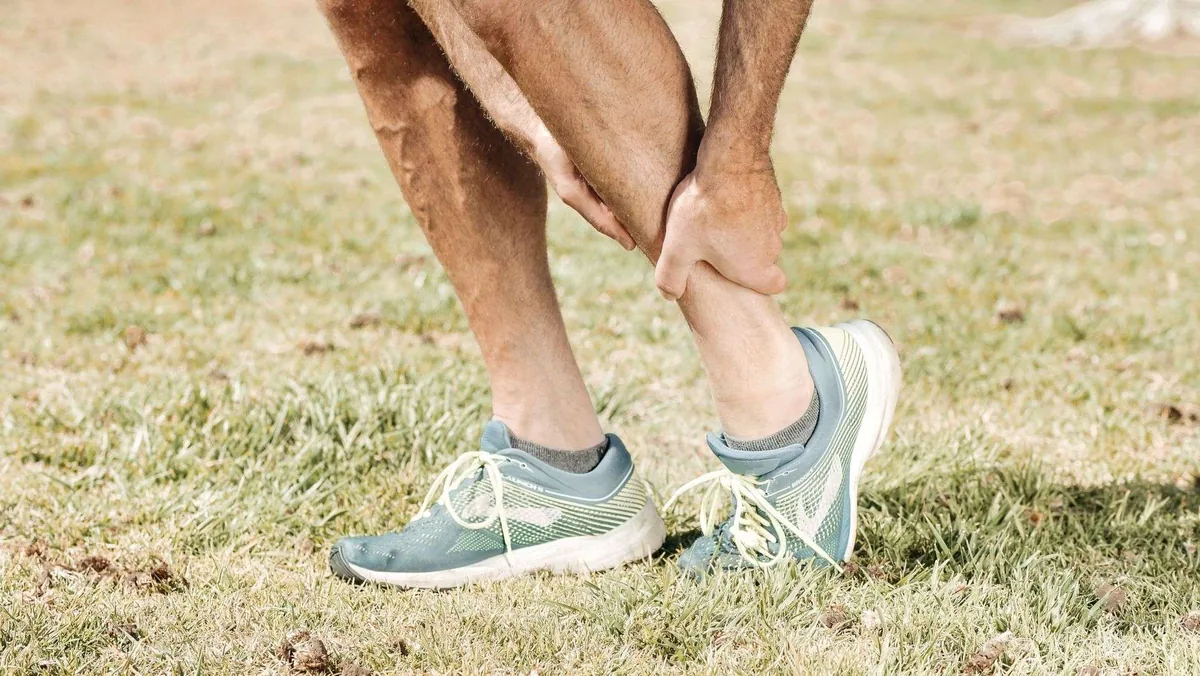
Muscle strain treatment in Oakville starts with an honest answer to one question: what exactly did you injure, and how badly? A pulled hamstring during a sprint, a calf that let go mid rally, a groin strained on the ice, a quad that grabbed during a kick, and a low back that seized while lifting a box are all different injuries with different healing timelines. Guessing wrong, or stopping rehab the day the pain fades, is the single biggest reason these injuries come back again and again.
At Wellmax Physiotherapy, we assess and treat muscle strains and ligament sprains every week in adults and recreational athletes from Oakville and Mississauga. This page explains the difference between a strain and a sprain, how strains are graded, what modern first aid looks like (it is no longer RICE), why pulled muscles recur, and how physiotherapy rebuilds the strength and speed you need to run, skate, lift, and play without flinching.
- What Is the Difference Between a Strain and a Sprain?
- How Are Muscle Strains Graded?
- Which Muscle Strains Do We Treat Most Often in Oakville?
- What Should I Do in the First Few Days? PEACE and LOVE, Not RICE
- Why Do Muscle Strains Keep Coming Back?
- How Does Physiotherapy Treat Muscle Strains and Sprains?
- When Can I Return to Sport After a Strain?
- When Is a Pulled Muscle Something More Serious?
- How Can I Prevent Muscle Strains in the First Place?
- Why Do Oakville Athletes Choose Wellmax for Strain and Sprain Treatment?
- Book Your Muscle Strain Assessment in Oakville
- Frequently Asked Questions
What Is the Difference Between a Strain and a Sprain?
The two words get used interchangeably, but they describe injuries to two different tissues. A strain is an overstretch or tear of a muscle or its tendon, the tissue that contracts to move your body. A sprain is an overstretch or tear of a ligament, the tissue that connects bone to bone and keeps a joint stable. A pulled hamstring is a strain. A rolled ankle is usually a sprain.
The distinction is not trivia. It changes the rehab. A strained muscle recovers best when it is progressively loaded and strengthened through its full length, because muscle tissue adapts quickly to the right dose of exercise. A sprained ligament needs a short period of joint protection first, and then balance and stability retraining, because ligaments contain position sensors that tell your brain where the joint is in space. When those sensors are disrupted and never retrained, the joint keeps giving way. That is why our rehab for ankle ligament sprains looks quite different from our rehab for a torn calf, even though both injuries might happen on the same tennis court. What the two injuries share is this: they heal with the right loading at the right time, not with rest alone.
How Are Muscle Strains Graded?
Clinicians grade strains by how much of the muscle or tendon has torn, and the grade drives the timeline:
- Grade 1: an overstretch with only a few fibres damaged. The muscle is sore and tight but still strong. Most grade 1 strains settle over days to a few weeks with the right early loading.
- Grade 2: a partial tear. There is real pain, swelling, often bruising, and a clear loss of strength. Recovery typically takes several weeks to a few months, and the rehab work matters enormously.
- Grade 3: a complete tear of the muscle or tendon. Function is dramatically lost, and recovery is measured in months. Some complete tears need a surgical opinion before rehab begins.
Here is the important part: you cannot reliably grade your own strain from pain alone. A grade 1 strain in a sensitive spot can hurt more than a grade 2 tear somewhere else, and some serious tears feel surprisingly quiet once the first shock passes. Grading takes specific strength testing, length testing, and palpation of the injured tissue. That is exactly what a physiotherapy assessment determines, and it is the foundation the whole recovery plan is built on. If the findings suggest a complete tear or something beyond a strain, we refer you to the right physician promptly.
Which Muscle Strains Do We Treat Most Often in Oakville?
Certain muscles tear far more often than others, because they cross two joints and work hardest when they are lengthening at speed:
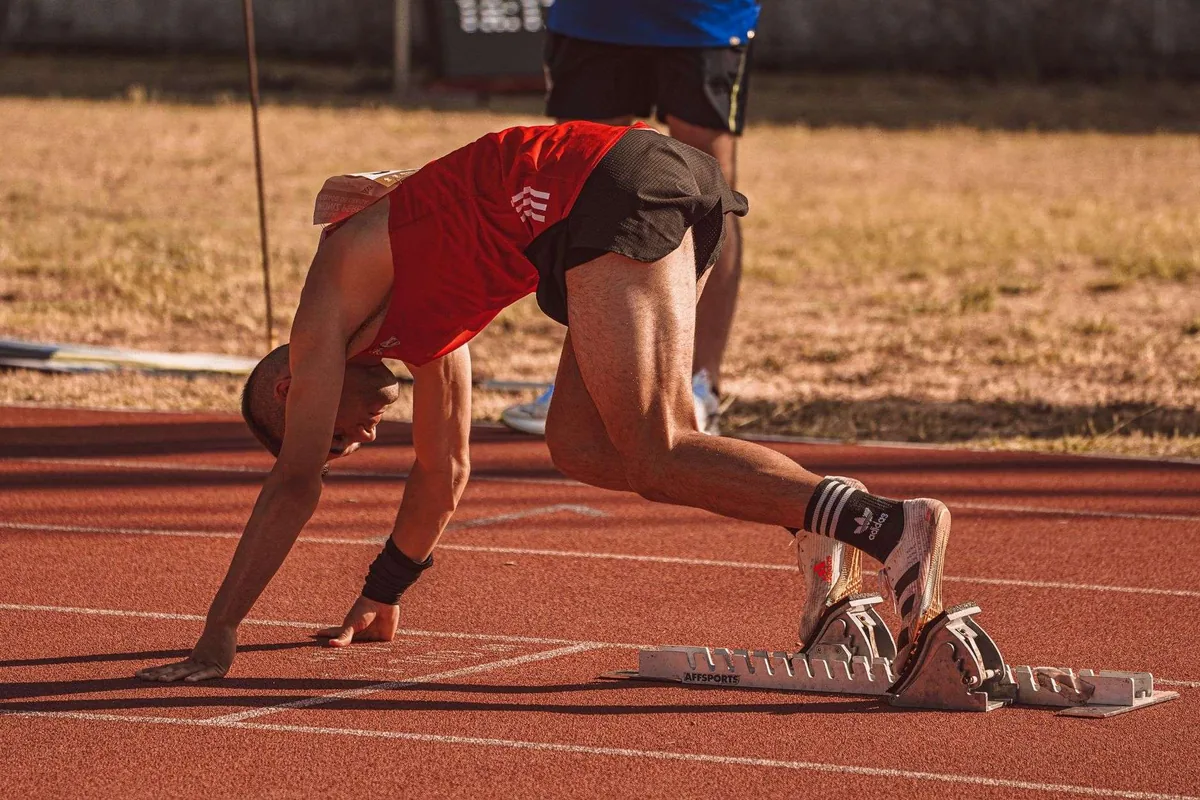
- Hamstring strains: the classic sprinting injury. They happen during acceleration, sudden stops, and overstretched kicks, and they have one of the highest recurrence rates in sport when rehab stops early. If yours has dragged on, read our guide to hamstring strains that will not heal.
- Calf strains: common in push-off sports such as tennis, running, badminton, and especially pickleball, where quick lunges catch the calf at full stretch. Many people describe a sudden “hit in the back of the leg” feeling. Our article on calf pain when walking or running covers the slower-burning version.
- Groin (adductor) strains: the skating and soccer injury, produced by hard cutting, kicking across the body, and the push-off stride on the ice.
- Quadriceps strains: sprinting, kicking, and sudden deceleration, often felt in the front of the thigh and sometimes near the knee. Pain around the kneecap that lingers after a quad injury is worth its own look; see our knee pain physiotherapy page.
- Low back strains: lifting, twisting, shovelling, and long gardening sessions. Most acute back strains settle well with early movement and graded loading, and our back pain and sciatica physiotherapy page explains that pathway in depth.
Ligament sprains follow their own patterns, with the ankle far in the lead. If you rolled your ankle, start with our dedicated ankle sprain physiotherapy page. And if your injury happened on a court, field, rink, or trail, our sports injury physiotherapy service ties all of this together with return-to-play planning.
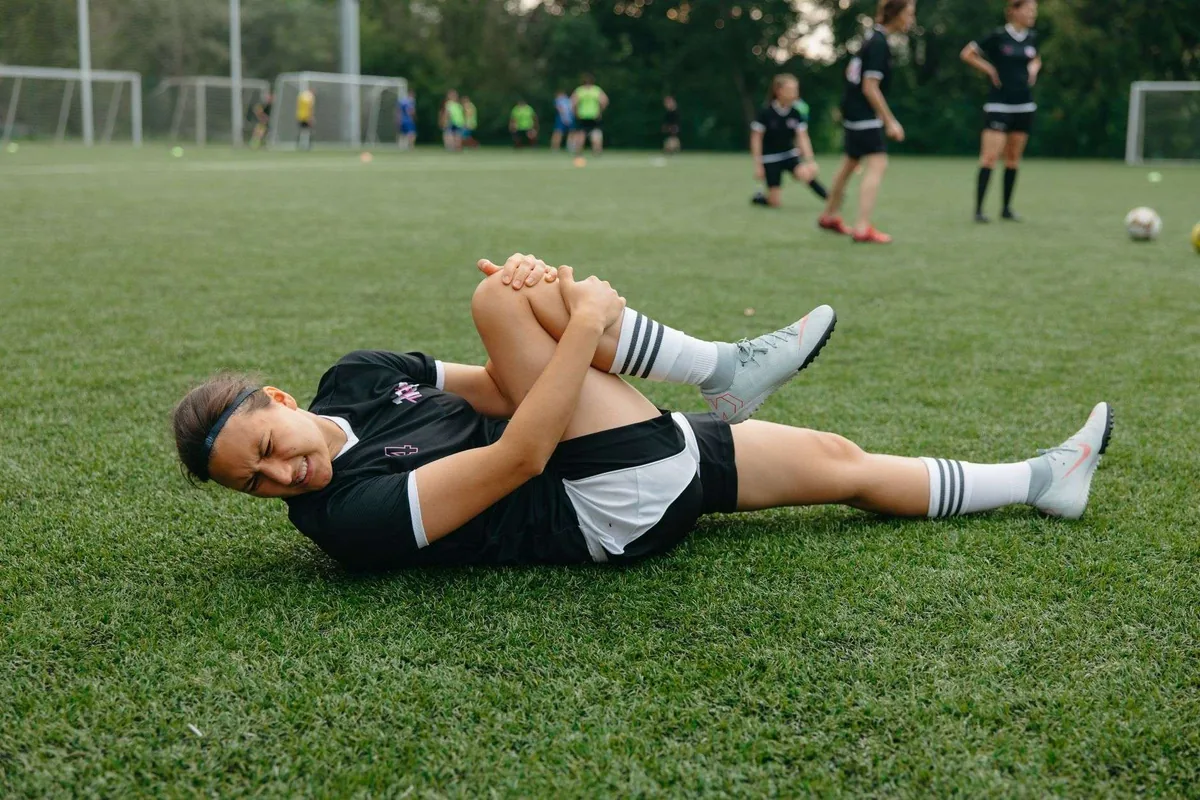
What Should I Do in the First Few Days? PEACE and LOVE, Not RICE
For decades, everyone was told RICE: rest, ice, compression, elevation. Sports medicine has moved on. The framework now taught in the British Journal of Sports Medicine is PEACE and LOVE, and it treats the injury in two phases.
In the first days, PEACE:
- Protect: reduce activity for a short period and avoid movements that sharply provoke pain, but do not immobilise completely.
- Elevate: raise the limb above the heart when resting to help swelling drain.
- Avoid anti-inflammatories early: inflammation is the start of healing, and routinely blunting it with medication or long icing sessions in the first days may slow tissue repair. Speak with your physician or pharmacist about your specific situation.
- Compress: a snug bandage or sleeve helps limit swelling.
- Educate: understand that tissue heals on a biological timetable, and that an active recovery beats passive gadgets.
Then, as the acute pain settles, LOVE:
- Load: begin progressive, tolerable loading early. Muscle and ligament both remodel along the lines of stress you give them.
- Optimism: confidence and realistic expectations genuinely influence recovery outcomes.
- Vascularisation: pain-free cardio, such as cycling for a calf strain, boosts blood flow to healing tissue.
- Exercise: restore strength, mobility, and balance through a structured program.
Why did complete rest and long-term ice fall out of favour? Because rested muscle heals weak and disorganised. Scar tissue laid down without load does not align with the muscle fibres around it, and joints that are immobilised lose position sense. Ice still has a role for short-term pain relief in the first day or two, but it is a comfort tool, not a healing tool. The goal from day one is calm, protected movement that gradually becomes strengthening.
Why Do Muscle Strains Keep Coming Back?
Recurrence is the defining problem of this injury. Hamstring strains in particular re-tear at high rates, and the second tear is usually worse than the first. Three things drive it:
- Scar tissue without strength: healed muscle contains a patch of scar that is stiffer and weaker than the tissue around it. Untrained, that patch becomes the weak link the next time you sprint.
- Lost strength at length: strains happen when a muscle is loaded while lengthening. If rehab only rebuilds strength in mid-range, the muscle is still fragile exactly where it tore. Eccentric strengthening, controlled lengthening under load, is the best-supported protective factor we have against hamstring and calf re-injury.
- Returning when pain stops, not when strength returns: pain usually disappears weeks before strength, speed, and coordination are back. The player who feels fine jogging at week three and jumps into a game at week four is the player we meet again at week five.
Proper rehab closes all three gaps. It is not complicated, but it does have to be progressive, measured, and finished.
How Does Physiotherapy Treat Muscle Strains and Sprains?
At Wellmax, muscle strain treatment starts with a full 60-minute one-on-one assessment. We establish two things: the grade of the injury, through strength, length, and tissue testing, and the why behind it. Most strains have a backstory, such as a sudden spike in training, a weak muscle group quietly overloading its neighbour, an old injury that never got finished rehab, or a sport picked up enthusiastically after years away. Fix the tear without fixing the why, and the why finds another way to hurt you.
From there, your plan typically includes:
- Hands-on manual therapy: joint mobilisation, soft tissue work, and techniques to reduce protective muscle tension, ease pain, and restore movement so you can load the tissue sooner.
- Progressive loading through range: a staged exercise program that starts with gentle isometrics, builds to heavy strength work, and finishes with eccentric strengthening at full muscle length, the range where strains actually happen.
- Sport-specific return progressions: graded running builds, acceleration and deceleration work, change of direction, skating strides, or lifting mechanics, matched to your sport and rebuilt step by step.
- Balance and stability retraining: essential after ligament sprains, so the joint’s position sense recovers along with the tissue.
- Registered massage therapy as an adjunct: once the acute phase passes, massage therapy helps manage the muscle tension and tightness that build up around a healing injury, and pairs well with your exercise program.
You get expert care from assessment to discharge, with the plan reassessed at every visit so every progression builds on the last one.
When Can I Return to Sport After a Strain?
Not when the calendar says so, and not when the pain stops. We clear return to sport on criteria you can feel and we can measure:
- Strength symmetry: the injured side tests close to the strength of the uninjured side, including at full muscle length.
- Pain-free speed work: you can sprint, cut, push off, or lift at game intensity without pain or guarding, built up progressively in rehab first.
- Confidence: you can commit to the movement without hesitating. Hesitation changes mechanics, and changed mechanics cause new injuries.
Meeting these criteria usually takes a few weeks longer than simply feeling better. Those weeks are the cheapest insurance in sport, because they are the difference between one strain this season and three.
When Is a Pulled Muscle Something More Serious?
Most strains are safe to rehab. A few findings need prompt medical attention first:
- A loud pop followed by an immediate, dramatic loss of function, such as being unable to push off the foot or raise the leg.
- Rapidly spreading bruising with a visible gap, lump, or change in the muscle’s shape, which can signal a complete tear.
- A calf that becomes swollen, hot, and tender, especially after long travel, illness, or a period of immobilisation. This pattern needs same-day medical assessment to rule out a blood clot before any rehab begins.
If any of these describe you, see a physician or urgent care first. We will gladly coordinate your rehab afterwards, and if we spot these signs during your assessment, we will send you to the right care immediately.
How Can I Prevent Muscle Strains in the First Place?
Most strains are predictable in hindsight, which means many are preventable in advance. The biggest risk factors are a previous strain that was never fully rehabilitated, a sudden spike in training volume or intensity, and playing explosive sports on muscles that never do strength work. A few habits genuinely lower the risk:
- Strength train the muscles you sprint with: regular hamstring, calf, and hip strengthening, including eccentric work, is the best-supported way to cut strain risk in running and court sports.
- Ramp up gradually: when you return to a sport after time away, build volume over weeks rather than playing three matches in your first weekend back. This is where we see many pickleball and soccer strains in adults over 40.
- Warm up properly: several minutes of progressive movement that finishes near game speed prepares muscle to absorb load at length far better than static stretching alone.
- Respect fatigue: most strains happen late in a game or run, when tired muscles lose their ability to absorb force.
Why Do Oakville Athletes Choose Wellmax for Strain and Sprain Treatment?
Every assessment at Wellmax is a full 60 minutes of one-on-one care, led by a registered physiotherapist, with expert guidance from your first visit to discharge. Care is led by Gurmeet Rai, a registered physiotherapist with more than 16 years of experience, and our clinic director’s philosophy is simple: find the root cause, treat with your hands and a plan, and graduate people out of physiotherapy rather than keeping them on a treatment treadmill.
We keep recovery practical, too. We offer evening and weekend-morning appointments so rehab fits around work and family, free on-site parking, and direct billing to most major insurers so you are not chasing paperwork while you heal. Patients reach us easily from across Oakville and Mississauga, right off the QEW at Winston Churchill Blvd.
Book Your Muscle Strain Assessment in Oakville
The earlier a strain is graded and loaded correctly, the faster and more completely it heals. Book a free consultation or a full assessment at Wellmax Physiotherapy in Oakville, or call (905) 829-1100. No physician referral is needed for physiotherapy in Ontario, and if you are not sure whether your injury needs treatment, the free consult is exactly the place to ask.
What Our Patients Say
David M.“I have been to a few places over the years, but Wellmax is by far the best physiotherapy clinic in Oakville. I came in suffering from severe sciatica that was shooting down my leg. It was making it impossible to sit at my desk or drive without sharp pain. Gurmeet did a very detailed assessment and explained how a compressed nerve was causing the issue. My treatment included the spinal decompression table and targeted manual therapy. Nav and Janvi were also great at guiding me through my rehab exercises and making sure my form was correct. I am finally sleeping and working without pain. They are a highly skilled and professional team.”
Harsha P.“I’ve been going to Wellmax for my neck and lower back pain for a few months now, and the entire experience has been incredibly smooth. Gurmeet is a true expert, she gets straight to the root cause of the discomfort and treats it perfectly. I’m so happy with the results, and my pain is practically gone. I can finally sit and work at my desk for hours without any stress. Janvi (PTA) is also fantastic at her job. The whole team at the clinic makes you feel comfortable, guides you through the right exercises, and always ensures your form is correct.”
Verified Patient“I had been to three different physio clinics over the past two years for my chronic lower back pain and nothing stuck. The pain would improve a bit during treatment and then come right back. Gurmeet’s approach was completely different. She spent almost an hour on the initial assessment looking at how I moved, not just where it hurt. She explained that the issue was not just my back but how my whole body was compensating. The treatment plan combined manual therapy with progressive exercises that actually challenged me instead of just stretching. For the first time in two years I feel like the pain is actually resolving instead of just being managed.”
James A.“This is easily the best physiotherapy clinic in Oakville for anyone working a desk job. I had terrible upper back pain and stiffness that was not going away. Dhrushi did a fantastic job explaining how my work setup was impacting my posture and causing the muscles to overwork. The treatment sessions included deep manual therapy and some cupping, which released months of built-up tension. She also taught me exactly how to correct my posture throughout the day. The clinic is very well organized, the staff is incredibly friendly, and they genuinely care about fixing the root cause of your pain.”
R. Singh.“I had an incredible experience with Gurmeet at Wellmax Physio, she is highly skilled and takes the time to explain everything in a way that makes you feel informed and confident in your treatment. Her techniques are effective, and you can tell she’s very knowledgeable in what she does. What stood out most was her attentiveness, she really listens and tailors the treatment to what your body needs. If you’re dealing with back pain or need physiotherapy, I would absolutely recommend her without hesitation.”
Kelly H.“So happy I decided to go here, my back is finally better! I wrecked it shovelling snow and nothing was helping until I came to Wellmax. Amazing service, got me moving again. Everyone working there is so nice; Gurmeet is amazing and I love her ha ha. I highly recommend!”
Danuta K.“After struggling with my SI joint pain for long time, Gurmeet and manual therapy techniques made a huge difference. She gave me personalized exercise plan. Now I can move freely and feel a huge difference”
Bashar F.“I came to Wellmax for neck and back pain, Saw Gurmeet, she did detailed assessment and her hands on treatment, manual therapy, customised treatment plan and exercises with 2 sessions only I am feeling big difference. Her PTAs Janvi and Minahil are good at their job.”
See all our Google reviewsRead more patient storiesLeave a review
Frequently Asked Questions
What is the difference between a muscle strain and a sprain?+–
A strain is an overstretch or tear of a muscle or its tendon, such as a pulled hamstring. A sprain is an overstretch or tear of a ligament, the tissue that connects bone to bone, such as a rolled ankle. The distinction changes rehab: strains recover through progressive strengthening at full muscle length, while sprains need early joint protection followed by balance and stability retraining.
How do I know how bad my pulled muscle is?+–
You cannot reliably grade a strain from pain alone. A minor strain in a sensitive spot can hurt more than a partial tear elsewhere, and some serious tears feel quiet after the first day. Grading takes specific strength, length, and tissue testing, which is what a physiotherapy assessment determines. Getting the grade right early sets the whole recovery timeline, so book an assessment rather than guessing.
Should I stretch a pulled muscle?+–
Not in the early days. Stretching a freshly torn muscle pulls on healing fibres and can make the injury worse. Early on, gentle pain-free movement and light loading are safer and more useful. Stretching and full-length strengthening come later in rehab, once the tissue tolerates load, because rebuilding strength at length is what actually protects against re-injury.
Should I use ice or heat on a pulled muscle?+–
Ice can help pain in the first day or two, in short bouts, but think of it as comfort rather than treatment. Long-term icing may slow the healing process, which is why modern guidelines moved away from RICE. After the acute phase, heat is fine for easing muscle tension before exercise. The real driver of healing is progressive, tolerable loading, not what you put on the skin.
Should I take anti-inflammatories for a muscle strain?+–
Current sports medicine guidance, summarised in the PEACE and LOVE framework, suggests avoiding anti-inflammatory medication in the first days after a strain, because inflammation is the first stage of tissue healing. Blunting it routinely may slow repair. Pain relief choices are individual though, so speak with your physician or pharmacist about what is right for you.
How long does a pulled hamstring take to heal?+–
A mild grade 1 hamstring strain often settles in days to a few weeks. A grade 2 partial tear typically takes several weeks to a few months, and a complete tear takes months and sometimes a surgical opinion. Pain usually fades well before strength and sprinting capacity return, and returning at that gap is why hamstrings re-tear so often. An assessment gives you a realistic timeline for your injury.
How long does a calf strain take to heal?+–
Mild calf strains usually improve over two to four weeks, moderate tears take roughly six to twelve weeks, and severe tears can take longer. Calf strains are notorious for recurring when people return to push-off sports like tennis, running, or pickleball as soon as walking feels normal. Progressive calf strengthening, including loaded heel work through full range, is what makes the recovery stick.
Can I keep training with a pulled muscle?+–
Often yes, with modifications. Complete rest is outdated; the goal is to protect the injured tissue while training everything else. A physiotherapist can usually keep you cycling, swimming, or strength training pain-free parts of the body while the strain heals. What you should not do is push through sharp pain in the injured muscle or return to sprinting and cutting before strength is rebuilt.
Why does my muscle strain keep coming back?+–
Usually because rehab stopped when pain stopped. Healed muscle contains scar tissue that stays weaker and stiffer than the surrounding fibres unless it is progressively loaded, and strength at full muscle length returns last. Returning to sport before strength, speed, and confidence are rebuilt leaves the weak link in place. Eccentric strengthening through full range is the best-supported protection against recurrence.
Do muscle strains show up on X-ray?+–
No. X-rays show bone, not muscle, tendon, or ligament, so a strain will not appear on one. X-rays are only useful if a fracture is suspected. Most strains are diagnosed with a hands-on clinical assessment of strength, length, and tenderness, which is faster and usually all that is needed. Ultrasound or MRI is reserved for suspected complete tears or unclear cases.
When should I see a physiotherapist for a strain, and do I need a referral?+–
Book promptly if you have significant pain, weakness, bruising, limping, or a strain that is not clearly improving within a week, and seek same-day medical care for a pop with loss of function or a hot, swollen calf. No physician referral is needed for physiotherapy in Ontario. Early grading and correct loading speed up healing and cut the risk of the strain returning.
Is physiotherapy for a muscle strain covered by insurance?+–
Most extended health plans through work cover physiotherapy, and Wellmax direct bills most major insurers, so you usually pay only the portion your plan does not cover. Massage therapy, often used alongside strain rehab, is typically covered too. Call (905) 829-1100 to confirm your coverage or to book a free consultation, no referral needed.
Registered & Regulated
Regulated & Recognized Across Every Discipline
Wellmax is in good standing with the regulatory colleges and leading associations for physiotherapy, chiropractic, massage therapy, and naturopathic medicine in Ontario.