
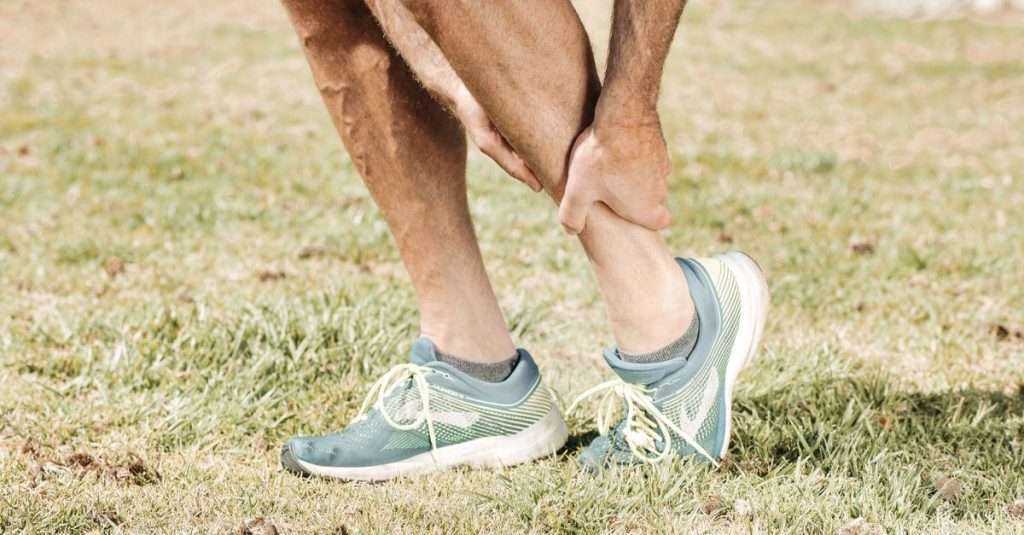
Calf Pain When Walking or Running: Causes and Treatment in Oakville
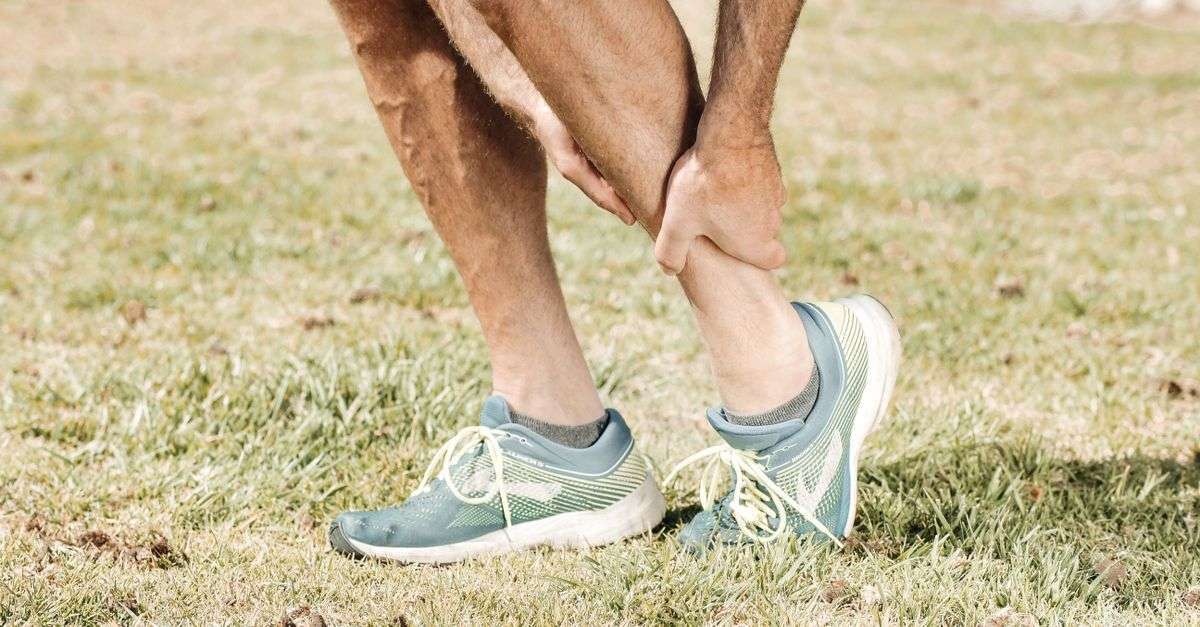
That tight, pulling, or sharp pain in the back of your lower leg can turn a normal walk or an easy run into a stop-and-start ordeal. Calf pain is one of the most common complaints we hear from active people in Oakville, and it shows up everywhere from the first kilometre of a run to a simple walk up the stairs.
Most calf pain is muscular and settles well with the right care. A small number of cases, though, are a signal to seek urgent medical attention. This guide walks through the common causes, the warning signs you should never ignore, how recovery works, and when it is time for a proper assessment.
Key Takeaways
- Most calf pain comes from a muscle strain, tightness, an Achilles issue, or cramps, not anything dangerous.
- Calf strains are graded one to three, with recovery ranging from roughly two weeks to a few months depending on severity.
- Sudden severe calf pain with swelling, redness, or warmth can signal a blood clot (DVT) and needs urgent medical care.
- Progressive calf-raise loading and a gradual return to running are the backbone of a full, lasting recovery.
Why do my calves hurt when I walk or run?
Your calf is built from two main muscles, the gastrocnemius near the surface and the soleus underneath, which join into the Achilles tendon at your heel. Every step you take, and especially every push-off when you run, loads this group hard. When the demand outpaces what the tissue can handle, pain shows up.
The pattern of your pain often hints at the cause. A sudden sharp pull mid-run points one way. A slow, creeping tightness over weeks points another. Below are the most common drivers we see.
Calf strain (a pulled calf muscle)
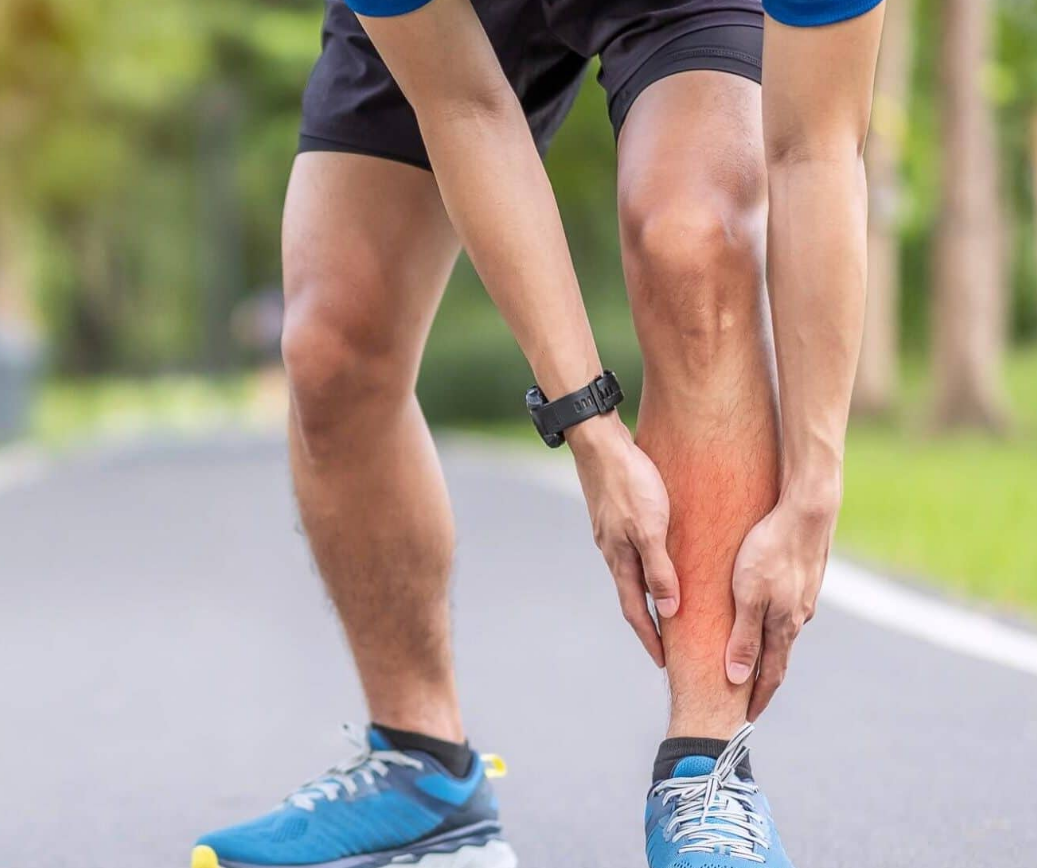
A calf strain happens when muscle fibres are overstretched or torn, often during a quick acceleration, a sudden stop, or a push off the back foot. Many people feel a sharp pain or even a pop in the back of the lower leg, sometimes described as feeling like they were kicked or hit. This classic injury is often called “tennis leg” and usually involves the inner gastrocnemius.
Strains are graded by severity. A grade 1 is a mild overstretch with minimal tearing. A grade 2 is a partial tear with more pain and weakness. A grade 3 is a complete tear, which is far less common and may need specialist input.
Gastrocnemius versus soleus strains
These two muscles tend to get injured in different ways. The gastrocnemius is loaded most during fast, explosive efforts like sprinting, accelerating, and jumping. The soleus is worked harder during steady, sustained running and longer distance work. Soleus strains often feel deeper and lower in the calf, build up more gradually, and can take longer to settle than a gastrocnemius strain of the same grade. Knowing which one is involved helps shape the right rehab.
Tight or overloaded calves
Not all calf pain is a tear. Often it is a tissue that has simply been asked to do too much, too soon. A jump in running mileage, a new hill route, worn-out shoes, or a stretch of long days on your feet can all overload the calf faster than it can adapt, leaving it tight, achy, and tender. This is one of the most common and most fixable patterns, especially in runners.
Achilles tendon involvement
The calf and the Achilles tendon are part of the same system, so a problem in one often shows up in the other. An irritated Achilles tendon, which sits just above the heel, can refer pain up into the lower calf, particularly during walking, running, or the push-off phase of a stride. If your pain sits low and near the heel and is worst first thing in the morning, the Achilles may be part of the story. You can read more on our Achilles tendinopathy physiotherapy page.
Calf cramps
A cramp is a sudden, involuntary, and often intense contraction of the muscle that can stop you in your tracks. Cramps during or after running are commonly linked to fatigue, dehydration, and an imbalance of electrolytes like sodium, potassium, magnesium, and calcium that are lost through sweat. Muscles that are tired or underprepared for the workload are more cramp-prone. Most cramps ease on their own, but ones that keep returning are worth investigating.
When should I worry about calf pain? Red flags for a blood clot
This is the one part of calf pain that is not about training. A small number of calf problems are caused by a blood clot in a deep vein of the leg, known as a deep vein thrombosis, or DVT. A DVT is a medical emergency because the clot can travel to the lungs.
A muscle strain usually has a clear cause, like a sprint or a stumble, and tends to ease when you rest. A possible clot behaves differently. Seek urgent medical care, the same day, if your calf pain comes with any of the following, especially without a clear injury:
- Swelling in one leg, often noticeably more than the other.
- Redness or a change in skin colour over the calf.
- Warmth in the area compared to your other leg.
- Calf pain that came on with no obvious strain or injury.
- Pain that is steadily worsening rather than settling.
- Recent surgery, a cast, a long flight, or a long period of immobility.
“Sudden severe calf pain with swelling, redness, or warmth, especially with no clear injury, should be treated as urgent. Get it checked the same day rather than waiting it out.”
If you also have sudden shortness of breath, chest pain, or are coughing up blood, call emergency services right away, as these can be signs the clot has reached the lungs. We are not able to diagnose or treat a clot at the clinic, and this is one situation where a doctor or emergency department comes first.
What about calf pain only when walking that stops at rest?
Calf pain that reliably comes on after a few minutes of walking and then eases when you stand still can sometimes point to a circulation issue in the arteries called claudication, where narrowed vessels limit blood flow to the muscle during activity. This is different from a muscle strain and is worth raising with your doctor, who can assess your circulation. If a medical cause has been ruled out, we are happy to help with the muscular and movement side.
Not sure where to start?
Book a free consultation and we will point you to the right care, with no pressure.
How can I relieve calf pain at home?
If your pain is recent, mild, and clearly muscular with none of the red flags above, a few simple steps often help within the first week or two. These are general suggestions rather than a diagnosis, so ease in and stop anything that sharply increases pain.
- Calm it down early. In the first day or two after a strain, relative rest, gentle elevation, and short bouts of ice can settle the initial irritation.
- Keep moving gently. Total rest for too long is rarely the answer. Light, pain-free walking and gentle movement keep the tissue healthy as it heals.
- Ease into stretching. Once the sharp pain fades, gentle calf stretches against a wall, both with a straight knee and a bent knee, help restore length and target both calf muscles.
- Hydrate and refuel. If cramps are your main issue, steady hydration and replacing electrolytes around longer sessions can reduce how often they strike.
- Back off the trigger. Reduce the running volume, hills, or speed that flared things, then build it back up gradually rather than all at once.
If these steps are not making a clear difference within a couple of weeks, or the pain keeps returning every time you ramp back up, that is the point to get assessed rather than keep guessing.
How is calf pain treated by a physiotherapist?
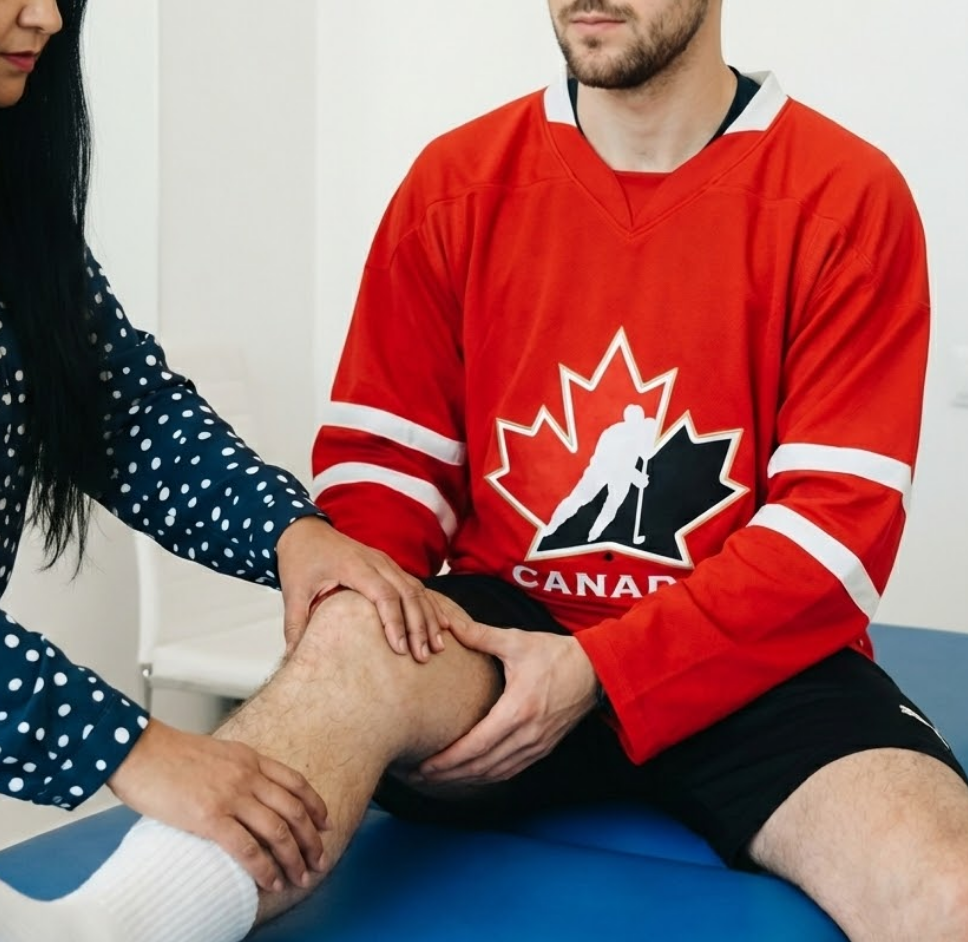
At Wellmax Physiotherapy in Oakville, calf pain treatment starts by finding out why the tissue was overloaded in the first place, not just chasing the sore spot. Your first visit is a full 60-minute assessment, which gives us time to examine your calf, ankle, and Achilles, watch how you walk and load the leg, and review your training and footwear together.
From there, care is hands-on and built around your specific situation. A typical plan may include:
- Manual therapy to ease tight, guarded calf tissue and restore ankle motion so the leg moves freely again.
- Progressive calf-raise loading, starting with gentle isometric holds, then double-leg and single-leg raises, then bent-knee raises to target the soleus, building strength the tissue can rely on.
- A graded return-to-running plan that layers walking, jogging intervals, then steady running, with speed and hills added only once each stage is comfortable.
- Root-cause work on the hip, ankle, and running mechanics, since calves often get overloaded when other links in the chain are not sharing the load.
Why progressive calf-raise loading matters
The calf is a strength-dependent muscle, and rest alone rarely rebuilds the capacity it lost. Carefully progressed loading, from holds to heavy slow raises, is what restores the strength and resilience that lets you walk, push off, and run without the pain returning. Rushing this stage, or skipping it, is one of the biggest reasons calf strains come back.
How do I return to running without re-injuring my calf?
Returning too soon is the most common cause of a repeat calf strain. A safe return usually means starting with short jog-walk intervals, increasing running time week by week based on how your calf responds the next day, and saving sprints, hills, and explosive work until steady running feels easy. We map this out with you so you are not guessing whether today is the day to push.
Why Wellmax for calf pain in Oakville
Wellmax Physiotherapy is based in Oakville and serves patients across Oakville and Mississauga. Our lead physiotherapist, Gurmeet Rai, brings over 16 years of experience and a strong focus on hands-on, root-cause care. The goal is always a confident graduation from treatment, not an endless string of appointments. We want to get your calf strong and reliable again and send you back to the activities you enjoy. For runners, our running injuries physiotherapy and sports physiotherapy teams handle this often, and we also look after the related ankle and foot pain that can travel with a calf problem.
Frequently Asked Questions
How do I know if my calf pain is a strain or a blood clot?+
A calf strain usually has a clear trigger, such as a sprint or sudden stop, and tends to ease with rest. A possible blood clot, or DVT, often appears without a clear injury and brings swelling in one leg, redness, and warmth, with pain that worsens rather than settles. If you notice those signs, treat it as urgent and seek medical care the same day. When in doubt, get it checked, since a clot is one thing you do not want to wait on.
How long does a calf strain take to heal?+
It depends on the grade. A mild grade 1 strain often recovers in roughly two to four weeks with the right loading. A grade 2 partial tear typically takes four to eight weeks, and a full grade 3 tear can take several months and sometimes needs specialist input. Soleus strains can run a little longer than gastrocnemius strains of the same grade. Starting guided rehab early, and returning to running gradually, gives you the best chance of a clean, lasting recovery.
Why do my calves cramp when I run?+
Running cramps are commonly linked to muscle fatigue, dehydration, and an imbalance of electrolytes like sodium, potassium, and magnesium lost through sweat. Calves that are tired or not yet conditioned for the workload are more cramp-prone, so a sudden jump in distance or pace can trigger them. Steady hydration, replacing electrolytes on longer efforts, and building your training load gradually all help. Cramps that keep returning despite this are worth getting assessed.
Should I keep running with calf pain?+
Mild tightness that eases as you warm up is usually fine to work with, but sharp, worsening, or sudden pain is a signal to stop. Pushing through a strain often turns a short recovery into a long one. A better approach is to reduce the running that flares your calf, stay active with lower-impact movement, and build mileage back up gradually as symptoms settle. If pain keeps returning each time you ramp up, an assessment will save you time.
What is the best exercise for calf pain recovery?+
Progressive calf raises are the backbone of recovery. Most people start with gentle isometric holds, then move to double-leg and single-leg raises, then add bent-knee raises to target the deeper soleus muscle. Slow, controlled lifting and lowering builds strength and tendon capacity over time. The right starting point and progression depend on your grade and symptoms, which is why a tailored program tends to work far better than a generic exercise sheet.
Why is my calf pain worse going up stairs or hills?+
Stairs and hills load the calf and Achilles much harder than flat walking, because the muscle has to push you upward against gravity through a bigger range. If your calf is strained, tight, or under-strengthened, those movements expose it quickly. This is actually useful information, since the pattern of what aggravates your pain helps point to the cause. A physiotherapist can test this directly and build a plan that rebuilds the strength those movements demand.
Do I need a referral to see a physiotherapist in Oakville?+
No referral is needed. In Ontario you can book a physiotherapy assessment directly, and at Wellmax in Oakville we offer direct billing to many insurance plans to keep things simple. If you are unsure whether physiotherapy is the right next step for your calf, you can start with a free consultation, where we listen to your story and point you toward the most sensible option with no pressure.
What happens at my first calf pain appointment?+
Your first visit is a full 60-minute assessment. We talk through your symptoms and history, screen for any red flags, then examine your calf, ankle, and Achilles and watch how you walk and load the leg. From there we explain what is going on in plain language and build a hands-on plan, which may include manual therapy, progressive calf-raise loading, and a graded return-to-running program. You will usually leave with a clear idea of what to do next.
You Might Also Like

Gurmeet Rai, Registered Physiotherapist
Gurmeet is a Registered Physiotherapist with the College of Physiotherapists of Ontario and the Clinic Director and co-owner of Wellmax Physiotherapy in Oakville, with 16+ years of clinical experience. She focuses on complex, stubborn cases where earlier treatment has not worked, with advanced training in pelvic health, TMJ, vestibular, and sports and MSK rehab. Expect expert care from assessment to discharge, with honest guidance along the way. Read Gurmeet’s full profile or meet the team.
This article is for educational purposes only and does not replace a professional clinical assessment. Every body and condition is different. If you are experiencing pain or symptoms, book an assessment with a qualified clinician for advice specific to your situation. If you are experiencing a medical emergency, call 911 or visit your nearest emergency department.
