
Whiplash Treatment in Oakville
Car accident neck injury, whiplash associated disorder and post-MVA rehabilitation, with auto insurance billed directly.
Home > Conditions We Treat > Whiplash Treatment in Oakville
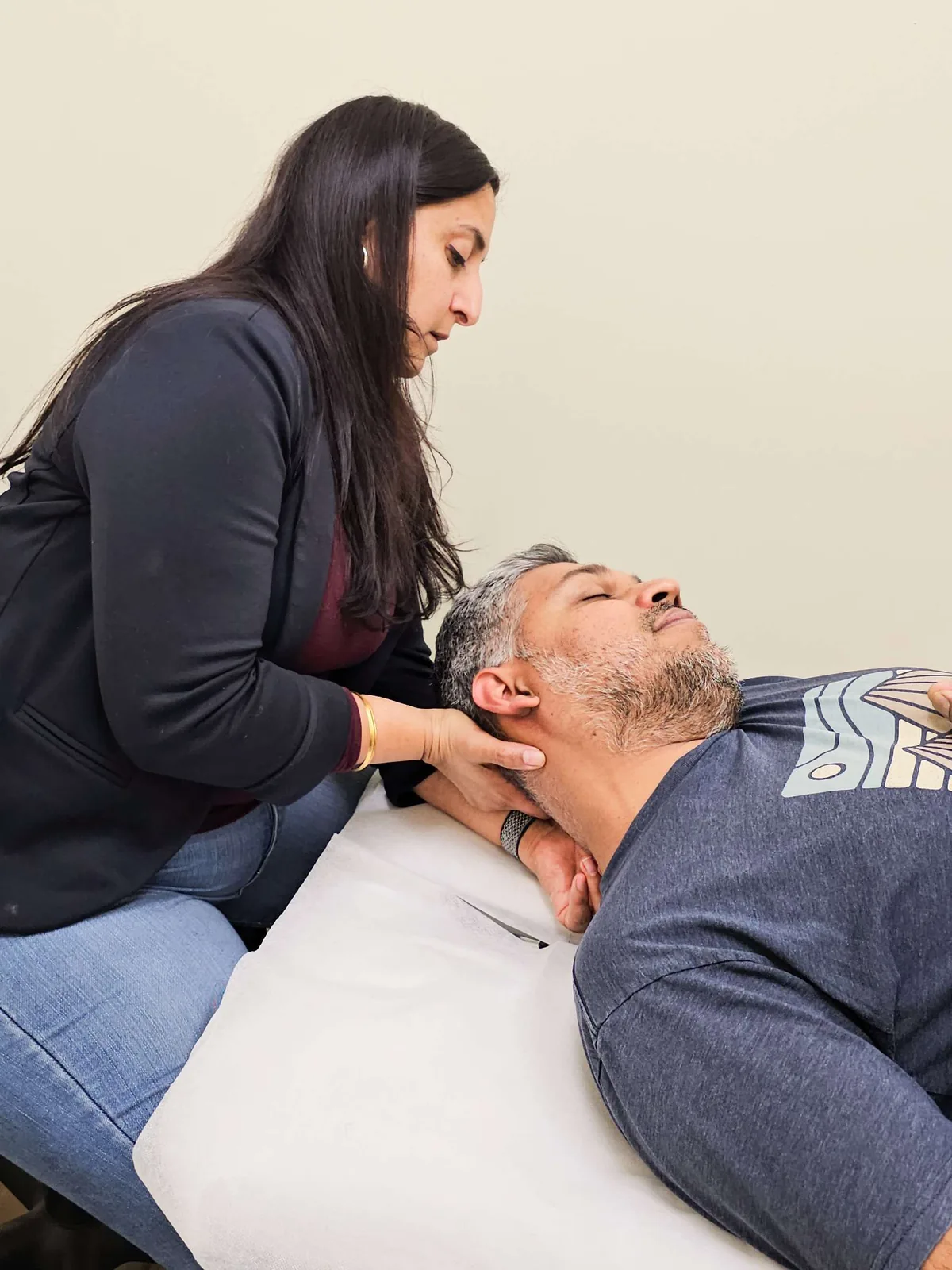
The accident happened two days ago. Maybe it was a rear-end collision at a red light. Maybe someone ran a stop sign at an intersection. The airbags deployed, or maybe they didn’t. At the time, you felt shaken but okay. You drove home, maybe went to the emergency department, and they told you nothing was broken. The X-ray was clear. You thought you’d be fine.
Then you woke up the next morning and couldn’t turn your head. The neck was stiff, the muscles were in spasm, and a headache was building at the base of your skull. By day three, pain was radiating into the shoulder, the jaw was tight, and concentration felt off. This is whiplash. The right whiplash treatment in Oakville starts with grading the injury and beginning active care early, and the fact that symptoms appeared a day or two after the accident is completely normal. Delayed onset is one of the hallmark features of whiplash associated disorders.
Whiplash is the most common injury from car accidents. It happens when the head is thrown forward and then snapped backward (or the reverse) faster than the neck muscles can control the movement. The muscles, ligaments, facet joints, and discs in the cervical spine absorb forces they weren’t designed for. The result is a spectrum of symptoms ranging from mild neck stiffness to severe pain, headaches, dizziness, difficulty concentrating, and radiating arm pain.
The good news: the evidence is clear that most whiplash injuries recover well with the right approach. Early active physiotherapy, not rest, not a collar, not just painkillers, produces the best outcomes. The earlier treatment begins after the accident, the lower the risk of the condition becoming chronic.
At Wellmax Physiotherapy, we treat whiplash from car accidents, cycling collisions, sports impacts, and falls. We grade the severity, identify all affected structures, begin active treatment early, and manage the full recovery process including the insurance paperwork. See our motor vehicle accident (MVA) rehabilitation page for the broader auto accident treatment process. Not sure where to start? Book a free consult and we will assess what the accident affected.
We’re at 1148 Winston Churchill Blvd, Unit B3, Oakville, just south of the QEW. Patients from Clarkson, Clearview, Sheridan Park, Maple Grove, and south Mississauga come to us for whiplash treatment after car accidents.
- Understanding Whiplash: What Happens to the Neck
- Whiplash Symptoms Beyond Neck Pain
- How We Deliver Whiplash Treatment in Oakville at Wellmax
- Whiplash Recovery Timelines
- Ontario Auto Insurance Coverage for Whiplash Treatment in Oakville
- Why Oakville Patients Choose Wellmax for Whiplash Treatment
- Related Conditions and Services
- Book Your Whiplash Assessment
- Frequently Asked Questions
Understanding Whiplash: What Happens to the Neck
The Injury Mechanism

During a collision, the torso is restrained by the seatbelt while the head is free to move. In a rear-end collision, the body is pushed forward while the head stays behind momentarily, creating a rapid extension (backward bending) of the cervical spine followed by a rebound flexion (forward bending). This entire sequence happens in less than 200 milliseconds. The neck muscles don’t have time to brace. The forces are absorbed by the cervical facet joints, the intervertebral discs, the ligaments, the muscles, and in some cases, the nerve roots.
The severity depends on the speed of impact, the angle of collision, whether the headrest was positioned correctly, whether you saw the impact coming (bracing changes the injury pattern), and individual factors like neck strength, age, and pre-existing conditions.
WAD Grading: Not All Whiplash Is the Same
Whiplash associated disorders (WAD) are classified using the Quebec Task Force grading system. Understanding your grade helps determine the treatment approach and expected recovery timeline.
Grade 0: No neck complaints. No physical signs. No treatment needed.
Grade I: Neck pain, stiffness, or tenderness. No physical signs on examination (full range of motion, no neurological findings). This is the most common grade. Recovery is typically 4-8 weeks with proper management.
Grade II: Neck pain with musculoskeletal signs. Reduced range of motion, point tenderness over specific structures, muscle spasm. This is the most common grade requiring structured physiotherapy. Recovery is typically 8-14 weeks.
Grade III: Neck pain with neurological signs. Decreased or absent reflexes, weakness in the arm or hand, sensory changes (numbness, tingling). This indicates nerve root involvement and requires more intensive treatment and monitoring. Recovery may take 3-6 months.
Grade IV: Neck pain with fracture or dislocation. This is a medical emergency managed in hospital. Physiotherapy begins after the fracture has been stabilized or surgically treated.
Why Symptoms Are Often Delayed
It’s common for whiplash symptoms to appear 24 to 72 hours after the accident. This doesn’t mean the injury is less serious. The delay is caused by the body’s initial adrenaline response masking pain, gradual swelling of injured soft tissues, and the inflammatory process taking time to develop. If you’ve been in a car accident and feel “fine” immediately afterward, don’t assume you’re uninjured. Monitor for symptoms over the next 3-5 days and get assessed if anything develops.
Whiplash Symptoms Beyond Neck Pain
Headaches
Cervicogenic headaches (headaches originating from the neck) are the second most common whiplash symptom after neck pain. They typically start at the base of the skull and radiate to the forehead, temples, or behind the eyes. They’re caused by dysfunction in the upper cervical spine joints (C1-C3) and tightness in the suboccipital muscles. Physiotherapy targeting the upper cervical spine is highly effective for post-whiplash headaches. See our neck pain and headache physiotherapy page for more on cervicogenic headaches.
Dizziness and Balance Problems
Whiplash can cause dizziness through several mechanisms: injury to the cervical proprioceptors (the sensors in the neck joints that tell the brain where the head is in space), direct concussion from the impact, or disruption of the vestibular system. If dizziness is a significant symptom, vestibular assessment and treatment may be needed alongside the neck rehabilitation. See our vestibular rehabilitation page for dizziness and balance treatment.
Concussion
The same forces that cause whiplash can cause concussion. The brain moves inside the skull during the rapid acceleration and deceleration. Concussion and whiplash frequently co-exist after car accidents, and the symptoms overlap (headaches, difficulty concentrating, dizziness, fatigue). Identifying whether concussion is present alongside whiplash changes the treatment approach significantly. See our concussion rehabilitation page for post-concussion assessment and treatment.
Jaw Pain (TMJ Dysfunction)
The temporomandibular joint can be injured during whiplash. The jaw is thrown open during the rapid head movement, straining the TMJ ligaments and muscles. Post-accident jaw pain, clicking, difficulty opening the mouth, and headaches radiating from the jaw are common but frequently overlooked in standard whiplash assessments. See our TMJ physiotherapy page for jaw pain treatment.
Radiating Arm Pain
In WAD Grade III, the nerve roots in the cervical spine can be compressed or irritated by disc bulging, foraminal narrowing, or swelling. This produces pain, numbness, or tingling radiating down one or both arms. This requires specific nerve assessment and treatment. Our approach to nerve pain follows similar principles to our sciatica treatment.
Mid-Back and Shoulder Pain
Whiplash doesn’t only affect the neck. The thoracic spine, the shoulder girdle, and the upper back muscles are all loaded during the collision. Mid-back stiffness, shoulder blade pain, and upper trapezius tightness are common parts of the whiplash presentation and need to be treated alongside the cervical spine. See our shoulder pain physiotherapy page for more on post-accident shoulder treatment.
How We Deliver Whiplash Treatment in Oakville at Wellmax
Early Active Treatment (Not Rest, Not a Collar)
Every major clinical guideline for whiplash says the same thing: early active treatment produces better outcomes than rest or immobilization. Wearing a cervical collar for more than a few days actually slows recovery by weakening the neck muscles and promoting fear of movement. We begin gentle active treatment as early as possible, typically within the first week of injury. This includes cervical range-of-motion exercises within the patient’s pain tolerance, education about the injury and expected recovery, reassurance that movement is safe and beneficial, and strategies for managing daily activities.
Manual Therapy for the Cervical and Thoracic Spine
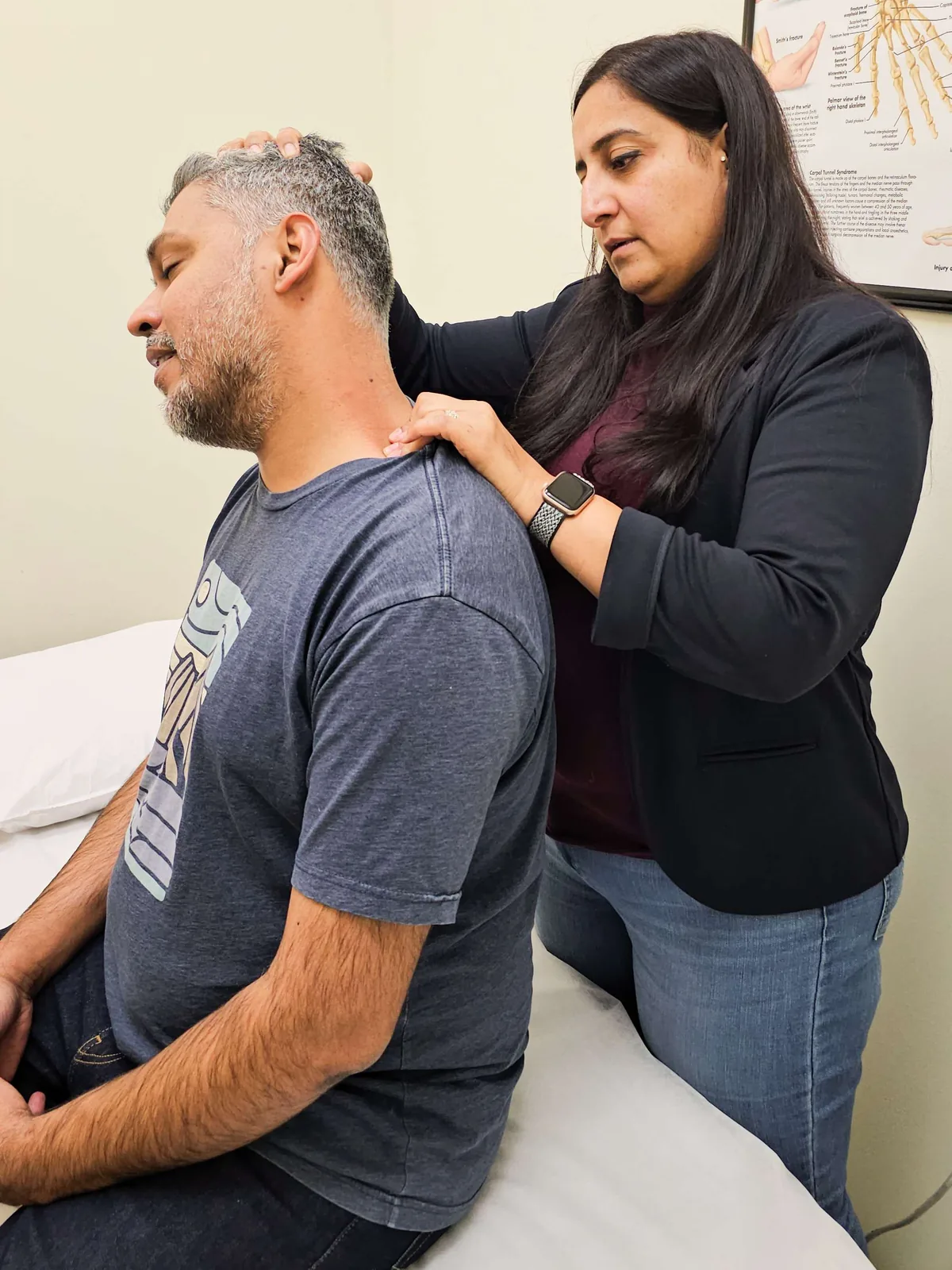
Hands-on treatment addresses the joint stiffness and muscle guarding that develop after whiplash. Gentle cervical mobilization restores segmental movement in the neck. Thoracic spine mobilization reduces the compensatory stiffness that develops in the mid-back. Soft tissue release targets the suboccipital muscles, upper trapezius, levator scapulae, and scalenes, the muscles most commonly affected in whiplash.
Progressive Cervical Strengthening
Once the acute pain settles (usually 2-4 weeks), the focus shifts to rebuilding cervical spine stability. The deep neck flexor muscles (longus colli and longus capitis) are critical stabilizers of the cervical spine, and research consistently shows they are inhibited and weakened after whiplash. Specific deep neck flexor retraining is a core component of evidence-based whiplash rehabilitation. Progressive strengthening of the neck, shoulder blade stabilizers, and upper back muscles follows.
Upper Cervical Treatment for Headaches
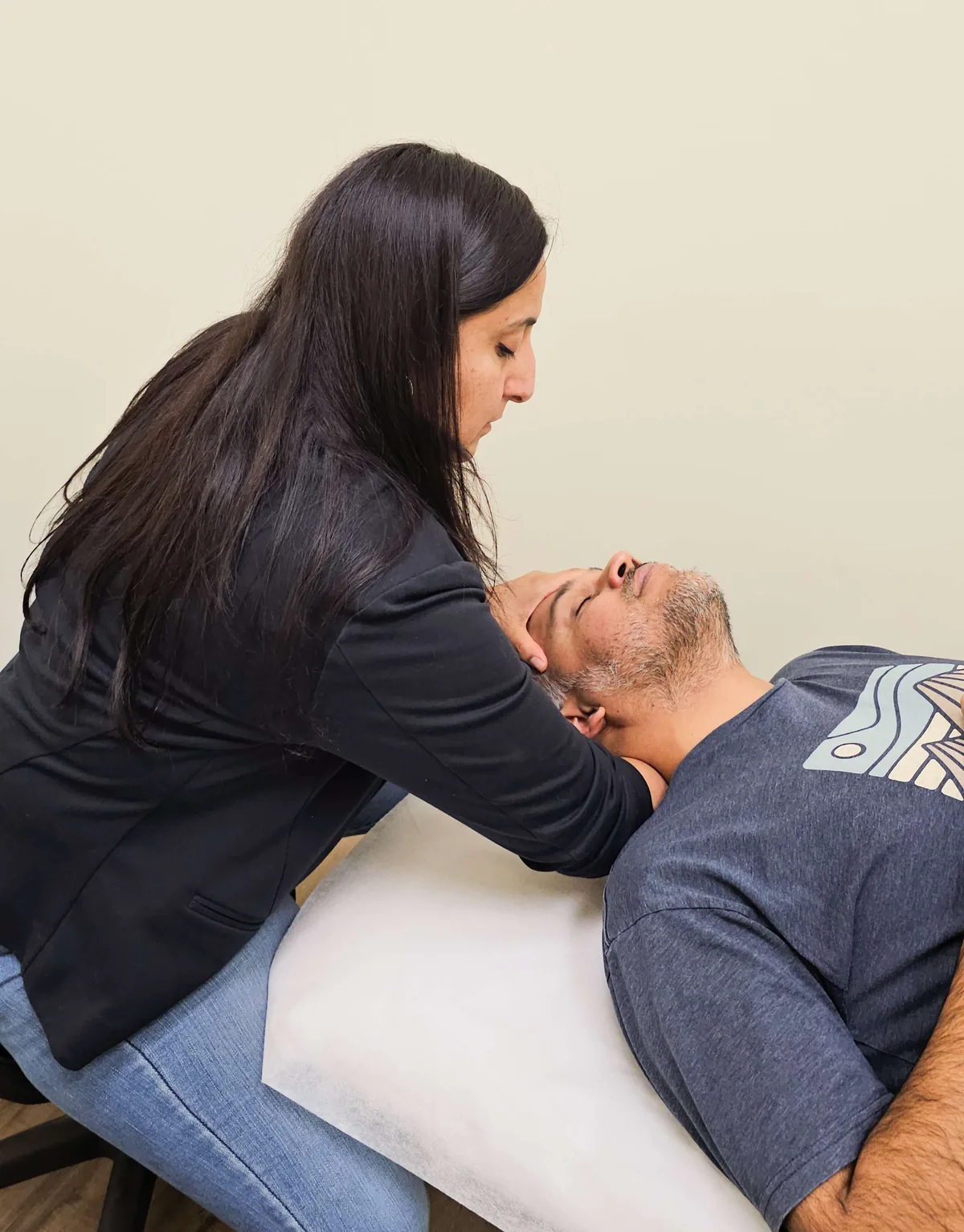
Post-whiplash headaches are primarily driven by the C1-C3 upper cervical segments. Specific mobilization and manual therapy targeting these joints, combined with suboccipital muscle release and deep neck flexor training, is the most effective approach for cervicogenic headaches. Most patients with post-whiplash headaches see significant improvement within 4-6 weeks of targeted upper cervical treatment.
Deep Tissue Laser for Acute Pain
Deep tissue laser therapy is particularly useful in the first 2-3 weeks after whiplash when pain and inflammation are at their peak. The laser reduces inflammation at the tissue level, decreases pain, and improves the patient’s ability to participate in the active exercise program. It’s an adjunct that accelerates the early recovery window.
Addressing Fear of Movement
After a car accident, many patients develop kinesiophobia, a fear of movement driven by the belief that their neck is damaged and that movement will cause further harm. Research shows that kinesiophobia is one of the strongest predictors of chronic whiplash. Part of effective whiplash physiotherapy is education: explaining that the neck structures are healing, that movement is safe, that imaging findings (even disc bulges) are often normal and not necessarily the source of pain, and that gradual return to activity is the path to recovery, not avoidance. When symptoms persist, our chronic pain physiotherapy approach adds pain education and graded exposure.
Whiplash Recovery Timelines
| WAD Grade | Typical Recovery | What to Expect |
|---|---|---|
| Grade I (pain, no physical signs) | 4-8 weeks | Full recovery expected with early active management |
| Grade II (pain + reduced ROM, muscle spasm) | 8-14 weeks | Most common grade requiring structured physio, good outcomes |
| Grade III (pain + neurological signs) | 3-6 months | Nerve involvement, longer rehab, may need imaging |
| Whiplash with concussion | 6-16 weeks | Dual treatment approach needed, cognitive symptoms tracked |
| Chronic whiplash (symptoms beyond 3 months) | Ongoing management, significant improvement 3-6 months | Multimodal approach with exercise, manual therapy, pain education |
Recovery timelines depend on the WAD grade, whether treatment begins early, the presence of concurrent injuries (concussion, TMJ), psychological factors, and consistency with the rehabilitation program. Your physiotherapist provides a specific prognosis at your first assessment.
Ontario Auto Insurance Coverage for Whiplash Treatment in Oakville
How Coverage Works After a Car Accident
Ontario operates a no-fault auto insurance system. This means your own insurance company pays for your treatment regardless of who caused the accident. You don’t need to wait for fault to be determined before starting physiotherapy. Your auto insurance coverage is completely separate from your workplace extended health benefits. The two are not connected.
Minor Injury Guideline (MIG): $3,500 Coverage
Most whiplash injuries (WAD Grade I and II without complicating factors) are classified under the Minor Injury Guideline. This provides up to $3,500 in total medical and rehabilitation benefits. While this amount sounds limited, many patients with straightforward whiplash recover well within this budget when treatment starts promptly. The key is beginning physiotherapy early rather than waiting weeks, which uses up the treatment window while the injury becomes harder to treat.
Non-MIG Coverage: Up to $65,000
If your whiplash injury is more complex (WAD Grade III with nerve involvement, concurrent concussion, pre-existing conditions that were worsened, or symptoms that persist beyond the expected MIG recovery period), your injury may be reclassified outside the MIG. Non-catastrophic injuries qualify for up to $65,000 in combined medical, rehabilitation, and attendant care benefits. This significantly expands your access to treatment. Your physiotherapist’s documentation supports this reclassification when clinically justified. Work injuries are handled separately; see our WSIB and workplace injury rehab page if your accident happened on the job.
What We Handle for You
We manage all insurance paperwork for MVA claims. This includes filing the OCF-18 Treatment Plan with your insurer, direct billing (you pay nothing out of pocket for approved treatment), communicating with your insurance adjuster about treatment progress, and coordinating with your physician when additional assessments or referrals are needed. See our motor vehicle accident (MVA) rehabilitation page for full details on the claims process.
Why Oakville Patients Choose Wellmax for Whiplash Treatment
We Assess Everything the Accident Affected
A car accident doesn’t injure just the neck. We assess the cervical spine, thoracic spine, shoulder girdle, TMJ, vestibular function, and screen for concussion at the first visit. Many patients come to us after being treated only for “neck pain” elsewhere, when the headaches are coming from the upper cervical joints, the dizziness is vestibular, and the jaw has been contributing for weeks. The first visit is comprehensive because whiplash rarely exists in isolation.
Active Treatment from Day One
We don’t put you in a collar and tell you to rest. We begin active, evidence-based treatment at the first visit within your pain tolerance. Early active management is the strongest predictor of good recovery in whiplash. Every week of delayed treatment increases the risk of chronic symptoms.
Expert Care Managing Your Case
Whiplash rehabilitation involves tracking subtle changes in pain patterns, range of motion, strength, neurological signs, and headache frequency across weeks and months. Your physiotherapy team follows your case from the first assessment through discharge, adjusting the treatment plan as the neck responds. The insurance documentation is also more consistent and effective when the full clinical picture is tracked in one place.
Oakville’s Whiplash Patients
We treat whiplash from collisions on the QEW, Highway 403, Trafalgar Road, Dundas Street, and local intersections throughout Oakville and south Mississauga. Rear-end collisions at the QEW/Winston Churchill interchange. T-bone accidents at Dundas and Trafalgar. Fender benders on Upper Middle Road and Lakeshore. The mechanism differs but the injury pattern is similar, and early treatment makes the difference in all of them. We also see cycling and pedestrian collision injuries and sports-related whiplash from hockey, football, and contact sports.
We’re at 1148 Winston Churchill Blvd, Unit B3, Oakville. Just south of the QEW in the Winston Park plaza. Free parking, ground-level access, private treatment rooms. Patients come from Clarkson, Clearview, Sheridan Park, Maple Grove, River Oaks, and south Mississauga.
What Our Patients Say
Amanda L.“I was searching for the best physiotherapy clinic in Oakville after a car accident, and this clinic exceeded my expectations. Dealing with whiplash and neck stiffness was overwhelming, and the insurance paperwork was stressing me out. The team at Wellmax made the entire process so smooth. They helped manage the MVA billing directly and focused entirely on my recovery. Gurmeet used manual therapy to reduce the tension in my neck, and the gentle exercises she prescribed helped me regain my mobility safely. They truly care about their patients and the facility is incredibly clean and modern.”
Ruchi P.“Team is excellent!! Very professional and compassionate towards their work. They helped me recover with Vertigo. I would strongly recommend them to anyone who is suffering with BPPV.”
Verified Patient“I had been dealing with jaw clicking and pain on the left side for over a year. My dentist made me a night guard which helped a bit with the grinding but the clicking and tightness never went away. A coworker mentioned that physiotherapy can treat TMJ problems, which I honestly did not know. Gurmeet assessed my jaw, neck, and posture in the first session and explained how everything was connected. After about five sessions the clicking had almost completely stopped and I could eat without that constant ache. I had no idea physiotherapy could make that much of a difference for jaw pain.”
Verified Patient“I was having dizzy spells that came out of nowhere. My doctor ran tests and said it was BPPV and to see a physiotherapist who does vestibular rehab. Wellmax was one of the few clinics in Oakville that offers it. The first visit Gurmeet did specific head positioning manoeuvres and the vertigo improved immediately. She also assessed my neck and found that some of the residual dizziness was actually coming from tightness in my upper cervical spine. After three sessions the dizziness was completely gone. I had been dealing with it for two months and it was resolved in under two weeks of treatment.”
Amanda S.“I’ve had very tight trap muscles greatly impact my neck, causing pain and limited flexibility/rotation for a very long time. Gurmeet has been a huge help between her education, several different exercise/stretch techniques, deep tissue massage, ultrasound and IFC sessions. My pain has subsided immensely and made huge progress in range of flexibility and rotation. Thank you!”
N.A. T.“I recently had physiotherapy sessions here for my neck and shoulder pain. After just 6 sessions, I’m feeling much, much better. The whole team is amazing, very supportive, friendly, and professional. I truly appreciate all the effort and care they put into my treatment. Highly recommended”
Verified Patient“Woke up one morning and could barely open my mouth. My doctor said it was TMJ dysfunction and suggested physio. Gurmeet worked on the muscles around my jaw and into my neck and upper back. She also gave me exercises I could do at home between sessions. Within three weeks my jaw was opening normally again and the headaches I had been getting every afternoon stopped too. Turns out the jaw and the headaches were related the whole time.”
Abeer A.“The Magician, that’s the only way I can describe Dr. Gurmeet. After six months of constant shoulder and neck pain that took over my life…”
See all our Google reviewsRead more patient storiesLeave a review
Frequently Asked Questions
How soon after a car accident should I start physiotherapy?+–
As soon as possible. Every major clinical guideline recommends early active treatment for whiplash. Starting within the first week produces better outcomes than waiting. Even if you’re still in significant pain, there are safe and effective treatments that can begin immediately. Waiting weeks to see if it gets better increases the risk of the condition becoming chronic. You don’t need a doctor’s referral to start physiotherapy in Ontario.
Is my whiplash treatment covered by auto insurance?+–
Yes. Ontario’s no-fault auto insurance covers physiotherapy after a car accident regardless of who was at fault. Your own insurance company pays for treatment. Minor whiplash injuries are covered up to $3,500 under the Minor Injury Guideline. More complex injuries qualify for up to $65,000 in benefits. We handle all insurance paperwork and bill your auto insurer directly. You pay nothing out of pocket for approved treatment.
How much does whiplash treatment in Oakville cost after a car accident?+–
For an approved auto insurance claim, your whiplash treatment in Oakville usually costs you nothing out of pocket. We file the OCF-18 Treatment Plan with your insurer and direct bill them, so there is no payment at the clinic for approved sessions. If the accident did not involve a vehicle, treatment is billed at our regular physiotherapy rates (a $130 initial assessment, then follow-ups from $90) and direct billed to most extended health plans. We confirm your coverage before treatment begins so there are no surprises.
My X-ray was normal. Does that mean my neck is fine?+–
No. X-rays only show bones. They rule out fractures and dislocations (which is important), but they don’t show the soft tissue injuries that cause whiplash pain: muscle strains, ligament sprains, facet joint injuries, and disc problems. A normal X-ray is expected in WAD Grades I through III. It means you don’t have a fracture, not that you don’t have an injury. A thorough clinical examination by a physiotherapist is more informative than imaging for diagnosing and treating whiplash.
Should I wear a neck collar after whiplash?+–
No, except for a few specific situations. Research clearly shows that prolonged collar use slows whiplash recovery. Collars weaken the neck muscles, promote stiffness, and reinforce the fear that the neck is fragile and needs to be protected. Current guidelines recommend early active movement within your pain tolerance. The exception is if a physician has prescribed a collar for a specific structural injury (fracture, severe ligament damage). For standard whiplash (WAD Grade I-II), a collar does more harm than good.
My symptoms didn't start until two days after the accident. Is that normal?+–
Completely normal. Delayed onset of whiplash symptoms (24-72 hours after the accident) is one of the most characteristic features of the condition. The body’s adrenaline response masks pain initially, and the inflammatory process in the injured soft tissues takes time to develop. Delayed symptoms don’t mean the injury is less serious. If you develop neck pain, headaches, dizziness, or stiffness in the days following a car accident, get assessed promptly.
Can whiplash cause headaches and dizziness?+–
Yes, both are very common. Headaches after whiplash are typically cervicogenic (originating from the upper cervical spine joints at C1-C3). They start at the base of the skull and radiate to the forehead, temples, or behind the eyes. Dizziness can result from injury to the cervical proprioceptors, vestibular system disruption, or concurrent concussion. Both symptoms are treatable with targeted physiotherapy.
How long does whiplash take to heal?+–
Most whiplash injuries (WAD Grade I-II) recover within 8-14 weeks with proper treatment. Mild cases (Grade I) often resolve in 4-8 weeks. More complex cases with nerve involvement (Grade III) may take 3-6 months. About 50% of whiplash patients recover within the first 3 months. Starting treatment early is the most important factor in determining recovery speed. Whiplash that hasn’t improved after 3 months is considered chronic and may require a more intensive multimodal approach.
What's the difference between the $3,500 and $65,000 coverage?+–
The $3,500 is the Minor Injury Guideline (MIG) limit for straightforward soft tissue injuries like standard whiplash. The $65,000 is the non-catastrophic benefit limit for more serious injuries or complications. If your whiplash involves nerve damage, concurrent concussion, pre-existing conditions that were worsened, or symptoms that persist beyond the expected MIG recovery period, your injury may be reclassified outside the MIG to access the higher benefit level. Your physiotherapist’s clinical documentation supports this process.
Can I also get concussion from a car accident?+–
Yes. The same forces that cause whiplash can cause concussion. The brain moves inside the skull during the rapid acceleration and deceleration of a collision. Concussion and whiplash frequently co-exist and their symptoms overlap significantly (headaches, difficulty concentrating, dizziness, fatigue). At Wellmax, we screen for concussion in every whiplash assessment because identifying both conditions changes the treatment approach and the expected recovery timeline.
Do you treat whiplash for patients coming from Mississauga?+–
Yes. We are located at Winston Churchill Boulevard right on the Oakville and Mississauga border, so many of our whiplash patients drive in from Clarkson, Sheridan Park, Lorne Park, and south Mississauga. The same no-fault auto insurance rules apply across Ontario, so your whiplash treatment in Oakville is covered no matter which side of the city line you live on. We bill your auto insurer directly and there is no referral needed to start.
Should I wear a neck collar after whiplash?+–
Current evidence does not support prolonged use of a soft cervical collar after whiplash. Wearing a collar for more than a few days delays recovery by reducing neck muscle activation and reinforcing pain-avoidance behaviour. Early, gentle movement produces consistently better outcomes than immobilisation. A collar can be used briefly for pain control in the very acute phase if recommended by a physician, but the goal is to transition off it quickly. A physiotherapist will guide you through active movement and neck-strengthening exercises from the earliest safe point.
How long does whiplash take to heal completely?+–
Most people with whiplash recover within six to twelve weeks with appropriate treatment. Mild to moderate cases often resolve in four to eight weeks. However, a subset of people develop chronic whiplash-associated disorder, particularly when symptoms go untreated in the early phase, when there is significant psychological distress, or when neck strength and function are not fully rehabilitated before returning to normal activity. Starting physiotherapy early and completing a full course of treatment gives the best chance of full recovery without persistent symptoms.
Can whiplash cause headaches weeks after the accident?+–
Yes. Cervicogenic headaches originating from the upper cervical joints and muscles are a common delayed symptom after whiplash. They often start at the base of the skull and spread forward and can appear or worsen days to weeks after the initial injury as the acute inflammation evolves into joint stiffness and muscle guarding. These headaches respond well to physiotherapy targeting the cervical spine, including manual therapy and specific neck strengthening. If headaches begin after a period of apparent recovery, seek assessment rather than assuming they are unrelated to the accident.
Is it normal for whiplash symptoms to get worse before they get better?+–
A temporary increase in soreness in the first few days after physiotherapy is common and does not mean the treatment is making things worse. The neck muscles and joints are being moved and loaded in ways that may not have happened since the accident, which produces some expected fatigue or soreness. However, a consistent worsening trend over multiple sessions, or a sudden sharp increase in neurological symptoms such as arm tingling or weakness, should be raised with your physiotherapist immediately. Good communication about how you are responding helps them adjust the intensity at the right pace.
Related Conditions and Services
- Motor Vehicle Accident (MVA) Rehabilitation: Complete auto accident rehabilitation process, insurance claims, and direct billing.
- Neck Pain and Headaches: Cervicogenic headaches, cervical disc problems, and non-traumatic neck pain treatment.
- Concussion Rehabilitation: Post-concussion assessment and return-to-activity protocols when concussion co-exists with whiplash.
- TMJ and Jaw Pain: Post-accident TMJ dysfunction frequently co-occurs with whiplash.
- Vestibular Rehabilitation: Dizziness and balance problems following car accidents and head injuries.
- Shoulder Pain: Shoulder and upper back injuries from seatbelt loading during collision.
- Deep Tissue Laser Therapy: Deep tissue laser for acute whiplash inflammation and pain.
- Chronic Pain: When whiplash symptoms persist beyond 3 months and central sensitization develops.
- WSIB and Workplace Injury Rehab: Coverage and rehabilitation when the accident happened at work or on the job.
- Sciatica: Nerve pain management principles applicable to cervical radiculopathy in WAD Grade III.
Book Your Whiplash Assessment
If you’ve been in a car accident, don’t wait weeks to see if the neck gets better on its own. The evidence is clear: early physiotherapy produces better outcomes than waiting. Whether the accident was yesterday, last week, or months ago and the symptoms aren’t resolving, get it assessed properly. Your physiotherapist will grade the severity, check for concussion and TMJ involvement, and start treatment at the first visit. We handle the insurance paperwork directly with your auto insurer, and your first step can be a free consult.
Wellmax Physiotherapy
1148 Winston Churchill Blvd, Unit B3, Oakville, ON L6J 0A3
Phone: (905) 829-1100
Email: info@wellmaxphysiotherapy.ca
Proudly Serving Our Local Communities:
- East Oakville: Winston Park, Clearview, and the QEW/403 Corridor.
- South Oakville: Eastlake, Maple Grove, Lorne Park, and Old Oakville.
- North Oakville: Joshua Creek, Falgarwood, Iroquois Ridge, and Upper Middle Road.
- Mississauga Border: Clarkson, Sheridan Park, Sheridan Homelands, and Southdown.
Insurance: Direct billing to auto insurance for all MVA claims. Extended health plan direct billing also available. WSIB claims accepted for work-related accidents. No referral needed. See our insurance and direct billing page for details.
Hours: Monday to Friday: 9am to 7pm | Saturday: 9am to 2pm | Sunday: 9am to 2pm (by appointment only)
Registered & Regulated
Regulated & Recognized Across Every Discipline
Wellmax is in good standing with the regulatory colleges and leading associations for physiotherapy, chiropractic, massage therapy, and naturopathic medicine in Ontario.