

Whiplash After a Car Accident: Symptoms, Recovery, and Ontario Insurance Basics

A car accident happens in a second, but the neck pain often shows up hours or even a day later. You felt fine at the scene, then woke up the next morning stiff, sore, and barely able to turn your head. That delayed onset is one of the most common patterns we see with whiplash, and it catches a lot of people off guard.
This guide explains what whiplash is, how long recovery usually takes, why early movement beats resting in a collar, and how Ontario auto insurance covers your care. Wellmax Physiotherapy treats car accident injuries at our Oakville clinic, and we welcome patients from Oakville and Mississauga, we offer direct billing, and we accept motor vehicle accident claims so you can start without paying up front.
Key Takeaways
- Whiplash is a neck injury from the rapid back-and-forth motion of a crash, and symptoms can be delayed by a day or more.
- Most mild to moderate cases (Grades I and II) improve within a few weeks, but roughly 30 to 50 percent of people have lingering symptoms past three months.
- Early, gentle movement and guided exercise lead to better outcomes than rest or a soft collar.
- In Ontario, accident benefits cover physiotherapy regardless of who was at fault, you do not need a doctor’s referral to start, and Wellmax can direct bill your insurer.
What is whiplash, exactly?
Whiplash is a neck injury caused by a sudden, forceful back-and-forth movement of the head, like the crack of a whip. A rear-end collision is the classic cause, but it can also happen in side impacts, sports collisions, or any sudden jolt.
During the crash, your head whips backward and then forward faster than your neck muscles can brace for. That motion strains the muscles, ligaments, and joints of the neck. The medical term clinicians use is whiplash-associated disorder, or WAD.
It is important to know that whiplash is a soft-tissue and joint injury in most cases, not something that shows up on a standard X-ray. That does not make it any less real. The pain, stiffness, and headaches are genuine, and they respond well to the right hands-on care.
What are the symptoms of whiplash after a car accident?
Whiplash affects more than just the neck. Common symptoms include:
- Neck pain, stiffness, and reduced range of motion
- Headaches, often starting at the base of the skull
- Pain or tightness across the shoulders and upper back
- Dizziness or a foggy, off-balance feeling
- Tingling or pins and needles into the arms
- Trouble sleeping, fatigue, and difficulty concentrating
If you are dealing with persistent neck pain and headaches, our neck pain and headache physiotherapy page goes deeper into how these symptoms connect and how we treat them.
Why do symptoms show up a day later?
Adrenaline at the scene of a crash masks pain. As it wears off over the following hours, inflammation builds and the injured tissues become sore and tight. This is why so many people feel fine on the day of the accident and much worse the next morning. A delayed onset does not mean the injury is minor, it simply means your body is catching up to what happened.
How is whiplash graded?
Clinicians classify whiplash into grades, which helps guide treatment and set realistic expectations.
- Grade 0: No neck pain, stiffness, or physical signs.
- Grade I: Neck pain, stiffness, or tenderness, with no physical signs on examination.
- Grade II: Neck pain plus musculoskeletal signs, such as reduced movement and muscle tenderness.
- Grade III: Neck pain plus neurological signs, such as reduced reflexes, weakness, or sensory changes.
- Grade IV: Neck pain with fracture or dislocation, which requires emergency medical care.
The large majority of car accident whiplash falls into Grades I and II. These respond very well to physiotherapy. Grades III and IV need medical assessment first, and we coordinate with your doctor when those signs are present.
“You felt fine at the scene, then woke up the next morning unable to turn your head. That delayed pain is whiplash catching up to you, and it is treatable.”
How long does whiplash take to heal?
For most people with Grade I or II whiplash, symptoms improve significantly within a few weeks. Recovery, when it happens, usually occurs within the first two to three months after the injury.
The honest part is this: not everyone follows the same timeline. Research shows that roughly 30 to 50 percent of people still have some symptoms beyond three months. The strongest predictor of a smooth recovery is starting active treatment early rather than waiting and hoping it settles on its own.
What makes recovery slower?
A few things tend to stretch out recovery: higher initial pain, dizziness, early headaches, prolonged rest, and waiting weeks before getting assessed. Stress and poor sleep play a role too. The good news is that most of these are things we can actively work on together in a treatment plan.
What is the best treatment for whiplash?
The evidence is clear and a little surprising to most people: for Grade I and II whiplash, early movement and education beat rest and soft collars. Lying still or wearing a collar for long periods actually tends to slow recovery and stiffen the neck further.
At Wellmax, treatment is led by Gurmeet Rai, who has over 16 years of clinical experience. Our approach combines:
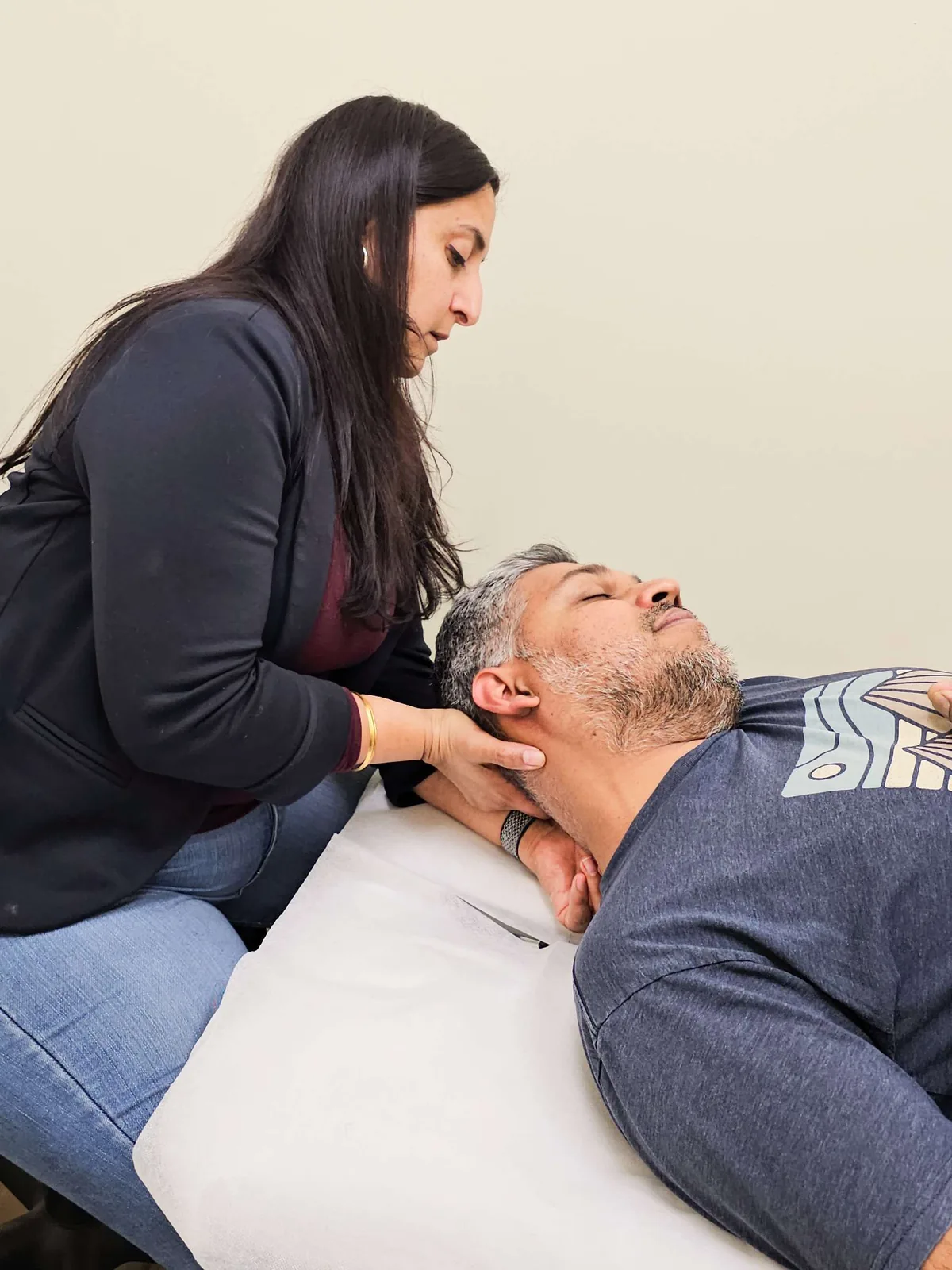
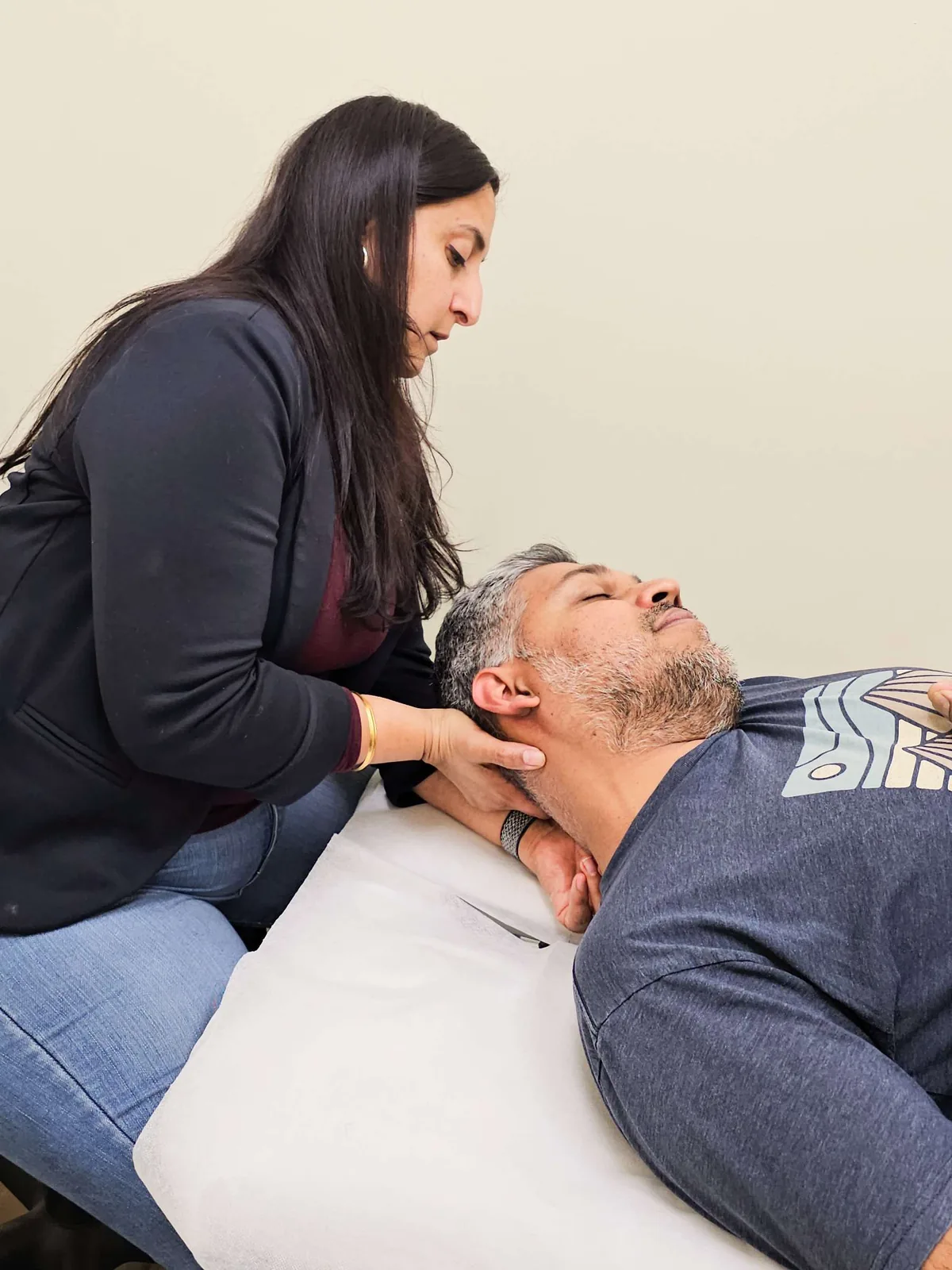
- Hands-on manual therapy to ease stiff joints and tight muscles in the neck and upper back.
- Guided active movement to safely restore range of motion early, when it is safe to do so.
- Progressive strengthening for the deep neck and postural muscles that protect the joints.
- Education and pacing so you understand what is happening and stay confident moving.
We start every plan with a 60-minute assessment so we can look at the whole picture, not just the sore spot, and find the root cause of your symptoms rather than only chasing the pain. You can learn more on our dedicated whiplash physiotherapy in Oakville page.
Should I rest or keep moving?
Beyond the first day or two, gentle movement is your friend. Complete rest stiffens the neck and can make things worse. Your physiotherapist will show you which movements are safe, how far to push, and when to progress. Staying active within comfortable limits is one of the most powerful things you can do for whiplash recovery.
How does Ontario auto insurance cover whiplash treatment?
This is the part that stops many people from getting care, so let us make it simple. In Ontario, your own auto insurance includes accident benefits, also called Statutory Accident Benefits (SABS). These cover medical and rehabilitation costs, including physiotherapy, after a car accident.
A few key points worth knowing:
- Fault does not matter. Accident benefits are available regardless of who caused the crash.
- No referral needed. You do not need a doctor’s note to start physiotherapy in Ontario.
- Direct billing. Wellmax bills your auto insurer directly, so there is no out-of-pocket cost to begin.
- Minor injuries. Whiplash, sprains, and strains are typically handled under the Minor Injury Guideline, which provides a set amount of coverage for assessment and treatment.
Please note this is general information, not legal advice, and the details of your coverage depend on your policy. We help you navigate the paperwork so you can focus on healing. For a fuller walkthrough of the rehab process after a crash, see our motor vehicle accident rehab page.
What do I need to start treatment?
To open a claim, you will report the accident to your insurer and get a claim number. Once you have that, we handle the rest, including the assessment forms and direct billing. If you are unsure whether your coverage applies, our team and our insurance coverage and direct billing page can walk you through it.
When should whiplash be treated as an emergency?
Most whiplash is not dangerous, but some symptoms need urgent medical attention rather than a physiotherapy clinic. Go to an emergency department or call for urgent care if you have severe or worsening neck pain after trauma, numbness or weakness in your arms or legs, loss of bladder or bowel control, severe headache that keeps getting worse, slurred speech, or repeated vomiting.
We do not diagnose serious conditions in posts like this. If you are worried about your symptoms, get assessed in person so the right professional can examine you properly.
Why choose Wellmax for whiplash physiotherapy?
We treat motor vehicle accident injuries at our Oakville clinic, and we welcome patients from Oakville and Mississauga. Care is led by Gurmeet Rai, with 16-plus years of experience, and centred on hands-on manual therapy paired with finding the root cause of your symptoms rather than just managing the pain. Our 60-minute assessments give us the time to understand your injury, your history, and your goals, and we accept motor vehicle accident claims with direct billing so cost is not a barrier to starting.
Not sure where to start?
Book a free consultation and we will point you to the right care, with no pressure.
Frequently Asked Questions
How soon after a car accident should I start physiotherapy?+
As soon as you are cleared of any serious injury, ideally within the first few days. Early, active physiotherapy leads to better outcomes than waiting and resting. You do not need a doctor’s referral to begin in Ontario, and starting sooner helps prevent stiffness, headaches, and lingering symptoms from setting in. If you have severe or worsening neurological symptoms, seek urgent medical care first.
Do I need a doctor’s referral to get whiplash treatment in Ontario?+
No. In Ontario you can see a physiotherapist directly without a referral. After a car accident, your auto insurance accident benefits cover physiotherapy, and we can begin with an assessment right away. We also handle the insurance paperwork and direct bill your insurer, so there is no need to chase a referral before getting started.
Is whiplash physiotherapy covered by insurance after a car accident?+
Yes. In Ontario, your own auto insurance includes accident benefits that cover medical and rehabilitation care, including physiotherapy, regardless of who was at fault. Whiplash is usually treated under the Minor Injury Guideline. Wellmax direct bills your auto insurer, so you can start treatment without paying out of pocket. This is general information, not legal advice, and your exact coverage depends on your policy.
Why do my whiplash symptoms feel worse a few days after the accident?+
Adrenaline at the scene of a crash masks pain. As it wears off over the following hours, inflammation builds and the strained muscles and joints become stiff and sore. This is why many people feel fine on the day of the accident and noticeably worse the next morning. A delayed onset is very common and does not mean the injury is minor.
How long does it take to recover from whiplash?+
Most mild to moderate cases improve significantly within a few weeks, and recovery generally occurs within the first two to three months. However, roughly 30 to 50 percent of people have some lingering symptoms past three months. Starting active treatment early is the strongest factor in a smooth, faster recovery, which is why we encourage getting assessed soon after your accident.
Should I wear a neck collar for whiplash?+
For typical whiplash (Grades I and II), prolonged collar use is not recommended and can actually slow recovery by stiffening the neck. The current evidence supports early, gentle movement and guided exercise over rest. Your physiotherapist will show you which movements are safe and how to progress. Collars are reserved for specific medical situations identified by a doctor, not everyday whiplash.
Can whiplash cause headaches and dizziness?+
Yes. Headaches that begin at the base of the skull, along with dizziness or a foggy, off-balance feeling, are common with whiplash. They often come from irritated joints and tight muscles in the upper neck. Hands-on manual therapy and targeted exercise usually help these symptoms settle. If dizziness is severe or paired with neurological changes, get assessed in person promptly.
Do you treat car accident injuries for patients from both Oakville and Mississauga?+
Yes. Wellmax treats motor vehicle accident injuries at our Oakville clinic and welcomes patients from Oakville and Mississauga. We accept motor vehicle accident claims, offer direct billing to your auto insurer, and begin with a 60-minute assessment led by Gurmeet Rai, who has over 16 years of experience. Book a free consultation and we will guide you to the right starting point for your recovery.
You Might Also Like


Gurmeet Rai, Registered Physiotherapist
Gurmeet is a Registered Physiotherapist with the College of Physiotherapists of Ontario and the Clinic Director and co-owner of Wellmax Physiotherapy in Oakville, with 16+ years of clinical experience. She focuses on complex, stubborn cases where earlier treatment has not worked, with advanced training in pelvic health, TMJ, vestibular, and sports and MSK rehab. Expect expert care from assessment to discharge, with honest guidance along the way. Read Gurmeet’s full profile or meet the team.
This article is for educational purposes only and does not replace a professional clinical assessment. Every body and condition is different. If you are experiencing pain or symptoms, book an assessment with a qualified clinician for advice specific to your situation. If you are experiencing a medical emergency, call 911 or visit your nearest emergency department.
