
Chronic Pain Treatment in Oakville
Persistent pain treated at the source – graded, hands-on, evidence-based.
Home > Conditions We Treat > Chronic Pain Treatment in Oakville
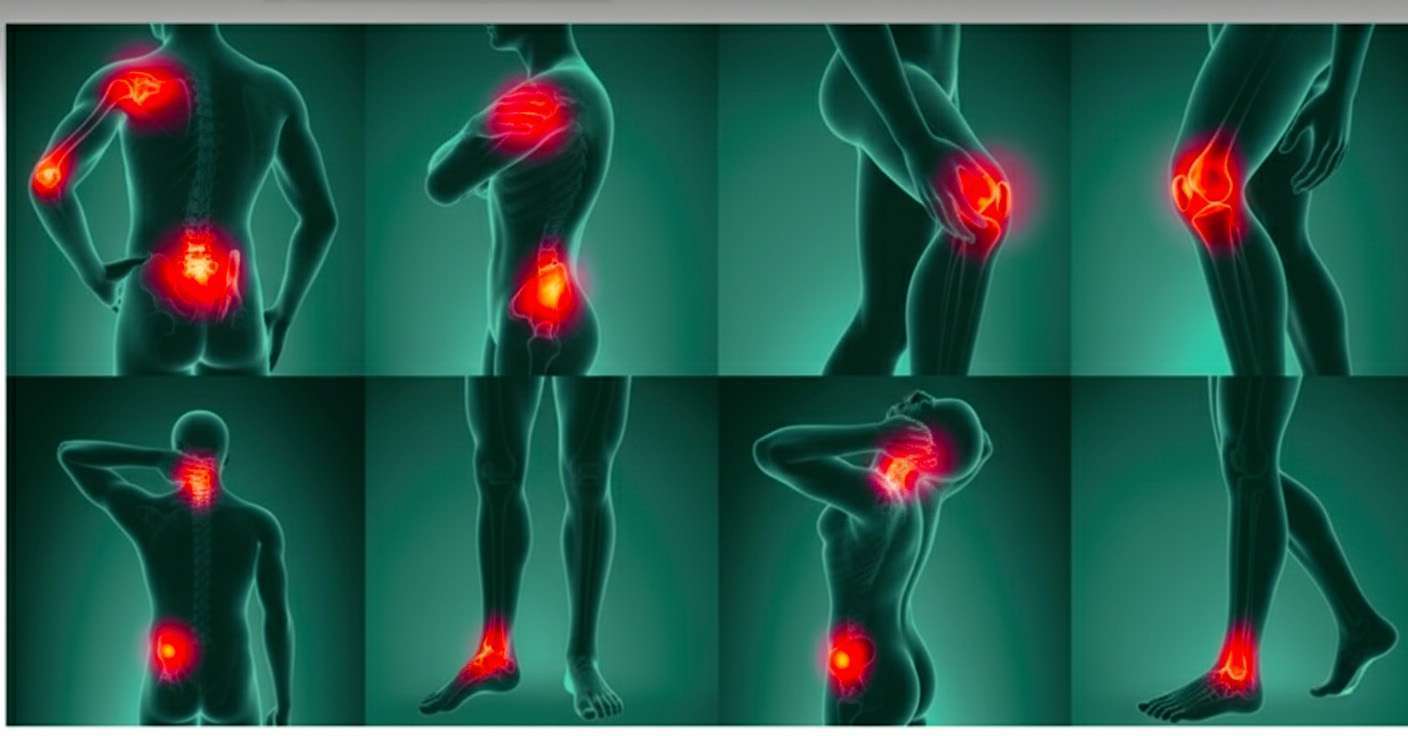
You’ve had this pain for months. Maybe years. You’ve tried physio before. You’ve tried massage. You’ve tried stretching, foam rolling, heat packs, Advil, rest, and every YouTube exercise video that promised relief. Some things helped temporarily. Nothing stuck.
You might have been told that your scans look “normal” and nothing is structurally wrong. Or you’ve been told the opposite – that your spine is “degenerative” and this is just what life looks like now. Neither answer is particularly helpful when you’re the one living with the pain every day.
Chronic pain is pain that persists beyond the normal healing time for an injury, typically past three months. But it’s more than just “pain that lasted too long.” Chronic pain treatment in Oakville must address the real changes in how your nervous system processes signals. The alarm system gets turned up. Things that shouldn’t hurt, do. Things that should hurt a little, hurt a lot. The pain is real, it’s physiological, and it’s treatable – but it requires a different approach than acute injury rehab.
This is a large part of what we do at Wellmax. Many of the people who come to see us have already been to other clinics. They’ve done the standard protocol and they’re still in pain. That doesn’t mean treatment can’t help. It often means the approach needs to change.
We’re at 1148 Winston Churchill Blvd, Unit B3, Oakville – in the Winston Park area just south of the QEW. Serving Clarkson, Clearview, Sheridan Park, Maple Grove, and south Mississauga.
Understanding Chronic Pain
When you hurt your back or twist your knee, the acute pain you feel is a protective signal. Your nervous system is telling you something is damaged and needs attention. Normally, as the tissue heals over 6-12 weeks, the pain settles along the same timeline. The injury repairs, the alarm turns off, and life goes back to normal.
Chronic pain is what happens when the pain persists after the tissue has healed. The original injury may have resolved months ago, but the nervous system is still producing pain. This isn’t imagined. It’s a physiological process called central sensitization – the nerves, spinal cord, and brain become more sensitive to pain signals. Input that would normally be filtered out as harmless (bending over, sitting for an hour, cold weather) gets amplified into a pain experience.
Think of it like a smoke alarm that keeps going off after the fire has been put out. The alarm is functioning – it’s just miscalibrated. The goal of chronic pain treatment isn’t to find the “broken part” that conventional treatment missed. It’s to recalibrate the alarm system so it responds appropriately again.
This is why more imaging often doesn’t help. MRIs of people with zero pain frequently show disc bulges, arthritis, and “degeneration” that are normal age-related changes. And MRIs of people in severe pain sometimes look perfectly clean. The correlation between what the scan shows and what the person feels is far weaker than most people assume. For chronic pain, the scan rarely changes the treatment plan, and the findings often increase anxiety and reinforce fear of movement – both of which make pain worse.
What Drives Chronic Pain
Chronic pain is not caused by a single factor. It’s influenced by a combination of biological, psychological, and social inputs that all feed into the nervous system’s sensitivity level. Understanding these factors isn’t about finding someone to blame. It’s about identifying which levers can be adjusted to turn the volume down.
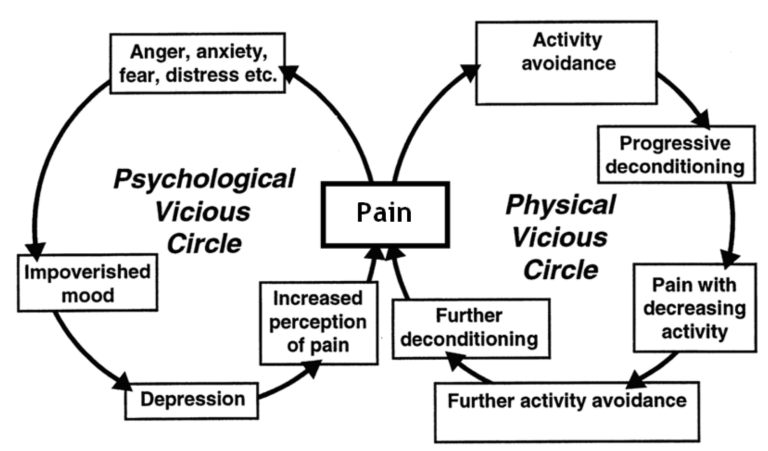
- Prolonged inactivity or fear of movement – avoiding activities because they might hurt leads to deconditioning, which makes the body more sensitive and less resilient
- Poor sleep – sleep deprivation directly lowers pain thresholds and increases nervous system sensitivity
- High stress and anxiety – the stress response system and pain processing system share neural pathways, and chronic stress amplifies pain
- Previous painful experiences – a history of pain, particularly in childhood or adolescence, can sensitize the nervous system long-term
- Unhelpful beliefs about the body – being told your spine is “crumbling” or you should “never bend” creates fear that reinforces pain and avoidance
- Depression and social isolation – both lower the threshold at which the brain produces a pain experience
- Boom-bust activity patterns – doing too much on good days, crashing for days afterward, then repeating the cycle
None of this means the pain is “in your head.” Every one of these factors creates measurable changes in nervous system function. They’re as real and as physiological as a torn muscle. They just require different treatment tools.

Conditions That Become Chronic
Chronic Lower Back Pain
The most common chronic pain condition worldwide. The original disc herniation, muscle strain, or facet joint irritation has healed – tissue healing takes 6-12 weeks – but the pain persists months or years later. Often accompanied by fear of bending, deconditioning of the trunk muscles, and anxiety about the spine being fragile or damaged.
The research is clear: graded exercise, progressive loading, pain science education, and gradually returning to normal activities produces better outcomes than rest, avoidance, or repeated passive treatments. The spine is a strong, resilient structure. It can and should be loaded, bent, twisted, and used – the key is getting there gradually and building confidence along the way. See our Back Pain page for comprehensive detail.
Chronic Neck Pain & Persistent Headaches
Neck pain that has lasted months or years, often with associated tension headaches or cervicogenic headaches. Frequently linked to postural habits, stress-related muscle tension, jaw clenching (TMJ connection), and central sensitization. The neck muscles become guarded and overactive, the deep cervical flexors weaken, and the pain cycle reinforces itself.
Treatment combines manual therapy for immediate relief, deep cervical flexor retraining to restore normal muscle balance, graduated exercise to build tolerance, and addressing contributing factors like workstation ergonomics, stress, and sleep. See our Neck Pain page.
Chronic Shoulder Pain
Rotator cuff tendinopathy, frozen shoulder aftermath, and impingement syndromes that have persisted beyond expected healing times. The shoulder may have become guarded and weak, the scapula may have lost its normal movement pattern, and the person may be avoiding overhead activities entirely. Breaking this cycle requires progressive loading of the rotator cuff and scapular muscles alongside manual therapy and confidence-building. See our Shoulder Pain page.
Fibromyalgia
A widespread pain condition involving multiple areas of the body, fatigue, sleep disturbance, and often cognitive difficulty (“fibro fog”). Fibromyalgia is fundamentally a central sensitization condition – the entire pain processing system is turned up. Treatment focuses on graded aerobic exercise (starting low, progressing slowly), pacing strategies to avoid boom-bust cycles, sleep optimization, stress management, and pain education. Research consistently shows that graduated exercise is the most effective intervention for fibromyalgia, improving pain, fatigue, and function.
Post-Surgical Persistent Pain
Pain that continues beyond expected recovery timelines after surgery – back surgery, joint replacement, rotator cuff repair, or any orthopedic procedure. This doesn’t mean the surgery failed. It means the nervous system became sensitized during the prolonged pain period before and after surgery, and it needs targeted treatment to reset. Post-surgical chronic pain responds to the same principles: graded movement, progressive loading, pain education, and addressing fear of movement.
Complex Regional Pain Syndrome (CRPS)
A rare but severe chronic pain condition usually affecting one limb, often following a fracture, surgery, or even a minor injury. Characterized by intense burning pain that seems out of proportion to the original injury, swelling, temperature and colour changes in the affected limb, movement sensitivity, and extreme tactile sensitivity. CRPS requires specialized treatment including graded motor imagery (mental rehearsal of movement before physical movement), mirror therapy, gradual desensitization, and very carefully progressed physical activity.
Chronic Joint Pain & Arthritis
Osteoarthritis pain that has become persistent and limiting. While arthritis involves structural joint changes that can’t be reversed, the pain experience is heavily influenced by muscle strength, activity levels, sleep, weight, and nervous system sensitivity. Many people with moderate to severe arthritis on imaging function well with minimal pain. Others with mild arthritis are significantly limited. The difference is usually modifiable factors that physiotherapy addresses directly. See our Arthritis page.
How We Treat Chronic Pain at Wellmax
Chronic pain requires a fundamentally different approach than acute injury rehabilitation. The conventional model – find the broken part, fix it, pain goes away – works well for acute injuries. It doesn’t always work for chronic pain, because the problem isn’t a single broken structure. It’s a sensitized nervous system.
Pain Science Education
Understanding what chronic pain actually is changes how people experience it. When you learn that ongoing pain after tissue healing reflects nervous system sensitivity rather than ongoing tissue damage, it reduces fear, changes behaviour, and measurably reduces pain levels. This isn’t a lecture or a pamphlet. It’s an ongoing conversation throughout your treatment, tailored to your specific situation and concerns.
Research shows that pain science education alone can reduce pain by 15-25% in chronic pain patients. Combined with exercise and manual therapy, the effects are significantly greater. Knowledge is genuinely therapeutic in chronic pain – and the harmful flip side is also true. Being told your spine is “degenerative” or you should “never lift” is measurably harmful and increases both pain and disability.
Graded Exposure to Movement
Many people with chronic pain have gradually reduced their activity because movement hurts. The problem is that inactivity makes the nervous system more sensitive, the muscles weaker, and the pain worse. It becomes a self-reinforcing cycle: pain leads to avoidance, avoidance leads to deconditioning, deconditioning leads to more pain.
Graded exposure means systematically reintroducing movements and activities at a pace your nervous system can tolerate, then gradually increasing. If bending forward triggers fear and pain, we start with small, safe bending movements and progressively increase range and load. The key word is gradual. Too fast triggers flare-ups and reinforces the threat. Too slow doesn’t challenge the system enough to change. Getting the dosage right is where clinical skill and experience matter.
Progressive Exercise
Exercise is the single most effective treatment for most chronic pain conditions. It reduces nervous system sensitivity, builds muscle strength and endurance, releases endorphins (the body’s natural painkillers), improves sleep quality, reduces stress, and rebuilds confidence in the body’s ability to move and load safely.
The exercise program starts where you actually are, not where you think you should be. If walking for 10 minutes is your current limit, we start there. If bodyweight squats are manageable but loaded squats aren’t, we work from that baseline. Progression is steady but responsive to how your body reacts. The program is designed to keep you improving without triggering flare-ups that set you back.
Hands-On Manual Therapy

Manual therapy still plays an important role in chronic pain treatment, but its purpose shifts. In acute injury, manual therapy fixes a specific structural problem. In chronic pain, manual therapy reduces muscle tension, improves joint mobility, provides temporary pain relief that creates a window for exercise, and helps normalize how the nervous system processes touch and pressure. It’s a tool within a larger strategy, not the strategy itself.
Addressing Contributing Factors
Chronic pain is influenced by sleep quality, stress levels, mental health, activity pacing patterns, beliefs about pain, work demands, and social factors. We can’t address all of these directly in a physiotherapy clinic, but we can identify which ones are most relevant to your situation and help accordingly. Sleep hygiene strategies, stress management techniques, activity pacing education, and referrals to appropriate professionals (family doctor, psychologist, pain specialist) when needed are all part of the approach.
Naturopathic Support for Chronic Pain
For patients whose chronic pain involves inflammatory, nutritional, or stress-related components, our naturopathic doctor can provide complementary support alongside the physiotherapy program. Anti-inflammatory nutrition, targeted supplementation, sleep support, and stress management through naturopathic care can address systemic factors that feed chronic pain. See our Naturopathic Medicine page.
What Makes Chronic Pain Treatment Different
This section matters because many people with chronic pain have tried physiotherapy before and it didn’t work. That doesn’t mean physiotherapy can’t work. It often means they received an acute injury protocol applied to a chronic pain problem. Different problem, different approach.
Effective chronic pain treatment:
- Focuses on function and activity levels, not just pain numbers on a scale
- Involves the patient as an active participant, not a passive recipient of treatment
- Uses exercise as the primary intervention, supported by manual therapy
- Includes education about how pain works and why it persists
- Addresses sleep, stress, and activity pacing as part of the treatment plan
- Sets realistic expectations and celebrates functional gains (what you can do, not just how you feel)
- Progresses gradually enough to avoid flare-ups but consistently enough to drive change
Effective chronic pain treatment does NOT:
- Rely on passive treatments (ultrasound, TENS, ice, heat) as the core approach
- Use fear-based language (“your disc is bulging,” “your spine is degenerating”)
- Treat the same way every session without adapting to how you’re responding
- Promise a quick fix or miraculous cure
- Blame the patient when progress is slow (“you’re just not trying hard enough”)
- Ignore the role of sleep, stress, mood, and beliefs in the pain experience
This is why many people with chronic pain do better the second time around with a different approach. The first attempt may have treated the scan findings. The second attempt treats the person. Wellmax specializes in helping such patients and complex cases.
What Results to Expect
| Condition | Expected Outcome | Typical Timeline |
|---|---|---|
| Chronic lower back pain | Significant functional improvement | 8-16 weeks |
| Chronic neck pain | Pain reduction, improved function | 8-12 weeks |
| Fibromyalgia | Improved function, pain management | 12-20 weeks |
| Post-surgical persistent pain | Gradual improvement | 8-16 weeks |
| Chronic shoulder pain | Improved range and strength | 8-16 weeks |
| Chronic joint pain / arthritis | Functional improvement, pain reduction | 8-16 weeks |
| Complex regional pain syndrome | Progressive improvement (variable) | 12-24+ weeks |
Important: Chronic pain recovery is not linear. There will be good weeks and setbacks. The overall trend should be upward. We measure progress by function (what you can do) more than pain numbers alone, because function often improves before pain levels drop significantly. A patient who still rates their pain at 5/10 but has returned to the gym, is sleeping better, and can sit through a workday is making meaningful progress even though the number hasn’t changed yet.
Why Choose Wellmax for Chronic Pain Treatment in Oakville
This Is What We Do
A large portion of our patients come to us after trying other clinics. Complex, persistent pain is one of our core competencies. We don’t treat every chronic pain patient the same way. We assess what’s driving the persistence – nervous system sensitivity, deconditioning, fear of movement, sleep deprivation, stress, or a combination – and tailor the approach accordingly.
Chronic pain treatment requires trust and nuanced progression. Your therapist needs to know your history, track your patterns, understand what triggers flare-ups, and adjust the program based on how you’re responding week over week. At Wellmax, every session includes that reassessment, with honest guidance on where you stand.
Honest, Evidence-Based Approach
We don’t promise miraculous cures or guaranteed pain elimination. We tell you what the evidence says, what realistic improvement looks like for your specific situation, and what you need to do to get there. The approach is collaborative, not passive. You’ll be doing work between sessions, and we’ll be honest about what’s working and what needs to change.
Integrated Care Under One Roof
For chronic pain patients who need naturopathic support (anti-inflammatory nutrition, sleep optimization, stress management) or massage therapy alongside physiotherapy, everything is available at the same clinic. No referrals to external providers. Direct communication between practitioners.
Convenient Oakville Location
1148 Winston Churchill Blvd, Unit B3, Oakville. Free parking directly in front. Ground-level entrance. Clarkson: 5 minutes. Clearview: 8 minutes. Sheridan Park: 10 minutes. South Mississauga: 7 minutes.
Chronic pain physiotherapy is covered under your physiotherapy benefit in most extended health plans. We direct bill to Sun Life, Manulife, Canada Life, Green Shield, Great-West Life, Blue Cross, Desjardins, and most other major providers. WSIB and MVA claims accepted. No referral needed. See our insurance and direct billing page for details.
Book Your Assessment
If you’ve been living with persistent pain for months or years – if previous physio didn’t produce lasting results, if scans showed “nothing,” or if the pain has taken over your daily decisions – it’s time to get it assessed properly. Our physiotherapists will identify what’s driving the persistence and build a plan that treats the actual problem.
Wellmax Physiotherapy offers a free consultation to help you understand your options and find out whether chronic pain treatment in Oakville is the right next step for you.
Wellmax Physiotherapy
1148 Winston Churchill Blvd, Unit B3, Oakville, ON L6J 0A3
Phone: (905) 829-1100
Email: info@wellmaxphysiotherapy.ca
Proudly Serving Our Local Communities:
- East Oakville: Winston Park, Clearview, and the QEW/403 Corridor.
- South Oakville: Eastlake, Maple Grove, Lorne Park, and Old Oakville.
- North Oakville: Joshua Creek, Falgarwood, Iroquois Ridge, and Upper Middle Road.
- Mississauga Border: Clarkson, Sheridan Park, Sheridan Homelands, and Southdown.
Hours: Monday to Friday: 9am to 7pm | Saturday: 9am to 2pm | Sunday: 9am to 2pm (by appointment only)
What Our Patients Say
Iqbaljeet S.“I came in with chronic back and neck pain that had been bothering me for a while, and I honestly wasn’t sure how much improvement to expect. Both Dhrushi and Gurmeet are knowledgeable physiotherapists at Wellmax who were thorough from the very first assessment, they took the time to actually understand the issue rather than just going through the motions. The treatment plan they put together made a real difference, and I noticed improvement faster than I expected. The staff is professional, attentive, and genuinely invested in your recovery. Highly recommend to anyone dealing with back or neck issues.”
Janki P.“I had been experiencing constant pain before starting treatment with this physiotherapist. From the very first session, Gurmeet Rai demonstrated exceptional knowledge, care, and professionalism. Her hands-on therapy and massage techniques were highly effective, and I noticed a significant improvement in my pain after the treatments. She also provided me with clear and practical exercises to continue at home, which have been very helpful in managing my condition on a daily basis. She takes the time to listen, explains everything well, and truly cares about her patients’ recovery. I feel very fortunate to have found such a skilled and dedicated physiotherapist. …”
Verified Patient“I had been to three different physio clinics over the past two years for my chronic lower back pain and nothing stuck. The pain would improve a bit during treatment and then come right back. Gurmeet’s approach was completely different. She spent almost an hour on the initial assessment looking at how I moved, not just where it hurt. She explained that the issue was not just my back but how my whole body was compensating. The treatment plan combined manual therapy with progressive exercises that actually challenged me instead of just stretching. For the first time in two years I feel like the pain is actually resolving instead of just being managed.”
Sukhleen B.“I had been suffering from severe chronic back and hip pain for a long time and had tried physical therapy at many different places. Most of them relied on machines, massage guns, and heat or cold therapy, but no one was ever able to truly pinpoint the real problem. Meeting Gurmeet changed everything for me. She took the time to do a very detailed analysis of my gait and pain points and focused on hands-on manual therapy. She truly has magic in her hands. The relief and improvement I felt were something I hadn’t experienced in years. In addition to her manual therapy, she gave me exercises that were simple, practical, and extremely helpful in supporting my recovery. …”
Danuta K.“After struggling with my SI joint pain for long time, Gurmeet and manual therapy techniques made a huge difference. She gave me personalized exercise plan. Now I can move freely and feel a huge difference”
David M.“I have been to a few places over the years, but Wellmax is by far the best physiotherapy clinic in Oakville. I came in suffering from severe sciatica that was shooting down my leg. It was making it impossible to sit at my desk or drive without sharp pain. Gurmeet did a very detailed assessment and explained how a compressed nerve was causing the issue. My treatment included the spinal decompression table and targeted manual therapy. Nav and Janvi were also great at guiding me through my rehab exercises and making sure my form was correct. I am finally sleeping and working without pain. They are a highly skilled and professional team.”
Harsha P.“I’ve been going to Wellmax for my neck and lower back pain for a few months now, and the entire experience has been incredibly smooth. Gurmeet is a true expert, she gets straight to the root cause of the discomfort and treats it perfectly. I’m so happy with the results, and my pain is practically gone. I can finally sit and work at my desk for hours without any stress. Janvi (PTA) is also fantastic at her job. The whole team at the clinic makes you feel comfortable, guides you through the right exercises, and always ensures your form is correct.”
Verified Patient“The sciatica pain running down my left leg had gotten so bad I could not sit at my desk for more than ten minutes. My family doctor told me to rest and take anti-inflammatories but after six weeks nothing had changed. Gurmeet identified that the nerve irritation was coming from a disc issue in my lower back and started treatment that same visit. She combined hands-on work with specific exercises that targeted the nerve. Three weeks later the leg pain was down by about 80 percent. After six weeks I was back at work full days with no pain. The difference between being told to rest and actually getting proper treatment is night and day.”
See all our Google reviewsRead more patient storiesLeave a review
Frequently Asked Questions
Is chronic pain 'all in my head'?+–
No. Chronic pain is a physiological process involving real changes in the nervous system. The nerves, spinal cord, and brain become more sensitive to pain signals – a process called central sensitization. It’s as real and as measurable as a broken bone. It just involves a different mechanism. Understanding this is actually the first step toward improvement, because it shifts the focus from ‘finding the broken structure’ to treating the sensitized system.
Will I always be in pain?+–
Most people with chronic pain improve significantly with the right approach. Complete elimination of all pain isn’t always realistic, and claiming it would be dishonest. But meaningful reduction in pain and major improvement in function is achievable for most people. Many patients get to a point where pain is manageable, predictable, and no longer controls their daily decisions.
Why didn't my previous physiotherapy treatment work?+–
Many chronic pain patients received treatment designed for acute injuries – passive modalities, standard exercises, and a ‘find and fix the structure’ approach. Chronic pain requires different tools: pain science education, graded exposure to movement, progressive exercise, activity pacing, and addressing sleep, stress, and beliefs about pain. A different approach often produces different results. This is one of the most common things we see at Wellmax – patients who improve with a chronic-pain-specific protocol after standard rehab didn’t produce lasting change.
Should I push through pain or rest?+–
Neither extreme works well. Complete rest leads to deconditioning and more sensitivity. Pushing aggressively through pain triggers flare-ups and reinforces the threat signal. The answer is paced, graduated exposure – doing slightly more than feels comfortable, less than triggers a flare-up, and increasing gradually over time. We help you find that balance, which is different for every person.
Do I need more imaging (MRI, X-ray)?+–
Usually not. For chronic pain, additional imaging rarely changes the treatment plan and often increases anxiety when ‘findings’ are reported that are actually normal age-related changes. Disc bulges, arthritis, and ‘degeneration’ appear on MRIs of people with zero pain. The correlation between scan findings and pain is weaker than most people assume. If imaging is genuinely needed, we’ll recommend it. But more scans don’t equal more answers for most chronic pain conditions.
Can exercise really help chronic pain?+–
Exercise is the most evidence-supported treatment for chronic pain across virtually every condition studied. It reduces nervous system sensitivity, builds strength and endurance, releases endorphins, improves sleep quality, reduces stress, and rebuilds confidence in movement. The key is starting at the right level and progressing gradually. Too much too fast causes flare-ups. The right dosage produces steady improvement.
How long does chronic pain treatment take?+–
Longer than acute injury rehab, typically 8-20 weeks of active treatment. Progress continues after discharge as long as you maintain the exercise program. Most patients notice meaningful functional improvement within the first 4-6 weeks. Complete resolution of symptoms takes longer and isn’t always the goal – functional recovery and confidence in the body often matter more than achieving a zero pain score.
What if I've tried everything and nothing works?+–
‘Everything’ usually means the same type of approach tried at different clinics. If every previous treatment focused on passive modalities, finding a structural problem on a scan, and standard exercises, you haven’t actually tried a chronic-pain-specific approach. The tools are different: pain neuroscience education, graded exposure, activity pacing, sleep optimization, and progressive exercise calibrated to your nervous system’s tolerance. Many of our best outcomes come from patients who describe themselves as ‘having tried everything.’
Will my insurance cover chronic pain physiotherapy?+–
Yes. Chronic pain physiotherapy is billed as physiotherapy and is covered under your physiotherapy benefit in most extended health plans. We direct bill to most major insurance providers. WSIB and MVA claims are also accepted. No referral is needed to start treatment.
Can chronic pain get better even after years?+–
Yes. The nervous system retains the ability to change at any age and at any stage of chronic pain. Neuroplasticity – the brain’s ability to rewire itself – works in both directions. The same process that turned up the pain volume can be used to turn it back down. We see patients who have had pain for 5, 10, even 20 years make meaningful improvement when they engage with a chronic-pain-specific treatment approach.
What is the difference between chronic pain and regular pain?+–
Acute pain is a normal protective signal that lasts while tissue heals, typically 6-12 weeks. Chronic pain is pain that continues beyond that healing window – usually defined as pain lasting more than three months. The key difference is mechanism: acute pain reflects tissue damage, while chronic pain reflects changes in how the nervous system processes signals. This is why treatments that work well for acute injuries often don’t produce lasting results for chronic pain.
Can physiotherapy help fibromyalgia?+–
Yes. Graduated aerobic exercise is one of the most consistently supported treatments for fibromyalgia, based on multiple systematic reviews. The approach at Wellmax combines very gradual exercise progression (starting below what feels comfortable), pacing strategies to avoid the boom-bust cycle, sleep optimization support, and pain education. Progress is slower than with other conditions, but meaningful improvement in pain, fatigue, and function is achievable.
Related Conditions and Services
- Back Pain & Sciatica: Chronic lower back pain is the most common persistent pain condition we treat.
- Neck Pain & Headaches: Chronic neck pain and persistent tension headaches often involve central sensitization.
- Shoulder Pain: Frozen shoulder aftermath, chronic tendinopathy, and post-surgical persistent shoulder pain.
- Arthritis: Chronic joint pain management through progressive exercise and lifestyle modification.
- Sciatica: Persistent nerve pain down the leg that benefits from the graded exposure approach.
- Acupuncture: Complementary pain relief for chronic pain conditions, used alongside progressive exercise.
- Shockwave Therapy: For chronic tendinopathy that has persisted beyond normal healing timelines.
- Naturopathic Medicine: Anti-inflammatory nutrition, sleep support, and stress management for chronic pain.
- Registered Massage Therapy: Muscle tension relief and nervous system calming alongside physiotherapy.
Registered & Regulated
Regulated & Recognized Across Every Discipline
Wellmax is in good standing with the regulatory colleges and leading associations for physiotherapy, chiropractic, massage therapy, and naturopathic medicine in Ontario.