Herniated Disc Treatment in Oakville
Non-surgical treatment for disc bulges, herniations and related sciatica, decompression, McKenzie-based exercise and manual therapy.
Home > Conditions We Treat > Herniated Disc Treatment in Oakville

The MRI report says “disc herniation at L4-L5” or “disc protrusion with nerve compression” and suddenly your back problem has a name that sounds permanent and surgical. The words themselves are alarming. Herniated. Bulging. Protruding. They make it sound like something is broken inside your spine and needs to be physically fixed. Effective herniated disc treatment in Oakville begins by reframing what that report actually means.
Here’s what the MRI report doesn’t tell you: the majority of disc herniations improve significantly without surgery. Research consistently shows that 80-90% of patients with disc herniations recover with conservative treatment, primarily physiotherapy. Even more encouraging, disc herniations naturally shrink over time through a process called resorption, where your body gradually absorbs the herniated material. And counterintuitively, larger herniations have the highest resorption rates because they trigger a stronger immune response.
This doesn’t mean disc herniations aren’t painful. They can be intensely painful, particularly when they compress or irritate a spinal nerve (causing sciatica, pain radiating down the leg). But painful and permanent are different things. The purpose of physiotherapy is to manage pain during the acute phase, restore movement, build strength, and return you to full activity while the disc heals.
At Wellmax, we treat disc herniations with an approach grounded in current evidence: education about what’s actually happening (and what the MRI does and doesn’t mean), progressive movement and exercise, manual therapy, and a clear timeline for recovery.
We’re at 1148 Winston Churchill Blvd, Unit B3, Oakville, just south of the QEW. Clarkson, Clearview, Sheridan Park, and south Mississauga are all under 10 minutes away.
Understanding Disc Herniations
What a Disc Actually Is
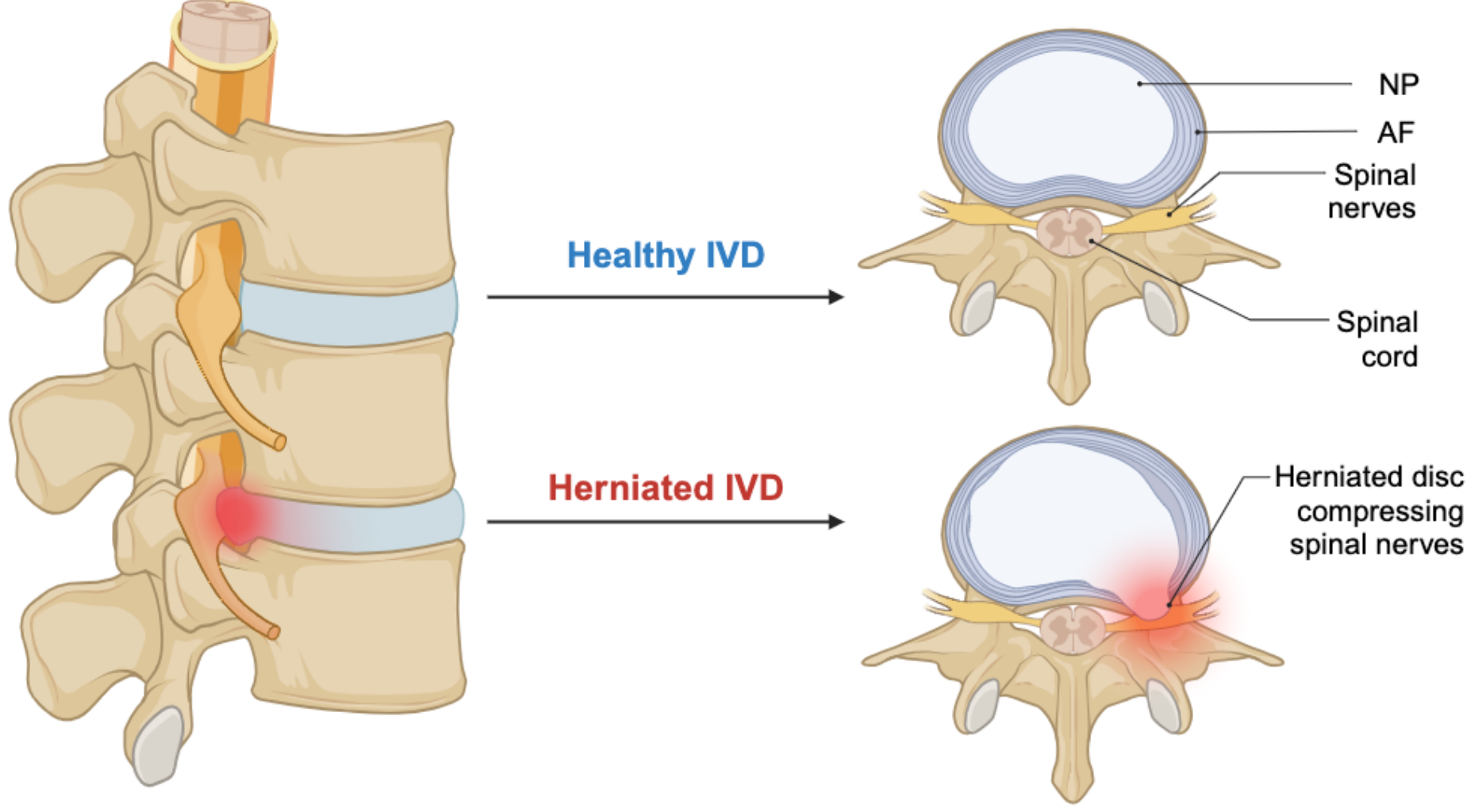
Intervertebral discs sit between each vertebra in the spine. Each disc has two parts: the annulus fibrosus (a tough outer ring of layered fibrous tissue) and the nucleus pulposus (a gel-like center that acts as a hydraulic shock absorber). The disc distributes load across the vertebral surfaces and allows the spine to bend, twist, and absorb impact. Discs are incredibly strong, they’re designed to handle enormous compressive forces.
What “Herniation” Means
A disc herniation occurs when the inner gel (nucleus) pushes through a tear or weakness in the outer ring (annulus). The terminology varies and can be confusing:
- Disc bulge: The disc wall extends beyond its normal boundary but the outer ring is intact. Very common and often incidental (found on MRI in people with no symptoms).
- Disc protrusion: The nucleus pushes the outer ring outward but doesn’t break through completely. The base of the protrusion is wider than the protruding part.
- Disc extrusion: The nucleus breaks through the outer ring. The protruding material may be larger than the base.
- Disc sequestration: A fragment of nucleus breaks off completely and migrates away from the disc.
Paradoxically, extrusions and sequestrations (which sound worse) often have BETTER natural histories than contained protrusions because the exposed nuclear material triggers a stronger immune response, leading to faster and more complete resorption.
Disc Herniations in People Without Pain
This is critically important context that changes how you should think about your MRI: research shows that disc herniations are present on MRI in a large percentage of people who have absolutely no pain or symptoms. Studies of pain-free individuals show that by age 40, roughly 40% have disc bulges on MRI, and by age 60, roughly 60% do. This means a disc finding on your MRI might be an incidental finding, present but not the cause of your pain. Context matters more than the image.
When a Herniation Causes Symptoms
A disc herniation causes symptoms when it compresses or irritates a nearby spinal nerve. In the lumbar spine (lower back), this produces sciatica, pain radiating down the leg following the path of the compressed nerve. The L4-L5 and L5-S1 levels are most commonly affected. In the cervical spine (neck), a herniation can compress a nerve root causing pain, tingling, or weakness radiating down the arm. The symptoms depend on which nerve level is affected, and the pattern of symptoms helps identify the level involved.
Natural Disc Resorption
Your body has a mechanism for dealing with disc herniations: the immune system recognizes the herniated nuclear material as foreign (because it’s normally contained within the disc and never exposed to the immune system), mounts an inflammatory response, and gradually resorbs (absorbs) the herniated material. This process takes weeks to months. Follow-up MRI studies show that the majority of herniations shrink significantly over 6-12 months, with larger herniations showing the greatest resorption. This natural healing is why most patients improve without surgery, the body resolves the problem on its own while physiotherapy manages symptoms and rebuilds function.
How We Deliver Herniated Disc Treatment in Oakville at Wellmax
Phase 1: Acute Pain Management (Weeks 1-4)
The first priority is getting pain under control and finding positions and movements that reduce nerve irritation. Treatment includes:
Directional preference assessment, identifying whether certain movements or positions (extension, flexion, lateral movements) reduce or centralize your pain. Many disc herniations respond to specific repeated movements that shift the herniated material away from the nerve. This is sometimes called the McKenzie approach, and when a directional preference exists, it provides rapid pain reduction.
Manual therapy, gentle spinal mobilization, soft tissue release for protective muscle guarding, and neural mobilization techniques that reduce nerve sensitivity. Hands-on treatment during the acute phase focuses on pain reduction and mobility, not aggressive manipulation.
Education, understanding what’s happening (the disc will likely heal), what the MRI does and doesn’t mean (incidental findings are common), what activities are safe (movement is better than bed rest), and what the realistic timeline looks like. This education is therapeutic in itself, research shows that patients who understand their condition and have realistic expectations recover faster.
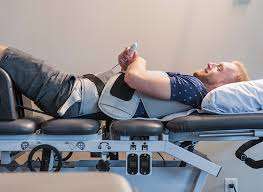
Spinal traction, mechanical traction can reduce intradiscal pressure and temporarily relieve nerve compression, providing a window for exercise and movement. For some patients we use a dedicated spinal decompression therapy table, and we use traction when indicated based on your response during the assessment.
Phase 2: Progressive Loading and Movement Restoration (Weeks 4-10)
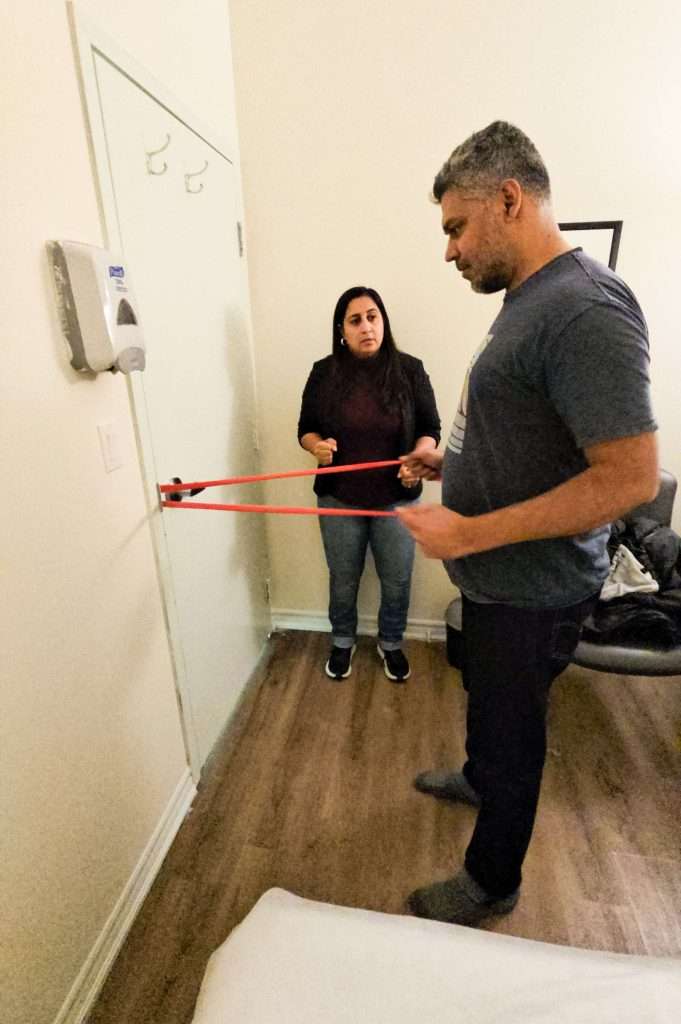
As acute pain settles, treatment shifts to rebuilding movement confidence and beginning systematic strengthening. Core muscle activation (deep stabilizers first, then global muscles), progressive spinal loading through functional movements, nerve gliding exercises to restore normal neural mobility, and cardiovascular exercise (walking, swimming, cycling) to maintain fitness and promote healing. The goal during this phase is to progressively increase what you can do without provoking significant symptoms.
Phase 3: Strengthening and Return to Full Activity (Weeks 10-16+)
Progressive strengthening of the core, back extensors, and hip muscles. Return to gym, sport, or physically demanding work with gradual loading. Lifting technique and spinal loading education for long-term self-management. Confidence rebuilding, many patients with disc herniations develop fear of bending, lifting, and loading the spine. This fear leads to avoidance, deconditioning, and chronic pain. Progressive loading under guidance breaks this cycle.
When Surgery Is Appropriate
Surgery (microdiscectomy) is considered when: neurological deficits are progressive (increasing weakness in the leg or foot), bladder or bowel function is affected (this is a medical emergency requiring urgent surgical assessment), or severe symptoms persist despite 6-12 weeks of quality physiotherapy. Even in cases requiring surgery, post-operative physiotherapy is essential for optimal recovery. Surgery addresses the structural compression; physiotherapy rebuilds strength, mobility, and function.
What Results to Expect
| Scenario | Expected Outcome | Typical Timeline |
|---|---|---|
| Disc herniation with sciatica (no neurological deficit) | 80-90% recover without surgery | 8-16 weeks |
| Disc bulge with local back pain | Significant improvement | 6-12 weeks |
| Cervical disc herniation with arm pain | 75-85% resolve conservatively | 8-16 weeks |
| Post-discectomy rehabilitation | Full functional recovery | 8-16 weeks post-op |
| Recurrent disc herniation | Significant improvement with core strengthening | 10-20 weeks |
Individual recovery depends on herniation size and location, severity of nerve involvement, duration of symptoms, adherence to the rehabilitation program, and overall health. Your physiotherapist provides a specific assessment and timeline at your first visit.
Why Patients Choose Wellmax for Herniated Disc Treatment in Oakville
We Help You Understand Your MRI
An MRI report full of terms like “disc desiccation,” “annular tear,” “foraminal narrowing” is terrifying without context. We explain what each finding means, which findings are relevant to your symptoms, and which are likely incidental (present in pain-free individuals). Understanding your condition reduces fear and improves outcomes.
Evidence-Based Conservative Treatment
80-90% of disc herniations resolve without surgery. Our treatment approach is built on this evidence: directional preference assessment, progressive exercise, manual therapy, and spinal traction when indicated. We don’t default to surgery referral or endless passive treatments.
Expert Care, Every Visit
Disc rehabilitation requires tracking week-to-week changes in pain location, nerve symptoms, movement tolerance, and strength. Your care at Wellmax is one-on-one every visit, with your history and progression tracked so the program advances at exactly the right time.
Spinal Traction Available
Mechanical traction can reduce intradiscal pressure and provide temporary nerve relief. When your assessment indicates traction would be beneficial, it’s available as part of your treatment plan.
Convenient Oakville Location
1148 Winston Churchill Blvd, Unit B3, Oakville. Free parking. Ground-level entrance. Clarkson: 5 minutes. Clearview: 8 minutes. South Mississauga: 7 minutes.
Direct Insurance Billing
We direct bill to Sun Life, Manulife, Canada Life, Green Shield, Great-West Life, Blue Cross, Desjardins, and most other major providers. WSIB and MVA claims accepted. No referral needed.
What Our Patients Say
Verified Patient“The sciatica pain running down my left leg had gotten so bad I could not sit at my desk for more than ten minutes. My family doctor told me to rest and take anti-inflammatories but after six weeks nothing had changed. Gurmeet identified that the nerve irritation was coming from a disc issue in my lower back and started treatment that same visit. She combined hands-on work with specific exercises that targeted the nerve. Three weeks later the leg pain was down by about 80 percent. After six weeks I was back at work full days with no pain. The difference between being told to rest and actually getting proper treatment is night and day.”
R. Singh.“I had an incredible experience with Gurmeet at Wellmax Physio, she is highly skilled and takes the time to explain everything in a way that makes you feel informed and confident in your treatment. Her techniques are effective, and you can tell she’s very knowledgeable in what she does. What stood out most was her attentiveness, she really listens and tailors the treatment to what your body needs. If you’re dealing with back pain or need physiotherapy, I would absolutely recommend her without hesitation.”
Kelly H.“So happy I decided to go here, my back is finally better! I wrecked it shovelling snow and nothing was helping until I came to Wellmax. Amazing service, got me moving again. Everyone working there is so nice; Gurmeet is amazing and I love her ha ha. I highly recommend!”
Danuta K.“After struggling with my SI joint pain for long time, Gurmeet and manual therapy techniques made a huge difference. She gave me personalized exercise plan. Now I can move freely and feel a huge difference”
Tanzy R.“I had an excellent experience at Wellmax physiotherapy clinic with Gurmeet for my back problem. Gurmeet was extremely knowledgeable, patient, and took the time to clearly explain the cause of my pain and the recovery plan. The treatment and exercises were very effective, and I noticed significant improvement within 2-4 weeks. I truly appreciated the constant support and personalized care throughout my recovery. Highly recommend Gurmeet and WellMax Clinic to anyone dealing with back pain.”
Richard B.“Excellent, My lower back is better than ever after seeing Gurmeet, and the team at Wellmax Physiotherapy”
Kapil N.“I had sprained my back while shoveling snow. Dr. Gurmeet and her team put me on electrotherapy, hands on manual therapy, and provided excellent physio treatment.”
Fred & Gail G.“My wife underwent back surgery (Decompression, Fusion L4/L5) in September 2025 following an extensive search for a surgeon we met who put her on his wait list. Complications arose post surgery because of reported soft bones & the need for a rare treatment to strengthen them. Pain continued & after months meeting with several Specialists covering numerous areas, we met Gurmeet @ Wellmax Physiotherapy. From the day we met, she has been: Highly Professional, Knowledgeable, Focused, Good Listener, Encouraging, all with the goal to provide treatments to get my wife back to her healthy self that preceded her severe back challenges. We are very confident Gurmeet’s wealth of knowledge, skills, guidance & determination are working to get her there!”
See all our Google reviewsRead more patient storiesLeave a review
Frequently Asked Questions
Can a herniated disc heal without surgery?+–
Yes. Research consistently shows that 80-90% of disc herniations improve significantly without surgery. The body has a natural mechanism (resorption) where the immune system gradually absorbs the herniated material over weeks to months. Physiotherapy manages symptoms during this healing process and rebuilds strength and function. Surgery is reserved for cases with progressive neurological deficits, bladder/bowel involvement, or symptoms that persist despite quality conservative treatment.
Does a herniated disc ever fully heal?+–
The herniated material typically shrinks significantly through resorption, and many herniations become asymptomatic. Follow-up MRI studies show substantial reduction in herniation size in the majority of cases. However, the disc itself may retain some structural changes. The important measure is function and symptoms, not imaging appearance. Most patients return to full activity including sports, gym work, and physically demanding jobs.
Should I avoid bending and lifting with a herniated disc?+–
Not permanently. During the acute phase when pain is severe, temporary activity modification (reducing heavy lifting, avoiding aggravating positions) makes sense. But long-term avoidance of bending and lifting leads to fear, deconditioning, and chronic pain. Your spine is designed to bend and lift. Progressive loading through physiotherapy rebuilds your confidence and capacity to handle these movements safely.
My MRI shows a disc bulge. Is that the same as a herniation?+–
A disc bulge is a milder form of disc displacement where the disc extends beyond its normal boundary but the outer wall remains intact. Disc bulges are extremely common, especially with age, they’re found on MRI in roughly 40% of pain-free 40-year-olds. A bulge on your MRI may or may not be related to your symptoms. Your physiotherapist correlates the MRI findings with your clinical presentation to determine what’s actually causing your pain.
Is bed rest recommended for a herniated disc?+–
No. Prolonged bed rest for disc herniations produces worse outcomes than staying active. Brief periods of rest (1-2 days) during severe acute pain are acceptable, but beyond that, gentle movement and walking are significantly better for recovery. Movement promotes disc nutrition (discs don’t have direct blood supply, they rely on movement to pump nutrients in and waste out), reduces muscle guarding, and prevents deconditioning.
How do I know if I need surgery for my disc?+–
Surgery is indicated when progressive weakness is developing in the leg or foot (getting worse despite treatment), bladder or bowel control is affected (medical emergency), or severe symptoms persist after 6-12 weeks of quality physiotherapy. Surgery is NOT indicated simply because the MRI shows a disc herniation, even a large one. Most herniations resolve without surgery regardless of size.
Can I exercise with a herniated disc?+–
Yes, and you should. The type and intensity of exercise depends on your current stage. Walking is almost always appropriate and beneficial. Swimming and cycling are excellent low-impact options during early recovery. Progressive strengthening (starting with core activation and building to heavier loading) is introduced as tolerated. Complete avoidance of exercise leads to muscle weakness and longer recovery.
What's the difference between a herniated disc and sciatica?+–
Sciatica is a symptom, pain radiating down the leg. A disc herniation is one possible cause of sciatica (the herniation compresses the sciatic nerve or its contributing nerve roots). But sciatica can also be caused by spinal stenosis, piriformis syndrome, or other conditions. And disc herniations don’t always cause sciatica, many cause only local back pain, and many cause no symptoms at all.
How often should I come for disc herniation physiotherapy?+–
Typically twice per week during the acute phase (first 2-4 weeks), then once weekly as symptoms improve and you become independent with the home program. Total treatment course is usually 10-16 sessions over 8-16 weeks. Severe cases or post-surgical rehabilitation may require longer programs.
Will my insurance cover herniated disc physiotherapy?+–
Most extended health plans cover physiotherapy. MVA-related disc injuries are billed directly through auto insurance. WSIB covers work-related disc injuries. We direct bill to most major providers. No referral needed in Ontario.
Where can I get herniated disc treatment in Oakville without a referral?+–
You can book herniated disc treatment in Oakville directly at Wellmax Physiotherapy without a doctor’s referral. Ontario lets you see a physiotherapist on your own, and most extended health plans reimburse without a referral. We offer a free consultation so you can describe your symptoms, review your MRI if you have one, and find out whether physiotherapy is the right next step before you commit to a full assessment.
How is a bulging disc treatment in Oakville different from a herniated disc?+–
The treatment principles are very similar because a bulging disc and a herniated disc sit on the same spectrum of disc displacement. A bulge is milder (the outer ring stays intact) while a herniation involves the inner gel pushing through. Both respond to the same core plan: directional preference exercise, manual therapy, progressive loading and, when helpful, traction. The plan is tailored to your symptoms and how irritable the nerve is, not just to the label on your MRI.
What is the difference between a herniated disc and a bulging disc?+–
A bulging disc means the disc has expanded outward beyond its normal boundary but the outer wall (annulus fibrosus) is still intact. A herniated disc means the inner gel (nucleus pulposus) has broken through the outer wall. Herniations typically cause more significant nerve irritation because the leaked material can directly contact the nerve root. Both can cause pain and require assessment, but a herniation is generally the more serious of the two presentations.
Can a herniated disc heal without surgery?+–
Yes, for the majority of people. Research shows that the herniated material is often reabsorbed by the body over time, and the nerve settles as inflammation reduces. Studies suggest that 80 to 90 percent of people with disc herniations improve significantly without surgery when managed with physiotherapy. Surgery is typically reserved for cases where there is significant neurological deficit, loss of bowel or bladder control, or failure to progress after several months of conservative treatment.
What movements should I avoid with a herniated disc?+–
In the early stages, deep forward bending, heavy lifting, and sustained sitting in a flexed position tend to increase disc pressure and aggravate symptoms. High-impact activities, twisting under load, and sitting for long periods without breaks are also common aggravators. However, movement avoidance should be guided by your specific presentation. A physiotherapy assessment will identify which positions and loads increase your nerve irritation and which directions are safe to load, rather than giving a generic blanket restriction.
How long does herniated disc recovery take with physiotherapy?+–
Most people with a herniated disc see meaningful improvement within six to twelve weeks of starting physiotherapy, though full recovery can take three to six months depending on the severity of the herniation and how much the nerve is involved. Leg or arm pain from a compressed nerve (radiculopathy) often takes longer to resolve than local back or neck pain alone. Progress is usually not linear. An assessment gives you a clearer timeline based on your specific situation and how irritable the nerve currently is.
Related Conditions and Services
- Back Pain & Sciatica: Comprehensive lower back pain and sciatica treatment including non-disc causes.
- Sciatica: Leg pain from a compressed nerve root, the most common symptom of a lumbar disc herniation.
- Spinal Stenosis: Narrowing of the spinal canal that can cause similar leg symptoms and sometimes co-exists with disc herniation.
- Spinal Decompression Therapy: Mechanical traction to reduce intradiscal pressure and relieve nerve compression.
- Neck Pain: Cervical disc herniations causing neck and arm pain.
- Hip Pain: Hip and gluteal problems that can mimic or accompany disc-related leg pain.
- Chronic Pain: When disc-related pain becomes persistent beyond normal healing timelines.
- MVA Rehabilitation: Disc injuries from car accidents are covered by auto insurance.
- WSIB Rehabilitation: Work-related disc injuries covered by WSIB.
- Physiotherapy Services: Overview of all physiotherapy services at Wellmax.
Book Your Herniated Disc Assessment
If an MRI has labelled your back problem a herniation and the words are keeping you up at night, if leg pain is following you down the stairs, or if you have been told to rest and wait and it is not improving, get it assessed properly. Your physiotherapist will explain what your imaging actually means, identify which movements settle your symptoms, and build a plan that moves you toward full activity. Book a free consultation to start your herniated disc treatment in Oakville.
Wellmax Physiotherapy
1148 Winston Churchill Blvd, Unit B3, Oakville, ON L6J 0A3
Phone: (905) 829-1100
Email: info@wellmaxphysiotherapy.ca
Proudly Serving Our Local Communities: We are conveniently located just minutes from the QEW & Winston Churchill Blvd, making us the clinic of choice for:
- East Oakville (Our Neighbours): Winston Park, Clearview, and the QEW/403 Corridor.
- South Oakville: Eastlake, Maple Grove, and Old Oakville.
- North Oakville: Joshua Creek, Falgarwood, and Upper Middle Road.
- Mississauga Border: Clarkson, Sheridan Park, and Sheridan Homelands.
Insurance: Direct billing to most major providers. WSIB and MVA claims accepted. No referral needed. See our insurance and direct billing page for details.
Hours: Monday to Friday: 9am to 7pm | Saturday: 9am to 2pm | Sunday: 9am to 2pm (by appointment only)
Registered & Regulated
Regulated & Recognized Across Every Discipline
Wellmax is in good standing with the regulatory colleges and leading associations for physiotherapy, chiropractic, massage therapy, and naturopathic medicine in Ontario.