

Bulging Disc vs Herniated Disc: What Is the Difference?

If a scan or a clinician has mentioned a “bulging disc” or a “herniated disc,” the two terms can sound alarming and almost interchangeable. They are related, but they are not the same thing, and the difference matters when you are trying to understand your pain and what to do next.
This guide breaks down the difference between a bulging disc and a herniated disc in plain language: what is actually happening in your spine, what the symptoms feel like, how long recovery usually takes, the warning signs that need urgent care, and how physiotherapy at Wellmax in Oakville and Mississauga helps most people recover without surgery.
Key Takeaways
- A bulging disc is a broad, contained outward spread of the disc. A herniated disc is when the soft inner core pushes through a tear in the tougher outer wall.
- Both can be painless. Many people have disc changes on a scan with no symptoms at all, so the image alone does not equal the diagnosis.
- Most disc problems improve with conservative care. Research suggests roughly 80 to 90 percent settle over time without surgery.
- A few red flags (loss of bladder or bowel control, saddle numbness, fast-spreading leg weakness) need urgent medical care, not a wait-and-see approach.
What is a spinal disc, and why does it matter?
Between each pair of vertebrae sits an intervertebral disc. Think of it like a small jelly doughnut. It has a tough, layered outer ring (the annulus fibrosus) and a soft, gel-like centre (the nucleus pulposus). These discs act as shock absorbers and let your spine bend and twist.
Over time, and with everyday load, these discs can change shape or develop small tears. That is normal aging in many cases. The terms bulging and herniated simply describe different patterns of that change.
What is a bulging disc?
A bulging disc is when the disc spreads outward beyond its normal border in a broad, even way, usually around more than a quarter of its circumference. The key point is that the outer wall stays intact. Nothing has leaked out. The disc has just flattened and pushed wider, a bit like a tire that is slightly under-inflated and pancakes outward.
Because the outer ring is still contained, a bulging disc is often the milder of the two. Many bulging discs cause no symptoms at all and are found by accident on a scan done for another reason.
What is a herniated disc?
A herniated disc is when the soft inner core pushes through a crack or tear in the tough outer wall. Instead of the whole disc spreading wide, a focused section of inner material breaks out of its normal space. You may also hear it called a slipped, ruptured, or prolapsed disc. They all point to the same basic event.
Because herniated material can press directly on a nearby nerve root, a herniation is more likely to cause sharp, shooting symptoms down an arm or leg. That said, plenty of herniations are also painless.
Protrusion vs extrusion: what do those words mean?
Radiologists often split herniations into two grades. In a protrusion, the inner material bulges through a tear but stays contained, with the base wider than the part that pokes out. In an extrusion, the material pushes further out so the escaped portion is wider than its neck, like toothpaste squeezing out of the tube. A sequestration is when a fragment fully separates.
Interestingly, larger extrusions sometimes shrink faster than smaller bulges. The body sends immune cells (macrophages) to reabsorb the escaped material, and a bigger exposed surface can be cleared more actively. So a scarier-sounding scan does not always mean a worse outcome.
“The picture on the scan and the pain in your body are two different things. We treat the person, not the image.”
Bulging disc vs herniated disc: a quick comparison
Here is the difference between a bulging disc and a herniated disc in short:
How they differ
- Bulging disc: broad, even outward spread. Outer wall intact. Nothing leaks out. Often milder or symptom-free.
- Herniated disc: focused tear with inner core pushing through. More likely to press on a nerve. More likely to send pain into a limb.
One simple way to remember it: a bulge is the whole wall pushing out, while a herniation is the filling escaping through a crack in that wall. A bulge can be an early stage that, under continued load, progresses to a herniation, though that is not inevitable.
What are the symptoms of a bulging or herniated disc?
Symptoms depend far more on whether a nerve is irritated than on the label. When a disc problem in the lower back presses on a nerve, you may feel:
- Sharp, shooting, or burning pain down the buttock and leg (often called sciatica)
- Numbness, pins and needles, or tingling in the leg or foot
- Weakness in the leg, ankle, or foot
- Pain that worsens with sitting, bending, coughing, or sneezing
When the problem is in the neck, those same sensations can travel into the shoulder, arm, and hand. Many people also have only local back or neck stiffness with no leg or arm pain at all.
When should a disc problem be checked urgently?
Most disc pain is not dangerous, but a small number of warning signs point to a possible emergency called cauda equina syndrome, where nerves at the base of the spine are compressed. Seek urgent medical care (emergency department) if you notice:
- Loss of bladder or bowel control, or new trouble starting to urinate
- Numbness in the saddle area (groin, inner thighs, the region you would sit on)
- Progressive or rapidly worsening weakness in one or both legs
- New numbness or weakness affecting both legs together
These signs are uncommon, but they need same-day assessment because early treatment protects long-term nerve function. This article is general information and is not a diagnosis. If you are worried about your symptoms, please get assessed.
Do bulging and herniated discs heal on their own?
Often, yes. The body can reabsorb herniated material over months, and symptoms frequently calm down well before a scan looks “clean.” Research following patients over time shows the majority improve with conservative care, and many disc herniations shrink on repeat imaging, sometimes disappearing within roughly 6 to 12 months.
Here is the important part: improvement does not require the disc to look perfect on a scan. Pain relief and getting back to your life come first, and the imaging often catches up later (or simply does not need to).
Why does the MRI not always match the pain?
Disc bulges and even herniations are common in people with no pain at all. Large studies show a big share of pain-free adults have disc changes on imaging. That is why a good clinician matches your scan to your actual symptoms and physical exam, rather than treating the picture alone. An MRI is most useful when red flags are present or when symptoms are not improving as expected.
How is a bulging or herniated disc treated?
For most people, the first line of care is conservative, not surgical. The goals are to calm the irritated nerve, restore movement, and rebuild the strength and control that protect your spine going forward.
What does physiotherapy involve?
At Wellmax, treatment starts with a thorough assessment for disc-related pain so we understand what is driving your symptoms before we treat them. From there, a typical plan includes:
- Hands-on manual therapy to ease muscle guarding and improve how your spine and surrounding joints move
- Targeted exercise that finds the positions and movements that settle your nerve, then gradually loads and strengthens
- Education and activity coaching so you know how to sit, lift, and move with less flare-up risk
- Root-cause work on the habits, postures, and weaknesses that let the problem build in the first place
We also treat the conditions that often travel with disc problems, including back pain and sciatica and ongoing sciatica. For some people, spinal decompression therapy is a helpful add-on to reduce pressure on the irritated nerve.
What makes the Wellmax approach different?
Our assessments run a full 60 minutes, so we have the time to actually find the root cause instead of handing you a generic sheet of exercises. Care is led by Gurmeet Rai, who brings more than 16 years of clinical experience, and we combine hands-on manual therapy with active rehab. Our aim is graduation, not endless visits. We want you confident and independent, not booked in forever.
Not sure where to start?
Book a free consultation and we will point you to the right care, with no pressure.
Frequently Asked Questions
Is a bulging disc worse than a herniated disc?+
Not necessarily. A bulging disc is usually the milder pattern because the outer wall stays intact and nothing leaks out, while a herniated disc has inner material pushing through a tear. However, what drives your symptoms is whether a nerve is irritated, not the label. A small herniation can be painless, and a bulge can flare a nerve. The severity comes from nerve involvement, not the term on the report.
Can a bulging disc turn into a herniated disc?+
It can, but it is not guaranteed. A bulge can be an early stage where the outer wall is stressed but still contained. Under continued heavy or repeated load, that wall can develop a tear and allow the inner core to push through, which is a herniation. Many bulging discs never progress at all, and good movement habits plus targeted strengthening help keep things stable. An assessment helps clarify your personal risk and plan.
How long does a herniated disc take to heal?+
Timelines vary, but many people feel meaningful improvement within 6 to 12 weeks of conservative care, and the majority settle over the longer term. On scans, herniated material is often reabsorbed over roughly 6 to 12 months. Importantly, your pain usually eases well before imaging looks clear, and full recovery does not require a perfect scan. Staying active within comfortable limits, rather than resting completely, tends to speed things up.
Do I need surgery for a bulging or herniated disc?+
Usually not. Research suggests roughly 80 to 90 percent of disc-related pain improves without surgery, so conservative care is the standard first step. Surgery is mainly considered when there are serious red flags, such as cauda equina syndrome or progressive nerve weakness, or when significant symptoms have not responded to a fair trial of conservative treatment. A clinician matches the plan to your symptoms and exam, not just your scan.
Can I exercise with a bulging or herniated disc?+
In most cases, gentle movement helps rather than harms. Prolonged bed rest tends to slow recovery. The trick is finding the positions and exercises that calm your nerve instead of aggravating it, then gradually loading and strengthening over time. That is exactly what a physiotherapy assessment is for. We help you stay active safely and build back to the activities you care about, rather than avoiding movement out of fear.
When should I worry about disc pain?+
Most disc pain is not dangerous, but a few signs need urgent care. Seek emergency assessment if you develop loss of bladder or bowel control, numbness in the saddle area (groin or inner thighs), or fast-spreading or worsening weakness in one or both legs. These can signal a rare but serious nerve compression. For ordinary back or leg pain without these signs, a physiotherapy assessment is a sensible next step.
Do I need an MRI to diagnose a disc problem?+
Often not right away. Disc bulges and herniations are common even in people with no pain, so a scan on its own does not equal a diagnosis. A skilled clinician relies on your history and a physical exam to understand what is driving your symptoms. Imaging is most useful when red flags are present or when symptoms are not improving as expected. Treating the image alone, instead of the person, can lead to unnecessary worry.
Do you treat disc problems in Oakville and Mississauga?+
Yes. Wellmax sees patients from Oakville and Mississauga for bulging discs, herniated discs, sciatica, and related back and neck pain. Care is led by Gurmeet Rai, who has more than 16 years of experience, and every assessment runs a full 60 minutes so we can find the root cause. We combine hands-on manual therapy with active rehab, and our goal is to graduate you to independence rather than keep you coming back forever.
You Might Also Like

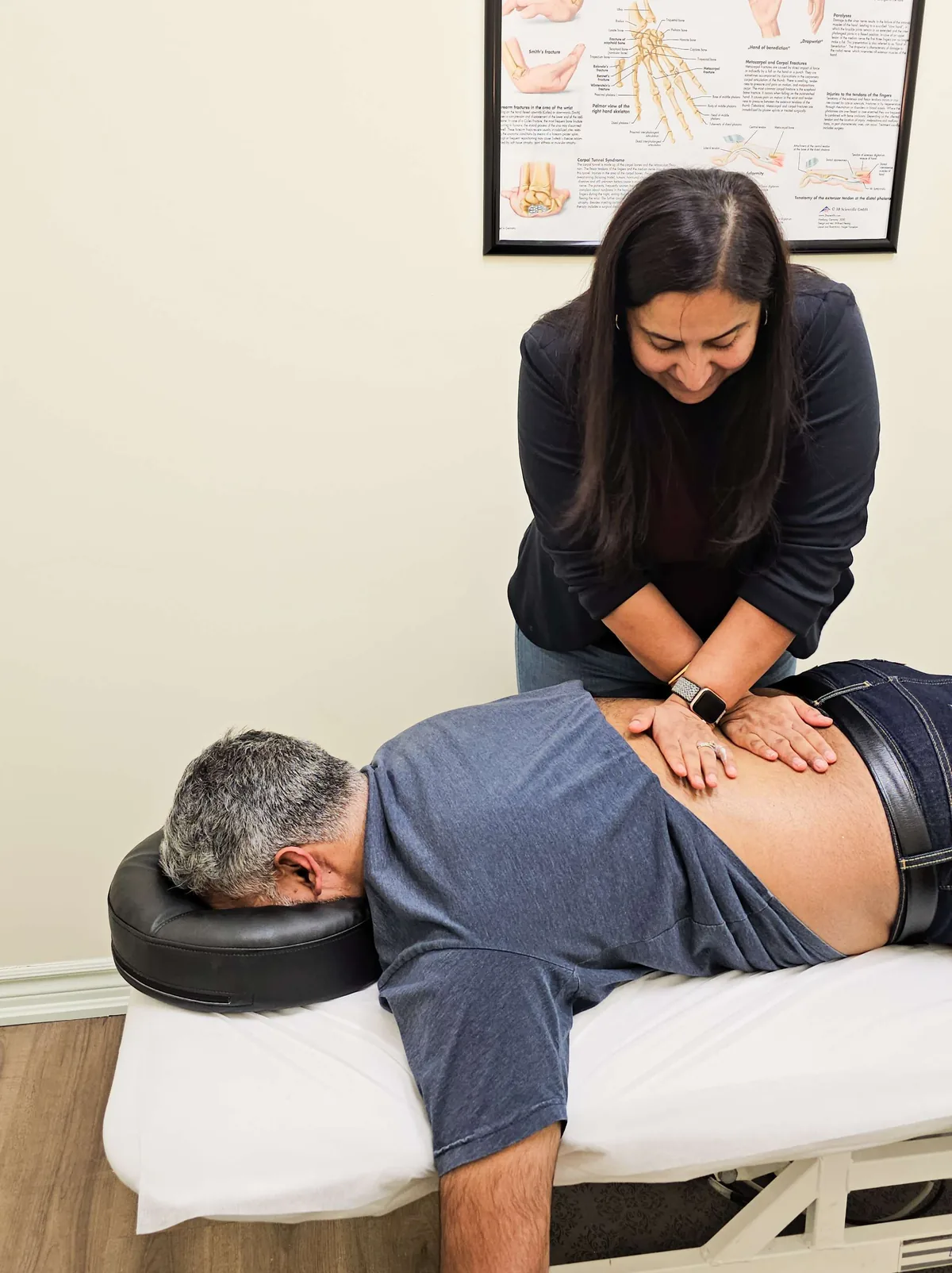
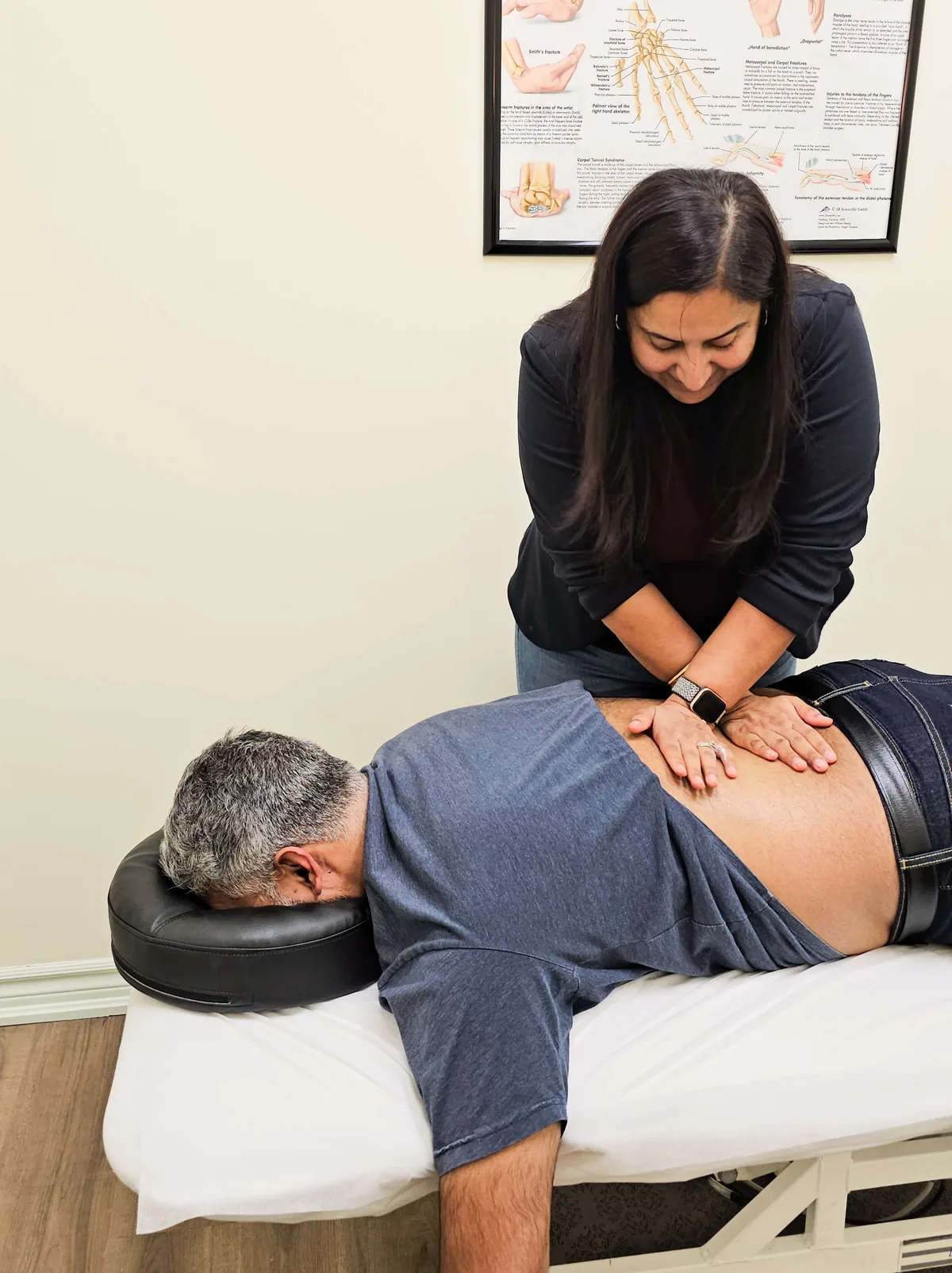

Gurmeet Rai, Registered Physiotherapist
Gurmeet is a Registered Physiotherapist with the College of Physiotherapists of Ontario and the Clinic Director and co-owner of Wellmax Physiotherapy in Oakville, with 16+ years of clinical experience. She focuses on complex, stubborn cases where earlier treatment has not worked, with advanced training in pelvic health, TMJ, vestibular, and sports and MSK rehab. Expect expert care from assessment to discharge, with honest guidance along the way. Read Gurmeet’s full profile or meet the team.
This article is for educational purposes only and does not replace a professional clinical assessment. Every body and condition is different. If you are experiencing pain or symptoms, book an assessment with a qualified clinician for advice specific to your situation. If you are experiencing a medical emergency, call 911 or visit your nearest emergency department.
