Ankle and Foot Pain Treatment in Oakville
Home > Conditions We Treat > Ankle and Foot Pain Treatment in Oakville
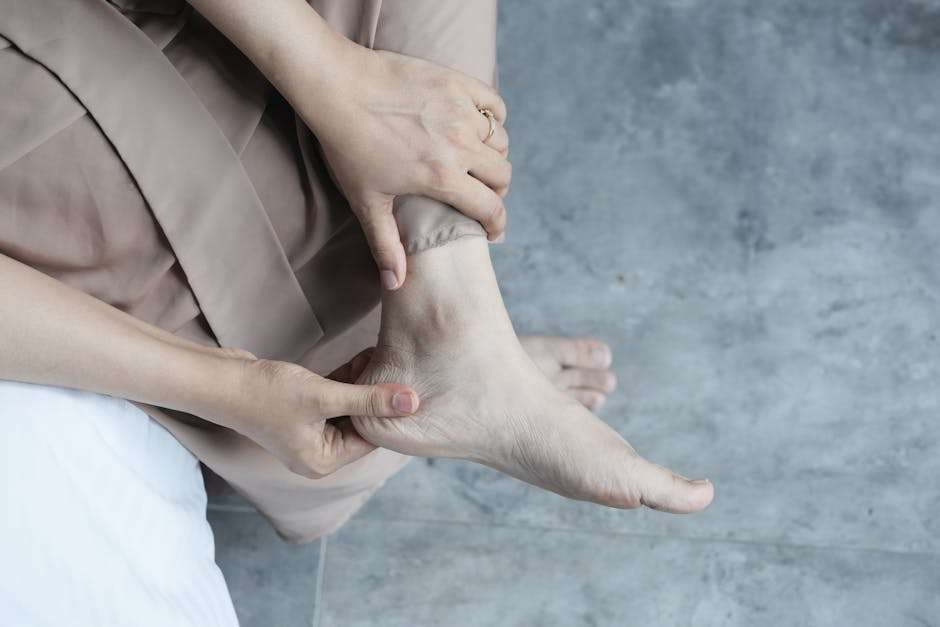
Ankle and foot pain treatment in Oakville at Wellmax Physiotherapy addresses the full range of ankle and foot problems: from acute ankle sprains and chronic instability to plantar fasciitis, Achilles tendinopathy, and post-fracture rehabilitation. That first step out of bed in the morning tells you everything. If your heel feels like you’re stepping on a nail, you already know the day is going to be shaped around your foot. Or maybe it’s the ankle that rolled six months ago and still doesn’t feel right. It swells after a long walk, aches when you stand too long, and you don’t trust it on uneven ground.
Ankle and foot problems are frustrating because you can’t rest them. Every step loads the foot with your full body weight, and the average person takes 6,000-10,000 steps per day. That’s 6,000-10,000 opportunities for an irritated tendon, an unstable ankle, or an inflamed fascia to remind you it’s there. Rest isn’t a realistic treatment option for your feet; they need to be rehabilitated while you’re still using them.
The foot and ankle complex is also deeply connected to everything above it. Ankle stiffness changes how your knee bends during stairs and squats. Foot mechanics influence how your hip absorbs force during walking and running. Many persistent ankle and foot problems are being driven, at least in part, by weakness or stiffness somewhere else in the chain. This is why every ankle and foot assessment at Wellmax includes the knee and hip as standard.
We’re at 1148 Winston Churchill Blvd, Unit B3, Oakville, in the Winston Park area just south of the QEW. Serving Clarkson, Clearview, Sheridan Park, Maple Grove, and south Mississauga.
Understanding the Ankle and Foot
The foot and ankle contain 26 bones, 33 joints, and over 100 muscles, tendons, and ligaments. It’s the most structurally complex region of the body, and it has to be: the foot is the only part of you that contacts the ground. Every force from walking, running, jumping, and standing passes through these structures.
The Ankle Joint
The ankle is formed where the tibia and fibula (shin bones) sit on top of the talus (the top bone of the foot). This joint primarily moves up (dorsiflexion) and down (plantarflexion). The range of dorsiflexion (how far the ankle can bend your toes toward your shin) is one of the most important measurements in lower limb function. When dorsiflexion is restricted (common after ankle sprains and prolonged immobilization), the knee and hip have to compensate during squats, stairs, and running. This single restriction is a factor in knee pain, shin splints, Achilles problems, and even hip issues.
The Ligaments
The lateral ligaments on the outside of the ankle (ATFL, CFL, PTFL) are the ones most commonly sprained. They prevent the ankle from rolling inward. The deltoid ligament on the inside is thicker and stronger, protecting against outward rolling. When the lateral ligaments are damaged from a sprain and not properly rehabilitated, they remain stretched and loose, leading to chronic ankle instability, which is the feeling that the ankle might give way at any moment on uneven ground.
The Plantar Fascia
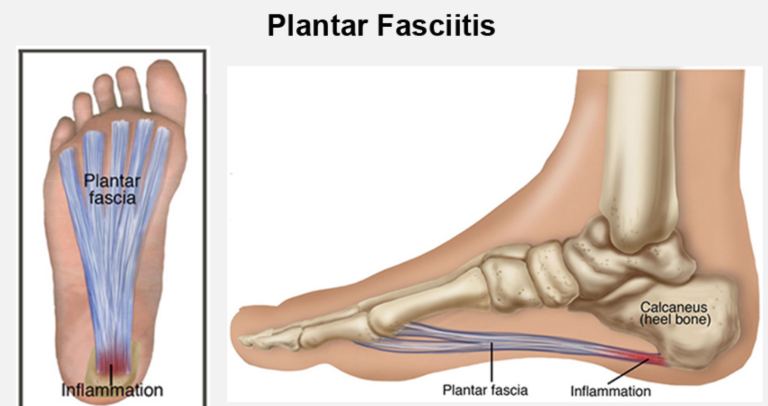
The plantar fascia is a thick band of connective tissue that runs along the bottom of the foot from the heel bone to the base of the toes. It acts as a spring and shock absorber during walking and running, and it supports the arch of the foot. When the plantar fascia becomes irritated and degenerates, that is plantar fasciitis, the most common cause of heel pain and one of the most common foot conditions we treat. Read more about Plantar Fasciitis Physiotherapy.
The Achilles Tendon
The Achilles tendon is the thickest and strongest tendon in the body, connecting the calf muscles to the heel bone. It transmits the force of the calf muscles to propel you forward during walking, running, and jumping. Despite its strength, the Achilles is vulnerable to overuse injury (tendinopathy) because its blood supply is relatively poor in the middle section, about 2-6cm above the heel bone, which is exactly where most Achilles pain occurs.
The Chain Reaction
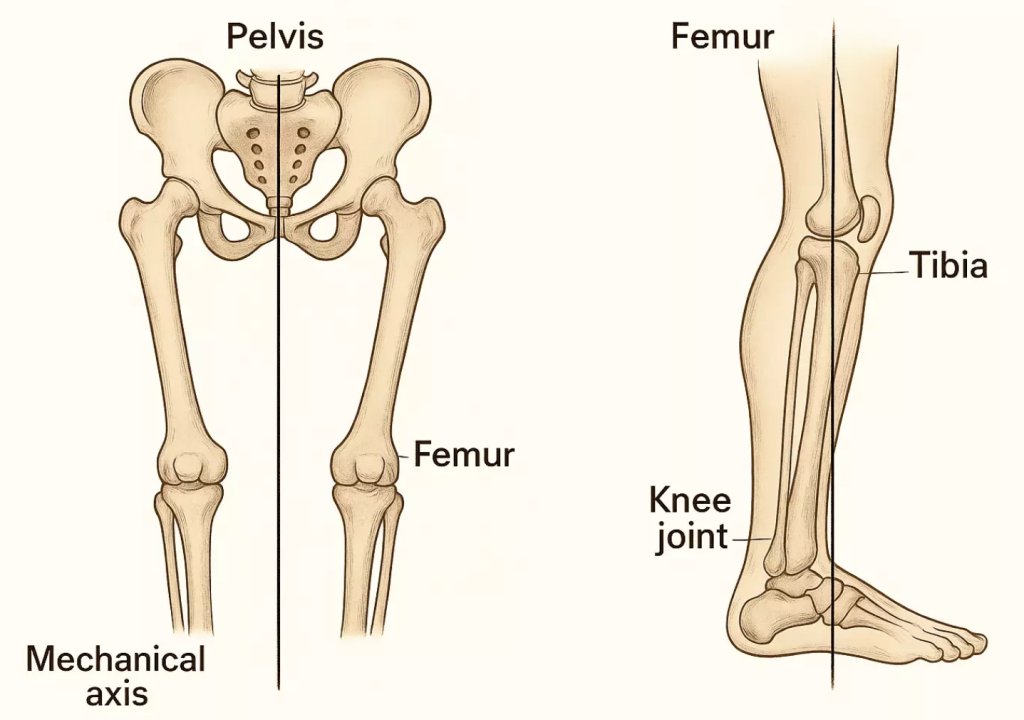
The foot, ankle, knee, and hip work as a connected chain. Weakness at the hip (particularly the gluteus medius) changes how the femur rotates during walking and running, which changes the angle at which force hits the knee, which changes how the ankle and foot absorb that force. A stiff ankle forces the knee to bend at different angles, which overloads the patellofemoral joint and the calf muscles. This is why “just treating the ankle” or “just treating the foot” often produces temporary relief that doesn’t last. The whole chain needs to be assessed.
Ankle and Foot Conditions We Treat
Ankle sprains, plantar fasciitis and Achilles tendinopathy each have a dedicated page with full treatment detail. Below is a short summary of each with its link, then real depth on the foot, ankle and calf conditions that do not have a page of their own. Whether you are looking for foot pain treatment in Oakville or coming to us from south Mississauga with an ankle that will not settle, the starting point is the same: 60 minutes of one-on-one care at Wellmax, with expert guidance every visit.
Ankle Sprains
A sprain happens when the foot rolls inward and the ligaments on the outside of the ankle stretch or tear. The ligaments heal, but the balance sensors around the joint do not retrain themselves, so the same ankle keeps rolling. Grading, healing timelines and the balance rehab that stops re-sprains are covered on our Ankle Sprain Treatment in Oakville page.
Chronic Ankle Instability
The ankle that “always gives way.” This develops when an ankle sprain (or repeated sprains) wasn’t fully rehabilitated and the ankle lacks the stability and proprioceptive control to handle uneven ground, quick direction changes, or unexpected surfaces. The ligaments may be permanently stretched, but that doesn’t mean the ankle can’t be stabilized. Targeted strengthening and balance training can compensate for ligament laxity, and most patients with chronic instability improve significantly without surgery.
Plantar Fasciitis
The most common cause of heel pain: sharp pain under the heel with the first steps of the morning that eases as you walk, then returns after a long day on your feet. Calf tightness, sudden jumps in walking or running volume and unsupportive footwear are the usual drivers. Treatment, timelines and shockwave therapy for cases that have not settled with exercise are covered on our Plantar Fasciitis and Heel Pain Treatment in Oakville page.
Achilles Tendinopathy
Pain in the tendon at the back of the heel, either a few centimetres above the heel bone or right where the tendon attaches. It is common in runners, walkers and anyone who suddenly does more, and rest alone rarely fixes it. The carefully dosed loading program that does, with shockwave as an option when progress stalls, is on our Achilles Tendinopathy Treatment in Oakville page.
Stress Fractures
Small cracks in foot or ankle bones caused by repetitive loading that exceeds the bone’s ability to remodel. Most common in the metatarsal bones (foot) and the calcaneus (heel). Common in distance runners, military personnel, and anyone who dramatically increases their training volume. Presents as gradual-onset pain that worsens with weight-bearing activity and improves with rest. Diagnosed with imaging (often requires MRI as X-rays can be negative in early stages).
Treatment involves a period of protected weight-bearing (walking boot or reduced loading), followed by gradual return to activity with progressive loading. Physiotherapy addresses the factors that led to the stress fracture: training load errors, biomechanical issues (hip weakness, ankle stiffness), nutritional factors (vitamin D, calcium), and footwear.
Morton’s Neuroma
A thickening of the nerve between the metatarsal bones, most commonly between the 3rd and 4th toes. Causes burning, tingling, or numbness in the forefoot that’s worse in tight shoes and during walking. Treatment includes footwear modification, metatarsal pads to reduce nerve compression, manual therapy, and addressing any biomechanical factors. Most cases improve with conservative management.
Post-Fracture Rehabilitation
After ankle fractures (fibula, tibia, talus) or foot fractures (metatarsals, calcaneus), structured rehabilitation is essential to restore range of motion, strength, proprioception, and confidence. Prolonged immobilization in a cast or boot causes significant muscle atrophy and joint stiffness. Rehabilitation progressively restores everything that was lost during the healing period.
Shin Splints and Calf Pain
Aching along the inner shin, or a calf that tightens with every run. Shin splints, known clinically as medial tibial stress syndrome, is an overload of the bone and muscles along the inside of the shin. Calf pain usually has the same cause: too much walking or running, too soon.
A calf strain is different. It comes on suddenly, often as a sharp pull mid-stride, and needs a graded return rather than rest.
- Inner-shin pain that builds during activity
- Calf tightness that lingers after runs
- Tenderness when you press along the bone
We look at load, footwear, calf strength and hip control. See our running injuries and muscle strain pages, our shin splints recovery guide, or book an assessment to find what is driving it.
Sinus Tarsi Syndrome
Outer-ankle pain that never quite left after a sprain. The sinus tarsi is a small tunnel on the outside of the ankle, just in front of the ankle bone. After a sprain, the tissue inside it can stay irritated for months, long after the ligaments have healed.
People describe a deep outer-ankle ache, a joint that feels unstable, and pain that flares on uneven ground. Sinus tarsi syndrome often gets missed because the sprain “should” be better by now.
Hands-on manual therapy to restore joint movement, plus balance and strength work, settles most cases. If the ankle is also giving way, our ankle sprain page explains why. Lingering outer-ankle pain deserves a proper look, so book an assessment.
Metatarsalgia and Ball of Foot Pain
A bruised, burning or “walking on a pebble” feeling under the ball of the foot. Metatarsalgia is an overload of the joints and soft tissue beneath the long bones of the forefoot. Narrow or thin-soled shoes, high heels, a tight calf and long hours standing all push more weight there.
Sharp, electric or numb sensations between the toes can point instead to Morton’s neuroma, a thickened nerve between the metatarsals. The two are treated differently.
Treatment offloads the forefoot with footwear changes and metatarsal padding, restores calf and ankle mobility, and strengthens the foot. Custom orthotics help when alignment is part of the problem. An assessment will tell you which it is and what to do next.
Peroneal Tendinopathy
Pain along the outside of the ankle and down toward the outer foot. The peroneal tendons wrap behind the outer ankle bone and are the main stabilizers that stop the foot rolling inward. Overworked, they become sore and weak.
Peroneal tendinopathy is common with high arches, repeated ankle sprains, and running on sloped roads. Pain builds during activity and the ankle can feel unreliable.
- Tenderness behind or below the outer ankle bone
- Swelling along the tendon line
- Pain turning the foot outward against resistance
Rehab means progressive strengthening of the peroneals, calf and hip, manual therapy for mobility, and a footwear review. Deep tissue laser and shockwave help stubborn cases. Ankle pain treatment in Oakville starts with an assessment.
Posterior Tibial Tendon Dysfunction
Inner-ankle pain and an arch that is slowly flattening on one side. The posterior tibial tendon runs behind the inner ankle bone and holds up the arch. When it weakens, the arch drops, the heel drifts outward and the ankle aches with standing and walking.
Posterior tibial tendon dysfunction is most common from middle age onward and progresses if ignored. Early signs include inner-ankle swelling, difficulty rising onto your toes on one leg, and a growing difference between your feet.
Caught early, it responds to tendon loading, calf strengthening, hands-on treatment and supportive footwear or custom orthotics. If your arch pain is on both sides, see our arch pain page. One flattening foot is worth assessing sooner rather than later.
Other Ankle and Foot Conditions We Treat
- Posterior tibial tendon dysfunction (flat foot progression)
- Peroneal tendinopathy (outside ankle pain)
- Turf toe (big toe sprain)
- Bunion-related pain and functional limitations
- Ankle arthritis (osteoarthritis)
- Shin splints (medial tibial stress syndrome)
- Sesamoiditis (pain under the big toe joint)
How We Treat Ankle and Foot Pain at Wellmax
Assessment Beyond the Foot
Every ankle and foot pain treatment at Wellmax starts with a 60-minute initial assessment that includes the knee, hip, and the way you walk and move. We measure ankle dorsiflexion range, test foot and ankle strength, assess proprioception and balance, evaluate hip and knee function, analyze gait mechanics, and examine footwear. The foot that hurts is often the foot that’s compensating for something else in the chain.
Hands-On Manual Therapy
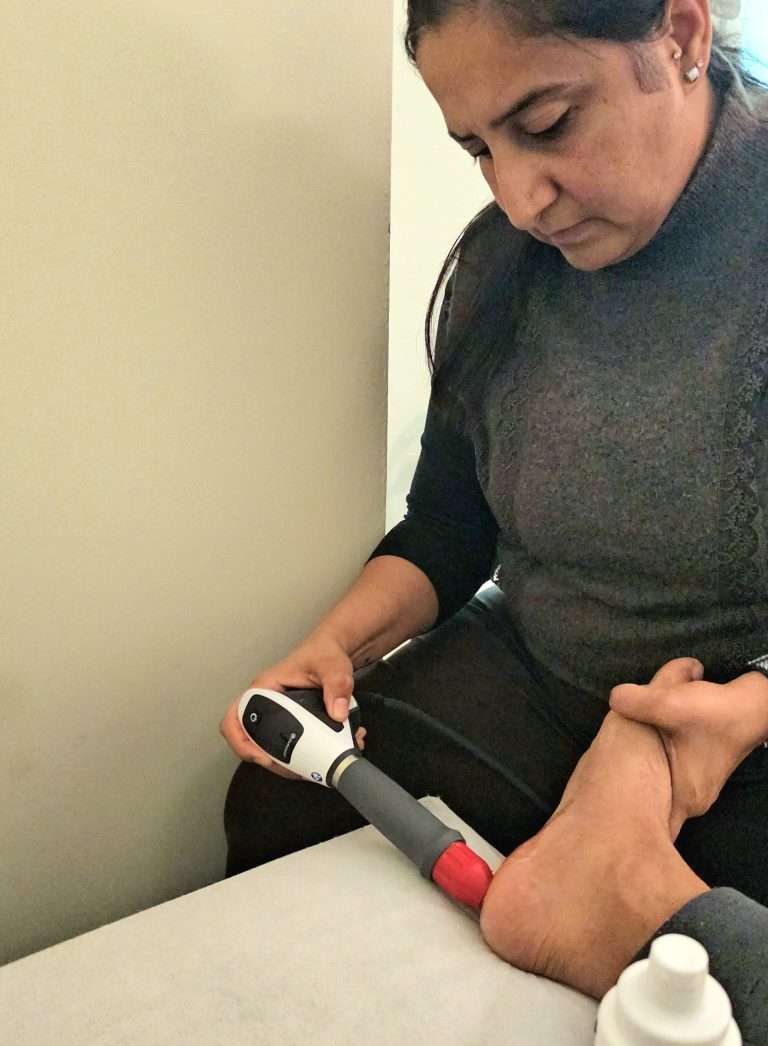
Ankle joint mobilization to restore dorsiflexion and subtalar movement. Talocrural joint mobilization for stiffness after sprains or immobilization. Soft tissue release for calf muscles, plantar fascia, peroneal muscles, and posterior tibial tendon. Foot joint mobilization for midfoot stiffness. Manual therapy creates immediate improvements in mobility and pain that open a window for the exercise program to take effect.
Progressive Strengthening and Balance Training
For ankle sprains and instability: peroneal strengthening, single-leg balance progressions, proprioceptive training on unstable surfaces, and reactive balance drills. For plantar fasciitis: calf strengthening (heavy slow resistance), foot intrinsic muscle training, and progressive loading of the plantar fascia. For Achilles tendinopathy: eccentric and heavy slow resistance calf training with careful load management. Strength and balance are the foundations of ankle and foot rehabilitation.
Shockwave Therapy
Highly effective for chronic plantar fasciitis and Achilles tendinopathy that haven’t responded to 6-8 weeks of exercise and manual therapy. Plantar fasciitis is one of the conditions with the strongest evidence base for shockwave therapy. See our Shockwave Therapy page.
Custom Braces and Orthotics
Custom orthotics are considered when structural foot alignment is contributing to the problem and exercise alone isn’t sufficient. We assess whether orthotics are genuinely indicated based on your assessment findings. Not everyone with foot pain needs orthotics, and we won’t recommend them unless the clinical evidence supports it. Ankle bracing may be used short-term during return to sport for chronic instability while the strengthening program builds long-term stability. See our Custom Braces and Orthotics page.
Your Recovery Timeline
Phase 1: Pain Management and Protected Loading (Weeks 1-3)
What we’re doing: Manual therapy to restore ankle mobility, gentle range of motion exercises, early muscle activation, swelling management, balance training introduction.
What you’ll notice: Morning pain decreases (plantar fasciitis), weight-bearing becomes more comfortable (sprains/fractures), swelling reduces. Your homework: Mobility exercises daily, calf stretches (plantar fasciitis), balance exercises, ice after activity if swollen.
Phase 2: Strengthening and Functional Loading (Weeks 4-8)
What we’re doing: Progressive calf strengthening, peroneal and intrinsic foot strengthening, balance and proprioceptive training on increasingly challenging surfaces, gait retraining.
What you’ll notice: Walking longer distances without pain, stairs improve, standing tolerance increases, ankle feels more stable and reliable.
Your homework: Strengthening exercises 3-4 times per week, balance training daily, graduated walking program.
Phase 3: Return to Full Activity (Weeks 8-12+)
What we’re doing: Advanced strengthening, sport-specific training (cutting, pivoting, jumping, landing for ankle sprains), running progression for runners, maintenance program.
What you’ll notice: Full function on uneven ground, return to sport/running, confidence in the ankle/foot.
Your homework: Maintenance exercises 2-3 times per week permanently. Ankle and foot strength is a lifelong investment, particularly after sprains.
What Results to Expect
| Condition | Expected Outcome | Typical Timeline |
|---|---|---|
| Ankle sprain (Grade I) | Full recovery | 2-4 weeks |
| Ankle sprain (Grade II-III) | Full recovery with rehab | 6-12 weeks |
| Chronic ankle instability | Significant stability improvement | 8-12 weeks |
| Plantar fasciitis | 70-80% improvement | 6-12 weeks |
| Achilles tendinopathy | 75-85% improvement | 8-12 weeks |
| Stress fracture (post-healing) | Full return to activity | 8-16 weeks |
| Post-fracture rehab | Functional recovery | 10-20 weeks |
| Morton’s neuroma | Significant pain reduction | 4-8 weeks |
Timelines vary based on condition severity, duration, adherence to the home program, and overall health. Your physiotherapist provides a specific estimate at your first assessment.
Why Choose Wellmax Physiotherapy for Ankle and Foot Pain Treatment in Oakville
We Assess the Whole Chain
Persistent ankle and foot pain is frequently driven by hip weakness or knee mechanics that change how forces are distributed through the foot. We assess the ankle, foot, knee, and hip at every initial evaluation. This is how you find the real driver and stop the cycle of temporary improvement followed by recurrence.
Expert Care, Every Visit
Ankle and foot rehabilitation requires tracking subtle changes in mobility, strength, balance, and loading tolerance week over week. Your progress is tracked at every visit, so each session picks up where the last one left off and builds on it.
Shockwave Therapy Available
For chronic plantar fasciitis and Achilles tendinopathy that haven’t responded to exercise alone, shockwave therapy is available as part of your treatment plan. These are two of the conditions with the strongest evidence base for shockwave.
Custom Orthotics When Indicated
We provide custom orthotics when assessment findings indicate they are genuinely needed, not as a default recommendation for every foot problem. Many foot conditions resolve with strengthening and manual therapy alone.
Convenient Oakville Location
1148 Winston Churchill Blvd, Unit B3, Oakville. Free parking. Ground-level entrance. Clarkson: 5 minutes. Clearview: 8 minutes. Sheridan Park: 10 minutes. South Mississauga: 7 minutes.
Direct Insurance Billing
We direct bill to Sun Life, Manulife, Canada Life, Green Shield, Great-West Life, Blue Cross, Desjardins, and most other major providers. WSIB and MVA claims accepted. No referral needed.
What Our Patients Say
Zakaria S.“I came in with a locked and sore ankle and Gurmeet was able to identify the root cause very quickly. The soft tissue release, electrical therapy, manual manipulation and assigned stretches have all been beneficial for my situation. They’ve got a customer for life. Gurmeet and her team are friendly and knowledgeable.”
Hazel V.“I was suffering from plantar fasciitis. I went to other physio, shockwave nothing helped. Until I found Wellmax Physiotherapy. This is a great place!”
Christopher N.“Gurmeet and her team are awesome 🙂 They really helped me to recover from my ankle sprain. Thanks team Wellmax. Highly Recommended!”
Tia D.“My experience with Gurmeet and her team was truly wonderful. I arrived with a painful ankle sprain and a lot of uncertainty about how well I would heal. After just a few sessions with her, I already felt more hopeful and confident again. I was able to walk more comfortably, the swelling went down significantly, and they helped me manage the pain so much better. Gurmeet and her team are incredibly caring, supportive, and knowledgeable. They made sure I felt looked after not only during my visits but also gave me everything I needed to continue healing well at home. I trusted them completely, and I still feel so grateful that I did. I would wholeheartedly recommend them to anyone.”
Kevin O.“Look no further if you want the best physiotherapy clinic in Oakville. I was dealing with plantar fasciitis that made taking my first steps out of bed every morning absolutely agonizing. I had tried custom insoles and resting, but nothing worked permanently. Dhrushi assessed my foot mechanics and put together a great plan using shockwave therapy. I also saw Cynthia for deep tissue massage on my tight calf muscles. The combination of their treatments worked wonders. I am finally walking normally again. They are honest, professional, and do not pressure you into endless treatment packages.”
Pamela V.“10/10!! I came to this physio after spraining my ankle with a grade 3 ankle sprain in late August 2025. I was on crutches, couldn’t walk and could barely move my ligaments in my foot to do an ankle circle. I came to this clinic and was so impressed with the new team and new physiotherapist, Gurmeet. She does her work exceptionally well. She explains things so easily and told me she wants patients to understand what’s going on so it can help them. …”
Sunil R.“Gurmeet figured out the cause of my knee pain and is working hard on fixing it. Already feel much more pain relief and better walking ability. Thanks to you and your team! Not only are you all very professional and knowledgeable, but also very kind and caring! As an update, Gurmeet’s techniques have significantly improved the mobility in my foot/ankle, and the recommended stretches and modalities have all helped so much too! Thankful to Nav and Cynthia too. Everyone is so skilled and polite and friendly! Cynthia is the best massage therapist I’ve had in years! She really works on the tight muscles and listens to feedback well if you ask for less or more pressure. …”
Ghanshyam S.“I had an excellent experience at Wellmax Physiotherapy for my ankle pain. Gurmeet, the physiotherapist, was very knowledgeable and took the time to understand my condition and create an effective treatment plan. She recommended shockwave therapy, which helped reduce my pain and improve my mobility significantly. Janvi and Manahil the Physiotherapy Assistant were also very friendly, professional, and supportive throughout my treatment sessions. The entire team made me feel comfortable and welcomed every time I visited. The clinic is clean, well-organized, and provides outstanding patient care. I highly recommend Wellmax Physiotherapy to anyone looking for effective treatment for physio and massage.”
See all our Google reviewsRead more patient storiesLeave a review
Frequently Asked Questions
How do I know if my ankle pain is a sprain or a fracture?+–
A bone tenderness test (Ottawa Ankle Rules) helps distinguish the two: if you have pain when pressing directly on the tip of either ankle bone (malleolus) or along the base of the fifth metatarsal (the bony bump on the outer foot), an X-ray is recommended to rule out fracture. Widespread ligament tenderness without bone point tenderness, swelling, and bruising on the outside of the ankle typically indicates a sprain. When in doubt, get assessed rather than assume.
Why does my ankle keep rolling?+–
Recurrent ankle sprains are almost always caused by incomplete rehabilitation from the first sprain. The ligament may have healed, but the proprioceptors (balance sensors) around the ankle were damaged and never retrained. Without proprioceptive training, the brain doesn’t receive accurate information about ankle position, leaving it vulnerable to rolling again. Targeted balance and proprioceptive rehabilitation can break this cycle even years after the original injury.
Why does the outside of my ankle still hurt months after a sprain?+–
Ligaments usually heal within several weeks, but pain can linger for other reasons. Common culprits are sinus tarsi syndrome (irritation in the small tunnel on the outer ankle), peroneal tendinopathy, a stiff ankle joint, or balance sensors that were never retrained. Each responds to a different treatment, so a hands-on assessment matters more than waiting it out. Most people improve once the right cause is targeted.
How do I know if it is shin splints or a stress fracture?+–
Shin splints usually cause a diffuse ache along several centimetres of the inner shin that eases when you stop. A stress fracture tends to hurt in one small, pinpoint spot, is tender to press, and can ache at rest or at night. Only imaging can confirm a stress fracture, and X-rays are often normal early on. If your shin pain is sharp and localized, get it assessed before running on it.
What causes pain in the ball of the foot when walking?+–
The most common cause is metatarsalgia, an overload of the joints under the long bones of the forefoot. Thin-soled or narrow shoes, high heels, a tight calf, extra body weight and long hours standing all push more load onto that area. Burning or numbness between the toes can point to Morton’s neuroma instead. Because they are treated differently, an assessment is the quickest way to sort out which one it is.
Can a flattening arch on one foot be treated without surgery?+–
In most cases, yes, especially when it is caught early. A flattening arch on one side is often posterior tibial tendon dysfunction, and the tendon responds to progressive loading, calf strengthening, hands-on treatment and supportive footwear or custom orthotics. Surgery is generally reserved for advanced cases where the foot has become rigid. The earlier it is assessed, the more options you have.
Do I need orthotics for foot pain?+–
Not necessarily. Many foot conditions respond well to strengthening, manual therapy, and footwear modification without orthotics. Custom orthotics are recommended when structural foot alignment is contributing to the problem and exercise alone isn’t sufficient. We assess whether orthotics are indicated based on your specific findings rather than recommending them as a default treatment.
How often should I come for ankle or foot physiotherapy?+–
Typically twice per week for the first 2-3 weeks, then once weekly as you become independent with the home exercise program, then every other week for monitoring. Total course is usually 8-12 sessions depending on the condition. Chronic conditions like plantar fasciitis and Achilles tendinopathy may need longer programs.
Can I still run with foot pain?+–
It depends on the condition and severity. For some conditions (mild Achilles tendinopathy, early plantar fasciitis), modified running may be possible with adjusted volume and intensity. For others (stress fractures, acute ankle sprains), running needs to stop until healing allows. We assess your specific situation and design a return-to-running plan with clear milestones rather than arbitrary rest periods.
Do I need a doctor referral for foot and ankle physiotherapy in Ontario?+–
No. Physiotherapists in Ontario are primary healthcare providers, so you can book directly without seeing a doctor first. Some extended health plans do ask for a doctor’s note before they reimburse physiotherapy, so check your plan’s wording. We direct bill most major insurers, and a free consult is available if you want to talk through your foot or ankle pain before committing.
Will my insurance cover ankle and foot physiotherapy?+–
Most extended health plans cover physiotherapy, typically $500-$1,500 per year. We direct bill to most major providers. WSIB and MVA ankle and foot injuries are billed directly. No referral needed in Ontario.
Related Conditions and Services
- Ankle Sprain Treatment in Oakville
- Plantar Fasciitis Treatment in Oakville
- Achilles Tendinopathy Treatment in Oakville
- Running Injuries Physiotherapy in Oakville
- Shockwave Therapy in Oakville
- Custom Braces and Orthotics
- Knee Pain Treatment in Oakville
- Hip Pain Treatment in Oakville
- Arch Pain & Flat Feet
If ankle or foot pain is affecting your daily life, Wellmax offers a free initial consultation to discuss your situation. Book a free consult online or call us at 905-829-1100 to schedule your assessment at our Oakville clinic.
Registered & Regulated
Regulated & Recognized Across Every Discipline
Wellmax is in good standing with the regulatory colleges and leading associations for physiotherapy, chiropractic, massage therapy, and naturopathic medicine in Ontario.