Back Pain Treatment in Oakville
Back pain treatment in Oakville for low back pain and sciatica. Decompression, McKenzie-based exercise and manual therapy. Non-surgical. Direct billing, no referral.
Home > Conditions We Treat > Back Pain Treatment in Oakville
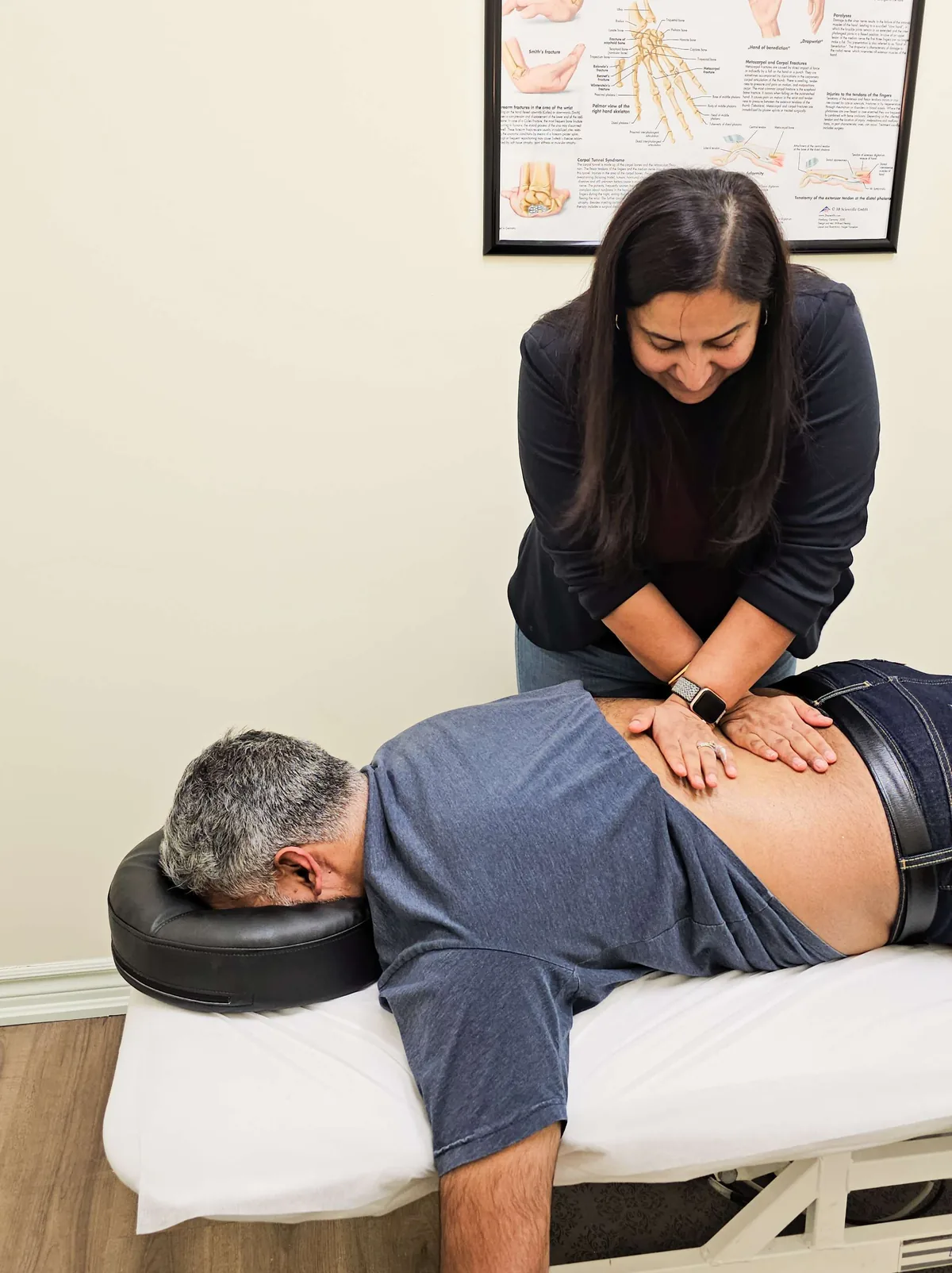
Looking for back pain treatment in Oakville? It started small. A twinge picking something up off the floor. A stiff morning that didn’t go away by lunch. Now it’s been weeks, maybe months. Sitting hurts. Standing too long hurts. Getting out of the car takes a full three seconds of bracing. And if the pain has started running down into your leg, you already know something isn’t right.
Back pain affects roughly 8 out of 10 people at some point in their life. It’s the most common reason people book a physiotherapy appointment in Oakville, and it’s the condition we treat more than anything else at Wellmax. We see it every day , people who’ve been stretching, resting, taking ibuprofen, watching YouTube videos, and still waking up in the same pain they went to bed with.
Here’s what a lot of people don’t hear from the first clinic they go to: most back pain does get better. Even disc herniations, even sciatica. But “getting better” doesn’t mean resting until it goes away on its own. It means figuring out what’s driving the problem and loading the spine in a way that lets it heal instead of keeps irritating it. That’s what we do here.
We’re at 1148 Winston Churchill Blvd, Unit B3, Oakville , in the Winston Park plaza just south of the QEW. If you’re in Clarkson, Clearview, Sheridan Park, or coming from south Mississauga, you can be here in under 10 minutes.
- Understanding Back Pain
- Common Back Pain Conditions We Treat
- How We Treat Back Pain at Wellmax
- What Results to Expect
- Your Recovery Timeline: What to Expect Week by Week
- Why Patients Choose Wellmax for Back Pain
- What Happens at Your First Visit
- Keeping Your Back Healthy Long-Term
- When to See a Doctor (Red Flags)
- Related Conditions and Services
- Book Your Back Pain Treatment in Oakville
- Frequently Asked Questions
Understanding Back Pain
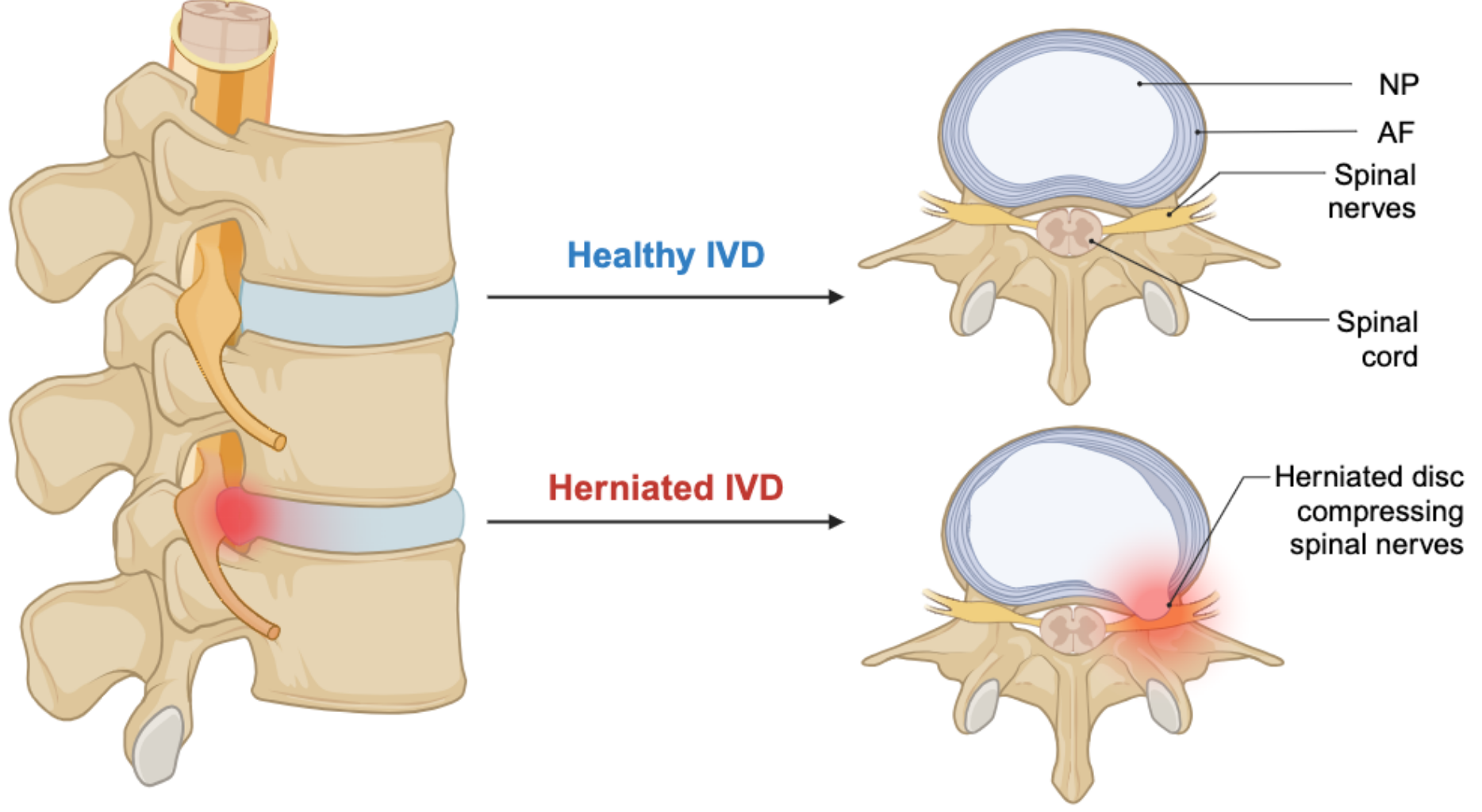
Your lower back is five vertebrae stacked on top of your pelvis. Between each bone sits a disc , basically a tough ring with a softer center. These discs act like spacers and shock absorbers. Behind the discs, small joints called facet joints help guide movement. Muscles wrap around all of it , the deep stabilizers that keep things steady and the big movers that let you bend, twist, and lift.
Running through the middle of the spine is a canal where the spinal cord sits. Nerves branch off at every level and travel into the legs. When something irritates a nerve a bulging disc pushing on it, a narrowed canal squeezing it, inflammation around it , you can feel pain, tingling, or numbness anywhere from your low back down to your toes. That’s sciatica.
One thing worth knowing: imaging doesn’t always tell the whole story. Studies have shown that plenty of people with “bad” MRIs , disc bulges, degenerative changes, even herniations have zero pain. And some people with terrible back pain have completely normal scans. This is why we assess the person, not just the picture. How you move, what triggers your pain, how your body responds to different positions , that tells us more than a scan in most cases.
Common Back Pain Conditions We Treat
Herniated Disc (Disc Bulge)
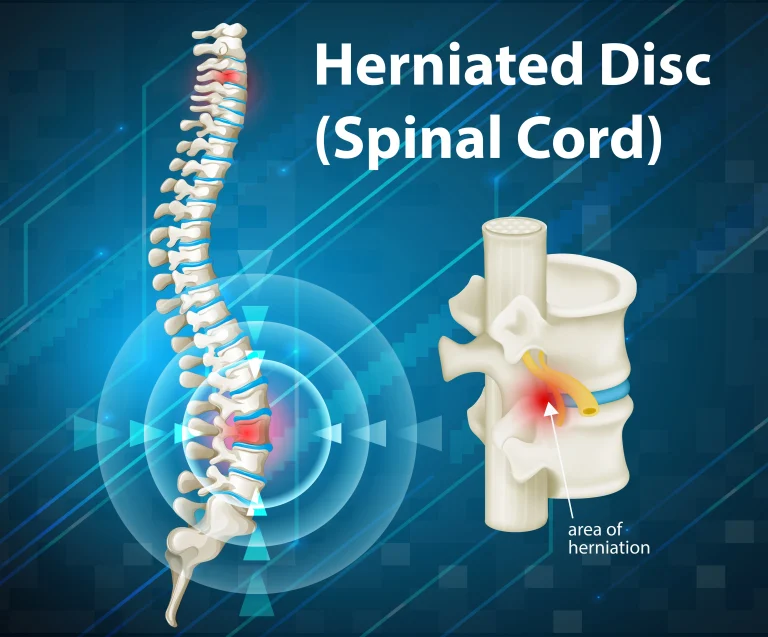
The soft center of a disc pushes through a crack in the outer ring. Sometimes it presses on a nerve. Sometimes it doesn’t. When it does press on a nerve, you get sciatica , pain, tingling, or numbness traveling down one leg.
What people with disc herniations usually describe to us:
Sharp pain in the lower back that gets worse bending forward
Pain, numbness, or tingling running down one leg (sometimes past the knee)
Sitting makes it worse, lying down eases it
Sneezing or coughing sends a jolt through your back
You instinctively lean to one side to take pressure off
The good news: research shows that most disc herniations shrink on their own over time. Larger herniations actually tend to reabsorb faster than small ones. Physiotherapy helps you manage pain, stay moving, and load the spine in ways
that help healing rather than making things worse.
Sciatica (Sciatic Nerve Pain)

Sciatica isn’t a diagnosis , it’s a symptom. Something is irritating the sciatic nerve (the longest nerve in your body, running from your lower back down each leg). The most common causes are disc herniations, spinal stenosis, or piriformis syndrome (a deep hip muscle clamping down on the nerve).
What sciatica typically feels like:
Shooting, burning, or electric pain from your back or buttock down the leg
Numbness or pins and needles in the leg, foot, or toes
One leg feels heavier or weaker than the other
Sitting for longer than 20 minutes becomes unbearable
Pain that changes with position: some postures make it worse, some better
Most sciatica settles within 6 to 12 weeks with proper treatment. The key word is “proper.” Resting in bed won’t do it. Stretching alone won’t do it. You need targeted movement, hands-on work to reduce nerve irritation, and a structured loading program that builds tolerance without flaring things up.
Lumbar Spinal Stenosis
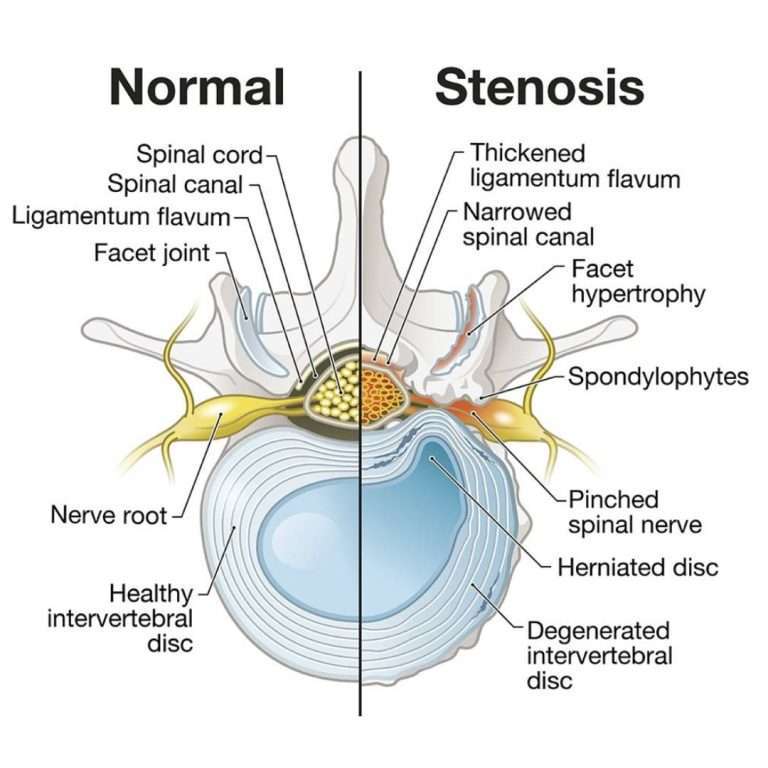
The canal where the nerves sit gets narrower. This is more common in people over 55 and often related to long-term wear and tear. Unlike disc herniations (which usually hurt more with sitting and bending), stenosis tends to cause problems with standing and walking.
What spinal stenosis looks like:
Pain or heaviness in both legs when you walk or stand for a while
You feel better leaning forward – pushing a shopping cart, riding a bike
Sitting down gives quick relief
Gradually, you can walk shorter distances before the pain starts
Your legs might feel numb or “dead” after standing too long
Spinal stenosis responds well to physiotherapy focused on flexion-based exercises (movements that open up the spinal canal), core stability, and walking endurance training. Many patients avoid surgery entirely.
Muscle Strain & Ligament Sprain

Lifting something too heavy, twisting awkwardly, or even just sneezing at the wrong angle. The muscles or ligaments around your spine get overstretched or torn. It hurts a lot but it usually heals faster than most people expect.
Typical signs:
Sudden pain during a specific movement or lift
Muscle spasm that locks your back up
Pain that’s worse with movement but calms down with rest
Tender to touch along the muscles beside your spine
Usually improves significantly within 2 to 4 weeks
Most acute strains respond quickly to hands-on treatment, early movement, and a short course of physiotherapy. The goal is getting you moving safely and preventing it from becoming a recurring problem.
Degenerative Disc Disease

Despite the scary name, this isn’t really a “disease.” It’s the normal aging process of your discs. Everyone’s discs lose some water content and height over time. It shows up on imaging in most adults over 40 and often causes no symptoms at all.
When it does cause pain:
Dull, chronic aching in the lower back
Stiffness that’s worse in the morning and eases as you move
Flare-ups with certain activities, then settling periods
Prolonged sitting can be uncomfortable
Responds well to staying active and keeping the back strong
Degenerative changes do not mean you’re “falling apart” or that surgery is in your future. Most people with degenerative discs live perfectly normal, active lives. Physiotherapy helps by building strength around the spine, improving how you move, and keeping flare-ups short.
Other Back Conditions We Treat
Facet joint dysfunction: irritation of the small joints behind each disc
SI joint pain: where the spine meets the pelvis, common after pregnancy or from asymmetric loading
Spondylolisthesis: one vertebra slips forward on the one below it
Chronic lower back pain: pain lasting longer than 3 months, often involving the nervous system becoming sensitized (see our Chronic Pain page)
Post-surgical back pain: lingering pain after spinal surgery
How We Treat Back Pain at Wellmax

Our back pain treatment in Oakville is built around finding the actual driver of your pain and loading the spine back to full capacity, not just chasing the symptom. Here is what a typical plan involves.
It Starts with Getting the Assessment Right
A lot of people who come to us have already been to another clinic. They got exercises. They did them. And they’re still in pain. That usually means the initial assessment missed something , or didn’t go deep enough to figure out what was really driving the problem.
Your first visit at Wellmax is a full session of one-on-one care. We take the time to go through your full history, understand what you’ve already tried, do a thorough physical exam, and test your movement in ways that actually tell us something useful. We explain what we find in plain language. No jargon. No vague “your core is weak” without showing you why that matters.
Back pain is rarely a one-and-done fix. Your therapist needs to know how your body responded last time, what’s changing, and when to adjust the plan, so every visit at Wellmax starts with a reassessment and ends with honest guidance on where you stand.
Hands-On Treatment (Manual Therapy)
Manual therapy is a big part of what we do for back pain. This means:
Joint mobilization to restore movement at stiff spinal segments
Soft tissue release for tight muscles that are guarding or spasming
Nerve mobilization techniques when a nerve is irritated or restricted
Myofascial work to address trigger points and fascial tension
Research supports manual therapy combined with exercise as one of the most effective approaches for back pain. It’s not just about feeling good on the table , it’s about reducing pain and stiffness enough that you can move better and start loading the spine properly.
Traction Table (Spinal Decompression)
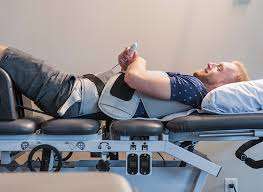
We use a traction table for spinal decompression for patients with disc herniations, sciatica, and spinal stenosis. Traction gently separates the vertebrae, reduces pressure on the discs and nerves, and can provide significant relief , sometimes within the first session.
Not every patient needs traction, but for the right conditions, it’s one of the fastest ways to take the edge off nerve pain. We have a dedicated traction table at the clinic and use it regularly for back and neck conditions.
Progressive Exercise & Strengthening
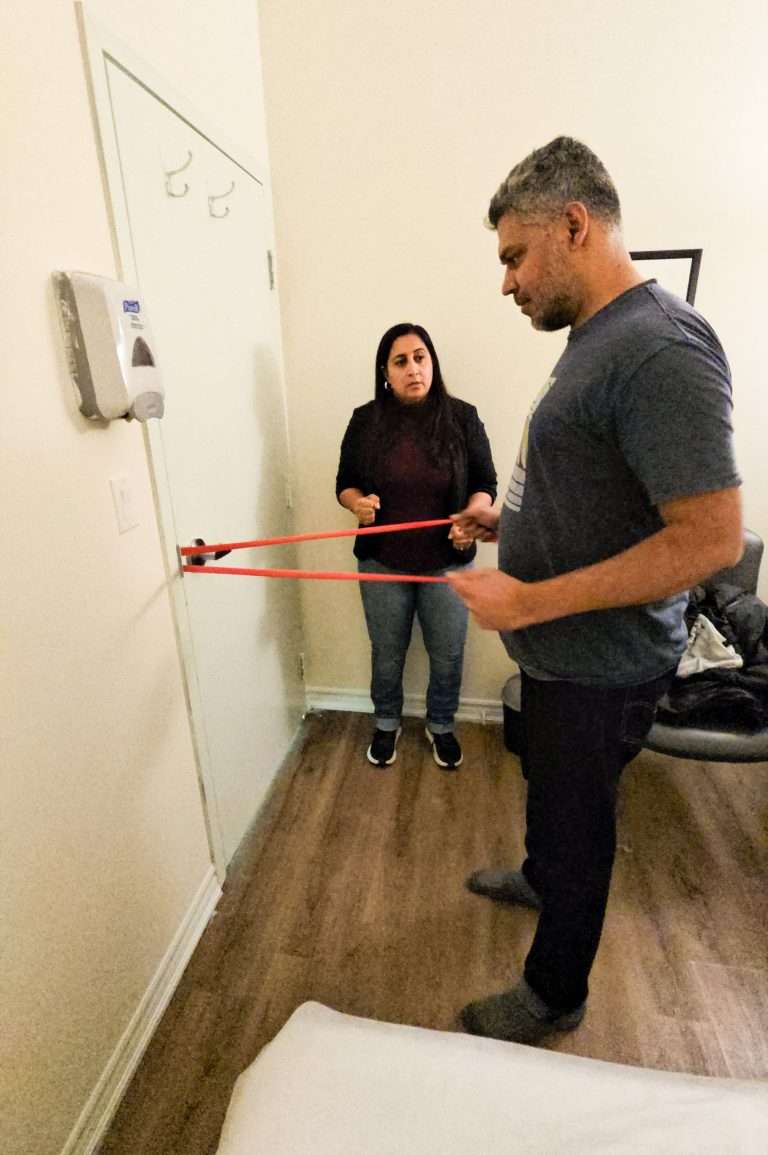
Exercise is the long-term fix for back pain. But the wrong exercise at the wrong time can make things worse. That’s why “go home and do planks” isn’t a treatment plan. We build exercise programs in stages:
Phase 1 , pain-relieving positions and gentle mobility work
Phase 2 , spinal stabilization and deep muscle activation
Phase 3 , progressive strengthening and loading
Phase 4 , return to full activity, sport, or work demands
Every exercise has a purpose. We explain why you’re doing it, how to do it right, and when to progress. If an exercise isn’t helping, we change it. No one-size-fits-all sheets.
Shockwave Therapy for Chronic Back Pain
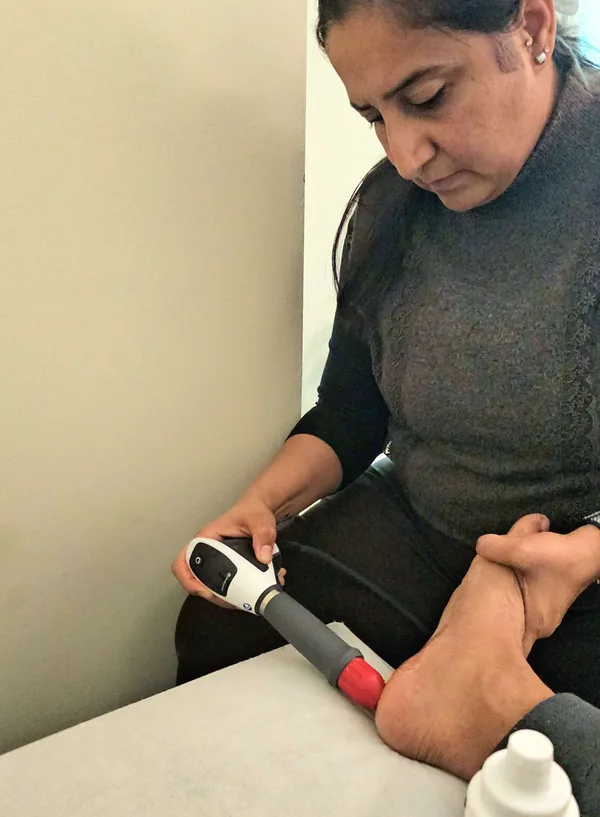
For back pain that’s become chronic , especially when soft tissue tightness and fascial restriction are contributing , shockwave therapy can accelerate progress. It promotes blood flow, breaks down scar tissue, and triggers a healing response in stubborn tissues.
Shockwave isn’t the first thing we reach for with back pain, but when someone has plateaued with manual therapy and exercise alone, adding shockwave can push through that stall.
Deep Tissue Laser Therapy
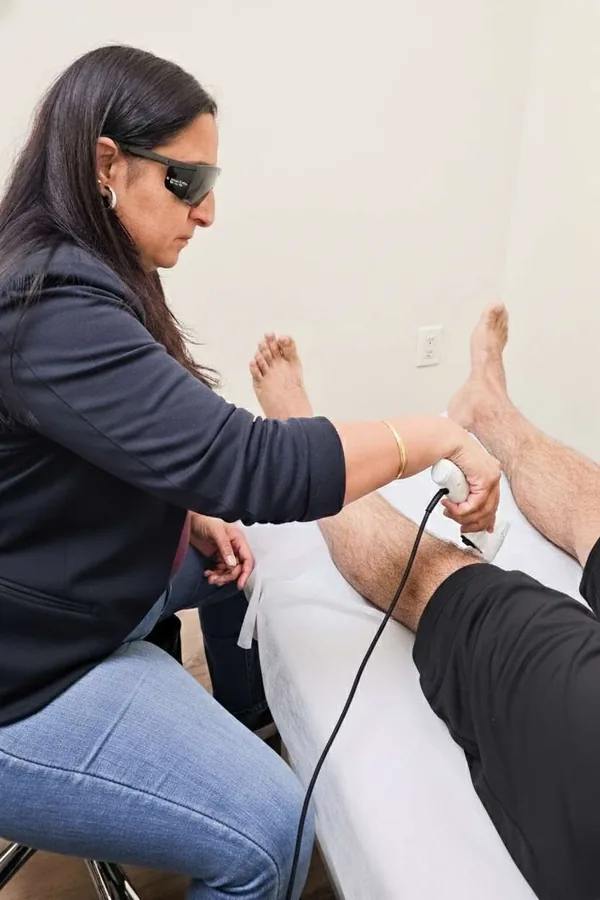
Deep tissue laser therapy reduces inflammation, promotes tissue repair, and provides pain relief at a cellular level. We use it for acute disc flare-ups, muscle spasm, and chronic lower back conditions where inflammation is a significant driver of pain.
What Results to Expect
It Starts with Getting the Assessment Right
Honest numbers. Not promises, not guesses , what the research and our clinical experience actually show:
| Condition | Expected Outcome | Typical Timeline |
|---|---|---|
| Acute muscle strain | 85-95% full recovery | 2-4 weeks |
| Disc herniation | 80-90% improve without surgery | 6-12 weeks |
| Sciatica | 80-90% resolve with conservative care | 6-12 weeks |
| Spinal stenosis | 60-80% significant improvement | 8-16 weeks |
| Chronic lower back pain | Significant improvement in function | 8-12+ weeks |
| Post-surgical back pain | Varies by procedure | 12-24 weeks |
| Degenerative disc disease | Symptom management, improved function | 4-8 weeks |
These are averages. How fast you improve depends on how long you’ve had the problem, your overall health, how consistent you are with exercises, and whether you modify the activities that aggravate it.
Most patients from Clarkson, Clearview, and Sheridan Park tell us they feel noticeably different within the first 2-3 visits. That doesn’t mean you’re healed , it means the pain is starting to move in the right direction and you’re getting a clear sense that treatment is working.
Your Recovery Timeline: What to Expect Week by Week
Phase 1: Pain Control and Early Movement (Weeks 1-3)
What we’re doing:
- Calming inflammation and reducing acute pain
- Gentle movement and position-based relief (McKenzie-style if appropriate)
- Manual therapy to restore mobility
- Traction if nerve compression is present
- Teaching you what to avoid and what’s safe to keep doing
What you’ll notice:
- Pain intensity drops within the first 1-2 weeks
- You can sit and stand longer without flaring up
- Sleeping starts improving
- Getting out of bed or out of a chair becomes easier
Your homework:
- Specific positions or movements to use throughout the day (takes 5-10 min)
- Walking within your tolerance
- Avoid prolonged sitting, heavy lifting, and bending with a rounded back
- Ice or heat as directed
Phase 2: Rebuilding Strength and Stability (Weeks 4-8)
What we’re doing:
- Progressive core stabilization exercises
- Spinal muscle strengthening (multifidus, transverse abdominis, glutes)
- More aggressive manual therapy as your tolerance improves
- Gradually increasing functional movements (bending, lifting, twisting)
- Fixing movement habits that contributed to the problem
What you’ll notice:
- Significant pain reduction , most patients feel 50-70% improved
- You can do more daily activities without thinking about your back
- Sitting tolerance has increased substantially
- If sciatica was present, leg symptoms are retreating
- Exercise feels productive instead of scary
Your homework:
- Strengthening exercises 3-4x per week with resistance bands or bodyweight
- Walking program , gradually increasing distance
- Ergonomic changes at your desk or workstation if applicable
- Beginning to return to light recreational activities
Phase 3: Return to Full Activity (Weeks 8-12+)
What we’re doing:
- Advanced strengthening and loading
- Sport-specific or work-specific training
- Endurance building
- Final movement optimization
- Building your long-term maintenance plan
What you’ll notice:
- Back to work, sports, and normal life with confidence
- Minimal or no pain during daily activities
- You know what to do if you feel a twinge coming on
- Your back feels stronger than it did before the injury
Your homework:
- Continue maintenance exercises 2-3x per week (this is forever, not just until you feel better , 15 minutes is all it takes)
- Proper lifting mechanics
- Warm-up before activities
- Periodic check-ins if needed
Condition-specific notes:
- Acute strains: Often resolved in Phase 1-2 (4-6 weeks total)
- Disc herniations with sciatica: Full timeline is 8-12 weeks for most
- Spinal stenosis: May need 12-16 weeks; maintenance is ongoing
- Chronic back pain: Recovery follows a less linear path; expect ups and downs but steady overall improvement
Why Patients Choose Wellmax for Back Pain
Convenient Oakville Location
We’re at 1148 Winston Churchill Blvd, Unit B3, Oakville, in the Winston Park commercial area. Easy to get to from everywhere:
- Clarkson: 5 minutes via Lakeshore Road
- Clearview: 8 minutes via Dundas Street
- Sheridan Park: 10 minutes via QEW
- Downtown Oakville: 12 minutes via Trafalgar Road
- South Mississauga: 7 minutes via Winston Churchill
- Convenient access from QEW and Highway 403
Free parking directly in front of the building. Early morning, evening, and weekend appointments available.
Expert Care, Every Visit
Your back problem didn’t show up overnight and it won’t be solved in one visit. That’s why you get expert care from your first assessment through to your last session: a plan that is reassessed each visit and adjusted based on how your body responds, with the goal of getting you moving pain-free and independent.
We See a Lot of People Who’ve Already Tried Somewhere Else
A good number of patients who walk into Wellmax have already done physiotherapy at another clinic. They did the exercises. They did the heat packs. And they’re still in pain. We’re not saying the other clinic did something wrong , but when standard treatment hasn’t worked, sometimes it means the assessment needs to go deeper, the treatment needs to be more specific, or the timeline needs to be more patient.
That’s something we’re comfortable with. Complex, stubborn back pain is a large part of what we treat.
Direct Insurance Billing
We bill directly to most major insurance providers: Sun Life, Manulife, Canada Life, Desjardins, Green Shield Canada, Great-West Life, Blue Cross, and more. We also accept WSIB claims, motor vehicle accident (MVA) claims, Veterans Affairs, and ODSP. No referral needed to start treatment in Ontario.
Same-Day or Next-Day Appointments
Back pain that just seized up doesn’t need to wait two weeks. Call us in the morning , we can often see you that afternoon or the next day.
What Happens at Your First Visit
Before You Arrive
- Fill out intake forms online through JaneApp (saves time) or arrive 10 minutes early
- Bring your insurance card and photo ID
- Wear comfortable clothes you can move in , gym wear or loose clothing
- Write down your questions
During Your Assessment (Full Session, One-on-One)
We’ll:
- Talk through your back pain history , when it started, what you’ve tried, what makes it better and worse
- Ask about your job, your activities, your sleep, your goals
- Do a physical exam , movement tests, strength checks, nerve testing, specific orthopedic tests to narrow down the diagnosis
- Check your hips and pelvis (they often contribute to back pain)
- Explain what we think is going on, in plain language
- Start treatment that same visit if appropriate
- Give you a clear plan with realistic expectations
You’ll leave with:
- An understanding of what’s causing your back pain
- Some exercises or positions to start using immediately
- Treatment frequency recommendation (usually 2-3x/week initially)
- Next appointment booked
- An honest answer to “how long is this going to take?”
Most patients tell us they feel better just from understanding what’s actually wrong and having a plan. That clarity makes a difference.
Keeping Your Back Healthy Long-Term
Stay Active (Seriously)
The worst thing for most back pain is rest. Research consistently shows that people who stay active , even with modified activity , recover faster and have fewer repeat episodes than people who stop moving.
You don’t need to run marathons. Walking counts. Gentle movement counts. Anything that keeps your spine moving and your muscles from shutting down.
Build a Strong Core (the Right Way)
“Strengthen your core” is advice everyone gives. But doing 100 sit-ups isn’t what your back needs. The muscles that actually protect your spine are deep stabilizers , the multifidus, transverse abdominis, and pelvic floor. We teach you how to activate these properly.
A 15-minute routine 3 times a week is enough for most people. We’ll build this into your treatment plan and you’ll have it for life.
Fix Your Desk Setup
If you work from home or at an office in Clarkson, Sheridan Park, or anywhere else in the Oakville area, your workstation matters:
- Monitor at eye level (not looking down at a laptop on a table)
- Keyboard and mouse positioned so elbows sit at about 90 degrees
- Chair adjusted so feet are flat on the floor
- Take a break every 30 to 40 minutes , stand, walk, stretch
- Your chair is not the enemy , sitting too long without movement is
Learn to Lift Properly
Sounds basic. But most back injuries at work and at home happen during lifting. Keep the load close to your body. Bend at the hips and knees, not just the back. Don’t twist while holding something heavy. If it’s too heavy, get help or use equipment.
Don’t Ignore Early Symptoms
A twinge today is easier to fix than a full flare-up next month. If your back starts feeling “off” again, come in for a check-up before it snowballs. One or two sessions early can save you six to eight sessions later.
When to See a Doctor (Red Flags)
Physiotherapy is the right first step for most back pain. But some situations need urgent medical attention. Get assessed by a physician or go to the emergency department if you experience:
- Loss of bladder or bowel control (incontinence or retention) , this is a medical emergency
- Numbness or weakness in both legs at the same time (saddle anaesthesia)
- Back pain following a significant fall, car accident, or sports collision
- Severe pain that does not ease at all with rest or any position change
- Unexplained weight loss alongside new back pain
- Back pain with fever, chills, or signs of infection
- History of cancer with new onset back pain
These symptoms are uncommon , the large majority of back pain is mechanical and responds well to physiotherapy. But when in doubt, get assessed before booking physio.
What Our Patients Say
Ahmad“This is a great place for physiotherapy, chiropractic and massage therapy. I had very bad pain in my neck and back but Gurmeet helped me to recover this pain. She is a great professional therapist. I love her!! Everyone is great and professional team members!!! 😊❤️”
R. Singh.“I had an incredible experience with Gurmeet at Wellmax Physio, she is highly skilled and takes the time to explain everything in a way that makes you feel informed and confident in your treatment. Her techniques are effective, and you can tell she’s very knowledgeable in what she does. What stood out most was her attentiveness, she really listens and tailors the treatment to what your body needs. If you’re dealing with back pain or need physiotherapy, I would absolutely recommend her without hesitation.”
Kelly H.“So happy I decided to go here, my back is finally better! I wrecked it shovelling snow and nothing was helping until I came to Wellmax. Amazing service, got me moving again. Everyone working there is so nice; Gurmeet is amazing and I love her ha ha. I highly recommend!”
Bashar F.“I came to Wellmax for neck and back pain, Saw Gurmeet, she did detailed assessment and her hands on treatment, manual therapy, customised treatment plan and exercises with 2 sessions only I am feeling big difference. Her PTAs Janvi and Minahil are good at their job.”
Linda G.“I have spinal stenosis in my lower back. Today I asked to use the decompression table and was put on it. I was also given a tissue massage and ultrasound. The physiotherapist is very knowledgeable and professional and the rooms are very clean. I would recommend this physio place for sure.”
Tanzy R.“I had an excellent experience at Wellmax physiotherapy clinic with Gurmeet for my back problem. Gurmeet was extremely knowledgeable, patient, and took the time to clearly explain the cause of my pain and the recovery plan. The treatment and exercises were very effective, and I noticed significant improvement within 2-4 weeks. I truly appreciated the constant support and personalized care throughout my recovery. Highly recommend Gurmeet and WellMax Clinic to anyone dealing with back pain.”
Richard B.“Excellent, My lower back is better than ever after seeing Gurmeet, and the team at Wellmax Physiotherapy”
Kapil N.“I had sprained my back while shoveling snow. Dr. Gurmeet and her team put me on electrotherapy, hands on manual therapy, and provided excellent physio treatment.”
See all our Google reviewsRead more patient storiesLeave a review
Frequently Asked Questions
How long does back pain treatment in Oakville take?+–
It depends on the cause and how long you have had it. Acute muscle strains often resolve in 4 to 6 weeks with 2 to 3 sessions per week. Disc herniations with sciatica typically take 8 to 12 weeks. Spinal stenosis and chronic lower back pain may require 12 to 16 weeks and an ongoing maintenance routine. Most patients notice a clear improvement in the first 2 to 3 sessions, which is a reliable early sign that treatment is heading in the right direction.
Do I need a referral for back pain physiotherapy in Oakville?+–
No. In Ontario, you can book directly with a physiotherapist without a doctor’s referral. Your insurance plan may require a referral for reimbursement purposes, so check your policy first. WSIB and MVA claims have their own intake processes but physiotherapy can begin quickly. Call us or book online and we can help clarify your coverage before your first visit.
Is physiotherapy better than rest for back pain?+–
Research consistently shows that staying active with guided physiotherapy leads to faster recovery and fewer recurrences than bed rest. Resting for more than a day or two can actually make things worse by deconditioned muscles and increasing pain sensitivity. Physiotherapy provides hands-on pain relief, teaches safe movement, and builds the strength that prevents the next episode.
Can physiotherapy help a herniated disc without surgery?+–
Yes. Studies show that 80 to 90 percent of disc herniations improve without surgery with appropriate conservative treatment. Physiotherapy uses traction (spinal decompression), nerve mobilization, McKenzie-based exercise, and manual therapy to reduce pressure on the disc and irritated nerve. Interestingly, larger disc herniations tend to reabsorb faster than smaller ones. Surgery is typically considered only after 12 or more weeks of conservative care without improvement, or if there are red flag neurological signs.
What is the difference between low back pain and sciatica?+–
Low back pain stays in the lumbar region. Sciatica is pain that travels from the lower back or buttock down one leg, sometimes past the knee to the foot. It is caused by irritation of the sciatic nerve, most often from a disc herniation, spinal stenosis, or piriformis muscle compression. Some people have both simultaneously. The treatment approach differs based on which structures are involved, which is why a thorough assessment matters before starting any exercise program.
Does spinal decompression (traction) help back pain?+–
Spinal decompression therapy on a traction table is effective for disc herniations, sciatica, and spinal stenosis. The gentle separation of the vertebrae reduces intradiscal pressure, which can relieve nerve compression and allow the disc to receive nutrients. Many patients report notable relief within the first one to three sessions. Traction is not the right choice for every back problem, but for the right conditions it is one of the fastest ways to reduce nerve pain.
Is back pain physiotherapy covered by my insurance in Ontario?+–
Yes, in most cases. Extended health plans with physiotherapy coverage (Sun Life, Manulife, Canada Life, Green Shield, Great-West Life, Blue Cross, Desjardins, and others) will reimburse or direct bill for your sessions. WSIB covers back injuries sustained at work. MVA coverage applies to car accident injuries. Most plans do not require a referral. Wellmax direct bills to the majority of major insurers so you pay nothing upfront in most cases.
What exercises help back pain at home?+–
The right exercises depend entirely on the cause of your back pain. Exercises that help one condition can irritate another. Generally, gentle walking is safe and beneficial for most back problems. Cat-cow mobility, pelvic tilts, and bird-dog are commonly used for lower back stabilization. However, exercises like sit-ups, full forward bends, or heavy lifting can aggravate disc and nerve conditions. Your physiotherapist will prescribe a home program specific to your assessment findings rather than a generic sheet.
Related Conditions and Services
Back pain often overlaps with or leads to other problems. Here are related conditions we treat at Wellmax:
- Sciatica: Leg pain, numbness, and tingling from an irritated sciatic nerve, the most common nerve-related cause of back and leg pain.
- Herniated Disc: Disc bulges and herniations that press on a nerve root, with detailed non-surgical treatment.
- Lumbar Spinal Stenosis: Narrowing of the spinal canal causing leg heaviness and pain with walking, treated with flexion-based rehab.
- Spinal Decompression Therapy: Gentle traction-table decompression for disc herniations, sciatica, and stenosis.
- Hip Pain: Because the lower back and pelvis are mechanically linked, we often assess the hip to ensure a long-term solution.
- Chronic Pain: For pain that has lasted more than three months, focused on nervous-system desensitization and long-term management.
- Shockwave Therapy: For chronic soft-tissue restriction and persistent muscle tension contributing to back pain.
- Deep Tissue Laser Therapy: Deep tissue laser to reduce inflammation and provide pain relief during flare-ups.
- Neck Pain and Headaches: Upper back stiffness and thoracic spine issues often contribute to both back and neck pain.
- Motor Vehicle Accident (MVA) Rehab: Whiplash and car-accident injuries frequently involve the lower back. Direct billing to auto insurers.
- WSIB and Workplace Injury Rehab: Back injuries are the most common workplace injury. We are an authorized WSIB provider.
- Sports Physiotherapy: Activity-related back overload and return-to-sport rehabilitation.
Book Your Back Pain Treatment in Oakville
Whether you are dealing with a fresh injury, a disc problem, sciatica running down your leg, or chronic back pain that has been dragging on for months, we are here to help. Your physiotherapist will identify what is actually driving your pain and build a treatment plan around fixing it.
Wellmax Physiotherapy
1148 Winston Churchill Blvd, Unit B3, Oakville, ON L6J 0A3
Phone: (905) 829-1100
Email: info@wellmaxphysiotherapy.ca
Proudly Serving Our Local Communities:
- East Oakville: Winston Park, Clearview, and the QEW/403 Corridor.
- South Oakville: Eastlake, Maple Grove, and Old Oakville.
- North Oakville: Joshua Creek, Falgarwood, and Upper Middle Road.
- Mississauga Border: Clarkson, Sheridan Park, Sheridan Homelands, and Southdown.
Insurance: Direct billing to most major providers. WSIB and MVA claims accepted. No referral needed. See our insurance and direct billing page for details.
Hours: Monday to Friday: 9am to 7pm | Saturday: 9am to 2pm | Sunday: 9am to 2pm (by appointment only)
Registered & Regulated
Regulated & Recognized Across Every Discipline
Wellmax is in good standing with the regulatory colleges and leading associations for physiotherapy, chiropractic, massage therapy, and naturopathic medicine in Ontario.