

Sciatica Stretches: What Helps and What Makes It Worse

If your sciatica feels worse every time you stretch, you are not doing anything wrong as a person. You may simply be doing the wrong kind of stretch for an irritated nerve. The right sciatica stretches can settle leg pain. The wrong ones, or the right ones done too hard, can light it up.
This guide explains which gentle movements tend to help, which ones commonly make things worse, and why the same stretch can soothe one person and flare another. We will also cover the warning signs that mean you should stop stretching and get assessed instead.
Key Takeaways
- Sciatica is a symptom, not a diagnosis, so the best stretch depends on what is irritating the nerve in the first place.
- Gentle nerve glides move the nerve a little, never stretch it hard. Stop before a strong pull or tingling.
- Aggressive hamstring stretching is the most common move that flares sciatica.
- Pain that travels further down the leg is a warning sign. Pain that pulls back toward your spine is usually a good sign.
Why do some sciatica stretches help and others make it worse?
The sciatic nerve runs from your lower back, through your buttock, and down the back of your leg. When it is irritated, it becomes sensitive to being pulled tight. A stretch that yanks on an already angry nerve can add to the irritation, even if the muscle around it feels tight.
This is the core idea many people miss. Nerves do not like to be stretched the way muscles do. The goal with sciatica is usually to gently mobilise the nerve and calm the source, not to crank into a deep stretch and hold it.
“Nerves do not like to be stretched hard. The aim is to gently move the nerve, not to pull it tight and hold.”
Is sciatica a diagnosis or a symptom?
Sciatica is a symptom, not a diagnosis. It describes pain, tingling, numbness, or weakness that starts in the low back or buttock and travels down the leg. The actual cause sits underneath that symptom.
Common sources include a lumbar disc bulge or herniated disc pressing near the nerve root, narrowing of the spinal canal, a tight buttock muscle compressing the nerve, or general low back irritation. Because the cause differs from person to person, the most helpful stretch differs too. That is exactly why one person feels relief from a move that makes the next person worse.
What are nerve glides, and why are they different from a stretch?
Nerve glides, sometimes called nerve flossing, are gentle back-and-forth movements that slide the sciatic nerve a small amount rather than holding it under tension. The idea is to encourage the nerve to move freely and to reduce its sensitivity over time.
The key difference from a normal stretch is the lack of a long hold. A hamstring stretch might be held for 30 to 60 seconds. A nerve glide is the opposite. You move into a position and back out smoothly, never parking at the end range and never chasing a strong pull. You should stop before the sensation of a real stretch.
How do I do a gentle sciatic nerve glide safely?
A common version is done seated. You sit tall, gently straighten one knee while tipping your head back slightly, then bend the knee again while tucking your chin. The two ends of the nerve take up slack at opposite times, so the nerve slides rather than stretches. Move slowly, keep the range small, and stop well before any tingling or shooting feeling. A few easy repetitions, once or twice a day, is plenty to start.
This is a general description, not a personalised prescription. The safe range and direction depend on your specific situation, which is why an assessment matters before you load it up.
What about knee-to-chest and the figure-4 stretch?
A gentle single knee-to-chest move can ease lower back and buttock tension for some people. You lie on your back and slowly draw one knee toward your chest only as far as is comfortable, then lower it. No forcing, no bouncing.
The figure-4 stretch targets the deep buttock muscles around the nerve. Lying on your back, you cross one ankle over the opposite thigh and gently draw the legs toward you. Done lightly it can relieve buttock tightness. Done aggressively it can compress and irritate the nerve, so ease in and back off the moment symptoms travel down the leg.
Which stretches commonly make sciatica worse?
The number one offender is aggressive static hamstring stretching. Reaching for your toes pulls the sciatic nerve tight along the whole back of the leg. If the nerve is already irritated, that hard pull can flare the symptoms instead of relieving them.
Tight hamstrings can genuinely contribute to sciatica, so light hamstring work is not banned. The problem is intensity. If a hamstring stretch produces tingling, burning, or pain shooting down the leg, that is the nerve being tensioned, not the muscle lengthening. That is your cue to stop and switch to a gentle nerve glide instead.
Deep forward folds, hard seated toe-touches, and anything you have to grit your teeth through tend to backfire with an irritated sciatic nerve. Harder is not better here.
How do I know if a stretch is helping or harming?
There is a simple rule of thumb used in physiotherapy. Watch where your symptoms move. If a movement pulls the pain back toward your spine and out of your leg, that direction is usually working in your favour. This is sometimes called centralisation.
If a movement pushes pain further down the leg, increases tingling, or causes numbness, that direction is usually irritating the nerve. Many people with disc-related sciatica respond better to gentle backward-leaning movements and worse to deep forward bends, but this is not universal, which is why an assessment is so valuable.
What is directional preference?
Directional preference is the idea that one direction of spinal movement tends to reduce your symptoms while the opposite direction tends to increase them. Finding your direction is a big part of what a physiotherapist does in a sciatica assessment. Once it is known, your home exercises can be chosen to match it instead of guessing from a generic video.
When should I stop stretching and get help?
Stop and book an assessment if your symptoms keep flaring with stretching, are not improving after a couple of weeks, or are interfering with sleep, work, or daily activities. Pushing harder through a flare rarely helps.
Some signs are urgent. Seek emergency care right away if you notice loss of bladder or bowel control, numbness around the saddle area between the legs, or progressive weakness in a leg. These can point to a rare but serious problem called cauda equina syndrome, which needs immediate attention. This article cannot diagnose you, so when in doubt, get it checked.
How we help with sciatica at Wellmax
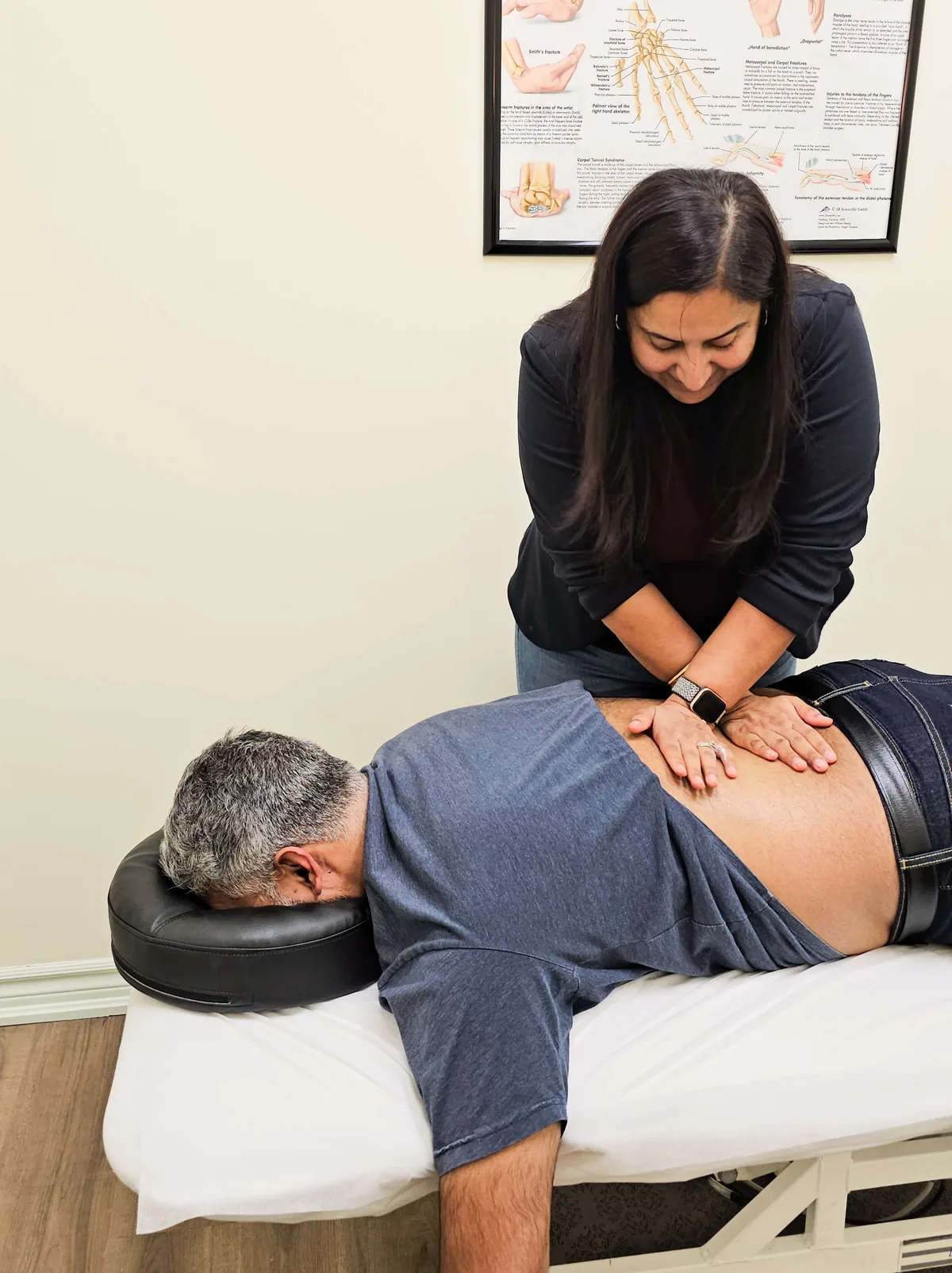
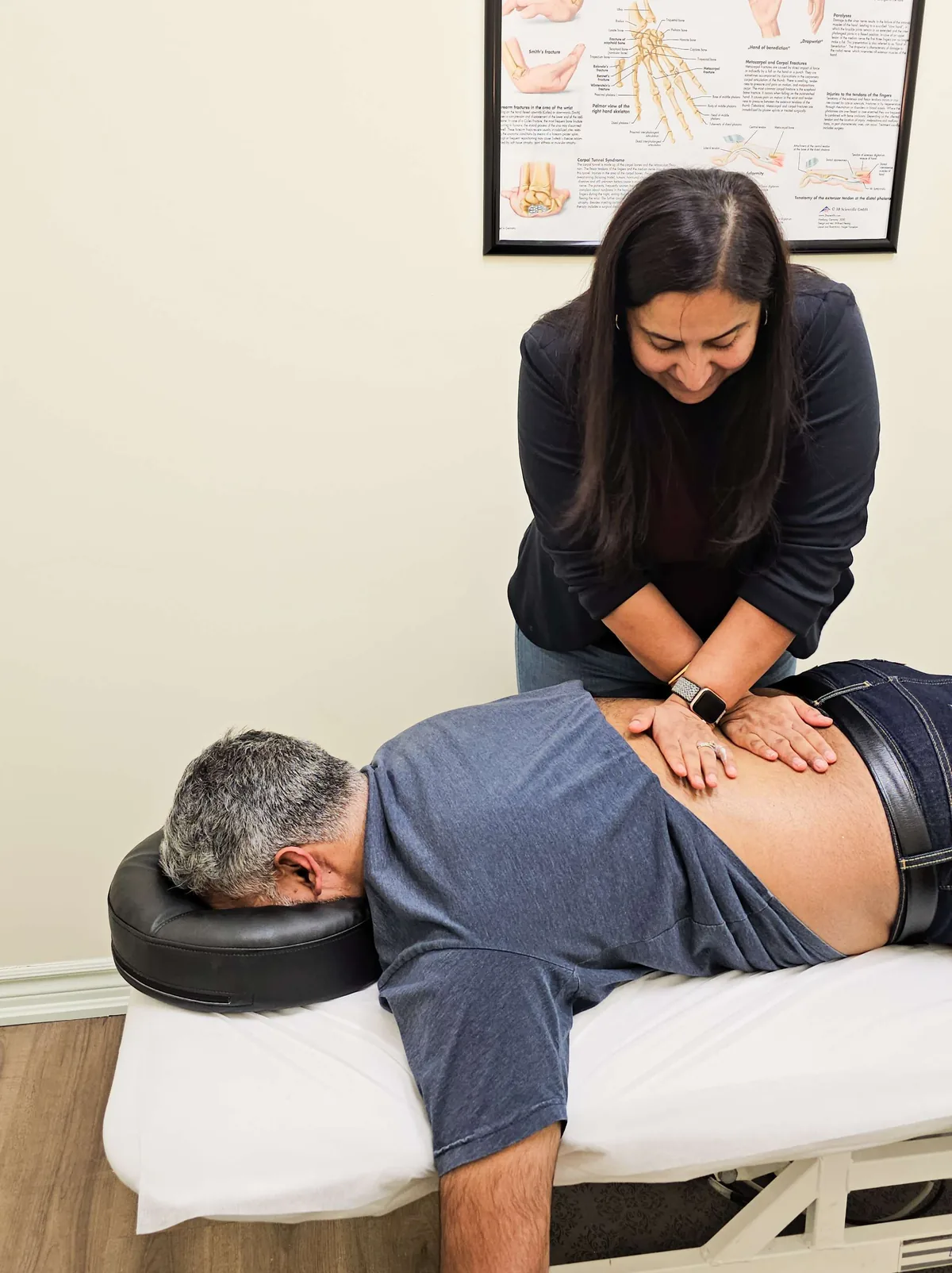
At Wellmax Physiotherapy in Oakville and Mississauga, we start with a thorough 60 minute assessment to find what is actually driving your sciatica, rather than handing you a one-size-fits-all stretch sheet. From there we combine hands-on manual therapy with a movement plan matched to your direction of preference, and we address the root cause so the relief lasts.
Clinic founder Gurmeet Rai brings over 16 years of experience treating back pain and nerve symptoms. Our goal is graduation, not endless visits. We want you confident and independent, not booked in forever. You can read more about our approach to sciatica physiotherapy in Oakville, our combined back pain and sciatica care, or how our sciatica chiropractor in Oakville can support your recovery.
Not sure where to start?
Book a free consultation and we will point you to the right care, with no pressure.
Frequently Asked Questions
What is the best stretch for sciatica?+
There is no single best stretch, because sciatica has different causes. For many people, a gentle sciatic nerve glide and a light single knee-to-chest move are good, low-risk starting points. The truly best choice depends on your direction of preference, which is found during an assessment. The safest approach is gentle movement that eases your symptoms rather than any stretch that forces a hard pull.
Why does stretching make my sciatica worse?+
Usually because the stretch is tensioning an already irritated nerve. Deep hamstring stretches and hard forward bends pull the sciatic nerve tight, which can flare tingling and shooting pain rather than relieving it. Nerves respond better to gentle gliding than to long, forceful holds. If a stretch causes symptoms to travel further down your leg, that is a signal to stop and try a gentler nerve glide instead.
Are nerve glides better than regular stretching for sciatica?+
For an irritated sciatic nerve, gentle nerve glides are often better tolerated than deep static stretches. Glides move the nerve a small amount without holding it under tension, which can reduce its sensitivity over time. Static stretching still has a place for genuine muscle tightness, but it should be light. If you feel tingling during a stretch, you are likely tensioning the nerve, and a glide is the safer choice.
How long should I hold a sciatica stretch?+
It depends on the move. Gentle muscle stretches, if they feel comfortable, are usually held briefly and lightly rather than cranked deep. Nerve glides are different. They are not held at all. You move smoothly into a position and back out, stopping before any strong stretch or tingling. The goal is easy, repeated motion, not a long, intense hold. Quality and comfort matter far more than duration.
How long does sciatica usually last?+
Many sciatica episodes settle within a few weeks to a few months. Acute sciatica often eases within about six weeks, while symptoms lasting beyond that may need a closer look. The large majority of cases improve with the right gentle movement and care rather than surgery. If yours is not improving after a couple of weeks, is getting worse, or is disrupting daily life, that is a good time to get assessed.
Should I keep moving or rest with sciatica?+
Gentle, regular movement usually helps more than strict bed rest. Long periods of rest can stiffen things and slow recovery. The key is to stay within comfortable limits, favour movements that ease your symptoms, and avoid the ones that send pain further down your leg. Light walking and gentle nerve glides are often well tolerated. If you are unsure what is safe for your situation, an assessment can give you clear, personalised limits.
When is sciatica a medical emergency?+
Seek emergency care right away if you lose control of your bladder or bowel, develop numbness around the saddle area between your legs, or notice rapidly worsening weakness in a leg. These can signal a rare but serious condition called cauda equina syndrome that needs urgent treatment. Most sciatica is not an emergency, but these specific red flags should never be ignored or stretched through. When in doubt, get checked promptly.
Can a physiotherapist tell me which stretches are right for me?+
Yes, and that is the most reliable way to avoid wasting weeks on the wrong moves. At Wellmax in Oakville and Mississauga, a 60 minute assessment identifies what is driving your sciatica and which direction of movement calms it. From there we build a tailored plan with hands-on manual therapy and the right home exercises for you, rather than a generic sheet. Our aim is lasting relief and your independence, not endless appointments.
You Might Also Like


Gurmeet Rai, Registered Physiotherapist
Gurmeet is a Registered Physiotherapist with the College of Physiotherapists of Ontario and the Clinic Director and co-owner of Wellmax Physiotherapy in Oakville, with 16+ years of clinical experience. She focuses on complex, stubborn cases where earlier treatment has not worked, with advanced training in pelvic health, TMJ, vestibular, and sports and MSK rehab. Expect expert care from assessment to discharge, with honest guidance along the way. Read Gurmeet’s full profile or meet the team.
This article is for educational purposes only and does not replace a professional clinical assessment. Every body and condition is different. If you are experiencing pain or symptoms, book an assessment with a qualified clinician for advice specific to your situation. If you are experiencing a medical emergency, call 911 or visit your nearest emergency department.
