
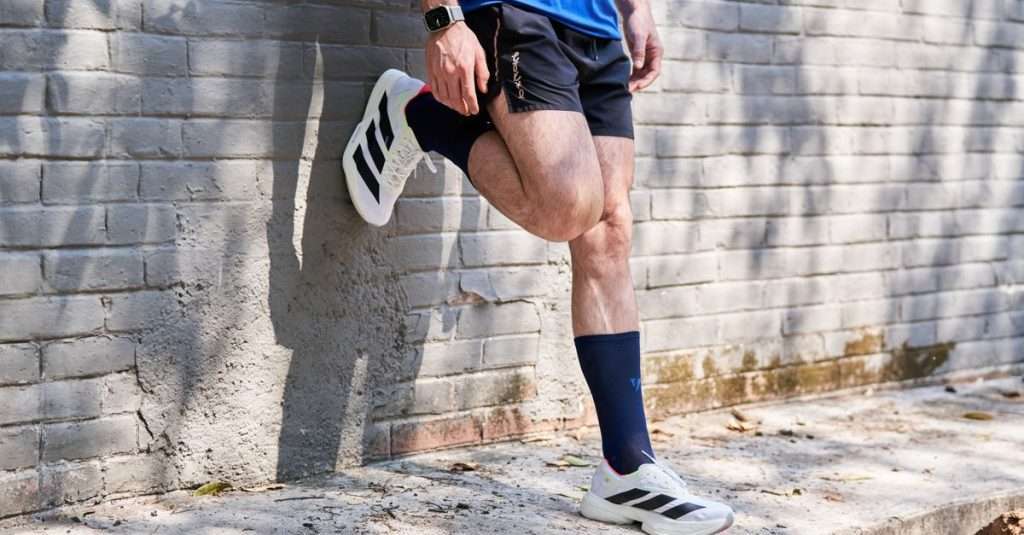
Achilles Tendon Pain: Why the Back of Your Heel Hurts (Especially That First Morning Step)
You swing your legs out of bed, take that first step toward the bathroom, and a sharp, stiff ache grips the back of your heel. A few minutes of walking and it eases off. By mid-morning you have almost forgotten about it. Then you stand up after sitting at your desk, or push off into a run, and there it is again.
That pattern, pain and stiffness that is worst on the first steps of the day and after rest, is the classic signature of an irritated Achilles tendon. It is one of the most common heel complaints we see at Wellmax Physiotherapy in Oakville, and we work with plenty of runners, walkers, and busy parents from neighbouring Mississauga who are dealing with exactly this. The good news is that, with the right plan, most people get back to what they love.
Key Takeaways
- Stiffness and pain on your first morning steps, easing as you warm up, is the hallmark sign of Achilles tendinopathy.
- There are two main locations: mid-portion (a few centimetres above the heel) and insertional (right where the tendon meets the heel bone). They are managed differently.
- Complete rest usually backfires. Tendons get stronger with gradual, guided loading, such as calf-raise and eccentric exercises, not by being avoided.
- A sudden pop or snap with a gap in the tendon, bruising, or trouble pushing off the foot is a red flag for a possible rupture and needs urgent assessment.
What is the Achilles tendon and why does it hurt?
Your Achilles is the thick, rope-like cord that connects your calf muscles to your heel bone. It is the strongest tendon in the body, and every step, hop, and push-off runs through it. When you walk or run, it can absorb several times your body weight.
When the load you put on the tendon outpaces its ability to recover, the tissue gets irritated and begins to change. The medical term is tendinopathy. The older term, tendonitis, suggests simple inflammation, but research now shows the tendon undergoes a gradual change in its structure rather than a classic inflammatory flare. That is why anti-inflammatory pills and rest alone often disappoint people. The tendon does not just need to calm down. It needs to be rebuilt.
Why does my Achilles hurt most in the morning?
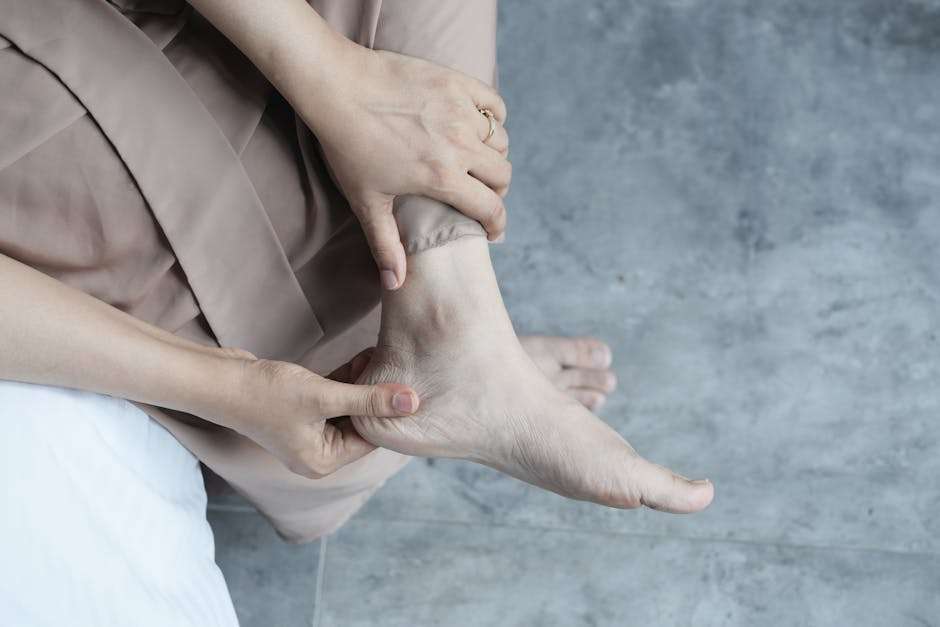
That first-step stiffness is so typical that clinicians treat it as a key clue. Overnight, while you are still, the tendon is not being loaded and it stiffens up. When you take those first steps, you are suddenly stretching and loading an irritated, stiffened tendon, and it protests. As you move and the tissue warms, blood flow improves and the symptoms settle.
A helpful way to track your recovery is to notice how long that morning stiffness lasts. As the tendon heals, the stiff window tends to shorten, from many minutes down to just a few. When we reassess at Wellmax, this is one of the simple markers we watch alongside your pain and function.
“If your first steps each morning are the worst part of your day, your tendon is telling you it is overloaded and under-built, not that you should stop moving entirely.”
Mid-portion or insertional: where is your pain?
Pinpointing where the pain sits matters, because the two common types respond to different approaches.
Mid-portion Achilles tendinopathy
This is pain a few centimetres above the heel bone, in the middle of the tendon. It is the more common type and often responds well to progressive calf loading and stretching. Squeezing the tendon at this spot is usually tender.
Insertional Achilles tendinopathy
This is pain right where the tendon attaches to the heel bone. It can be aggravated by stretching the tendon into a deep position, by pressure from the back of stiff shoes, and by going downstairs or downhill. Because of this, exercises and footwear are adjusted differently than for the mid-portion type. Pushing a deep stretch here often makes it worse, which is why a generic stretching routine can backfire.
This is exactly why a self-diagnosis from the internet can send you down the wrong path. The right starting point depends on where your tendon hurts, how irritable it is, and what you need to get back to. A proper assessment sorts that out.
What causes Achilles tendon pain in the first place?
Tendinopathy is usually a load problem. Something asked more of the tendon than it was prepared to give. Common triggers include:
- A sudden jump in activity, such as ramping up running distance, adding hills or speed work, or starting a new sport.
- Coming back too fast after time off, when the tendon has lost some capacity.
- Long hours on hard surfaces, or a job that keeps you on your feet.
- Tight or weak calf muscles that shift more strain onto the tendon.
- Footwear changes, including flat, unsupportive shoes or worn-out runners.
- Reduced ankle mobility or foot mechanics that load the tendon unevenly.
Notice that none of these are about the tendon being weak by nature. They are about a mismatch between demand and capacity. Close that gap and the tendon settles.
Why doesn’t rest fix Achilles tendon pain?
It feels logical: it hurts, so stop using it. And for a few days of severe pain, easing off does help. But weeks of complete rest is one of the most common reasons people stay stuck. A tendon that is not loaded does not get stronger. It loses capacity. So when you return to your activity, the tendon is even less ready than before, and the pain comes straight back.
The modern, evidence-based approach is the opposite of total rest. It is graded loading: gradually and deliberately stressing the tendon in a controlled way so it adapts and rebuilds. The skill is in finding the right dose, enough to drive change, not so much that you flare it up. That is the part that is hard to get right on your own, and where guided care earns its keep.
How is Achilles tendon pain treated?
At Wellmax, every plan starts with a thorough, unhurried assessment. Our initial visits are 60-minute assessments, so there is real time to figure out where the pain is, how irritable the tendon is, what set it off, and what you are trying to get back to. From there, treatment usually combines several pieces.
Progressive loading exercise
This is the backbone of recovery. Calf-raise and eccentric loading exercises, where the calf lowers slowly under control, have strong evidence for rebuilding tendon capacity in mid-portion tendinopathy. For insertional pain, the exercises are modified so they do not push the tendon into the deep, aggravating positions. The programme is progressed step by step as your tendon tolerates more.
Hands-on manual therapy and a root-cause look
We use hands-on manual therapy to ease calf and ankle tightness and improve how the area moves, which can make loading more comfortable. Just as important, we look for the root cause: the training error, the calf weakness, the footwear, or the mobility limit that overloaded the tendon, so the problem does not simply return once you feel better.
Load and activity management
Rather than stopping everything, we help you adjust volume, surfaces, and footwear so you keep moving while the tendon settles. Sometimes a temporary heel lift or shoe change takes pressure off, especially with insertional pain.
Shockwave therapy for stubborn cases
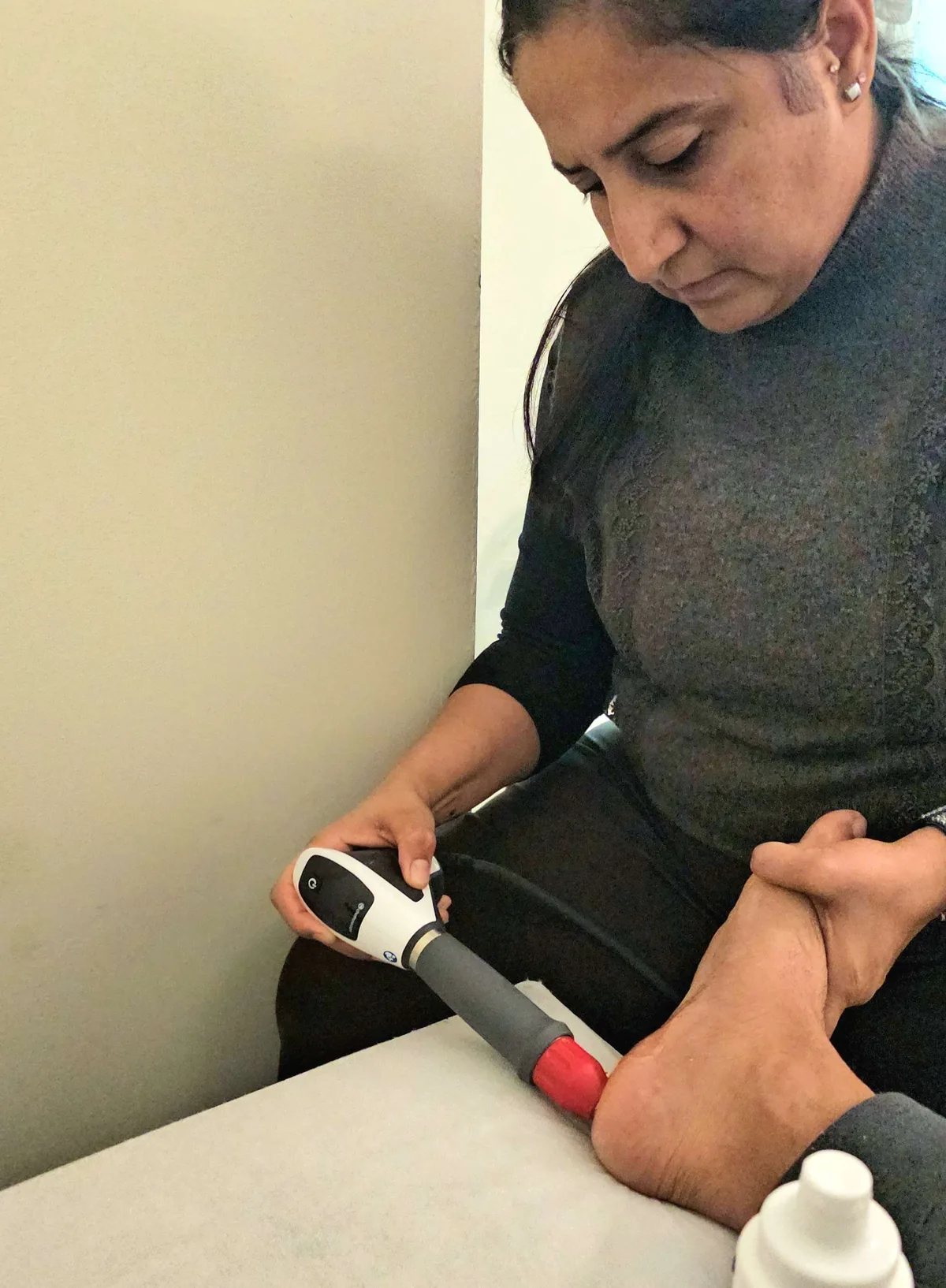
When a tendon has been grumbling for months and is not responding to loading alone, shockwave therapy can be a useful add-on. It delivers focused energy pulses to the tendon to stimulate healing, and it has reasonable evidence for stubborn Achilles cases, including insertional tendinopathy. It is typically done as a short series of sessions alongside your exercises, not instead of them. You can read more about our shockwave therapy in Oakville and how it fits into a tendon-loading plan.
How long does Achilles tendon pain take to heal?
Honestly, longer than most people hope, and that is normal for tendons. Many people with mid-portion tendinopathy turn a real corner over roughly 12 weeks of consistent loading, while more stubborn or long-standing cases can take several months. Insertional pain often needs patience too.
The key is consistency and the right progression, not intensity. Doing your exercises sporadically, or pushing into sharp pain and then resting, tends to stretch the timeline out. Steady, guided loading shortens it. Our goal is graduation, not endless visits: we want you confident and independent with a tendon that can handle your life, not booked in forever.
When should Achilles pain be checked urgently?
Most Achilles pain is a tendinopathy that builds gradually. But there is one pattern that needs prompt attention. If you feel a sudden pop or snap at the back of the ankle, often described like being kicked or hit, followed by a gap in the tendon, swelling or bruising, and difficulty pushing off or rising onto your toes, this could be an Achilles tendon rupture and needs urgent assessment. Do not wait it out. Seek care promptly.
We never diagnose anyone over the internet, and you should be cautious of anything that does. The point of a professional assessment is to tell tendinopathy apart from a rupture or other causes of heel pain, and to build a plan that matches what is actually going on with your tendon.
Help for Achilles pain in Oakville and Mississauga
Wellmax Physiotherapy is based in Oakville and proudly serves clients from Mississauga and the surrounding area. Our clinic director, Gurmeet Rai, is a registered physiotherapist with 16+ years of experience helping people recover from stubborn tendon and lower-limb problems. If your Achilles pain is tied to running or training, our running injuries physiotherapy is built for exactly that, and for broader heel and ankle issues see our ankle and foot pain physiotherapy. You can also read our dedicated guide to Achilles tendinopathy physiotherapy in Oakville.
Not sure where to start?
Book a free consultation and we will point you to the right care, with no pressure.
Frequently Asked Questions
Why does my Achilles only hurt on the first steps in the morning?+
Overnight, while you are still, an irritated tendon stiffens up. Your first steps suddenly stretch and load it, which provokes pain. As you keep moving, blood flow improves, the tissue warms, and the stiffness eases. This warm-up pattern is a classic sign of Achilles tendinopathy, and a shrinking morning-stiffness window is one good marker that you are recovering.
Is it Achilles tendonitis or tendinopathy?+
They describe the same area, but the language matters. Tendonitis implies simple inflammation, while tendinopathy reflects what research actually shows: a gradual change in the tendon’s structure under repeated overload. This is why rest and anti-inflammatories alone often underwhelm. The tendon needs to be rebuilt with progressive loading, not just calmed down, which is the basis of modern treatment.
Should I stop running or exercising if my Achilles hurts?+
Usually not completely. A few days of easing off can help during a sharp flare, but weeks of total rest tends to backfire because the tendon loses capacity and the pain returns when you resume. The better approach is managing your load, adjusting volume, surfaces, and footwear while you keep moving within a comfortable range, guided by a tailored loading plan.
Do calf raises and eccentric exercises really work for the Achilles?+
Yes, progressive calf loading is the most evidence-backed approach for mid-portion Achilles tendinopathy, with eccentric work, slow controlled lowering of the heel, having strong support. Many people improve meaningfully over about 12 weeks of consistent practice. Insertional pain needs the exercises modified so they avoid deep, aggravating positions, which is one reason guided progression beats a generic routine.
What is the difference between insertional and mid-portion Achilles pain?+
Mid-portion pain sits a few centimetres above the heel in the body of the tendon and generally responds well to loading and stretching. Insertional pain is right where the tendon meets the heel bone and is often aggravated by deep stretching, stiff shoe backs, and going downhill or downstairs. Because they respond differently, the exercises and footwear advice are adjusted for each.
How long does Achilles tendon pain take to recover?+
Tendons heal over weeks to months, not days. Many mid-portion cases improve substantially across roughly 12 weeks of consistent loading, while long-standing or insertional cases can take several months. Consistency and correct progression matter more than intensity. Skipping exercises or repeatedly flaring the tendon stretches the timeline, whereas steady, guided loading shortens it.
Does shockwave therapy help Achilles tendon pain?+
For stubborn cases that have not responded to loading alone, shockwave therapy can be a helpful add-on. It uses focused energy pulses to stimulate the tendon’s healing response and has reasonable evidence for chronic Achilles problems, including insertional tendinopathy. It is typically delivered as a short series of sessions alongside your exercise programme rather than as a standalone fix.
When is Achilles pain a sign of something serious?+
Most Achilles pain builds gradually as a tendinopathy. The warning pattern is sudden: a pop or snap at the back of the ankle, sometimes feeling like a kick, followed by a gap in the tendon, swelling or bruising, and trouble pushing off or rising onto your toes. That can indicate a rupture and needs urgent assessment, so do not wait it out.
You Might Also Like

Gurmeet Rai, Registered Physiotherapist
Gurmeet is a Registered Physiotherapist with the College of Physiotherapists of Ontario and the Clinic Director and co-owner of Wellmax Physiotherapy in Oakville, with 16+ years of clinical experience. She focuses on complex, stubborn cases where earlier treatment has not worked, with advanced training in pelvic health, TMJ, vestibular, and sports and MSK rehab. Expect expert care from assessment to discharge, with honest guidance along the way. Read Gurmeet’s full profile or meet the team.
This article is for educational purposes only and does not replace a professional clinical assessment. Every body and condition is different. If you are experiencing pain or symptoms, book an assessment with a qualified clinician for advice specific to your situation. If you are experiencing a medical emergency, call 911 or visit your nearest emergency department.
