Arthritis Treatment in Oakville
Osteoarthritis and rheumatoid arthritis treated with strengthening, manual therapy and pain management to keep your joints moving.
Home > Conditions We Treat > Arthritis Treatment in Oakville

The X-ray shows “bone on bone.” The doctor mentioned joint replacement might be in your future. And now you’re wondering whether physiotherapy can actually help, or whether you’re just delaying the inevitable. This page explains how arthritis treatment in Oakville at Wellmax works, and why exercise-based care keeps most people active and out of the operating room for years.
Here’s what the research says, and it’s more encouraging than most people expect: exercise-based physiotherapy is the most effective non-surgical treatment for arthritis. It’s recommended as first-line treatment by every major clinical guideline worldwide: the Osteoarthritis Research Society International (OARSI), the American Academy of Orthopaedic Surgeons, the Canadian Orthopaedic Association, and the National Institute for Health and Care Excellence (NICE). All of them recommend exercise therapy before considering surgery.
The reason is straightforward. Arthritis means the cartilage in a joint has worn down. You can’t regrow cartilage (yet). But cartilage wear isn’t the only factor determining how much pain you have and how well you function. Muscle strength, joint mobility, movement patterns, activity levels, body weight, and even your beliefs about arthritis all play significant roles. These are modifiable. And when they’re addressed through targeted physiotherapy, the majority of patients experience meaningful reductions in pain and meaningful improvements in function, regardless of what the X-ray looks like.
Many of our arthritis patients come to Wellmax expecting to be told they need surgery. Most leave with a clear exercise plan that keeps them active, functional, and out of the operating room for years, sometimes permanently.
We’re at 1148 Winston Churchill Blvd, Unit B3, Oakville, just south of the QEW. Clarkson, Clearview, Sheridan Park, Maple Grove, and south Mississauga are all under 10 minutes away.
Understanding Arthritis
What Osteoarthritis Actually Is
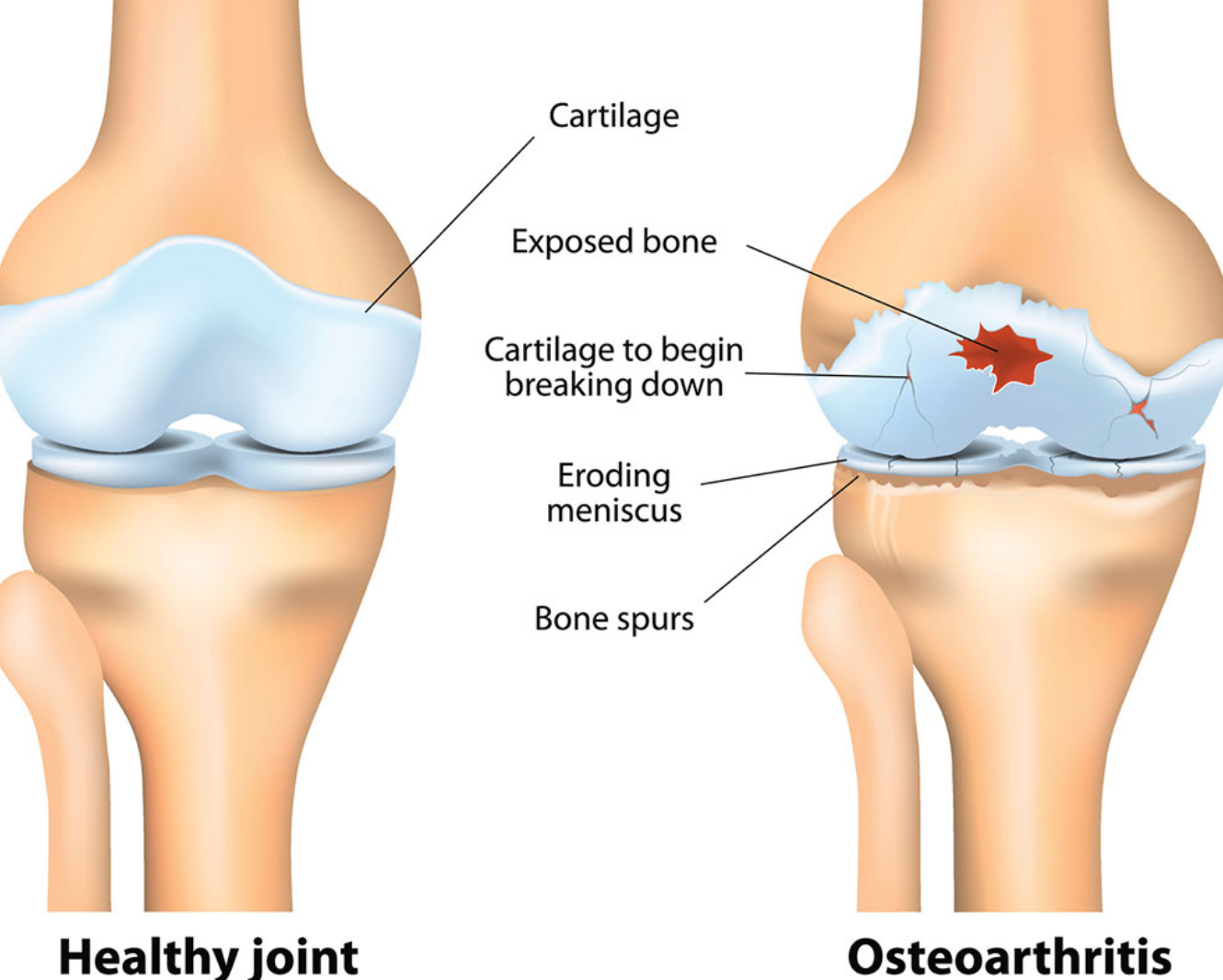
Osteoarthritis (OA) is the most common type of arthritis and the most common joint disease worldwide. It involves gradual breakdown of the articular cartilage that covers the ends of bones inside a joint. As cartilage thins, the space between bones narrows, the joint surfaces become rougher, and the bone underneath the cartilage changes shape (bone spurs or osteophytes form). These changes show up on X-rays and MRI.
But here’s the important part: the degree of cartilage wear on imaging does NOT reliably predict how much pain you’ll have or how well you’ll function. Research consistently shows a weak correlation between X-ray severity and patient symptoms. Some people with severe “bone on bone” changes on X-ray walk 5km daily with minimal pain. Others with mild changes on imaging are significantly limited. The difference? Modifiable factors like muscle strength, activity levels, body weight, and psychological factors (fear of movement, beliefs about damage).
Why Arthritis Isn’t Just “Wear and Tear”
The old model of arthritis as simple mechanical wearing down of cartilage like brake pads on a car is outdated. Arthritis involves the whole joint: cartilage, bone, synovial membrane (the joint lining that produces lubricating fluid), muscles, ligaments, and even the nervous system. Low-grade inflammation in the synovium contributes to pain and swelling flare-ups. Muscle weakness increases load on the joint surfaces. Fear of movement leads to deconditioning, which makes pain worse.
This is actually good news because it means there are multiple points of intervention, not just replacing the joint. Strengthening muscles reduces joint loading. Exercise reduces synovial inflammation. Education about arthritis reduces fear and changes behaviour. Manual therapy improves joint mobility. All of these produce measurable improvements in pain and function.
The Joints Most Commonly Affected
Osteoarthritis most commonly affects the knees (the most frequently replaced joint), the hips (the second most frequently replaced), the hands (base of the thumb and finger joints), the spine (facet joints in the neck and lower back), and the shoulders (less common but increasingly recognized). Each joint has its own pattern of symptoms, functional limitations, and response to exercise.
Risk Factors You Can and Can’t Change
Factors you can’t change: age (cartilage naturally thins over time), genetics (family history of arthritis increases risk), sex (women are more likely to develop OA, particularly after menopause), and previous joint injuries (ACL tears, fractures, and meniscus injuries accelerate cartilage wear in the affected joint).
Factors you CAN change and this is where physiotherapy focuses: muscle strength (stronger muscles reduce load on joint surfaces), body weight (every 1kg of body weight lost reduces the force on the knee joint by 4kg during walking), activity levels (regular exercise keeps joints mobile and muscles strong), movement patterns (how you distribute forces during daily activities), and beliefs about arthritis (fear of movement and damage leads to avoidance, deconditioning, and worse outcomes).
Arthritis by Joint
Knee Arthritis
The most common form of osteoarthritis and the condition most people think of when they hear “arthritis.” Knee arthritis typically presents as morning stiffness that eases within 30 minutes, aching after prolonged walking or standing, swelling that comes and goes, grinding or crunching with movement, and gradual loss of full bending or straightening.
Treatment centers on quadriceps strengthening, this is the single most important intervention for knee arthritis. The quadriceps absorb force during walking and stairs, and when they’re strong, the knee joint surfaces experience less load. Research shows that structured quadriceps strengthening reduces knee arthritis pain by 30-50% on average, with some patients achieving even greater improvement. This is comparable to or better than pain medication, without the side effects.
Additional treatment includes hip strengthening (the hip stabilizes the knee from above), manual therapy for joint mobility, exercise pacing (learning to balance activity and rest), and weight management guidance when relevant. See our Knee Pain page for detailed information.
Hip Arthritis

Gradual wear of the hip joint cartilage. Typically presents as groin pain or deep front-of-hip aching, morning stiffness, difficulty putting on shoes and socks (loss of hip rotation is usually the first restriction), reduced walking distance, and occasional sharp catches during movement.
Treatment focuses on gluteal strengthening (the gluteal muscles are the primary shock absorbers of the hip joint), hip mobility exercises within comfortable range, activity modification and pacing, and core stability training. The evidence is clear: exercise-based physiotherapy should be tried before considering hip replacement. Many patients manage their hip arthritis effectively for years with a regular exercise program. Those who eventually proceed to surgery recover faster when they’re stronger going in (this is called “prehabilitation”). See our Hip Pain page for detailed information.
Shoulder Arthritis
Less common than knee and hip arthritis but increasingly recognized. Shoulder arthritis typically causes gradual loss of overhead reach, aching after use, stiffness that takes progressively longer to loosen up, and grinding or catching during movement. The shoulder’s large range of motion means that even moderate cartilage changes can significantly impact daily activities like reaching overhead, dressing, and sleeping on the affected side.
Treatment involves rotator cuff strengthening and scapular stabilization (the muscles around the shoulder joint must compensate for the loss of smooth cartilage surfaces), manual therapy for joint mobility, and activity modification. See our Shoulder Pain page.
Hand and Thumb Arthritis
The base of the thumb (CMC joint) and the finger joints are common sites for osteoarthritis, particularly in women. Thumb arthritis makes gripping, pinching, opening jars, and turning keys painful and difficult. Finger joint arthritis causes stiffness, swelling, and sometimes visible joint enlargement (Heberden’s and Bouchard’s nodes).
Treatment includes joint protection education (using joints in ways that reduce stress), hand strengthening exercises (grip and pinch strength), manual therapy for joint mobility, splinting for the CMC joint when indicated, and activity modification. Hand arthritis responds well to exercise and education, though the exercises need to be specific and properly dosed. See our Wrist and Hand Pain page for related conditions.
Spinal Arthritis
Osteoarthritis of the facet joints in the cervical spine (neck) and lumbar spine (lower back). Contributes to neck stiffness, lower back pain, and in some cases spinal stenosis (narrowing of the spinal canal that can compress nerves). Treatment is covered in detail on our Back Pain and Neck Pain pages.
How Our Arthritis Treatment in Oakville Works
Assessment: What Actually Matters
Your assessment focuses on what’s modifiable, not what’s on the X-ray. We measure joint range of motion, test muscle strength (particularly quadriceps for knees, gluteals for hips, rotator cuff for shoulders), assess how you move during functional tasks (walking, stairs, squatting, reaching), discuss your activity levels and goals, and identify beliefs or fears about arthritis that may be affecting your behaviour. This tells us where the biggest opportunities for improvement are and allows us to design a targeted program. We never diagnose you over the phone or from an image alone, the right plan comes from a proper in-person assessment.
Progressive Strengthening (The Core of Treatment)
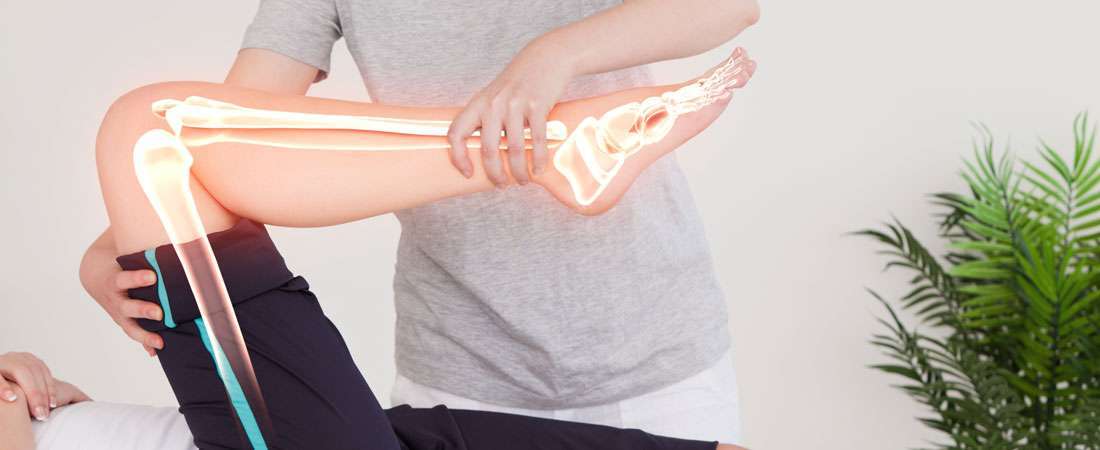
Exercise is the most evidence-supported treatment for arthritis. It is recommended by every major clinical guideline as the foundation of arthritis management. Strengthening the muscles around the arthritic joint reduces load on the joint surfaces, improves stability, reduces pain, and improves function. The exercises start at a level your joints can tolerate (often isometric holds and supported movements) and progress gradually through range as strength and confidence improve. This is a structured, progressive program that evolves over weeks, not a generic handout.
Manual Therapy
Hands-on joint mobilization to improve range of motion, reduce stiffness, and decrease pain. For knee arthritis, this includes patellar and tibiofemoral mobilization. For hip arthritis, hip joint mobilization (particularly rotation) and lumbar spine mobilization when the back is contributing. For shoulder arthritis, glenohumeral and scapulothoracic mobilization. Manual therapy produces immediate improvements that make exercise more comfortable and effective.
Education: Changing How You Think About Arthritis
Many people with arthritis have been told things that aren’t helpful: “you’re bone on bone,” “your joints are wearing out,” “you need to stop being active.” These messages create fear and lead to avoidance of movement, which actually makes arthritis worse. We explain what arthritis is and isn’t, what the X-ray actually means (and doesn’t mean), why exercise helps rather than harms arthritic joints (cartilage needs regular loading to stay healthy), and what you can realistically expect from treatment. Understanding arthritis changes behaviour, reduces fear, and improves outcomes.
Flare-Up Management
Arthritis has good days and bad days. Flare-ups (increased pain and swelling) are a normal part of the condition, not a sign that damage is occurring. We teach you how to manage flare-ups at home: temporary activity modification, ice, gentle movement to maintain mobility, and when to reduce and when to resume your exercise program. The goal is self-management so you can handle flare-ups confidently without needing an emergency appointment.
Shockwave Therapy
For chronic tendinopathies that often accompany arthritis (gluteal tendinopathy with hip arthritis, patellar tendinopathy with knee arthritis), shockwave therapy can accelerate recovery when exercise alone has plateaued. The same applies to bursitis that flares up alongside an arthritic hip or shoulder, where the irritated tendon underneath the joint is the real driver.
Your Arthritis Management Timeline
Phase 1: Pain Reduction and Confidence Building (Weeks 1-4)
What we’re doing: Manual therapy for joint mobility, gentle strengthening within comfortable range, education about arthritis (what helps, what doesn’t, what to expect), activity pacing guidance.
What you’ll notice: Morning stiffness duration decreases, walking becomes more comfortable, you start doing exercises you weren’t sure were safe.
Your homework: Daily gentle movement (prescribed exercises), activity pacing (balancing busy and rest days), ice for flare-ups.
Phase 2: Strengthening and Functional Improvement (Weeks 4-10)
What we’re doing: Progressive strengthening with increasing load, functional exercise (stairs, squats, reaching tasks), walking or cycling program.
What you’ll notice: Walking distance increases, stairs become easier, joint confidence improves, pain reduces during activities that previously hurt.
Your homework: Strengthening program 3-4 times per week, aerobic activity (walking, swimming, cycling) most days, continuing to challenge your comfort zone gradually.
Phase 3: Long-Term Self-Management (Weeks 10+)
What we’re doing: Transition to independent maintenance, final exercise program refinement, flare-up management strategy, long-term planning.
What you’ll notice: Meaningful improvement in pain and function, confidence in self-managing the condition, knowledge of how to handle flare-ups.
Your homework: Maintenance exercise program 3 times per week permanently. This is a lifelong commitment that takes 20-30 minutes per session and is the most effective thing you can do for your arthritis.
Important perspective: Arthritis is a chronic condition. The goal of physiotherapy isn’t to “cure” arthritis or make the X-ray look different. The goal is to minimize pain, maximize function, and give you the knowledge and tools to manage the condition independently for the long term. Many patients go from daily pain limiting their activities to minimal pain with a regular exercise program.
What Results to Expect
Individual results depend on arthritis severity, muscle strength at baseline, activity levels, adherence to the exercise program, and overall health. Your physiotherapist provides a specific assessment at your first visit.
Why Patients Choose Wellmax for Arthritis Treatment in Oakville
Exercise Is Our Core Treatment
Many clinics treat arthritis with passive modalities, heat, ultrasound, TENS. These provide temporary relief but don’t change the underlying problem. At Wellmax, progressive strengthening is the foundation of arthritis treatment because that’s what the evidence overwhelmingly supports. We use manual therapy to improve joint mobility and reduce pain, but the long-term results come from the exercise program.
We Treat the Person, Not the X-Ray
Your X-ray report doesn’t determine your treatment plan. Your strength, mobility, function, goals, and lifestyle determine your treatment plan. Two people with identical X-rays can have completely different levels of pain and function. We focus on the modifiable factors that actually drive your outcomes.
Expert Care, Every Visit
Arthritis management is a progression. Your care team needs to know how you responded to last week’s loading, whether the flare-up settled, and exactly when to progress the exercise intensity. That nuanced tracking happens at every visit, with honest guidance on when to progress.
Prehabilitation for Surgery
If joint replacement is ultimately the right decision, being stronger going in produces significantly better surgical outcomes and faster recovery. We provide structured pre-surgical strengthening programs that prepare your body for the demands of surgery and post-operative rehabilitation. See our pre and post-surgical rehabilitation page for details.
Convenient Oakville Location
1148 Winston Churchill Blvd, Unit B3, Oakville. Free parking. Ground-level entrance (no stairs). Clarkson: 5 minutes. Clearview: 8 minutes. Sheridan Park: 10 minutes. South Mississauga: 7 minutes.
Direct Insurance Billing
We direct bill to Sun Life, Manulife, Canada Life, Green Shield, Great-West Life, Blue Cross, Desjardins, and most other major providers. WSIB and MVA claims accepted. No referral needed. See our insurance and direct billing page for details.
What Our Patients Say
Sunny D.“I have had a great experience. Gurmeet was so helpful with my osteoarthritis thumb pain. The place is so clean and professional. I would so recommend it”
Maria G.“My experience here with knee osteoarthritis was too good not to share, making it the best physiotherapy clinic in Oakville in my opinion. I was having a lot of difficulty climbing stairs and my knee felt very unstable. Gurmeet was so patient and encouraging. Instead of just telling me to rest, she explained how strengthening the muscles around my knee would reduce the joint pain. The manual therapy provided instant relief, and the exercise program she designed was very easy to follow at home. My knee feels much stronger now and the sharp pain is gone. The entire staff is wonderful.”
Sam S.“Dr. Gurmeet is absolutely amazing! I have been suffering from knee and hamstring pain for 10 months. I tried physical therapy before seeing her, but nothing worked. Incredible as it sounds, I felt a noticeable improvement after my very first session with Dr. Gurmeet. She understood exactly where the pain was coming from right after our first conversation. On top of her expertise, she is cheerful, patient, and truly wonderful in every way. I highly recommend anyone experiencing bodily pain to visit her immediately. I will definitely be completing the rest of my sessions with her. Thank you so much, Dr. Gurmeet! 🙏”
Fred & Gail G.“My wife underwent back surgery (Decompression, Fusion L4/L5) in September 2025 following an extensive search for a surgeon we met who put her on his wait list. Complications arose post surgery because of reported soft bones & the need for a rare treatment to strengthen them. Pain continued & after months meeting with several Specialists covering numerous areas, we met Gurmeet @ Wellmax Physiotherapy. From the day we met, she has been: Highly Professional, Knowledgeable, Focused, Good Listener, Encouraging, all with the goal to provide treatments to get my wife back to her healthy self that preceded her severe back challenges. We are very confident Gurmeet’s wealth of knowledge, skills, guidance & determination are working to get her there!”
Keith T.“Gurmeet Rai, Owner and Registered Physiotherapist, at Wellmax Physiotherapy in Oakville, has been treating my wife Claudia for spinal curvature conditions, Scoliosis and Kyphosis. Gurmeet has also treated me for hip and side pain issues. Gurmeet Rai is a very caring, well trained and knowledgeable professional, and she carefully addresses all related health issues. Gurmeet also recommends personal exercises, which can be done at home to make sure that her patient is getting the maximum recovery in-between visits. We have the fullest confidence in Gurmeet’s capabilities and we are very happy to have her looking after us. We recommend her highly.”
Sukhleen B.“I had been suffering from severe chronic back and hip pain for a long time and had tried physical therapy at many different places. Most of them relied on machines, massage guns, and heat or cold therapy, but no one was ever able to truly pinpoint the real problem. Meeting Gurmeet changed everything for me. She took the time to do a very detailed analysis of my gait and pain points and focused on hands-on manual therapy. She truly has magic in her hands. The relief and improvement I felt were something I hadn’t experienced in years. In addition to her manual therapy, she gave me exercises that were simple, practical, and extremely helpful in supporting my recovery. …”
Farrah S.“I saw Gurmeet for Pelvic Floor Therapy, before and after my Hysterectomy. She always made me feel comfortable and is very knowledgeable, helpful, and educated me during the whole process and at each visit. The front desk staff are always inviting and professional. I would recommend Wellmax to my friends and family.”
Puja D.“I went to Gurmeet for knee tendinitis when I was struggling with climbing stairs and jogging. With her knowledge and techniques, she helped me recover and get back to feeling normal again. She is extremely helpful, friendly, and professional, and she never once made the sessions feel awkward. She explains things clearly and genuinely cares about your progress. I’m very grateful for her support and would highly recommend her.”
See all our Google reviewsRead more patient storiesLeave a review
Frequently Asked Questions
Can physiotherapy actually help arthritis or is it too late?+–
Physiotherapy is effective for arthritis at every stage, including severe cases. It’s recommended as first-line treatment by every major clinical guideline worldwide. Strengthening the muscles around arthritic joints reduces load on the joint surfaces, reduces pain, and improves function. It’s never too late. Even patients with advanced arthritis waiting for surgery benefit from physiotherapy, stronger patients have better surgical outcomes.
My X-ray says ‘bone on bone.’ Does that mean I need a knee replacement?+–
Not necessarily. ‘Bone on bone’ is an X-ray finding, not a sentence. Research consistently shows a weak correlation between X-ray severity and symptoms. Some people with severe X-ray changes function well with minimal pain. The modifiable factors, muscle strength, activity levels, weight, movement patterns, matter more than the imaging findings. Physiotherapy should be tried before considering joint replacement. Many patients delay or avoid surgery entirely.
Will exercise make my arthritis worse?+–
No. This is one of the most common and most harmful myths about arthritis. Regular exercise does not accelerate cartilage wear. In fact, cartilage needs regular loading to stay healthy, it gets its nutrition through compression and release during movement, not from blood supply. Avoiding exercise leads to muscle weakness, increased joint loading, more pain, and worse function. The right exercise program, properly dosed, reduces arthritis pain and improves function.
What type of exercise is best for arthritis?+–
Strengthening exercises are the most important. For knee arthritis, quadriceps strengthening produces the largest improvements in pain and function. For hip arthritis, gluteal strengthening is the priority. Beyond strengthening, low-impact aerobic exercise (walking, swimming, cycling) improves cardiovascular fitness and reduces pain. Flexibility and mobility exercises maintain joint range of motion. Your physiotherapist designs a balanced program covering all three components.
How long do I need to exercise for arthritis?+–
Permanently. Arthritis is a chronic condition and the benefits of exercise persist only as long as you continue exercising. This isn’t as daunting as it sounds, a maintenance program takes 20-30 minutes, 3 times per week. Think of it like brushing your teeth: a small daily investment that prevents much bigger problems. The formal physiotherapy program typically runs 8-16 sessions over 6-12 weeks, after which you transition to independent exercise.
Should I take glucosamine or other supplements for arthritis?+–
Current evidence for glucosamine and chondroitin supplements is mixed at best. Large clinical trials generally show minimal benefit over placebo. Exercise produces significantly larger and more reliable improvements in pain and function than any supplement currently available. If you’re interested in natural approaches to arthritis management, our naturopathic medicine team can provide evidence-based guidance.
Can I avoid joint replacement with physiotherapy?+–
Many patients do. Research shows that one-third to two-thirds of patients recommended for joint replacement improve enough with physiotherapy to postpone or cancel surgery. Even among those who eventually proceed to replacement, the timing is often delayed by years. And patients who strengthen before surgery have better post-operative outcomes. Physiotherapy is worth trying before making the surgery decision.
Is arthritis pain all in my head?+–
Absolutely not. Arthritis pain is real. However, the relationship between joint damage and pain is complex. Pain is influenced by many factors beyond cartilage wear: muscle strength, inflammation, nervous system sensitivity, sleep quality, stress, and beliefs about the condition. This isn’t a weakness, it’s biology. Understanding these factors allows us to address them, which is why comprehensive arthritis management often produces results that seem disproportionate to what the X-ray would predict.
How often should I come for arthritis physiotherapy?+–
Typically once or twice per week for the first 4-6 weeks to establish the exercise program and build confidence, then once weekly, then every other week. Total formal treatment is usually 8-16 sessions. After that, you transition to independent exercise with periodic check-ins as needed. The goal is self-management, not ongoing dependence on clinic visits.
Will my insurance cover arthritis physiotherapy?+–
Most extended health plans cover physiotherapy, typically $500-$1,500 per year. We direct bill to most major providers. No referral needed in Ontario to start treatment.
How much does arthritis treatment in Oakville cost at Wellmax?+–
An initial physiotherapy assessment with a full treatment plan starts at $130, and follow-up sessions are billed at standard physiotherapy rates that most extended health plans reimburse. Because we direct bill to the major insurers, most patients pay little or nothing out of pocket at the visit. We also offer a free consultation first, so you can understand your options before committing to a plan.
Is rheumatoid arthritis treated the same way as osteoarthritis?+–
The principles overlap but the approach is tailored. Rheumatoid arthritis is an autoimmune condition managed medically by a rheumatologist, and physiotherapy works alongside that care to protect joints, maintain mobility, and keep you strong, especially between flare-ups. Osteoarthritis is a wear-related condition where progressive strengthening is the lead treatment. In both cases we adjust loading to how the joints are behaving on the day and route anything outside our scope back to your physician.
Does cold weather actually make arthritis pain worse?+–
Many people with arthritis consistently report more pain and stiffness in cold, damp weather, and research supports this pattern. One leading explanation involves barometric pressure changes affecting the pressure inside joints and tissues. Cold also reduces circulation and increases muscle tension around the joint. Warm, dry conditions tend to improve symptoms. Staying active, using warm clothing or heated gloves, and maintaining muscle strength around the joint can help manage cold-weather flare-ups.
What is the difference between osteoarthritis and rheumatoid arthritis?+–
Osteoarthritis is a mechanical condition where joint cartilage breaks down over time from accumulated load and aging. It typically affects weight-bearing joints such as hips, knees, and the spine, and symptoms worsen with activity. Rheumatoid arthritis is an autoimmune disease where the immune system attacks the joint lining, causing inflammation and joint damage. It tends to affect multiple joints symmetrically, including hands and feet, and is often worse in the morning. Both respond to physiotherapy, though the approach differs and rheumatoid arthritis also requires medical management.
Are there foods that make arthritis flare-ups worse?+–
Research links certain diets to higher inflammation levels, which can worsen arthritis symptoms. Ultra-processed foods, refined sugar, trans fats, and excess alcohol are consistently associated with increased inflammatory markers. An anti-inflammatory diet rich in vegetables, oily fish, whole grains, and olive oil may reduce flare frequency for some people. For rheumatoid arthritis, dietary changes work best alongside medical management, not as a replacement. A naturopath can provide a structured dietary assessment if this is something you want to explore.
Is walking good or bad for knee arthritis?+–
Walking is generally beneficial for knee arthritis. Regular walking maintains joint lubrication, preserves the quadriceps and hip muscles that protect the knee, and reduces systemic inflammation over time. The key is appropriate dosing: starting at a comfortable distance and pace, avoiding large single-session increases, and monitoring how the knee responds for 24 hours afterward. If walking consistently causes significant pain or prolonged swelling, a physiotherapy assessment can identify whether load modification, gait retraining, or a progressive strengthening program would allow you to walk more comfortably.
Related Conditions and Services
- Knee Pain: Comprehensive treatment for all knee conditions including arthritis, ligament injuries, and post-surgical rehab.
- Hip Pain: Hip impingement, labral tears, gluteal tendinopathy, and hip arthritis management.
- Shoulder Pain: Rotator cuff injuries, frozen shoulder, impingement, and shoulder arthritis.
- Wrist and Hand Pain: Thumb (CMC) arthritis, finger joint arthritis, and other hand and wrist conditions.
- Bursitis: Hip, shoulder, and knee bursitis that often flares up alongside an arthritic joint.
- Chronic Pain: When arthritis pain becomes persistent and complex, pain science-based approaches can help.
- Shockwave Therapy: Evidence-based treatment for chronic tendinopathy that can accompany arthritis.
- Physiotherapy Services: Overview of all physiotherapy services at Wellmax.
Book Your Arthritis Assessment
Whether you’ve just been diagnosed, have been managing arthritis for years, or have been told you need a joint replacement, the first step is a thorough assessment focused on what’s modifiable, not what’s on the X-ray. Your physiotherapist will measure your strength, mobility, and function, then build a treatment plan around the factors you can actually change.
Wellmax offers a free consultation so you can ask questions and understand your options before starting. Book your arthritis treatment in Oakville and start moving with less pain.
Wellmax Physiotherapy
1148 Winston Churchill Blvd, Unit B3, Oakville, ON L6J 0A3
Phone: (905) 829-1100
Email: info@wellmaxphysiotherapy.ca
Proudly Serving Our Local Communities:
- East Oakville: Winston Park, Clearview, and the QEW/403 Corridor.
- South Oakville: Eastlake, Maple Grove, Lorne Park, and Old Oakville.
- North Oakville: Joshua Creek, Falgarwood, Iroquois Ridge, and Upper Middle Road.
- Mississauga Border: Clarkson, Sheridan Park, Sheridan Homelands, and Southdown.
Insurance: Direct billing to most major providers. WSIB and MVA claims accepted. No referral needed. See our insurance and direct billing page for details.
Hours: Monday to Friday: 9am to 7pm | Saturday: 9am to 2pm | Sunday: 9am to 2pm (by appointment only)
Registered & Regulated
Regulated & Recognized Across Every Discipline
Wellmax is in good standing with the regulatory colleges and leading associations for physiotherapy, chiropractic, massage therapy, and naturopathic medicine in Ontario.