Elbow Pain Treatment in Oakville
Golfer's elbow, cubital tunnel, bursitis, arthritis and post-fracture rehabilitation, diagnosed accurately and treated at the source.
Home > Conditions We Treat > Elbow Pain Treatment in Oakville
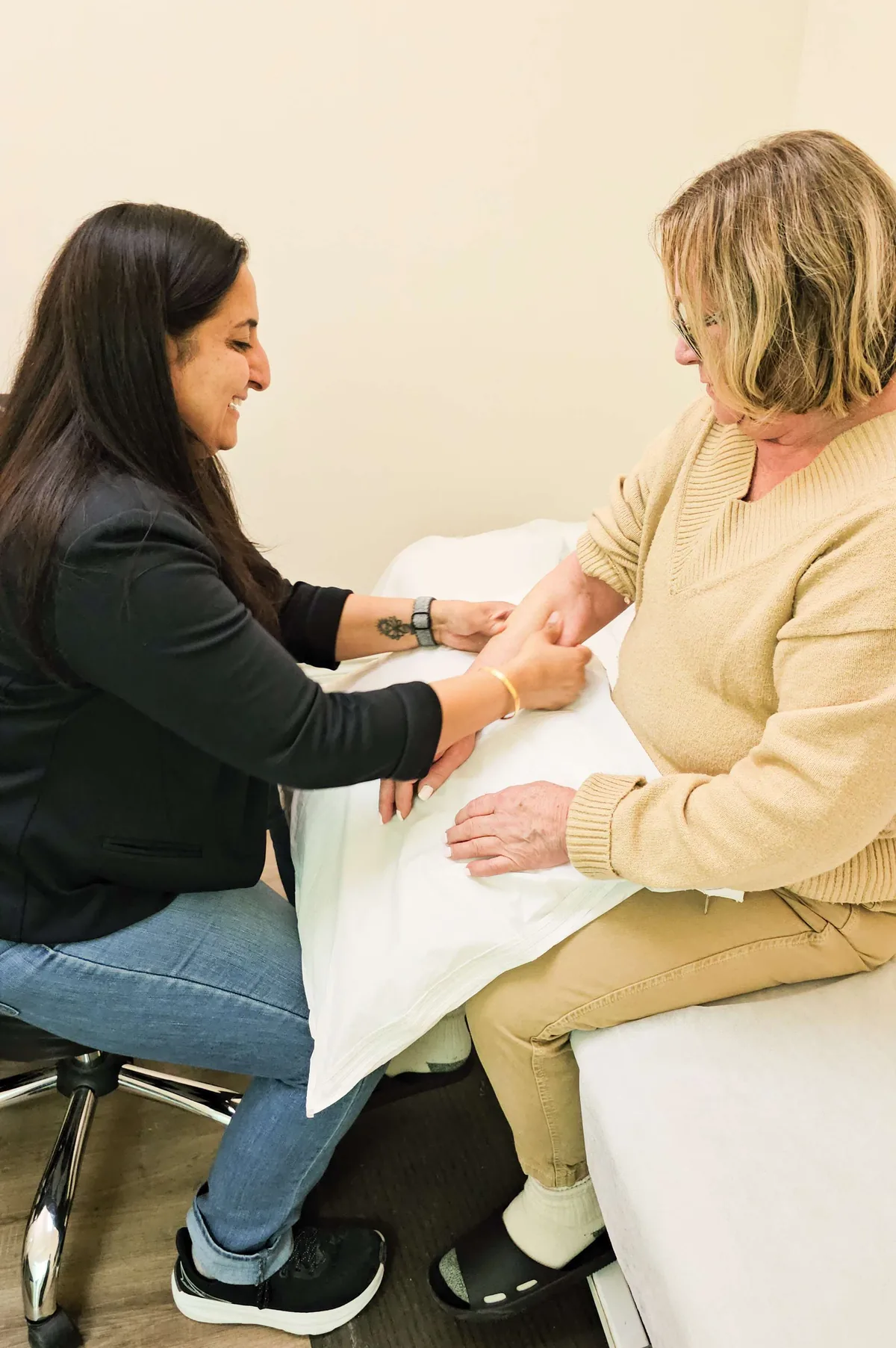
Elbow pain has a way of making you realize how much you use the joint. Gripping a coffee mug. Turning a doorknob. Lifting a bag of groceries. Shaking someone’s hand. Typing at your desk. Using your phone. The elbow is involved in almost every hand and arm movement you make, which means when it hurts, the list of things that aggravate it is long. Effective elbow pain treatment in Oakville starts with finding out which structure is actually causing the problem.
Most people assume elbow pain is “tennis elbow” and treat it accordingly. Sometimes it is. But the elbow is more complex than that single diagnosis. Pain on the inside of the elbow is golfer’s elbow, a different tendon and a different loading pattern. Numbness in the ring and pinky fingers that gets worse when the elbow is bent might be cubital tunnel syndrome, a nerve compression problem. A puffy, swollen bump at the back of the elbow is usually olecranon bursitis. Stiffness and loss of range of motion after a fracture requires structured rehabilitation. And sometimes the elbow pain isn’t even coming from the elbow at all. A cervical spine problem at C5-C6 can refer pain directly to the lateral elbow and mimic tennis elbow perfectly.
At Wellmax Physiotherapy, our physiotherapists assess the full picture: the elbow itself, the wrist, the shoulder, and the cervical spine. Different conditions require different treatments, and getting the diagnosis right at the first visit prevents months of incorrect management. If your elbow pain is lateral epicondylalgia (tennis elbow), we have a dedicated page covering that condition in detail, and golfer’s elbow (medial epicondylalgia) has its own dedicated page too. This page covers the rest of the elbow conditions we treat at Wellmax.
We’re at 1148 Winston Churchill Blvd, Unit B3, Oakville, just south of the QEW. Patients from Clarkson, Clearview, Sheridan Park, Maple Grove, and south Mississauga come to us for elbow pain treatment.
Understanding Elbow Pain: The Conditions We Treat
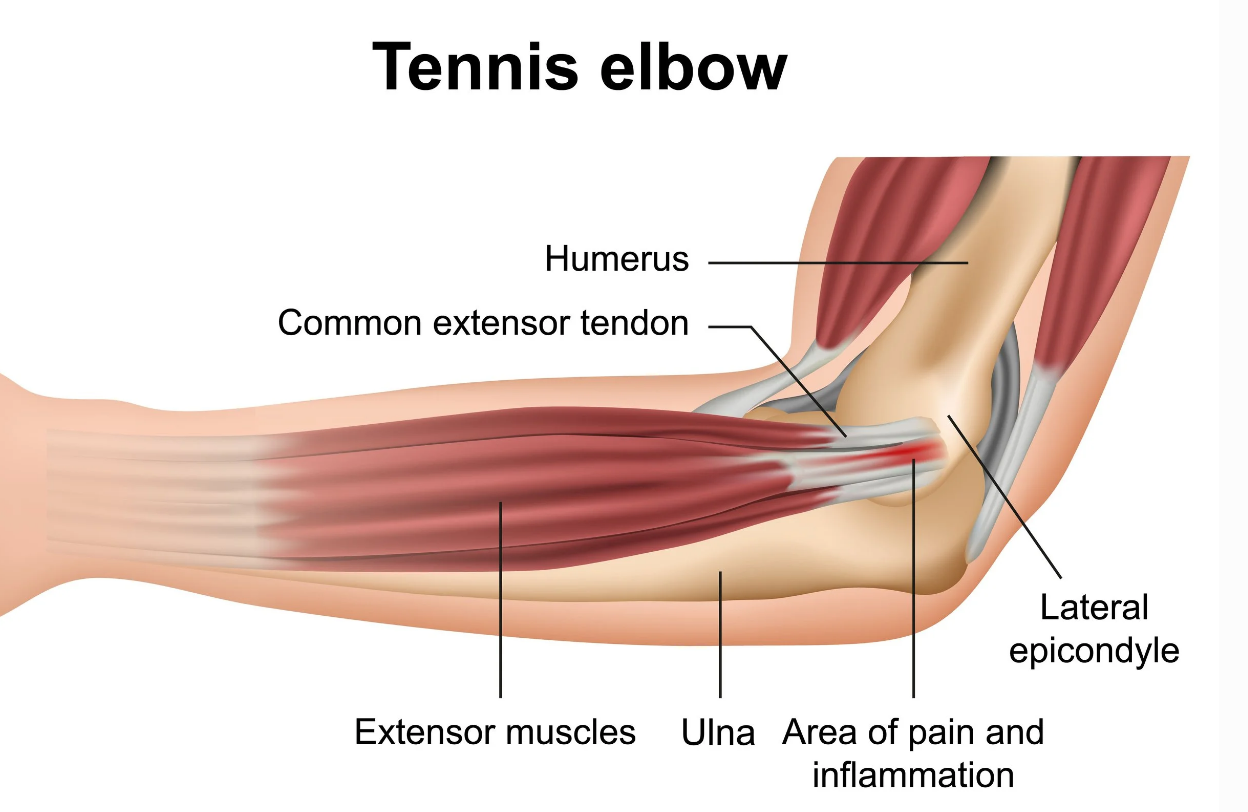
Golfer’s Elbow (Medial Epicondylalgia)
Pain on the inside of the elbow, at the bony bump called the medial epicondyle. This is where the wrist flexor and pronator muscles attach. Despite the name, golfer’s elbow is more common in non-golfers: people who do heavy gripping, pulling, and lifting. Gym athletes doing deadlifts, pull-ups, and rows. Tradespeople using hand tools. Office workers gripping a mouse for hours. And yes, golfers, particularly those who hit the ground before the ball on their downswing.
The mechanism is identical to tennis elbow but on the opposite side: the tendon is overloaded beyond its capacity to recover, and the collagen structure degenerates. Treatment follows the same loading-first principles: progressive wrist flexor strengthening, manual therapy, activity modification, and shockwave therapy for chronic cases. The cortisone evidence applies here too: injection provides short-term relief but leads to worse long-term outcomes compared to physiotherapy alone. See our dedicated golfer’s elbow treatment in Oakville page for the full medial epicondylalgia protocol.
Cubital Tunnel Syndrome (Ulnar Nerve Entrapment at the Elbow)
The ulnar nerve passes through a groove on the inside of the elbow called the cubital tunnel. When this nerve is compressed or irritated, it produces numbness and tingling in the ring and pinky fingers, aching along the inner forearm, and in advanced cases, weakness of the hand muscles (difficulty spreading the fingers, weak grip, clumsiness). This is the nerve you hit when you bump your “funny bone.”
Cubital tunnel syndrome is aggravated by prolonged elbow bending (sleeping with the elbow flexed, resting on the elbow at a desk, holding a phone to the ear) and repetitive elbow flexion-extension activities. Treatment involves nerve gliding exercises, elbow positioning modification (especially at night), manual therapy to mobilize the nerve and surrounding structures, and ergonomic changes. Like carpal tunnel syndrome, the nerve pathway needs to be assessed from the cervical spine through the shoulder because the ulnar nerve can be compressed at multiple sites. See our Carpal Tunnel page for more on nerve compression and double crush syndrome.
Olecranon Bursitis
A visible, swollen lump at the back of the elbow (the point of the elbow). The olecranon bursa is a fluid-filled sac that normally reduces friction between the skin and the elbow bone. When irritated by direct pressure (leaning on hard surfaces), trauma (a fall or hit to the elbow), or repetitive elbow extension, the bursa fills with fluid and swells. Sometimes it becomes inflamed and painful. Occasionally it can become infected (septic bursitis), which requires medical attention.
Treatment for non-infected bursitis involves activity modification (stop leaning on the elbow), compression, protective padding, and gentle range-of-motion exercises. If swelling is significant, aspiration by a physician may be needed. Physiotherapy focuses on restoring full elbow function, preventing recurrence, and addressing any movement or strength deficits that developed during the swollen phase. See our Bursitis page for how bursa irritation is usually driven by the tendon underneath it.
Elbow Arthritis and Stiffness
Osteoarthritis of the elbow is less common than knee or hip arthritis but occurs in people with a history of heavy manual work, previous fractures, or repetitive overhead activities. Symptoms include stiffness (especially loss of full extension), grinding or catching, and aching that worsens with prolonged activity. Rheumatoid arthritis can also affect the elbow, causing swelling, warmth, and progressive joint damage.
Treatment focuses on maintaining range of motion through targeted mobilization and stretching, strengthening the muscles around the joint to reduce joint loading, and pain management strategies. See our Arthritis page for more on osteoarthritis and rheumatoid arthritis management.
Post-Fracture Elbow Rehabilitation
Elbow fractures (radial head fractures, olecranon fractures, distal humerus fractures) are common after falls. After immobilization or surgical fixation, the elbow is typically stiff, weak, and limited in range of motion. The elbow is particularly prone to developing post-traumatic stiffness because scar tissue forms quickly in and around the joint capsule. Early physiotherapy after medical clearance is critical: the longer the stiffness persists, the harder it is to restore full motion.
Rehabilitation involves progressive range-of-motion restoration (both flexion/extension and rotation), grip and wrist strengthening, manual therapy for joint capsule tightness, and functional retraining for work and sport. See our Pre & Post-Surgical Rehab page for more on fracture rehabilitation.
Pickleball Elbow and Racquet Sport Injuries
Pickleball has exploded in Oakville over the past few years, with courts at Iroquois Ridge, Shell Park, Bronte Athletic Park, and multiple community centres. And with that growth has come a spike in elbow injuries. The repetitive overhead and backhand mechanics, combined with the rapid stop-start nature of the game, loads the elbow in ways that recreational players are often not conditioned for. Both lateral (tennis elbow pattern) and medial (golfer’s elbow pattern) overload are common in pickleball, as well as wrist extensor strain from the constant paddle grip.
We treat pickleball elbow with the same progressive loading principles we use for all tendon injuries, combined with sport-specific modification advice: grip size, paddle weight, playing frequency, and technique adjustments. Our Tennis Elbow page covers the lateral epicondylalgia approach in detail, which applies directly to pickleball-related elbow pain.
Cervical Spine Contribution to Elbow Pain
This deserves its own mention because it’s commonly missed. A C5-C6 nerve root irritation in the neck can refer pain directly to the lateral elbow. The patient feels pain gripping and extending the wrist, exactly like tennis elbow, but the source is the cervical spine. If the neck is contributing, treating only the elbow will fail. We screen the cervical spine with every elbow assessment to catch this. See our Neck Pain page for more on cervical nerve root pain that refers down the arm.
How We Deliver Elbow Pain Treatment in Oakville at Wellmax
Progressive Tendon Loading
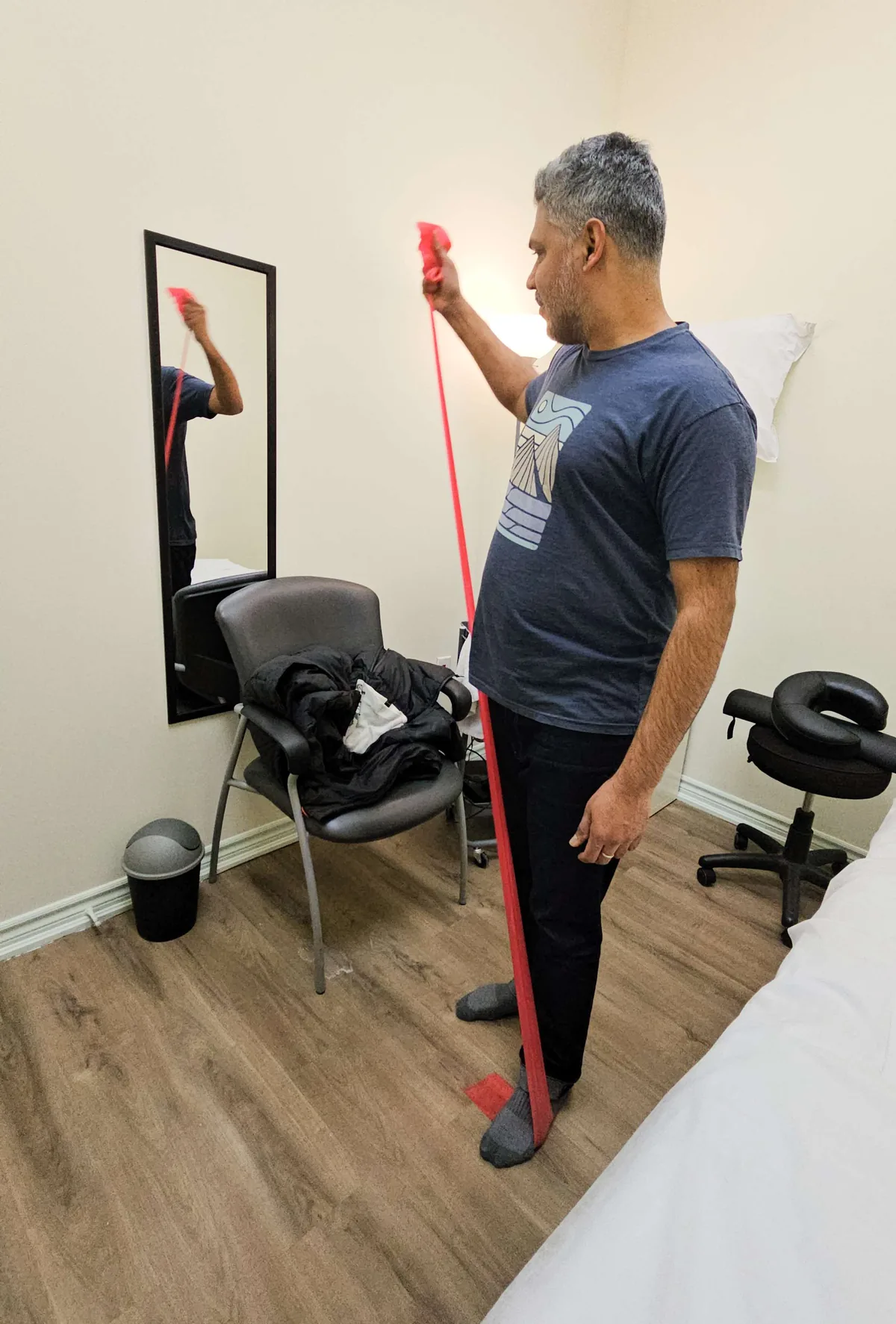
For tendon-based elbow pain (golfer’s elbow, tennis elbow, and tendinopathies), progressive loading is the foundation. The tendon needs mechanical stimulus to repair and rebuild its collagen structure. We start with isometric holds (pain-free muscle contractions without joint movement) and progress through concentric/eccentric loading to heavy slow resistance. The loading program is tailored to the specific tendon involved: wrist extensors for lateral elbow pain, wrist flexors for medial elbow pain.
Nerve Mobilization
For cubital tunnel syndrome and other nerve-related elbow pain, nerve gliding exercises are the primary treatment. These specific movements glide the ulnar or radial nerve through the surrounding structures, reducing adhesions and decreasing nerve sensitivity. The exercises are combined with positioning strategies (avoiding prolonged elbow flexion, using a night splint or towel wrap to keep the elbow straighter during sleep) and ergonomic modification.
Manual Therapy
Hands-on treatment for the elbow joint, the forearm muscles, and the surrounding structures. Joint mobilization improves range of motion. Soft tissue work reduces muscle tension that increases tendon loading. For post-fracture stiffness, manual therapy is essential for breaking down scar tissue and restoring capsular mobility. We also assess and treat the wrist and shoulder because restrictions above or below the elbow change how the joint is loaded. See our Wrist & Hand Pain and Shoulder Pain pages for how the joints above and below the elbow are involved.
Shockwave Therapy for Chronic Elbow Tendinopathy
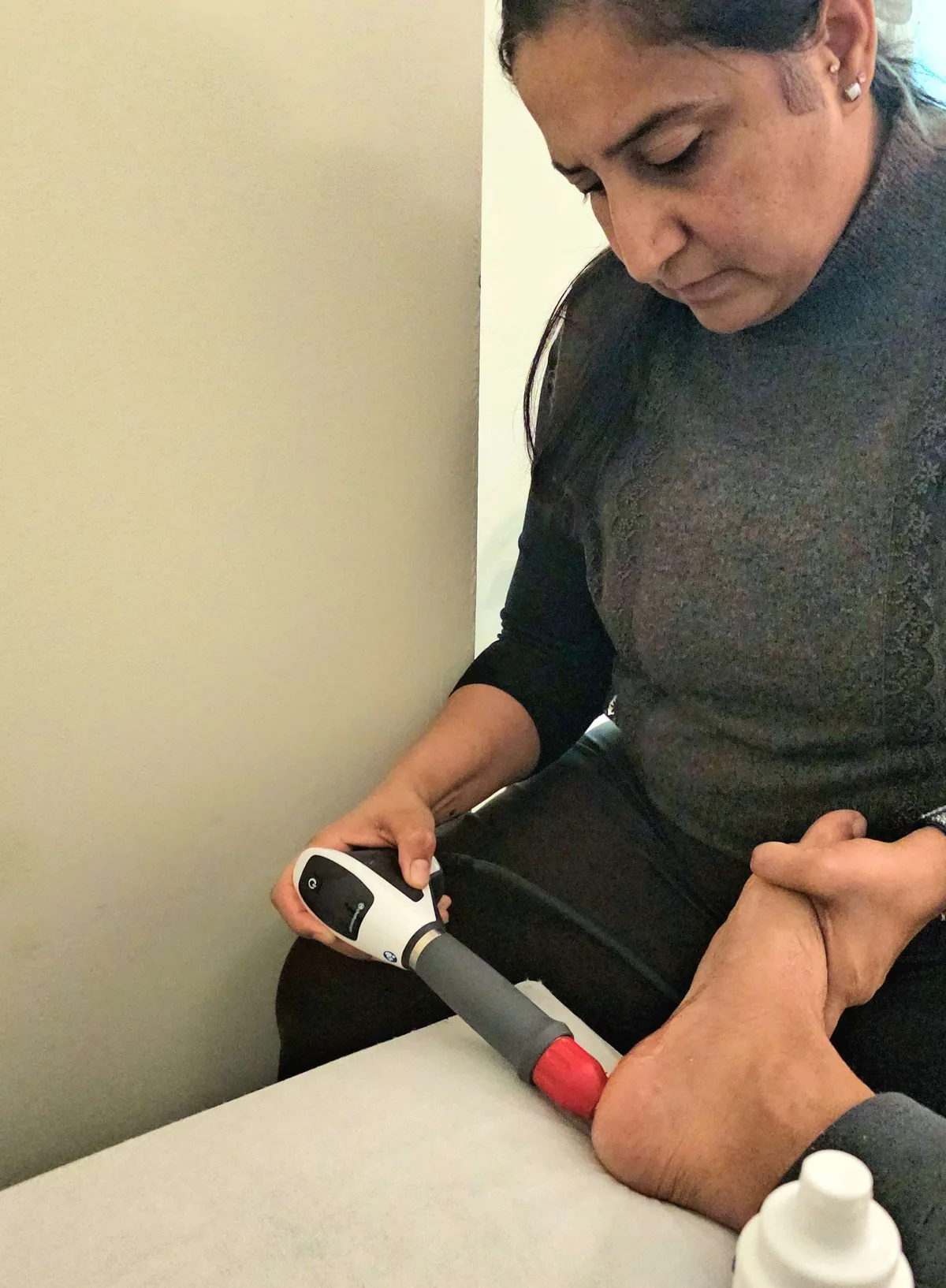
Shockwave therapy is well-supported for chronic elbow tendinopathy (both lateral and medial) that has persisted for 3+ months and hasn’t responded to loading alone. It delivers acoustic energy into the degenerative tendon tissue, promoting collagen remodeling and reducing pain. We typically combine 3-6 shockwave sessions with the ongoing loading program.
Bracing and Taping
A counterforce brace (the strap worn just below the elbow) can reduce tendon loading during activities and provide symptom relief for tennis and golfer’s elbow. Kinesiology taping can support the forearm muscles and modify loading patterns. These are adjuncts, not primary treatments. They help manage symptoms while the loading program builds the tendon’s capacity.
Elbow Condition Recovery Timelines
| Condition | Typical Recovery | Can You Stay Active? |
|---|---|---|
| Golfer’s elbow (mild, <6 weeks) | 4-8 weeks | Usually, with grip and pulling modifications |
| Golfer’s elbow (chronic, 3+ months) | 8-14 weeks | Yes, with modified loading |
| Cubital tunnel syndrome (mild-moderate) | 4-10 weeks | Yes, with positioning changes |
| Olecranon bursitis (non-infected) | 2-6 weeks | Yes, avoid direct pressure on elbow |
| Elbow arthritis (OA management) | Ongoing management | Yes, with activity modification |
| Post-fracture elbow rehab | 8-16 weeks | Depends on fracture type and fixation |
| Pickleball / racquet sport elbow | 6-12 weeks | Modified play, reduced frequency |
These timelines depend on the specific diagnosis, how long symptoms have been present, contributing factors, and consistency with the treatment plan. Your physiotherapist provides a specific timeline based on your assessment findings.
Why Oakville Patients Choose Wellmax for Elbow Pain Treatment
Beyond “Tennis Elbow”: Accurate Diagnosis First
Not all elbow pain is tennis elbow. Golfer’s elbow, cubital tunnel syndrome, olecranon bursitis, and cervical radiculopathy all produce elbow pain but require completely different treatment approaches. At Wellmax, the first visit identifies the specific condition so the treatment plan is targeted from day one. A loading program for tennis elbow applied to cubital tunnel syndrome wastes time and can make the nerve worse.
We Check the Neck Every Time
A C5-C6 nerve root problem in the cervical spine can refer pain to the lateral elbow that’s indistinguishable from tennis elbow. If the neck is contributing and nobody checks, the elbow treatment will fail. We screen the cervical spine with every elbow assessment.
Loading + Shockwave for Tendon Problems
For golfer’s elbow and tennis elbow, progressive tendon loading is the foundation. For chronic cases that need more, we combine loading with shockwave therapy and deep tissue laser. Having both modalities available means we can match the intervention to the tendon’s stage and reactivity.
Oakville’s Elbow Pain Community
Pickleball players from Iroquois Ridge, Shell Park, Bronte Athletic Park, and Wallace Park whose elbows can’t keep up with 3-4 sessions per week. Golfers from Glen Abbey, RattleSnake Point, and Oakville Executive whose medial elbow pain is affecting their game. Gym athletes from CrossFit Radix, Element Movement, CORTEN, and Iron 24 with pull-up and deadlift-related elbow overload. Office workers in the Winston Park business district and Clarkson commercial area who grip a mouse all day. Tradespeople along Royal Windsor Drive whose tools and equipment are hard on the forearm. And people across the area who fell, fractured their elbow, and need structured rehab to get the range of motion back.
We’re at 1148 Winston Churchill Blvd, Unit B3, Oakville. Just south of the QEW in the Winston Park plaza. Free parking, ground-level access, private treatment rooms. Patients come from Clarkson, Clearview, Sheridan Park, Maple Grove, River Oaks, and south Mississauga.
What Our Patients Say
Rahul K.“Highly recommended. I was suffering from tennis elbow for over an year and Gurmeet helped me to fix it like a magic. I was back at the court in less than 4 months.”
Robert K.“Wellmax is truly the best physiotherapy clinic in Oakville. I developed a bad case of tennis elbow from working with my hands, and my grip strength was completely gone. Dhrushi took her time during the initial visit to explain the healing process for tendons. My personalized plan included hands-on therapy, shockwave treatments, and a practical exercise routine I could easily do at home. The inflammation went down faster than I expected, and my arm feels strong again. The front desk staff is always welcoming, and my appointments always started right on time. Highly recommend this place to anyone in pain.”
Sunny D.“I have had a great experience. Gurmeet was so helpful with my osteoarthritis thumb pain. The place is so clean and professional. I would so recommend it”
Farwah R.“Gurmeet deeply cares about her patients and her work, and it is rare to find such Healthcare providers. I went to her for physio after suffering with terrible shoulder & right hand pain. Doctors continued to gaslight me and after 2 years when the pain got unbearable, I finally went for physio. The pain immediately started getting better. Cannot recommend her enough.”
Morenita Z.“I came to see Gurmeet and Dhrushi at wellmax after my thumb and wrist injury at work under wsib. They took time to assess and explain everything to me and time i started with wellmax, I am feeling so much better and pain is less. Gurmeet’s hands on technique and manual therapy is amazing and knowledgeable. I see big difference in my condition and movement. Clinic is very clean and very positive that makes me comfortable every time I come here. I truly appreciate work they do and recommend it everyone who is looking for real physio treatment and manual therapy.”
Mosaab T.“I highly recommend Wellmax Physiotherapy! The team is professional, caring, and truly understands my needs. Special thanks to Gurmeet for her kindness, patience, and professionalism. I’m so happy with the care I receive here, and I hope to continue with this amazing team. Highly recommended❤️ thanks!”
See all our Google reviewsRead more patient storiesLeave a review
Frequently Asked Questions
What's the difference between tennis elbow and golfer's elbow?+–
Tennis elbow (lateral epicondylalgia) is pain on the outside of the elbow, involving the wrist extensor tendons. Golfer’s elbow (medial epicondylalgia) is pain on the inside of the elbow, involving the wrist flexor and pronator tendons. Tennis elbow is more common with gripping and wrist extension activities. Golfer’s elbow is more common with pulling, gripping, and wrist flexion. Both are tendon overload injuries treated with progressive loading, but the specific muscles and exercises differ. See our Tennis Elbow page for detailed lateral epicondylalgia treatment.
My ring and pinky fingers are numb. Is that related to my elbow?+–
Likely yes. The ulnar nerve passes through a groove on the inside of the elbow (the cubital tunnel). When compressed, it causes numbness and tingling in the ring and pinky fingers, and weakness in the hand. This is cubital tunnel syndrome. It’s different from carpal tunnel, which affects the thumb, index, and middle fingers. Treatment involves nerve gliding, elbow positioning changes, and sometimes a night splint to prevent the elbow from bending fully during sleep.
Should I use a brace for my elbow pain?+–
A counterforce brace (the strap below the elbow) can reduce tendon loading and provide symptom relief for tennis elbow and golfer’s elbow during activities. It’s a useful adjunct but not a standalone treatment. The tendon still needs progressive loading to repair. For cubital tunnel syndrome, an elbow splint that prevents full flexion at night can reduce nerve compression. Your physiotherapist will advise whether a brace is appropriate for your specific condition.
Can I keep playing pickleball with elbow pain?+–
Often yes, with modifications. Reducing playing frequency, adjusting grip size and paddle weight, shortening session duration, and avoiding aggressive overhead shots can keep pain below the manageable threshold while the loading program builds tendon capacity. If every shot produces pain above 4 out of 10, the volume needs to come down further. Complete rest from pickleball is usually not necessary and can actually slow tendon recovery.
Is cortisone effective for elbow tendon pain?+–
Short-term, yes. Long-term, no. Research consistently shows that cortisone injections provide pain relief for 6-12 weeks but lead to worse outcomes at 6 and 12 months compared to physiotherapy alone. The injection provides temporary relief but doesn’t address the tendon degeneration and may actually weaken the tissue. We recommend progressive loading as the primary treatment, with shockwave therapy for chronic cases that need additional stimulus.
Can elbow pain come from my neck?+–
Yes. A C5-C6 nerve root irritation in the cervical spine can refer pain directly to the lateral elbow. The patient feels pain with gripping and wrist extension, identical to tennis elbow, but the source is the neck. If neck treatment isn’t included, the elbow pain won’t resolve. We screen the cervical spine with every elbow assessment to ensure we’re treating the right structure.
What's the swollen bump on the back of my elbow?+–
That’s likely olecranon bursitis, swelling of the bursa (fluid-filled sac) at the point of the elbow. It’s usually caused by leaning on hard surfaces, a direct hit, or repetitive elbow movement. Most cases resolve with activity modification, compression, and protective padding. If the swelling is hot, red, and painful, see a physician to rule out infection. Physiotherapy helps restore elbow function after the swelling resolves.
Is elbow pain physiotherapy covered by insurance?+–
Yes. Treatment at Wellmax is billed as physiotherapy and covered by most extended health plans. WSIB covers work-related elbow injuries. We direct bill to Sun Life, Manulife, Canada Life, Green Shield, Great-West Life, Blue Cross, Desjardins, and most other major providers. No referral needed. See our insurance page for details.
How long does elbow pain treatment in Oakville take to work?+–
It depends on the diagnosis. A mild golfer’s elbow or olecranon bursitis often settles in 2 to 8 weeks, while chronic tendon pain or post-fracture stiffness can take 8 to 16 weeks of progressive loading. Most people feel meaningful improvement within the first few weeks once the right structure is being loaded and the aggravating positions are removed. Your physiotherapist gives you a specific timeline at the first visit based on how long the symptoms have been present and what is driving them.
Do I need a referral for elbow pain treatment in Oakville at Wellmax?+–
No referral is needed to start physiotherapy at Wellmax. You can book directly, and we offer a free consult so you can have your elbow assessed and ask questions before committing to a treatment plan. If your elbow pain is work-related, WSIB and motor vehicle accident claims are accepted, and we direct bill most major extended health insurers so there is little or no out-of-pocket cost at the visit.
Related Conditions & Services
- Tennis Elbow (Lateral Epicondylalgia): Dedicated page for lateral elbow tendinopathy with detailed treatment protocols.
- Golfer’s Elbow (Medial Epicondylalgia): Dedicated page for medial elbow tendinopathy and progressive wrist flexor loading.
- Wrist & Hand Pain: Forearm and wrist conditions frequently co-exist with elbow pain.
- Carpal Tunnel Syndrome: Nerve compression in the wrist and forearm chain.
- Bursitis: Olecranon bursitis and bursa irritation driven by the tendon underneath.
- Rotator Cuff Injury: Shoulder tendon problems that can change how the elbow is loaded.
- Shoulder Pain: Shoulder dysfunction can alter elbow loading patterns.
- Neck Pain: Cervical nerve root compression referring pain to the elbow.
- Shockwave Therapy: Evidence-based treatment for chronic elbow tendinopathy.
- Deep Tissue Laser Therapy: Deep tissue laser for acute elbow pain flare-ups.
- Arthritis: Elbow arthritis management and joint preservation.
- Sports Injury Rehabilitation: Racquet sport, gym, and throwing sport elbow injuries.
Book Your Elbow Pain Assessment
If the elbow has been aching for more than a couple of weeks, if numbness in the fingers is getting worse, if the grip is weakening, or if you’ve been treated for tennis elbow and it’s not improving, get it properly assessed. Your physiotherapist will identify the specific condition, check whether the neck or wrist is contributing, and build a treatment plan that targets the actual problem. Wellmax offers a free consult so you can get answers before you commit to a plan.
Wellmax Physiotherapy
1148 Winston Churchill Blvd, Unit B3, Oakville, ON L6J 0A3
Phone: (905) 829-1100
Email: info@wellmaxphysiotherapy.ca
Proudly Serving Our Local Communities:
- East Oakville: Winston Park, Clearview, and the QEW/403 Corridor.
- South Oakville: Eastlake, Maple Grove, Lorne Park, and Old Oakville.
- North Oakville: Joshua Creek, Falgarwood, Iroquois Ridge, and Upper Middle Road.
- Mississauga Border: Clarkson, Sheridan Park, Sheridan Homelands, and Southdown.
Insurance: Direct billing to most major providers. WSIB and MVA claims accepted. No referral needed. See our insurance and direct billing page for details.
Hours: Monday to Friday: 9am to 7pm | Saturday: 9am to 2pm | Sunday: 9am to 2pm (by appointment only)
Registered & Regulated
Regulated & Recognized Across Every Discipline
Wellmax is in good standing with the regulatory colleges and leading associations for physiotherapy, chiropractic, massage therapy, and naturopathic medicine in Ontario.