Shoulder Pain Treatment in Oakville
Rotator cuff, frozen shoulder, impingement and tendon pain treated at the source.
Home > Conditions We Treat > Shoulder Pain Treatment in Oakville
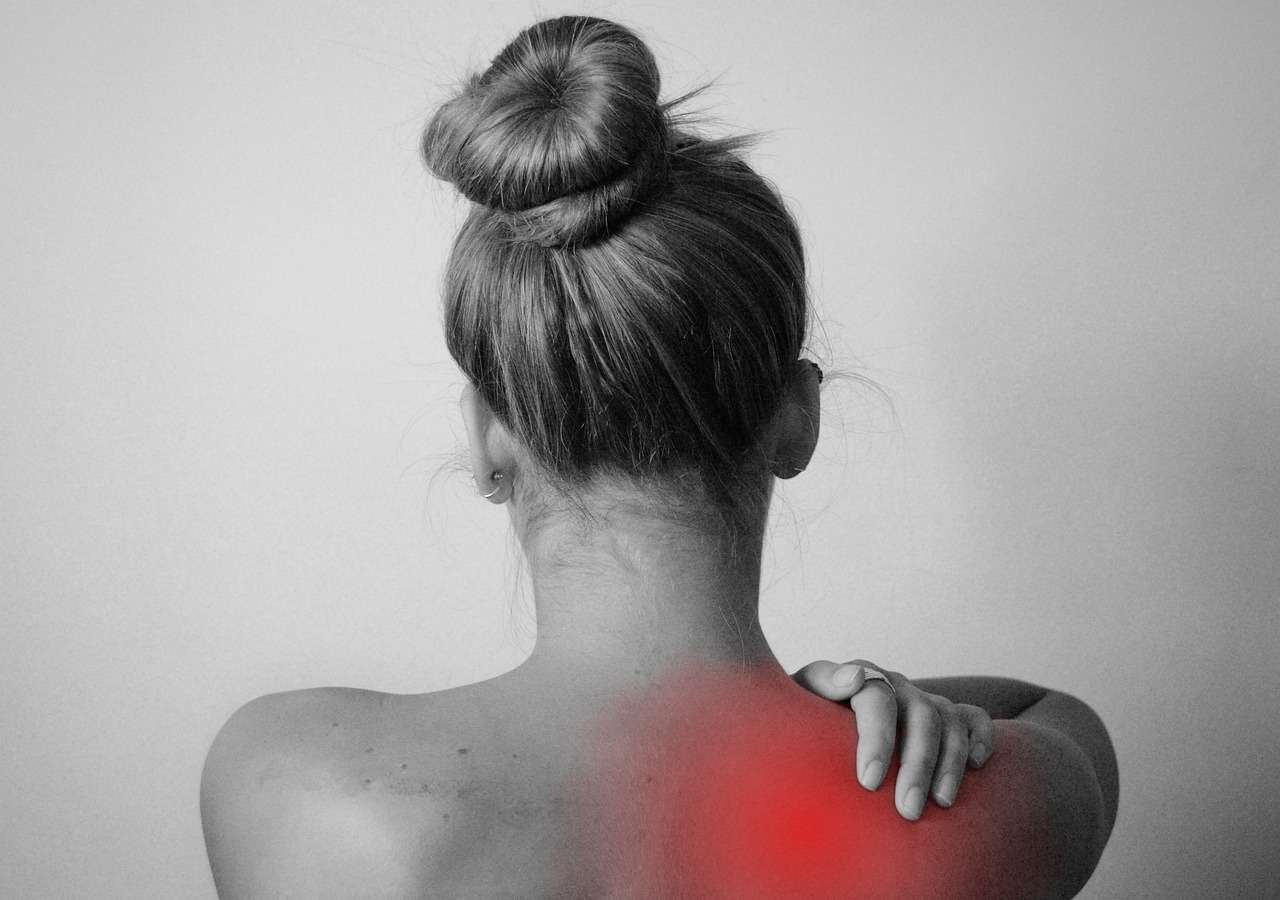
You can’t reach behind your back to tuck in your shirt. Sleeping on that side wakes you up at 2am. Lifting your arm to grab something from a shelf sends a sharp catch through the front of your shoulder. You’ve been ignoring it for weeks, maybe months, hoping it would settle on its own. It hasn’t.
Shoulder pain treatment in Oakville at Wellmax Physiotherapy starts with finding out what’s actually driving the problem. The shoulder is the most mobile joint in your body, which means it relies heavily on muscles, tendons, and ligaments to keep it working properly. When something goes wrong in that system, simple tasks become painful and frustrating fast.
The other challenge with shoulders is that people tend to wait too long. A rotator cuff issue that would have taken 6 weeks to fix at the start can take 4 months once it becomes chronic. Frozen shoulder that gets caught early responds much faster than one that’s been stiffening for a year. If your shoulder has been bothering you for more than a couple of weeks and it’s not improving, earlier is better.
We’re at 1148 Winston Churchill Blvd, Unit B3, Oakville, in the Winston Park area just south of the QEW. Clarkson, Clearview, Sheridan Park, and south Mississauga are all under 10 minutes away.
- Understanding Shoulder Pain
- Common Shoulder Conditions We Treat
- How We Treat Shoulder Pain at Wellmax
- What Results to Expect
- Your Recovery Timeline: What to Expect Week by Week
- Why Patients Choose Wellmax for Shoulder Pain Treatment in Oakville
- Shoulder Pain Treatment for Oakville's Community
- Related Conditions and Services
- Book Your Shoulder Pain Assessment Today
- Frequently Asked Questions
Understanding Shoulder Pain
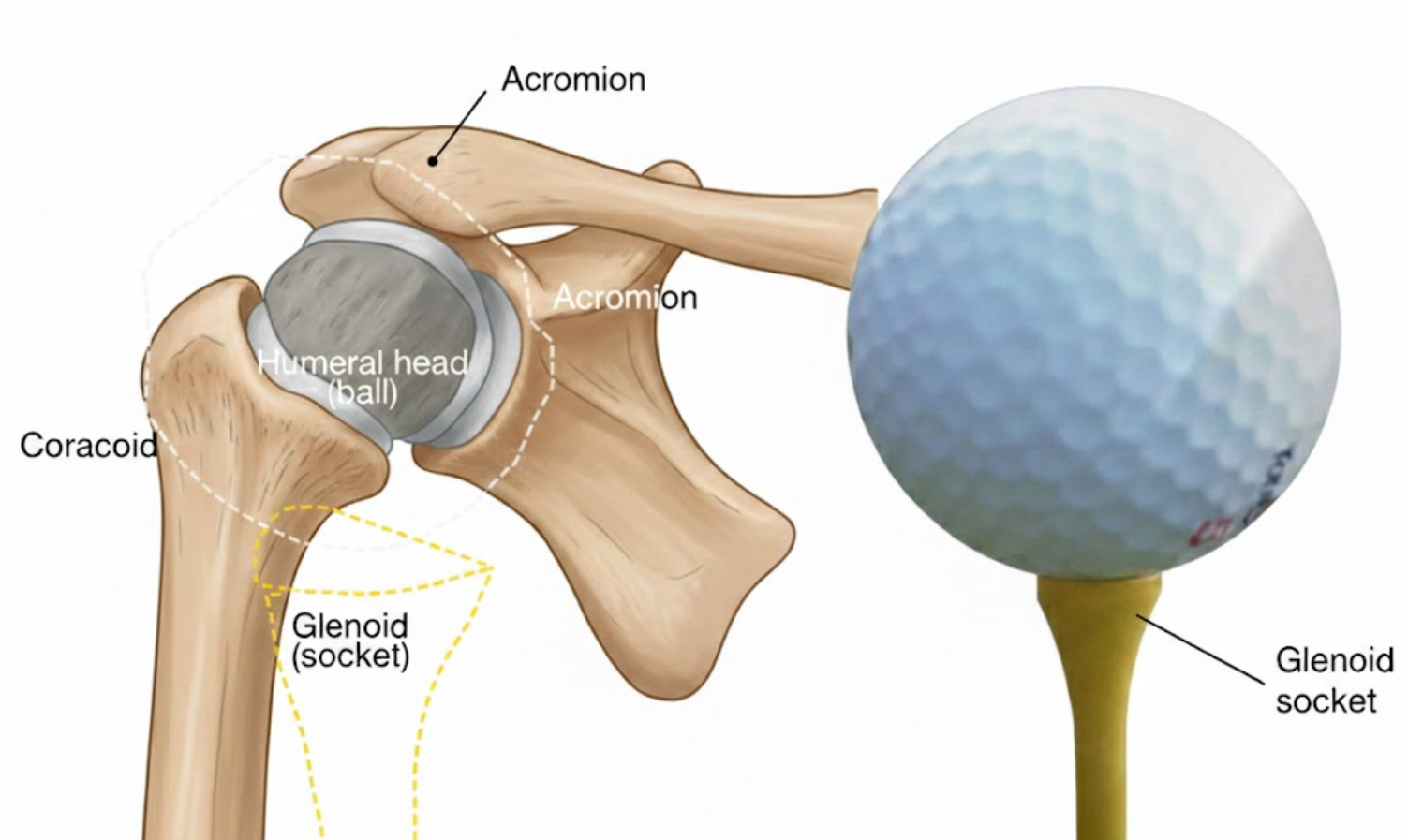
The shoulder is the most mobile joint in your body and that mobility comes at a cost. Unlike the hip, which is a deep ball-and-socket joint held together by bone and thick ligaments, the shoulder is a shallow socket with a relatively large ball sitting on top of it. Picture a golf ball on a tee. That’s your shoulder joint. The socket (glenoid) only covers about a third of the ball (humeral head), which means the joint relies almost entirely on muscles, tendons, and ligaments to stay stable and move properly.
Four muscles make up the rotator cuff: the supraspinatus (lifts the arm out to the side), the infraspinatus and teres minor (rotate the arm outward), and the subscapularis (rotates the arm inward). These four muscles work together to keep the ball centred in the socket during every movement. When even one of them is injured, weakened, or not firing correctly, the whole system compensates and that’s when problems develop.
Behind the shoulder sits the scapula (shoulder blade), which is the foundation that everything else moves on. The scapula has to rotate, tilt, and glide along the rib cage in precise coordination with the arm. When it doesn’t, a condition called scapular dyskinesia, the shoulder joint absorbs extra stress, the rotator cuff gets overloaded, and the tendons start to break down. This is why many shoulder problems can’t be fixed by treating only the shoulder joint itself. The shoulder blade and the thoracic spine (upper back) have to be part of the equation.
Your shoulder also has a bursa, a fluid-filled sac that sits between the rotator cuff tendons and the bony roof of the shoulder (the acromion). The bursa reduces friction so the tendons can glide smoothly. When the space narrows from swelling, poor mechanics, or bone spur formation, the tendons and bursa get pinched. This is shoulder impingement, and it’s one of the most common shoulder conditions we see at our Oakville clinic.
Understanding this anatomy matters because it explains why effective shoulder pain treatment in Oakville isn’t just about the spot that hurts. It’s about assessing and addressing the rotator cuff, the scapula, the thoracic spine, and the way all of these work together during functional movement.
Common Shoulder Conditions We Treat
Rotator Cuff Injuries (Tears and Tendinopathy)
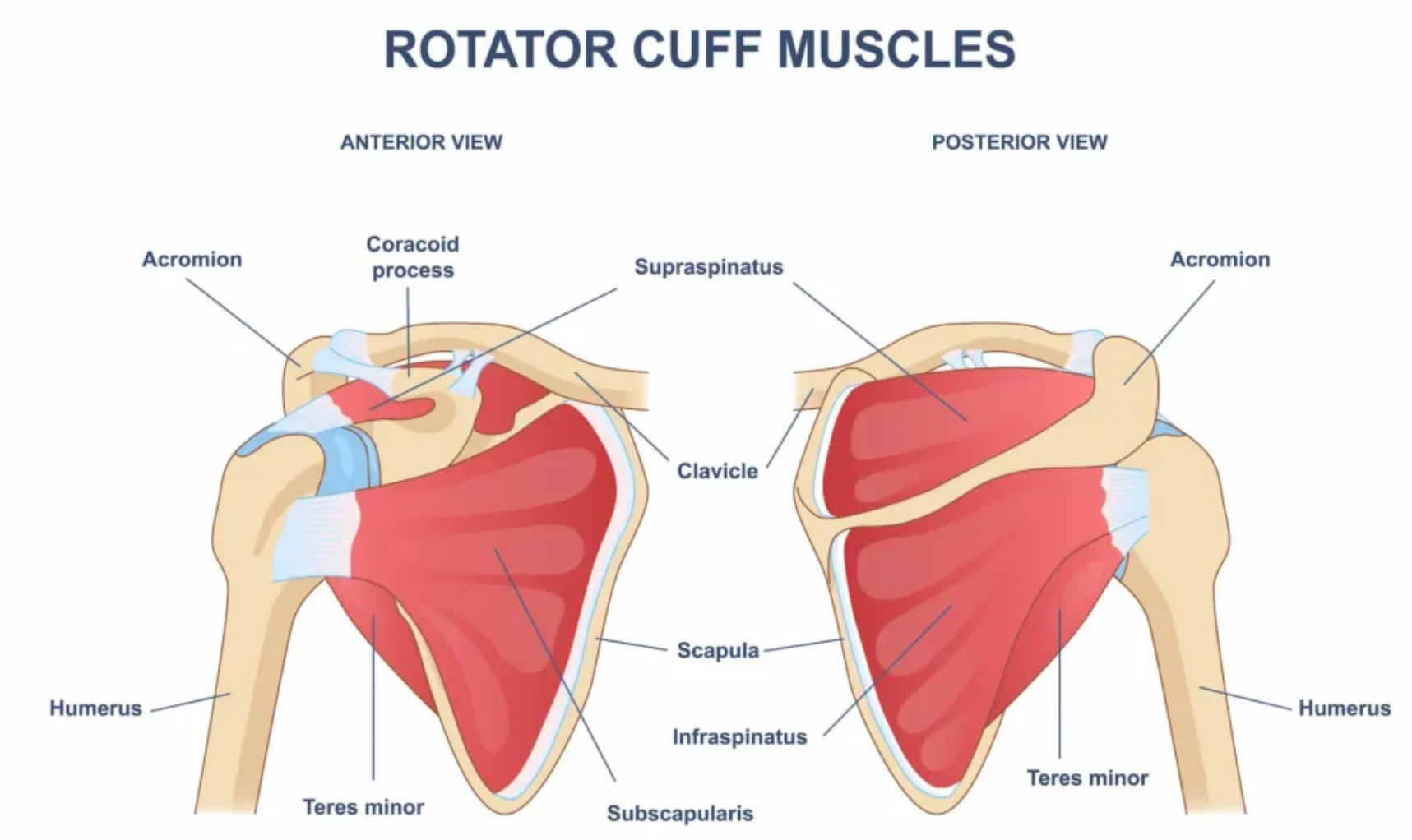
The rotator cuff is a group of four muscles and their tendons that stabilize the shoulder joint and control overhead movement. Rotator cuff problems range from tendinopathy (irritation and degeneration of the tendon) to partial tears to full-thickness tears. Most rotator cuff issues develop gradually from repetitive use, though acute tears can happen from a fall or sudden force.
What it feels like:
- Pain on the outside of the shoulder, often worse at night
- Difficulty reaching overhead or behind the back
- Weakness when lifting the arm to the side
- A catching or clicking sensation during movement
- Pain that wakes you up when you roll onto that shoulder
- Gradual loss of range of motion over weeks or months
Important: many partial rotator cuff tears and most tendinopathies heal well with physiotherapy. Research consistently shows that conservative treatment produces outcomes comparable to surgery for most non-traumatic rotator cuff tears. Surgery is typically reserved for full-thickness tears in younger, active patients or when physiotherapy has not produced adequate improvement after 3-6 months. Read more about rotator cuff treatment in Oakville.
Frozen Shoulder (Adhesive Capsulitis)
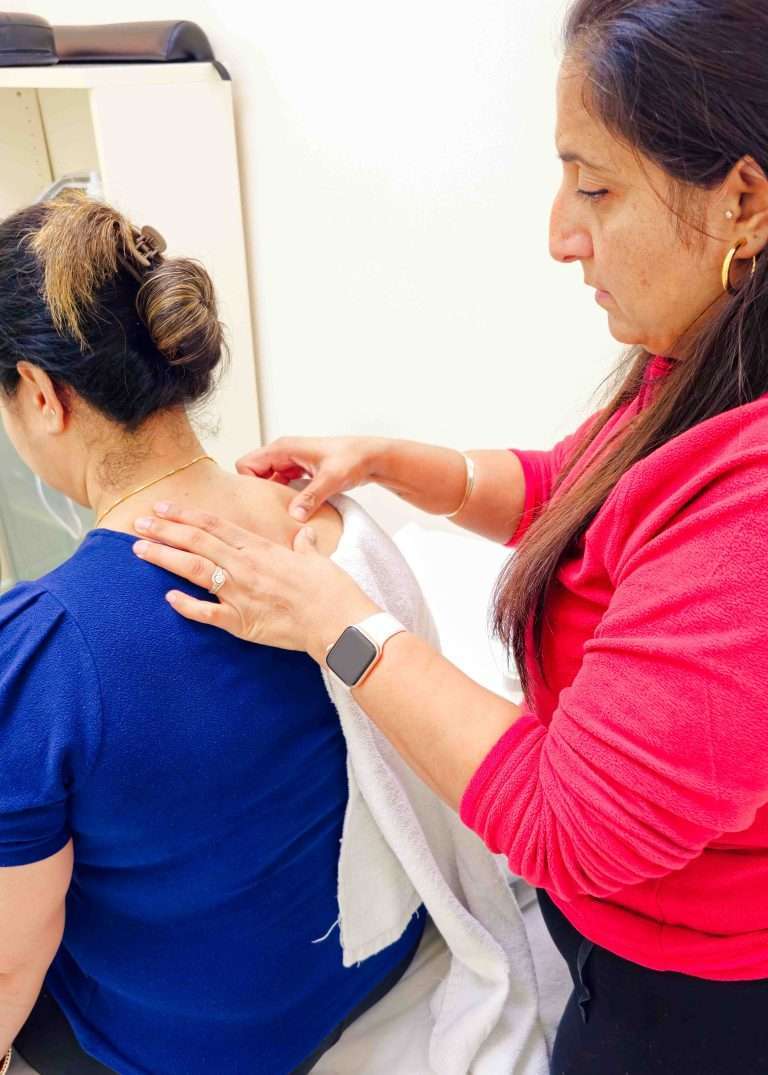
One of the most frustrating shoulder conditions. The capsule surrounding the shoulder joint thickens and tightens, dramatically restricting movement. Frozen shoulder typically progresses through three stages: the freezing stage (pain increases, movement starts to limit), the frozen stage (pain may decrease but stiffness is severe), and the thawing stage (movement gradually returns).
What frozen shoulder feels like:
- Progressive loss of shoulder movement in all directions
- Unable to reach overhead, behind the back, or across the body
- Intense pain in the early stages, especially at night
- Stiffness that doesn’t respond to stretching alone
- May have started after a period of immobilization (sling, surgery, injury)
- More common in people aged 40-60, and significantly more common in people with diabetes
Frozen shoulder will eventually resolve on its own, but “eventually” can mean 18-24 months without treatment. Physiotherapy shortens the timeline significantly and helps manage pain during the worst phases. Treatment combines gentle mobilization, stretching at the right intensity for each stage, and strengthening as range of motion returns. Read more about frozen shoulder treatment in Oakville.
Shoulder Impingement
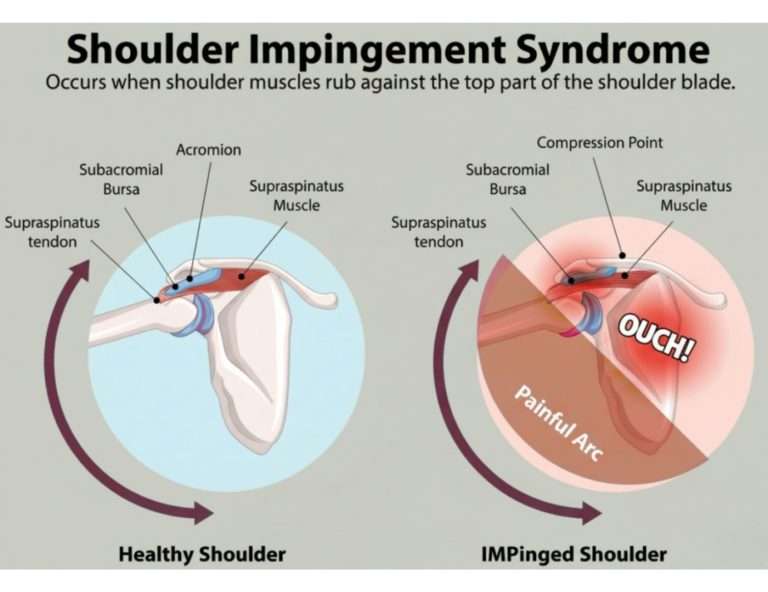
The tendons of the rotator cuff and the bursa (a fluid-filled cushion) pass through a narrow space under the bony roof of the shoulder (the acromion). When this space narrows from swelling, poor posture, or muscle imbalance, the tendons get pinched during overhead movements. This is shoulder impingement.
Common signs:
- Pain when lifting the arm between 60 and 120 degrees (the “painful arc”)
- Pain reaching overhead or across the body
- Discomfort that’s worse with repetitive overhead activities
- Aching in the shoulder that builds through the day
- May have started gradually from desk posture, gym exercises, or overhead work
Impingement is heavily influenced by how the shoulder blade moves. If the scapula doesn’t rotate properly when you lift your arm, the space narrows and the tendons get pinched. Treatment focuses on restoring normal scapular movement, strengthening the rotator cuff, and correcting the postural or movement patterns that caused the problem.
Labral Tears (SLAP Tears and Bankart Lesions)
The labrum is a ring of cartilage that deepens the shoulder socket and helps stabilize the joint. Labral tears can happen from acute trauma (a fall on an outstretched hand, a shoulder dislocation) or from repetitive overhead movements (throwing sports, swimming, overhead work).
Symptoms:
- Deep aching in the shoulder, hard to pinpoint
- Catching, clicking, or locking sensation
- A feeling of instability, like the shoulder might “slip”
- Pain with overhead movements, particularly throwing
- May follow a shoulder dislocation or subluxation event
Not all labral tears need surgery. Many respond well to physiotherapy focused on shoulder stability, rotator cuff strengthening, and movement retraining. If surgery is required, post-surgical rehabilitation is critical for a good outcome, and we provide structured rehab programs following labral repair.
AC Joint Injuries
The acromioclavicular joint sits at the top of the shoulder where the collarbone meets the shoulder blade. AC joint injuries are common from falls directly onto the shoulder (cycling crashes, contact sports, slipping on ice) or from repetitive overhead pressing (bench press, overhead press).
What it feels like:
- Point tenderness right at the top of the shoulder
- Pain reaching across the body (like reaching for a seatbelt)
- A visible bump at the top of the shoulder in more severe sprains
- Pain with pushing movements (push-ups, bench press)
- Pain sleeping on that side
Most AC joint sprains (Grade I-III) recover fully with physiotherapy. Treatment focuses on pain management in the early stages, then progressive loading and strengthening to restore full function.
Shoulder Bursitis
The subacromial bursa sits between the rotator cuff tendons and the acromion. When the rotator cuff tendons are weak or degenerating, the bursa becomes compressed and inflamed. Like most bursitis, it’s usually secondary to the real problem, rotator cuff tendinopathy. Treatment targets the tendon, not just the bursa. Read more about shoulder bursitis treatment in Oakville.
Post-Surgical Shoulder Rehabilitation
If you’ve had shoulder surgery, whether rotator cuff repair, labral repair, shoulder replacement, or AC joint reconstruction, the quality of your rehabilitation determines your outcome as much as the surgery itself. We follow surgeon-specific protocols while progressing you safely through each phase of recovery.
Common post-surgical programs:
- Rotator cuff repair (arthroscopic and open)
- SLAP repair and Bankart repair
- Total and reverse shoulder replacement
- AC joint reconstruction
- Biceps tenodesis
- Shoulder stabilization procedures
Each protocol has specific timelines for when you can start moving, when you can start strengthening, and when you can return to full activity. We communicate directly with your surgeon to ensure your rehab stays on track. See our Pre and Post-Surgical Rehab page for more details.
Other Shoulder Conditions We Treat
- Biceps tendinopathy (pain at the front of the shoulder)
- Calcific tendinopathy (calcium deposits in rotator cuff tendons, shockwave therapy can be very effective here)
- Thoracic outlet syndrome (nerve/vascular compression between neck and shoulder)
- Post-fracture rehabilitation (clavicle, proximal humerus, scapula)
- Shoulder instability and recurrent dislocations
How We Treat Shoulder Pain at Wellmax
Assessment: Why the Shoulder Needs a Thorough Look
Shoulder pain is one of the most commonly misdiagnosed areas in physiotherapy. The shoulder, the neck, and the thoracic spine are tightly interconnected. Pain that feels like a shoulder problem can be referred from the cervical spine. A shoulder that isn’t moving well can be partly caused by a stiff upper back. And a rotator cuff that keeps getting aggravated might be compensating for a shoulder blade that isn’t doing its job.
Your first visit is a full one-on-one session. We test the shoulder joint itself, the rotator cuff muscles individually, the scapular movement patterns, the cervical spine (to rule out neck referral), and the thoracic spine. We also ask about your daily activities, work demands, sleep position, and what you’ve already tried. By the end, you’ll understand exactly what’s going on and what the plan is.
Hands-On Treatment (Manual Therapy)
Manual therapy techniques we use for shoulder pain treatment in Oakville:
- Glenohumeral joint mobilization (restoring movement in the shoulder joint itself)
- Scapulothoracic mobilization (improving how the shoulder blade moves on the rib cage)
- Thoracic spine mobilization (freeing up the upper back so the shoulder doesn’t have to compensate)
- Soft tissue release for rotator cuff muscles, upper trapezius, pectoralis minor, and latissimus dorsi
- Cervical mobilization if neck involvement is contributing
For frozen shoulder specifically, manual therapy is essential. The joint capsule needs to be progressively mobilized within tolerance to restore range of motion. Too aggressive and it flares up. Too gentle and nothing changes. Getting the dosage right requires experience and a reassessment at every visit.
Progressive Exercise and Strengthening
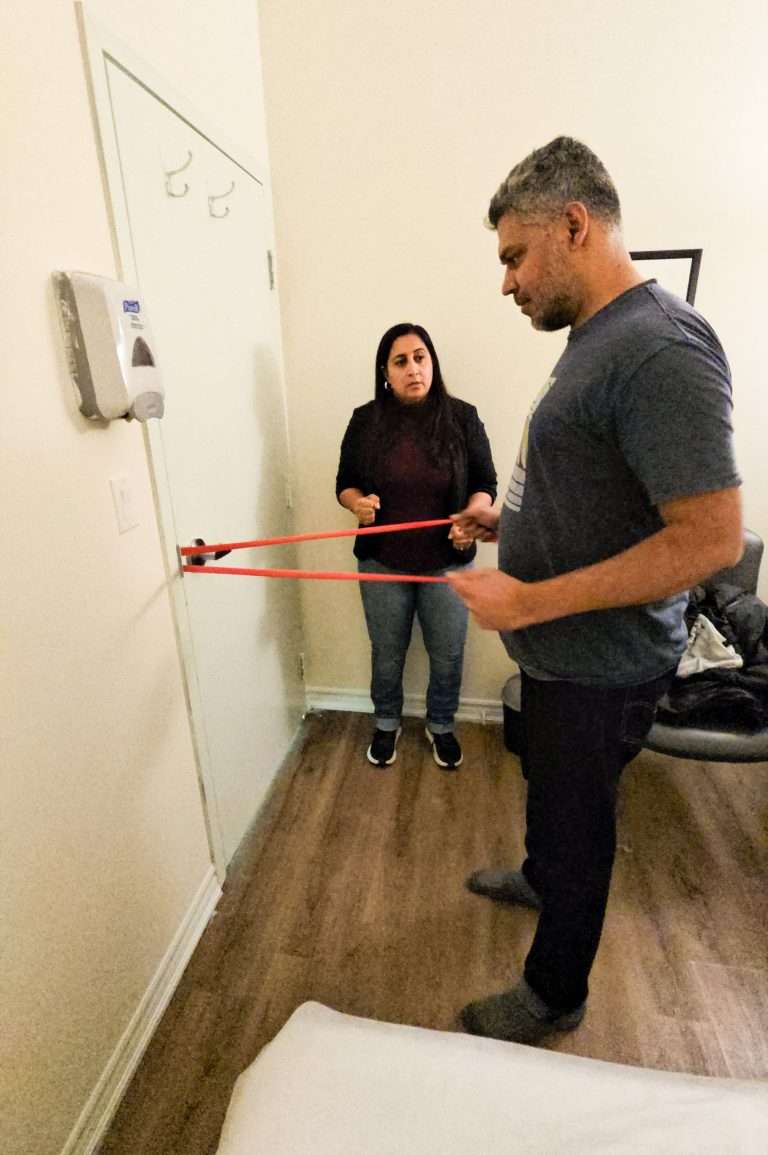
Shoulder rehab lives and dies by the strengthening program. Manual therapy gets things moving. Strengthening keeps them moving. A typical progression:
- Phase 1: Isometrics and pain-free range exercises (first 1-3 weeks)
- Phase 2: Resistance band rotator cuff work and scapular strengthening (weeks 3-6)
- Phase 3: Weighted exercises, overhead loading, functional movements (weeks 6-12)
- Phase 4: Sport-specific or work-specific training, return to full activity
The speed of progression depends entirely on your condition and response. A mild impingement might move through these phases quickly. A post-surgical rotator cuff repair moves much more carefully with specific surgeon timelines.
Shockwave Therapy for Chronic Shoulder Conditions
For calcific tendinopathy (calcium deposits in the rotator cuff) and chronic tendinopathy that hasn’t responded to exercise alone, shockwave therapy can break through the plateau. It promotes blood flow, breaks down calcifications, and stimulates healing in chronic tendon tissue. The evidence for shockwave in chronic rotator cuff tendinopathy and calcific tendinitis is strong. We combine it with the progressive loading program, never as a standalone.
Deep Tissue Laser Therapy
Deep tissue laser therapy is used for acute inflammation (post-surgical, acute bursitis flare-ups) and chronic pain conditions. The laser penetrates deep into the shoulder structures to reduce inflammation and accelerate healing. Most patients notice a meaningful difference after the first few sessions.
What Results to Expect
| Condition | Expected Outcome | Typical Timeline |
|---|---|---|
| Rotator cuff tendinopathy | 80-90% improvement | 6-12 weeks |
| Partial rotator cuff tear | 70-85% recovery without surgery | 8-16 weeks |
| Frozen shoulder | Full or near-full range restored | 12-24 weeks |
| Shoulder impingement | 85-90% resolution | 6-10 weeks |
| AC joint sprain (Grade I-II) | 90-95% full recovery | 4-8 weeks |
| Labral tear (non-surgical) | Significant stability improvement | 8-16 weeks |
| Post-surgical rehab | Varies by procedure | 12-24+ weeks |
| Calcific tendinopathy | 70-80% improvement with shockwave | 6-12 weeks |
Most patients notice meaningful improvement within the first 3-4 visits. Frozen shoulder is the exception, it’s a slower process, but steady progress is expected week over week with proper treatment.
Your Recovery Timeline: What to Expect Week by Week
Phase 1: Pain Reduction and Early Movement (Weeks 1-3)
What we’re doing: Gentle joint mobilization, soft tissue work, pain management strategies, and beginning rotator cuff activation exercises.
What you’ll notice: Sleeping becomes easier, sharp pain reduces, you start reaching further without wincing.
Your homework: Isometric exercises daily, ice/heat as directed, activity modification (we’ll tell you what to avoid temporarily).
Phase 2: Restoring Range of Motion and Building Strength (Weeks 4-8)
What we’re doing: Progressive mobilization, resistance band exercises, scapular strengthening, postural correction.
What you’ll notice: Overhead reaching improves, you can dress and reach behind your back more easily, strength starts returning.
Your homework: Resistance band program 4x/week, postural awareness at desk, gradual return to normal activities.
Phase 3: Full Function and Return to Activity (Weeks 8-12+)
What we’re doing: Weighted strengthening, sport or work-specific training, overhead loading progression, maintenance program design.
What you’ll notice: Full or near-full range of motion, confidence using the shoulder without fear, return to gym/sports/work activities.
Your homework: Maintenance strengthening 2-3x/week (permanent), sport-specific progression if applicable.
Why Patients Choose Wellmax for Shoulder Pain Treatment in Oakville
Convenient Oakville Location
1148 Winston Churchill Blvd, Unit B3, Oakville. Free parking. Clarkson: 5 min, Clearview: 8 min, Sheridan Park: 10 min, Downtown Oakville: 12 min, South Mississauga: 7 min.
The Whole Shoulder Gets Assessed
We don’t just look at where it hurts. We check the rotator cuff, the shoulder blade, the thoracic spine, and the cervical spine. If the neck is contributing to shoulder pain, we find it. If the shoulder blade isn’t moving properly, we address it. This is how you avoid chasing symptoms that keep coming back.
Expert Care, Every Visit
Shoulder rehab requires precise progression. Your therapist needs to know how the joint felt last week versus this week, how your tolerance is changing, and when to push harder versus hold steady. Reassessing at every visit is non-negotiable for good outcomes.
Shockwave and Laser for Stubborn Cases
Not every clinic has access to both shockwave therapy and deep tissue laser therapy. Wellmax does. For chronic rotator cuff tendinopathy and calcific tendinitis that haven’t responded to exercise alone, combining these modalities with progressive loading produces outcomes that exercise or modalities in isolation cannot.
Direct Insurance Billing
We bill directly to Sun Life, Manulife, Canada Life, Desjardins, Green Shield Canada, Great-West Life, Blue Cross, and most other major providers. WSIB and MVA claims accepted. No referral needed.
Shoulder Pain Treatment for Oakville’s Community
Shoulder injuries don’t discriminate by age or activity level. We treat shoulder problems in tennis players from Ontario Racquet Club and Joshua Creek who develop tendinopathy from repetitive serving. Gym athletes from CrossFit Radix, GoodLife Fitness, and Orangetheory who pushed too hard on overhead pressing. Swimmers from the Oakville Swim Club with chronic impingement from thousands of repetitive strokes. Weekend golfers from Glen Abbey, Credit Valley, and Oakville Golf Club whose trailing arm develops rotator cuff irritation over a season.
We also see a lot of occupational shoulder injuries. Electricians, painters, carpenters, and warehouse workers from the Clarkson and Royal Windsor industrial areas who work overhead every day. Office workers in the Winston Park business district whose desk posture has been slowly narrowing the subacromial space for years. And patients recovering from rotator cuff repair surgery who need structured, staged post-operative rehabilitation.
We’re at 1148 Winston Churchill Blvd, Unit B3, Oakville. Just south of the QEW in the Winston Park plaza. Free parking, ground-level access, private treatment rooms. Patients come from Clarkson, Clearview, Sheridan Park, Maple Grove, River Oaks, and south Mississauga.
What Our Patients Say
N.A. T.“I recently had physiotherapy sessions here for my neck and shoulder pain. After just 6 sessions, I’m feeling much, much better. The whole team is amazing, very supportive, friendly, and professional. I truly appreciate all the effort and care they put into my treatment. Highly recommended”
John C.“Fully recommendable. Gurmeet is very knowledgeable and a well experienced Physiotherapy. I’ve been going to this place for a couple of times they really managed to recover my shoulder issues that I have been suffering for more than a decade. Thank you Wellmax Physiotherapy.”
George X.“Ms Rai is doing a fabulous job of managing the rehab of my rotator cuff, both in her treatment and in her guiding of my own exercise regimen.”
Abeer A.“The Magician, that’s the only way I can describe Dr. Gurmeet. After six months of constant shoulder and neck pain that took over my life…”
Sarah J.“Without a doubt, this is the best physiotherapy clinic in Oakville. My experience here with frozen shoulder is too good not to share. I came in with persistent shoulder pain and stiffness that was not fading away. I was having difficulties lifting my arm, getting dressed, and even sleeping was extremely uncomfortable. Before coming to Wellmax, nothing I tried gave me lasting relief. From the very first visit, the staff made me feel welcomed and genuinely cared for. What stood out most was how thorough the assessment was. Gurmeet took her time and explained everything without rushing. Within a few sessions, the improvement was incredible. The sharp pain faded and my range of motion improved drastically. …”
Neha T.“Great experience with Gurmeet and Jhanvi for a rotator cuff injury. They were knowledgeable, patient, and explained everything clearly throughout my recovery. The treatment plan was effective and tailored to my needs, and I noticed steady improvement in my shoulder pain and mobility. Highly recommend for anyone dealing with shoulder issues.”
Nilson A.“Physio therapy on my left shoulder, amazing. Felt relief right away. Gurmeet is excellent and I recommend Wellmax to everyone. The staff are friendly and courteous and professional. Genuinely care about the patients.”
Lu M.“Kind, caring, knowledgeable and magical hands. Came in about 6 weeks ago with lots of pain from a torn rotator cuff. Dhrushi and the team provided various treatments and exercises to help reduce my shoulder pain, and now I can sleep through the night. They worked with my medical diagnosis, my schedule and my insurance to build a treatment schedule, and now I’m on my way to recovery. I’m feeling great and look forward to returning to racquet sports this fall.”
See all our Google reviewsRead more patient storiesLeave a review
Frequently Asked Questions
Do I need an MRI for my shoulder pain?+–
Not necessarily, and often not right away. A thorough physical examination can identify most shoulder conditions accurately. Imaging is recommended when there is suspicion of a significant structural tear that isn’t responding to treatment, when surgery is being considered, or when the diagnosis is unclear after clinical assessment. Many people with ‘abnormal’ MRI findings have no pain, and some with significant pain have normal scans. We treat the person, not the picture.
Can a rotator cuff tear heal without surgery?+–
Many partial tears and some full-thickness tears in older adults improve significantly with physiotherapy. Research shows that conservative treatment produces functional outcomes comparable to surgery for many non-traumatic tears. Surgery is typically recommended for full-thickness tears in younger, active patients, large acute tears from trauma, or cases where 3-6 months of dedicated rehab hasn’t produced adequate improvement.
How long does frozen shoulder last?+–
Without treatment, frozen shoulder can last 18-24 months, sometimes longer. With physiotherapy, the timeline is typically shortened to 6-12 months, with meaningful progress occurring throughout. The freezing phase (worst pain) is usually the first 3-6 months. The frozen phase (less pain, most stiffness) follows. The thawing phase is when movement returns. Physiotherapy helps most during the freezing and frozen phases.
Why does my shoulder hurt at night?+–
Night pain is extremely common with rotator cuff problems and frozen shoulder. When you lie down, especially on the affected side, the shoulder compresses and the inflamed tendons or capsule get pinched. Sleeping on your back with a pillow under the affected arm, or on the opposite side with a pillow hugged to your chest, usually helps. We’ll give you specific sleeping position advice based on your condition.
Can physiotherapy help after shoulder surgery?+–
Post-surgical rehabilitation is one of the most important factors in your surgical outcome. The surgery fixes the structural problem. Physiotherapy restores the movement, strength, and function. Without proper rehab, even a well-performed surgery can result in stiffness, weakness, or re-injury. We follow surgeon-specific protocols and communicate directly with your surgical team.
Is it normal for my shoulder to click or pop?+–
Clicking and popping without pain is usually harmless and caused by tendons snapping over bony prominences or gas bubbles releasing in the joint. Clicking with pain, catching, or a feeling of instability is different and should be assessed. It could indicate a labral tear, biceps tendon issue, or other structural problem.
How often do I need to come for shoulder physiotherapy?+–
Most shoulder patients start at 2 visits per week for the first 2-3 weeks, then reduce to once weekly, then every other week. A typical course of treatment is 8-16 sessions depending on the condition. Frozen shoulder and post-surgical cases may need longer treatment courses.
Can desk work cause shoulder problems?+–
Absolutely. Prolonged sitting with forward-rounded shoulders shortens the pectoralis muscles, weakens the scapular stabilizers, and changes how the shoulder blade moves. Over time, this creates impingement conditions and rotator cuff irritation. For desk workers, postural correction is always part of the treatment plan.
Will my insurance cover shoulder physiotherapy?+–
Most extended health benefit plans cover physiotherapy. We direct bill to Sun Life, Manulife, Canada Life, Green Shield, Great-West Life, Blue Cross, Desjardins, and most other providers. If your shoulder injury is from a car accident (MVA) or workplace incident (WSIB), those claims are billed directly to the respective insurer.
When can I return to the gym after a shoulder injury?+–
This depends entirely on the condition and severity. A mild impingement may allow modified gym work within 2-3 weeks. A rotator cuff repair typically requires 4-6 months before returning to overhead pressing. We provide specific return-to-exercise guidelines with progressions so you get back safely without re-injury.
Related Conditions and Services
- Rotator Cuff Injury: Detailed rotator cuff tendinopathy and tear treatment, the most common driver of shoulder pain.
- Frozen Shoulder: Adhesive capsulitis management through staged mobilization and strengthening.
- Bursitis: Subacromial bursitis and its relationship to rotator cuff tendinopathy.
- Neck Pain: Cervical spine problems that refer pain to the shoulder and mimic rotator cuff symptoms.
- Back Pain: Thoracic spine stiffness that drives shoulder compensations.
- Wrist and Hand Pain: Shoulder dysfunction can alter how the entire arm functions.
- Elbow Pain: Tennis elbow and golfer’s elbow often co-exist with shoulder conditions.
- Shockwave Therapy: Evidence-based treatment for chronic rotator cuff tendinopathy and calcific tendinitis.
- Deep Tissue Laser Therapy: Deep tissue laser for acute shoulder bursitis and inflammation control.
- Sports Injury Rehabilitation: Shoulder injuries are among the most common in sport.
- Pre and Post-Surgical Rehabilitation: Structured rehab programs following shoulder surgery.
- Insurance and Direct Billing: Direct billing to most extended health plans. No referral needed.
- Biceps Tendon Pain
Book Your Shoulder Pain Assessment Today
Whether you’re dealing with a rotator cuff issue, frozen shoulder, post-surgical rehab, or chronic shoulder pain that’s been dragging on for months, we’re here to help. A thorough assessment identifies exactly what’s driving the problem and what it will take to fix it. Book a free consult with a registered Oakville physiotherapist today.
Wellmax Physiotherapy
1148 Winston Churchill Blvd, Unit B3, Oakville, ON L6J 0A3
Phone: (905) 829-1100
Email: info@wellmaxphysiotherapy.ca
Proudly Serving Our Local Communities:
- East Oakville: Winston Park, Clearview, and the QEW/403 Corridor.
- South Oakville: Eastlake, Maple Grove, Lorne Park, and Old Oakville.
- North Oakville: Joshua Creek, Falgarwood, Iroquois Ridge, and Upper Middle Road.
- Mississauga Border: Clarkson, Sheridan Park, Sheridan Homelands, and Southdown.
Insurance: Direct billing to most major providers. WSIB and MVA claims accepted. No referral needed. See our insurance and direct billing page for details.
Hours: Monday to Friday: 9am to 7pm | Saturday: 9am to 2pm | Sunday: 9am to 2pm (by appointment only)
Registered & Regulated
Regulated & Recognized Across Every Discipline
Wellmax is in good standing with the regulatory colleges and leading associations for physiotherapy, chiropractic, massage therapy, and naturopathic medicine in Ontario.