
Vertigo & Vestibular Physiotherapy in Oakville
BPPV, vertigo, dizziness and balance disorder treatment. Direct billing, no referral needed.
Home > Our Services > Vertigo & Vestibular Physiotherapy in Oakville
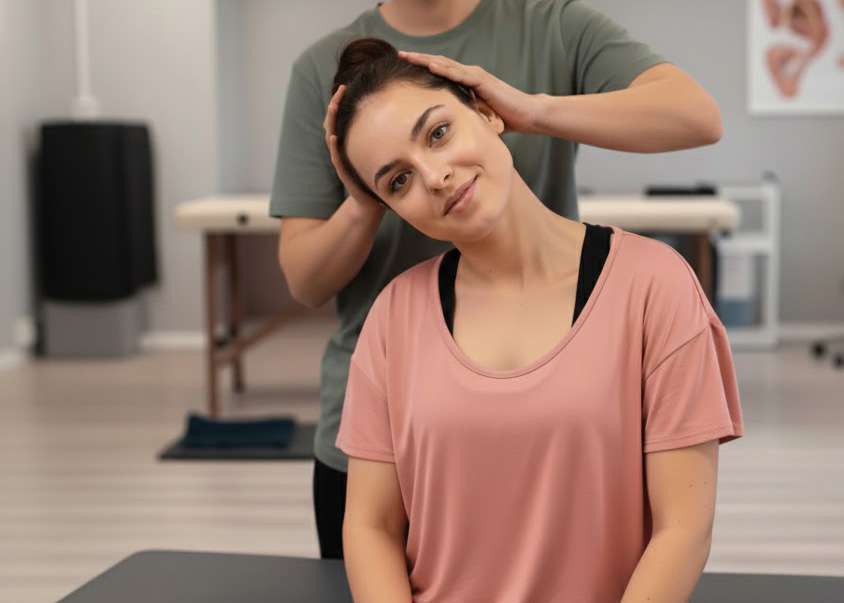
The room spins when you roll over in bed, and the medication only dulls it?
The most common cause of vertigo, BPPV, can often be resolved in one to two visits, not weeks. Our Oakville physiotherapists are trained in vestibular assessment: we identify the exact type of dizziness at your first visit and treat BPPV on the spot.
Direct billing to most insurers. No referral needed.
Wellmax Physiotherapy provides expert vestibular physiotherapy in Oakville for vertigo, BPPV, dizziness and balance disorders.
The room spins when you roll over in bed. You feel off balance walking through the grocery store. Turning your head to check your blind spot while driving triggers a wave of nausea. You have been to the emergency department and they told you it is “vertigo” and sent you home with medication. The medication dulls the spinning but doesn’t fix it. And it comes back.
If this sounds familiar, you are dealing with a vestibular disorder. The vestibular system is the balance and spatial orientation system located in your inner ear. When it malfunctions, the brain receives conflicting signals about where the body is in space, and the result is dizziness, vertigo (a sensation that the room is spinning), nausea, balance problems, and difficulty with visual focus during head movement.
Here is the part most people don’t know: the most common cause of vertigo, BPPV (benign paroxysmal positional vertigo), can be resolved in one to two treatment sessions. It is not a chronic condition you have to live with. It is tiny calcium crystals displaced in the inner ear canal, and a specific repositioning maneuver puts them back where they belong. When performed correctly, the vertigo stops. Not gradually over weeks. Within minutes.
At Wellmax Physiotherapy, our physiotherapists are trained in vestibular assessment and treatment. We identify the specific type of vestibular disorder at the first visit, perform repositioning maneuvers for BPPV on the spot, and prescribe targeted vestibular rehabilitation exercises for other vestibular conditions. We also assess whether the dizziness is coming from the inner ear, the neck (cervicogenic dizziness), or a concussion, because each requires a different treatment approach.
We are at 1148 Winston Churchill Blvd, Unit B3, Oakville, just south of the QEW. Patients from Clarkson, Clearview, Sheridan Park, Maple Grove, and south Mississauga come to us for vertigo and dizziness treatment.
- Vestibular Conditions We Treat
- How We Treat Vestibular Disorders at Wellmax
- Vestibular Condition Recovery Timelines
- When Dizziness Is NOT Vestibular
- Why Oakville Patients Choose Wellmax for Vestibular Treatment
- Related Conditions and Services
- Book Your Vestibular Assessment in Oakville
- Frequently Asked Questions
Vestibular Conditions We Treat
BPPV (Benign Paroxysmal Positional Vertigo)

BPPV is the single most common cause of vertigo, the most common cause of vertigo in older adults, accounting for roughly one in three dizziness diagnoses in people over 60, and a significant portion in younger adults. It happens when tiny calcium carbonate crystals (otoconia) become dislodged from their normal position in the utricle and fall into one of the three semicircular canals. When you move your head into certain positions (rolling over in bed, looking up, bending forward), the displaced crystals move through the canal and send a false signal to the brain that the head is spinning. The result is a brief but intense episode of rotational vertigo lasting 10 to 60 seconds, often with nausea.
The treatment is a canalith repositioning maneuver (most commonly the Epley maneuver for the posterior canal, which is affected in roughly 85 to 95% of BPPV cases). The maneuver guides the crystals out of the affected canal and back into the utricle where they belong. Most patients experience complete resolution of vertigo in one to two sessions. This is one of the most satisfying treatments in all of physiotherapy because the results are immediate and dramatic. You walk in dizzy and you walk out without vertigo.
We also treat less common variants: horizontal canal BPPV (treated with the BBQ roll or Lempert maneuver) and anterior canal BPPV. Each canal requires a different repositioning technique, which is why accurate diagnosis of which canal is involved matters.
Vestibular Neuritis and Labyrinthitis
Vestibular neuritis is inflammation of the vestibular nerve, usually caused by a viral infection. It produces sudden, severe, continuous vertigo that can last days, along with nausea, vomiting, and difficulty walking. Labyrinthitis is similar but also affects the cochlear nerve, so hearing loss or tinnitus (ringing in the ears) accompanies the dizziness.
The acute phase is managed medically (anti-nausea medication, rest). Once the severe vertigo subsides (usually within a few days to a week), vestibular physiotherapy becomes essential. The brain needs to recalibrate to compensate for the damaged vestibular nerve. Without rehabilitation, many patients are left with residual dizziness, unsteadiness, and motion sensitivity that can persist for months. Vestibular rehabilitation exercises (gaze stabilization, balance training, habituation exercises) train the brain to compensate and significantly speed recovery.
Cervicogenic Dizziness
This is dizziness caused by dysfunction in the cervical spine, not the inner ear. The upper cervical joints (C1 to C2) contain dense proprioceptive receptors that feed balance information to the brain. When these joints are stiff, injured, or dysfunctional (commonly after whiplash or prolonged neck problems), they send inaccurate signals that conflict with the information from the inner ear, producing dizziness and unsteadiness.
Cervicogenic dizziness is frequently missed because practitioners look only at the inner ear. If vestibular testing is normal but the patient is dizzy, the cervical spine needs to be assessed. Treatment involves upper cervical mobilization, proprioceptive retraining, and cervical spine strengthening. The dizziness resolves as the cervical joint function improves. See our Neck Pain page for more on cervical spine treatment, and our Whiplash page for post-accident dizziness.
Post-Concussion Vestibular Dysfunction
Dizziness and balance problems are among the most common and persistent symptoms after a concussion. The same forces that cause the brain injury can also damage the vestibular system. Post-concussion vestibular dysfunction can involve BPPV (the impact dislodges the crystals), vestibular nerve damage, central vestibular processing problems (the brain’s ability to integrate balance signals is impaired), or cervicogenic dizziness from the whiplash component of the injury.
Treatment requires identifying which mechanism is causing the dizziness. If BPPV is present, repositioning is done first. If the vestibular nerve is involved, gaze stabilization and balance exercises are prescribed. If the cervical spine is contributing, manual therapy addresses the neck. Often, multiple mechanisms are at play simultaneously. See our Concussion Rehabilitation page for the full post-concussion treatment approach.
Meniere’s Disease
Meniere’s disease is a chronic inner ear condition characterized by episodes of vertigo lasting 20 minutes to several hours, fluctuating hearing loss, tinnitus, and a sensation of fullness in the affected ear. It is caused by abnormal fluid pressure in the inner ear (endolymphatic hydrops). While Meniere’s is managed primarily by an ENT specialist (ear, nose, and throat physician), vestibular rehabilitation between episodes helps maintain balance function, reduce sensitivity to triggers, and improve the patient’s ability to manage the condition long-term.
Age-Related Vestibular Decline and Fall Risk
The vestibular system gradually declines with age. After 55, the number of hair cells in the inner ear decreases, vestibular nerve conduction slows, and the brain’s ability to process balance information diminishes. Combined with reduced vision, decreased muscle strength, and slower reflexes, this vestibular decline significantly increases fall risk. Vestibular rehabilitation combined with balance training and strengthening exercises is one of the most effective fall prevention strategies available. Seniors with arthritis affecting mobility can benefit from combined vestibular and joint management.
How We Treat Vestibular Disorders at Wellmax
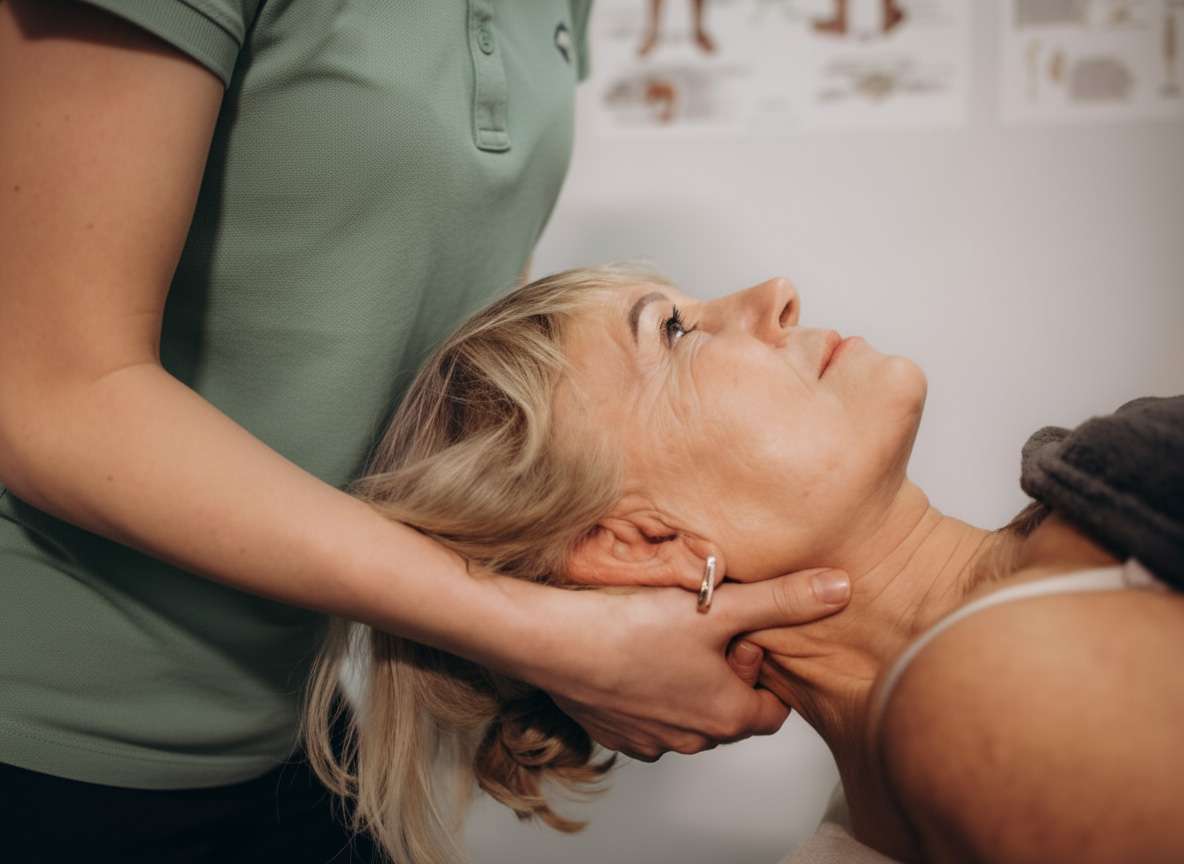
Comprehensive Vestibular Assessment
The first visit includes a thorough assessment to determine the type and source of dizziness. This involves a detailed history (onset, triggers, duration of episodes, associated symptoms), oculomotor testing (tracking eye movements for nystagmus, which reveals which part of the vestibular system is affected), positional testing (Dix-Hallpike test for posterior canal BPPV, supine roll test for horizontal canal BPPV), balance and gait assessment, and cervical spine screening to rule out cervicogenic dizziness. The assessment tells us whether the problem is peripheral (inner ear), central (brain), or cervical (neck), and which specific condition is present.
Canalith Repositioning for BPPV
If BPPV is diagnosed, treatment begins immediately at the first visit. The Epley maneuver (for posterior canal) or appropriate alternative maneuver (for horizontal or anterior canal) is performed. Most patients feel significant improvement or complete resolution within the session. A follow-up visit confirms the crystals have been successfully repositioned and addresses any residual symptoms.
Gaze Stabilization Exercises
For vestibular neuritis, labyrinthitis, and other conditions affecting the vestibular nerve, gaze stabilization exercises are the primary treatment. These exercises train the vestibulo-ocular reflex (VOR), the system that keeps your vision clear while your head is moving. Patients practice focusing on a target while moving their head at progressively faster speeds. As the brain adapts and compensates, visual clarity during head movement improves and dizziness decreases.
Balance and Habituation Training
Balance training challenges the balance system under progressively more demanding conditions: standing on unstable surfaces, reducing visual input (eyes closed), adding head movements, and performing dual tasks (balancing while talking or counting). Habituation exercises deliberately expose the patient to the movements and positions that provoke dizziness, in a controlled and graduated way, until the brain learns to suppress the inappropriate response.
Cervical Spine Treatment for Cervicogenic Dizziness
When the cervical spine is contributing to dizziness, manual therapy targeting the upper cervical joints (C1 to C2 mobilization), deep neck flexor strengthening, and cervical proprioceptive retraining address the neck dysfunction causing the vestibular symptoms. This is frequently part of treatment after whiplash and car accidents where both the vestibular system and the cervical spine may be affected.
Vestibular Condition Recovery Timelines
| Condition | Treatment Approach | Typical Timeline |
|---|---|---|
| BPPV (posterior canal) | Epley repositioning maneuver | 1-2 sessions, often resolved same day |
| BPPV (horizontal canal) | BBQ roll / Lempert maneuver | 1-3 sessions |
| Vestibular neuritis | Gaze stabilization, balance training | 6-12 weeks of vestibular rehab |
| Cervicogenic dizziness | Cervical mobilization, proprioceptive retraining | 4-8 weeks |
| Post-concussion vestibular dysfunction | Combined vestibular and concussion rehab | 6-16 weeks depending on severity |
| Age-related vestibular decline | Balance training, fall prevention program | Ongoing management, improvement in 6-8 weeks |
| Meniere’s disease | Vestibular rehab between episodes, ENT co-management | Long-term management, reduced episode impact |
BPPV stands out as one of the fastest conditions to resolve in all of physiotherapy. Other vestibular conditions require more time, but most patients see meaningful improvement within the first 4 to 6 weeks of vestibular rehabilitation. Your physiotherapist provides a specific timeline at the first assessment based on the diagnosis and severity.
When Dizziness Is NOT Vestibular
Not all dizziness comes from the inner ear or vestibular system. During the assessment, your physiotherapist screens for non-vestibular causes that may require medical referral.
- Cardiovascular causes: Dizziness with blood pressure changes (lightheadedness when standing, feeling faint) suggests an orthostatic or cardiovascular issue that needs medical assessment.
- Medication side effects: Blood pressure medications, antidepressants, anti-anxiety medications and pain medications can all cause dizziness. If it started after a medication change, discuss it with your prescribing physician.
- Central neurological causes: Dizziness with double vision, difficulty swallowing, slurred speech, a severe new headache, or loss of coordination could indicate a central problem requiring urgent medical attention.
- Anxiety-related dizziness: Persistent dizziness with anxiety or panic that develops after a vestibular episode, sometimes called PPPD, benefits from a combined physiotherapy and psychological approach.
Why Oakville Patients Choose Wellmax for Vestibular Treatment
We Diagnose the Type of Dizziness First
BPPV, vestibular neuritis, cervicogenic dizziness, and post-concussion vestibular problems all produce dizziness but require completely different treatments. The Epley maneuver for BPPV does nothing for cervicogenic dizziness. Gaze stabilization exercises for vestibular neuritis don’t address displaced crystals. Getting the diagnosis right at the first visit is the difference between immediate resolution and months of ongoing symptoms.
BPPV Treated on the Spot
If your dizziness is caused by BPPV, we perform the repositioning maneuver at the first visit. Most patients walk out of the clinic without vertigo. This is not a multi-week treatment program for BPPV. It is a specific, targeted intervention that works within minutes when the correct canal is identified and the appropriate maneuver is performed.
We Check the Neck Too
Cervicogenic dizziness is one of the most commonly missed diagnoses. If the inner ear is normal but the patient is still dizzy, the cervical spine is the next place to look. We screen the cervical spine in every vestibular assessment. For patients with whiplash-related dizziness, this is essential.
Comprehensive Care Beyond Vestibular
Many vestibular patients also benefit from our other services: concussion rehabilitation for post-concussion dizziness, neck pain treatment for cervicogenic dizziness, massage therapy for cervical muscle tension contributing to balance problems, and naturopathic medicine for holistic support alongside your vestibular rehabilitation. All available under one roof.
We treat dizziness and balance disorders across the local community: seniors in Sheridan Park and Maple Grove concerned about falls, active adults in Clearview and Winston Park who woke up with the room spinning, post-concussion patients from Oakville’s hockey arenas and car accidents on the QEW, people who were given medication and told to “wait it out” but aren’t getting better, and patients who have seen multiple practitioners without a clear diagnosis. We are at 1148 Winston Churchill Blvd, Unit B3, Oakville, just south of the QEW, with free parking, ground-level access, and private treatment rooms.
What Our Patients Say
Ruchi P.“Team is excellent!! Very professional and compassionate towards their work. They helped me recover with Vertigo. I would strongly recommend them to anyone who is suffering with BPPV.”
Verified Patient“I was having dizzy spells that came out of nowhere. My doctor ran tests and said it was BPPV and to see a physiotherapist who does vestibular rehab. Wellmax was one of the few clinics in Oakville that offers it. The first visit Gurmeet did specific head positioning manoeuvres and the vertigo improved immediately. She also assessed my neck and found that some of the residual dizziness was actually coming from tightness in my upper cervical spine. After three sessions the dizziness was completely gone. I had been dealing with it for two months and it was resolved in under two weeks of treatment.”
Rolando F.“I had vestibular treatment with Dhrushi Bhatt, my therapist. I was handled professionally and with care. My symptoms started to disappear right away from the start of the sessions. I would highly recommend this clinic with this awesome performance and service! Thank you.”
Sharon Q.“I have been having mild dizzy spells for 2 months and was getting concerned because the lightheadedness and feelings of imbalance wouldn’t go away. Went to Wellmax in Oakville and Gurmeet Rai took care of me. Her manipulations on my neck and back helped relax my tight and knotted muscles and she assured me that my lightheadedness and mild dizziness would eventually go away. There was improvement after my 1st session. Today I completed my 2nd session and I am certainly looking forward to feeling normal again. The at home exercises were also great and not too complicated. Would highly recommend. Gurmeet knows what she’s doing!”
Verified Patient“Got rear-ended on the QEW near Winston Churchill and started having neck pain, headaches, and dizziness about three days later. I did not know where to start with insurance and treatment. Wellmax handled everything. They explained how the auto insurance coverage works in Ontario, did direct billing so I did not pay anything out of pocket, and started treatment the same week. Gurmeet treated my neck and the dizziness component separately because she said they needed different approaches. After about eight weeks I was back to normal. The whole process from first call to discharge was smooth and I never had to chase paperwork.”
Verified Patient“I had been dealing with jaw clicking and pain on the left side for over a year. My dentist made me a night guard which helped a bit with the grinding but the clicking and tightness never went away. A coworker mentioned that physiotherapy can treat TMJ problems, which I honestly did not know. Gurmeet assessed my jaw, neck, and posture in the first session and explained how everything was connected. After about five sessions the clicking had almost completely stopped and I could eat without that constant ache. I had no idea physiotherapy could make that much of a difference for jaw pain.”
Muhammad S.“Very professional and friendly staff my long time neck pain problems treated very professionally.”
Jessica T.“Finding the best physiotherapy clinic in Oakville was a game changer for my jaw pain. I had been dealing with TMJ issues, jaw clicking, and terrible tension headaches for months. I honestly did not even know physiotherapy could help with this until I found Wellmax. The assessment was incredibly thorough. Gurmeet took the time to explain the mechanics of my jaw and how my neck posture was contributing to the problem. The hands-on release techniques provided relief almost immediately. The whole team is genuinely invested in your recovery, and the clinic is spotless. I have already recommended them to several family members.”
See all our Google reviewsRead more patient storiesLeave a review
Frequently Asked Questions
What is BPPV and how is it treated?+–
BPPV (benign paroxysmal positional vertigo) is the most common cause of vertigo. It happens when tiny calcium crystals in the inner ear become displaced into the semicircular canals. When you move your head into certain positions, the crystals trigger a brief but intense spinning sensation. The treatment is a repositioning maneuver (most commonly the Epley maneuver) that guides the crystals back to their correct position. Most patients experience complete resolution in one to two sessions, and many walk out of the first visit without vertigo.
How can I tell if my dizziness is from the inner ear or my neck?+–
Inner ear (vestibular) dizziness is typically triggered by specific head positions and produces a true spinning sensation, often with nystagmus (involuntary eye movements) your physiotherapist can observe during testing. Cervicogenic dizziness from the neck tends to produce more of an unsteadiness or wooziness rather than true spinning, and it is associated with neck pain, stiffness, or a history of neck injury like whiplash. The assessment differentiates between them using positional tests, oculomotor examination, and cervical spine screening.
Will the vestibular exercises make me dizzy?+–
Some vestibular rehabilitation exercises, particularly habituation exercises, deliberately provoke mild dizziness to train the brain to suppress the inappropriate response. This is normal and expected. The dizziness should be mild to moderate, settle within a few minutes of stopping, and progressively decrease over days and weeks as the brain adapts. Your physiotherapist calibrates the exercises to your tolerance so the provocation is therapeutic, not overwhelming.
Do dizziness medications actually work?+–
Medications commonly prescribed for dizziness (meclizine, dimenhydrinate, betahistine) suppress symptoms but do not address the underlying cause. For BPPV the crystals are still displaced; for vestibular neuritis the brain still has not compensated. Long-term use of vestibular suppressant medication can actually slow recovery by preventing the brain from doing the adaptation work it needs to do. Medication may help manage acute severe vertigo, but vestibular rehabilitation addresses the actual dysfunction.
Does BPPV come back?+–
BPPV has a recurrence rate of about 15 to 20% per year. If the crystals become dislodged again, the same repositioning maneuver resolves it, and most recurrences respond to a single treatment session. For vestibular neuritis, once the brain has compensated through rehabilitation, recurrence is uncommon. Cervicogenic dizziness can recur if the neck dysfunction returns, which is why maintaining neck mobility and strength matters long-term.
How long does BPPV last without treatment?+–
Each vertigo episode is brief, usually 30 to 60 seconds when you change head position, but the condition itself can linger for weeks or months if it is not treated. It sometimes settles on its own within a few weeks, but there is no need to wait it out and risk falls or ongoing nausea. A repositioning maneuver usually clears it in one to two visits, so most people choose to have it treated rather than suffer through it.
Can I just do the Epley maneuver at home?+–
Home repositioning exercises do exist, but the catch is that the right maneuver depends on which ear and which of the three canals the crystals are in. Performing the wrong maneuver, or treating the wrong side, can make the vertigo worse or move the crystals into a different canal. We recommend getting an accurate diagnosis first; we identify the exact canal during the assessment, treat it on the spot, and can then teach you a safe home maneuver for any future recurrence.
When should I see someone urgently about my dizziness?+–
Most dizziness is not dangerous, but seek urgent medical attention if your dizziness comes with double vision, slurred speech, difficulty swallowing, facial or limb weakness, a severe sudden headache, or loss of coordination, as these can signal a central neurological problem. Fainting or dizziness with chest pain or palpitations also needs prompt medical assessment. For positional spinning, balance problems and post-concussion dizziness, a vestibular physiotherapy assessment is the right next step.
Can BPPV come back after successful treatment?+–
Yes, BPPV recurs in approximately 30-50% of patients within five years. The calcium crystals that dislodge once can dislodge again, particularly with changes in sleep position, head trauma, or inner ear conditions. Most recurrences respond quickly to repositioning manoeuvres – knowing the Epley and having a physiotherapist you can return to quickly makes recurrences manageable rather than frightening.
What if the Epley manoeuvre doesn’t work for my vertigo?+–
If the Epley doesn’t resolve symptoms, it may mean the affected canal has been misidentified. BPPV can affect three different semicircular canals, each requiring a different manoeuvre. A vestibular physiotherapist can perform canal-specific testing including the Dix-Hallpike and roll test to identify the exact problem. Some BPPV presentations, particularly horizontal-canal or cupulolithiasis variants, require different repositioning techniques than the standard Epley.
Why am I still dizzy after my crystals were repositioned?+–
Post-repositioning dizziness is common and doesn’t mean the treatment failed. After successful crystal repositioning, the brain needs time to recalibrate its balance signals – this usually takes one to three days but can last up to two weeks. Some residual unsteadiness is normal. If full spinning vertigo returns, the crystals may have migrated back, which is easily re-treated. Vestibular habituation exercises prescribed by your physiotherapist speed up the recalibration process.
Can vestibular problems affect my vision or make me feel nauseous?+–
Yes. Visual disturbances are a common vestibular symptom, particularly oscillopsia (the sense that the visual field is moving), difficulty focusing while moving, and sensitivity to busy visual environments like scrolling screens or crowded spaces. Nausea occurs because the inner ear, eyes, and brain are receiving conflicting sensory information. Vestibular rehabilitation addresses both the balance deficit and the associated visual and nausea symptoms through habituation and gaze stabilization exercises.
What happens if I leave BPPV untreated?+–
BPPV can resolve spontaneously in some cases, but this typically takes two to four weeks and increases fall risk in the meantime. Without treatment, people often unconsciously restrict head movements to avoid symptoms, which delays the brain’s natural compensation and can lead to secondary problems including neck stiffness, anxiety, and deconditioning. Repositioning manoeuvres typically resolve BPPV in one to three sessions – there is no good reason to wait it out when effective treatment is readily available.
Can inner ear infections cause the same symptoms as BPPV?+–
Inner ear infections such as vestibular neuritis or labyrinthitis cause sudden severe vertigo that differs from BPPV in one key way: the dizziness is constant and prolonged (lasting days), rather than brief position-triggered episodes lasting 30-60 seconds. Labyrinthitis also involves hearing loss, while BPPV does not affect hearing. Both conditions benefit from vestibular physiotherapy, but the treatment approach differs significantly. A thorough vestibular assessment is needed to distinguish the two.
Is there a difference between BPPV and other types of vestibular disorders?+–
Yes. BPPV is specifically caused by displaced calcium crystals in the semicircular canals and produces brief spinning episodes triggered by head position changes. Other vestibular disorders include vestibular neuritis (inflammation of the vestibular nerve causing prolonged vertigo), Meniere’s disease (fluctuating hearing loss plus vertigo), and central vestibular disorders involving the brainstem or cerebellum. Each requires a different treatment approach, which is why proper vestibular assessment before starting treatment matters.
Related Conditions and Services
- Concussion Rehabilitation: Vestibular, oculomotor and cervical treatment for post-concussion dizziness.
- Neck Pain & Headaches: Cervical spine treatment for cervicogenic dizziness.
- Whiplash: Post-accident dizziness from combined vestibular and cervical injury.
- Balance & Fall Prevention: Balance training for age-related vestibular decline.
- Massage Therapy: Releases cervical muscle tension that contributes to dizziness.
- Physiotherapy: The full range of one-on-one, hands-on physiotherapy at Wellmax.
Book Your Vestibular Assessment in Oakville
If the room is spinning, you feel off balance, or you have been told to just live with dizziness, get it properly assessed. We identify the exact cause at the first visit and, for BPPV, often resolve it on the spot. Prefer to talk it through first? Wellmax offers a free 15-minute consult.
Book a Vestibular Assessment Call (905) 829-1100
Wellmax Physiotherapy
1148 Winston Churchill Blvd, Unit B3, Oakville, ON L6J 0A3
Phone: (905) 829-1100
Email: info@wellmaxphysiotherapy.ca
Hours: Monday to Friday 9am to 7pm; Saturday 9am to 2pm; Sunday 9am to 2pm (by appointment only).
Proudly Serving Our Local Communities:
- East Oakville: Winston Park, Clearview, and the QEW/403 Corridor.
- South Oakville: Eastlake, Maple Grove, Lorne Park, and Old Oakville.
- North Oakville: Joshua Creek, Falgarwood, Iroquois Ridge, and Upper Middle Road.
- Mississauga Border: Clarkson, Sheridan Park, Sheridan Homelands, and Southdown.
Insurance: Direct billing to most major providers. WSIB and MVA claims accepted. No referral needed.
Find Us in Oakville
Registered & Regulated
Regulated & Recognized Across Every Discipline
Wellmax is in good standing with the regulatory colleges and leading associations for physiotherapy, chiropractic, massage therapy, and naturopathic medicine in Ontario.