Spinal Decompression Therapy in Oakville
Mechanical traction for disc herniations, sciatica, nerve compression and spinal stenosis. Included in physiotherapy, no extra charge.
Home > Our Services > Spinal Decompression Therapy in Oakville
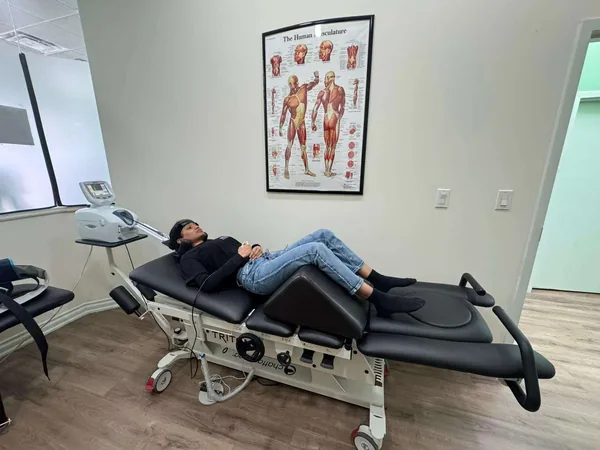
The disc is bulging. The nerve is compressed. The MRI shows L4-L5 herniation and surgery feels like the only path forward?
Most disc herniations respond to conservative treatment. Spinal decompression therapy (mechanical traction) gently separates the vertebrae, creates negative pressure inside the disc space, and reduces the nerve compression causing your pain, without surgery, injection, or medication. At Wellmax, traction is included in your physiotherapy session at no extra charge, combined with manual therapy, laser, and exercise for a complete program.
Direct billing to most insurers. WSIB and MVA accepted. No referral needed.
Wellmax Physiotherapy provides spinal decompression therapy in Oakville for disc herniations, sciatica, spinal stenosis, cervical disc problems, and degenerative disc disease.
The disc is bulging. The nerve is compressed. The pain shoots down the leg every time you sit. The MRI shows a herniation at L4-L5 or L5-S1 and now you’re wondering whether surgery is the only option. Before going down that road, there’s a treatment that can take pressure off the disc and nerve without surgery, without injection, and without medication. Spinal decompression therapy (mechanical traction) gently separates the vertebrae, creates negative pressure inside the disc space, and reduces the compression that’s causing the pain.
At Wellmax Physiotherapy, spinal decompression is not a standalone treatment and it’s not something we sell as a 24-session package. It’s one tool within a complete physiotherapy program. Traction works best when combined with manual therapy, specific exercises, and clinical judgment about which patients it helps and which patients it doesn’t. Not every disc herniation needs traction. Not every back pain benefits from decompression. The assessment determines whether traction is appropriate for your specific condition, and if it is, it’s integrated into your treatment plan alongside everything else your spine needs to recover.
We’re at 1148 Winston Churchill Blvd, Unit B3, Oakville, just south of the QEW. Patients from Clarkson, Clearview, Sheridan Park, Maple Grove, and south Mississauga come to us for spinal decompression as part of their physiotherapy program.
- What Spinal Decompression Does
- Conditions That Respond to Spinal Decompression
- When Spinal Decompression Is NOT the Right Treatment
- How We Use Traction at Wellmax
- What to Expect During a Traction Session
- Spinal Decompression Recovery Timelines
- Why Oakville Patients Choose Wellmax for Spinal Decompression
- Related Conditions and Services
- Book Your Spinal Assessment in Oakville
- Frequently Asked Questions
What Spinal Decompression Does
How the Traction Table Works
You lie on a mechanical traction table with a harness around the pelvis (for lumbar decompression) or a head cradle (for cervical decompression). The table applies a controlled, gentle pull that gradually separates the vertebrae in the targeted spinal segment. This separation creates negative pressure inside the disc, which does two things: it draws the bulging or herniated disc material back toward the centre, and it pulls nutrient-rich fluid into the disc to support healing. The pull is gradual, controlled, and adjusted to your tolerance. Most patients describe it as a gentle stretching sensation that actually feels good on a compressed spine.
The traction force is set by your physiotherapist based on your body weight, the specific spinal segment affected, and how your condition presents at the assessment. Clinical traction tables apply precise, calibrated force, not the uncontrolled full-body stretch of an inversion table. The force angle targets the specific disc level causing your symptoms.
What Happens Inside the Spine During Traction
When the vertebrae are gently separated, the intervertebral foramen (the openings where the nerve roots exit the spine) widen. This takes direct pressure off the compressed nerve root. For patients with sciatica from a disc herniation, this decompression can provide significant and sometimes immediate pain relief. The negative intradiscal pressure also helps retract disc material that has migrated toward the nerve, and it improves disc hydration by drawing fluid and nutrients into the disc space.
Discs have very limited blood supply and rely on this fluid exchange for nutrition and repair. By improving intradiscal fluid movement, traction supports the biological healing process that the spine is already attempting to carry out. This is why decompression is most effective when combined with the right exercise program, the traction creates the mechanical environment, and the exercises teach the spine to maintain it.
What It Feels Like
Spinal decompression is not painful. Most patients find it comfortable and relaxing. You feel a gradual pull through the lower back or neck, which increases over 30 to 60 seconds, holds for a set duration, then releases. The cycle repeats for 15 to 20 minutes per session. Many patients report that the pulling sensation provides noticeable relief during the treatment itself. Some feel lighter and move more easily immediately after. The treatment is fully controlled: if anything is uncomfortable at any point, the force is reduced immediately.
Conditions That Respond to Spinal Decompression
Disc Herniations and Bulging Discs
This is the primary indication for spinal decompression therapy. When a lumbar or cervical disc herniates, disc material pushes outward and compresses a nerve root. Traction creates the mechanical environment for the disc to retract and for the nerve to decompress. Combined with directional preference exercises (typically extension for lumbar disc herniations), manual therapy, and progressive core strengthening, traction accelerates the recovery that the body is already doing naturally. See our Herniated Disc page for the full treatment approach.
Research published in journals including the Journal of Physical Therapy Science shows measurable reductions in disc herniation volume and pain intensity after a course of non-surgical spinal decompression. Most disc herniations, with appropriate conservative management, improve significantly within 6 to 12 weeks without surgery. Traction is one of the tools that supports this process.
Sciatica from Nerve Compression
When sciatica is caused by a disc herniation or foraminal narrowing compressing the nerve root, traction directly addresses the compression. By widening the intervertebral foramen and reducing disc pressure, traction can significantly decrease the leg pain, numbness, and tingling that characterize sciatica. For patients whose sciatica is so severe that they can barely sit or participate in exercises, traction can reduce the pain enough to make the rest of the physiotherapy program possible.
Sciatica from piriformis syndrome or sacroiliac joint dysfunction responds differently and may not benefit from traction. The assessment distinguishes between nerve root compression (traction helps) and non-compressive nerve irritation (other treatments are more appropriate). This distinction matters: treating piriformis-driven sciatica with traction misses the cause entirely. See our Sciatica page for the complete nerve pain approach.
Spinal Stenosis
Lumbar spinal stenosis (narrowing of the spinal canal) compresses the nerve roots and produces leg pain, heaviness, and numbness with walking (neurogenic claudication). Traction can temporarily open the canal space and provide symptomatic relief. For stenosis patients, traction is combined with flexion-based exercises, core strengthening, and walking endurance training. It’s part of the management strategy, not a cure, but it can meaningfully improve the patient’s ability to walk and function. See our Spinal Stenosis page for more detail.
Cervical Disc Problems and Neck Pain
Cervical traction uses a head cradle to gently decompress the cervical spine. This is effective for cervical disc herniations, cervical radiculopathy (nerve pain radiating down the arm), and chronic neck stiffness with nerve involvement. Cervical traction opens the neural foramina and reduces disc compression in the neck, providing relief for patients with arm pain, hand numbness, and tingling from compressed cervical nerve roots. See our Neck Pain page for the broader cervical spine approach.
Degenerative Disc Disease
As discs lose height and hydration with age, the space for nerve roots narrows and the facet joints bear more load. Traction can temporarily restore disc height, improve nutrient flow into the disc, and reduce the nerve compression that accompanies disc degeneration. For patients with chronic low back pain from degenerative changes, periodic traction sessions as part of an ongoing maintenance program can improve comfort and function. See our Back Pain page for comprehensive lumbar treatment.
When Spinal Decompression Is NOT the Right Treatment
Honest clinical judgment means knowing when NOT to use a treatment. Spinal decompression is not appropriate for:
- Spinal fractures or unstable spinal injuries. Traction on a fractured or unstable spine can cause serious harm.
- Spinal tumours or infections. These require medical or surgical management, not traction.
- Severe osteoporosis. Bones that are significantly weakened may not tolerate traction forces safely.
- Cauda equina syndrome. Progressive neurological deficit with bowel or bladder changes is a surgical emergency, not a traction case.
- Pregnancy. Lumbar traction is not performed during pregnancy.
- Certain metal implants or spinal hardware. Post-surgical spines with hardware need clearance before traction is considered.
- Facet joint pain, muscle strain, and sacroiliac joint dysfunction. These conditions respond to other treatments. Traction is most effective when disc or nerve compression is the primary problem.
Your physiotherapist screens for all of these at the assessment before traction is ever considered. If traction isn’t appropriate for your condition, there are plenty of other effective treatments available, including shockwave therapy, deep tissue laser therapy, and manual therapy.
How We Use Traction at Wellmax
Always Part of a Complete Program
Traction alone doesn’t fix a disc herniation. It reduces the pressure and creates the environment for healing. But the disc still needs the right movement patterns (directional preference exercises), the spine still needs stability (core strengthening), the muscles still need to move properly (manual therapy), and the patient still needs to understand how to manage their condition (education and activity modification). At Wellmax, traction is one component of an integrated treatment session, not the entire session.
Combined with Manual Therapy
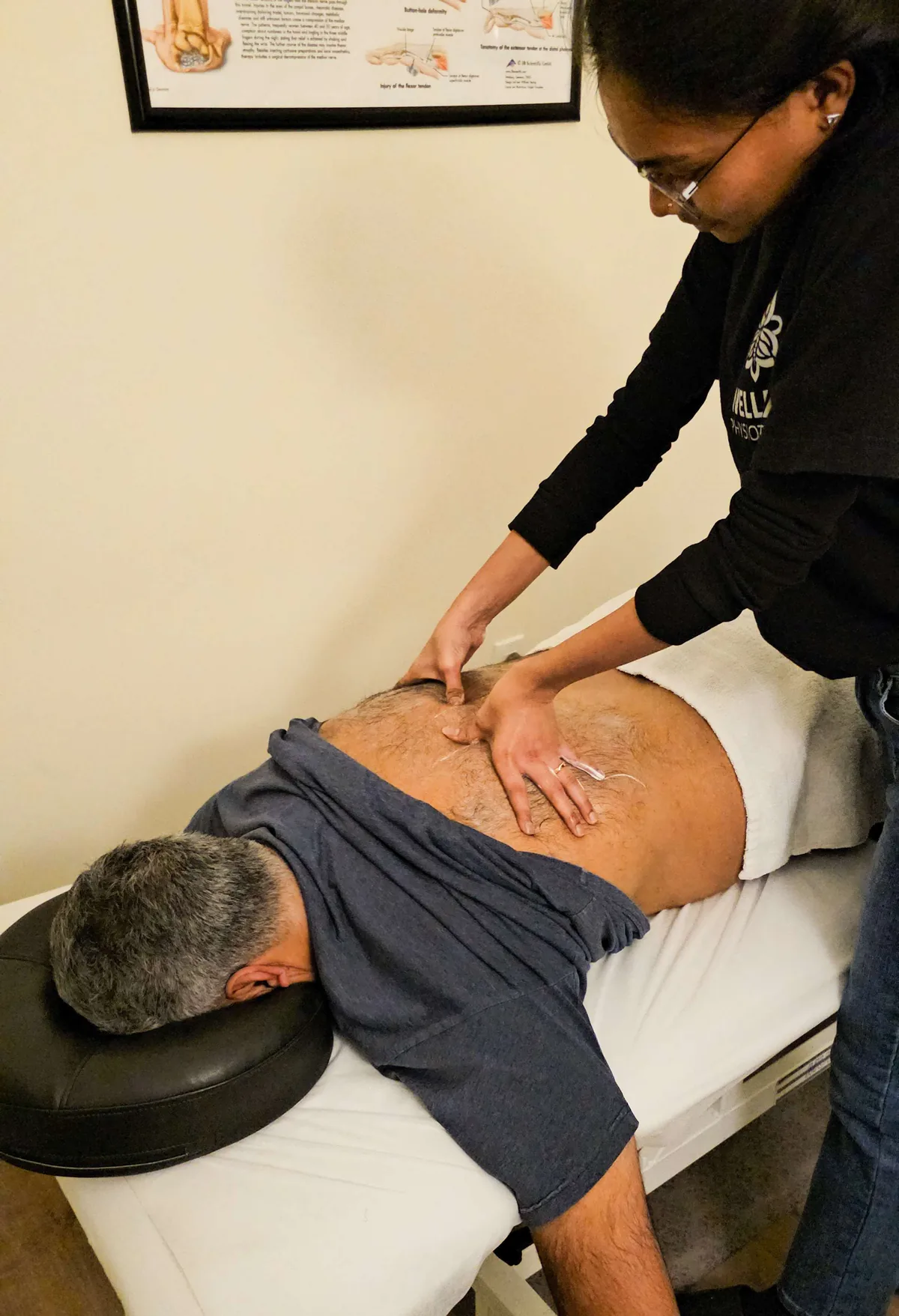
Traction opens the joint space. Manual therapy (spinal mobilization, soft tissue release) then addresses the segmental stiffness and muscle guarding that accompany disc problems. The combination produces better outcomes than either alone. Traction first, then hands-on treatment while the spine is decompressed and more receptive to mobilization. This sequence, decompress, then mobilize, is one of the reasons integrated physiotherapy produces better results than standalone decompression packages.
Our physiotherapists are trained in multiple manual therapy techniques including spinal mobilization, neural mobilization, and soft tissue release. For patients with whiplash injuries involving cervical disc involvement, manual therapy combined with cervical traction addresses both the disc compression and the surrounding joint dysfunction from the injury.
Combined with Deep Tissue Laser
For acute disc herniations with significant inflammation and nerve irritation, Deep tissue laser combined with traction provides the most effective early-stage pain management. The laser reduces inflammation at the nerve root level. The traction takes mechanical pressure off the nerve. Together, they create the conditions for the exercise program to begin. This combination is particularly helpful in the first two to three weeks when pain is severe enough to prevent the patient from doing any meaningful exercises.
Combined with Exercise
After traction decompresses the spine, you perform specific exercises to maintain the benefit. For disc herniations, this typically means extension-based exercises (McKenzie approach). For stenosis, flexion-based exercises and walking. For degenerative conditions, core stabilization. The exercise program is what produces lasting change. Traction provides the window to start it. As the condition improves, the frequency of traction sessions decreases and the exercise program takes over as the primary treatment.
What to Expect During a Traction Session
Duration: 15 to 20 minutes of traction per session, integrated into a full physiotherapy appointment (typically 30 to 45 minutes total including manual therapy and exercise).
Positioning: You lie on the traction table, face up for lumbar decompression. A pelvic harness is secured comfortably around the hips. The table applies a controlled pull that gradually increases to the prescribed force.
Frequency: Typically 2 to 3 times per week during the acute phase (first 2 to 4 weeks), then reduced as symptoms improve and the exercise program takes over.
Comfort: The treatment should feel like a gentle, relieving stretch. If it’s uncomfortable at any point, the force is reduced immediately. You are in control throughout.
Results: Many patients notice reduced leg pain or improved mobility after the first few sessions. Meaningful, lasting improvement typically develops over 4 to 8 weeks as traction is combined with the full rehabilitation program.
Spinal Decompression Recovery Timelines
| Condition | Treatment Approach | Typical Timeline |
|---|---|---|
| Lumbar disc herniation with sciatica | Traction, extension exercises, manual therapy, core strengthening | 6 to 12 weeks; many improve significantly in 4 to 6 weeks |
| Cervical disc herniation with arm pain | Cervical traction, manual therapy, nerve mobilization | 6 to 10 weeks |
| Lumbar spinal stenosis | Traction, flexion exercises, walking program, core stability | 8 to 16 weeks ongoing management |
| Bulging disc (no nerve compression) | Traction, directional preference exercises, postural correction | 4 to 8 weeks |
| Degenerative disc disease | Periodic traction, core strengthening, activity modification | Ongoing management; meaningful improvement in 6 to 10 weeks |
| Cervical radiculopathy (arm numbness) | Cervical traction, neural mobilization, manual therapy | 6 to 12 weeks |
These timelines reflect typical outcomes. Individual recovery depends on the severity of the herniation, how long the nerve has been compressed, the patient’s age and overall health, and how consistently the home exercise program is followed. Your physiotherapist provides a specific timeline at the first assessment based on the examination findings.
Why Oakville Patients Choose Wellmax for Spinal Decompression
- Physiotherapy-First, Not Sales-First: Traction is included in your physiotherapy session at no extra charge. We don’t sell 20-30 session decompression packages. The assessment determines whether traction helps your condition, and if it does, it’s built into your plan.
- Integrated with Manual Therapy, Laser, and Exercise: Traction alone is a partial solution. Combined with deep tissue laser, shockwave therapy, manual therapy, and progressive exercise, it becomes part of a complete recovery program under one roof.
- Expert Care for Your Spine: Disc herniations, sciatica, and stenosis are conditions that change week to week. Your physiotherapist reassesses at every visit to know how the nerve responded to the last session’s traction, whether the leg pain centralized, and when to advance loading.
- Honest About What Traction Can and Can’t Do: Traction is excellent at reducing acute nerve compression. It is not a cure for degenerative disc disease. It is not a replacement for surgery when surgery is genuinely needed. We tell you upfront whether traction will help your specific condition.
- Cervical and Lumbar Traction Available: Both neck and lower back decompression in the same clinic, combined with the full range of physiotherapy services under one roof.
- Direct Billing and No Referral: Spinal decompression is billed as physiotherapy and covered by most extended health plans. WSIB and MVA claims accepted. No referral needed. Same-day appointments often available.
We treat spinal conditions across the local community: patients in Sheridan Park and Maple Grove dealing with disc herniations from years of desk work, active adults in Winston Park and Clearview managing sciatica flaring from running or cycling, seniors in Joshua Creek and Iroquois Ridge with spinal stenosis that limits their walking distance, post-accident patients from MVA and whiplash injuries on the QEW corridor, and people who have been told surgery may be needed but want to explore conservative options first. We’re at 1148 Winston Churchill Blvd, Unit B3, Oakville, with free parking and ground-level access.
What Our Patients Say
David M.“I have been to a few places over the years, but Wellmax is by far the best physiotherapy clinic in Oakville. I came in suffering from severe sciatica that was shooting down my leg. It was making it impossible to sit at my desk or drive without sharp pain. Gurmeet did a very detailed assessment and explained how a compressed nerve was causing the issue. My treatment included the spinal decompression table and targeted manual therapy. Nav and Janvi were also great at guiding me through my rehab exercises and making sure my form was correct. I am finally sleeping and working without pain. They are a highly skilled and professional team.”
Linda G.“I have spinal stenosis in my lower back. Today I asked to use the decompression table and was put on it. I was also given a tissue massage and ultrasound. The physiotherapist is very knowledgeable and professional and the rooms are very clean. I would recommend this physio place for sure.”
Kapil N.“I had sprained my back while shoveling snow. Dr. Gurmeet and her team put me on electrotherapy, hands on manual therapy, and provided excellent physio treatment.”
Iqbaljeet S.“I came in with chronic back and neck pain that had been bothering me for a while, and I honestly wasn’t sure how much improvement to expect. Both Dhrushi and Gurmeet are knowledgeable physiotherapists at Wellmax who were thorough from the very first assessment, they took the time to actually understand the issue rather than just going through the motions. The treatment plan they put together made a real difference, and I noticed improvement faster than I expected. The staff is professional, attentive, and genuinely invested in your recovery. Highly recommend to anyone dealing with back or neck issues.”
Janki P.“I had been experiencing constant pain before starting treatment with this physiotherapist. From the very first session, Gurmeet Rai demonstrated exceptional knowledge, care, and professionalism. Her hands-on therapy and massage techniques were highly effective, and I noticed a significant improvement in my pain after the treatments. She also provided me with clear and practical exercises to continue at home, which have been very helpful in managing my condition on a daily basis. She takes the time to listen, explains everything well, and truly cares about her patients’ recovery. I feel very fortunate to have found such a skilled and dedicated physiotherapist. …”
Harsha P.“I’ve been going to Wellmax for my neck and lower back pain for a few months now, and the entire experience has been incredibly smooth. Gurmeet is a true expert, she gets straight to the root cause of the discomfort and treats it perfectly. I’m so happy with the results, and my pain is practically gone. I can finally sit and work at my desk for hours without any stress. Janvi (PTA) is also fantastic at her job. The whole team at the clinic makes you feel comfortable, guides you through the right exercises, and always ensures your form is correct.”
Verified Patient“The sciatica pain running down my left leg had gotten so bad I could not sit at my desk for more than ten minutes. My family doctor told me to rest and take anti-inflammatories but after six weeks nothing had changed. Gurmeet identified that the nerve irritation was coming from a disc issue in my lower back and started treatment that same visit. She combined hands-on work with specific exercises that targeted the nerve. Three weeks later the leg pain was down by about 80 percent. After six weeks I was back at work full days with no pain. The difference between being told to rest and actually getting proper treatment is night and day.”
Verified Patient“I had been to three different physio clinics over the past two years for my chronic lower back pain and nothing stuck. The pain would improve a bit during treatment and then come right back. Gurmeet’s approach was completely different. She spent almost an hour on the initial assessment looking at how I moved, not just where it hurt. She explained that the issue was not just my back but how my whole body was compensating. The treatment plan combined manual therapy with progressive exercises that actually challenged me instead of just stretching. For the first time in two years I feel like the pain is actually resolving instead of just being managed.”
See all our Google reviewsRead more patient storiesLeave a review
Frequently Asked Questions
Is spinal decompression therapy painful?+–
No. Most patients find spinal decompression comfortable and relaxing. You feel a gradual, gentle pull through the lower back or neck that increases slowly, holds, then releases. Many patients report the stretching sensation actually provides relief during the treatment itself. If discomfort occurs at any point, the force is reduced immediately. It is one of the more comfortable treatments in physiotherapy for disc and nerve conditions.
How many sessions of spinal decompression will I need?+–
It depends on the condition and severity. For acute disc herniations with nerve compression, traction is typically used 2 to 3 times per week for 2 to 4 weeks during the acute phase, then reduced as the exercise program takes over. Some patients need 6 to 8 sessions. Others with more chronic conditions benefit from 10 to 15 sessions. Your physiotherapist determines frequency based on how your condition responds. We do not sell fixed session packages.
Is spinal decompression the same as an inversion table?+–
No. Inversion tables flip you upside down and apply uncontrolled decompression to the entire spine. Clinical spinal decompression uses a traction table with precise, controlled force targeting the specific spinal segment causing the problem. The force, angle, duration, and hold pattern are all set by your physiotherapist based on assessment findings. This level of control makes clinical traction safer and more effective than an inversion table, which applies the same force regardless of where your actual problem is.
Can spinal decompression help me avoid surgery for a disc herniation?+–
In many cases, yes. Most disc herniations improve with conservative treatment including physiotherapy, traction, and exercise. Research shows the body naturally reabsorbs herniated disc material over weeks to months. Traction combined with the full physiotherapy program supports this process. However, some cases with large herniations and progressive neurological deficit genuinely require surgery. We are honest about when conservative treatment has reached its limit and coordinate surgical referrals when needed.
Is there an extra charge for spinal decompression at Wellmax?+–
No. Spinal decompression is included as part of your physiotherapy session at no extra charge. There is no separate fee for traction. You pay for physiotherapy, and traction is one of the tools used within that session when clinically appropriate. We do not sell standalone decompression packages separate from physiotherapy.
Does spinal decompression work for all types of back pain?+–
No. Traction is most effective when disc compression or nerve root compression is the primary problem: disc herniations, bulging discs, sciatica from nerve compression, spinal stenosis, and cervical radiculopathy. It is less effective for facet joint pain, muscle strain, sacroiliac joint dysfunction, and non-specific low back pain. The assessment determines which treatment approach is right for your specific type of back pain, traction is not the default for every case.
Can I get cervical traction for neck pain and arm numbness?+–
Yes. Wellmax offers both lumbar (lower back) and cervical (neck) traction. Cervical traction uses a head cradle to gently decompress the cervical spine. It is effective for cervical disc herniations, cervical radiculopathy causing arm pain or hand numbness, and chronic neck stiffness with nerve involvement. Your physiotherapist assesses the cervical spine at the first visit to determine whether cervical traction is appropriate for your specific condition.
Is spinal decompression covered by insurance?+–
Yes. Spinal decompression is performed by a registered physiotherapist and billed as physiotherapy. It is covered by most extended health plans under your physiotherapy benefit. WSIB and MVA (auto insurance) claims also cover traction as part of the approved treatment plan. Wellmax direct bills to most major providers. No referral needed.
How does spinal decompression differ from chiropractic adjustment for back pain?+–
Chiropractic adjustments apply a brief, high-velocity thrust to realign vertebral joints and restore joint mobility. Spinal decompression uses sustained, controlled traction force specifically calibrated to decompress a disc and widen the space where nerve roots exit the spine. They address different mechanisms: adjustments target joint alignment and mobility; traction targets disc pressure and nerve compression. For disc herniations with radiating nerve pain, traction is typically the more targeted tool. Many patients benefit from both as part of a combined program.
What conditions make someone unsuitable for spinal decompression therapy?+–
Spinal decompression is not appropriate for spinal fractures, spinal tumours or infections, severe osteoporosis, cauda equina syndrome (a surgical emergency), pregnancy (for lumbar traction), and certain post-surgical spines with metal hardware. Your physiotherapist screens for all of these at the initial assessment. If traction is not safe or appropriate for your condition, other effective treatments are available including laser therapy, manual therapy, shockwave, and exercise.
How quickly can I expect results from spinal decompression?+–
Many patients notice reduced leg or arm pain and improved mobility after the first few sessions. Meaningful, lasting improvement typically develops over 4 to 8 weeks as traction is combined with the full rehabilitation program. Recovery speed depends on the severity of the herniation, how long the nerve has been compressed, and how consistently the home exercise program is followed. Acute disc herniations with nerve compression often respond faster than chronic degenerative conditions.
Is spinal decompression the right treatment for spinal stenosis?+–
Spinal decompression can help manage lumbar spinal stenosis by temporarily widening the spinal canal and reducing nerve compression. It is combined with flexion-based exercises, core stabilization, and walking endurance training. For stenosis, traction is a management tool rather than a cure, the canal narrowing is structural and traction provides relief, not reversal of the narrowing. It can meaningfully improve walking distance and reduce the heaviness and leg pain that characterize neurogenic claudication.
Related Conditions and Services
- Herniated Disc: Complete disc herniation treatment including traction, manual therapy, and progressive exercise.
- Sciatica: Nerve pain from disc compression, piriformis syndrome, and spinal stenosis.
- Spinal Stenosis: Canal narrowing management including traction, flexion exercises, and walking programs.
- Back Pain and Sciatica: Comprehensive lumbar spine treatment for all causes of back pain.
- Neck Pain and Headaches: Cervical disc problems and neck pain treated with cervical traction.
- Deep Tissue Laser Therapy: Deep tissue laser combined with traction for acute disc inflammation.
- Shockwave Therapy: Chronic musculoskeletal conditions alongside spinal decompression.
- Chronic Pain: Long-term spine pain management including decompression as a maintenance tool.
- Whiplash: Cervical traction for post-accident disc and nerve involvement.
- MVA Rehabilitation: Auto accident injuries with disc damage covered under auto insurance.
Book Your Spinal Assessment in Oakville
If you’ve been diagnosed with a disc herniation, if sciatica is shooting down your leg, if spinal stenosis is limiting your walking, or if you’ve been told you might need surgery and want to try conservative treatment first, get a proper assessment. Your physiotherapist will determine whether spinal decompression is right for your condition and build the full treatment program around it. Prefer to talk it through first? Wellmax offers a free 15-minute consult.
Book a Spinal Assessment Call (905) 829-1100
Wellmax Physiotherapy
1148 Winston Churchill Blvd, Unit B3, Oakville, ON L6J 0A3
Phone: (905) 829-1100
Email: info@wellmaxphysiotherapy.ca
Hours: Monday to Friday 9am to 7pm; Saturday 9am to 2pm; Sunday 9am to 2pm (by appointment only).
Proudly Serving Our Local Communities:
- East Oakville: Winston Park, Clearview, and the QEW/403 Corridor.
- South Oakville: Eastlake, Maple Grove, Lorne Park, and Old Oakville.
- North Oakville: Joshua Creek, Falgarwood, Iroquois Ridge, and Upper Middle Road.
- Mississauga Border: Clarkson, Sheridan Park, Sheridan Homelands, and Southdown.
Insurance: Direct billing to most major providers. WSIB and MVA claims accepted. No referral needed.
Find Us in Oakville
Registered & Regulated
Regulated & Recognized Across Every Discipline
Wellmax is in good standing with the regulatory colleges and leading associations for physiotherapy, chiropractic, massage therapy, and naturopathic medicine in Ontario.