Balance and Fall Prevention Physiotherapy in Oakville
Balance training and fall prevention for seniors and active adults. Direct billing, no referral needed.
Home > Conditions We Treat > Balance and Fall Prevention Physiotherapy in Oakville
Your balance feels less steady and a fall is starting to feel like a matter of when, not if?
The risk factors that lead to falls, including poor balance, leg weakness, dizziness and slower reflexes, are treatable with the right physiotherapy program. Our Oakville physiotherapists provide comprehensive fall risk assessments, vestibular testing, and individualized balance training.
Direct billing to most insurers. No referral needed. Free consult available.
Wellmax Physiotherapy provides fall prevention physiotherapy in Oakville for older adults, people with dizziness or vertigo, and anyone whose balance has declined.
A fall can change everything. A fractured hip. A broken wrist. A head injury. Months of recovery. Loss of independence. Fear of it happening again. For adults over 65, falls are the leading cause of injury-related hospitalization in Canada and the number one cause of injury-related death in seniors. But here is what most people do not realize: the majority of falls are preventable. The risk factors that lead to falls (poor balance, leg weakness, dizziness, reduced reaction time, medication effects) are treatable with the right physiotherapy program.
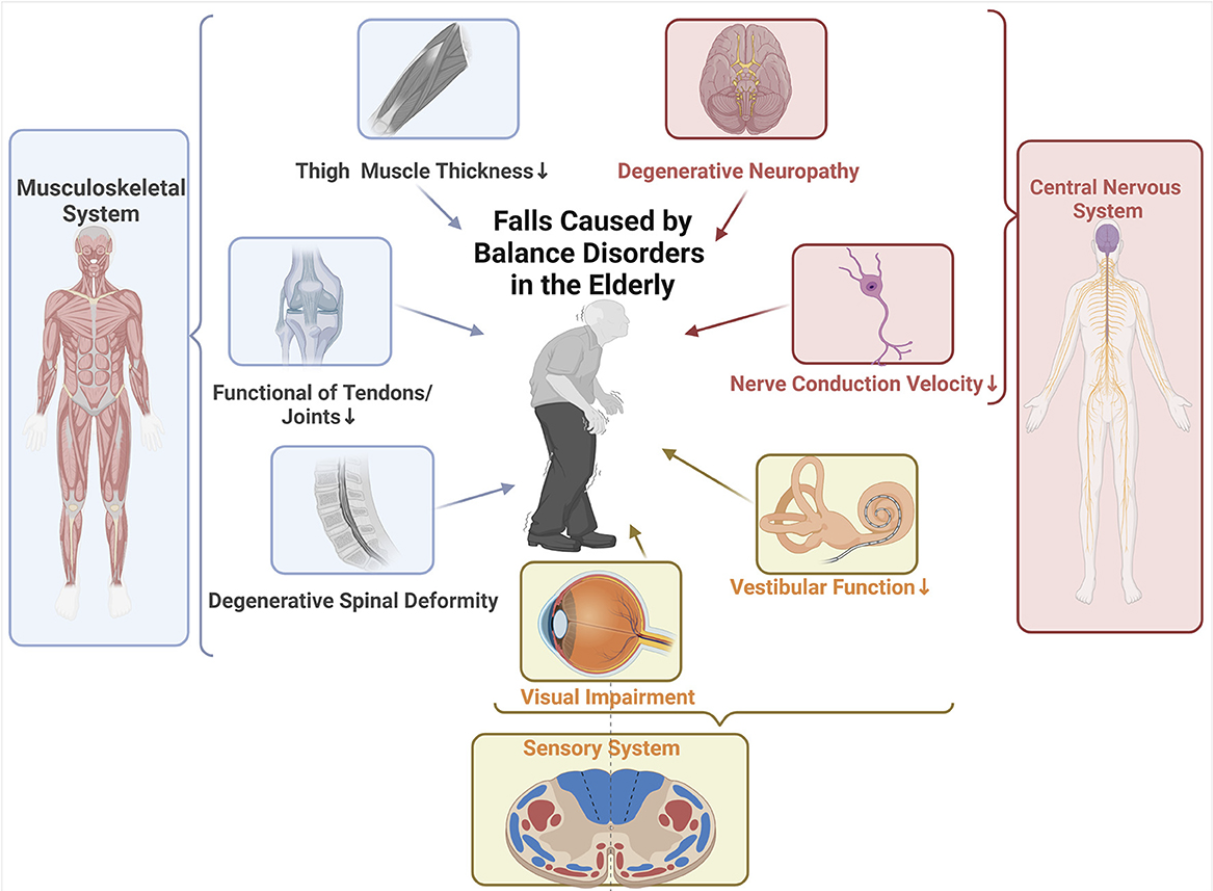
Balance is not a fixed trait. It is a system, and like any system, it can be trained, improved, and maintained. The balance system relies on three inputs: the vestibular system (inner ear), the visual system (eyes), and proprioception (the sensors in your joints and muscles that tell your brain where your body is in space). When any of these inputs decline, and they all decline with age, the brain receives less accurate balance information and the risk of falling increases. Add in muscle weakness, joint stiffness, slower reflexes, and certain medications, and the risk compounds.
At Wellmax Physiotherapy, we provide comprehensive fall risk assessments and individualized balance training programs for older adults. We test all three balance systems, identify the specific deficits, and build a progressive program that addresses them. We also treat the conditions that contribute to falls: dizziness and vertigo (vestibular rehabilitation), joint stiffness from arthritis, and post-surgical weakness (surgical rehab).
We are at 1148 Winston Churchill Blvd, Unit B3, Oakville, just south of the QEW. Free parking, ground-level access, no stairs. Patients from Clarkson, Clearview, Sheridan Park, Maple Grove, and south Mississauga come to us for balance and fall prevention programs.
- Why Falls Happen: The Risk Factors
- Our Fall Prevention Assessment
- The Balance and Strength Program
- Who Benefits from Fall Prevention Physiotherapy
- Fall Prevention Results
- Why Oakville Seniors Choose Wellmax
- Related Conditions and Services
- Book Your Fall Risk Assessment in Oakville
- Frequently Asked Questions
Why Falls Happen: The Risk Factors
Muscle Weakness
Sarcopenia (age-related muscle loss) begins after age 30 and accelerates after 60. By age 70, the average person has lost 25 to 30% of their peak muscle mass. The legs are most affected, and the legs are what keep you upright. Weak quadriceps, weak gluteal muscles, and weak calf muscles reduce your ability to catch yourself when you stumble, step off a curb, or get up from a chair. Strength training reverses sarcopenia at any age. People in their 70s and 80s can build significant muscle strength with progressive resistance exercise. It is never too late.
Poor Balance and Proprioception
The proprioceptive sensors in your ankles, knees, and hips send constant feedback to the brain about body position. These sensors become less sensitive with age, and even more so after joint replacement, ankle sprains, or prolonged inactivity. When the brain gets less accurate position information, balance suffers. Balance training exercises progressively challenge these sensors and retrain the brain to process the signals more effectively.
Vestibular Decline
The vestibular system in the inner ear gradually loses function after age 55. The number of hair cells decreases, nerve conduction slows, and the brain’s ability to process balance information from the inner ear diminishes. This contributes to unsteadiness, especially in low-light conditions or on uneven surfaces. BPPV (benign paroxysmal positional vertigo), which causes sudden room-spinning vertigo, is also most common in older adults and is a direct cause of falls. The good news: BPPV can be resolved in one to two treatment sessions with a specific repositioning maneuver. See our Vestibular Rehabilitation page for more detail.
Medications
Many medications commonly prescribed to older adults list dizziness, lightheadedness, or drowsiness as side effects. Blood pressure medications, sedatives, antidepressants, antihistamines, and pain medications can all affect balance. Taking four or more medications (polypharmacy) significantly increases fall risk. We do not change your medications (that is your physician’s role), but we identify medication-related fall risk factors and factor them into the balance program. If medication effects are a major contributor, we communicate this to your physician.
Vision Changes
The visual system is one of the three balance inputs. Reduced visual acuity, bifocal or progressive lenses (which distort depth perception on stairs), cataracts, and glaucoma all impair balance. We assess how visual changes affect your balance and train compensatory strategies that rely more on the vestibular and proprioceptive systems.
Fear of Falling
After a first fall, many older adults develop a fear of falling that leads them to reduce their activity. They walk less, exercise less, and avoid activities they used to do. This deconditioning further weakens the muscles and balance systems, increasing fall risk. It becomes a cycle: fall, fear, inactivity, weakness, another fall. Breaking this cycle requires building confidence through supervised, progressive balance and strength training in a safe environment.
Our Fall Prevention Assessment
What We Test
The first visit is a comprehensive fall risk assessment that takes approximately 45 to 60 minutes. We use validated, standardized tools including the Berg Balance Scale, the Timed Up and Go (TUG) test, and the 4-Stage Balance Test. We evaluate:

Leg strength: Sit-to-stand test, single leg stance, calf raise capacity. These predict your ability to recover from a stumble.
Balance: Standing balance with eyes open and closed, tandem stance (heel to toe), single-leg standing, balance on unstable surfaces. These test all three balance systems.
Gait: Walking speed, stride length, turning ability, ability to walk while performing a secondary task (dual-task walking). Gait changes are one of the earliest predictors of fall risk.
Vestibular function: Positional testing for BPPV, gaze stability testing, and screening for vestibular hypofunction. If dizziness is a symptom, we identify the specific vestibular cause.
Functional mobility: Timed Up and Go test (TUG), ability to get up from the floor, stair negotiation, reaching tasks. These reflect real-world fall scenarios.
Medications and medical history: Review of current medications, recent falls, fear of falling, vision status, and any contributing medical conditions (diabetes, neuropathy, Parkinson’s, stroke history).
What You Get from the Assessment
A clear picture of your specific fall risk factors, a personalized exercise program targeting your deficits, and an honest conversation about what needs to change. If BPPV is found, we treat it on the spot. If vestibular decline is significant, vestibular rehabilitation is integrated. If strength is the primary issue, the program is built around progressive resistance training. Most patients have multiple contributing factors, and the program addresses all of them.
The Balance and Strength Program
Progressive Strength Training
Lower body strengthening is the single most effective fall prevention intervention. Squats (or chair sit-to-stands), step-ups, calf raises, hip abduction, and hamstring strengthening build the muscle capacity needed to maintain balance and recover from stumbles. The program starts at your current level and progresses systematically. We use bodyweight initially, then add resistance as strength improves. Research shows that even 2 to 3 strength sessions per week produces meaningful improvements in fall risk within 8 to 12 weeks. Combined strength and balance training has been shown to reduce fall risk by up to 40%.
Balance Training
Progressive balance exercises challenge the balance system under increasingly demanding conditions. Standing on one leg, tandem walking (heel to toe), standing on foam pads (unstable surface), reaching while standing, turning exercises, and walking with head turns. Each exercise is progressed as competence and confidence improve. Balance training is most effective when combined with strength training, not in isolation.
Vestibular Rehabilitation
If the inner ear component of balance is compromised, vestibular-specific exercises are added: gaze stabilization (keeping vision clear during head movement), habituation exercises (reducing sensitivity to movements that provoke dizziness), and vestibulo-ocular reflex training. For BPPV, the Epley repositioning maneuver resolves the vertigo, often in a single session. Full details on our Vestibular Rehabilitation page.
Functional Mobility Training
Practicing the real-world tasks where falls happen: getting in and out of the bathtub, navigating stairs, getting up from the floor, walking on uneven surfaces, carrying objects while walking, and turning quickly to answer a phone or doorbell. These functional exercises translate directly to everyday fall prevention.
Home Safety Guidance
Environmental factors contribute to 30 to 50% of falls. We discuss home modifications based on your specific risk: grab bars in bathrooms, improved lighting (especially stairways and hallways), removal of loose rugs, appropriate footwear indoors, and strategies for managing icy conditions during Ontario winters. We do not do home visits, but we provide specific, actionable recommendations.
Who Benefits from Fall Prevention Physiotherapy
- Adults over 65 who want to maintain independence and reduce fall risk before a fall happens. Prevention is far more effective than rehabilitation after a fall.
- Anyone who has already fallen. A first fall doubles the risk of a second fall. Getting assessed after a fall, even if you were not injured, is one of the most important steps you can take.
- People with dizziness or vertigo. Vestibular disorders are a direct cause of falls, and most are treatable. Vestibular rehabilitation addresses the inner ear component of fall risk.
- People with arthritis affecting hips, knees, or ankles. Joint pain and stiffness alter gait and reduce balance confidence.
- Post-surgical patients. After hip or knee replacement, rebuilding balance is part of the rehabilitation process. Pre and post-surgical rehab details.
- People taking multiple medications who experience dizziness or lightheadedness.
- People with neuropathy (reduced sensation in the feet from diabetes or other conditions) who have impaired proprioception.
- Post-concussion patients with lingering balance problems. Concussion rehabilitation addresses vestibular and balance deficits after head injury.
Fall Prevention Results
| Risk Factor | Intervention | Expected Improvement |
|---|---|---|
| Leg weakness / sarcopenia | Progressive resistance training 2 to 3 times/week | Meaningful strength gains in 8 to 12 weeks at any age |
| Poor standing balance | Progressive balance training plus strength | Improved stability and confidence in 6 to 8 weeks |
| BPPV vertigo | Epley repositioning maneuver | Resolved in 1 to 2 sessions, often same day |
| Vestibular decline / dizziness | Gaze stabilization plus balance retraining | Reduced dizziness and improved stability in 6 to 12 weeks |
| Gait instability / slow walking speed | Gait training plus lower body strengthening | Faster, safer gait in 8 to 12 weeks |
| Fear of falling / activity avoidance | Supervised progressive exposure plus strength | Increased activity levels and confidence in 6 to 8 weeks |
| Post-fall deconditioning | Full reconditioning program | Return to pre-fall function in 8 to 16 weeks |
Results depend on the specific risk factors, the starting level of strength and balance, and consistency with the program. Your physiotherapist provides a specific assessment and timeline at the first visit.
Why Oakville Seniors Choose Wellmax
We Assess the Full Picture
Strength, balance, vestibular function, gait, medications, and fall history. Most clinics test balance with one or two quick tests. We run a comprehensive assessment using standardized tools (Berg Balance Scale, TUG test, 4-Stage Balance Test) that identifies every contributing factor so the program is targeted, not generic.
Vestibular Expertise
If dizziness is part of the picture, we identify the cause and treat it. BPPV is resolved on the spot with a repositioning maneuver. Vestibular decline is addressed with specific rehabilitation exercises. Many older adults are told dizziness is just part of aging. It is not. It is treatable. Our physiotherapists are trained in vestibular assessment and are equipped to distinguish between inner-ear causes (BPPV, vestibular neuritis), neck-related causes (cervicogenic dizziness), and post-concussion vestibular dysfunction.
Expert Care, Every Visit
Fall prevention programs run 8 to 16 weeks. Your physiotherapist knows your starting point, tracks your progress, adjusts the program week to week, and celebrates the milestones with you. Trust and rapport matter especially for older adults, and honest guidance keeps engagement with the program high.
Ground-Level, Accessible Clinic
No stairs, no elevators, free parking directly at the door. The clinic is fully accessible for patients with mobility limitations, walkers, or canes. Located at 1148 Winston Churchill Blvd, Unit B3, Oakville, just south of the QEW.
Linked Services Under One Roof
Many fall prevention patients benefit from more than one service. Vestibular rehabilitation for dizziness, arthritis management for stiff joints, massage therapy for muscle tension affecting posture and gait, chiropractic care for spinal alignment issues, and naturopathic medicine for holistic support including osteoporosis and bone health. All available at the same location.
Oakville’s Older Adults
We treat seniors from across the local area. Retirees in Sheridan Park and Maple Grove who want to stay active and independent. Older adults in Clearview and Winston Park who have had a fall and want to prevent the next one. People in Clarkson whose balance has been declining and who avoid going out in winter. Grandparents who want to keep up with their grandchildren without fear of falling. And patients recovering from hip or knee replacement who need balance retraining as part of their post-surgical rehab.
We are at 1148 Winston Churchill Blvd, Unit B3, Oakville. Just south of the QEW in the Winston Park plaza. Free parking, ground-level access, private treatment rooms. Patients come from Clarkson, Clearview, Sheridan Park, Maple Grove, River Oaks, and south Mississauga.
What Our Patients Say
Amanda S.“I’ve had very tight trap muscles greatly impact my neck, causing pain and limited flexibility/rotation for a very long time. Gurmeet has been a huge help between her education, several different exercise/stretch techniques, deep tissue massage, ultrasound and IFC sessions. My pain has subsided immensely and made huge progress in range of flexibility and rotation. Thank you!”
Rolando F.“I had vestibular treatment with Dhrushi Bhatt, my therapist. I was handled professionally and with care. My symptoms started to disappear right away from the start of the sessions. I would highly recommend this clinic with this awesome performance and service! Thank you.”
N.A. T.“I recently had physiotherapy sessions here for my neck and shoulder pain. After just 6 sessions, I’m feeling much, much better. The whole team is amazing, very supportive, friendly, and professional. I truly appreciate all the effort and care they put into my treatment. Highly recommended”
Verified Patient“Woke up one morning and could barely open my mouth. My doctor said it was TMJ dysfunction and suggested physio. Gurmeet worked on the muscles around my jaw and into my neck and upper back. She also gave me exercises I could do at home between sessions. Within three weeks my jaw was opening normally again and the headaches I had been getting every afternoon stopped too. Turns out the jaw and the headaches were related the whole time.”
Abeer A.“The Magician, that’s the only way I can describe Dr. Gurmeet. After six months of constant shoulder and neck pain that took over my life…”
Muhammad S.“Very professional and friendly staff my long time neck pain problems treated very professionally.”
Ruchi P.“Team is excellent!! Very professional and compassionate towards their work. They helped me recover with Vertigo. I would strongly recommend them to anyone who is suffering with BPPV.”
Sharon Q.“I have been having mild dizzy spells for 2 months and was getting concerned because the lightheadedness and feelings of imbalance wouldn’t go away. Went to Wellmax in Oakville and Gurmeet Rai took care of me. Her manipulations on my neck and back helped relax my tight and knotted muscles and she assured me that my lightheadedness and mild dizziness would eventually go away. There was improvement after my 1st session. Today I completed my 2nd session and I am certainly looking forward to feeling normal again. The at home exercises were also great and not too complicated. Would highly recommend. Gurmeet knows what she’s doing!”
See all our Google reviewsRead more patient storiesLeave a review
Frequently Asked Questions
How do I know if I need a fall prevention assessment?+–
If you have had one or more falls in the past year, if you feel unsteady on your feet, if you avoid activities because of balance concerns, if you experience dizziness, or if you hold onto furniture or walls while walking at home, a fall risk assessment is appropriate. You do not need to have fallen to benefit. Prevention before the first fall is the most effective approach.
Is it too late to improve my balance at my age?+–
No. Balance and strength can be improved at any age. Research consistently shows that people in their 70s, 80s, and even 90s respond to progressive strength and balance training. The muscles still adapt to resistance exercise, the brain still responds to balance challenges, and vestibular rehabilitation still works. Starting is more important than starting age.
How often do I need to come in for sessions?+–
Most balance and fall prevention programs involve 1 to 2 sessions per week for 8 to 12 weeks. Between clinic sessions, you perform a home exercise program (typically 15 to 20 minutes, 3 to 5 times per week). As balance and strength improve, the clinic sessions taper and the home program becomes the primary maintenance strategy.
My parent had a fall. When should they start physiotherapy?+–
As soon as any acute injuries have been assessed and cleared (fractures, head injury). If there are no acute injuries, physiotherapy can begin immediately. If a fracture was sustained, physiotherapy begins once the fracture has been stabilized or after surgical fixation, as directed by the physician. Early intervention after a fall prevents the deconditioning and fear-of-falling cycle that leads to further falls.
Can dizziness in seniors be treated?+–
Yes. The most common cause of sudden vertigo in older adults is BPPV (displaced crystals in the inner ear), which can be resolved in one to two treatment sessions. Age-related vestibular decline responds to vestibular rehabilitation exercises. Medication-related dizziness may improve with a medication review by your physician. Dizziness is not something seniors have to accept as normal.
Will the exercises be too difficult for me?+–
No. Every exercise is scaled to your current ability level and progressed gradually. If you cannot stand on one leg for more than a few seconds, we start there. If you need to hold onto a counter for balance, that is fine. The program meets you where you are and builds from there. Safety is always the priority during balance training.
Do I need a doctor's referral for fall prevention physiotherapy?+–
No. In Ontario, you can see a physiotherapist directly without a referral. Some insurance plans require a referral for reimbursement, so check with your provider. We can help sort out your coverage before booking.
Is fall prevention physiotherapy covered by insurance?+–
Yes. Fall prevention physiotherapy is billed as physiotherapy and covered by most extended health plans. We direct bill to Sun Life, Manulife, Canada Life, Green Shield, Great-West Life, Blue Cross, Desjardins, and most other major providers. No referral needed.
What is the difference between vestibular physiotherapy and fall prevention physiotherapy?+–
Vestibular physiotherapy specifically addresses the inner ear and vestibular system: it treats BPPV, vestibular neuritis, and dizziness disorders. Fall prevention physiotherapy is broader: it addresses strength, balance, gait, vision, medication effects, and environmental hazards in addition to vestibular function. Many older adults need both, and our fall prevention assessment includes vestibular screening so the two are integrated when needed.
How many falls happen each year in Canada?+–
Falls are the leading cause of injury-related hospitalization among Canadian seniors. Each year, approximately one in three adults over 65 will experience a fall, and the proportion rises to one in two for those over 80. Falls account for roughly 85% of injury-related hospitalizations for older adults in Canada and cause about 20% of all injury-related deaths in seniors. Most of these falls are preventable with proper assessment and targeted physiotherapy.
My elderly parent has had two falls this month. Who should they see?+–
Start with a physiotherapy balance assessment. Repeated falls in a short period are a pattern worth investigating rather than accepting as ageing. An assessment looks at strength, balance reactions, walking pattern, footwear, blood pressure changes on standing and inner ear function, then identifies which of those is driving the falls. Their family doctor should also review medications.
How soon should someone be assessed after a fall?+–
Soon, and certainly after a second fall. Falls tend to cluster, and each one increases the fear of falling, which reduces activity, which weakens the legs and raises the risk again. Breaking that cycle early is far easier than reversing it after months of avoiding activity.
Can balance actually be improved at 78, or is it just ageing?+–
It can be improved. Balance is trainable at any age because it depends on strength, reaction speed and sensory input, all of which respond to progressive exercise. Programmes that specifically challenge balance, rather than general walking, produce the largest reductions in fall risk. Improvement usually shows within weeks, not months.
What does a falls and balance assessment involve?+–
Standardised tests of walking speed, sit-to-stand strength, and balance under different conditions, plus a review of home hazards, footwear and dizziness. You get a clear picture of which specific factors are raising the risk and a targeted programme rather than generic advice to be careful.
Does dizziness cause falls, and is that treatable?+–
It can, and it often is treatable. Some dizziness comes from the inner ear balance system and responds well to vestibular physiotherapy, sometimes within a few sessions. Other dizziness comes from blood pressure drops on standing or from medication and needs a doctor. The assessment is there to work out which pattern applies before treatment starts.
Related Conditions and Services
- Vestibular Rehabilitation: BPPV, vertigo, dizziness, and inner ear balance disorders.
- Arthritis: Hip, knee, and ankle arthritis management that affects mobility and fall risk.
- Pre and Post-Surgical Rehab: Balance retraining after hip replacement, knee replacement, and lower body surgery.
- Hip Pain: Hip conditions that affect gait and balance.
- Knee Pain: Knee conditions limiting mobility and balance confidence.
- Ankle and Foot Pain: Ankle instability and foot conditions affecting balance.
- Concussion Rehabilitation: Post-concussion balance problems and vestibular dysfunction.
- Chronic Pain: Chronic pain management in older adults affecting activity and fall risk.
- Massage Therapy: Muscle tension and stiffness management alongside balance programs.
Book Your Fall Risk Assessment in Oakville
If you have had a fall, if your balance feels less steady than it used to, if dizziness makes you hesitant to go out, or if you want to stay active and independent for years to come, get a proper fall risk assessment. Your physiotherapist will identify the specific factors affecting your balance and build a program to address every one of them. Prevention is far more effective than recovering from a fall. Wellmax offers a free 15-minute consult to talk it through first.
Book a Fall Risk Assessment Call (905) 829-1100
Wellmax Physiotherapy
1148 Winston Churchill Blvd, Unit B3, Oakville, ON L6J 0A3
Phone: (905) 829-1100
Email: info@wellmaxphysiotherapy.ca
Hours: Monday to Friday 9am to 7pm; Saturday 9am to 2pm; Sunday 9am to 2pm (by appointment only).
Proudly Serving Our Local Communities:
- East Oakville: Winston Park, Clearview, and the QEW/403 Corridor.
- South Oakville: Eastlake, Maple Grove, Lorne Park, and Old Oakville.
- North Oakville: Joshua Creek, Falgarwood, Iroquois Ridge, and Upper Middle Road.
- Mississauga Border: Clarkson, Sheridan Park, Sheridan Homelands, and Southdown.
Insurance: Direct billing to most major providers. WSIB and MVA claims accepted. No referral needed.
Hours: Monday to Friday: 9am to 7pm | Saturday: 9am to 2pm | Sunday: 9am to 2pm (by appointment only)
Find Us in Oakville
Registered & Regulated
Regulated & Recognized Across Every Discipline
Wellmax is in good standing with the regulatory colleges and leading associations for physiotherapy, chiropractic, massage therapy, and naturopathic medicine in Ontario.