
TMJ Treatment in Oakville
Jaw pain, clicking, locking and headaches treated at the source with manual therapy, jaw retraining and posture work.
Home > Conditions We Treat > TMJ Treatment in Oakville
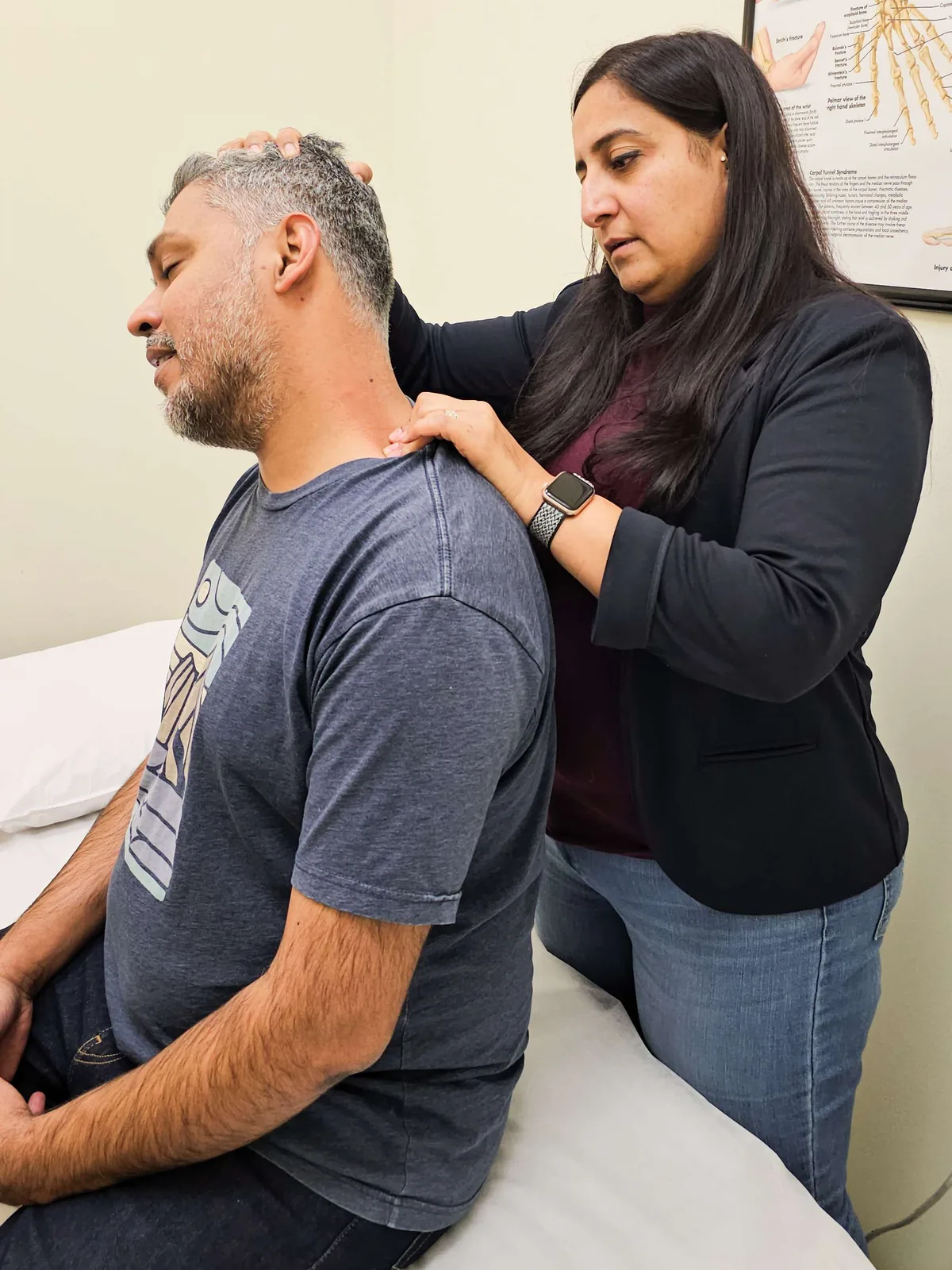
If your jaw clicks, aches, locks, or wakes you with morning headaches, you are looking for real answers, not another night guard that only manages the symptom. TMJ treatment in Oakville at Wellmax targets the actual driver of jaw pain: the joint mechanics, the overworked chewing muscles, and the neck that almost always travels with it. We serve patients across Oakville and Mississauga with hands-on manual therapy, jaw retraining, and posture work, so the clicking, locking, and headaches settle for good rather than flaring back the moment the freezing wears off. No referral needed, and we direct bill most extended health plans.
- Understanding the Temporomandibular Joint (TMJ)
- TMJ Symptoms: How to Know If the Jaw Is the Problem
- How We Treat TMJ Disorders at Wellmax
- What to Expect at Your First TMJ Assessment
- What Results to Expect from TMJ Treatment in Oakville
- Who We Help with TMJ Treatment
- Related Conditions We Treat
- Book Your TMJ Treatment in Oakville at Wellmax Physiotherapy
- Direct Billing and Insurance for TMJ Physiotherapy
- Frequently Asked Questions
Understanding the Temporomandibular Joint (TMJ)
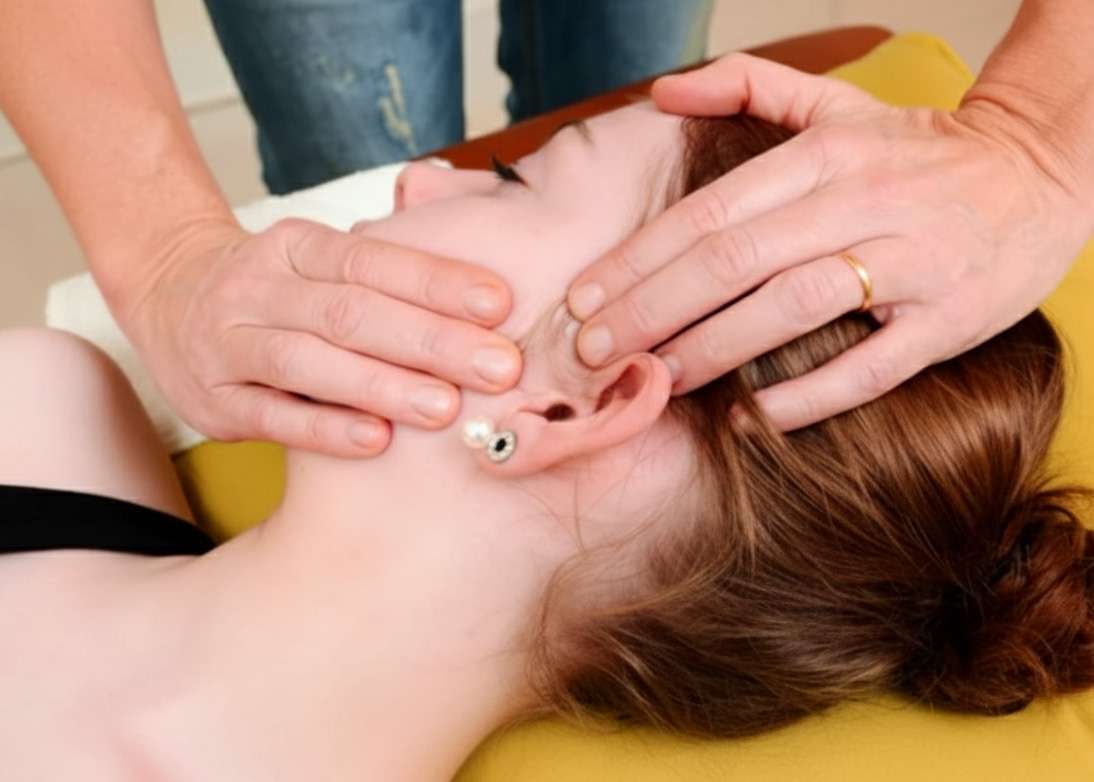
The temporomandibular joint connects the lower jaw (mandible) to the temporal bone of the skull, just in front of each ear. Place your fingers in front of your ears and open your mouth. That movement you feel is the TMJ. It is one of the most complex joints in the body because it performs two distinct movements simultaneously: a hinge rotation (like opening a door) and a sliding translation (the lower jaw glides forward). No other joint in the body does both at the same time.
The Disc
A small fibrocartilage disc sits between the mandible and the temporal bone. It acts as a cushion and allows the two bones to glide smoothly against each other. When the disc slips out of position, most commonly forward, it creates the clicking or popping sound that many people with TMJ dysfunction experience. If the disc displaces far enough, it can physically block the jaw from opening fully. That is what a “locked jaw” actually is.
The Muscles
Four primary muscles control jaw movement. The masseter and temporalis are the main closing muscles, generating the force for biting and chewing. The lateral pterygoid is the primary opening and forward-sliding muscle. The medial pterygoid assists with closing and side-to-side grinding movements. When these muscles become overactive (from clenching, grinding, or stress), they generate enormous forces through the joint. The masseter is actually the strongest muscle in the body relative to its size, capable of producing up to 90 kg of force at the molars. Chronic overactivity of these muscles is the single most common driver of TMJ pain.
The Cervical Spine Connection
The jaw and the upper neck are wired together. The nerves that supply the TMJ and the muscles around it share connections with the upper cervical spine (C1 to C3), so tension or dysfunction in the neck can refer pain straight into the jaw, the temple, and behind the eye. Forward head posture is a common culprit: when the head drifts ahead of the shoulders, it changes the resting position of the mandible and the length-tension relationship of the jaw muscles, forcing them to work harder all day just to keep the mouth closed.
This is why effective TMJ care almost always has to address the neck as well as the jaw. In our clinical experience, the upper cervical spine is involved in the majority of TMJ cases, which is why our assessment and treatment always include it. Treating the jaw in isolation, without the neck, is one of the most common reasons TMJ symptoms keep coming back. Our neck pain and headache physiotherapy page covers the cervical side of this picture in more detail.
Common Causes of TMJ Dysfunction
TMJ problems rarely have a single cause. Most cases involve a combination of factors that overload the joint and its surrounding muscles over time.
Clenching and grinding (bruxism) is the most common contributor. Many people clench during the day without realizing it, during concentration, driving, or stress. Nighttime grinding generates forces several times higher than normal chewing because the protective reflexes that limit daytime bite force are reduced during sleep.
Stress and emotional tension directly increase muscle activity in the jaw and neck. The connection is well documented: elevated stress hormones increase resting muscle tone in the masticatory muscles, often without the person being aware of it.
Neck dysfunction can refer pain into the jaw region and alter the resting position of the mandible. Forward head posture, for example, changes the length-tension relationship of the jaw muscles and shifts how the TMJ loads during opening and closing.
Trauma, including direct blows to the jaw, whiplash injuries from motor vehicle accidents, prolonged dental procedures requiring the mouth to stay open for extended periods, and intubation during surgery, can all trigger TMJ dysfunction.
Postural habits like resting the chin on the hand, cradling a phone between the ear and shoulder, and sleeping face-down all place sustained asymmetric loads on the TMJ.
TMJ Symptoms: How to Know If the Jaw Is the Problem
TMJ dysfunction does not always announce itself as “jaw pain.” Many people experience symptoms they never connect to the joint, which is part of why it takes so long to get properly diagnosed.
Direct Jaw Symptoms
Jaw pain on one or both sides, particularly with chewing, yawning, or opening wide. Clicking, popping, or grinding sounds when opening or closing the mouth. Limited jaw opening, where normal opening is approximately 40 to 50mm (roughly three finger widths stacked vertically between the upper and lower front teeth). If you cannot fit three fingers, the jaw is not opening fully. Jaw locking in an open or closed position. Pain or fatigue with chewing, especially tough or chewy foods. A feeling that the bite has shifted or the teeth do not line up properly.
Symptoms People Do Not Connect to TMJ
Headaches, particularly in the temples, behind the eyes, or across the forehead. The temporalis muscle covers the entire side of the skull. When it is overactive from clenching, it produces headaches that mimic tension headaches or migraines. Many people treated for chronic headaches actually have undiagnosed TMJ dysfunction.
Ear symptoms, including pain in front of or inside the ear, a feeling of fullness or pressure in the ear, ringing (tinnitus), and even dizziness. The TMJ sits directly in front of the ear canal. When the joint is inflamed or the muscles around it are tight, the symptoms can feel exactly like an ear infection. Negative ear examinations in the presence of ear pain should always raise the question of TMJ involvement.
Neck pain and stiffness, particularly in the upper neck and suboccipital region. Given the shared nerve supply and muscular connections, chronic TMJ dysfunction almost always has a cervical spine component.
Tooth pain that does not have a dental cause. Clenching and grinding can produce diffuse tooth sensitivity and pain that mimics cavities or cracked teeth. If the dentist has cleared the teeth, the jaw muscles may be the source.
When to Seek TMJ Treatment in Oakville
If jaw clicking has progressed to intermittent locking or limited opening. If headaches are occurring more than twice a week without clear cause. If you have been told by a dentist that you clench or grind. If ear symptoms have been investigated and no ear pathology was found. If jaw pain is affecting eating, speaking, or quality of life. If neck treatment alone has not fully resolved associated neck pain or headaches.
The earlier TMJ dysfunction is addressed, the simpler the treatment. Chronic cases where the disc has been displaced for months or years, or where clenching patterns have been reinforced over a long period, take longer to resolve. Acute flare-ups caught early often respond within 4 to 6 sessions. We never diagnose your jaw over the internet; the right next step is always a proper hands-on assessment.
How We Treat TMJ Disorders at Wellmax
Comprehensive Assessment: Jaw, Neck, and Posture
Every TMJ assessment at Wellmax covers the full picture. We measure jaw opening range (how far, and whether it tracks straight or deviates). We palpate the TMJ and surrounding muscles, including the masseter, temporalis, and lateral and medial pterygoids, to identify which structures are producing pain. We assess disc position and behaviour based on the pattern of clicks and locks. And we perform a thorough cervical spine assessment, because in our clinical experience, the neck is involved in the majority of TMJ cases.
We also ask about habits, including daytime clenching, sleep position, gum chewing, nail biting, and stress patterns. These behavioural factors are often maintaining the problem even when the structural issue has been addressed.
Hands-On Manual Therapy
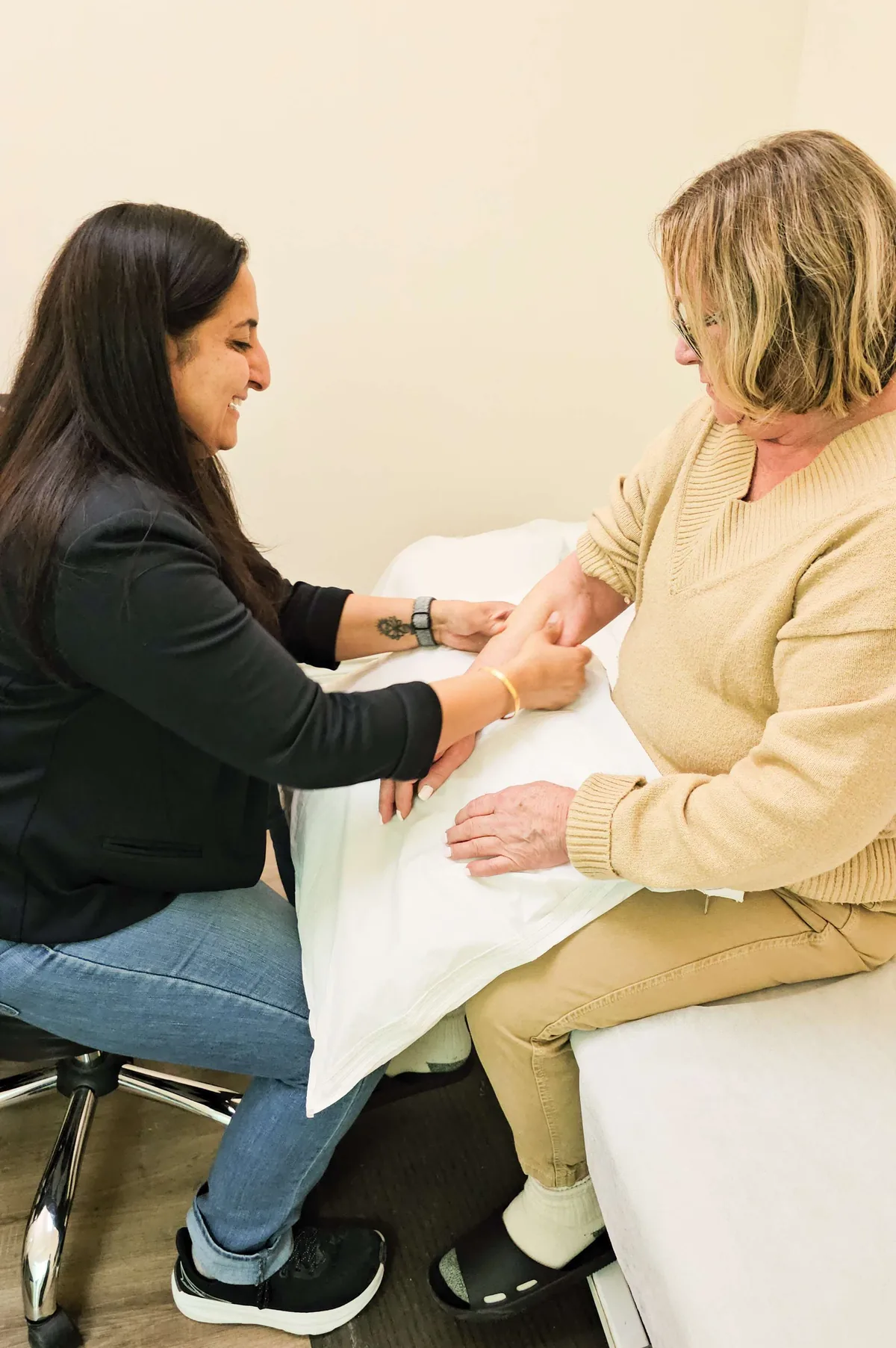
Manual therapy is the foundation of TMJ physiotherapy treatment. Intra-oral release of the lateral and medial pterygoid muscles addresses the muscles on the inside of the jaw that can only be accessed through the mouth. This technique is highly effective but requires specific training and comfort with intra-oral work. We also use masseter and temporalis soft tissue release from the outside, TMJ joint mobilization to restore normal disc tracking and joint mechanics, cervical spine mobilization (particularly at C1, C2, and C3) to address the neck component, and suboccipital release for associated headache patterns.
Patients often notice a meaningful difference in jaw opening range and pain levels within the first 2 to 3 sessions of manual therapy.
Jaw Retraining Exercises
The muscles that control the jaw need to be retrained, not just released. Coordination exercises teach the jaw to open in a straight line without deviating to one side. Controlled opening exercises progressively restore full range of motion. Isometric strengthening exercises build endurance in the muscles that stabilize the joint during chewing and talking. Relaxation techniques help break the clenching habit, including tongue positioning (resting the tongue on the roof of the mouth behind the front teeth), diaphragmatic breathing, and awareness training for daytime clenching.
Posture and Ergonomic Correction
Forward head posture changes the resting position of the jaw and increases load on the TMJ. If someone spends 8 hours a day at a desk with their head forward of their shoulders, the jaw muscles are working harder all day just to keep the mouth closed. Addressing posture does not mean “sit up straight.” It means adjusting the workstation, strengthening the deep neck flexors and scapular stabilizers, and building endurance in the postural muscles so that a neutral position is sustainable.
Stress and Habit Management
Clenching is a stress response. For many TMJ patients, managing the muscular habit is just as important as treating the joint itself. We use awareness training (recognizing when you are clenching during the day), positioning cues (teeth should be slightly apart at rest, “lips together, teeth apart”), and relaxation strategies. If nighttime grinding is a factor, we will coordinate with the dentist regarding a night guard, which protects the teeth and reduces joint loading during sleep.
What to Expect at Your First TMJ Assessment
Your first appointment is 45 to 60 minutes. The assessment follows a structured process designed to identify exactly what is driving the problem and what needs to happen to fix it.
History. We will ask when the symptoms started, what makes them better or worse, whether there is a history of trauma or dental work, and what habits might be contributing (clenching, gum chewing, sleep position). We will ask about headaches, ear symptoms, and neck pain because these are all connected in TMJ dysfunction.
Physical examination. We will measure jaw opening range and observe the path the jaw takes as it opens (straight versus deviating). We will palpate the TMJ and every muscle that controls jaw movement, both externally and, with consent, intra-orally (inside the mouth). We will assess disc position based on the clicking pattern. We will perform a cervical spine examination to determine if the neck is contributing.
Findings. We will explain what we found in plain language. What is driving the pain, which structures are involved, whether the disc is displaced, and what role the neck and muscles are playing.
Treatment. We will begin treatment in the same session. Most patients receive hands-on manual therapy to the jaw muscles and joint, cervical spine mobilization if indicated, and initial exercises to start the retraining process.
Plan. We will give you a clear treatment plan with estimated frequency, expected timeline, and home exercises. For most TMJ cases, we recommend 1 to 2 sessions per week for the first 4 to 6 weeks, then reassess.
What Results to Expect from TMJ Treatment in Oakville
| Condition | Expected Outcome | Typical Timeline |
|---|---|---|
| TMJ clicking (disc displacement with reduction) | 75 to 85% reduction in clicking, improved opening range | 4 to 8 weeks |
| Jaw locking (disc displacement without reduction) | Restored opening range, reduced episodes | 6 to 12 weeks |
| Myofascial TMJ pain (muscle-driven) | 80 to 90% pain reduction | 4 to 8 weeks |
| TMJ-related headaches | Significant reduction in frequency and intensity | 4 to 10 weeks |
| Clenching and bruxism management | Reduced jaw tension, improved awareness and control | 6 to 12 weeks |
| Post-trauma TMJ dysfunction (MVA, dental, surgery) | Progressive restoration of function and comfort | 6 to 16 weeks |
These timelines represent typical ranges. Individual results depend on how long the condition has been present, the degree of disc displacement, the severity of muscle involvement, compliance with exercises and habit changes, and whether contributing factors (stress, posture, nighttime grinding) are being addressed. Your physiotherapist will give you a specific estimate at your first assessment.
Who We Help with TMJ Treatment
People with jaw clicking that is getting worse
A click that has been there for years might not need treatment. A click that is becoming more frequent, more painful, or starting to catch or lock is a disc displacement that is progressing and should be assessed before it becomes a chronic lock.
Chronic headache sufferers who have not found answers
If headaches are primarily in the temples, forehead, or behind the eyes, and medications provide only temporary relief, the jaw muscles should be assessed. The temporalis muscle is one of the most common sources of chronic tension-type headaches, and it is frequently overlooked.
People who clench or grind
If a dentist has mentioned wear on the teeth, or if you wake up with a sore jaw and morning headaches, the muscles and joint are being overloaded. A night guard protects the teeth but does not address the muscle tension or joint dysfunction. Physiotherapy does.
People with ear symptoms and no ear pathology
Ear pain, fullness, ringing, or pressure that comes back as “ears are normal” on examination often has a TMJ origin. The joint sits millimetres from the ear canal. When it is inflamed, the symptoms can be indistinguishable from an ear problem.
Post-MVA patients with jaw and neck symptoms
Whiplash does not just affect the neck. The rapid acceleration-deceleration forces in a motor vehicle accident can injure the TMJ, displace the disc, and trigger muscle guarding in the jaw. Many whiplash patients develop TMJ symptoms weeks or months after the collision, and the connection gets missed. If the jaw injury is part of an MVA claim, physiotherapy is covered under Ontario auto insurance.
Anyone who has had TMJ symptoms dismissed
“Just try to relax your jaw.” “It is stress.” “There is nothing really wrong.” These responses are common because TMJ dysfunction is undertreated. If the symptoms are affecting eating, speaking, sleeping, or daily comfort, there is something to treat, and physiotherapy is the first-line approach.
What Our Patients Say
Verified Patient“I had been dealing with jaw clicking and pain on the left side for over a year. My dentist made me a night guard which helped a bit with the grinding but the clicking and tightness never went away. A coworker mentioned that physiotherapy can treat TMJ problems, which I honestly did not know. Gurmeet assessed my jaw, neck, and posture in the first session and explained how everything was connected. After about five sessions the clicking had almost completely stopped and I could eat without that constant ache. I had no idea physiotherapy could make that much of a difference for jaw pain.”
Jessica T.“Finding the best physiotherapy clinic in Oakville was a game changer for my jaw pain. I had been dealing with TMJ issues, jaw clicking, and terrible tension headaches for months. I honestly did not even know physiotherapy could help with this until I found Wellmax. The assessment was incredibly thorough. Gurmeet took the time to explain the mechanics of my jaw and how my neck posture was contributing to the problem. The hands-on release techniques provided relief almost immediately. The whole team is genuinely invested in your recovery, and the clinic is spotless. I have already recommended them to several family members.”
Verified Patient“Woke up one morning and could barely open my mouth. My doctor said it was TMJ dysfunction and suggested physio. Gurmeet worked on the muscles around my jaw and into my neck and upper back. She also gave me exercises I could do at home between sessions. Within three weeks my jaw was opening normally again and the headaches I had been getting every afternoon stopped too. Turns out the jaw and the headaches were related the whole time.”
Ruchi P.“Team is excellent!! Very professional and compassionate towards their work. They helped me recover with Vertigo. I would strongly recommend them to anyone who is suffering with BPPV.”
Verified Patient“I was having dizzy spells that came out of nowhere. My doctor ran tests and said it was BPPV and to see a physiotherapist who does vestibular rehab. Wellmax was one of the few clinics in Oakville that offers it. The first visit Gurmeet did specific head positioning manoeuvres and the vertigo improved immediately. She also assessed my neck and found that some of the residual dizziness was actually coming from tightness in my upper cervical spine. After three sessions the dizziness was completely gone. I had been dealing with it for two months and it was resolved in under two weeks of treatment.”
Muhammad S.“Very professional and friendly staff my long time neck pain problems treated very professionally.”
Sharon Q.“I have been having mild dizzy spells for 2 months and was getting concerned because the lightheadedness and feelings of imbalance wouldn’t go away. Went to Wellmax in Oakville and Gurmeet Rai took care of me. Her manipulations on my neck and back helped relax my tight and knotted muscles and she assured me that my lightheadedness and mild dizziness would eventually go away. There was improvement after my 1st session. Today I completed my 2nd session and I am certainly looking forward to feeling normal again. The at home exercises were also great and not too complicated. Would highly recommend. Gurmeet knows what she’s doing!”
Rolando F.“I had vestibular treatment with Dhrushi Bhatt, my therapist. I was handled professionally and with care. My symptoms started to disappear right away from the start of the sessions. I would highly recommend this clinic with this awesome performance and service! Thank you.”
See all our Google reviewsRead more patient storiesLeave a review
Direct Billing and Insurance for TMJ Physiotherapy
TMJ physiotherapy is billed as physiotherapy, so it comes out of the physiotherapy portion of your extended health plan, and no doctor referral is needed to book.
How Direct Billing for TMJ Physiotherapy Works at Wellmax
- Bring your plan details. Your insurance company, your plan or policy number and your member ID. If you are covered under a spouse or parent, bring their plan member details too.
- We submit the claim for you. At your visit we send the claim for your tmj physiotherapy session straight to your insurer.
- You pay only what is left. If your plan covers part of the visit, you pay only the difference. If your plan does not allow direct billing, you pay at the visit and we give you an official physiotherapy receipt to submit yourself.
Insurers We Direct Bill for TMJ Physiotherapy
We direct bill most major insurers for tmj physiotherapy in Oakville, including Manulife, Sun Life, Canada Life (formerly Great-West Life), Desjardins, Green Shield Canada, Blue Cross, Medavie Blue Cross, Industrial Alliance, ClaimSecure, Empire Life, Equitable Life, Cowan, Johnston Group, GroupHEALTH, GroupSource and SSQ. WSIB and motor vehicle accident (MVA) claims are billed to the insurer directly. Not sure about your plan? Ask us before your first visit and we will check it with you.
Frequently Asked Questions
Can physiotherapy really fix TMJ problems?+–
Physiotherapy is recommended as the first-line treatment for TMJ disorders by both the American Association for Dental, Oral, and Craniofacial Research and the Royal College of Dental Surgeons. Research published in the Journal of Oral Rehabilitation shows that manual therapy combined with exercise produces clinically significant improvements in jaw opening range, pain levels, and function in 70 to 85% of TMJ patients. It is effective for disc displacements, muscle-driven jaw pain, TMJ-related headaches, and post-trauma dysfunction.
Is TMJ physiotherapy covered by insurance in Ontario?+–
TMJ physiotherapy is covered under most extended health plans that include physiotherapy benefits. There is no need for a doctor’s referral, so you can book directly. Treatment is billed as physiotherapy. If your TMJ symptoms are the result of a motor vehicle accident, treatment is covered under Ontario auto insurance. Check with your insurance provider for your specific coverage details, or contact our clinic at (905) 829-1100 and we will help you confirm your benefits.
What does TMJ physiotherapy treatment involve?+–
Treatment includes hands-on manual therapy to the jaw joint and muscles (including intra-oral techniques to release the deep jaw muscles that can only be accessed through the mouth), cervical spine mobilization when the neck is contributing, jaw retraining exercises to restore normal movement patterns, and habit management strategies for clenching and grinding. Every session involves direct hands-on treatment, not just exercises or a heat pack.
Do I need a referral from my dentist to see a physiotherapist for TMJ?+–
No. In Ontario, physiotherapy is a direct-access profession. You can book a TMJ assessment without a referral from a dentist or doctor. That said, we often coordinate with dentists, particularly regarding night guards and bite adjustments, because TMJ treatment works best when the physiotherapy and dental sides are aligned.
How long does TMJ treatment take?+–
Most TMJ conditions show meaningful improvement within 4 to 8 weeks of consistent treatment (1 to 2 sessions per week). Muscle-driven TMJ pain tends to respond fastest. Disc displacements with locking take longer, typically 6 to 12 weeks. Chronic cases that have been present for years may require 8 to 16 weeks and ongoing self-management strategies. Your physiotherapist will give you a specific estimate after the initial assessment.
My jaw clicks but it doesn't hurt. Should I get it assessed?+–
A painless click that has been stable for years may not need treatment. But if the clicking has changed, becoming louder, more frequent, or occasionally catching before it pops, that suggests the disc displacement is progressing. A quick assessment can determine whether the click is stable or moving toward a locking pattern, and whether preventive exercises would be beneficial.
Can TMJ cause headaches and ear pain?+–
Yes. TMJ-related headaches are extremely common, particularly in the temples, forehead, and behind the eyes. The temporalis muscle (one of the main jaw-closing muscles) covers the entire side of the skull, and when it is overactive from clenching, it produces headaches. Ear symptoms, including pain, fullness, ringing, and pressure, are also common because the TMJ sits directly in front of the ear canal. If ear examinations have been normal and headaches are not responding to typical treatments, the jaw should be assessed.
Is there anything I can do at home for TMJ pain right now?+–
Three things tend to help immediately. First, check your resting jaw position; the teeth should be slightly apart at rest with the tongue resting on the roof of the mouth behind the front teeth (lips together, teeth apart). Most people with TMJ pain are clenching without realizing it. Second, apply gentle heat (not ice) to the jaw muscles for 10 to 15 minutes. Third, avoid hard and chewy foods temporarily. These steps reduce load on the joint while you wait for your assessment.
Will I need a night guard?+–
A night guard protects the teeth from grinding damage and can reduce joint loading during sleep. It is a useful tool, but it does not address the underlying muscle tension, joint dysfunction, or movement patterns that are driving the TMJ problem. Many patients benefit from both: a night guard from the dentist to protect the teeth, and physiotherapy to treat the joint and muscles. We can advise whether a night guard would be helpful in your case and coordinate with your dentist.
What is the difference between TMJ treatment from a physiotherapist versus a dentist or chiropractor?+–
Dentists focus on the teeth and bite, providing night guards, bite adjustments, and dental interventions. That is essential when the bite is part of the problem. Physiotherapists focus on the joint mechanics, the muscles, the cervical spine, and the movement patterns. We use hands-on manual therapy (including intra-oral muscle release), exercise prescription, and postural correction to treat the musculoskeletal components of TMJ dysfunction. In our clinical experience, the best outcomes happen when physiotherapy and dentistry work together. At Wellmax, we assess and treat the jaw, the neck, and the muscle patterns as an integrated system.
Do you offer TMJ treatment for patients in Mississauga?+–
Yes. While our clinic is in Oakville at Winston Churchill Boulevard, we are right on the Oakville and Mississauga border, so we regularly see TMJ patients from Clarkson, Sheridan Park, Sheridan Homelands, and Lorne Park. The drive is short, parking is free, and your jaw retraining and manual therapy are reassessed each visit so they stay consistent from session to session.
Can TMJ problems cause ringing in my ears or affect my hearing?+–
Yes. The temporomandibular joint is adjacent to the ear canal and shares ligament attachments with the small bones of the middle ear. TMJ dysfunction can cause tinnitus, ear fullness, muffled hearing, and earache – symptoms frequently misattributed to ear problems. Many patients see multiple specialists before receiving a TMJ diagnosis. Physiotherapy that addresses jaw mechanics, muscle tension, and cervical spine involvement often reduces these ear-related symptoms significantly.
My jaw locks open or closed sometimes – is that a TMJ problem?+–
Jaw locking is a significant TMJ symptom that warrants prompt assessment. Closed-lock occurs when the articular disc displaces forward and blocks jaw opening. Open-lock occurs when the disc or condyle displaces and prevents closing, which can happen when yawning widely. Physiotherapy can improve disc mechanics through joint mobilization, muscle releases, and exercises that improve disc position. Persistent closed-lock that severely limits opening may require additional investigation by a dentist or oral surgeon.
Why does my jaw click or pop, and does the clicking mean damage is happening?+–
Jaw clicking usually means the articular disc – a small cartilage pad that cushions the joint – is moving slightly out of position and snapping back during jaw movement. This is called anterior disc displacement with reduction. Clicking without pain is generally benign and does not indicate progressive damage. However, when clicking is accompanied by pain, limited opening, locking, or headaches, it indicates clinically significant disc displacement that benefits from physiotherapy targeting disc mechanics and the surrounding jaw muscles.
Do I need to see a dentist or a physiotherapist first for jaw pain?+–
It depends on the type of pain. If it is related to teeth grinding, dental wear, bite problems, or you need a night guard assessed, start with your dentist. If the pain is muscular, involves jaw clicking or locking, causes headaches or ear pain, or is associated with neck stiffness, a physiotherapist with TMJ training is the better first stop. Many patients benefit from a coordinated approach – dentist managing the dental aspect and physiotherapist addressing the musculoskeletal component. The two approaches work well together.
Can poor posture or forward head position make my TMJ worse?+–
Yes – this is one of the most underappreciated connections in TMJ care. Forward head posture, common from prolonged screen use, increases load on the cervical spine and alters the resting position of the jaw, changing how the chewing muscles are recruited. Physiotherapy for TMJ that ignores posture and the cervical spine is often incomplete. Correcting forward head posture, addressing upper cervical joint stiffness, and strengthening deep neck flexors are key components of comprehensive TMJ treatment.
Is it possible to have TMJ problems even if my teeth and bite look normal?+–
Yes. TMJ disorders are primarily musculoskeletal – they involve the joint, the disc, and surrounding muscles – not just dental occlusion. Many patients with perfect dental alignment develop TMJ problems from stress-related jaw clenching, direct trauma, cervical spine dysfunction, or postural problems. Conversely, some patients with significant bite irregularities have no TMJ symptoms. Physiotherapy addresses the musculoskeletal component regardless of dental status.
Can TMJ physiotherapy help if I have already tried a night guard and it didn’t work?+–
Frequently yes. Night guards are effective for protecting teeth from grinding and reducing joint compression during sleep, but they do not address the underlying muscle tension, joint mechanics, disc displacement, or cervical spine dysfunction that drive TMJ symptoms. Many patients plateau with a night guard because the root cause remains untreated. Physiotherapy targeting the jaw muscles, TMJ joint mobility, and the upper cervical spine addresses what the night guard cannot. The combination of a night guard plus physiotherapy typically produces better outcomes than either alone.
Related Conditions We Treat
TMJ dysfunction frequently overlaps with other conditions. If any of these also apply to you, effective treatment often means addressing both at the same time.
- Neck Pain & Headaches: The TMJ and upper cervical spine share nerve supply and muscle connections. Chronic neck pain and headaches are present in up to 70% of TMJ cases.
- Whiplash: Acceleration-deceleration injuries from a collision commonly displace the TMJ disc and trigger jaw muscle guarding alongside the neck injury, so the jaw and neck are best treated together.
- Concussion Rehabilitation: Concussions frequently involve cervicogenic (neck-related) headaches and TMJ dysfunction, particularly when the mechanism of injury involved a blow to the head or face.
- Chronic Pain: Longstanding TMJ disorders can develop central sensitization patterns where the nervous system amplifies pain signals. Our chronic pain approach addresses both the local joint problem and the broader nervous system response.
- Shoulder Pain: Upper body tension patterns involving the neck, shoulder, and jaw often overlap. Patients with desk-bound work frequently present with combined TMJ, neck, and shoulder symptoms.
- Motor Vehicle Accident Rehab: Whiplash injuries commonly involve TMJ disc displacement and muscle guarding. If jaw symptoms developed after a collision, both the neck and the jaw should be assessed and treated together.
- Massage Therapy: Registered massage therapy can complement TMJ physiotherapy by addressing the broader neck, shoulder, and upper back muscle tension that contributes to jaw clenching patterns.
Book Your TMJ Treatment in Oakville at Wellmax Physiotherapy
If jaw pain, clicking, locking, or unexplained headaches are affecting daily life, a TMJ assessment is the logical first step. Most patients start noticing meaningful changes within the first few sessions, and your first consultation is free. Treatment is covered under most insurance plans, and no referral is needed.
Wellmax Physiotherapy
1148 Winston Churchill Blvd, Unit B3, Oakville, ON L6J 0A3
Phone: (905) 829-1100
Email: info@wellmaxphysiotherapy.ca
Proudly Serving Our Local Communities: We are conveniently located just minutes from the QEW and Winston Churchill Blvd, making us the clinic of choice for:
- East Oakville: Winston Park, Clearview, and the QEW/403 Corridor.
- South Oakville: Eastlake, Maple Grove, and Old Oakville.
- North Oakville: Joshua Creek, Falgarwood, and Upper Middle Road.
- Mississauga Border: Clarkson, Sheridan Park, Sheridan Homelands, and Lorne Park.
Insurance: TMJ physiotherapy is covered under most extended health benefit plans that include physiotherapy coverage. We offer direct billing to most major insurance providers, so you do not need to pay out of pocket and wait for reimbursement. No doctor’s referral is required. If your TMJ symptoms are related to a motor vehicle accident, treatment is covered under Ontario auto insurance (SABS). Contact us at (905) 829-1100 or email info@wellmaxphysiotherapy.ca to confirm your coverage before your first visit. Learn more about insurance and billing.
Hours: Monday to Friday: 9am to 7pm | Saturday: 9am to 2pm | Sunday: 9am to 2pm (by appointment only)
Registered & Regulated
Regulated & Recognized Across Every Discipline
Wellmax is in good standing with the regulatory colleges and leading associations for physiotherapy, chiropractic, massage therapy, and naturopathic medicine in Ontario.