
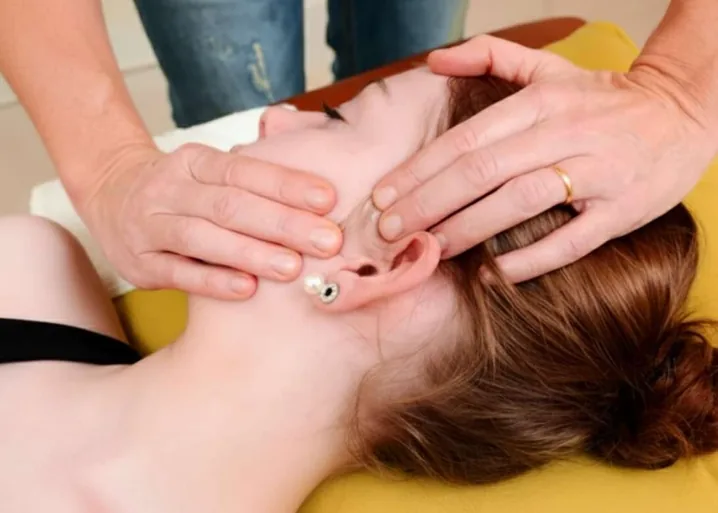
If you wake up with a stiff jaw, hear a loud “pop” every time you chew, or suffer from unexplained headaches that start at your temples, you aren’t alone.
TMJ (Temporomandibular Joint) dysfunction is one of the most common, yet most misunderstood, conditions we treat at Wellmax Physiotherapy in Oakville.
Many patients visit their dentist first. They get a night guard to protect their teeth, which is important, but they are often frustrated because the pain doesn’t stop. Why? Because a night guard protects your enamel, but it often doesn’t fix the muscle tension, joint misalignment, or disc displacement causing the problem.
In this comprehensive guide, we will dive deep into the anatomy of your jaw, explain exactly why it clicks, and show you how specialized manual physiotherapy can stop the pain at the source.
Part 1: The Anatomy of Your Jaw (Why It’s So Complex)
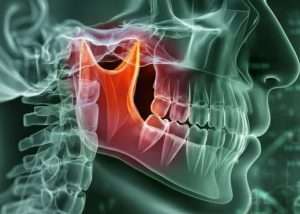
To understand why your jaw hurts, you have to understand how unique this joint is. The TMJ is not a simple hinge like your knee or elbow. It is a ginglymoarthrodial joint, meaning it does two things at once: it hinges open, and it glides forward.
The Three Key Players
The Condyle: This is the rounded top of your jawbone (mandible) that fits into the skull.
The Fossa: The socket in your skull (temporal bone) where the condyle sits.
The Articular Disc: This is the most important part. It is a tiny, bowtie-shaped cushion made of cartilage that sits between the ball and socket. It acts as a shock absorber and a smooth surface for the jaw to glide on.
The Muscles Behind the Movement
Your jaw is powered by four primary muscles (The Muscles of Mastication), and when they get tight, they cause chaos:
Masseter: The big muscle on the side of your cheek. It is the strongest muscle in the human body relative to its size. When you clench stress, this muscle works overtime.
Temporalis: A fan-shaped muscle that covers the side of your head (temples). Tension here is commonly linked with headaches felt around the temples and sides of the head.
Pterygoids (Medial & Lateral): These are the deep, hidden muscles inside your mouth. The Lateral Pterygoid is the troublemaker, it attaches directly to the jaw disc. When it spasms, it pulls the disc out of place, causing that dreaded “click.”
Part 2: The “Click” Explained (Anterior Disc Displacement)
The most common question we get at our Oakville clinic is: “Why does my jaw click when I eat?”
The medical term is Anterior Disc Displacement with Reduction. Here is the step-by-step mechanics of a click:
Resting Position: Ideally, the tiny cartilage disc should sit right on top of the jawbone (condyle). In this pattern, the disc sits forward (anteriorly) of where it should be. A physiotherapist or dentist can confirm whether this is what is happening in your jaw.
Opening: As you start to open your mouth, the jawbone moves forward, but the disc is in the way.
The Pop: To open fully, the jawbone has to hop onto the disc. SNAP. That is the sound of the bone recapturing the disc.
Closing: As you close your mouth, the disc slips forward again, sometimes causing a second, softer click (the reciprocal click).
Is the Clicking Dangerous?
If the clicking is painless, it is usually manageable. However, if ignored, it can progress to Disc Displacement WITHOUT Reduction. This is commonly known as “Closed Lock.”
The disc slips so far forward that the jawbone can no longer hop onto it.
Result: You cannot open your mouth more than two fingers’ width. The click disappears, but now you are stuck.
Warning Sign: If your jaw used to click but suddenly stopped and now feels stiff, you need to see a physiotherapist immediately.
Part 3: The “Hidden” Causes of TMJ Dysfunction
Most people blame stress. While stress is a major factor, the physical root causes are often overlooked.
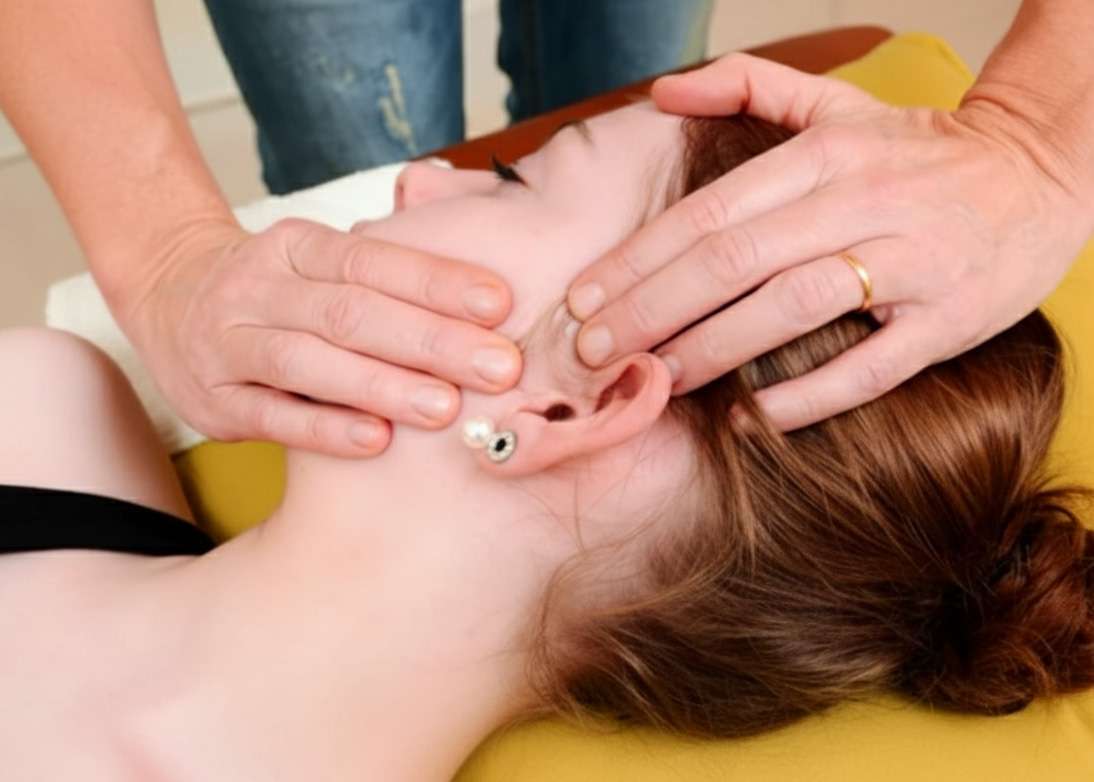
1. The “Tech Neck” Connection
Your jaw and your neck are mechanically linked. The muscles that control your jaw position (hyoids) attach to your neck vertebrae.
When you sit at a desk with Forward Head Posture (chin poking out towards a screen), it creates tension in the suboccipital muscles at the base of your skull.
This tension pulls the lower jaw backward, compressing the TMJ joint and forcing the muscles to work harder just to keep your mouth closed.
The Test: Try jutting your chin forward. Now try to tap your teeth together. Feel how your bite changes? That is what poor posture does to your jaw all day long.
2. The Stress and Clenching Loop
Your jaw is an emotional release valve. The Trigeminal Nerve, which controls jaw muscles, is directly wired into your “Fight or Flight” system.
When you are stressed, your brain sends a signal to “armor up.”
For many people, this manifests as subconscious clenching (Bruxism), especially at night.
You cannot “relax” your jaw if your nervous system is in overdrive. Our treatment often involves calming the nervous system alongside physical release.
3. Sleep Positioning
Stomach sleeping is a disaster for TMJ patients. When you sleep on your stomach, your head is turned 90 degrees to the side for hours, putting immense lateral pressure on the jaw joint.
Part 4: How We Treat TMJ at Wellmax Physiotherapy
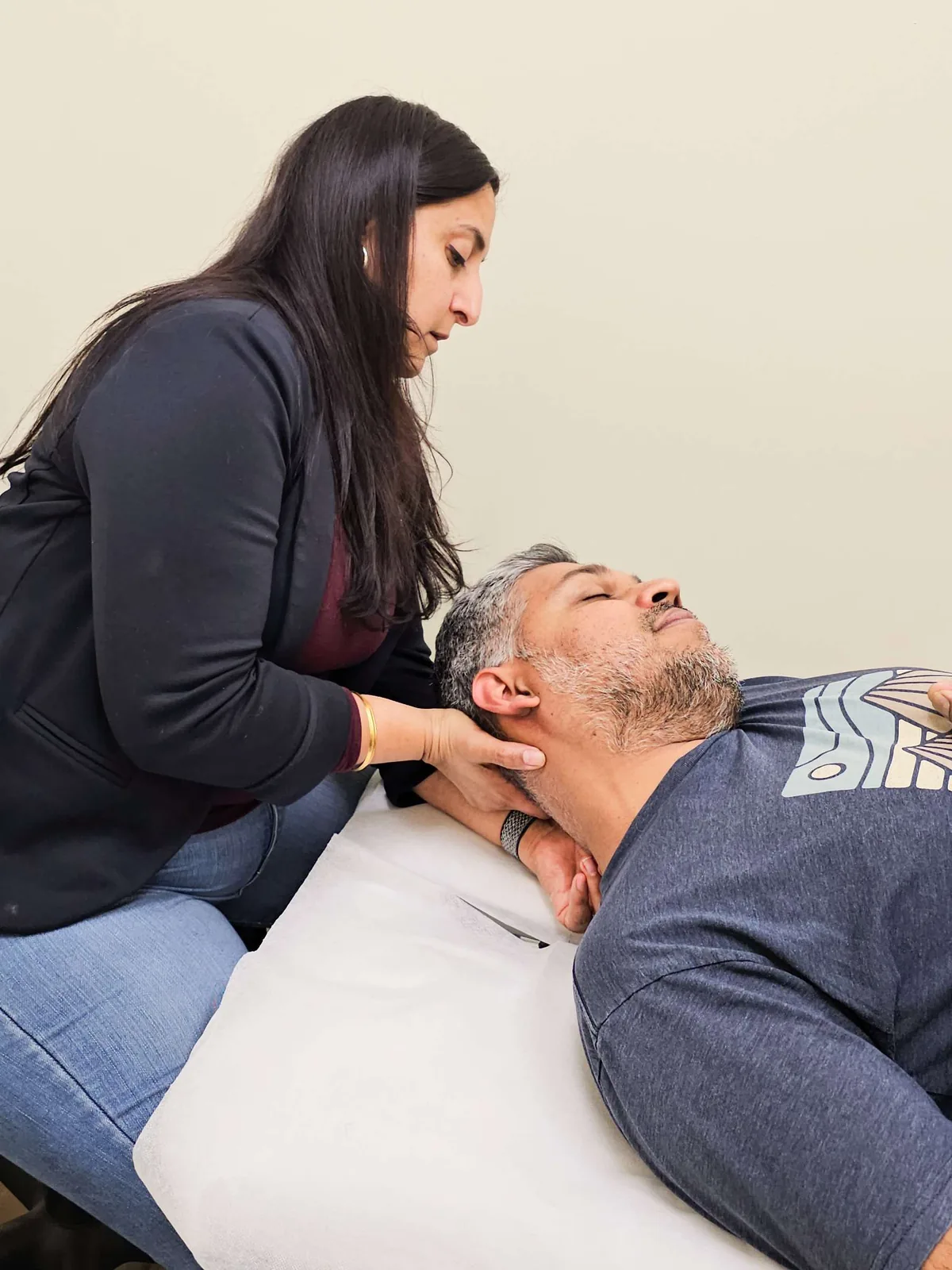
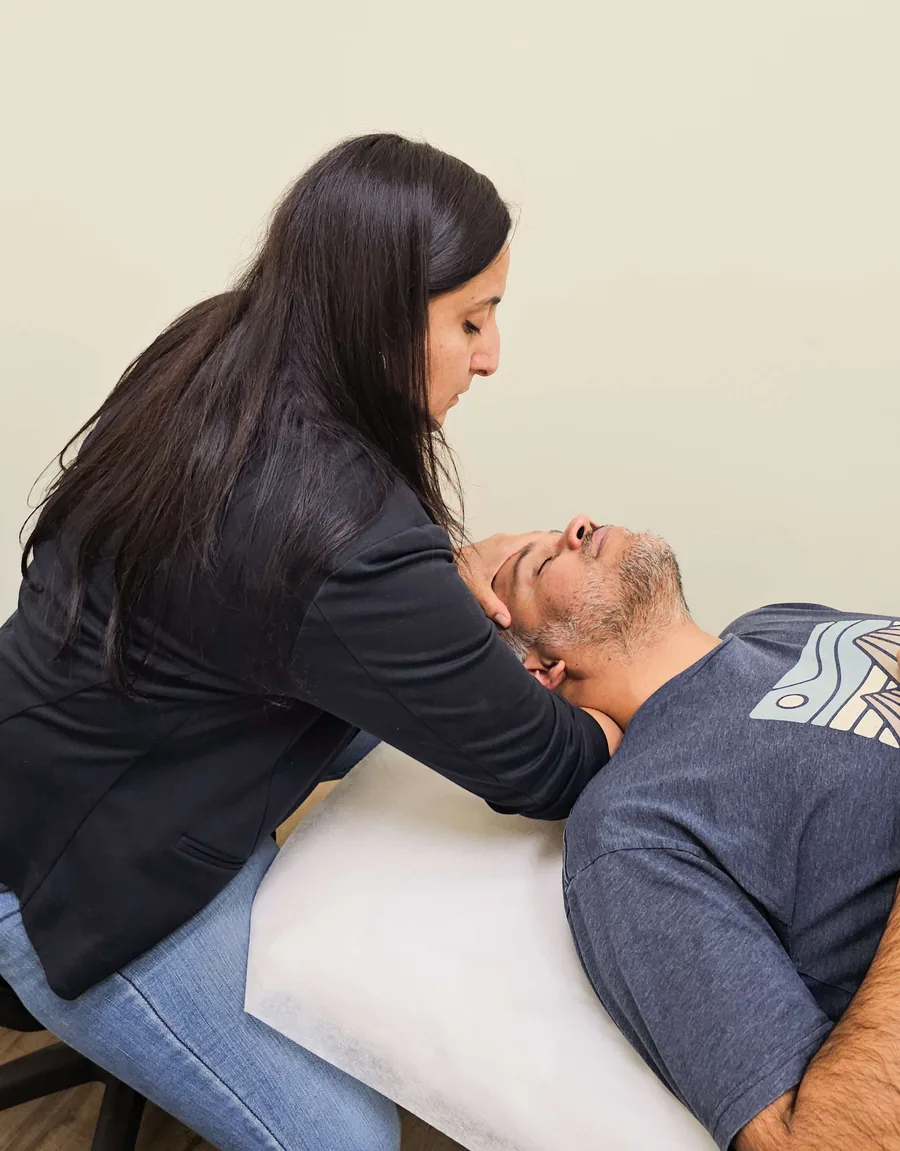
We don’t just give you a sheet of exercises and send you home. We use a hands-on, multi-modal approach to restore normal movement.
1. Intra-Oral Release (The Game Changer)
This is one of the hands-on techniques physiotherapists with TMJ training use.
Using a gloved hand, we work inside your mouth to access the deep Pterygoid muscles that you cannot reach from the outside.
This can be uncomfortable for a few seconds. Some patients notice easier jaw opening soon after treatment, though how much and how quickly varies from person to person.
2. Joint Mobilization
If your joint is stiff, we use gentle manual traction to create space in the joint capsule. We glide the jawbone in specific directions to help the disc slide back into its proper track and improve fluid circulation in the joint.
3. Postural Restoration
We treat your neck (Cervical Spine), specifically the C1 and C2 vertebrae. By restoring normal neck mobility and strengthening the deep neck flexors, we take the tension off the jaw.
Part 5: Your “Soft Diet” & Lifestyle Survival Guide
While you are undergoing treatment, you need to give your jaw a vacation. This doesn’t mean a liquid diet forever, but you need to avoid “The 3 Cs”: Chewy, Crunchy, and Chunky.
Foods to Avoid (The Danger Zone)
Bagels: The “chew factor” is too high.
Steak: Requires prolonged, heavy grinding.
Raw Carrots/Apples: The sudden “snap” force can shock the joint.
Gum: This is the #1 enemy. Chewing gum is like running a marathon for an injured knee. Stop immediately.
Foods to Enjoy
Smoothies with protein powder.
Scrambled eggs.
Oatmeal.
Fish (Salmon/Cod) to naturally soft.
Cooked vegetables (steamed till soft).
Pasta.
The “Rest Position” Habit
Throughout the day, check in with your jaw. Your teeth should never touch unless you are swallowing.
The Mantra: “Lips together, teeth apart, tongue on the roof of the mouth.”
Place the tip of your tongue gently behind your front teeth (on the ridge, not the teeth themselves). This reflexively relaxes the jaw muscles.
Part 6: Frequently Asked Questions (FAQ)
Q: Should I get Botox for my TMJ?
A: Botox can provide temporary relief by paralyzing the Masseter muscle so it cannot clench as hard. However, it wears off in 3-4 months and does not fix the root cause (like neck posture or joint mechanics). We recommend trying physiotherapy first as a non-invasive, long-term solution.
Q: Is TMJ treatment covered by insurance?
A: Yes, because our treatment is performed by Registered Physiotherapists, it is covered under standard extended health benefits plans (SunLife, Manulife, Canada Life, etc.) under the “Physiotherapy” category. We offer direct billing at our Oakville clinic.
Q: Can a night guard cure TMJ?
A: A night guard acts as a “crutch.” It protects your teeth from cracking and can take some pressure off the joint, but it does not loosen the tight muscles or fix the clicking disc. Physio and night guards work best together
Here is a helpful Video on Masseter Muscle Release:
You Might Also Like

Gurmeet Rai, Registered Physiotherapist
Gurmeet is a Registered Physiotherapist with the College of Physiotherapists of Ontario and the Clinic Director and co-owner of Wellmax Physiotherapy in Oakville, with 16+ years of clinical experience. She focuses on complex, stubborn cases where earlier treatment has not worked, with advanced training in pelvic health, TMJ, vestibular, and sports and MSK rehab. Expect expert care from assessment to discharge, with honest guidance along the way. Read Gurmeet’s full profile or meet the team.
This article is for educational purposes only and does not replace a professional clinical assessment. Every body and condition is different. If you are experiencing pain or symptoms, book an assessment with a qualified clinician for advice specific to your situation. If you are experiencing a medical emergency, call 911 or visit your nearest emergency department.
