ACL Treatment in Oakville
Pre-surgical prehab, post-reconstruction rehab, and return-to-sport protocols for ACL and MCL injuries.
Home > Conditions We Treat > ACL Treatment in Oakville
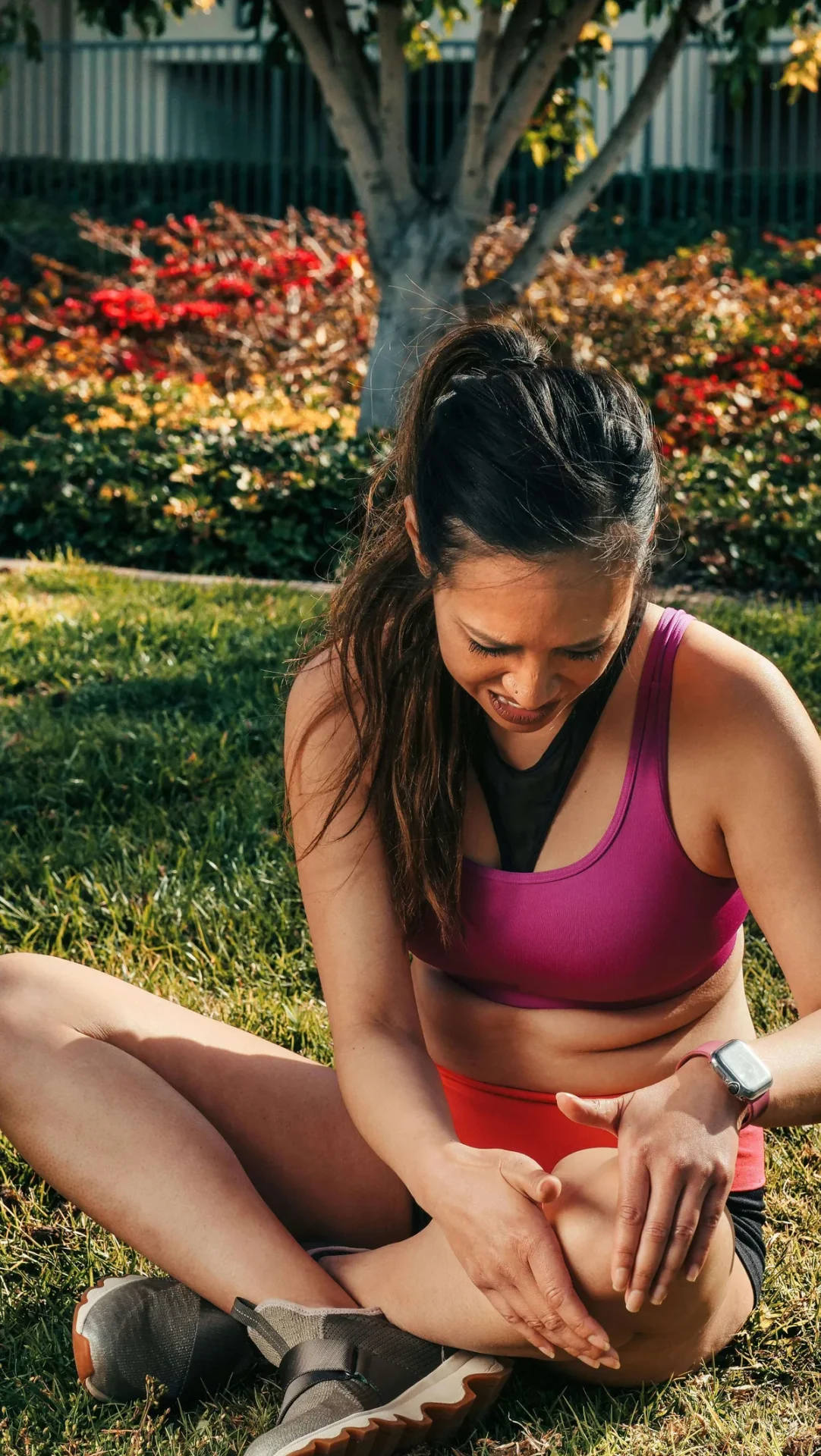
You were cutting on the field. Or landing from a jump. Or pivoting on the ice. And then you heard it. That pop. The knee buckled. And now you’re sitting in your car outside the walk-in clinic with an MRI requisition in your hand and a thousand questions running through your head.
Will I need surgery? How long until I can play again? Can I even walk properly right now?
We see this story regularly at our clinic. ACL tears are one of the most common serious knee injuries in sport. They happen in soccer, hockey, basketball, skiing, lacrosse, football, and any activity that involves rapid direction changes, pivoting, or awkward landings. And the injury changes the trajectory of your next year whether you have surgery or not. ACL treatment in Oakville at Wellmax Physiotherapy is built around that reality: a structured, evidence-based program that rebuilds the knee from injury through return to sport.
Here’s what most people don’t realize until they’re in the middle of it: the surgery itself takes about an hour. The rehab takes 9 to 12 months. And the difference between a knee that comes back strong and one that doesn’t comes down almost entirely to the quality and consistency of the physiotherapy program. The graft your surgeon puts in is just raw material. Physiotherapy is what turns that graft into a functional ligament that can handle the forces your sport demands.
At Wellmax Physiotherapy, we work with ACL patients from the week of injury through return-to-sport clearance, tracking your quad strength, your range of motion, your movement quality, and your confidence level at every visit. That matters over a 9-12 month rehab timeline more than it matters for almost any other injury.
We’re at 1148 Winston Churchill Blvd, Unit B3, Oakville, just south of the QEW. Athletes from Clarkson, Clearview, Sheridan Park, and south Mississauga come to us for structured ACL rehabilitation and return-to-sport programming.
- Understanding ACL Tears and Why They Happen
- ACL Surgery vs. Non-Surgical Management
- ACL Rehabilitation at Wellmax: Phase by Phase
- MCL Injuries and Combined Knee Ligament Rehabilitation
- ACL Rehabilitation Timelines at Wellmax
- Why Oakville Athletes Choose Wellmax for ACL Treatment in Oakville
- ACL Rehabilitation for Oakville's Active Community
- Related Conditions & Services
- Book Your ACL Assessment
- Frequently Asked Questions
Understanding ACL Tears and Why They Happen

What the ACL Actually Does
The anterior cruciate ligament sits deep inside the knee joint, running diagonally from the back of the femur (thigh bone) to the front of the tibia (shin bone). Its primary job is preventing the tibia from sliding forward on the femur and controlling rotational stability when the knee pivots. Every time you plant your foot and change direction, every time you land from a jump, every time you decelerate from a sprint, your ACL is working.
When it tears, that stability disappears. The knee feels like it can’t be trusted. Patients describe it as the knee “giving way” or feeling hollow. Walking in a straight line might feel okay after the swelling settles, but the moment you try to cut, pivot, or push off hard, the knee buckles.
How ACL Tears Happen
About 70% of ACL tears are non-contact injuries. Nobody hit the knee. The athlete was cutting, pivoting, decelerating, or landing from a jump and the forces through the knee exceeded what the ligament could handle. The knee collapses inward (what physios call valgus collapse) and the ACL snaps.
The remaining 30% are contact injuries, usually from a blow to the outside of the knee that forces it inward, like a tackle in soccer or a check in hockey.
Some factors increase ACL tear risk. Women are 2 to 8 times more likely to tear their ACL than men in the same sports, largely due to differences in landing mechanics, knee alignment, and hormonal influences on ligament laxity. Previous ACL injury on either knee increases the risk of a second tear. And fatigue plays a role. A lot of ACL tears happen in the second half of games or the end of practice sessions when neuromuscular control starts to break down.
Common sports where we see ACL injuries in our local Oakville community: soccer (Sheridan Park leagues, Ontario Cup), hockey (Joshua’s Creek Arenas, Sixteen Mile Sports Complex), basketball (community leagues, school teams), skiing (Blue Mountain, seasonal ski trips), lacrosse, volleyball, and recreational fitness activities involving jumping and direction changes.
What Happens Inside the Knee
ACL tears are classified by grade:
Grade 1 (sprain): The ligament is stretched but still intact. The knee remains stable. These are relatively rare because most ACL injuries involve more significant force.
Grade 2 (partial tear): Some fibers of the ligament are torn but the overall structure is partially intact. Partial tears are uncommon. Most ACL injuries are either mild sprains or complete tears.
Grade 3 (complete tear): The ligament is torn completely through. This is the most common ACL injury presentation. The knee loses its rotational stability and the tibia can slide forward on the femur (positive Lachman test, positive anterior drawer test).
ACL tears rarely happen alone. Over half of ACL injuries involve damage to other structures: meniscus tears (particularly the medial meniscus), MCL sprains, bone bruising, and cartilage damage. This is why a thorough assessment matters. The other injuries affect the rehab timeline and the approach. Learn about Meniscus Injury Treatment.
ACL Surgery vs. Non-Surgical Management
This is the first big question every ACL patient faces. Not everyone with a torn ACL needs surgery. The right decision depends on your activity level, your sport, your age, your goals, and what else was damaged inside the knee.
When Surgery Is Usually Recommended
ACL reconstruction is generally recommended if you’re an athlete who wants to return to pivoting sports (soccer, hockey, basketball, tennis, skiing, lacrosse). It’s also recommended if you have combined injuries (ACL + meniscus tear, ACL + MCL), if the knee gives way during daily activities, or if you’re young and active with decades of knee use ahead of you. The surgery involves replacing the torn ACL with a graft, usually taken from your own hamstring tendon or patellar tendon.
When Non-Surgical Management Can Work
If you don’t play pivoting sports, if you’re willing to modify your activity level, or if you’re older with lower physical demands, non-surgical management through physiotherapy alone can be a viable option. The goal is to build enough strength and neuromuscular control around the knee that the muscles compensate for the absent ligament. Some patients do extremely well without surgery and return to activities like running, cycling, swimming, and gym training. The key is honest assessment of whether the knee is functionally stable during the activities that matter to you.
What We Tell Patients at Wellmax
We don’t make the surgical decision. That’s between you and your orthopaedic surgeon. What we do is make sure you understand the implications of both paths, and then deliver the best possible rehabilitation program whichever route you take. If you choose surgery, we start prehab immediately to get the knee as strong and mobile as possible before the operation. Research consistently shows that patients who go into ACL surgery with better quad strength, full range of motion, and minimal swelling have significantly better post-operative outcomes.
If you choose non-surgical management, we build a structured strength and neuromuscular training program and test the knee’s functional stability over time. If it holds up, great. If it doesn’t, surgery is still an option later.
ACL Rehabilitation at Wellmax: Phase by Phase
ACL rehab is a long game. There are no shortcuts that don’t come with consequences. Rushing back too early is the single biggest predictor of re-injury. Studies show that athletes who return to sport before 9 months have a re-tear rate up to 6 times higher than those who wait until they’re actually ready. At Wellmax, we follow evidence-based timelines and use objective testing, not just how the knee feels, to determine when each phase progresses.
Pre-Operative Prehab (Injury to Surgery: 2-6 Weeks)
Most ACL reconstructions aren’t done immediately. Surgeons typically want the acute swelling to resolve and the knee to regain near-full range of motion before operating. This window is an opportunity, not dead time.
Prehab focuses on reducing swelling, restoring full knee extension (getting the knee completely straight is the number one priority), rebuilding quadriceps activation (the quads “shut down” after ACL injury, a process called arthrogenic muscle inhibition), and maintaining cardiovascular fitness. Patients who prehab properly recover faster after surgery. The evidence on this is strong.
Phase 1: Protection and Early Motion (Weeks 0-2 Post-Surgery)
The graft is at its weakest in the first weeks. Treatment focuses on managing post-operative pain and swelling, achieving full knee extension (matching the other side), gradually restoring flexion (bending), activating the quadriceps with gentle isometric contractions, and protected weight bearing with crutches. This phase is about protecting the graft while getting the knee moving.
Phase 2: Progressive Loading (Weeks 2-6)
As the knee tolerates more, we progress to closed-chain strengthening (leg press, squats, step-ups), stationary cycling for both mobility and endurance, balance and proprioception work (the ACL tear disrupts the knee’s position sense), and gradual weaning off crutches as strength allows. The quad is still the primary focus. Most ACL rehab failures can be traced back to insufficient quad strength recovery.
Phase 3: Strengthening (Months 2-4)
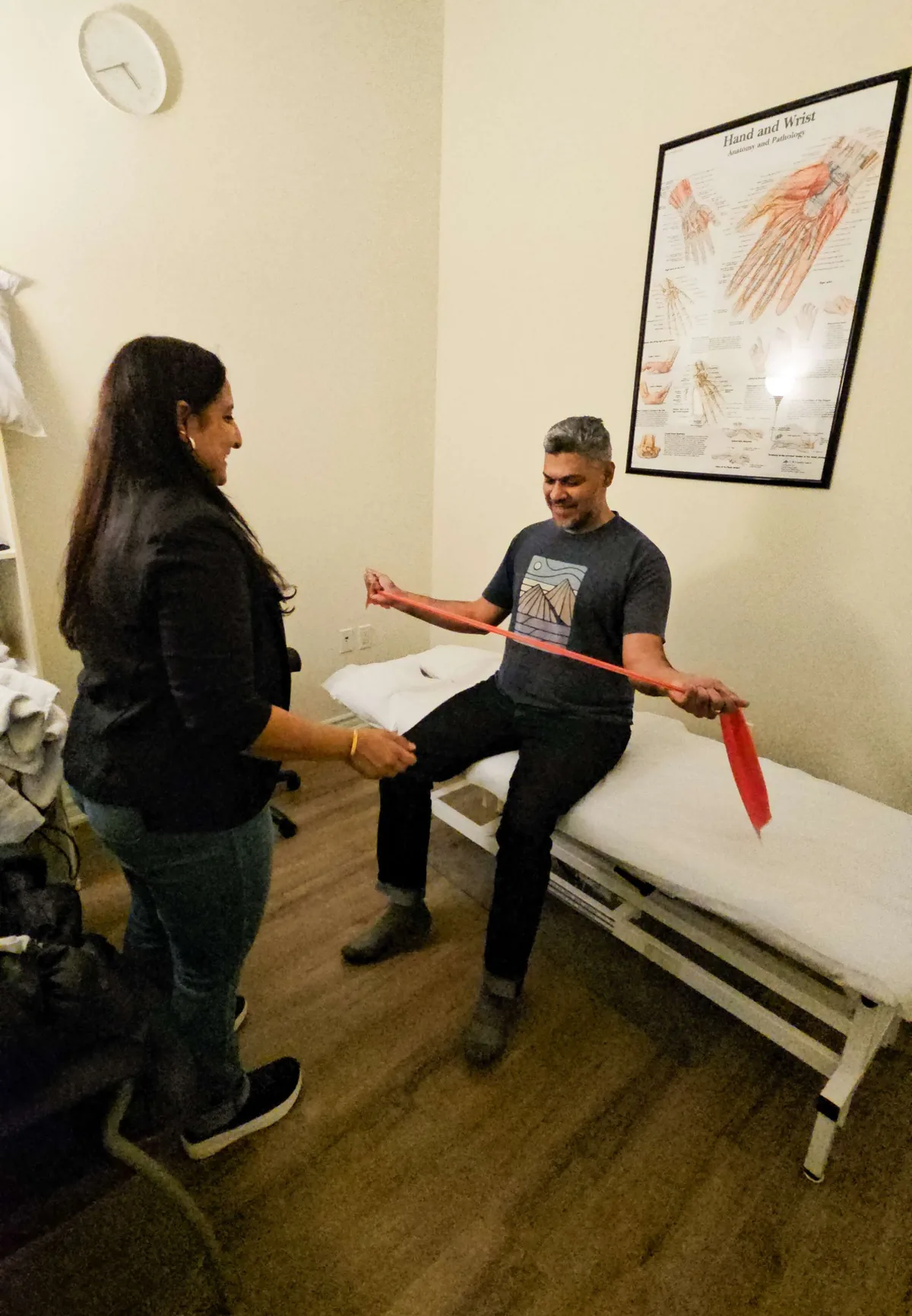
This is where the real work starts. Progressive resistance training for quads, hamstrings, glutes, and calves. Single-leg exercises to build unilateral strength and balance. The goal is to build muscle mass and force production back to at least 80% of the uninjured side. We test this objectively, not by asking “does it feel strong?” The knee can feel fine long before it’s actually strong enough.
Phase 4: Running and Sport-Specific Preparation (Months 4-6)
Running doesn’t start until the quad is strong enough and the knee demonstrates good control during single-leg activities. We use a progressive running program (walk-jog intervals building to continuous running) and monitor the knee’s response. Sport-specific drills begin: lateral movement for hockey and basketball players, cutting and pivoting for soccer players, landing mechanics for volleyball and basketball players.
Phase 5: Return-to-Sport Testing and Clearance (Months 6-9+)
This is the phase that most clinics rush or skip entirely. At Wellmax, return to sport isn’t based on a calendar date. It’s based on passing a battery of objective tests:
Strength testing: Quad and hamstring strength within 90% of the uninjured leg, tested on dynamometry or standardized clinical tests.
Hop testing: Single-leg hop for distance, triple hop, crossover hop, and timed hop, all within 90% of the other side.
Movement quality: No knee valgus collapse during single-leg squat, landing, and cutting. This is critical because poor landing mechanics are the primary mechanism for ACL re-tear.
Psychological readiness: Confidence in the knee matters. Athletes who don’t trust the knee change their movement patterns unconsciously, which creates compensatory injury risk elsewhere.
If testing isn’t passed, rehab continues. The timeline extends. That’s not a failure. That’s protecting a 9-month investment in the knee.
MCL Injuries and Combined Knee Ligament Rehabilitation
ACL tears don’t always happen alone. The medial collateral ligament (MCL) is frequently injured alongside the ACL, particularly from contact mechanisms where a force hits the outside of the knee and drives it inward. MCL treatment in Oakville follows the same principle as our ACL work: protect the healing ligament early, then load progressively until the knee is strong and stable. We also see plenty of overuse knee complaints in the same athletes, from IT band syndrome to the wider range of running injuries we rehabilitate every week.
MCL Injuries
The MCL runs along the inside of the knee and resists forces that push the knee inward (valgus stress). MCL sprains range from Grade 1 (stretched, minor pain, knee stable) to Grade 3 (complete tear, significant medial knee instability). The good news about MCL injuries is that the MCL has excellent blood supply and heals well without surgery in most cases. Treatment involves bracing in the early stages, progressive loading, and rebuilding strength and stability. Recovery timelines range from 2-6 weeks for Grade 1 sprains to 6-12 weeks for Grade 3 tears.
When both the ACL and MCL are torn together, the surgical approach changes. Most surgeons let the MCL heal first (6-8 weeks) before proceeding with ACL reconstruction. The prehab period extends, and the post-operative rehab takes the MCL healing into account.
The “Unhappy Triad”
A combined ACL tear, MCL tear, and medial meniscus tear is sometimes called the “unhappy triad” and represents a more complex injury with a longer rehabilitation timeline. These injuries require careful coordination between the surgeon and the physiotherapist to manage multiple healing structures simultaneously. At Wellmax, we’ve treated patients through these complex combined injuries and understand how to progress the rehab safely when multiple structures are involved.
ACL Rehabilitation Timelines at Wellmax
| Phase | Timeframe | Key Goals |
|---|---|---|
| Pre-Operative Prehab | 2-6 weeks before surgery | Full extension, quad activation, swelling control, fitness maintenance |
| Phase 1: Protection | Weeks 0-2 post-op | Pain/swelling management, full extension, quad isometrics |
| Phase 2: Early Loading | Weeks 2-6 | Closed-chain strength, cycling, proprioception, crutch weaning |
| Phase 3: Strengthening | Months 2-4 | Progressive resistance, single-leg work, quad strength >80% of other side |
| Phase 4: Running & Sport-Specific | Months 4-6 | Progressive running, lateral drills, cutting, sport-specific movement |
| Phase 5: Return-to-Sport | Months 6-9+ | Hop tests, strength testing >90%, movement quality, psychological readiness |
| MCL Sprain (isolated, Grade 1-2) | 2-6 weeks | Bracing, progressive loading, return to full activity |
| MCL Tear (Grade 3) | 6-12 weeks | Protected healing, bracing, progressive strengthening, stability testing |
| Combined ACL + MCL | 10-14 months total | MCL healing first, then ACL reconstruction + full post-op rehab |
These timelines are general guides. Your actual progression depends on surgical findings, graft type, associated injuries, healing response, and objective testing at each phase. Gurmeet adjusts the plan based on how your knee responds, not based on a fixed calendar.
Why Oakville Athletes Choose Wellmax for ACL Treatment in Oakville
Expert Care for 9-12 Months Straight
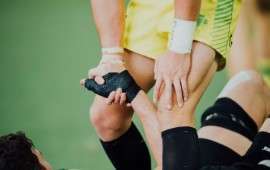
ACL rehab is a long journey, and months 3-5 are the toughest, when the knee feels good but isn’t ready yet. That is when honest guidance matters most. At Wellmax, your entire ACL rehab is managed from first assessment through return-to-sport clearance, with your quad numbers, your hop test scores, and your movement patterns tracked session by session so you always know exactly where you stand.
Objective Return-to-Sport Testing, Not Calendar-Based Clearance
We don’t clear athletes to return to sport because “it’s been 9 months.” We clear them because they’ve passed a battery of tests that demonstrate their knee is objectively ready. Strength testing, hop testing, movement quality assessment, and psychological readiness screening. If the numbers aren’t there, rehab continues. This protects the investment you’ve made in 9 months of hard work.
Prehab Before Surgery, Not Just Rehab After
If surgery is scheduled, we start working with you immediately. The research is clear: patients who go into ACL reconstruction with better quad strength, full extension, controlled swelling, and higher fitness levels recover faster and have better long-term outcomes. That 2-6 week window between injury and surgery is not downtime. It’s preparation time.
MCL and Combined Injuries Managed Under One Roof
If you’ve torn more than just the ACL, the rehab becomes more complex. Multiple healing timelines running simultaneously. Different structures with different loading tolerances. At Wellmax, combined ACL/MCL/meniscus injuries are managed within one coordinated treatment plan that accounts for how all the pieces fit together.
We Treat the Athlete, Not Just the Knee
An ACL injury affects everything. Your fitness drops. Your other leg compensates. Your hip and ankle mechanics change. Your mental game takes a hit. Effective ACL rehab addresses the whole chain, not just the surgical knee. Cardiovascular maintenance, contralateral leg strength, core stability, and psychological confidence are all part of the program at Wellmax.
ACL Rehabilitation for Oakville’s Active Community
ACL tears don’t just happen to elite athletes. We treat ACL injuries in recreational soccer players from local Sheridan Park and Oakville leagues, hockey players from Joshua’s Creek Arenas and Sixteen Mile Sports Complex, basketball players from community programs and high school teams, skiers who got hurt on weekend trips to Blue Mountain or Horseshoe Valley, CrossFit and gym athletes from CrossFit Radix, Vive Fitness, and Anytime Fitness, and weekend warriors who tore their ACL doing something they’ve done a hundred times before.
We also treat younger athletes. ACL injuries in teenagers are increasing as youth sport specialization and year-round competition becomes more common. The rehab approach for adolescent ACL injuries has some important differences (growth plate considerations, graft selection implications, and the psychological component of being sidelined during formative athletic years). Gurmeet has experience managing ACL rehab across all age groups.
Our clinic is at 1148 Winston Churchill Blvd, Unit B3, Oakville. Just south of the QEW in the Winston Park plaza. Patients drive to us from Clarkson, Clearview, Sheridan Park, Maple Grove, River Oaks, and south Mississauga. Free parking, ground-level access, and private treatment rooms. For a 9-12 month rehab program, proximity matters. We’re close enough that getting to appointments 2-3 times per week in the early months isn’t a logistical burden.
What Our Patients Say
Farrah S.“I saw Gurmeet for Pelvic Floor Therapy, before and after my Hysterectomy. She always made me feel comfortable and is very knowledgeable, helpful, and educated me during the whole process and at each visit. The front desk staff are always inviting and professional. I would recommend Wellmax to my friends and family.”
Jeff B.“I’m a new client suffering from a sports-related injury. Gurmeet was quick to diagnose the issue and, along with her colleagues, Nav and Janvi, has me back on the road to recovery. Coupled with a very friendly environment and loads of free parking, my experience has been top-notch!”
Gurjit M.“Great Practice, I have seen Gurmeet a number of times for various injuries and sports related issues over the years. She is a great Physiotherapist and took great care and attention to treating me. Definitely recommend Wellmax!”
Puja D.“I went to Gurmeet for knee tendinitis when I was struggling with climbing stairs and jogging. With her knowledge and techniques, she helped me recover and get back to feeling normal again. She is extremely helpful, friendly, and professional, and she never once made the sessions feel awkward. She explains things clearly and genuinely cares about your progress. I’m very grateful for her support and would highly recommend her.”
Palkin K.“I have been seeing Gurmeet Rai for physiotherapy for the past few months following my surgery. When I started, I was dealing with significant pain and limitations, but her treatment and guidance truly changed my recovery journey. She is incredibly skilled, patient, and compassionate, and she always took the time to understand my condition and tailored the therapy accordingly. Because of her support, my pain reduced. I highly recommend to anyone looking for effective and genuine physiotherapy care.”
Steven S.“I have been to many different physiotherapists for various sport related, I wish I would have found her sooner! She and her staff are always warm and welcoming. Very knowledgeable in what she does and always goes above and beyond with her treatment. You can tell she really cares about her patients and not just the paycheque like other physiotherapists. I highly recommend going to see her!”
Verified Patient“Tore my meniscus playing soccer at Sixteen Mile Sports Complex and needed a physio who understood returning to sport, not just getting out of pain. Gurmeet built a rehab program that started with reducing the swelling and restoring range of motion and progressed all the way to cutting, pivoting, and sport-specific drills before she cleared me to play again. Most physios would have discharged me when the pain stopped. She made sure I was actually ready to compete. Back on the pitch now with full confidence in the knee.”
Joan B.“The team is wonderful and they did amazing job to fix my knee injury. I highly recommend them for any physio needs”
See all our Google reviewsRead more patient storiesLeave a review
Frequently Asked Questions
How long does ACL rehabilitation take?+–
Full ACL rehabilitation after reconstruction surgery takes 9 to 12 months. The first 6 months focus on restoring range of motion, rebuilding strength, and progressive loading. Months 6-9+ focus on sport-specific training and return-to-sport testing. Rushing back before 9 months is associated with a significantly higher re-tear rate. The timeline is guided by objective testing, not how the knee feels.
Do I need surgery for a torn ACL?+–
Not always. If you don’t play pivoting sports and your knee feels stable during daily activities, non-surgical management through physiotherapy can work well. If you’re active in sports that involve cutting, pivoting, or rapid direction changes, reconstruction is usually recommended because the ACL doesn’t heal on its own and the knee will remain rotationally unstable. Your orthopaedic surgeon and physiotherapist can help you make the right decision based on your activity level and goals.
When should I start physiotherapy after ACL injury?+–
Immediately. If surgery is planned, starting prehab within the first week of injury gives you the best possible foundation going into the operation. If you’re managing non-surgically, early physiotherapy is how you build the strength and control to compensate for the torn ligament. Either way, waiting doesn’t help. Early intervention leads to better outcomes.
Can physiotherapy prevent ACL injuries?+–
Yes. ACL injury prevention programs that include neuromuscular training, landing mechanics coaching, hip and core strengthening, and plyometric training have been shown to reduce ACL injury risk by 50% or more. If you’ve already torn one ACL, prevention work for the other knee is especially important because your risk of a second ACL tear (either knee) is elevated. See our Sports Physiotherapy page for prevention programming.
What is ACL prehab and why does it matter?+–
Prehab is the physiotherapy you do between ACL injury and reconstruction surgery. The focus is on reducing swelling, restoring full knee extension, rebuilding quad activation, and maintaining fitness. Research consistently shows that patients who complete prehab have faster post-operative recovery, better range of motion, and stronger quads at 6 months compared to patients who don’t prehab. It’s one of the highest-value things you can do for your surgical outcome.
How do I know when I'm ready to return to sport after ACL surgery?+–
Return-to-sport readiness is determined by objective testing, not by time alone. We use quad and hamstring strength testing (must be within 90% of the uninjured side), hop testing (single hop, triple hop, crossover hop, timed hop, all within 90%), movement quality assessment during landing, cutting, and pivoting, and psychological readiness screening. All criteria must be met. If they’re not, rehab continues until they are.
Do you treat MCL injuries as well?+–
Yes. MCL sprains and tears are treated at Wellmax both as isolated injuries and as part of combined ACL/MCL rehabilitation. Most MCL injuries heal without surgery and respond well to bracing, progressive loading, and physiotherapy. When the MCL is torn alongside the ACL, the rehab timeline is coordinated to manage both structures safely. See our Knee Pain page for more on knee conditions.
What is the difference between an ACL and an MCL injury?+–
The ACL (anterior cruciate ligament) sits deep inside the knee and controls forward shift and rotational stability, so a torn ACL makes the knee feel like it gives way when you cut or pivot. The MCL (medial collateral ligament) runs along the inside of the knee and resists inward (valgus) forces, so an MCL injury causes pain and looseness on the inner knee. The MCL has a rich blood supply and usually heals without surgery, while a fully torn ACL does not heal on its own and often needs reconstruction in active people. The two are frequently injured together.
Is ACL physiotherapy covered by insurance?+–
Yes. ACL rehabilitation at Wellmax is billed as physiotherapy and is covered by most extended health benefit plans. We direct bill to Sun Life, Manulife, Canada Life, Green Shield, Great-West Life, Blue Cross, Desjardins, and most other major providers. If your injury is from a motor vehicle accident, treatment is covered through your auto insurance. No referral is needed to start. See our insurance page for more detail.
Can I still exercise while rehabbing my ACL?+–
Absolutely, and you should. Cardiovascular fitness, upper body strength, and contralateral leg training continue throughout ACL rehab. We modify the program based on what the knee can tolerate at each phase. Swimming, cycling, and upper body training are typically available early. The goal is to maintain overall fitness so that when the knee is ready, the rest of your body is ready too.
What's the risk of re-tearing my ACL after surgery?+–
Overall re-tear rates after ACL reconstruction range from 6-15% depending on the study and the population. Younger athletes in high-risk sports have higher re-tear rates. The biggest modifiable risk factor is inadequate rehabilitation. Athletes who return to sport before passing objective return-to-sport testing, or who return before 9 months, have dramatically higher re-injury rates. Completing a full, structured rehab program is the most effective way to protect the reconstruction.
How much does ACL treatment in Oakville cost and do I need a doctor's referral?+–
You do not need a doctor’s referral to start physiotherapy in Ontario, and your first consultation at Wellmax is free. A standard physiotherapy assessment and treatment session is around 120 dollars, and most extended health plans reimburse physiotherapy in full or in part. We direct bill to most major insurers, and motor vehicle accident and WSIB injuries are covered through those programs. We will confirm your coverage before treatment so there are no surprises.
Related Conditions & Services
Knee Pain Physiotherapy – Patellofemoral pain, runner’s knee, knee osteoarthritis, and general knee conditions.
Sports Injury Rehabilitation – Full spectrum sports injury treatment including muscle tears, tendon injuries, and concussion.
Sports Physiotherapy – Return-to-sport programming and sport-specific rehabilitation for athletes at every level.
Pre & Post-Surgical Rehab – Rehabilitation protocols for knee replacement, rotator cuff repair, and other surgeries.
Shoulder Pain – Rotator cuff injuries, frozen shoulder, impingement, and post-surgical shoulder rehab.
Ankle & Foot Pain – Ankle sprains, Achilles tendinopathy, and lower limb rehabilitation.
Deep Tissue Laser Therapy – Post-surgical inflammation and swelling management with deep tissue laser.
Orthotics & Braces – Custom ACL braces for return-to-sport protection and post-surgical knee bracing.
Concussion Physiotherapy – Many ACL injuries in contact sport occur alongside concussion. Combined management available.
Running Injuries – Overuse knee, shin, and lower-limb injuries in runners, plus return-to-running programming.
IT Band Syndrome – Lateral knee pain from IT band irritation, common in runners and cyclists.
Meniscus Tear Treatment – Meniscus tears that frequently accompany ACL injuries, surgical and non-surgical rehab.
Book Your ACL Assessment
Whether you just tore your ACL and need guidance on next steps, you’re preparing for reconstruction surgery and want to start prehab, or you’re post-op and looking for structured rehabilitation with clear return-to-sport milestones, we can help. Every ACL treatment in Oakville program at Wellmax starts with a thorough assessment of where the knee is right now and builds a roadmap from there. We never diagnose you online; the right plan starts with an in-person assessment, and your first consult is free.
Wellmax Physiotherapy
1148 Winston Churchill Blvd, Unit B3, Oakville, ON L6J 0A3
Phone: (905) 829-1100
Email: info@wellmaxphysiotherapy.ca
Proudly Serving Our Local Communities: We are conveniently located just minutes from the QEW and Winston Churchill Blvd, making us the clinic of choice for:
- East Oakville (Our Neighbours): Winston Park, Clearview, and the QEW/403 Corridor.
- South Oakville: Eastlake, Maple Grove, and Old Oakville.
- North Oakville: Joshua Creek, Falgarwood, and Upper Middle Road.
- Mississauga Border: Clarkson, Sheridan Park, and Sheridan Homelands.
Insurance: Direct billing to most major providers. WSIB and MVA claims accepted. No referral needed. See our insurance and direct billing page for details.
Hours: Monday to Friday: 9am to 7pm | Saturday: 9am to 2pm | Sunday: 9am to 2pm (by appointment only)
Registered & Regulated
Regulated & Recognized Across Every Discipline
Wellmax is in good standing with the regulatory colleges and leading associations for physiotherapy, chiropractic, massage therapy, and naturopathic medicine in Ontario.