Sports Injury Treatment in Oakville
Evidence-based rehabilitation from acute injury to full return to sport, for athletes and active people at every level.
Home > Conditions We Treat > Sports Injury Treatment in Oakville
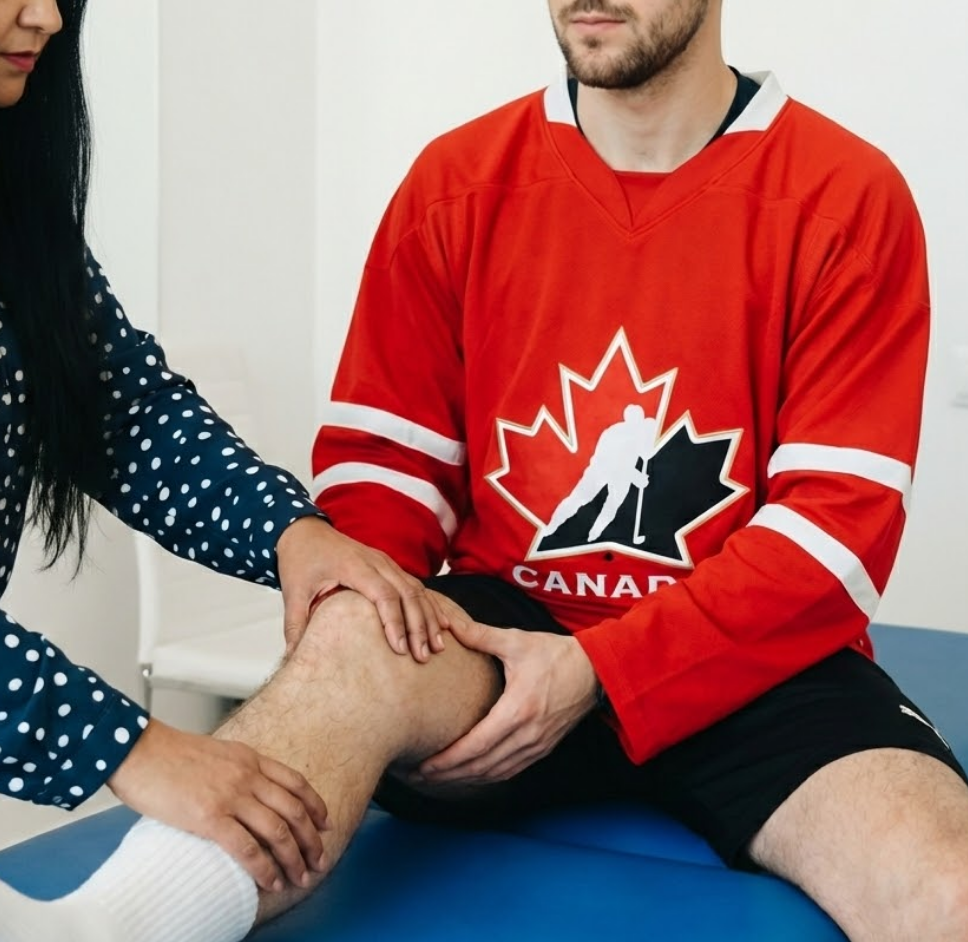
Something popped during the game. A muscle grabbed during a sprint. The ankle rolled on the trail. Or maybe it’s a nagging pain that started small and now limits every training session.
Sports injuries fall into two categories: traumatic (something happened in a specific moment: a tackle, a fall, a twist) and overuse (pain developed gradually from repetitive loading without adequate recovery). Both require a treatment approach that goes beyond just getting the pain to stop. Pain resolution isn’t the finish line. For an athlete or active person, the finish line is returning to full performance at the level you were at before the injury, or better, with confidence that the injury won’t come back the moment you push hard again.
This is where sports injury treatment in Oakville differs from general physiotherapy. The end goal isn’t “can you walk without pain.” It’s “can you cut, sprint, jump, land, and compete without hesitation.” Getting there requires progressive loading that rebuilds tissue tolerance, sport-specific training that prepares you for the actual demands of your activity, and clear return-to-sport criteria so you don’t come back too early and reinjure.
At Wellmax, we treat athletes and active people at every level: competitive, recreational, weekend warriors, and gym regulars. The principles are the same regardless of level: identify the injury, understand why it happened, rehabilitate the tissue, and build the capacity to handle the demands you’re going back to.
We’re at 1148 Winston Churchill Blvd, Unit B3, Oakville, just south of the QEW. Clarkson, Clearview, Sheridan Park, Maple Grove, and south Mississauga are all under 10 minutes away.
Common Sports Injuries We Treat
Ligament Injuries
- ACL tears and sprains: the most significant knee ligament injury in sport. Occurs during cutting, pivoting, and landing. Women are 2-8x more likely to suffer ACL injuries than men in the same sports. Treatment involves either surgical reconstruction followed by 9-12 months of rehabilitation, or non-surgical management with focused rehab (viable for many patients, particularly those in non-pivoting sports). Prehab before surgery dramatically improves outcomes.
- MCL sprains: medial collateral ligament injuries from contact or valgus stress. Excellent healing potential without surgery due to good blood supply. Grade I sprains recover in 2-4 weeks, Grade II in 6-8 weeks.
- Ankle sprains: the most common injury in sport across virtually every discipline. 40% develop chronic instability without proper rehabilitation. Proprioceptive and balance training are essential for preventing recurrence. Read more about ankle sprain physiotherapy.
Muscle Injuries
- Hamstring strains: the most common muscle injury in running and sprinting sports. Graded I-III by severity. The recurrence rate is high (up to 30% within the first year) when rehabilitation is cut short. Progressive loading through full range of motion and eccentric strengthening are key to preventing reinjury. Nordic hamstring exercises reduce the risk of initial and recurrent hamstring injuries. Read more about running injuries physiotherapy.
- Quadriceps strains: common in kicking sports (soccer, football). Similar grading and rehabilitation principles to hamstring strains.
- Calf strains: increasingly common in recreational runners and court sport athletes, particularly in the 35+ age group. The soleus muscle is most commonly affected and requires progressive loading through full plantarflexion range.
- Groin/adductor strains: common in hockey, soccer, and sports involving rapid direction changes. Often recurrent when underlying hip weakness isn’t addressed.
Tendon Injuries
- Achilles tendinopathy: degeneration of the Achilles tendon from repetitive loading. Common in runners and court sport athletes. Treatment is progressive loading (heavy slow resistance), not rest.
- Patellar tendinopathy: “jumper’s knee” affecting basketball, volleyball, and running athletes. Responds to heavy slow resistance training and isometric pain management.
- Tennis elbow and golfer’s elbow: common in racquet sports, golf, and gym training. Progressive tendon loading is the gold standard treatment.
Shoulder Injuries
- Rotator cuff injuries: strains, partial tears, and impingement. Common in overhead sports (swimming, tennis, volleyball, baseball) and gym training (bench press, overhead press). Read more about rotator cuff injury physiotherapy.
- Labral tears: SLAP tears and Bankart lesions from shoulder dislocations or repetitive overhead loading. May require surgical repair depending on severity, sport demands, and response to conservative management.
- Shoulder dislocations: common in contact sports. Rehabilitation focuses on dynamic stability and proprioception. Recurrence risk is highest in athletes under 25.
Head and Spine Injuries
- Concussion: mild traumatic brain injury from direct or indirect head impact. Active rehabilitation with sub-symptom threshold exercise produces faster recovery than prolonged rest. Cervical spine assessment is essential as neck dysfunction commonly accompanies concussion.
- Back injuries: disc herniations, muscle strains, stress fractures (spondylolysis in young athletes, particularly gymnasts, cricket fast bowlers, and overhead athletes).
Overuse Injuries
- Stress fractures: repetitive bone loading exceeding remodeling capacity. Common in distance runners. Often related to training load errors, biomechanical issues, or nutritional factors.
- IT band syndrome: lateral knee pain in runners. Driven by hip weakness, not “tightness” of the IT band. Foam rolling doesn’t address the cause.
- Shin splints (medial tibial stress syndrome): medial shin pain from repetitive impact. Related to training load, ankle stiffness, and calf/hip weakness.
- Plantar fasciitis: heel pain in runners and standing athletes. Progressive calf loading and foot intrinsic strengthening are the cornerstone of treatment.
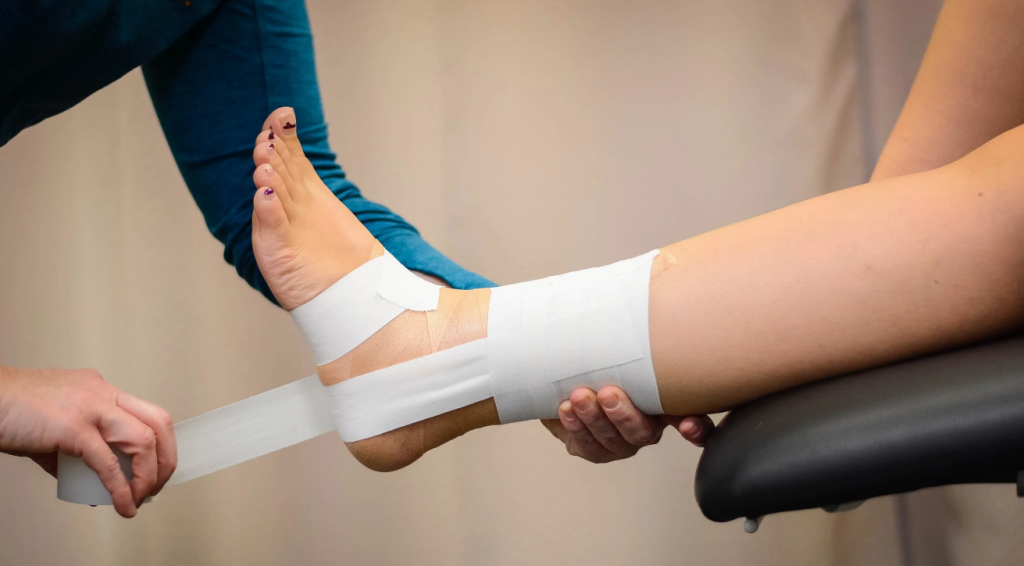
Our Approach to Sports Injury Rehabilitation
Every sports injury assessment at Wellmax includes the joints above and below the injury site. A hamstring strain doesn’t happen in isolation. It happens because of how the pelvis, hip, and lumbar spine interact during sprinting. An ankle sprain recurs because of how the hip controls the leg during landing. A rotator cuff injury develops because of how the scapula and thoracic spine move during overhead activity. Treating the injury without addressing the chain guarantees recurrence.
Progressive Loading, Not Rest
Tissues heal through loading, not through avoidance. Tendons need progressive resistance to remodel. Muscles need graduated contraction through full range to rebuild. Ligaments need controlled stress to regain tensile strength. Complete rest beyond the initial acute phase (24-72 hours depending on injury severity) leads to deconditioning, prolonged recovery, and higher reinjury risk. We load tissues as early as safely possible and progress systematically.
Return-to-Sport Criteria, Not Just Timelines
Calendar-based return to sport (“you can play again in 6 weeks”) is how injuries recur. Criteria-based return to sport (“you can play again when you pass these functional tests”) is how they don’t. Our return-to-sport progression includes strength testing (achieving 90%+ of the uninjured side), functional testing (hop tests, agility tests, sport-specific movements), graduated training exposure (practice, modified game, full game), and confidence assessment (the psychological readiness to trust the injured area under competitive stress).
Injury Prevention Integration
Once you’ve recovered, we don’t just send you back. The same biomechanical and strength deficits that caused the first injury will cause the second one if they’re not addressed. Your discharge program includes ongoing strength and mobility work targeting your specific risk factors. For runners: hip strengthening, calf capacity, training load management. For field sport athletes: hamstring eccentrics, cutting and landing mechanics, proprioceptive training. For gym athletes: movement quality, mobility prerequisites, program design guidance.
Manual Therapy Throughout
Hands-on treatment at every stage. Joint mobilization for restricted joints, soft tissue release for compensatory muscle tension, neural mobilization when nerve sensitivity is present, and scar tissue management for surgical sites and muscle tears.
Shockwave Therapy for Chronic Tendon Conditions
For tendinopathies (Achilles, patellar, tennis elbow, plantar fasciitis) that haven’t responded to 6-8 weeks of progressive loading, shockwave therapy is a highly effective adjunct that stimulates tendon remodeling.
Athletes and Active People We Treat
We treat athletes and active people from across the Oakville, Clarkson, and south Mississauga community. Whether you train competitively or play for fun, these are the sports and injuries we see most often:
- Hockey: Groin strains, shoulder injuries, concussion, back pain, hip impingement. We regularly see players from leagues at Joshua’s Creek Arenas, Sixteen Mile Sports Complex, Maple Grove Arena, and Kinoak Arena.
- Soccer and Field Sports: ACL injuries, ankle sprains, hamstring strains, groin injuries, concussion. Players from Clarkson Park fields, Churchill Meadows Sports Park, and local Oakville Soccer Club programs.
- Running and Trail Running: Achilles tendinopathy, plantar fasciitis, IT band syndrome, shin splints, stress fractures, knee pain. Runners training on the Sixteen Mile Creek trails, Lions Valley Park, and the Waterfront Trail through Clarkson and Oakville. Read more about plantar fasciitis physiotherapy.
- Basketball and Volleyball: Patellar tendinopathy (jumper’s knee), ankle sprains, ACL injuries, shoulder injuries. Players from drop-in and league programs at Iroquois Ridge Community Centre, Trafalgar Park Community Centre, and Churchill Meadows Community Centre.
- Tennis and Racquet Sports: Tennis elbow, shoulder impingement, ankle sprains, calf strains. Members from Joshua Creek Tennis, Wallace Park Tennis Club, Ontario Racquet Club on Southdown Road, and Iroquois Ridge courts.
- Golf: Golfer’s elbow, low back pain, shoulder pain, wrist injuries. Golfers from Oakville Golf Club, Deerfield Golf Club, Credit Valley Golf and Country Club, and Glen Abbey.
- Gym and CrossFit: Shoulder impingement, rotator cuff injuries, back pain, tennis elbow, patellar tendinopathy. Members from Vive Fitness in Clarkson, Anytime Fitness on Winston Churchill, CrossFit Radix, Element Movement, CORTEN, Iron 24, Conker Fitness, and Waters Edge Fitness.
- Yoga and Pilates: Shoulder injuries, wrist pain, back strain, hip flexor issues. Practitioners from iGita Yoga and Pilates, Hot Yoga and Pilates on Lakeshore, and Goji Yoga and Wellness.
- Lacrosse: Shoulder injuries, concussion, knee ligament injuries, ankle sprains. Athletes training at Toronto Rock Athletic Centre on Invicta Drive.
- Swimming: Shoulder impingement (swimmer’s shoulder), neck pain, back pain. Swimmers from Oakville Trafalgar Community Centre pool, Iroquois Ridge pool, and Ontario Racquet Club.
- Cycling: Knee pain (patellofemoral, IT band), back pain, neck pain, wrist/hand numbness. Road cyclists and commuters on the Winston Churchill corridor and Lakeshore routes.
- Weekend Warriors: General muscle strains, joint sprains, tendon overload, back and neck injuries from recreational activity, backyard sports, and seasonal projects.
What Results to Expect
| Injury Type | Expected Outcome | Return to Sport |
|---|---|---|
| Grade I muscle strain | Full recovery | 1-3 weeks |
| Grade II muscle strain | Full recovery | 4-8 weeks |
| Ankle sprain (Grade I-II) | Full recovery with balance rehab | 2-6 weeks |
| ACL reconstruction rehab | Full return to sport | 9-12 months |
| Tendinopathy (Achilles, patellar) | 75-90% resolution | 8-16 weeks |
| Concussion (standard recovery) | Full clearance | 2-6 weeks |
| Rotator cuff repair rehab | Full return to sport | 4-6 months |
Return-to-sport timelines are based on meeting functional criteria, not calendar dates. Actual timelines depend on injury severity, surgery involvement, sport demands, and individual recovery rate.
Why Athletes Choose Wellmax for Sports Injury Rehab
We Treat the Chain, Not Just the Injury
Most sports injuries recur because the underlying biomechanical issue wasn’t addressed, only the symptomatic tissue. We assess and treat the whole kinetic chain to resolve the current injury and prevent the next one.
Criteria-Based Return to Sport
You return to sport when you’ve met functional benchmarks, not when the calendar says so. Strength testing, hop testing, agility testing, and sport-specific progressions ensure you’re physically ready before you compete.
Expert Care, Every Visit
Sports rehab involves dozens of exercise progressions, sport-specific modifications, and training load adjustments over weeks to months. You get the same one-on-one care every visit, with a team that tracks your body, your sport, and exactly where you are in the progression.
Shockwave Therapy for Chronic Tendon Conditions
Achilles tendinopathy, patellar tendinopathy, plantar fasciitis, and tennis elbow are stubborn conditions in active populations. When progressive loading alone isn’t enough, shockwave therapy accelerates tendon recovery.
We Work with Athletes at Every Level
Competitive, recreational, and weekend warriors. The injury demands your full attention regardless of the level you play at. We apply the same evidence-based principles whether you’re returning to provincial-level competition or Sunday morning pickup hockey.
Convenient Oakville Location
1148 Winston Churchill Blvd, Unit B3, Oakville. Free parking. Clarkson: 5 minutes. Clearview: 8 minutes. Sheridan Park: 10 minutes. South Mississauga: 7 minutes.
Direct Insurance Billing
We direct bill to Sun Life, Manulife, Canada Life, Green Shield, Great-West Life, Blue Cross, Desjardins, and most other major providers. WSIB for workplace injuries. MVA for auto accident injuries. No referral needed. See our insurance and direct billing page for details.
What Our Patients Say
Jeff B.“I’m a new client suffering from a sports-related injury. Gurmeet was quick to diagnose the issue and, along with her colleagues, Nav and Janvi, has me back on the road to recovery. Coupled with a very friendly environment and loads of free parking, my experience has been top-notch!”
Gurjit M.“Great Practice, I have seen Gurmeet a number of times for various injuries and sports related issues over the years. She is a great Physiotherapist and took great care and attention to treating me. Definitely recommend Wellmax!”
Steven S.“I have been to many different physiotherapists for various sport related, I wish I would have found her sooner! She and her staff are always warm and welcoming. Very knowledgeable in what she does and always goes above and beyond with her treatment. You can tell she really cares about her patients and not just the paycheque like other physiotherapists. I highly recommend going to see her!”
Michael R.“If you are dealing with sports injuries, this is easily the best physiotherapy clinic in Oakville. I was struggling with Achilles tendinopathy from running, and the pain in my heel was getting worse every week. Dhrushi was my physiotherapist and she was absolutely fantastic. She did not just look at my ankle but assessed my entire walking and running mechanics. She explained exactly why the tendon was inflamed and built a personalized treatment plan with manual therapy and specific eccentric exercises for me to do at home. The clinic always runs on time and the entire team is so friendly. I am finally back to running pain-free and I will not hesitate to return if I ever need care again.”
Verified Patient“Tore my meniscus playing soccer at Sixteen Mile Sports Complex and needed a physio who understood returning to sport, not just getting out of pain. Gurmeet built a rehab program that started with reducing the swelling and restoring range of motion and progressed all the way to cutting, pivoting, and sport-specific drills before she cleared me to play again. Most physios would have discharged me when the pain stopped. She made sure I was actually ready to compete. Back on the pitch now with full confidence in the knee.”
Amna“Great service, friendly staff, and excellent care. Highly recommend Wellmax Physiotherapy!”
See all our Google reviewsRead more patient storiesLeave a review
Frequently Asked Questions
How soon after a sports injury should I see a physiotherapist?+–
As soon as possible. For acute injuries (sprains, strains, muscle tears), early assessment within the first 48-72 hours allows us to determine injury severity, begin appropriate treatment, and establish a rehabilitation plan. Early intervention consistently produces faster recovery and better outcomes than waiting to see if it gets better on its own. For overuse injuries, assessment is recommended when the pain isn’t resolving with your own modifications within 1-2 weeks.
Should I use ice or heat on a sports injury?+–
For acute injuries (first 48-72 hours), ice helps manage pain and swelling. After the acute phase, heat can improve comfort and tissue flexibility before exercise. However, neither ice nor heat is treatment. They’re symptom management tools. The real treatment is progressive loading, manual therapy, and addressing the factors that caused the injury. Don’t rely on ice or heat as your primary intervention.
How do I know if I tore my ACL?+–
Common signs: a pop felt or heard at the time of injury, rapid swelling within 2-4 hours (the knee fills with blood), difficulty weight-bearing, and a feeling of instability or the knee giving way. However, these signs aren’t definitive. MCL injuries and meniscus tears can present similarly. Clinical examination by a physiotherapist or physician can identify ACL tears with high accuracy. MRI confirms the diagnosis and identifies associated injuries.
Can I still train while rehabilitating a sports injury?+–
In most cases, yes, with modifications. We identify which activities are safe to continue, which need modification, and which need temporary avoidance. Complete cessation of all training leads to general deconditioning that prolongs recovery. For lower body injuries, upper body training usually continues. For upper body injuries, lower body and cardiovascular training continue. Maintaining fitness during rehab means a faster return to full sport.
Why does my injury keep coming back?+–
Recurrent injuries almost always indicate that the underlying cause wasn’t addressed during previous rehabilitation. The pain resolved, but the strength deficit, the movement pattern issue, or the training load error that caused the injury remained. This is why we assess the whole chain and address the biomechanical factors, not just the symptomatic tissue. And why we use functional criteria for return to sport rather than symptom-based clearance.
Do I need surgery for my sports injury?+–
Many sports injuries that were historically treated surgically are now managed conservatively with equal or better outcomes. Meniscus tears, ACL injuries (in non-pivoting athletes), partial rotator cuff tears, and most ligament sprains respond well to physiotherapy. Surgery is indicated for complete ligament tears in pivoting sport athletes, unstable fractures, and injuries that haven’t responded to quality conservative treatment. We help you make an informed decision based on your specific injury, sport demands, and the evidence.
What's the difference between a sprain and a strain?+–
A sprain is a ligament injury (the tissue connecting bone to bone). An ankle sprain, for example, involves the ankle ligaments. A strain is a muscle or tendon injury. A hamstring strain involves the hamstring muscle or its tendon. Both are graded I (mild stretch), II (partial tear), and III (complete tear). Treatment principles are similar: progressive loading through the healing phases to rebuild tissue tolerance.
How long until I can play again?+–
It depends on the injury severity, the sport demands, and how well you progress through rehabilitation. We give you an estimated timeline at your first assessment, but actual return to sport is determined by meeting functional criteria (strength testing, hop testing, sport-specific movement testing), not by a calendar date. This approach reduces reinjury risk significantly.
Do you treat youth athletes?+–
Yes. Youth athletes have specific considerations: growth plate injuries, traction apophysitis (Osgood-Schlatter, Sever’s disease), different injury patterns than adults, and the importance of long-term athletic development over short-term return to play. We treat youth athletes with age-appropriate assessment and rehabilitation, including education for parents and coaches on return-to-play decisions.
Will my insurance cover sports injury physiotherapy?+–
Most extended health plans cover physiotherapy for sports injuries. We direct bill to most major providers. No referral needed in Ontario. WSIB covers injuries sustained during work. MVA covers injuries from auto accidents.
What is the difference between sports physiotherapy and regular physiotherapy?+–
Sports physiotherapy applies the same techniques as general physiotherapy but with a higher performance target. The goal isn’t just pain resolution. It’s full return to the specific demands of your sport. This means criteria-based return-to-sport testing, sport-specific loading progressions, training load management, and injury prevention programming. At Wellmax, all physiotherapists treat sports injuries, and our assessment always includes the kinetic chain above and below the injury site.
Can physiotherapy help me prevent sports injuries before they happen?+–
Yes. Injury prevention is a core part of what we do. Common risk factors (hip weakness driving knee and ankle injuries, limited hip mobility causing back and hamstring strains, scapular instability loading the rotator cuff) are identifiable and addressable before they cause an injury. If you have a history of recurrent injuries or are returning to a new sport or higher training load, a pre-season assessment can identify your specific risk factors and build a prevention program around them.
Related Conditions and Services
- Knee Pain: ACL, MCL, meniscus, patellar tendinopathy, and all knee conditions.
- Meniscus Tear Treatment: meniscus injury rehabilitation and return to sport.
- ACL Injury Physiotherapy: ACL reconstruction rehab and non-surgical ACL management.
- Ankle and Foot Pain: ankle sprains, chronic instability, Achilles tendinopathy, plantar fasciitis.
- Shoulder Pain: rotator cuff injuries, labral tears, dislocations, impingement.
- Running Injuries: Achilles, plantar fasciitis, IT band syndrome, shin splints, stress fractures.
- Tennis Elbow and Golfer’s Elbow: elbow tendinopathy from racquet sports, golf, and gym training.
- Concussion: sports concussion treatment and return-to-play protocols.
- Hip Pain: hip impingement, labral tears, groin injuries in athletes.
- Shockwave Therapy: for chronic tendon conditions that haven’t responded to exercise alone.
- Sports Physiotherapy Oakville: overview of all sports physiotherapy services at Wellmax.
- Physiotherapy Services: overview of all services at Wellmax.
- Muscle Strains & Sprains
Book Your Sports Injury Assessment
The sooner treatment starts, the sooner you’re back. Every day of delayed treatment is a day added to your return timeline. The assessment identifies exactly what’s injured, why it happened, and the fastest safe path back to full activity.
Book a free consult at Wellmax. Our physiotherapists will identify the root cause, not just the painful tissue, and give you a clear plan from injury to full return to sport.
Wellmax Physiotherapy
1148 Winston Churchill Blvd, Unit B3, Oakville, ON L6J 0A3
Phone: (905) 829-1100
Email: info@wellmaxphysiotherapy.ca
Proudly Serving Our Local Communities:
- East Oakville: Winston Park, Clearview, and the QEW/403 Corridor.
- South Oakville: Eastlake, Maple Grove, Lorne Park, and Old Oakville.
- North Oakville: Joshua Creek, Falgarwood, Iroquois Ridge, and Upper Middle Road.
- Mississauga Border: Clarkson, Sheridan Park, Sheridan Homelands, and Southdown.
Insurance: Direct billing to most major providers. WSIB and MVA claims accepted. No referral needed.
Hours: Monday to Friday: 9am to 7pm | Saturday: 9am to 2pm | Sunday: 9am to 2pm (by appointment only)
Registered & Regulated
Regulated & Recognized Across Every Discipline
Wellmax is in good standing with the regulatory colleges and leading associations for physiotherapy, chiropractic, massage therapy, and naturopathic medicine in Ontario.