

Does Physiotherapy Help Arthritis? Managing Joint Pain Without Surgery

If your knees ache on the stairs, your hips stiffen up after sitting, or your hands feel sore and swollen in the morning, you have probably wondered whether anything actually helps, short of surgery or a lifetime of pills. It is a fair question, and the honest answer surprises a lot of people.
Yes, physiotherapy genuinely helps arthritis. In fact, for the most common type, structured exercise and movement are considered first-line treatment by health guidelines around the world, recommended before injections or surgery. Below we will walk through what works, why it works, and how a good plan looks for both osteoarthritis and rheumatoid arthritis. If you would rather just talk it through with a person, we offer free consultations at our arthritis physiotherapy clinic in Oakville and Mississauga.
Key Takeaways
- Exercise and education are recommended as first-line care for osteoarthritis, ahead of surgery and even ahead of most medication.
- The right kind of movement does not wear your joints out faster. Done well, it eases pain, builds the muscle that protects the joint, and helps keep you active for longer.
- Osteoarthritis and rheumatoid arthritis need different game plans, but physiotherapy plays a central role in both.
- The goal is graduation, not endless visits. A good physio teaches you to manage flare-ups and keep your joints moving on your own.
Does physiotherapy actually help arthritis, or is that just hopeful talk?
It helps, and the evidence behind it is strong. International clinical guidelines, including the well-known NICE guidelines, consistently recommend education, structured exercise, and weight management as the core, first-line treatment for hip and knee osteoarthritis. That means it is not a last resort or a nice extra. It is meant to be the starting point.
What physiotherapy does is straightforward. It calms down painful joints, strengthens the muscles around them, restores movement that stiffness has taken away, and teaches you how to load your joints in a way they can handle. Over time, that combination usually means less pain, easier daily tasks, and more confidence to keep doing the things you enjoy.
“The joint did not stop working because you used it too much. More often, the muscles around it got weak, and the joint lost its support.”
What is the difference between osteoarthritis and rheumatoid arthritis?
This matters, because the two conditions are not the same and they are not treated the same way.
Osteoarthritis (the “wear and tear” type)
Osteoarthritis is the most common form. It develops gradually as the smooth cartilage that cushions a joint thins out, usually in weight-bearing joints like the knees, hips, and lower back, as well as the hands. It tends to cause pain that is worse with activity and eases with rest, along with morning stiffness that usually loosens within about half an hour of moving.
Rheumatoid arthritis (the inflammatory type)
Rheumatoid arthritis is different. It is an autoimmune condition, which means the body’s own immune system attacks the lining of the joints. It often affects the same joints on both sides of the body, such as both hands or both wrists, and it can come with longer-lasting morning stiffness, swelling, warmth, and periods of flare-up where the joint becomes red, hot, and tender.
People with rheumatoid arthritis usually work with a rheumatologist on medication that controls the disease itself. Physiotherapy works alongside that medical care to protect the joints, keep them moving, and maintain strength. With osteoarthritis, physiotherapy is often the main treatment.
How does physiotherapy ease arthritis joint pain?
There is no single trick. A good physiotherapy plan combines several tools, and the mix is tailored to your joint, your stage, and your goals.
Targeted strengthening
This is the heavy lifter. Strong muscles around an arthritic joint act like shock absorbers, taking load off the painful surfaces. For knee osteoarthritis, for example, building the muscles around the thigh and hip is one of the most reliable ways to reduce pain. We cover this in more detail on our knee pain physiotherapy page.
Movement and range-of-motion work
Stiff joints get stiffer when you avoid them. Gentle, regular movement keeps the joint mobile, nourishes the cartilage, and stops the surrounding tissues from tightening up. This is especially important for arthritic hips and shoulders.
Hands-on manual therapy
Skilled hands-on treatment can settle a flared-up joint, ease muscle guarding, and improve how the joint moves. There are early but encouraging signs that combining manual therapy with exercise works better than exercise alone for hip and knee osteoarthritis. At Wellmax, hands-on manual therapy is part of how we treat, not an afterthought.
Water-based exercise (hydrotherapy)
Water supports your body weight, so it takes a lot of stress off sore joints while still letting you build strength and move freely. For people whose joints are too painful to load on land at first, gentle water exercise can be a great place to start.
Load management and pacing
A big part of the job is teaching you how much is the right amount. Too little movement and the joint stiffens and weakens. Too much, too fast, and it flares. We help you find the sweet spot and slowly build from there.
Will exercise make my arthritis worse or wear my joints out faster?
This is the fear that keeps a lot of people sitting still, and it is understandable. The good news is that it is mostly a myth. Studies consistently show that appropriate exercise does not worsen arthritis or speed up joint damage. The opposite tends to happen.
When people cut back on activity to protect a sore joint, the muscles around it weaken, the joint loses support, and over time things often get worse, not better. People with knee osteoarthritis who keep walking are actually less likely to go on to develop worse pain. Movement is medicine here, as long as it is the right type and dose, which is exactly what a physiotherapist helps you figure out.
Can physiotherapy slow down arthritis, or even reverse it?
Let us be honest and clear. Physiotherapy cannot regrow cartilage or undo joint damage that has already happened, and we would never promise that. What it can do is just as valuable. It can slow the loss of function that usually comes with arthritis, keep you strong and mobile, reduce how much pain limits your day, and in many cases delay or avoid the need for surgery.
Some research even suggests that regular exercise supports cartilage health and reduces the low-grade inflammation linked to joint damage. So while we cannot turn back the clock, a consistent plan can keep your joints working well for years longer than doing nothing would.
Is walking good for arthritis?
For most people, yes. Walking is low-impact, which means it puts less stress on weight-bearing joints than running or jumping. It keeps the joints moving, supports a healthy weight, and builds endurance. Many people worry that walking grinds their joints down, but for the vast majority it does the opposite and helps.
The key is to start at a level your joints tolerate and build up gradually. If walking flares your pain, that is a signal to adjust the distance, pace, footwear, or technique, not to stop moving altogether. That is the kind of thing we fine-tune during an assessment.
Does losing weight help arthritis pain?
For weight-bearing joints like the knees and hips, it can make a real difference. Every extra pound multiplies the load that travels through your knees with each step, so even a modest reduction in body weight can meaningfully reduce the pressure on an arthritic joint and ease pain. A balanced approach that combines movement, strength, and gradual weight management tends to work better than any single change on its own.
What does arthritis treatment look like at Wellmax in Oakville?
It starts with understanding, not guessing. Every new patient gets a thorough 60-minute assessment where we look at the painful joint, the muscles around it, how you move, and how arthritis is affecting your daily life. We do not just chase the sore spot. We look for the root cause, including the weakness, stiffness, or movement habits that are loading the joint badly.
From there you get a clear, personalized plan that usually blends hands-on manual therapy with targeted exercise, education, and practical advice for managing flare-ups at home. Our clinical director, Gurmeet Rai, brings more than 16 years of experience helping people with stubborn joint pain, and the whole team works the same way.
Just as importantly, our goal is graduation, not dependency. We want to get you strong and confident enough to manage your arthritis on your own, with check-ins as needed, rather than booking you in forever. If arthritis is part of a bigger picture of long-standing pain, our chronic pain physiotherapy approach may also be a fit. We serve patients across Oakville and Mississauga.
Not sure where to start?
Book a free consultation and we will point you to the right care, with no pressure.
Frequently Asked Questions
Is physiotherapy good for arthritis?+
Yes. For osteoarthritis, structured exercise, education, and movement are recommended as first-line treatment by international guidelines, ahead of surgery and most medication. For rheumatoid arthritis, physiotherapy works alongside medical care to protect joints, maintain strength, and keep you mobile. In both cases it can reduce pain, improve daily function, and help you stay active for longer.
Can physiotherapy cure arthritis?+
There is no cure for arthritis, and physiotherapy cannot regrow cartilage or reverse joint damage. What it can do is manage the condition very effectively. A good plan reduces pain, builds the muscle that supports the joint, slows the loss of function over time, and in many cases helps people delay or avoid surgery. Think of it as long-term management that keeps you living well.
What is the best exercise for arthritic joints?+
The best exercises are low-impact and combine strengthening with gentle movement. Walking, swimming, cycling, water-based exercise, and targeted strength training all rank highly. Strengthening the muscles around the affected joint tends to give the biggest reduction in pain. The ideal mix depends on which joints are involved and how active you currently are, which is why a personalized assessment matters.
Will exercise make my arthritis worse?+
For most people, no. Research shows that appropriate exercise does not worsen arthritis or speed up joint damage. Avoiding movement is what usually causes trouble, because the muscles weaken and the joint loses support. Some mild soreness when starting a new program is normal, but sharp or lasting pain is a sign to adjust the type or amount. A physiotherapist helps you find the right dose.
How is rheumatoid arthritis treatment different from osteoarthritis?+
Rheumatoid arthritis is an autoimmune condition, so the main treatment is medication from a rheumatologist that controls the disease itself. Physiotherapy supports that by protecting joints, preserving movement, and maintaining strength, with gentler rest and joint-protection strategies during flare-ups. Osteoarthritis is more about wear of the joint surfaces, and there physiotherapy is often the main treatment, focused on exercise, strength, and load management.
How long until physiotherapy helps my arthritis pain?+
It varies by person, joint, and how long the problem has been there. Many people notice their joints feel a little looser and calmer within the first few weeks, while building real strength and lasting change usually takes a few months of consistent work. Arthritis is a long-term condition, so the focus is steady, sustainable progress rather than a quick fix. We track how you are doing and adjust as you go.
Can I avoid joint replacement surgery with physiotherapy?+
Sometimes, yes. Because exercise and education are first-line treatment, many people manage their arthritis well for years and either delay surgery or avoid it. Surgery is still the right call for some, especially with severe joint damage, but it is worth giving conservative care a proper try first. Even if you do eventually need surgery, going in stronger usually leads to a smoother recovery.
Do you treat arthritis in Oakville and Mississauga?+
Yes. Wellmax serves patients across Oakville and Mississauga. Every new patient starts with a thorough 60-minute assessment, then receives a personalized plan that blends hands-on manual therapy with targeted exercise and practical self-management advice. Our goal is to get you managing your arthritis confidently on your own, not to keep you booking visits forever. You can start with a free consultation to see if we are the right fit.
You Might Also Like


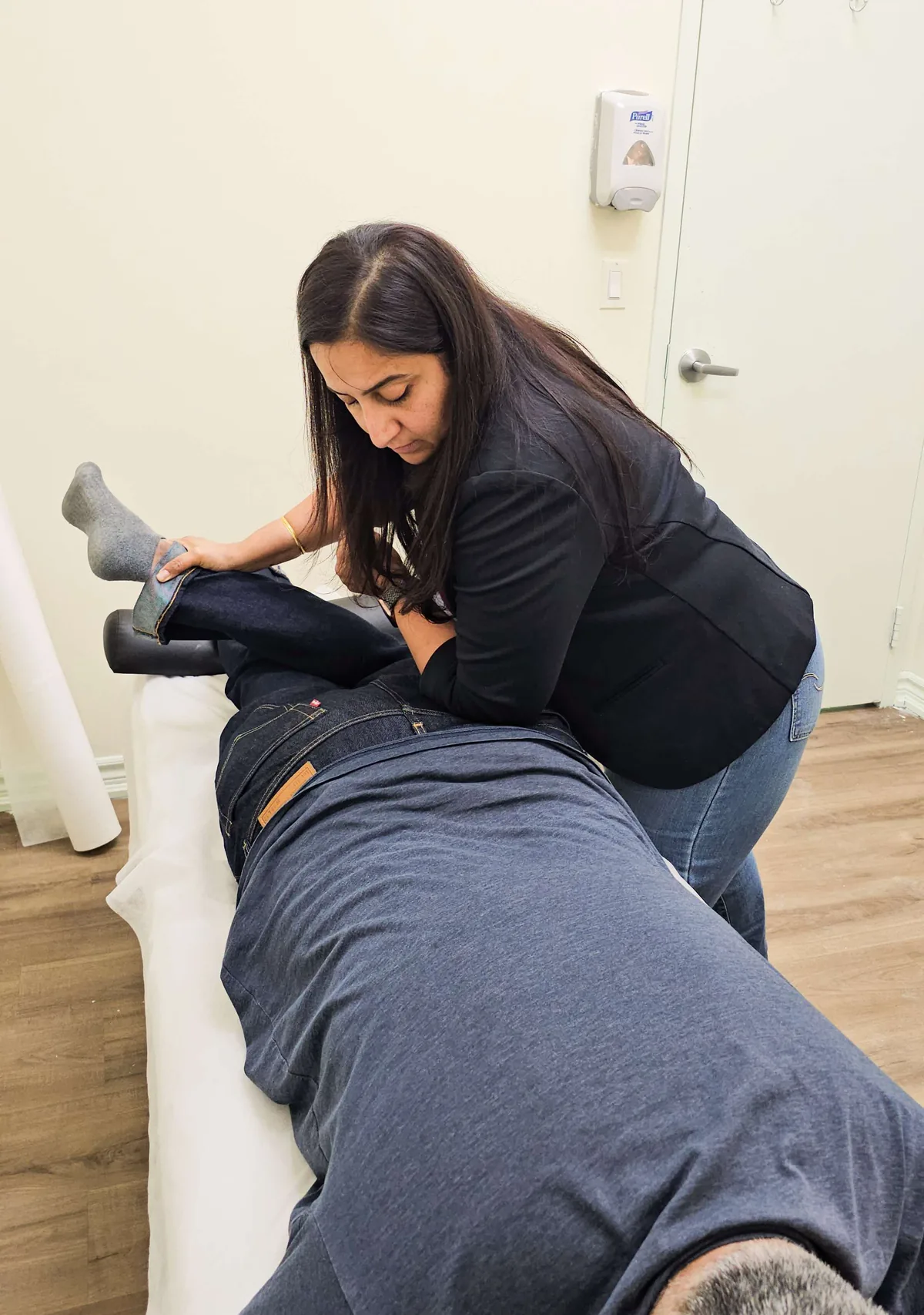

Gurmeet Rai, Registered Physiotherapist
Gurmeet is a Registered Physiotherapist with the College of Physiotherapists of Ontario and the Clinic Director and co-owner of Wellmax Physiotherapy in Oakville, with 16+ years of clinical experience. She focuses on complex, stubborn cases where earlier treatment has not worked, with advanced training in pelvic health, TMJ, vestibular, and sports and MSK rehab. Expect expert care from assessment to discharge, with honest guidance along the way. Read Gurmeet’s full profile or meet the team.
This article is for educational purposes only and does not replace a professional clinical assessment. Every body and condition is different. If you are experiencing pain or symptoms, book an assessment with a qualified clinician for advice specific to your situation. If you are experiencing a medical emergency, call 911 or visit your nearest emergency department.
