Pelvic Floor Physiotherapy in Oakville
Incontinence, prolapse, postpartum recovery, pelvic pain and diastasis recti. One-on-one, private room, expert care every visit. No referral needed.
Home > Our Services > Pelvic Floor Physiotherapy in Oakville
Some people wait years with pelvic symptoms because they were told it was just something to live with. We take those cases, and our pelvic floor physiotherapist in Oakville starts with a 60-minute assessment in a private room.
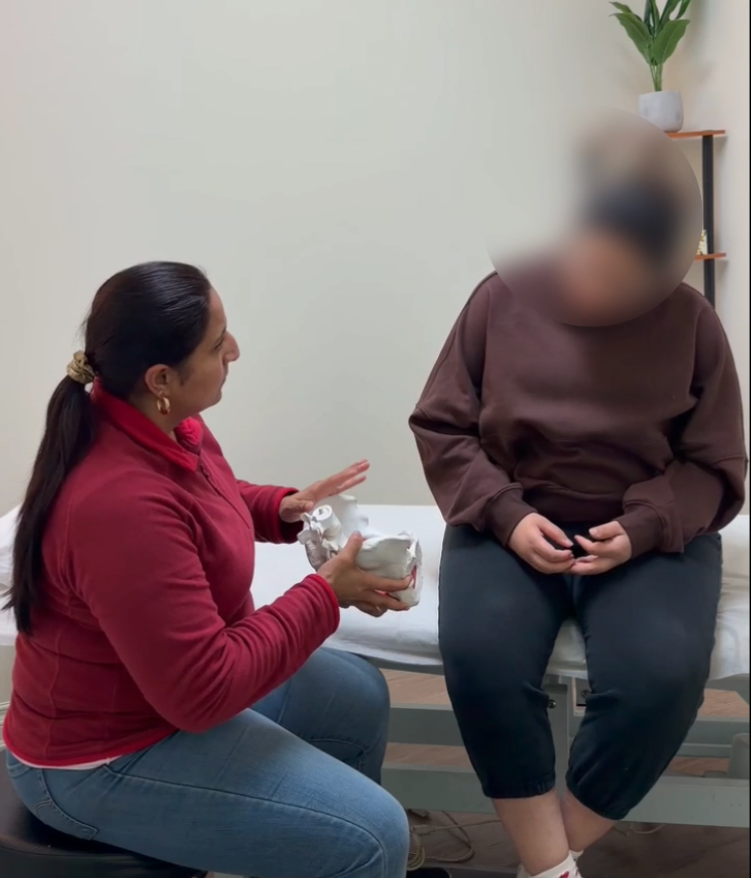
You have been leaking, aching, or just managing. You were told it comes with the territory. It doesn’t.
Pelvic floor physiotherapy in Oakville at Wellmax is built around one reality: these conditions are treatable, and you do not have to keep living around them. Research shows supervised pelvic floor treatment resolves stress incontinence in 60 to 70% of patients. The same approach addresses prolapse, postpartum recovery, pelvic pain, and diastasis recti.
One-on-one, private room, expert care every visit. No referral needed. Direct billing available.
Wellmax Physiotherapy provides expert pelvic floor physiotherapy in Oakville for incontinence, prolapse, postpartum recovery, pelvic pain, diastasis recti, and more.
A lot of people dealing with pelvic floor problems have spent months, sometimes years, telling themselves it is just part of life now. That leaking when you sneeze is normal after having a baby. That the heaviness you feel in your pelvis by the end of the day is something you manage, not something you fix. That pain during sex is just how it is. None of that is true. Pelvic floor physiotherapy at Wellmax is built around one simple reality: these conditions are treatable, and you do not have to keep living around them.
This is still one of the most under-discussed areas in physiotherapy, and it should not be. Pelvic floor issues affect a huge number of women: postpartum, during pregnancy, and after surgery. For too long the conversation has been limited to “just do your Kegels.”
Wellmax offers pelvic floor physiotherapy in Oakville provided by a registered physiotherapist trained specifically in this area. Every session is one-on-one, in a fully private room with the door closed. No open-concept gym areas, no curtained-off corners. That level of privacy is not a bonus. It is the foundation of effective pelvic health care.
We are at 1148 Winston Churchill Blvd, Unit B3, Oakville, in the Winston Park area just south of the QEW. Serving Clarkson, Clearview, Sheridan Park, Maple Grove, and south Mississauga.
- Pelvic Floor Physiotherapy at Wellmax
- Understanding the Pelvic Floor
- Conditions We Treat
- How We Treat Pelvic Floor Conditions at Wellmax
- What to Expect at Your First Pelvic Floor Assessment
- What Results to Expect
- Why Choose Wellmax for Pelvic Floor Physiotherapy in Oakville
- How Much Pelvic Floor Physiotherapy Costs
- Related Services
- Book Your Confidential Pelvic Floor Assessment in Oakville
- Frequently Asked Questions
Pelvic Floor Physiotherapy at Wellmax
Pelvic floor physiotherapy at Wellmax is not a one-size-fits-all approach. Your first session starts with a detailed conversation: symptoms, history, what makes things better or worse, what your goals are. Then a physical assessment. Then, if clinically indicated and only with your full informed consent, an internal assessment to understand exactly how your pelvic floor is functioning.
Treatment is built around what your pelvic floor actually needs. For some patients, that is progressive strengthening. For others, it is relaxation and releasing chronic tension. For many, it is both: a pelvic floor that is weak in some areas and guarded in others. Up to 50% of women who try Kegels on their own are doing them incorrectly. That is not a judgment. It is a fact that makes professional assessment worth it.
Treatment methods include pelvic floor muscle training, manual therapy (internal and external), core rehabilitation, bladder and bowel retraining, and practical education that you can actually apply to daily life.
Understanding the Pelvic Floor
The pelvic floor is a layered group of muscles that stretch like a hammock from the pubic bone at the front to the tailbone at the back. They support the bladder, uterus, and rectum, control when you leak and when you do not, contribute to sexual function, and form a core part of your spinal stability system, working alongside the deep abdominals, the diaphragm, and the multifidus muscles of the spine.
When people think “pelvic floor problem,” they usually think weak muscles. Weakness is common, especially after pregnancy and delivery, after menopause, or with aging. But dysfunction can also mean muscles that are too tight, muscles with poor coordination, or muscles that cannot sustain effort long enough to do their job. A tight pelvic floor causing pain will get worse with Kegels, not better. That is exactly why a proper assessment comes first.
You may benefit from pelvic floor physiotherapy if you are dealing with:
- Leaking urine when you cough, sneeze, laugh, or jump
- Rushing to the bathroom and not always making it in time
- Pressure or heaviness in the pelvis, worse at end of day
- Postpartum pain, core weakness, or a tummy that still feels disconnected
- Pain during intercourse
- Painful periods
- Constipation or bowel control issues
- Pelvic, hip, or lower back pain linked to muscle tightness
- Recovery after pelvic or abdominal surgery, including C-section
Conditions We Treat
Urinary Incontinence
Leaking urine is the most common pelvic floor complaint and one of the most treatable. There are several types, and the distinction matters because treatment differs.
Stress incontinence is leaking that happens with physical exertion: coughing, sneezing, laughing, jumping, running, or lifting. The pelvic floor cannot generate enough closure force to counteract the sudden increase in abdominal pressure. This is the most common type in women after childbirth and during perimenopause. Research shows that supervised pelvic floor muscle training is effective in 60 to 70% of women with stress incontinence. Learn more on our Bladder Leakage and Incontinence page.
Urge incontinence is a sudden, strong need to urinate that is hard to control, sometimes resulting in leaking before reaching the bathroom. This involves the bladder contracting when it should not, and treatment combines bladder retraining strategies with pelvic floor exercises to improve the muscles’ ability to suppress the urge. See our Overactive Bladder page for more.
Mixed incontinence involves both stress and urge components, which is common. Frequency and urgency (needing to urinate more than 6 to 8 times per day, or feeling an intense need to go with very little urine in the bladder) often accompany incontinence and respond to the same treatment approach.
The key point: incontinence is not an inevitable consequence of having a baby or getting older. It is a muscular and neurological issue that physiotherapy directly addresses. Most patients see significant improvement within 6 to 12 weeks of consistent treatment and home exercise.
Pelvic Organ Prolapse
Prolapse happens when the pelvic organs shift from their normal position because the supporting structures (muscles, ligaments, and connective tissue) are weakened. Most common after vaginal delivery, particularly with prolonged pushing, large babies, or multiple pregnancies. Also common during and after menopause.
The feeling most women describe: heaviness, pressure, or a bulge in the vaginal area. Often worse at the end of the day, after standing for long periods, or after lifting. Physiotherapy for prolapse focuses on pelvic floor strengthening, proper lifting and straining mechanics, constipation management, and activity modification. Many women with mild to moderate prolapse manage their symptoms effectively with physiotherapy alone. Full details on our Pelvic Organ Prolapse page.
Pregnancy-Related Pelvic Pain
Pelvic girdle pain, pubic symphysis pain, sacroiliac joint discomfort, and lower back pain during pregnancy are extremely common and extremely under-treated. Most women are told to rest, manage it, and wait it out. Physiotherapy does more than that. See our dedicated Pregnancy Pelvic Pain page for the full approach.
Pregnancy-related pelvic pain at Wellmax is addressed directly through manual therapy, targeted exercise, and education. The goal is to keep you functional and as comfortable as possible through your pregnancy. Not just surviving the third trimester, actually moving well through it.
Prenatal pelvic floor physiotherapy also covers a broader set of goals beyond pain management. Assessment identifies any existing pelvic floor weakness or dysfunction before it becomes a postpartum problem. Pelvic floor training during pregnancy maintains strength and coordination for labour. Perineal massage education starting around 34 weeks has evidence for reducing tearing during vaginal delivery. And a postpartum recovery plan is put in place before the baby arrives.
The second trimester is the ideal time to start, but any point during pregnancy is worth coming in. If something feels wrong or uncomfortable, do not wait.
Postpartum Pelvic Rehab

A lot of new moms in Sheridan Park and Clearview assume that leaking when they jump, or a core that still feels hollow months after delivery, is just what having a baby does to your body. It is not, or at least it is not something you have to accept permanently. Postpartum pelvic rehab at Wellmax is designed to actually restore what pregnancy and delivery changed.
The 6-week medical check confirms that healing is progressing. It does not assess pelvic floor function, diastasis recti, or whether your core is actually ready for the things you are trying to do. That is a different evaluation entirely.
Common postpartum concerns that bring patients in:
- Leaking with coughing, sneezing, laughing, or exercise
- Pelvic heaviness or early prolapse symptoms
- Diastasis recti (abdominal separation that has not resolved)
- C-section scar tightness or sensitivity
- Pelvic girdle pain or sacroiliac joint pain that persists after delivery
- Pain during intercourse
- Uncertainty about when and how to return to exercise safely
Formal postpartum assessment typically starts at 6 weeks with medical clearance. Earlier consultation is welcome if you have questions. C-section recovery timing depends on wound healing, typically 6 to 8 weeks. And there is no “too late.” Women come in for postpartum rehab months or even years after delivery and still see real improvement. Pelvic floor dysfunction does not have an expiration date on treatment.
Diastasis Recti (Abdominal Separation)
During pregnancy, the two sides of the rectus abdominis muscles separate along the midline to make room for the baby. For many women, this resolves on its own postpartum. Full details on our Diastasis Recti page.
When it does not resolve, it can cause a visible bulge or “doming” down the centre of the abdomen when sitting up, a core that feels weak or disconnected, difficulty lifting, lower back pain, and a persistent tummy that does not respond to exercise.
Assessment measures the width, depth, and tissue tension of the separation. Treatment focuses on specific core retraining (not crunches, which typically make diastasis worse) that restores the ability to generate tension across the midline. The goal is functional recovery: a core that works, not just a gap that closes.
Pelvic Pain
Pelvic pain covers a wide range of conditions: pain in the pelvis, vulva, vagina, perineum, lower abdomen, or tailbone. It can be constant or intermittent, triggered by specific activities or always present. See our Pelvic Pain and Painful Sex page for condition-specific detail.
Conditions treated include dyspareunia (painful intercourse), vaginismus, vulvodynia, coccydynia (tailbone pain), pudendal neuralgia, endometriosis-related pelvic pain, and chronic pelvic pain syndrome.
Treatment for pelvic pain is typically the opposite of what is done for incontinence. The focus is on releasing tension, down-training overactive muscles, manual therapy to address trigger points and scar tissue, and pain education. What your pelvic floor needs is determined by assessment, not assumption.
Chronic Constipation and Bowel Dysfunction
The pelvic floor plays a direct role in bowel function. For stool to pass normally, the pelvic floor has to relax and coordinate with abdominal pressure. When it cannot relax properly, straining becomes a habit, which creates more tension. Physiotherapy addresses pelvic floor coordination during bearing down, relaxation patterns, toileting posture, and dietary guidance.
How We Treat Pelvic Floor Conditions at Wellmax
Pelvic Floor Muscle Training
This is the foundation of pelvic floor physiotherapy. It involves learning to correctly contract and relax the pelvic floor muscles, then progressively strengthening them over time. The emphasis on “correctly” is important. Research shows that up to 50% of women perform Kegels incorrectly when given verbal instruction alone. They may be bearing down instead of lifting, engaging the wrong muscles, or holding their breath. Direct assessment (ideally internal) confirms that the muscles are activating properly before a strengthening program begins.
Training progresses from isolated pelvic floor contractions to integration with functional movements: coughing, sneezing, lifting, jumping, and running. The goal is automatic activation in real-life situations, not just lying on a bed doing exercises.
Manual Therapy
Internal manual therapy (with consent) addresses specific muscle tension, trigger points, scar tissue restrictions, and connective tissue tightness within the pelvic floor. This is particularly important for pain conditions, vaginismus, scar-related dysfunction (perineal tears, episiotomy scars, C-section scars), and overactive pelvic floors.
External manual therapy includes work on the hip muscles, inner thighs, abdominal wall, lower back, and sacroiliac joint, all of which influence pelvic floor function and are often involved in pelvic pain and dysfunction.
Core Rehabilitation
The pelvic floor does not work in isolation. It coordinates with the transversus abdominis, diaphragm, and multifidus as part of the deep core system. Restoring this coordination is essential for long-term results, particularly after pregnancy, abdominal surgery, or prolonged dysfunction. Core rehabilitation at Wellmax is specific and progressive: not generic “core exercises” but targeted retraining of the deep stabilization system that supports the pelvic floor. This is directly relevant to back pain that has a pelvic floor component.
Bladder and Bowel Retraining
For urge incontinence, frequency, urgency, and constipation, behavioural strategies are a critical part of treatment. Bladder retraining involves gradually increasing the time between voiding to restore normal bladder capacity and reduce urgency. Bowel management includes dietary guidance, positioning strategies, and pelvic floor coordination training for proper emptying.
Education and Lifestyle Modification
Understanding what your pelvic floor is doing and why is a powerful part of treatment. Education covers fluid intake management, dietary factors affecting bladder and bowel, proper lifting mechanics that protect the pelvic floor, exercise modification during recovery, and long-term strategies for maintaining pelvic floor health. For those managing symptoms alongside other health changes, our Menopause and Perimenopause page covers pelvic floor changes related to hormonal shifts.

Level 3 Pelvic Health Certified
 Advanced training with
Pelvic Health Solutions
As a Level 3 certified, rostered pelvic health practitioner, Gurmeet Rai looks at how your pelvic floor works with your breathing, posture and daily load. Whether the concern is leaking, prolapse, pelvic pain or postpartum change, she explains what she finds in plain words. Your first visit is a full 60-minute assessment, and your plan has a clear end point.
What to Expect at Your First Pelvic Floor Assessment
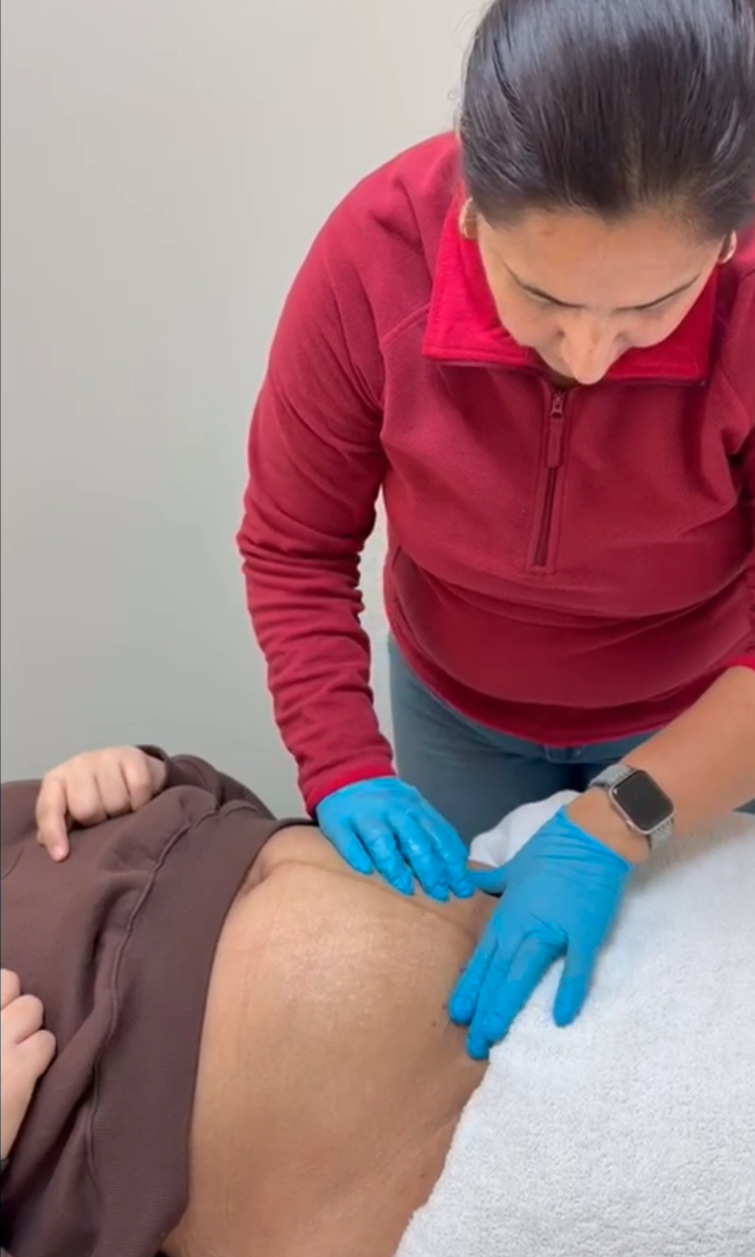
If you have never had a pelvic floor assessment before, not knowing what to expect is one of the biggest reasons people delay coming in. Here is exactly what happens.
Before you arrive: Complete intake forms through JaneApp, or arrive 10 minutes early. Wear comfortable clothing. No special preparation is needed.
Your session is in a private room, door closed, just you and your physiotherapist for the full appointment.
- Detailed history: Questions about your symptoms, when they started, what makes them better or worse, your pregnancy and delivery history, bowel and bladder habits, sexual function concerns, exercise levels, and what you actually want to get back to. Nothing you say will be judged.
- Physical assessment: Posture and movement, breathing pattern evaluation, abdominal wall assessment including diastasis recti check, hip and lower back assessment, and pelvic floor assessment.
- Internal assessment: If clinically indicated, your physiotherapist will explain exactly what it involves and ask for your informed consent. It involves a single gloved finger vaginally (or rectally for bowel-related concerns) to assess muscle strength, endurance, coordination, tone, and tenderness. You can decline at any time, for any reason. External assessment alone can still be highly effective.
You leave with a clear understanding of what your pelvic floor is doing, a realistic treatment plan, initial home exercises, and your next appointment booked.
What Results to Expect
| Condition | Expected Outcome | Typical Timeline |
|---|---|---|
| Stress incontinence | 60 to 70% resolved or significantly improved | 6 to 12 weeks |
| Urge incontinence | Significant reduction in urgency and frequency | 6 to 12 weeks |
| Pelvic organ prolapse | Symptom improvement, reduced heaviness | 8 to 16 weeks |
| Diastasis recti | Improved tension and functional recovery | 6 to 12 weeks |
| Pelvic pain and dyspareunia | Significant pain reduction | 8 to 16 weeks |
| Postpartum recovery | Core and pelvic floor function restored | 6 to 16 weeks |
| Vaginismus | Progressive improvement in comfort | 8 to 20 weeks |
Why Choose Wellmax for Pelvic Floor Physiotherapy in Oakville
- Private room every visit: Every pelvic health session is in a fully enclosed room. Not a curtained-off corner. Not a shared gym space. A real private room, every time.
- Expert care every visit: Pelvic floor treatment is deeply personal. Trust matters. Your progress is tracked from session one, your comfort sets the pace, and you get honest guidance on where you stand.
- Consent-centred care: Internal assessment is only performed with explicit, informed consent. You are told exactly what will happen before anything happens. You can decline at any time without judgment, no questions asked.
- Evidence-based treatment: Treatment at Wellmax is grounded in current research. Pelvic floor physiotherapy has strong clinical evidence for incontinence, prolapse management, prenatal and postpartum recovery, and pelvic pain.
- Integrated clinic: If your pelvic floor condition involves the lower back, hips, or chronic pain, you have access to the full range of physiotherapy services under the same roof.
- Direct insurance billing: Pelvic floor physiotherapy is covered under your physiotherapy benefit in most extended health plans. We direct bill to Sun Life, Manulife, Canada Life (formerly Great-West Life), Green Shield, Blue Cross, Desjardins, and most other major providers. WSIB claims accepted. No referral needed.
- Weekend and evening availability: Monday to Friday 9am to 7pm, Saturday 9am to 2pm. Weekend availability means you do not have to take time off work for appointments.
- Pelvic Health Solutions trained: Our pelvic floor physiotherapist holds advanced training through Pelvic Health Solutions, the leading Canadian continuing education provider for pelvic health.
We treat pelvic floor conditions across the local community: new moms in Sheridan Park and Clearview working on postpartum recovery, women in Joshua Creek and Maple Grove managing incontinence or prolapse, patients dealing with pelvic pain who have been told nothing can be done, women recovering from pelvic surgery, and anyone who has been quietly managing something that is actually very treatable. We are at 1148 Winston Churchill Blvd, Unit B3, Oakville, just south of the QEW, with free parking, ground-level access, and private treatment rooms.
How much does pelvic floor physiotherapy cost in Oakville?
| Appointment | Length | Fee |
|---|---|---|
| Free consult | 15 minutes | $0 |
| Pelvic health assessment | 60 minutes | $150 |
| Pelvic health treatment | 45 minutes | $120 |
Most extended health plans cover a large share of these fees, and we direct bill most major insurers, so you usually pay only the remaining portion at the desk. WSIB and motor vehicle accident claims are billed to the insurer directly at no cost to you. Prices are in Canadian dollars and current as of October 2026.
How Direct Billing for Pelvic Floor Physiotherapy Works at Wellmax
- Bring your plan details. Your insurance company, your plan or policy number and your member ID. If you are covered under a spouse or parent, bring their plan member details too.
- We submit the claim for you. At your visit we send the claim for your pelvic floor physiotherapy session straight to your insurer.
- You pay only what is left. If your plan covers part of the visit, you pay only the difference. If your plan does not allow direct billing, you pay at the visit and we give you an official physiotherapy receipt to submit yourself.
Insurers We Direct Bill for Pelvic Floor Physiotherapy
We direct bill most major insurers for pelvic floor physiotherapy in Oakville, including Manulife, Sun Life, Canada Life (formerly Great-West Life), Desjardins, Green Shield Canada, Blue Cross, Medavie Blue Cross, Industrial Alliance, ClaimSecure, Empire Life, Equitable Life, Cowan, Johnston Group, GroupHEALTH, GroupSource and SSQ. WSIB and motor vehicle accident (MVA) claims are billed to the insurer directly. Not sure about your plan? Ask us before your first visit and we will check it with you.
What Our Patients Say
Verified Patient“After my second baby I was dealing with leakage every time I coughed, sneezed, or tried to exercise. I put off getting help for almost a year because I felt embarrassed and thought it was just something that happens after kids. The pelvic floor assessment at Wellmax was private, respectful, and way less uncomfortable than I expected. Gurmeet explained exactly what was happening with my pelvic floor muscles and gave me a program that was nothing like the generic Kegels my doctor had suggested. Four sessions in and the leakage had improved significantly. I can actually jump with my kids again without worrying.”
Emily C.“I can confidently say this is the best physiotherapy clinic in Oakville for postpartum care. After having my baby, I was experiencing pelvic floor discomfort and lower back pain that was making daily life very difficult. I booked an appointment with Gurmeet, and she made me feel completely comfortable and heard right from the start. She asked detailed questions about my daily routine and explained how pelvic health physiotherapy could help rebuild my core strength safely. The hands-on treatment and tailored home exercises made a massive difference in just a few weeks. The atmosphere is welcoming and professional, and they truly focus on long-term results rather than just a quick fix.”
Mrs A.“I have pelvic pain after my hysterectomy. I visited my doctors in UK, but I didn’t get any relief. My sister recommended me to come to Canada and consult her physio Gurmeet Rai. Gurmeet caught the root cause of my problem. After three appointments my mobility was improved.Working with Gurmeet Rai has been an absolute game changer. She quickly identified that my pelvic floor function was the missing link.The combination of targeted manual therapy and functional strength progression entirely resolved my symptoms, she is highly specialized expert who truly treat the root cause of my issues.Now she is working on migraine I hope it will be resolved soon .It is really worth to come to Canada and see Gurmeet for …”
Victoria D.“I first met Gurmeet about two years ago at a different clinic when I sought out pelvic floor therapy to help with C-section recovery after the birth of my second daughter. Within just a handful of sessions, Gurmeet took issues I had been struggling with for months (and honestly, years after my first birth) and had me feeling like myself again. She’s the reason I went from debilitatingly painful periods to completely manageable ones — something I didn’t think was possible! Since then, I’ve seen her for other physio needs, as I carry a lot of stress-related tension and chronic pain. Gurmeet is exceptionally kind, supportive, and incredibly knowledgeable about how the body functions as a whole. …”
Farrah S.“I saw Gurmeet for Pelvic Floor Therapy, before and after my Hysterectomy. She always made me feel comfortable and is very knowledgeable, helpful, and educated me during the whole process and at each visit. The front desk staff are always inviting and professional. I would recommend Wellmax to my friends and family.”
Amara W.“I can’t recommend Gurmeet enough for post-partum recovery. She has been incredibly supportive, knowledgeable, and attentive throughout my healing journey. An incredible pelvic floor physio she is. From week 1 Postpartum I am seeing Gurmeet and thats the best decision I ever made!”
Verified Patient“I was referred to pelvic health physio after having bladder urgency issues for months. I was nervous about the internal assessment but the therapist at Wellmax explained every single step before doing anything and I never felt rushed or uncomfortable. The treatment room was completely private. By the end of my treatment plan I went from running to the bathroom every 30 minutes to being able to hold comfortably for hours. I wish I had done this sooner instead of just assuming I had to live with it.”
Shamaila R.“Gurmeet Rai is not only an amazing physiotherapist, but also a truly wonderful person. Her smiling face and unique approach to treatment completely set her apart from other therapists. I first came to her with severe lower back and leg pain, and after her treatments, I experienced massive relief. When my younger sister visited from the UK suffering from pelvic floor issues, I immediately recommended Gurmeet. After just a few sessions, she is already feeling so much better! The clinic staff are also incredibly welcoming and helpful. Thank you, Gurmeet Rai, for your exceptional therapy and care!”
See all our Google reviewsRead more patient storiesLeave a review
Read our guide: Signs of a weak pelvic floor, and what helps.
Frequently Asked Questions
Is pelvic floor physiotherapy just Kegels?+–
No. Kegels are one tool, and for some conditions they are the wrong tool entirely: a tight, overactive pelvic floor causing pain will get worse with Kegels, not better. Your first assessment establishes whether your pelvic floor needs strengthening, relaxation, coordination training, or a combination of all three.
Is an internal examination required for pelvic floor physiotherapy?+–
No. Internal assessment provides the most accurate evaluation of pelvic floor function and is the gold standard, but it is never required. Your physiotherapist explains why it is recommended and asks for your informed consent before proceeding. You can decline at any time without it affecting your treatment. External techniques can still provide valuable information and guide effective care.
When should I start postpartum pelvic floor physiotherapy?+–
Formal assessment can begin at 6 weeks postpartum with medical clearance (6 to 8 weeks after a C-section, depending on wound healing), and earlier consultation is welcome if you have questions or concerns. It is never too late: women come for postpartum pelvic floor rehabilitation months or years after delivery and still see significant improvement.
Will my insurance cover pelvic floor physiotherapy?+–
Yes. Pelvic floor physiotherapy is billed under your physiotherapy benefit and is covered by most extended health plans. Typical coverage is $500 to $1,500 per year. Wellmax direct bills to Sun Life, Manulife, Canada Life (formerly Great-West Life), Green Shield, Blue Cross, Desjardins, and most other major providers. No referral is needed.
How many sessions will I need for pelvic floor physiotherapy?+–
Most pelvic floor conditions require 6 to 12 sessions over 8 to 16 weeks. Straightforward stress incontinence may resolve in 6 to 8 sessions. More complex conditions like chronic pelvic pain or vaginismus may require 12 to 20 sessions. Your physiotherapist provides a realistic estimate at your first assessment based on the diagnosis and how your pelvic floor is functioning.
Does pelvic floor physiotherapy hurt?+–
Assessment and treatment should not be painful. Internal examination involves gentle palpation and should be comfortable. If you experience any discomfort, say so immediately and your physiotherapist will adjust. For pelvic pain conditions, treatment is progressed gradually and always within your comfort tolerance. The goal is to reduce pain, not create it.
Can I do pelvic floor physiotherapy during pregnancy?+–
Yes, and it is recommended. Prenatal pelvic floor physiotherapy manages pregnancy-related pelvic and back pain, maintains pelvic floor strength for labour, and covers perineal preparation and pushing mechanics, and any point during pregnancy is worthwhile.
I have been leaking for years. Is it too late to benefit from pelvic floor physiotherapy?+–
No. Pelvic floor muscles respond to training at any age, regardless of how long symptoms have been present. Women in their 60s and 70s see meaningful improvement with pelvic floor physiotherapy. Research consistently shows that even long-standing incontinence responds to a supervised training program. It is never too late to start.
Can pelvic floor physiotherapy help with returning to running after having a baby?+–
Yes. Current guidelines recommend no running before 12 weeks postpartum at minimum, and only after pelvic floor assessment confirms readiness. Many women benefit from waiting 16 to 20 weeks with a structured return-to-running program. Your physiotherapist tests pelvic floor strength, endurance, and response to impact before clearing you for running, and provides a graduated program that builds back safely.
What is the difference between pelvic floor physiotherapy and what my GP or OB does at a 6-week postpartum check?+–
The 6-week medical check confirms that physical healing (incision, episiotomy, organ positioning) is progressing. It does not assess pelvic floor muscle function, strength, coordination, or diastasis recti. A pelvic floor physiotherapy assessment specifically evaluates how the muscles are contracting, relaxing, and coordinating, checks the abdominal wall, and determines whether exercise is safe and what program is appropriate. They are complementary, not the same.
Do you treat pelvic floor dysfunction related to endometriosis?+–
Yes. Endometriosis often causes secondary pelvic floor muscle tension, trigger points, and myofascial pain. Physiotherapy addresses the muscular and pain components that develop alongside endometriosis, complementing medical or surgical management. Many patients with endometriosis benefit from pelvic floor physiotherapy as part of their broader care plan.
Where can I get pelvic floor physiotherapy near me?
Wellmax provides pelvic floor physiotherapy at 1148 Winston Churchill Blvd, near the Oakville and Mississauga border. The first visit is a 60-minute assessment in a private treatment room, and you stay in control of what happens and when. You get one-on-one care at Wellmax, and nothing is done without your consent. If you have questions first, book the free 15-minute consultation, which is in person.
Related Services
- Women’s Health Physiotherapy: The full hub for women’s health services at Wellmax.
- Bladder Leakage and Incontinence: Detailed treatment for stress, urge, and mixed incontinence.
- Pelvic Organ Prolapse: Physiotherapy management for prolapse symptoms.
- Pelvic Pain and Painful Sex: Treatment for dyspareunia, vaginismus, and chronic pelvic pain.
- Overactive Bladder: Bladder retraining and pelvic floor treatment for urgency and frequency.
- Diastasis Recti: Core retraining for abdominal separation after pregnancy.
- Pudendal Neuralgia: Physiotherapy for nerve-related pelvic and perineal pain.
- Menopause and Perimenopause: Pelvic floor changes and management through hormonal transitions.
- Pregnancy Pelvic Pain: Prenatal physiotherapy for pelvic girdle and pubic symphysis pain.
- Physiotherapy: The full range of one-on-one, hands-on physiotherapy at Wellmax.
Book Your Confidential Pelvic Floor Assessment in Oakville
If you have been leaking, aching, or just managing, get it properly assessed. We identify exactly what your pelvic floor needs at the first visit and build a treatment plan around that. Prefer to talk it through first? Wellmax offers a free 15-minute consult.
Book a Pelvic Floor Assessment Call (905) 829-1100
Wellmax Physiotherapy
1148 Winston Churchill Blvd, Unit B3, Oakville, ON L6J 0A3
Phone: (905) 829-1100
Email: info@wellmaxphysiotherapy.ca
Hours: Monday to Friday 9am to 7pm; Saturday 9am to 2pm; Sunday 9am to 2pm (by appointment only).
Proudly Serving Our Local Communities:
- East Oakville: Winston Park, Clearview, and the QEW/403 Corridor.
- South Oakville: Eastlake, Maple Grove, Lorne Park, and Old Oakville.
- North Oakville: Joshua Creek, Falgarwood, Iroquois Ridge, and Upper Middle Road.
- Mississauga Border: Clarkson, Sheridan Park, Sheridan Homelands, and Southdown.
Insurance: Direct billing to most major providers. WSIB and MVA claims accepted. No referral needed.
Find Us in Oakville
Registered & Regulated
Regulated & Recognized Across Every Discipline
Wellmax is in good standing with the regulatory colleges and leading associations for physiotherapy, chiropractic, massage therapy, and naturopathic medicine in Ontario.