

Pubic Bone and Pelvic Girdle Pain After Birth: Why It Happens and How to Heal

The first weeks after having a baby ask a lot of your body, and for many new mothers, that includes a deep, nagging ache right at the front of the pelvis, over the pubic bone, or a wider soreness across the whole pelvic girdle. If it hurts to roll over in bed, climb the stairs, or lift one leg to get dressed, and you are exhausted and wondering if this is normal, you are not alone, and you are not broken.
Pubic bone pain after birth, often called pubic symphysis pain or symphysis pubis dysfunction (SPD), is one of the most common and most under-discussed parts of early postpartum recovery. This guide explains why it happens, what it typically feels like, a realistic timeline for feeling better, and how postpartum physiotherapy can help. It is general information, not a diagnosis of your specific situation. If anything here sounds familiar, that is your cue to book an assessment so your care can be built around your body and your birth.
Key Takeaways
- Pubic bone and pelvic girdle pain after birth is common, driven by pregnancy hormones, the physical demands of labour, and new postpartum habits like carrying and feeding.
- Some pelvic soreness in the first few weeks after delivery is normal and expected, not a sign that something has gone wrong.
- Most people see real improvement within the first three months, though a smaller group need more time and hands-on support.
- Gentle, guided movement and pelvic floor care almost always help more than complete rest or waiting it out alone.
Why does pubic bone pain happen after birth?
Pubic bone pain after birth is rarely caused by one single thing. It is usually the combined result of three normal parts of pregnancy and delivery working on the same joint at once: the pubic symphysis, the small joint where the left and right sides of your pelvis meet at the front.
Pregnancy hormones soften the joint
During pregnancy, hormones such as relaxin, progesterone, and estrogen rise to loosen the ligaments around your pelvis so your baby has room to be born. That is exactly what your body is supposed to do. The trade-off is that the pubic symphysis and the joints at the back of the pelvis become more mobile and, for some people, less stable, which can make them ache with everyday movement. Read more on our pregnancy and pelvic pain physiotherapy page.
Labour and delivery add mechanical load
Pushing, positioning, and the birth itself ask a lot of an already-loosened pelvis. A long labour, a difficult positioning during pushing, or a fast delivery can all add extra strain to the pubic symphysis and surrounding joints right at the moment they are least stable. This does not mean anything was done wrong during your birth. It simply means the joint took on real mechanical work at a time when it had less natural support.
Postpartum life keeps the joint under strain
Once your baby arrives, the demands do not stop. Carrying a car seat on one hip, feeding in positions that round your back, bending over a crib dozens of times a day, and broken sleep all add up. None of these habits are wrong. They simply explain why pain can continue, or even start, well after delivery rather than fading away immediately.
Is it normal to still have pelvic pain weeks after having a baby?
Yes. Some ache and stiffness around the pelvis in the early postpartum weeks is a normal, expected part of recovery, not a red flag on its own. Your body spent nine months preparing this joint to soften, and it does not simply reset the moment your baby is born. Many women feel pelvic soreness that eases week by week rather than disappearing overnight.
That said, common does not mean you have to grit your teeth through it. Pain that is limiting how you walk, sleep, or care for your baby deserves attention, and a pelvic health physiotherapy assessment can tell you clearly what is going on and what will help, rather than leaving you to guess.
“Sore does not mean broken. For almost everyone, this is a joint that is healing on a normal timeline and simply needs the right support to get there faster and more comfortably.”
What does postpartum pubic bone and pelvic girdle pain usually feel like?
Every body is different, and only an assessment can tell you what is happening in yours. In general, though, postpartum pubic bone and pelvic girdle pain tends to follow a recognizable pattern rather than showing up randomly. People commonly notice it with:
- Walking, especially longer distances or a brisk pace.
- Going up or down stairs, particularly one leg at a time.
- Turning over in bed, which can bring a sharp catch right at the front of the pelvis.
- Standing on one leg, such as getting dressed, stepping into the shower, or pulling on pants.
- Getting in and out of a car, or lifting a car seat or stroller in and out of the trunk.
Some people describe a dull, deep ache, others a sharp pinch, and some notice a clicking or grinding sensation at the front of the pelvis. These are general patterns worth noticing and mentioning at an assessment. They are not a way to diagnose yourself, since several different structures around the pelvis can produce a similar feeling, and telling them apart is exactly what a hands-on pelvic health assessment is for.
How long does postpartum pelvic girdle pain last? A realistic recovery timeline
This is usually the first question on every new mother’s mind, and the honest answer is that most people get better, often faster than they expect once they have the right plan. Research led by Robinson and colleagues, following women with pregnancy-related pelvic girdle pain after delivery, found that while a meaningful share still reported some pelvic pain at 12 weeks postpartum, most rated their pain and day-to-day disability as low, a pattern consistent with a gradual, positive recovery curve for the majority.
What happens beyond the first three months?
For many people, improvement keeps going well past the 12-week mark, with strength and confidence continuing to build as the joint settles. A smaller group have symptoms that persist longer, sometimes a year or more, and longer-term studies show this is not unusual. That group tends to benefit most from a hands-on, individualized plan rather than simply waiting it out, since time alone is not the only factor that predicts recovery.
Is it safe to move and exercise in the early postpartum weeks?
Yes, and in fact gentle, appropriate movement usually helps pubic bone and pelvic pain more than strict rest does. Lying still for long stretches can leave the muscles around the pelvis weaker and less able to support the joint, which can make pain worse over time rather than better. The goal in the first few weeks is not intensity. It is choosing movement that does not provoke sharp pain and gradually building from there.
What movement and daily habits tend to help?
- Keeping your knees together when rolling in bed, getting out of bed, or getting in and out of the car.
- Taking stairs one at a time, leading with the more comfortable leg, rather than alternating.
- Sitting to get dressed instead of standing on one leg.
- Short, frequent walks rather than one long walk, especially in the first few weeks.
- Avoiding activities that involve wide-legged stretching or twisting through the pelvis until they have been cleared.
What role does the pelvic floor play?
The pelvic floor, deep core, and pubic symphysis all work as one connected system, so pelvic floor recovery matters even when your main complaint is pubic bone pain rather than incontinence or heaviness. Gentle, correctly coached pelvic floor activation can help support the front of the pelvis from the inside, which is one reason pelvic floor therapy is often part of the plan for postpartum pelvic girdle pain, not just for bladder symptoms. If you also notice doming or a gap along your midline abdominal muscles, that is worth mentioning too, since core and pelvic recovery are closely linked, and our diastasis recti physiotherapy page explains how that piece fits in.
How does pelvic health physiotherapy help with pubic bone pain after birth?
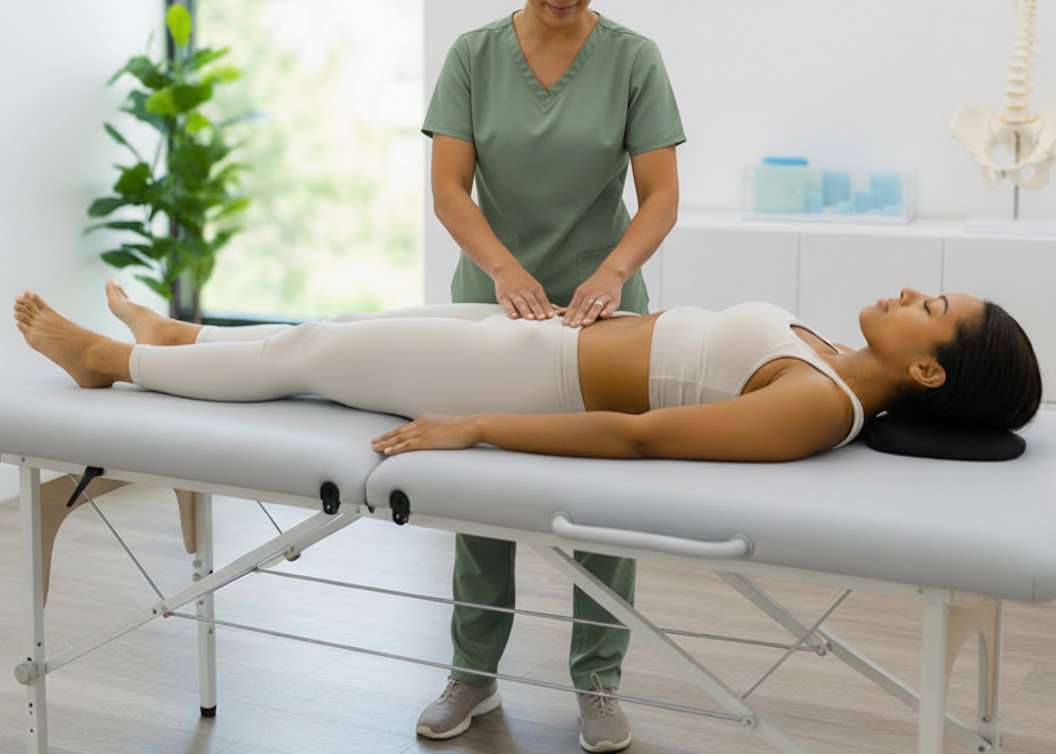
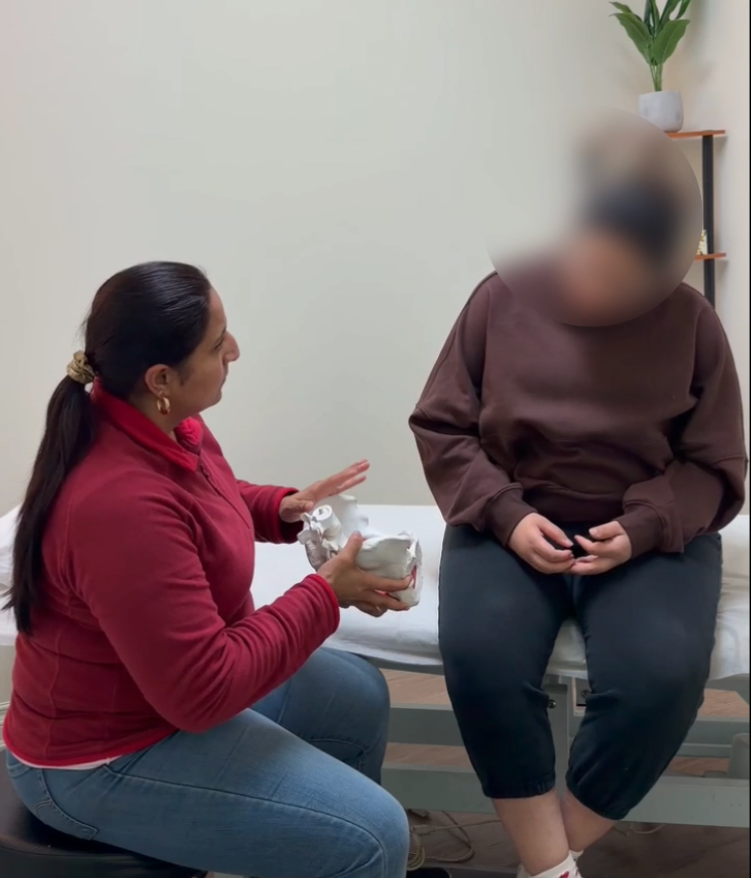
Pelvic health physiotherapy looks at your pelvis as a whole connected system rather than treating the front of the pubic bone in isolation. A thorough assessment looks at how your pelvis moves, how your deep core and pelvic floor are working together, your posture during feeding and carrying, and your specific daily routine with your baby, before building a plan around what your body actually needs.
Treatment commonly includes hands-on manual therapy to calm irritated joints and overworking muscles, a graded exercise plan that rebuilds strength without provoking pain, practical coaching for daily tasks like lifting a car seat or feeding, and pelvic floor rehabilitation where needed. The goal is a confident, supported recovery, not endless visits with no clear plan.
At Wellmax, first assessments run a full 60 minutes because a story like this deserves the time to be properly understood. Gurmeet Rai, our Clinic Director, is a Registered Physiotherapist with advanced training specifically in pelvic health, alongside 16-plus years of clinical experience, and our team supports new families across Oakville and Mississauga through our broader women’s health physiotherapy program. You can read more about her background on the Gurmeet Rai physiotherapist page, and if pain started earlier in pregnancy and never fully resolved, our pregnancy back pain relief guide is a helpful companion to this one.
Not sure where to start?
Book a free consultation and we will point you to the right care, with no pressure.
When should you contact your doctor instead of waiting for physiotherapy?
Most postpartum pubic bone and pelvic girdle pain, while uncomfortable, is not dangerous and improves with the right plan and a bit of time. A smaller number of symptoms need medical attention right away rather than waiting for a physiotherapy appointment. Fever, severe or worsening pain, heavy vaginal bleeding, a foul-smelling discharge, or being completely unable to walk or bear weight after birth are signs to contact your doctor, midwife, or a hospital right away. When in doubt, it is always reasonable to reach out and ask.
Frequently Asked Questions
How common is pubic bone pain after having a baby?+
Very common. Pelvic girdle pain and pubic symphysis pain are widely reported in the weeks after delivery, since the same hormonal softening and joint mobility that help during birth do not disappear the moment your baby arrives. Research following postpartum women shows a meaningful share still notice some pelvic discomfort around the three-month mark, though for most people it is mild and steadily improving rather than severe or worsening.
What does pubic symphysis pain feel like after birth?+
People generally describe a deep ache, a sharp pinch, or a clicking or grinding feeling right at the front of the pelvis, over the pubic bone. It is commonly noticed with walking, climbing stairs, turning over in bed, or standing on one leg to get dressed. These are general patterns rather than a diagnosis, since a hands-on assessment is the only reliable way to confirm exactly what is producing the pain in your body.
How long does postpartum pelvic girdle pain last?+
For most people, meaningful improvement happens within the first three months after birth, with strength and comfort continuing to build for months after that. A smaller group of women have symptoms that last longer, sometimes a year or more, which is where a pelvic health physiotherapy plan tends to make the biggest difference rather than waiting for time alone to resolve it.
Is it safe to exercise with pubic bone pain after birth?+
Yes, gentle and appropriately paced movement is usually part of the solution rather than something to avoid. Strict rest can leave the muscles that support the pelvis weaker over time. Early on, the safest approach is short walks, keeping the knees together during transfers like getting out of bed or the car, and avoiding wide-legged or twisting movements until a physiotherapist has assessed you and guided your progression.
Can I still carry and feed my baby if my pelvis hurts?+
Yes, with some adjustments. Feeding positions that keep your back supported and your pelvis level, switching which hip you carry on, and sitting rather than standing on one leg to dress or change your baby can all reduce strain on a sore pubic symphysis. A physiotherapist can walk through your specific daily routine and suggest small changes that make a real difference without asking you to stop caring for your baby the way you need to.
Do I need an X-ray or scan for pubic bone pain after birth?+
Usually not. Most postpartum pubic bone and pelvic girdle pain is diagnosed through a clinical assessment, looking at your history, movement, and hands-on testing, rather than imaging. Imaging is generally reserved for pain that is severe, not following the expected pattern, or not improving as anticipated. Your physiotherapist or doctor can advise if imaging is appropriate for your specific situation.
Will a pelvic support belt help postpartum pelvic pain?+
For many people, yes, especially in the early weeks. A pelvic support belt, worn correctly and at the right position, can offload the pubic symphysis and the joints at the back of the pelvis, making walking and standing more comfortable. It works best as one part of a broader plan that also includes movement and pelvic floor and core rehabilitation, rather than as a stand-alone fix.
When should pelvic pain after birth be treated as urgent?+
Fever, severe or worsening pain, heavy vaginal bleeding, a foul-smelling discharge, or being completely unable to walk or bear weight after birth are signs to contact your doctor, midwife, or a hospital right away rather than waiting for a physiotherapy appointment. Most postpartum pelvic pain is uncomfortable but not dangerous, but these particular signs deserve prompt medical attention.
You Might Also Like

Gurmeet Rai, Registered Physiotherapist
Gurmeet is a Registered Physiotherapist with the College of Physiotherapists of Ontario and the Clinic Director and co-owner of Wellmax Physiotherapy in Oakville, with 16+ years of clinical experience. She focuses on complex, stubborn cases where earlier treatment has not worked, with advanced training in pelvic health, TMJ, vestibular, and sports and MSK rehab. Expect expert care from assessment to discharge, with honest guidance along the way. Read Gurmeet’s full profile or meet the team.
This article is for educational purposes only and does not replace a professional clinical assessment. Every body and condition is different. If you are experiencing pain or symptoms, book an assessment with a qualified clinician for advice specific to your situation. If you are experiencing a medical emergency, call 911 or visit your nearest emergency department.
