
Grade 3 Ankle Sprain Recovery: A Clarkson Patient’s Case Study

A grade 3 ankle sprain is one of the more serious ankle injuries we see at Wellmax Physiotherapy in Oakville, and it turns up more often than you would think in active people across Clarkson, Oakville and Mississauga. It usually starts with a single bad step or an awkward landing, and suddenly you cannot put weight through your foot.
This is a real recovery story from one of our patients, shared here as a case study. Every ankle and every person is different, so please read it as an example of how we work, not a promise of a specific timeline. Names and identifying details have been left out.
Key Takeaways
- A grade 3 ankle sprain means a ligament is torn through or almost through, yet most people still recover fully with the right guided rehabilitation.
- Getting it assessed early matters. Guessing the grade or toughing it out is what leaves an ankle weak and prone to rolling again.
- Recovery follows stages: calm the joint and restore movement, rebuild strength, then retrain balance so the ankle can be trusted on uneven ground.
- You do not need a referral in Ontario, and Wellmax is minutes from Clarkson with direct billing.
What is a grade 3 ankle sprain?
Ankle sprains are graded by how much the ligaments are damaged. A grade 1 is a mild overstretch, a grade 2 is a partial tear, and a grade 3 means one or more ligaments are torn through or very close to it.
A grade 3 usually comes with heavy swelling, bruising, and a clear feeling that the ankle cannot be trusted to hold you. Many people end up on crutches for a while. The reassuring part is that even severe sprains tend to recover well when the rehabilitation is done properly and in the right order. You can read more on our ankle sprain physiotherapy page.
What did this patient’s ankle look like at the start?
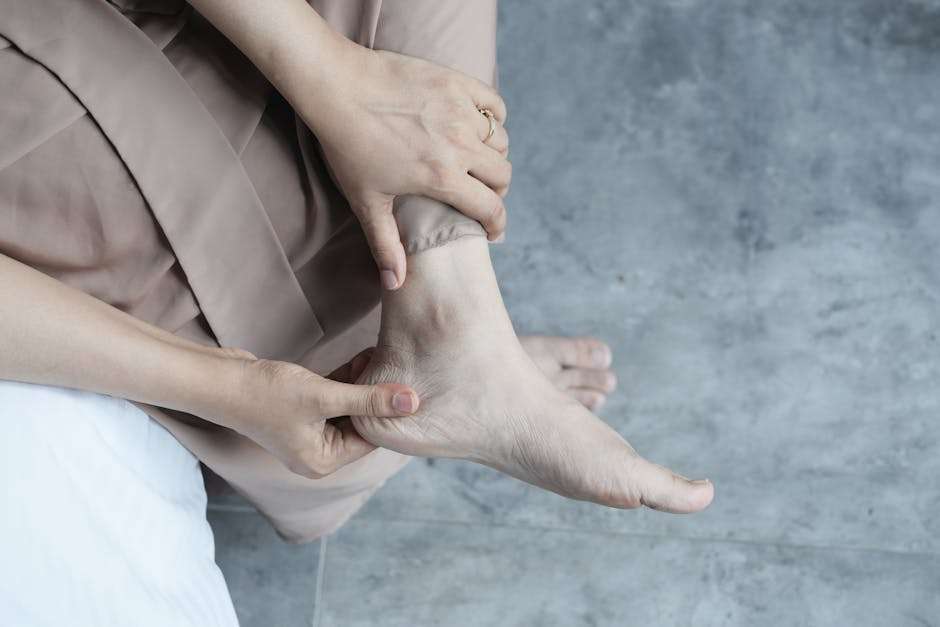
This patient came to us in late summer after a bad roll of the ankle and a grade 3 diagnosis. They were on crutches, could not bear weight, and could barely move the ankle enough to trace a small circle.
On top of the physical pain was the part people rarely mention: not knowing whether, or when, they would walk normally again. That uncertainty is its own barrier. When you do not understand what is happening, every twinge feels like a setback, and fear makes you move less, which slows healing further.
“By explaining what she was doing and why, she eased not just the physical pain, but the pain of not knowing when I would walk again.”
How did we assess the injury?
The first visit was a full 60-minute, one-on-one assessment. Rather than rushing into a sheet of exercises, the physiotherapist examined how the ankle moved, checked the surrounding joints and muscles, and then explained in plain language what was going on and why each part of the plan mattered.
That explanation did real work. Understanding the plan settled the fear, and a calm, informed patient sticks to their rehabilitation far better than an anxious one. This is the same hands-on, root-cause approach our lead physiotherapist Gurmeet Rai has used across more than 16 years of practice.
What did the treatment plan involve?
Treatment combined hands-on manual therapy to restore the ankle’s movement with a progressive exercise program that changed as the ankle got stronger. It moved through clear stages rather than jumping ahead.
- Settle and restore motion. Gentle hands-on work and easy, pain-respecting movement to calm the joint and get the ankle bending and pointing again.
- Rebuild strength. Loading the ankle and calf gradually so the supporting muscles could take over the work and protect the healing ligaments.
- Retrain balance and control. Single-leg and balance work to restore the ankle’s sense of position, so it could be trusted on stairs, curbs and uneven ground.
- Return to running. A staged build back to full activity, only once the ankle was genuinely ready for it.
Weekly check-ups kept everything on track. The exercises were adjusted as the patient improved, with expert care guiding the whole journey from assessment to discharge, so nothing had to be re-explained or restarted.
How long did the recovery take?
By the first week of December, roughly three months after starting, the patient was fully recovered. They could walk without a limp, run, and move freely again. In their own words, they could not have done it without the weekly support, the check-ups, and the patience of the team through rehab.
It is worth repeating that this was one patient’s result. A grade 3 sprain in a different person can take more or less time depending on the injury, age, general health and how consistently the rehabilitation is done. For a general guide, see our post on how long a sprained ankle takes to heal.
What are the most common mistakes people make with a sprained ankle?
Most of the ankles that keep giving people trouble are not the result of a bad sprain. They are the result of an incomplete recovery. A few patterns come up again and again.
- Resting it for too long. Complete rest past the first few days can leave the ankle stiff and weak. Guided, gradual loading usually helps it heal better than sitting still.
- Returning to sport too early. Feeling fine walking around is not the same as being ready to cut, jump and land. Skipping that final stage is how ankles roll again.
- Skipping balance work. A sprain dulls the ankle’s sense of position. If you never retrain that, the ankle stays a step behind on uneven ground.
- Never rebuilding strength. Pain settling is not the same as strength returning. Without loading, the ankle stays vulnerable.
How do you stop an ankle sprain from happening again?
The single biggest predictor of a future ankle sprain is a past one that was not fully rehabilitated. The good news is that this is largely within your control.
Finishing the whole plan, not just the part that gets you out of pain, is what protects you. That means rebuilding full strength, restoring balance and control, and reintroducing the specific movements your sport or daily life demands before you call it done. A short maintenance routine after discharge keeps that progress in the bank.
Why does a clinic close to home matter?
Ankle rehabilitation is not a single visit. It means coming back once or twice a week for several weeks, so a clinic you can actually get to is a clinic where you finish the plan. A five-minute drive gets visited. A long slog through traffic gets skipped, and skipped appointments slow recovery.
Wellmax sits right at Winston Churchill Blvd and the QEW, so we are minutes from Clarkson and south Mississauga, often closer than clinics deeper inside the city. There is free parking at the door, with evening and weekend-morning appointments so rehab fits around work.
What should you do if you have a bad ankle sprain in Clarkson or Oakville?
The most important thing is not to guess the grade or push through it on your own. Early assessment is the difference between a clean recovery and an ankle that stays weak and keeps rolling. If your ankle already keeps giving way, our ankle and foot pain care can help there too.
You do not need a referral to start physiotherapy in Ontario, and we direct bill most major insurers, so there is nothing standing between you and getting it looked at properly.
Not sure where to start?
Book a free consultation and we will point you to the right care, with no pressure.
Frequently Asked Questions
How long does a grade 3 ankle sprain take to heal?+
A grade 3 sprain, where a ligament is torn through or almost through, generally takes longer than a mild sprain, often a couple of months or more before a full return to activity like running. The exact timeline depends on the severity, your age and health, and how consistently you do your rehabilitation. Guided physiotherapy usually speeds recovery and lowers the chance of the ankle staying weak or re-spraining.
Should I walk on a badly sprained ankle?+
It depends on the injury, which is exactly why it is worth getting assessed rather than guessing. Complete rest for too long can slow recovery, but loading an unstable ankle the wrong way can set you back. A physiotherapist can tell you how much weight is safe to put through it and guide you through the right progression as it heals.
What is the difference between a grade 2 and a grade 3 ankle sprain?+
A grade 2 sprain is a partial tear of a ligament, with moderate swelling and some loss of function but usually still some stability. A grade 3 is a complete or near-complete tear, with more swelling and bruising and a distinct sense that the ankle cannot be trusted to hold you. Grade 3 sprains generally need a longer, more structured rehabilitation, but they still recover well with the right plan.
Can physiotherapy help an old ankle sprain that keeps rolling?+
Yes, and this is one of the most common ankle problems we see. An ankle that keeps giving way usually points to an old sprain that was never fully rehabilitated, leaving gaps in strength and balance. A physiotherapist can assess exactly where those gaps are and rebuild the strength and control so the ankle stops rolling. It is very treatable, even years later.
Do I need a referral, and do you direct bill for ankle sprain physiotherapy?+
No referral is needed. In Ontario you can see a physiotherapist directly, so you can book and start right away. Some insurance plans ask for a referral before they reimburse, so it is worth checking your plan, but it is never required to be assessed and treated at Wellmax. We also direct bill most major insurers, so in most cases you rarely pay upfront.
How far is Wellmax from Clarkson?+
We are minutes from Clarkson, just across Winston Churchill Blvd at the QEW, so we are often closer than clinics deeper inside Mississauga. There is free parking right at the door, the clinic is on the ground floor with an accessible entrance, and we offer evening and weekend-morning appointments so you can fit rehabilitation around work.
When can I run again after a grade 3 ankle sprain?+
Running comes back near the end of recovery, once the ankle has its strength, movement and balance back and can handle the load. For many people with a grade 3 sprain that is a matter of a couple of months, but it is guided by how the ankle is responding, not by the calendar. Returning to running before that final stage is a common reason ankles re-sprain.
Do I need an X-ray or MRI for a sprained ankle?+
Not always. Many ankle sprains are diagnosed and treated well without imaging. Imaging is usually reserved for ruling out a fracture or a more serious ligament injury, and there are clinical rules a clinician uses to decide when it is needed. If your pain or swelling is severe, or you cannot bear weight at all, it is worth getting assessed so the right call can be made.
You Might Also Like


Gurmeet Rai, Registered Physiotherapist
Gurmeet is a Registered Physiotherapist with the College of Physiotherapists of Ontario and the Clinic Director and co-owner of Wellmax Physiotherapy in Oakville, with 16+ years of clinical experience. She focuses on complex, stubborn cases where earlier treatment has not worked, with advanced training in pelvic health, TMJ, vestibular, and sports and MSK rehab. Expect expert care from assessment to discharge, with honest guidance along the way. Read Gurmeet’s full profile or meet the team.
This article is for educational purposes only and does not replace a professional clinical assessment. Every body and condition is different. If you are experiencing pain or symptoms, book an assessment with a qualified clinician for advice specific to your situation. If you are experiencing a medical emergency, call 911 or visit your nearest emergency department.
