

How Much Does Shockwave Therapy Cost in Ontario? A Transparent Buyer’s Guide

If you have started phoning around about shockwave therapy, you have probably noticed something frustrating: every clinic quotes a different number. One place charges less than a hundred dollars, another wants several hundred, and nobody explains why. When your heel or elbow has hurt for months, the last thing you need is a pricing mystery on top of it.
This guide gives you straight answers. We will cover what most Ontario clinics actually charge per session, how many sessions a realistic plan needs, why prices vary so much, whether OHIP or your benefits will pay, and how to judge whether a quote is good value. If you want the full picture of how the treatment itself works at our clinic, our shockwave therapy in Oakville page covers that side in detail.
Key Takeaways
- Most Ontario clinics charge roughly $75 to $250 per shockwave session, with $100 to $200 being the most common range. Some clinics instead add shockwave to a regular physiotherapy visit for a smaller add-on fee of about $40 to $60.
- A typical plan runs 3 to 6 sessions, usually one week apart, so a full course commonly lands somewhere between $300 and $1,200 depending on the clinic and how the treatment is billed.
- OHIP does not cover shockwave therapy. Most extended health plans do reimburse it when it is delivered as part of a physiotherapy session and billed under your physiotherapy benefit.
- Price alone is a poor guide to value. Research consistently shows shockwave combined with a proper assessment and exercise rehab outperforms shockwave on its own, so what surrounds the machine matters more than the machine.
How much does shockwave therapy cost per session in Ontario?
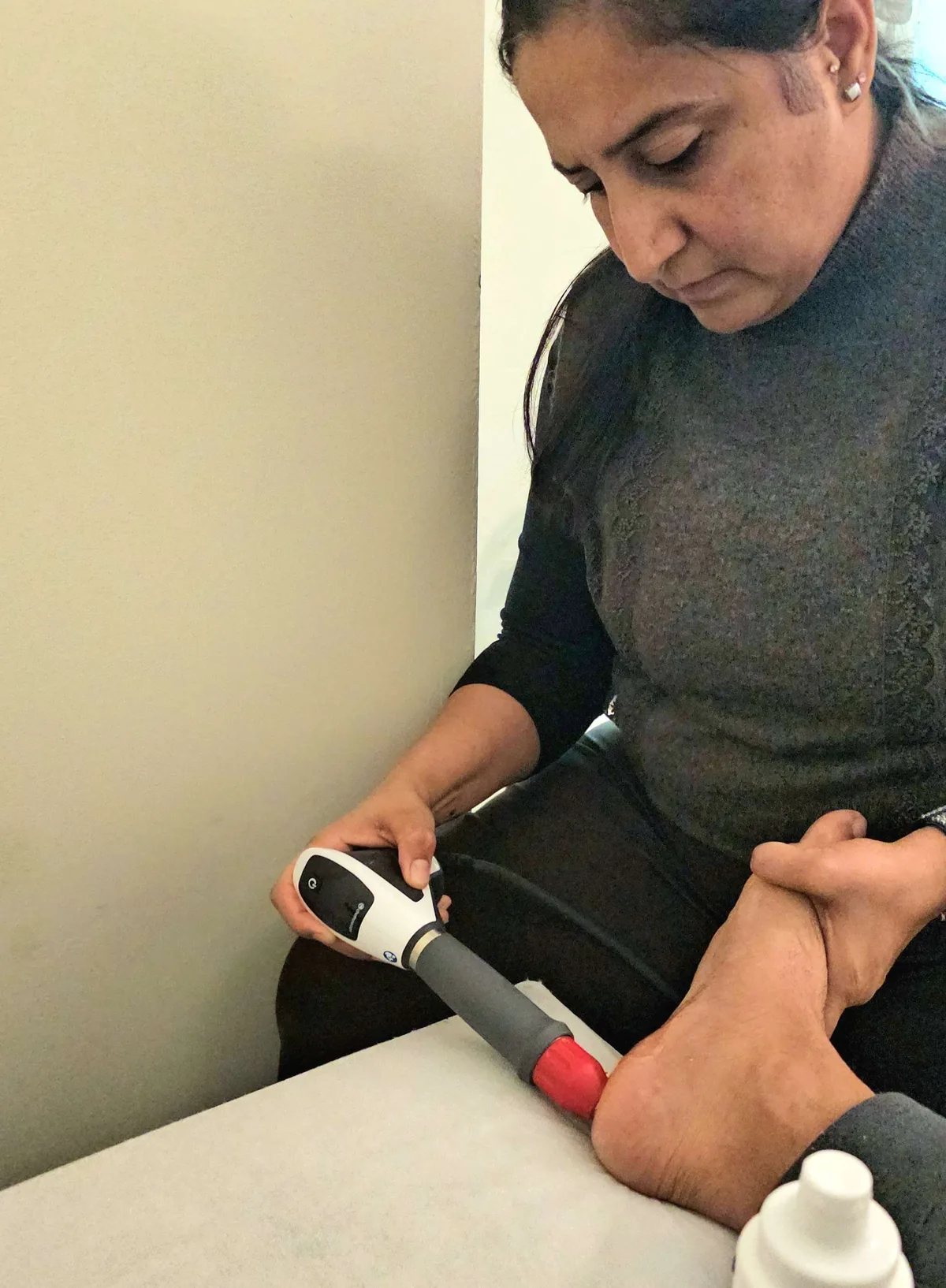
Most Ontario clinics charge between $75 and $250 per shockwave session, and the majority of quotes you will hear fall in the $100 to $200 range. A session itself is short, usually 5 to 15 minutes of actual shockwave time, often delivered inside a longer treatment appointment.
There is also a second pricing model worth knowing about. Some physiotherapy clinics do not sell shockwave as a separate service at all. Instead, they add it to a standard physiotherapy visit for an add-on fee, commonly around $40 to $60 on top of the regular visit rate. Since a private physiotherapy visit in Ontario typically runs about $70 to $150, the bundled route often works out cheaper overall and, more importantly, it comes with hands-on treatment and exercise rehab in the same appointment.
A few specialty clinics charge $400 or more per session for focused shockwave aimed at niche conditions. Those prices are the exception, not the norm, for the tendon and heel problems most people are researching.
How many sessions do you need, and what does a full plan cost?
Most conditions that respond to shockwave need 3 to 6 sessions, spaced about one week apart. Calcific shoulder tendinitis sometimes responds in as few as 2 or 3 sessions, while stubborn chronic tendon problems may sit at the higher end. More is not automatically better. The benefit tends to plateau, so a good clinician reassesses as you go rather than pre-selling a long package.
That gives you a simple budgeting formula. At typical Ontario rates, a full course of shockwave usually costs somewhere between $300 and $1,200 in total. Bundled into physiotherapy visits, the shockwave portion of a plan can come in well under that. If a clinic cannot give you a rough total after assessing you, or pushes a large prepaid package before anyone has examined you, treat that as a caution flag.
One more timing note that affects value: the biological effects of shockwave continue for weeks after the final session, so improvement often keeps building after you stop paying. Judging the treatment, and the cost, at session two is usually too early.
Why do shockwave therapy prices vary so much from clinic to clinic?
Three factors explain most of the spread you will see when comparing quotes.
Radial versus focused devices
Radial shockwave units are the workhorses of most physiotherapy and chiropractic clinics. They spread pressure waves over a broader area, suit most tendon and heel conditions, and cost clinics far less to buy and maintain. Focused shockwave devices concentrate energy at a precise depth, cost several times more, and are typically found in specialty or medical clinics, which is a big part of why their session prices run higher. For the common conditions shockwave treats, radial devices are well supported by research, so a higher-priced focused session is not automatically a better purchase.
Standalone service versus part of a physiotherapy visit
A standalone shockwave appointment prices the machine time on its own. When shockwave is woven into a physiotherapy session, you are paying for a full appointment that also includes manual therapy, exercise progression, and reassessment, with shockwave as one tool inside it. The bundled model usually delivers more care per dollar, and it matches how the research says shockwave works best.
Who is treating you and what is included
Prices also reflect the practitioner’s time and what wraps around the treatment. A clinic that starts with a thorough assessment, confirms shockwave is actually indicated for your problem, and pairs it with a progressive loading program is delivering a different product than a clinic that points the applicator at wherever it hurts. At Wellmax Physiotherapy in Oakville, every new patient starts with a full 60-minute assessment with a physiotherapist, because the most expensive shockwave plan is one aimed at the wrong tissue.
“The machine does not decide whether shockwave is worth your money. The assessment does. Pay for the clinic that figures out what is actually wrong before turning anything on.”
Is shockwave therapy covered by OHIP?
No. OHIP does not cover shockwave therapy at private clinics in Ontario, and this has not changed as of 2026. That surprises many people, but it is consistent with how Ontario handles most clinic-based rehabilitation: OHIP funds physiotherapy only for narrow groups through designated community clinics, and shockwave is not part of any publicly funded program for the general population.
So for almost everyone, shockwave is paid privately or through insurance. If you want the wider picture of what rehabilitation care costs out of pocket in this province, our guide to physiotherapy costs in Ontario breaks down OHIP eligibility, private rates, and funding routes like WSIB and car accident claims.
Will extended health insurance pay for shockwave therapy?
Usually yes, with one important detail: coverage depends on how the treatment is billed, not on the word shockwave. Most extended health plans do not list shockwave as its own category. When a registered physiotherapist delivers shockwave as part of a physiotherapy session, the visit is billed under your physiotherapy benefit, and most workplace plans cover physiotherapy at 70 to 100 percent up to an annual maximum.
A few practical tips to protect your wallet:
- Ask the clinic who will be delivering the treatment and under which benefit category it will be billed. Shockwave delivered by a chiropractor bills under chiropractic coverage, which may have a different limit on your plan.
- Check your annual paramedical maximum before starting a multi-session plan, so a 6-session course does not exhaust the benefit you were saving for other care.
- Choose a clinic that direct bills. Wellmax direct bills most major insurers, so you only pay the portion your plan does not cover instead of fronting the full fee and waiting for reimbursement.
If your problem came from a workplace injury with an approved WSIB claim, or from a car accident claim under Ontario auto insurance, treatment that includes shockwave may be covered through those channels with little or no cost to you. It is worth asking before you assume you are paying privately.
Which conditions make shockwave worth the money?
Shockwave is not a cure-all, and paying for it only makes sense where the evidence is strong. The best-supported uses are chronic tendon and heel problems that have stubbornly outlasted rest and basic care:
- Plantar heel pain. Chronic plantar fasciitis is the most researched use of shockwave, with multiple meta-analyses showing meaningful pain reduction compared with placebo.
- Achilles problems. Stubborn Achilles tendinopathy responds well when shockwave is combined with a progressive loading program.
- Tennis elbow. Chronic tennis elbow that has lingered beyond a few months is another well-supported use.
- Calcific shoulder tendinitis. Shockwave can help break down calcium deposits in the rotator cuff, and results here can arrive in fewer sessions than for other conditions.
For a deeper, honest look at the research behind each of these, including where shockwave is oversold, read our evidence guide on whether shockwave therapy works. The short version for your budget: if your problem is one of the conditions above and it has been around for months, shockwave is a reasonable spend. If a clinic recommends it for something outside that list, ask what evidence supports it before paying.
How do you judge value, not just the sticker price?
Once you know the going rates, the real question shifts from what does it cost to what am I getting for it. Three things separate money well spent from money wasted.
Assessment quality beats machine time
Shockwave only helps when it is applied to the right problem. Heel pain, elbow pain, and shoulder pain each have several possible sources, and shockwave suits some of them and not others. A proper assessment sorts that out first. At Wellmax, lead physiotherapist Gurmeet Rai has spent 16+ years treating exactly these stubborn tendon and heel problems, and every plan starts with that 60-minute assessment, hands-on testing, and a clear explanation of what is driving your pain before any modality is recommended.
Shockwave plus exercise beats shockwave alone
This is the single biggest value lever, and it is well established in the research. Shockwave restarts a stalled healing response. Progressive exercise then gives the tendon the loading it needs to remodel and stay better. Clinics that sell shockwave as a standalone series, with no rehab program around it, are selling the less effective half of the treatment. When you compare quotes, a slightly higher price that includes hands-on treatment and a structured exercise plan is usually the cheaper option once you count results.
A graduation plan, not an endless one
Good value also means a defined finish line. Ask any clinic how they will measure progress and when they expect to stop. At Wellmax, the goal is a pain-free graduation, not a standing weekly appointment. If shockwave is not moving the needle by session 3 or 4, we reassess the plan rather than keep billing for it.
What does shockwave therapy cost at Wellmax in Oakville?
At Wellmax Physiotherapy, serving Oakville and Mississauga, shockwave is not sold as a standalone gadget session. It is delivered as part of your physiotherapy treatment when the assessment shows it is genuinely indicated, billed under your physiotherapy benefit, and direct billed to most major insurers. That means one appointment covers the shockwave, the hands-on manual therapy that addresses the root cause, and the exercise progression that makes results last, and our front desk will confirm your exact rate and coverage before you book anything.
Two quick suitability notes: shockwave is not used over open wounds or tumours, and it is not used during pregnancy. A proper assessment is what decides whether it is right for your situation, which is exactly why we start every new patient there.
If you are comparing prices right now, here is the no-pressure option: book a free consultation, tell us what is going on, and we will give you an honest read on whether shockwave is even the right tool for your problem, what a realistic plan would look like, and what it would cost with your coverage. If shockwave is not the answer, we will tell you that too.
Not sure where to start?
Book a free consultation and we will point you to the right care, with no pressure.
Frequently Asked Questions
Is shockwave therapy covered by OHIP?+
No. OHIP does not cover shockwave therapy at private clinics in Ontario. Most people pay through extended health insurance or privately. When shockwave is delivered by a physiotherapist as part of a physiotherapy session, it is typically billed under your physiotherapy benefit, which most workplace plans cover at 70 to 100 percent up to an annual maximum. WSIB and car accident claims can also cover it in eligible cases.
How much does shockwave therapy cost per session in Ontario?+
Most Ontario clinics charge between $75 and $250 per session, with $100 to $200 being the most common range. Some physiotherapy clinics instead add shockwave to a regular visit for an add-on fee of roughly $40 to $60, which often works out cheaper and includes hands-on treatment and exercise rehab in the same appointment. Specialty focused-shockwave clinics can charge $400 or more, but that is the exception.
How many sessions of shockwave therapy do I need?+
Most conditions need 3 to 6 sessions, spaced about one week apart. Calcific shoulder tendinitis sometimes responds in 2 to 3 sessions, while long-standing tendon problems may need the full course. Benefits keep building for weeks after the last session, so improvement often continues after treatment ends. A good clinician reassesses your progress each visit rather than pre-selling a long package up front.
Is shockwave therapy painful?+
You will feel it, but most people tolerate it well. The pulses create a strong tapping or aching sensation over the sore area for a few minutes, and the intensity can be adjusted to what you can handle. Some soreness, redness, or tenderness for a day or two afterward is normal and usually settles on its own. It should never feel unbearable, and your therapist adjusts the settings if it does.
Is shockwave therapy worth the money?+
For the right conditions, yes. Chronic plantar fasciitis, Achilles tendinopathy, tennis elbow, and calcific shoulder tendinitis have solid research support, with meta-analyses reporting success rates as high as 88 percent for chronic heel pain. Value depends on the plan around it: shockwave combined with assessment-guided exercise rehab consistently outperforms shockwave alone, so choose the clinic with the better plan, not just the lower per-session price.
Can I claim shockwave therapy through my extended health insurance?+
Usually yes, as long as it is delivered by a covered practitioner. Most plans do not list shockwave separately, so it is claimed under the benefit of whoever provides it, most often physiotherapy. Check your annual physiotherapy maximum before starting a multi-session plan, and pick a clinic that direct bills your insurer so you only pay the uncovered portion at each visit rather than waiting for reimbursement.
Why is shockwave therapy more expensive at some clinics?+
Three main reasons: the device, the billing model, and what is included. Focused shockwave machines cost clinics far more than the radial units most physiotherapy clinics use, so their sessions are priced higher. Standalone shockwave appointments price the machine time alone, while bundled physiotherapy visits include manual therapy and exercise rehab. And clinics that begin with a thorough assessment are pricing in the clinical reasoning, which is what actually makes the treatment work.
Who should not have shockwave therapy?+
Shockwave is not used over open wounds or tumours, and it is not used during pregnancy. It is also generally avoided directly over areas with certain circulation or clotting concerns, and timing matters after recent injections. This is exactly why a proper assessment comes first: a physiotherapist confirms both that shockwave is safe for you and that it is genuinely indicated for your specific problem before you spend anything on a course of treatment.
You Might Also Like


Gurmeet Rai, Registered Physiotherapist
Gurmeet is a Registered Physiotherapist with the College of Physiotherapists of Ontario and the Clinic Director and co-owner of Wellmax Physiotherapy in Oakville, with 16+ years of clinical experience. She focuses on complex, stubborn cases where earlier treatment has not worked, with advanced training in pelvic health, TMJ, vestibular, and sports and MSK rehab. Expect expert care from assessment to discharge, with honest guidance along the way. Read Gurmeet’s full profile or meet the team.
This article is for educational purposes only and does not replace a professional clinical assessment. Every body and condition is different. If you are experiencing pain or symptoms, book an assessment with a qualified clinician for advice specific to your situation. If you are experiencing a medical emergency, call 911 or visit your nearest emergency department.
