
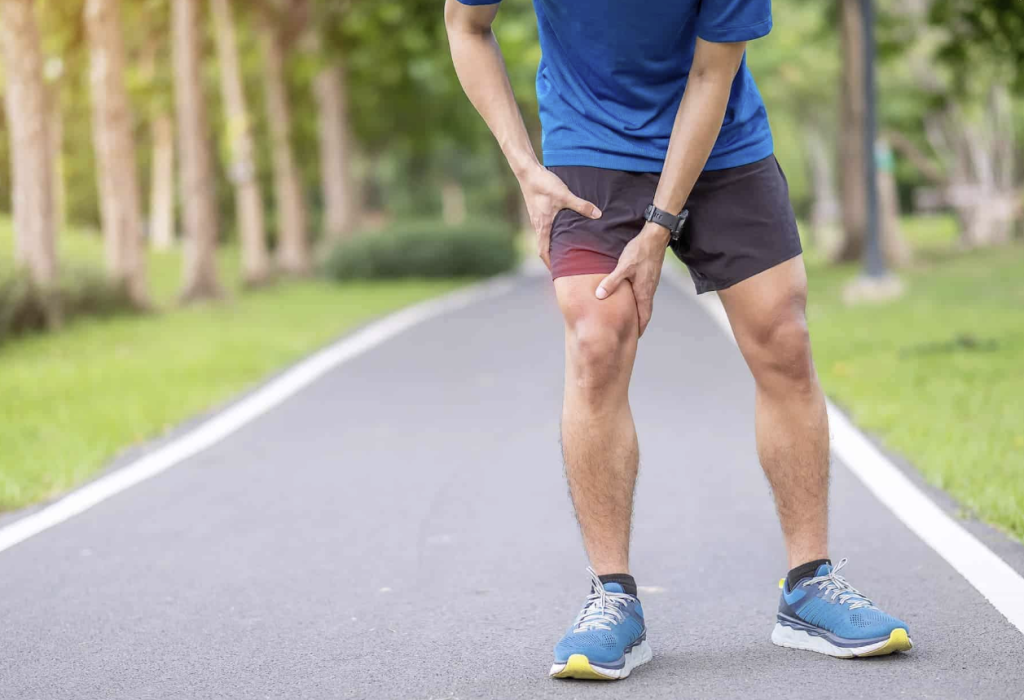
Does Foam Rolling Fix IT Band Syndrome?
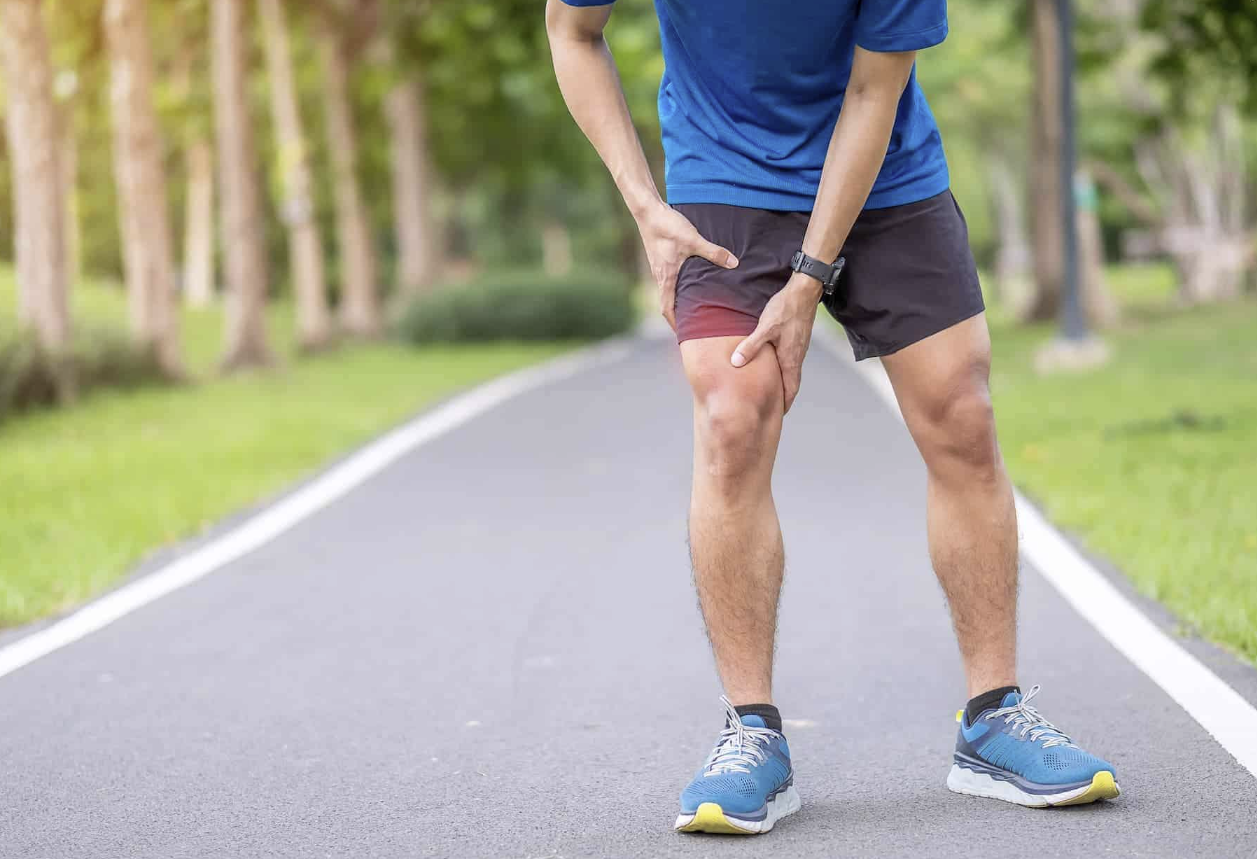
You Have Been Foam Rolling Your IT Band for Months. It Still Hurts. Here Is Why.
Every runner knows the routine. The outside of the knee starts aching a few kilometres into a run. You cut the run short, go home, and lie on a foam roller, grinding the outside of your thigh until tears form in your eyes. It hurts. You assume it must be working because it hurts. So you do it again the next day. And the day after that. Weeks go by. Months. The IT band syndrome keeps coming back every time you increase your distance, and the foam roller has become a nightly ritual that produces temporary relief but never actually solves the problem.
You are not alone. IT band foam rolling is one of the most commonly recommended treatments for iliotibial band syndrome, and it is also one of the least effective at addressing the actual cause. The reason is straightforward once you understand what the IT band actually is and what is making it hurt. At Wellmax Physiotherapy in Oakville, we treat runners and cyclists from the Waterfront Trail, Sixteen Mile Creek, and the local gym community with IT band syndrome regularly. The solution is almost never more foam rolling.
The IT Band Is Not a Muscle. You Cannot Stretch or Roll It Out.
This is the fundamental misunderstanding that keeps people stuck. The iliotibial band is not a muscle. It is a thick, dense strip of connective tissue (fascia) that runs from the hip to just below the outside of the knee. It is structurally similar to a ligament or a leather belt. It does not contract. It does not relax. It does not lengthen in response to stretching or foam rolling the way a muscle does.
A randomized controlled trial published in the International Journal of Sports Physical Therapy measured IT band stiffness before and after foam rolling using shear wave ultrasound elastography (the most accurate way to measure tissue stiffness). The result: a single session of foam rolling did not change IT band stiffness at any of the three measured locations. The researchers concluded that foam rolling may have no impact on IT band stiffness whatsoever.
When you foam roll your outer thigh and feel that intense pain, you are compressing a dense band of tissue against the bone underneath it. The temporary relief you feel afterward is likely a neurological pain-modulation effect (your nervous system temporarily reduces pain sensitivity in the area), not an actual change in the tissue. The band itself is just as stiff after rolling as it was before.
Even more concerning, aggressive foam rolling of the IT band can irritate the bursa (a fluid-filled sac) that sits between the IT band and the hip bone. Rolling directly over this area can cause bursitis, adding a new problem on top of the original one.
What Is Actually Causing Your IT Band Pain
Hip Weakness Is the Primary Driver
In the vast majority of IT band syndrome cases, the underlying cause is weakness in the hip stabilizers, specifically the gluteus medius. This is the muscle on the side of your hip that stabilizes your pelvis when you stand on one leg. Every single step while running is a one-legged stance. If the gluteus medius is weak, the pelvis drops on the opposite side and the femur (thigh bone) rotates inward. This changes the angle at which the IT band crosses the knee, increasing friction and compression against the lateral femoral condyle (the bony bump on the outside of the knee).
A landmark study by Fredericson et al. published in the Clinical Journal of Sports Medicine found that runners with IT band syndrome had significantly weaker hip abductors on the affected side compared to the uninjured side and compared to healthy controls. After a 6-week hip strengthening program, 22 out of 24 runners were pain-free and had returned to running.
This finding has been replicated in numerous studies since. The evidence is clear: IT band syndrome is a hip problem that presents as a knee problem. Treating the knee (foam rolling, icing, stretching the outer thigh) without strengthening the hip is treating the symptom without addressing the cause. Our hip pain page covers gluteal weakness in detail.
Training Load Errors
IT band syndrome is an overuse injury. It almost always develops when training load increases faster than the body can adapt. Running more kilometres per week, adding hills, increasing speed, or returning to running after a break without a gradual build-up are the most common triggers. The IT band is being asked to handle more repetitive stress than the hip stabilizers can support.
This is why IT band syndrome commonly appears at a specific distance. A runner might feel fine for the first 5km and then the pain shows up at 6km every single time. That distance represents the point at which the hip muscles fatigue and can no longer control the pelvis and femur properly. The IT band takes over the stabilization role, gets overloaded, and starts hurting.
Running Biomechanics
How you run matters. A narrow step width (running as if on a tightrope, with feet crossing the midline), excessive hip drop (the pelvis tilting side to side), and overly long strides all increase the stress on the IT band. These patterns are often connected to hip weakness but can also be habitual movement patterns that persist even after the hips are strong. Our running injuries page covers biomechanical assessment and correction.
What Actually Fixes IT Band Syndrome
Step 1: Load Management
You do not need to stop running entirely. You need to reduce to a distance and intensity that is below your pain threshold. If the pain starts at 6km, run 4km. If it hurts on hills, run flat. The goal is to keep running at a level the body can tolerate while you strengthen the hips to handle more. Complete rest often makes things worse because the hip muscles decondition further.
Step 2: Hip Strengthening (The Core of Treatment)
This is what actually solves IT band syndrome. The exercises target the gluteus medius, gluteus maximus, and the deep hip rotators. Key exercises include:
- Side-lying hip abduction: Targets the gluteus medius directly. Performed with control, no momentum, and progressed to resistance bands.
- Clamshells: Activates the gluteus medius and deep external rotators in a low-load position. Good starting point for patients with significant weakness.
- Single-leg glute bridges: Challenges the gluteus maximus and hip stability under load. Progressed from double-leg to single-leg as strength improves.
- Single-leg squats and step-downs: The gold standard for functional hip strength because they mimic the single-leg demands of running. If your knee dives inward during a single-leg squat, that is the same pattern that is overloading your IT band while running.
- Lateral band walks: Functional hip abduction under load. Engages the glutes in a standing position that transfers directly to running mechanics.
The program needs to be progressive. Starting exercises and staying at the same level for 12 weeks does not build the strength needed to handle running loads. Your physiotherapist increases the difficulty every 1 to 2 weeks based on your response.
Step 3: Running Gait Modification
Once hip strength is improving, addressing running form can accelerate recovery and prevent recurrence. Common modifications include increasing step rate (cadence) to around 170 to 180 steps per minute (reduces overstriding), widening step width slightly (keeps the feet from crossing the midline), and cueing hip and core engagement during the stance phase. These changes are subtle but they meaningfully change the loading pattern through the IT band. Our sports physiotherapy program includes running analysis.
Step 4: Graduated Return to Full Training
Once the hips are strong and the pain has resolved at shorter distances, the return to full mileage follows a structured progression. Typically adding no more than 10% per week. Speed and hills are added last. The strengthening program continues alongside running as a maintenance routine. IT band syndrome has a recurrence rate of approximately 50% in runners who do not maintain hip strength after recovery. The maintenance exercises take 15 to 20 minutes, 2 to 3 times per week, and are the best insurance against recurrence.
What About Foam Rolling the Surrounding Muscles?
Here is where foam rolling does have a role, but not on the IT band itself. Foam rolling the muscles that attach to the IT band can reduce tension in the system. The tensor fasciae latae (TFL) at the front of the hip, the gluteus maximus, and the quadriceps all feed into or interact with the IT band. Rolling these muscles can reduce pulling forces on the band and provide temporary symptom relief.
The key distinction: foam rolling surrounding muscles is a symptom management tool. It can make things feel better temporarily, which is useful. But it does not replace the hip strengthening that fixes the underlying cause. Think of it as a complement to the real treatment, not the treatment itself.
How Long Does IT Band Syndrome Take to Resolve?
With consistent physiotherapy (typically 1 to 2 sessions per week) and daily adherence to the hip strengthening program, most runners notice meaningful improvement within 4 to 6 weeks. Full return to pre-injury mileage typically takes 8 to 12 weeks. Chronic cases (6+ months of symptoms) may take longer because the hip weakness is more significant and the nervous system has become sensitized to the loading pattern.
The runners who recover fastest are the ones who do their exercises consistently and follow the graduated return-to-running plan rather than jumping back to full mileage the moment the pain decreases.
When to See a Physiotherapist
Book an assessment if your IT band pain has lasted more than 2 to 3 weeks despite rest and foam rolling, if the pain keeps returning every time you increase distance or intensity, if the outer knee pain occurs with daily activities like stairs or prolonged sitting, or if you have had IT band syndrome before and it keeps coming back. Recurrent IT band syndrome is a clear sign that the underlying hip weakness has not been addressed.
No referral needed in Ontario. Most insurance plans cover physiotherapy.
IT Band Treatment at Wellmax Physiotherapy in Oakville
This post is about IT band foam rolling and why it does not fix the problem on its own. For the full treatment programme, timelines and what a first visit involves, see our IT band syndrome treatment in Oakville page.
We treat runners and cyclists with IT band syndrome from across Oakville’s trail and gym community. Our approach starts with a thorough assessment of hip strength, running biomechanics, and training load. We build a progressive hip strengthening program, manage the return-to-running progression, and address any gait issues contributing to the problem. Manual therapy, soft tissue work on the TFL and glutes, and deep tissue laser for acute flare-ups are part of the treatment when indicated. Expert guidance every visit.
Frequently Asked Questions About IT Band Syndrome
Does foam rolling fix IT band syndrome?
On its own, no. The IT band is not a muscle. It is a thick strip of dense connective tissue running from the hip to just below the outside of the knee, closer to a ligament than to something that contracts and relaxes. A randomized controlled trial using ultrasound elastography found that a single foam rolling session did not change IT band stiffness at any measured location. Rolling can feel useful, but it is not changing the band.
Why does it feel better after I roll it, then?
The relief is real, it is just short lived. It most likely comes from your nervous system briefly turning down pain sensitivity in the area rather than from a change in the tissue itself. That is genuinely useful for comfort and before a run. It does not build capacity in the muscles that control the knee, which is why the pain tends to return as soon as your distance goes back up.
Is there a better way to use a foam roller for this?
Yes. Roll the muscles around the band rather than the band itself. The muscle at the front of the hip, the gluteus maximus and the quadriceps all feed into the IT band, and easing tension in them can take some pull off it. Treat that as comfort and warm up work that sits alongside the strength program. Rolling hard over the outside of the hip can also irritate the bursa there.
Can I keep running with IT band pain?
Often you do not need to stop completely. The aim is to drop to a distance and intensity below the level that brings the pain on. If it starts at 6km, run 4km. If hills set it off, stay flat. Complete rest can backfire, because the hip muscles decondition further while you wait. A physiotherapist can help you find the level that keeps you running while you build strength.
Why does the pain show up at the same distance every run?
That predictable pattern is common with IT band syndrome. One likely reason is that the hip muscles fatigue at around that point and can no longer control the pelvis and thigh bone well, so loading through the outside of the knee increases. Outer knee pain can have several different causes though, and each needs different treatment, so it is worth having it assessed rather than assumed.
What exercises actually help?
Hip strengthening is the core of treatment, aimed at the gluteus medius, gluteus maximus and the deep hip rotators. Common exercises include side lying hip abduction, clamshells, single leg glute bridges, single leg squats and step downs, and lateral band walks. Progression is the important part. Staying at the same level for weeks does not build the strength running demands, so difficulty should step up every one to two weeks.
How long does IT band syndrome take to resolve?
With consistent physiotherapy and daily hip strengthening, most runners notice meaningful improvement within four to six weeks. Full return to previous mileage usually takes eight to twelve weeks. Longstanding cases, six months or more of symptoms, often take longer because the hip weakness is greater. The runners who recover fastest are the ones who do the exercises consistently and follow a graduated return instead of jumping straight back to full distance.
Why does it keep coming back every time I build mileage?
Usually because the capacity problem underneath was never fixed. Recurrence is common in runners who stop the hip strengthening once the pain settles. Keeping maintenance exercises going, roughly 15 to 20 minutes two to three times a week, is the best insurance. Building weekly distance by no more than about 10 percent, and adding hills and speed last, protects what you have gained.
Should I be stretching my IT band?
Stretching does not lengthen it the way stretching a muscle does, so it is unlikely to be the answer on its own. The band does not contract or relax. If stretching the hip and thigh muscles that attach into it feels good, there is no harm in it. Put your real effort into the hip strength program and your training load, because those are the two things that change the problem.
When should I get outer knee pain looked at?
Book an assessment if the pain has lasted more than two or three weeks despite rest and rolling, if it returns every time you increase distance or intensity, if it bothers you on stairs or after sitting, or if this has happened before. Outer knee pain can come from more than one source, and each needs different treatment. No referral is needed in Ontario, and Wellmax offers a free 15 minute consult.
Related Conditions and Services
Running Injuries: IT band syndrome, runner’s knee, shin splints, and return-to-running programs.
Knee Pain: Patellofemoral pain, meniscus injuries, and other causes of knee pain.
Hip Pain: Gluteal weakness, hip bursitis, and conditions that drive IT band overload.
Plantar Fasciitis: Another common running overuse injury that responds to load management.
Sports Physiotherapy: Running gait analysis and return-to-sport programming.
Shockwave Therapy: Treatment for chronic tendon conditions that haven’t responded to exercise.
Deep Tissue Laser Therapy: Inflammation management for acute IT band flare-ups.
Physiotherapy Services: Overview of all physiotherapy services at Wellmax.
Wellmax Physiotherapy
1148 Winston Churchill Blvd, Unit B3, Oakville, ON L6J 0A3
Phone: (905) 829-1100
Email: info@wellmaxphysiotherapy.ca
Proudly Serving Our Local Communities:
- East Oakville: Winston Park, Clearview, and the QEW/403 Corridor.
- South Oakville: Eastlake, Maple Grove, and Old Oakville.
- North Oakville: Joshua Creek, Falgarwood, and Upper Middle Road.
- Mississauga Border: Clarkson, Sheridan Park, and Sheridan Homelands.
Insurance: Direct billing to most major providers. WSIB and MVA claims accepted. No referral needed.
Hours: Monday to Friday: 9am to 7pm | Saturday: 9am to 2pm | Sunday: 9am to 2pm (by appointment only)
You Might Also Like


Gurmeet Rai, Registered Physiotherapist
Gurmeet is a Registered Physiotherapist with the College of Physiotherapists of Ontario and the Clinic Director and co-owner of Wellmax Physiotherapy in Oakville, with 16+ years of clinical experience. She focuses on complex, stubborn cases where earlier treatment has not worked, with advanced training in pelvic health, TMJ, vestibular, and sports and MSK rehab. Expect expert care from assessment to discharge, with honest guidance along the way. Read Gurmeet’s full profile or meet the team.
This article is for educational purposes only and does not replace a professional clinical assessment. Every injury and condition is different. If you are experiencing pain or symptoms, book an assessment with a qualified physiotherapist to get advice specific to your situation. If you are experiencing a medical emergency, call 911 or visit your nearest emergency department.
