

Ankle Still Hurts Months After a Sprain? Why It Never Fully Healed, and What Actually Fixes It

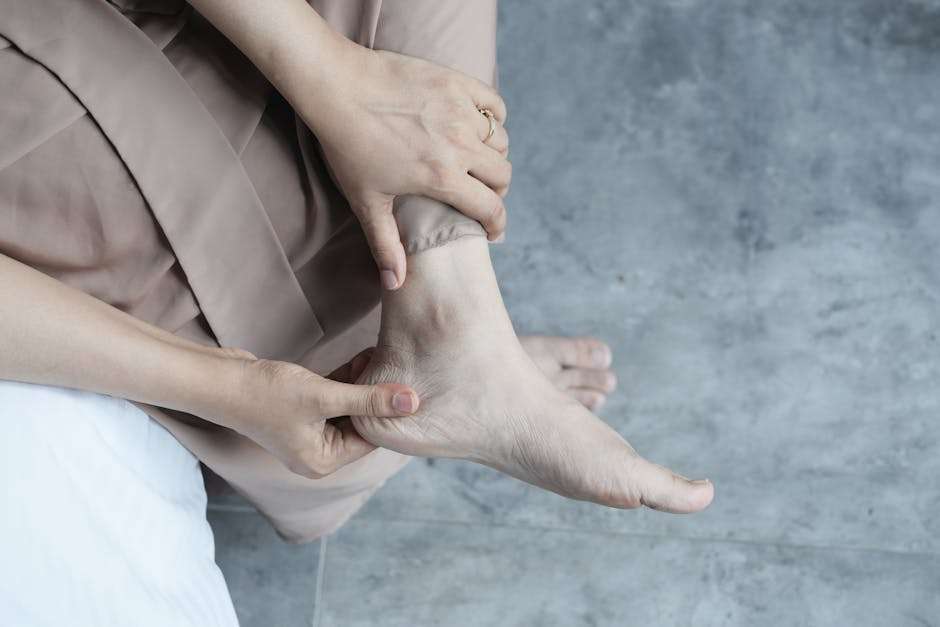
You did everything you were told after the sprain. You rested it, iced it, maybe wore a brace for a few weeks, and eventually got back on your feet. But months later, the ankle still is not right. It aches after a long walk, swells after sports, and every so often it rolls or wobbles on a curb and your heart skips.
You are not imagining it, and you are definitely not alone. Research shows that a large share of “simple” ankle sprains leave lingering problems long after the original injury should have healed. This post explains why that happens, what an ankle that never fully recovered tends to feel like, and how physiotherapy rebuilds the strength, balance control and confidence the sprain took away.
Key Takeaways
- Up to 40 percent of first-time ankle sprains lead to chronic ankle instability, according to systematic reviews published through the U.S. National Library of Medicine.
- The most common reasons a sprain never fully recovers: rehab stopped too early, balance sense (proprioception) was never retrained, weak peroneal muscles, a stiff joint, a too-fast return to sport, or a missed associated injury.
- Giving way, not trusting the ankle, repeat sprains and swelling after activity form a recognizable pattern, and that pattern is trainable at almost any age.
- Physiotherapy rebuilds stability with balance and proprioception retraining, progressive strengthening, hands-on joint work and a graded return to sport.
Why does an ankle still hurt months after a sprain?
Most straightforward sprains follow a fairly predictable healing timeline: a mild sprain settles in one to three weeks, a moderate one in about four to six, and even a severe sprain is usually well on its way by three months. So when pain, swelling or wobbliness hangs around past that window, it is rarely because the ligament is still “torn.” Something else is unfinished.
Here is the part most people are never told: an ankle sprain is not just a ligament injury. Those ligaments are packed with tiny nerve endings that constantly report the ankle’s position to your brain, thousands of times a day, without you ever thinking about it. When the ligament is overstretched, those sensors get damaged too.
The ligament tissue can heal on its own with time. The position sense, the reflexes and the muscle strength that protect the joint do not come back automatically. They have to be retrained. When they are not, the ankle keeps getting loaded in slightly wrong positions, tissues get irritated over and over, and the soreness and swelling never get a chance to fully switch off.
What is chronic ankle instability?
Chronic ankle instability is the name researchers use for the long-term pattern that follows an incompletely recovered sprain: an ankle that repeatedly gives way or feels untrustworthy, with ongoing symptoms lasting a year or more after the original injury. It is one of the best-documented outcomes in sports medicine, and the numbers are bigger than most people expect.
The risk compounds, too. Research summarized in the British Journal of Sports Medicine literature shows athletes carry roughly double the risk of re-spraining an ankle in the first year after a sprain. Each new sprain stretches the ligaments a little further and knocks the balance system back again, which is how one bad step on a soccer pitch in your twenties can turn into an ankle you still do not trust in your forties.
None of this means your ankle is doomed. It means the sprain was treated as a rest-and-wait injury when it needed to be treated as a retraining injury.
What does an ankle that never fully recovered feel like?
Everyone’s story is a little different, but people who come to see us months or years after a sprain describe a remarkably consistent pattern:
- Giving way. The ankle suddenly buckles or rolls on stairs, curbs, grass or uneven sidewalks, sometimes with no warning at all.
- Not trusting it. You hesitate before jumping, cutting, hiking or even stepping off a ladder. Part of your brain is always monitoring that ankle.
- Recurrent sprains. The same ankle keeps getting hurt, and each new sprain seems to take less force than the last one.
- Swelling after activity. The ankle looks puffy along the outside after a long day, a run or a rec-league game, then settles overnight.
- A deep ache or pinching. Often at the front or outside of the joint, especially on slopes, squats or push-off.
To be clear, we are describing a general pattern here, not diagnosing your ankle from a blog post. Lingering symptoms after a sprain can have several different drivers, and the right treatment depends on which ones are at play in your ankle. That is exactly what a hands-on ankle and foot assessment is for.
One important note: if you cannot put weight on the ankle, have marked tenderness right on the bone, notice numbness, or the joint looks deformed after an injury, that needs prompt medical assessment first. This post is about lingering symptoms after a sprain that has already been checked.
What stops an ankle sprain from healing completely?
In our experience, and in the research, it is rarely one single thing. It is usually two or three of the following stacked together.
Rehab stopped when the pain stopped
This is the biggest one. Pain usually fades weeks before strength, balance and reflexes are actually restored. Most people, quite reasonably, stop doing anything about the ankle the day it stops hurting. The ligament has healed enough to be quiet, but the protective system around it is still offline, and the next awkward step exposes the gap.
Your balance system was never retrained
Proprioception is your body’s position sense, the automatic awareness of where your joints are in space. It is what lets you walk on gravel without staring at your feet. Sprains damage the sensors that feed this system, and studies consistently show measurably impaired balance and slower protective muscle reactions in people with a history of ankle sprain.
“An ankle that keeps giving way is not weak willed. It is missing information. Retrain the position sense and the ankle starts protecting itself again.”
This is why an ankle can feel fine walking on flat floors yet betray you on a trail. Flat ground barely tests the system. Uneven ground demands split-second corrections the ankle can no longer make on its own.
Weak peroneal muscles
The peroneals run down the outside of your lower leg and are the primary muscles that catch the ankle when it starts to roll inward, which is the direction of almost every sprain. After an injury they commonly become weak and slow to fire. If they never get specifically strengthened, the one muscle group designed to prevent the next sprain is exactly the one that is underpowered.
A stiff ankle joint
After a sprain, the main ankle joint often loses some of its normal glide, especially the backward glide of the shin bone over the foot that allows the knee to travel over the toes. That shows up as a pinch at the front of the ankle on squats, lunges and stairs, and it forces the foot to compensate on every step. Stretching alone often does not restore this. Hands-on joint mobilization usually does.
Going back to sport too early
Feeling ready and being ready are two different things. Returning to soccer, basketball, hockey or running before strength and balance are back is one of the most reliable ways to turn one sprain into a series of them. A structured sports injury rehabilitation plan uses objective checkpoints, like hop tests and single-leg balance benchmarks, instead of the calendar to decide when the ankle can be trusted at full speed.
A missed associated injury
Sometimes the sprain was not the whole story. The same twisting force can also injure the joint surface cartilage, the high ankle ligaments between the two shin bones, the peroneal tendons, or produce a small fracture that early scans did not catch. When months of sensible rehab make no dent in the symptoms, an assessment should look carefully for one of these, and refer for imaging or a physician review when the pattern fits.
Can an old ankle sprain cause problems years later?
Yes, and this is worth taking seriously rather than shrugging off. An unstable ankle keeps micro-injuring itself with every small roll and wobble, and long-term studies link repeated sprains with higher rates of ongoing pain, cartilage wear and reduced activity years down the road. People also quietly shrink their lives around the ankle: they stop trail walking, skip the shinny game, or avoid uneven ground without ever deciding to.
There is a balance dimension as well. Because the ankle is the body’s first line of defence against stumbles, an ankle with poor position sense contributes to poorer overall balance. For older adults especially, that is a real fall-risk factor, and it is one of the reasons our balance and fall prevention physiotherapy programs so often include ankle stability work.
The encouraging flip side: the research on retraining is just as consistent. Balance and strength systems remain trainable for decades after the original injury. We have helped people rebuild ankles they sprained ten or fifteen years ago. Old does not mean permanent.
How does physiotherapy fix an ankle that keeps giving way?
This is one of the most evidence-backed areas in all of physiotherapy. A meta-analysis in the Journal of Science and Medicine in Sport found proprioceptive training cut the risk of ankle sprains by roughly 35 percent compared with control interventions, in both first-time and previously sprained ankles. Rehab for a lingering sprain is not guesswork. It is a known recipe, tailored to your ankle. Here is what it looks like.
Balance and proprioception retraining
This is the heart of it, because it targets the system the sprain actually broke. Training progresses step by step: standing on one leg, then with eyes closed, then on foam or a wobble board, then while catching a ball or turning your head. Each stage forces the ankle’s sensors and reflexes to fire faster and more accurately, until protective reactions become automatic again. Most people are surprised at how hard the early drills feel on the injured side, which is the deficit made visible.
Progressive strengthening
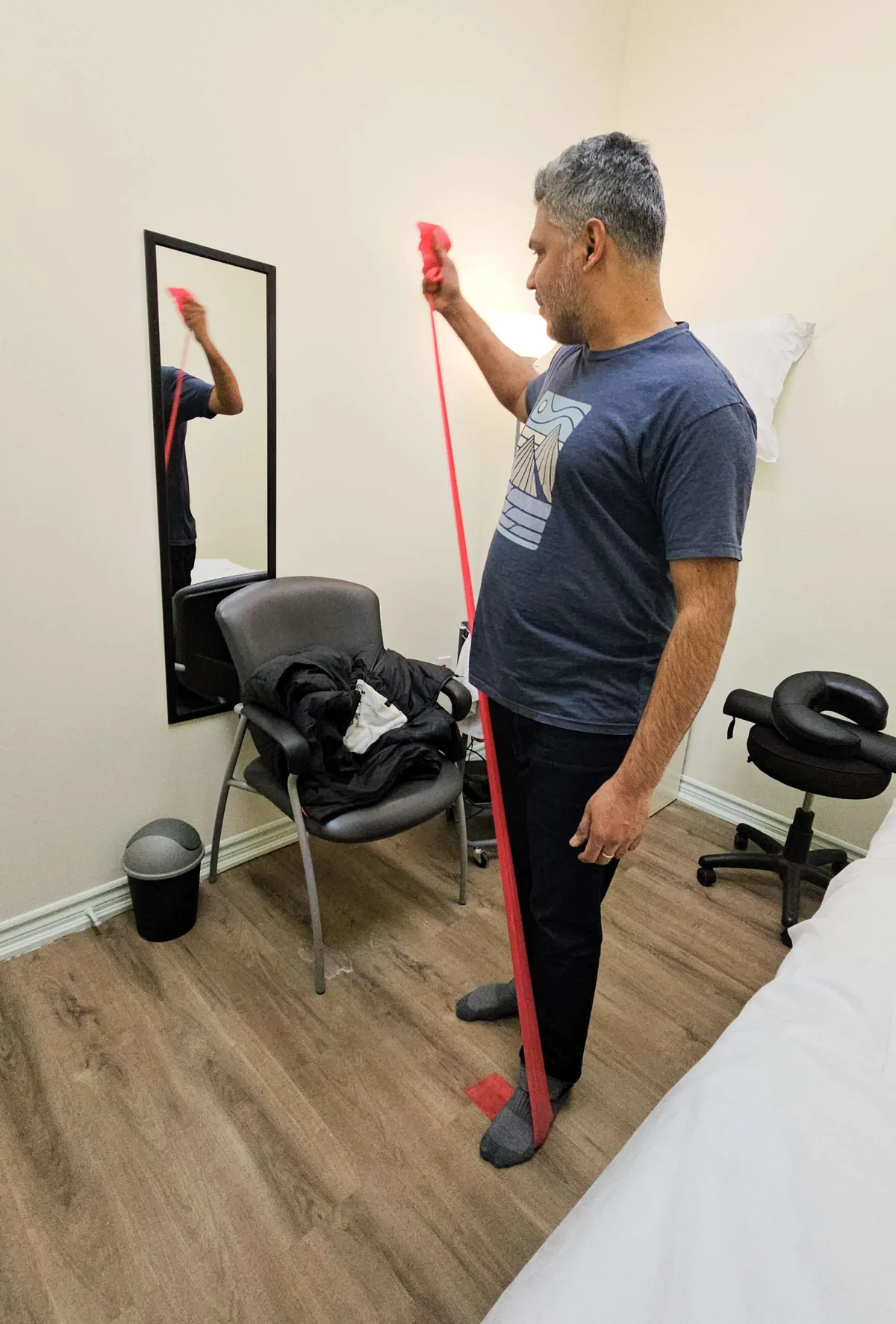
Targeted, progressively loaded exercise for the peroneals, calf complex and the deep foot muscles, moving from resistance-band work to weight-bearing strength to hopping and landing control. The goal is not general fitness. It is making the specific muscles that catch a rolling ankle strong enough and fast enough to actually catch it.
Manual therapy for the stiff joint
Hands-on joint mobilization restores the normal glide the sprain took away, which reduces that front-of-ankle pinch and lets you squat, lunge and descend stairs without compensating. Soft-tissue work around the calf and peroneals helps settle guarded, tense muscle. Manual therapy opens the window; the balance and strength work makes the change stick.
A graded return to sport and activity
The final phase rebuilds the exact demands of your life: hopping, cutting, sprinting, hiking on uneven ground, or simply carrying groceries down icy steps, layered in progressively and tested before you rely on them. Clear criteria decide each step up, so you return to the things you love with an ankle that has already proven itself in the clinic.
What does ankle rehab look like at Wellmax in Oakville?
At Wellmax Physiotherapy in Oakville, serving Oakville and Mississauga, every new patient starts with a full 60-minute first assessment. For a lingering ankle, that time matters: we test balance and position sense on each side, measure peroneal and calf strength, check joint glide by hand, watch how you hop and land, and screen for the missed injuries that mimic a stubborn sprain.
Our lead physiotherapist, Gurmeet Rai, has more than 16 years of clinical experience, and our approach is hands-on manual therapy aimed at the root cause, paired with a progressive exercise plan you can actually follow. You can read more about how we treat these injuries on our ankle sprain physiotherapy page.
And our goal is a pain-free graduation, not endless visits. We want you to finish with a strong, trustworthy ankle, a plan to keep it that way, and no reason to keep coming back for the same problem.
When should you stop waiting and get it assessed?
A useful rule of thumb: if it has been more than three months since the sprain and you still have pain, swelling after activity, giving way, or you simply do not trust the ankle, waiting longer is unlikely to change anything. The ligament has had its healing time. What is missing now is retraining, and that does not happen on its own.
The earlier the balance and strength work starts, the fewer re-sprains the ankle accumulates along the way. In Ontario you do not need a doctor’s referral to see a physiotherapist, and we direct bill most insurance plans, so there is nothing standing between you and an answer.
Not sure where to start?
Book a free consultation and we will point you to the right care, with no pressure.
Frequently Asked Questions
Why does my ankle still hurt 6 months after a sprain?+
By six months the ligament itself has usually healed, so lingering pain typically points to something unfinished around it: balance sense that was never retrained, weak peroneal muscles, a stiff joint that pinches at the front, or an associated injury the sprain masked, such as cartilage or tendon involvement. These respond to different treatments, which is why a proper physiotherapy assessment matters more than more rest at this stage.
Can an old ankle sprain cause problems years later?+
Yes. Systematic reviews report that up to 40 percent of ankle sprains develop chronic ankle instability, a long-term pattern of giving way, recurrent sprains and activity-related swelling. Each new roll stretches the ligaments further and erodes balance control, and repeated sprains are linked with ongoing pain and joint wear over time. The good news is that balance and strength remain trainable even many years after the original injury.
What is chronic ankle instability?+
Chronic ankle instability is the research term for an ankle that repeatedly gives way or feels untrustworthy, with symptoms like recurrent sprains, swelling after activity and hesitancy on uneven ground, persisting a year or more after a sprain. It develops when the position sense, reflexes and muscle strength that protect the joint never fully recover. It is treated primarily with balance retraining and progressive strengthening rather than more rest.
Why does my ankle keep giving way?+
Giving way usually reflects two deficits left behind by a sprain: damaged position sensors in the ligaments, so your brain gets slower and less accurate information about the ankle, and weak, slow-firing peroneal muscles, which are the muscles that catch a rolling ankle. Flat ground rarely exposes the problem, but curbs, grass and quick changes of direction demand corrections the ankle can no longer make automatically.
How do I strengthen my ankle after a sprain?+
Effective rehab combines two streams. Strength work targets the peroneals and calf, progressing from resistance-band exercises to weight-bearing strength to hopping and landing control. Balance work progresses from single-leg standing to eyes-closed, unstable-surface and task-based drills. A meta-analysis found proprioceptive training cut ankle sprain risk by roughly 35 percent. A physiotherapist tailors the starting point and progressions so the ankle is challenged without being re-injured.
Should I just wear an ankle brace forever?+
A brace can be a sensible short-term tool, especially during the return to sport, and research supports bracing for reducing re-sprains in that window. But a brace manages the problem rather than fixing it, because it does not restore balance sense or strength. Most people do best using a brace while they rebuild the ankle through rehab, then weaning off it once strength and balance testing show the ankle can protect itself.
Do I need an X-ray or MRI for lingering ankle pain?+
Not always. Most lingering post-sprain problems are functional, meaning balance, strength and stiffness deficits that no scan shows and that respond to rehab. Imaging becomes worth pursuing when symptoms do not improve despite several weeks of well-targeted rehab, or when the pattern suggests an associated injury such as cartilage damage, a high ankle sprain or a peroneal tendon problem. A physiotherapist can screen for these and refer you onward when the picture fits.
Can physiotherapy fix an ankle that never healed properly?+
In most cases, yes. Balance retraining, progressive strengthening and hands-on joint mobilization directly target the deficits that keep an ankle painful and untrustworthy, and this is one of the most evidence-supported areas of physiotherapy. At Wellmax in Oakville, rehab starts with a 60-minute assessment to find your ankle’s specific drivers, and the plan finishes with a graded return to the activities you actually want back, not just symptom relief.
You Might Also Like


Gurmeet Rai, Registered Physiotherapist
Gurmeet is a Registered Physiotherapist with the College of Physiotherapists of Ontario and the Clinic Director and co-owner of Wellmax Physiotherapy in Oakville, with 16+ years of clinical experience. She focuses on complex, stubborn cases where earlier treatment has not worked, with advanced training in pelvic health, TMJ, vestibular, and sports and MSK rehab. Expect expert care from assessment to discharge, with honest guidance along the way. Read Gurmeet’s full profile or meet the team.
This article is for educational purposes only and does not replace a professional clinical assessment. Every body and condition is different. If you are experiencing pain or symptoms, book an assessment with a qualified clinician for advice specific to your situation. If you are experiencing a medical emergency, call 911 or visit your nearest emergency department.
