
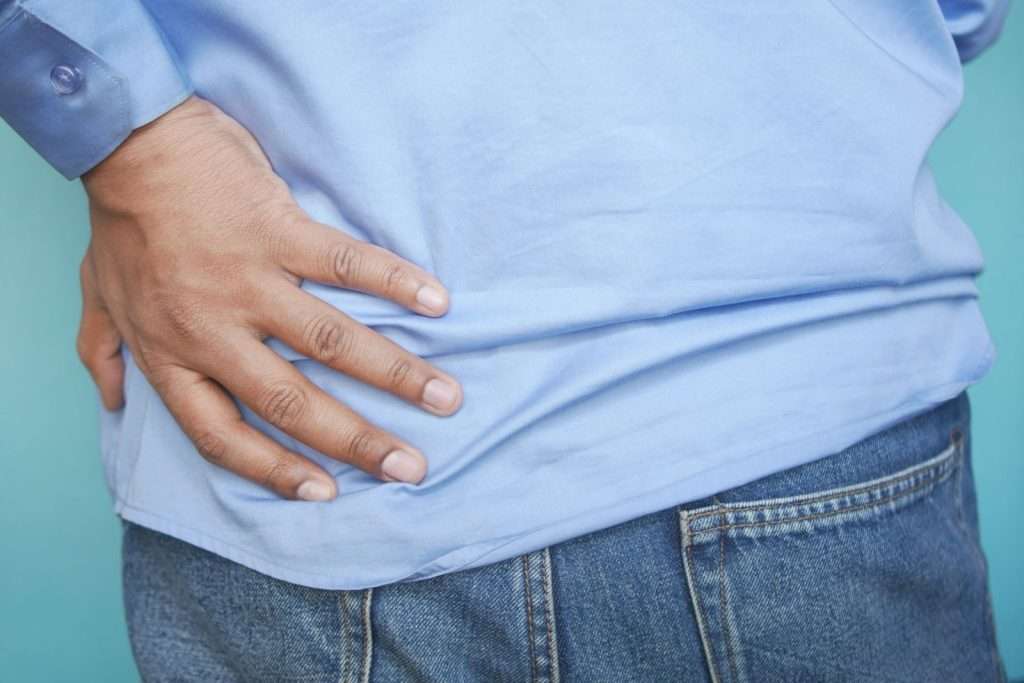
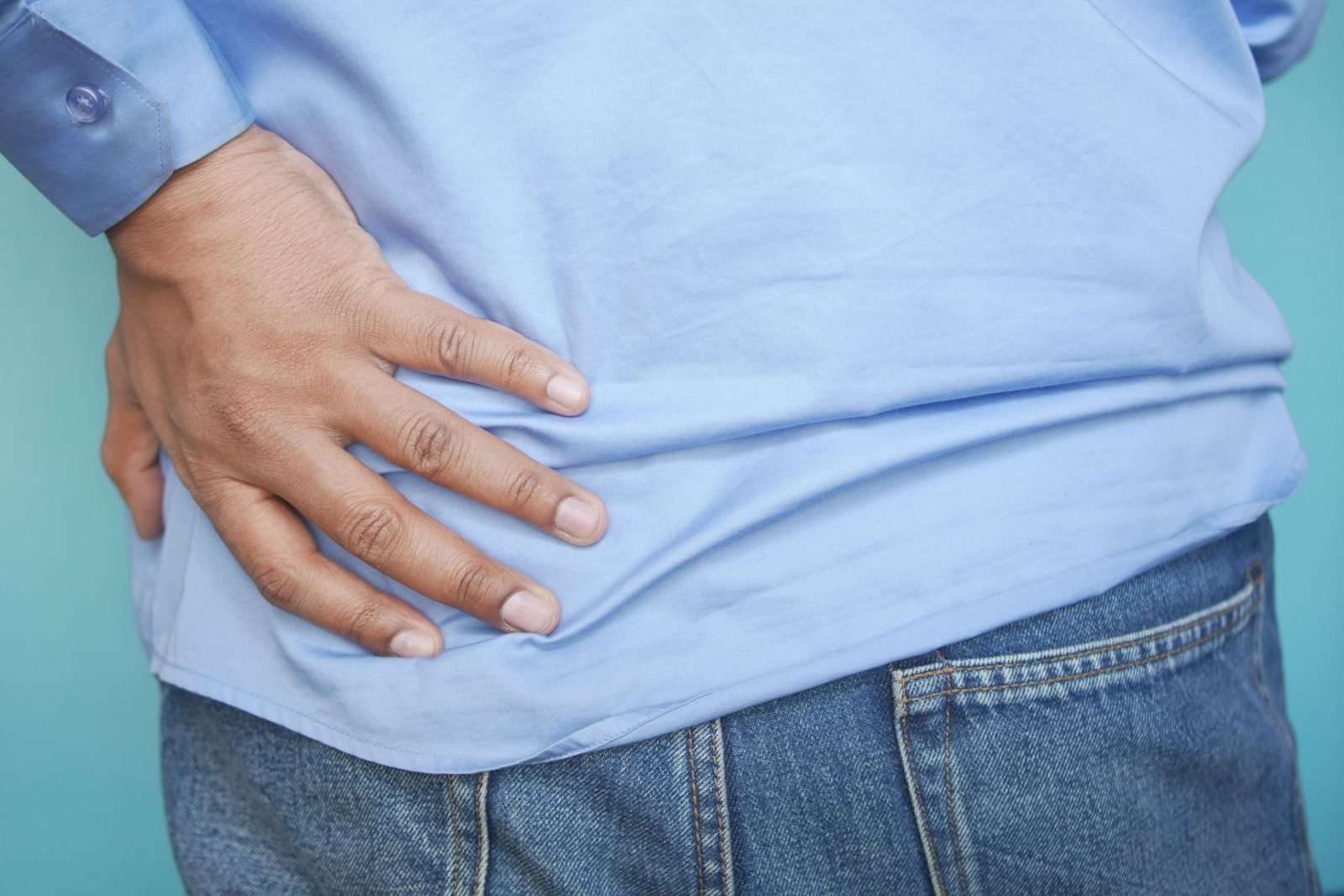
Gluteal tendinopathy is a painful overload of the tendons that anchor your gluteus medius and gluteus minimus muscles to the bony point on the outside of your hip, called the greater trochanter. It is one of the most common reasons for outer hip pain, especially the kind that makes lying on your side at night miserable, and in the best trial so far, a gradual loading program with education worked better over time than a single cortisone injection or waiting.
This guide explains what gluteal tendinopathy is, why side-sleeping and stairs can set it off, what good rehab actually looks like, how long it tends to take and what to avoid. We never diagnose anyone from a screen, so use this as education and a reason to get your hip properly assessed. It is written from what we see every day at Wellmax Physiotherapy in Oakville, serving Oakville and Mississauga.
Key Takeaways
- Gluteal tendinopathy is an overload problem in the hip tendons. Compression against the bony point of the hip is what makes side-lying, crossed legs and stairs feel worse.
- In the 2018 LEAP trial (adults aged 35 to 70 with MRI-confirmed gluteal tendinopathy), education plus a progressive exercise program did better than a cortisone injection or a wait-and-see approach at eight weeks. At one year, overall improvement was still higher with exercise, although pain levels were similar to the injection group.
- Aggressive stretching across the hip, deep pressure on the outer hip and complete rest can keep the tendon irritated. Gradual, well-dosed loading is generally what helps it rebuild.
- Outer hip pain has several possible sources, and each needs different treatment. A hands-on assessment is the safest way to know which applies to you.
What is gluteal tendinopathy, and where do you feel it?
Your gluteus medius and minimus are the muscles on the side of your pelvis that keep you steady when you stand on one leg, walk or climb stairs. Each one narrows into a strong tendon that attaches to the greater trochanter, the bony bump you can feel on the outside of your hip. When those tendons are asked to do more than they are ready for, or are squeezed repeatedly against the bone, they can become sore and less tolerant of load. That is what the word tendinopathy describes.
People usually describe an ache or sharp tenderness on the outer hip. Some feel it spread down the outside of the thigh. Common patterns include:
- Pain when lying on the sore side, or on the other side with the top leg dropping forward
- Pain going up or down stairs
- Pain standing on one leg, putting on pants or getting out of a low chair
- Soreness after a longer walk or a run, then stiffness afterwards
Having some of these patterns does not mean this is the cause of your pain. It means an assessment is worth booking.
Why does lying on your side hurt so much at night?
Two things happen when you sleep on your side. If you lie directly on the sore hip, your body weight presses the tendon against the bone for hours. If you lie on the other side, the top leg usually drops forward across your body. That position, called hip adduction, stretches the tendons over the bony point and squeezes them against it.
Research on lateral hip pain describes difficulty lying on the side at night, pain on stairs and pain in low chairs as typical complaints. Pressure builds slowly through the night, which is why many people notice it most in the early hours or when they first roll over.
Can the pain be on the side you are not lying on?
Yes. The underneath hip is compressed by your weight. The top hip is pulled into adduction. Either can flare, and some people find both sides complain on a bad night. This is a good reason to think about your whole position, not only the hip that hurts.
Is it bursitis, gluteal tendinopathy or something else?
Outer hip pain used to be labelled almost automatically as trochanteric bursitis. More recent research suggests that the tendons are involved in many cases, which is why many clinicians now use the broader term greater trochanteric pain syndrome and look closely at the tendon. If you want the bigger picture on irritated hip structures, see our page on bursitis physiotherapy in Oakville.
The honest answer is that the same outer hip pain can have several different causes, and each needs different treatment. The hip joint itself, the lower back and irritated nerves can all send pain into the same region. Our guides on hip osteoarthritis without surgery and sciatica physiotherapy in Oakville cover two of the common look-alikes. Sorting out which one you have is exactly what a hands-on assessment is for, and our hip pain physiotherapy page explains how we approach it.
Why are women in midlife affected so often?
Gluteal tendinopathy and greater trochanteric pain syndrome are reported more often in women than men, most commonly in midlife and after menopause. In the LEAP trial discussed below, 167 of the 204 participants were women, and the average age was about 55. Researchers have suggested that the fall in sex hormones may affect how tendons cope with load, although the evidence is still developing and it is not the only factor.
If you are in perimenopause or menopause and have noticed new joint or tendon aches, you are not imagining it and you are not alone. Our page on menopause and perimenopause physiotherapy explains how strength-based care fits into this stage of life.
What does loading-based rehab for gluteal tendinopathy look like?
Tendons generally respond better to graded, repeatable load than to complete rest, and they do not cope well with being overwhelmed either. Good rehab sits in the middle and is built around two parts: education and exercise. Programs vary by person, but most follow a similar order.
“A sore tendon does not need to be switched off. It needs the right dose of load, built up gradually.”
Stage 1: Calm the tendon and reduce compression
The first goal is to take the squeeze off. That means understanding which positions pile pressure on the tendon, such as crossing your legs, standing with your weight hanging on one hip, sinking into low sofas and sleeping with the top leg dropped across. Gentle isometric holds, where the muscle works but the hip does not move, are often used early because they load the tendon in a controlled way.
Stage 2: Build strength gradually
Next, we add slow, controlled strengthening for the muscles on the side and back of the hip. Examples include side-lying or standing leg raises, bridges and supported step-ups. The load, the number of repetitions and the range are increased in small steps. A common rule of thumb is that a little discomfort during exercise is acceptable if it settles within about a day. Pain that is sharply worse the next morning is a signal to ease back.
Stage 3: Return to stairs, single-leg tasks and sport
Once the hip tolerates strength work, we make it more like real life: stepping down from a curb, single-leg balance, longer walks and, if you run or play sport, a graded return. This stage matters for staying pain-free after you finish, because it prepares the tendon for the things that set it off in the first place.
Does exercise really beat a cortisone injection?
The best trial evidence so far comes from the LEAP trial, a randomized clinical trial led by Rebecca Mellor and colleagues and published in the BMJ in 2018. It followed 204 adults aged 35 to 70 who had MRI-confirmed gluteal tendinopathy and pain for over three months, and compared three approaches: eight weeks of physiotherapist-led education and exercise (14 supervised sessions plus a daily home program), a single corticosteroid injection, and a wait-and-see approach.
At one year, the pattern held. Roughly 78 per cent of the education and exercise group (51 of 65 people) reported being at least moderately better, compared with about 57 per cent after the injection (36 of 63) and about 52 per cent in the wait-and-see group (31 of 60). Pain at one year was similar for exercise and injection, and both were lower than in the wait-and-see group, but the overall improvement favoured exercise.
Are cortisone injections ever reasonable?
A cortisone injection can give short-term relief for some people. In the LEAP trial, about 57 per cent of the injection group reported being at least moderately better at one year, compared with about 52 per cent of those who waited and about 78 per cent of those who did education and exercise. The injection group also did better than the wait-and-see group in the first eight weeks, but its advantage over simply waiting shrank by one year. Relying on injections as the only plan does not address why the tendon was overloaded in the first place, and many clinicians are cautious about repeated injections into tendons. Whether an injection suits you is a decision to make with your doctor, ideally alongside a rehab plan rather than as the only plan.
How long does gluteal tendinopathy take to settle?
There is no single timeline, and we would be wary of anyone who promises one. In LEAP, the exercise group followed a structured program over eight weeks and many people were clearly better by then, but tendons generally keep adapting for months, and long-standing cases can take longer.
What tends to help is consistency rather than intensity. What can slow things down is flaring the tendon repeatedly, which is why the education side matters as much as the exercises. At Wellmax the goal is a plan with an end point, so you finish strong and confident.
What should you avoid with gluteal tendinopathy?
- Aggressive stretching across the hip. Pulling your knee to the opposite shoulder, deep figure-four stretches and crossing your legs can squeeze the tendon against the bone. It can feel like a relief for a moment and then leave it more irritable.
- Deep pressure on the outer hip. Pressing hard with a foam roller or ball directly on the bony point compresses the very area that is already sore. If you are tempted to roll the outside of the thigh, see our guide on whether foam rolling fixes IT band pain first.
- Standing on one hip. Hanging your weight on one leg with the pelvis dropped sideways can keep the tendon stretched and compressed.
- Low, soft seating. Deep couches and low chairs put the hip into a bent, adducted position.
- Complete rest. Resting may calm symptoms briefly, but tendons generally respond better to graded load than to complete rest, so pain can return when you start again.
- Jumping straight back into long walks or running. A sudden jump in volume is a common reason for a flare.
- Relying on repeated injections as the only plan. They may help the pain, but on their own they do not build tendon capacity.
How can you sleep better while it settles?
These are a safe starting point, not a fix. Many people find that lying on their back with a small pillow under the knees takes the pressure off. If you prefer your side, lie on the pain-free side and place a pillow between your knees and another in front of your chest so the top leg rests level with the hip rather than dropping forward. Avoid lying on the sore hip for long stretches.
Poor sleep can make pain feel louder, so it is worth getting the set-up right early. Shoulder pain has a similar pattern, and our guide to shoulder pain when sleeping on your side covers the same logic of reducing night-time compression.
How does physiotherapy at Wellmax help?
Your first visit is a 60-minute assessment. We look at how your hip, pelvis, lower back and feet move and load, rule out the common look-alikes, and then build a plan around the cause. Treatment combines hands-on manual therapy to settle sore, guarded muscle tension with a graded strengthening program taught by your physiotherapist. Our Clinic Director, Gurmeet Rai, a Registered Physiotherapist with more than 16 years of experience, leads your care, and the aim is to get you strong, confident and discharged.
For stubborn tendon problems, shockwave therapy is sometimes added alongside loading work. The research in this area is still developing, so we treat it as an add-on rather than a replacement for rehab. Our honest overview is in Does shockwave therapy actually work? and you can see how we offer it on our shockwave therapy page.
When should you get urgent medical care instead?
Most outer hip pain is mechanical and manageable, but some signs need urgent medical care, not physiotherapy. Go to an emergency department now if you have hip pain after a fall or other injury, you cannot put weight on the leg, you have a fever or feel generally unwell along with the hip pain, or you have new leg weakness, numbness in the groin or saddle area, or new trouble controlling your bladder or bowels.
See your doctor promptly if you have:
- A history of cancer, with new or unexplained hip pain
- Unexplained weight loss alongside hip pain
- Constant night pain that does not change with position
Not sure where to start?
Book a free consultation and we will point you to the right care, with no pressure.
Frequently Asked Questions
What is gluteal tendinopathy?+
Gluteal tendinopathy is an overload problem in the tendons of the gluteus medius and gluteus minimus, where they attach to the bony point on the outside of the hip. It causes outer hip pain that is often worse lying on the side, on stairs and standing on one leg. It is common in midlife, particularly in women, and often responds well to graded exercise and education.
Why does gluteal tendinopathy hurt more at night?+
Side-lying compresses the tendon against the bone if you lie on the sore hip, and the top leg dropping across your body pulls the tendon into a stretched, squeezed position. Hours in either position add up. Lying on your back with a pillow under the knees, or on the pain-free side with a pillow between the knees, is a sensible starting point.
What is the best treatment for gluteal tendinopathy?+
The best trial evidence so far supports education plus a progressive exercise program. In the 2018 LEAP trial published in the BMJ, 77 per cent of people doing education and exercise were at least moderately better at eight weeks, compared with about 58 per cent after a cortisone injection and 29 per cent who took a wait-and-see approach. That trial studied adults aged 35 to 70 with MRI-confirmed gluteal tendinopathy and pain for over three months. A physiotherapist can tailor the load to your hip.
How long does gluteal tendinopathy take to heal?+
It varies. Improvement is often noticeable within about eight weeks, but tendons keep adapting for several months. Long-standing cases can take longer. Steady progress and avoiding repeated flare-ups matter more than speed.
Should I stretch my hip if I have gluteal tendinopathy?+
Aggressive stretching across the body, such as pulling the knee to the opposite shoulder or deep figure-four stretches, tends to compress the tendon and can leave it more irritable. A better approach is graded strengthening and positions that avoid squeezing the tendon. A physiotherapist can show you what is safe for your hip.
Can walking make gluteal tendinopathy worse?+
Walking is usually fine in sensible amounts, and gentle activity is part of rehab. Flares tend to come from sudden jumps in distance, hills, stairs or standing with your weight hanging on one hip. A common rule of thumb is that mild discomfort that settles within about 24 hours is acceptable, while pain that is clearly worse the next day means you did too much.
Is a cortisone injection a good idea for outer hip pain?+
It can give short-term relief for some people. In the LEAP trial, about 57 per cent of the injection group reported being at least moderately better at one year, compared with about 52 per cent of those who waited and about 78 per cent of those who did education and exercise. Whether an injection suits you is a decision to make with your doctor, ideally alongside a rehab plan rather than as the only plan.
Do I need a referral to see a physiotherapist in Oakville for hip pain?+
No referral is needed to book physiotherapy at Wellmax, and we direct bill most major insurers. Your first visit is a 60-minute assessment, and you are welcome to book a free consultation first. We serve Oakville and Mississauga, and our focus is finding the cause of your pain and getting you self-managing.
You Might Also Like
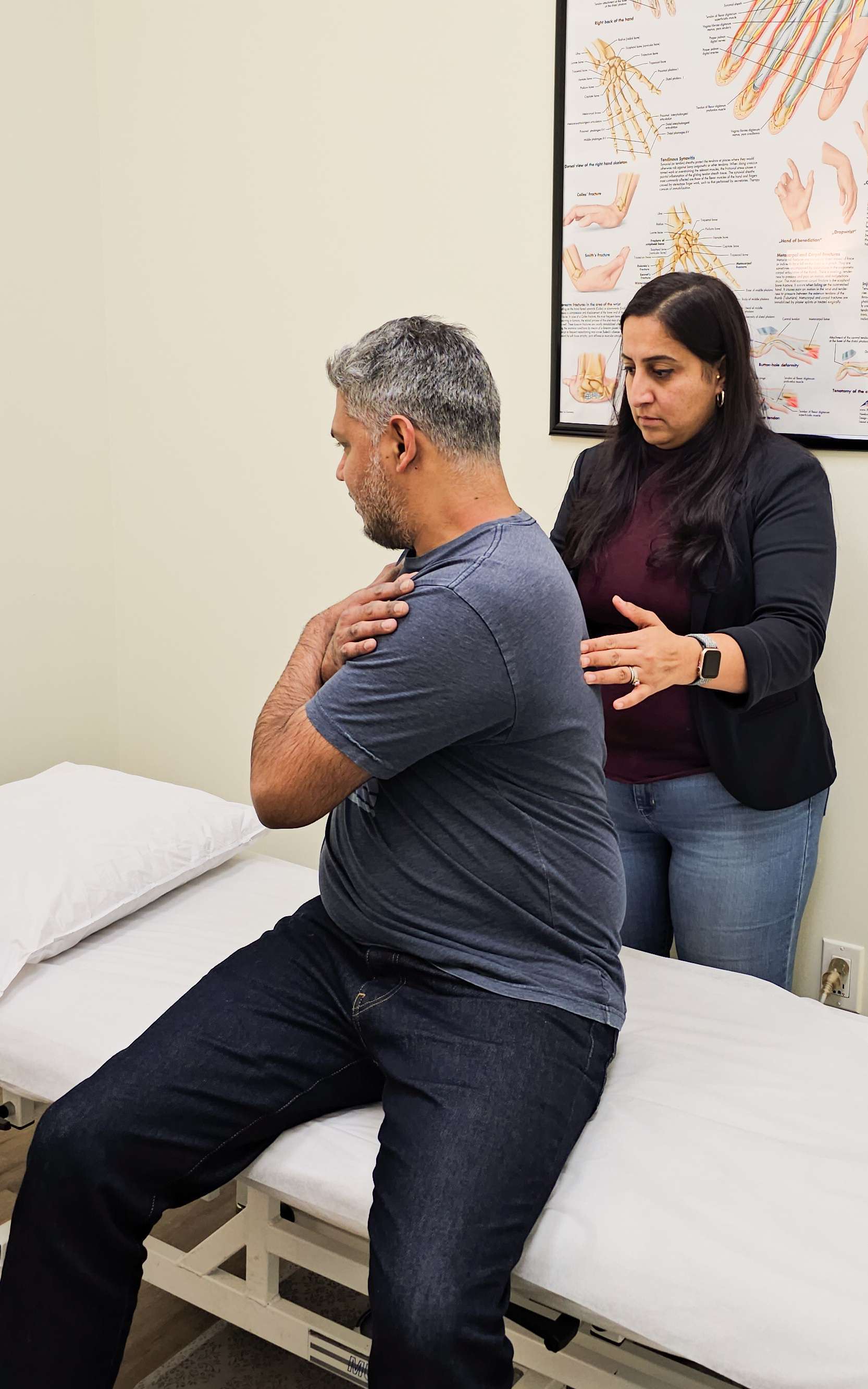

Gurmeet Rai, Registered Physiotherapist
Gurmeet is a Registered Physiotherapist with the College of Physiotherapists of Ontario and the Clinic Director and co-owner of Wellmax Physiotherapy in Oakville, with 16+ years of clinical experience. She focuses on complex, stubborn cases where earlier treatment has not worked, with advanced training in pelvic health, TMJ, vestibular, and sports and MSK rehab. Expect expert care from assessment to discharge, with honest guidance along the way.Read Gurmeet’s full profile or meet the team.
This article is for educational purposes only and does not replace a professional clinical assessment. Every body and condition is different. If you are experiencing pain or symptoms, book an assessment with a qualified clinician for advice specific to your situation. If you are experiencing a medical emergency, call 911 or visit your nearest emergency department.
