
Pregnancy Back Pain Relief in Oakville: What Helps and What to Avoid
If your lower back or hips ache more with every passing week of pregnancy, you are in very good company. Back pain is one of the most common parts of pregnancy, affecting an estimated half to four in five expecting parents, and pelvic girdle pain affects roughly one in five. It is common, but common does not mean you simply have to endure it. The right movement, the right positions, and the right support can make a real difference.
This guide explains, in plain language, why pregnancy can stir up low back and pelvic pain, what tends to help, what is worth skipping, and when it is time to ask for a hand. Everything here is general information. It is not a diagnosis or a treatment plan for you specifically. If anything below sounds like your situation, that is your cue to book an assessment so the advice can be tailored to your body and your stage of pregnancy.
Key Takeaways
- Pregnancy back and pelvic pain is very common and usually treatable, not something you have to push through alone.
- Gentle movement, good positions, and targeted hip and core support tend to help far more than strict rest.
- Side sleeping with a pillow between the knees and a possible support belt can ease day-to-day pain.
- Severe pain, bleeding, fever, or regular cramping means you should contact your maternity provider promptly.
Why does pregnancy cause back and pelvic pain?
Three things tend to combine. First, hormones such as relaxin, progesterone, and estrogen rise to help your body soften and prepare for birth. That softening makes the joints of your pelvis and lower back a little more mobile, which can leave them feeling less stable. Second, your growing baby shifts your centre of gravity forward, so your back muscles work harder all day to keep you upright. Third, the added weight and changing posture place more load on the lower back and the joints at the front and back of the pelvis.
None of this means something is wrong with you. It means your body is adapting quickly, and the muscles that support your spine and pelvis need a little help to keep up.
What is pelvic girdle pain, and how is it different from back pain?
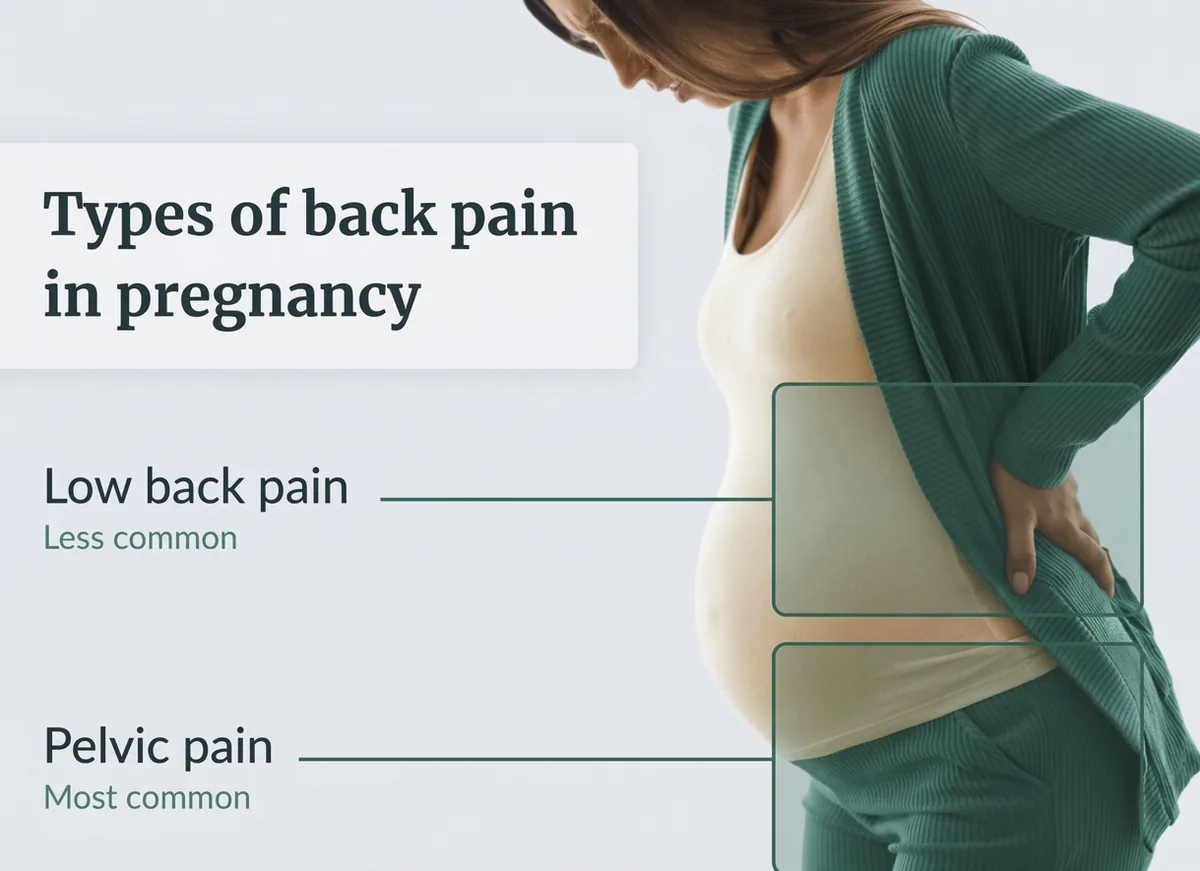
Low back pain is usually felt across the lower back. Pelvic girdle pain is felt lower and wider: at the front over the pubic area, deep in the buttocks, or across the back of the pelvis near the dimples above your tailbone. It often flares when you roll over in bed, climb stairs, stand on one leg to get dressed, or get in and out of a car. Many people have a mix of both. A pelvic health assessment can sort out where the pain is really coming from, which then guides what to do about it.
“Common is not the same as unavoidable. With the right plan, most people feel meaningfully better well before their due date.”
What helps relieve pregnancy back pain?
The most reassuring thing to know is that gentle, regular movement usually beats strict rest. Lying still for days tends to stiffen the very muscles you need. The goal is to keep moving comfortably, build a little support around the hips and core, and make daily tasks kinder to your back.
Which exercises are generally safe and helpful?
Many people do well with low-impact options such as walking, swimming, stationary cycling, prenatal yoga, and gentle pilates. Targeted movements that calm the lower back and support the pelvis often include:
- Pelvic tilts and the cat-cow stretch to gently mobilise the lower back.
- Glute and hip strengthening, such as side-lying leg raises and supported bridges, to steady the pelvis.
- Gentle core activation that you can hold while breathing normally, rather than crunches.
- Inner thigh and buttock stretches to ease tightness around the pelvis.
The right mix depends on your stage and symptoms, so think of this as a menu, not a prescription. A physiotherapist can show you which movements fit you and which to ease off.
Does a pregnancy support belt help?
For many people, yes. A pelvic or maternity support belt can take some load off the lower back and pelvic joints and make walking and standing more comfortable, especially later in pregnancy. It works best as one tool alongside movement and good positioning, not as a replacement for them. If a belt feels pinching, makes pain worse, or you are unsure how to fit it, that is worth checking with your provider rather than guessing.
What sleeping and resting positions ease the pain?
Sleep is often where pregnancy back pain feels loudest. Side sleeping tends to be the most comfortable, and many find the left side eases pressure. A pillow between the knees keeps the hips level and the pelvis settled, and a small pillow or rolled towel under the bump can support the belly. A pregnancy pillow can do both jobs at once.
For getting in and out of bed, roll onto your side first, then push up with your arms while swinging your legs down together, rather than twisting through the middle. Small changes like this protect a sore pelvis through the parts of the day that usually hurt most.
What everyday habits make back pain worse?
A few small adjustments add up. Try to avoid standing on one leg to dress, lifting and twisting at the same time, carrying a toddler on one hip all day, and sitting slumped for long stretches. When you lift, bend at the knees and keep the load close. When you sit, support your lower back and keep both feet flat. None of this needs to be perfect. The aim is simply to give your back fewer reasons to flare.
Is it safe to exercise in each trimester?
For most healthy pregnancies, staying active is encouraged throughout, with the focus shifting as you go. Early on, gentle movement and good habits set a strong foundation. In the second trimester, when back pain often first appears, supported strengthening and mobility work tend to feel best. Later in pregnancy, comfort and stability become the priority, and you may swap floor-based moves for upright or side-lying versions.
This is a general picture, not a green light for every exercise. Some movements are best modified or avoided depending on your history and symptoms, so the safest path is a plan reviewed by someone who works with pregnancy.
How can pelvic health physiotherapy help?
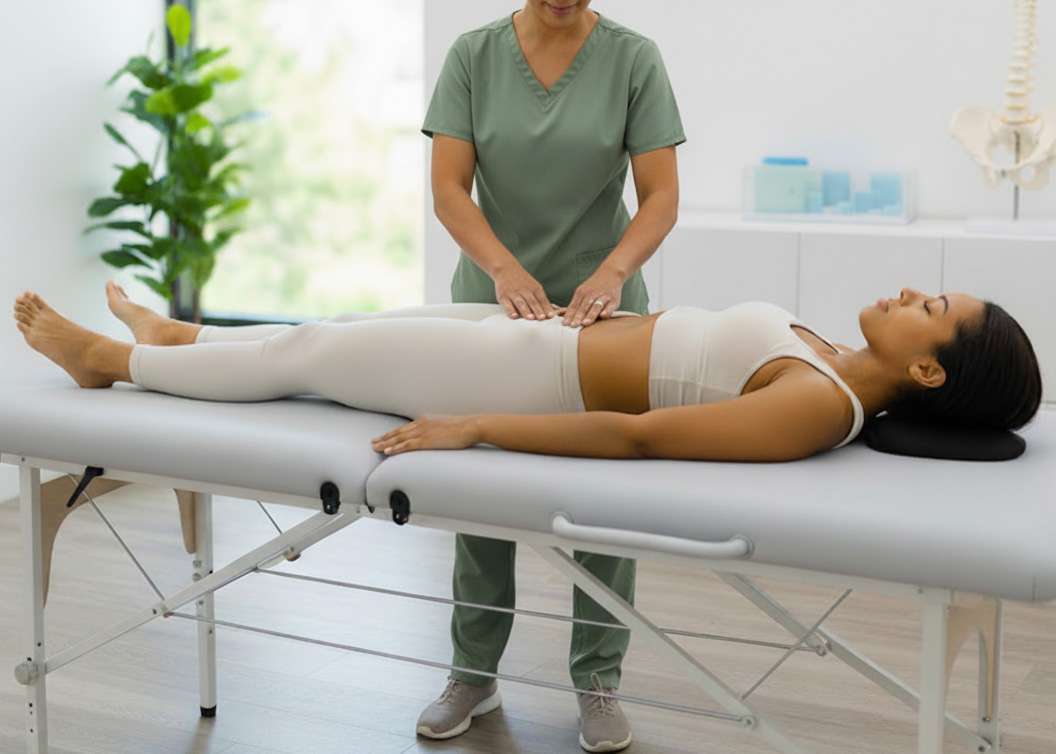
Pelvic health and women’s health physiotherapy looks at the whole system: your lower back, hips, deep core, and pelvic floor, and how they work together to support you. After a thorough assessment, treatment may include hands-on manual therapy to ease sore joints and muscles, a tailored exercise plan, guidance on positions and daily movement, and help with the pelvic floor, which often needs attention both during pregnancy and afterward.
At Wellmax, our assessments run a full 60 minutes, so there is time to understand your story rather than rush. Care is trauma-informed and takes place in private treatment rooms, because this is personal and you deserve to feel comfortable. Gurmeet Rai is a rostered pelvic health physiotherapist with more than 16 years of experience, and our team supports families across Oakville and Mississauga. You can read more on our pregnancy and pelvic pain physiotherapy page and our women’s health physiotherapy page.
What about chiropractic care during pregnancy?
Some people find gentle, pregnancy-trained chiropractic care a helpful part of the picture, often alongside physiotherapy. The key is that your provider is experienced with pregnancy and adapts everything to your stage and comfort. If you are curious, our prenatal pregnancy chiropractor page explains how that care works at Wellmax.
What happens to back pain after the baby arrives?
Postpartum back and pelvic pain is common too, and for many people it eases as hormones settle and strength returns over the weeks after birth. For some, it lingers longer, and that is exactly when focused recovery work pays off. Rebuilding deep core and pelvic floor support, easing stiff hips, and gradually returning to the activities you love can all be guided rather than guessed at.
Whether you delivered recently or months ago, it is not too late to feel stronger. Our postpartum physiotherapy page walks through how recovery care is structured and what to expect.
Not sure where to start?
Book a free consultation and we will point you to the right care, with no pressure.
When should you seek care promptly?
Most pregnancy back pain is uncomfortable but not dangerous. Some symptoms, though, deserve a quick call to your maternity provider rather than waiting. Contact your provider promptly if you have severe or sudden pain, any vaginal bleeding, regular cramping or contractions, a fever, pain with urination, or any pregnancy concern that worries you. When in doubt, reach out. It is always reasonable to ask.
Frequently Asked Questions
Is back pain in pregnancy normal?+
Yes. Low back pain affects an estimated 50 to 80 percent of pregnant people, and pelvic girdle pain affects about one in five. It is one of the most common parts of pregnancy. Being common does not mean you have to suffer through it, though. Gentle movement, supportive positions, and pelvic health physiotherapy can usually reduce the pain and help you stay active and comfortable.
What is the best sleeping position for pregnancy back pain?+
Most people find side sleeping the most comfortable, often on the left side, with a pillow between the knees to keep the hips level and a small pillow supporting the bump. A full-length pregnancy pillow can do both at once. When getting up, roll onto your side first and push up with your arms instead of twisting through your middle, which protects a sore lower back and pelvis.
Which exercises are safe for pregnancy back pain?+
For most healthy pregnancies, low-impact options such as walking, swimming, stationary cycling, prenatal yoga, and gentle pilates are good choices. Pelvic tilts, cat-cow, supported bridges, and side-lying leg raises can calm the lower back and steady the pelvis. The right mix depends on your stage and symptoms, so it is best to have a plan reviewed by a physiotherapist who works with pregnancy rather than following a generic routine.
Do pregnancy support belts actually work?+
For many people they help. A pelvic or maternity support belt can offload the lower back and pelvic joints and make standing and walking more comfortable, especially later in pregnancy. It works best alongside movement and good positioning rather than on its own. If a belt pinches, makes pain worse, or you are unsure how to fit it, check with your provider so it actually helps instead of adding strain.
What is the difference between back pain and pelvic girdle pain?+
Low back pain is felt across the lower back. Pelvic girdle pain sits lower and wider: over the pubic area at the front, deep in the buttocks, or across the back of the pelvis. It tends to flare when you roll over in bed, climb stairs, or stand on one leg. Many people have both. A pelvic health assessment can identify where the pain truly comes from and guide the right treatment.
When should I see a physiotherapist for pregnancy back pain?+
It is reasonable to seek care any time the pain is limiting your sleep, walking, work, or daily activities, and you do not need to wait until it is severe. Choose a physiotherapist experienced with pregnancy, such as a rostered pelvic health provider, so your plan is tailored to your stage and comfort. Earlier support often means an easier pregnancy and a smoother recovery afterward.
Will my back pain go away after I give birth?+
For many people, postpartum back and pelvic pain eases as hormones settle and strength returns over the weeks after birth. For some it lingers longer, which is where focused recovery work helps. Rebuilding deep core and pelvic floor support, easing stiff hips, and gradually returning to activity can all be guided. Whether you delivered recently or months ago, it is not too late to feel stronger.
When should pregnancy back pain be treated as urgent?+
Contact your maternity provider promptly if you have severe or sudden pain, any vaginal bleeding, regular cramping or contractions, a fever, pain with urination, or any pregnancy concern that worries you. These warning signs need a quick call rather than waiting. Most pregnancy back pain is uncomfortable but not dangerous, yet when something feels different or alarming, it is always reasonable to reach out and ask.
You Might Also Like

Gurmeet Rai, Registered Physiotherapist
Gurmeet is a Registered Physiotherapist with the College of Physiotherapists of Ontario and the Clinic Director and co-owner of Wellmax Physiotherapy in Oakville, with 16+ years of clinical experience. She focuses on complex, stubborn cases where earlier treatment has not worked, with advanced training in pelvic health, TMJ, vestibular, and sports and MSK rehab. Expect expert care from assessment to discharge, with honest guidance along the way. Read Gurmeet’s full profile or meet the team.
This article is for educational purposes only and does not replace a professional clinical assessment. Every body and condition is different. If you are experiencing pain or symptoms, book an assessment with a qualified clinician for advice specific to your situation. If you are experiencing a medical emergency, call 911 or visit your nearest emergency department.
