
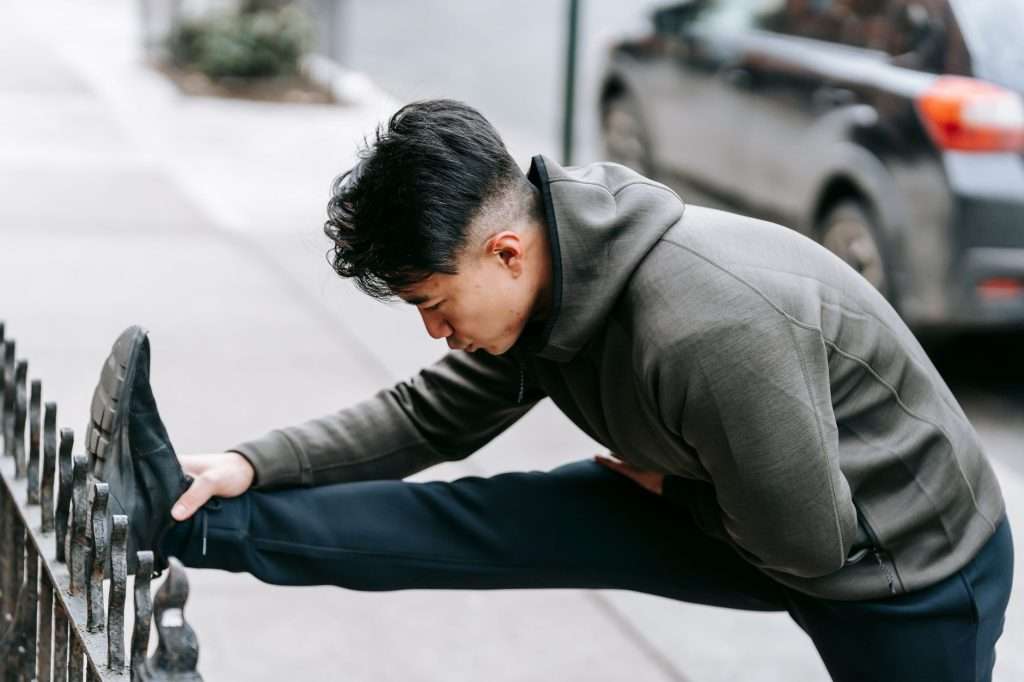
Hamstring Strain Not Healing? 7 Signs to Get Checked

You pulled your hamstring weeks ago. The initial soreness faded, you eased back into light activity, and then it happened again: a familiar twinge the moment you tried to pick up speed. If that sounds familiar, you are not imagining it. Hamstring strains are notorious for feeling mostly better long before they are actually ready for full-speed work, and pushing past that gap is exactly how a simple strain turns into a repeat injury.
This guide walks through why hamstrings are so slow and stubborn to heal, seven general recovery patterns worth paying attention to, and what proper physiotherapy-guided rehab looks like, so you can get back to running, sport, or simply bending down to tie your shoes without a second thought.
Key Takeaways
- Hamstring strains have one of the highest re-injury rates of any muscle strain, largely because people return to sprinting before strength and length are fully restored.
- A hamstring that is still tight, weak, or achy weeks after the original injury is not necessarily just slow to heal. It is worth a proper assessment rather than more guesswork.
- The 7 patterns below describe things worth noticing, not a self-diagnosis. Only a hands-on assessment can tell you exactly what is going on and what to do next.
- Recovery that holds up under real sprinting needs progressive loading, eccentric strength work, and a graded return to speed, not just rest and stretching.
Why Are Hamstrings So Slow to Heal, and So Easy to Re-Injure?
The hamstrings are a group of three muscles running down the back of the thigh, and they do a demanding job: decelerating your leg at the end of a running stride while under enormous force. That mix of high load and high speed is part of why hamstring strains happen so often in sport and running, and why they are so slow to settle down afterward.
Blood supply is part of the problem. The upper hamstring, where the muscle blends into a tendon near the sit bone, has a relatively poor blood supply compared with the muscle belly itself. Less blood flow means slower delivery of the nutrients and cells needed to repair tissue, which is one reason injuries closer to the sit bone (sometimes becoming a longer-term, tendon-based problem called proximal hamstring tendinopathy) tend to drag on longer than a strain in the middle of the muscle.
The bigger driver of repeat injuries, though, is timing. Many people feel roughly normal walking around, assume the hamstring has healed, and go straight back to sprinting, cutting, or hard stretching. But walking asks very little of the hamstring compared with sprinting. A muscle can feel fine at low speed while still being noticeably weaker than the uninjured side, and that strength gap is exactly what gives out under a sprint.
Is It Normal for a Hamstring Strain to Still Bother You After a Month?
It depends on how the initial injury was graded, but still not 100 percent at four to six weeks is common enough that it should not automatically alarm you. Mild strains typically settle within one to three weeks. Moderate strains, involving a partial tear of muscle fibres, often take six to eight weeks before they can handle full sprinting. More significant tears can take three months or longer.
What is not normal is a strain that keeps re-flaring every time you try to progress, or one where the same ache has been sitting in the same spot for two months without any real change. That pattern usually means the muscle has not been reloaded properly, not that you simply need to wait longer. This is where the signs below come in.
7 Signs Your Hamstring Strain Might Not Be Healing the Way It Should
None of these signs point to a specific diagnosis on their own. They are general recovery patterns that, together or on their own, are worth getting looked at by a physiotherapist rather than waiting it out.
- Pain returns every time you try to sprint or stretch fully. If light jogging feels fine but any attempt at top-end speed, a hill sprint, or a full hamstring stretch brings the same pull back, the muscle likely has not regained the length or capacity those tasks demand. Worth an assessment before you try again on your own.
- Tightness that never fully eases, even with regular stretching. A hamstring that feels perpetually short or tight for weeks, no matter how much you stretch it, is not usually a flexibility problem. Persistent guarding like this is a pattern worth having assessed rather than stretched harder.
- Strength that noticeably lags behind your other leg. If your injured-side hamstring tires faster, feels weaker on a single-leg bridge, or you catch yourself favouring the other leg on stairs, that side-to-side gap is exactly what predicts a repeat strain. It is worth measuring properly rather than guessing.
- Pain when sitting for long stretches, like a car ride or a movie. Discomfort that builds the longer you sit, then eases once you stand and move, is a pattern that often points toward the upper hamstring near the sit bone rather than the muscle belly. Worth getting assessed rather than just shifting in your seat.
- A nagging, deep ache low in the buttock near the sit bone. This is different from a typical mid-thigh strain and can overlap with hip and buttock pain patterns that need a slightly different rehab approach. It is worth having a professional sort out which structures are involved.
- Symptoms that spread, tingle, or travel down the leg. A strain that stays put as a pulling or aching sensation is one thing. Pain, tingling, or numbness that spreads down toward the back of the knee or lower leg is a different pattern, and it is worth an assessment to understand what is actually being irritated.
- Swelling or bruising that lingers well past the first couple of weeks. Some bruising in the first days after a strain is expected, especially as it tracks down toward the knee. Swelling or bruising that is still present, or reappears weeks later, is worth getting checked rather than assumed to be normal healing.
When a Hamstring Injury Needs Same-Day Medical Attention
A loud pop at the moment of injury, immediate bruising, severe pain, or being unable to bear weight or walk normally can mean a complete tear or a tendon pulled off the bone (an avulsion). That combination needs prompt medical assessment, sometimes with imaging, rather than home rehab alone.
What Does Physiotherapy-Guided Hamstring Rehab Actually Look Like?
Recovering from a hamstring strain is not just about rest and gentle stretching. Real rehab needs to progressively reload the muscle until it can tolerate the same demands as sprinting, cutting, or kicking, because that is what you are eventually asking it to do again.
Progressive Loading, Not Just Rest
Early on, gentle movement and light strengthening protect against stiffness and muscle wasting without overloading healing tissue. As pain settles, the load increases in stages, from isometric holds, to slow controlled strengthening, to more dynamic movement, always guided by how the tissue responds rather than a fixed calendar.
Eccentric Strengthening
Exercises like the Nordic hamstring curl train the muscle to control lengthening under load, which is exactly what happens at the end of a running stride. Building this kind of strength is one of the most well-supported ways to reduce the risk of re-injury once you are back to running and sport.
Graded Return to Sprinting
The last stage bridges the gap between feels fine jogging and can handle a full sprint. This usually means building speed in stages, adding change of direction and deceleration drills, and only returning to full training once the hamstring can repeatedly tolerate near-maximal effort without symptoms. A structured return-to-running plan is the difference between healing once and healing on repeat.
“Most people do not re-injure a hamstring because they rested too little. They re-injure it because they went from resting straight to sprinting with nothing progressive in between.”
At Wellmax Physiotherapy in Oakville, hands-on manual therapy is combined with progressive strength and speed work to find the actual root cause of a stubborn hamstring, not just calm the symptoms down for a week. Our physiotherapists see patients across Oakville and Mississauga, starting with a thorough 60-minute first assessment so the rehab plan is built around your specific hamstring, not a generic timeline. Lead physiotherapist Gurmeet Rai brings over 16 years of experience to sport and running-related rehab, with the goal of a full, pain-free graduation rather than open-ended visits.
How Long Does a Hamstring Strain Really Take to Heal?
Timelines vary with the grade and location of the strain, but general ranges from sports medicine research are a useful benchmark.
- Mild (Grade 1) strains: often 1 to 3 weeks before return to light activity, longer before full sprinting.
- Moderate (Grade 2) strains: commonly 3 to 8 weeks depending on how much muscle tissue is involved.
- Severe (Grade 3) strains or tears: three months or longer, sometimes requiring surgical input.
These are general guides, not a substitute for an individual assessment, since the exact timeline depends on exactly where the strain is, how it is loaded during recovery, and whether it has already been re-injured once.
When Should You See a Physiotherapist About a Hamstring That Is Not Improving?
As a general guide, it is worth booking an assessment if pain has not measurably improved within one to two weeks, if you have already re-injured the same hamstring once, if pain is spreading toward the back of the knee or lower leg, or if you simply are not sure whether it is safe to return to running or sport. Guessing at this stage is usually what turns a four-week recovery into a four-month one.
Not sure where to start?
Book a free consultation and we will point you to the right care, with no pressure.
Frequently Asked Questions
Why does my hamstring strain keep coming back every time I start running again?+
Repeat strains usually happen because the muscle regains enough strength to handle jogging before it regains enough strength and length to handle sprinting. Returning to full speed too early, without a graded build-up or targeted eccentric strengthening, is the most common reason the same hamstring keeps re-injuring itself.
How do I know if my hamstring strain is a grade 1, 2, or 3?+
Grading is based on how much muscle tissue is affected and is best determined by a physiotherapist through a hands-on assessment, sometimes alongside imaging for more severe injuries. General clues include how much strength and range of motion you have lost and whether you can walk normally, but self-grading at home is unreliable enough that it should not guide your rehab decisions.
What is proximal hamstring tendinopathy, and is it different from a hamstring strain?+
Proximal hamstring tendinopathy is an overload condition of the tendon where the hamstring attaches near the sit bone, and it often develops gradually rather than from one specific moment. It tends to cause a deep ache that is worse with sitting and can be mistaken for a muscle strain, which is why an accurate assessment matters before choosing a rehab plan.
Can I stretch a hamstring strain to help it heal faster?+
Gentle, pain-free movement is useful, but aggressive stretching of a healing hamstring can aggravate it rather than help it. Strengthening the muscle through a full, pain-free range tends to be more effective for lasting recovery than static stretching alone.
Is it safe to keep running on a mild hamstring strain?+
Continuing to run through hamstring pain, even mild pain, tends to slow healing and raises the risk of turning a small strain into a larger tear. Reducing intensity, addressing the strength deficit, and getting guidance on when it is safe to resume are generally safer than pushing through discomfort.
What exercises help a hamstring strain that will not fully heal?+
A structured programme usually progresses from isometric holds, to slow resistance exercises like bridges and leg curls, to eccentric work such as Nordic curls, and finally to sprint-specific drills. The right starting point and pace depend on where your hamstring currently is, which is best mapped out with a physiotherapist rather than a generic exercise list.
Why does my hamstring hurt more when I sit for a long time?+
Pain that builds with sitting often points toward the upper hamstring near the sit bone, an area that gets compressed and stretched while seated. This pattern is common with proximal strains or tendinopathy and is worth mentioning specifically during an assessment, since it changes which exercises will help.
Should I get an MRI for a hamstring strain that is not improving?+
Imaging is not usually needed for a typical hamstring strain, but it can be useful when pain is not improving as expected, when there was a loud pop or immediate significant bruising, or when a physiotherapist suspects a more significant tear or tendon injury. A clinical assessment is usually the right first step, with imaging added only if needed.
You Might Also Like


Gurmeet Rai, Registered Physiotherapist
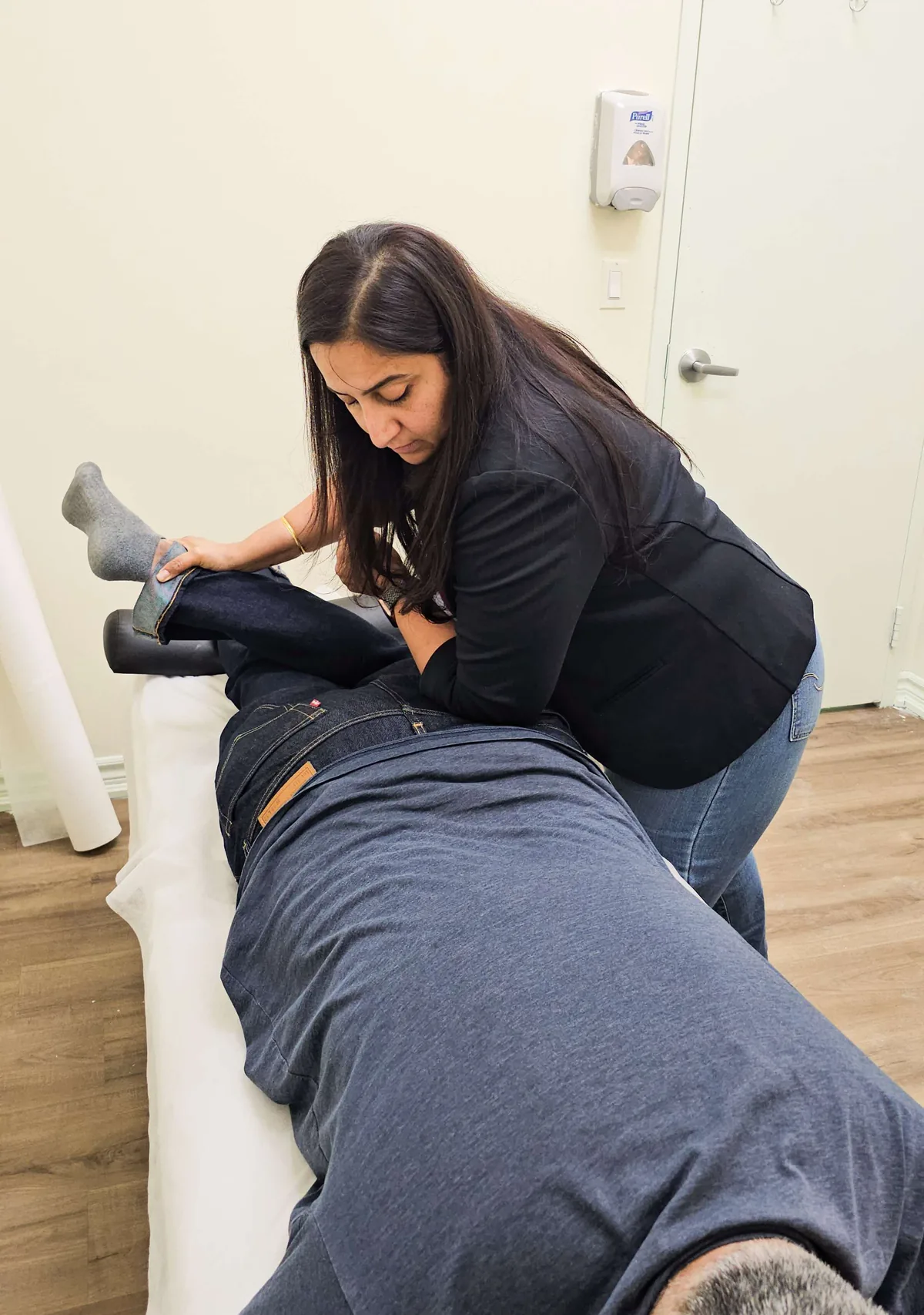
Gurmeet is a Registered Physiotherapist with the College of Physiotherapists of Ontario and the Clinic Director and co-owner of Wellmax Physiotherapy in Oakville, with 16+ years of clinical experience. She focuses on complex, stubborn cases where earlier treatment has not worked, with advanced training in pelvic health, TMJ, vestibular, and sports and MSK rehab. Expect expert care from assessment to discharge, with honest guidance along the way. Read Gurmeet’s full profile or meet the team.
This article is for educational purposes only and does not replace a professional clinical assessment. Every body and condition is different. If you are experiencing pain or symptoms, book an assessment with a qualified clinician for advice specific to your situation. If you are experiencing a medical emergency, call 911 or visit your nearest emergency department.
