
You spent a Saturday afternoon raking, bagging leaves, hauling the bags to the curb and cutting back the garden. It felt fine while you were doing it. Then you woke up Sunday morning, and getting out of bed took a plan.
If that sounds familiar, you are in very good company every October and November in Oakville and Mississauga. This guide explains why back pain after yard work happens, how to pace a big cleanup so it does not, what a sensible first week looks like, and when it is time to get checked.
Key Takeaways
- Fall cleanup stacks hours of repeated bending, twisting and lifting on a back that has had all summer off from it.
- For most flare-ups, staying gently active beats bed rest, and pain often improves over the first few weeks, although flare-ups can come back.
- Pace the job in short blocks, switch tasks often, and keep the load close to your body.
- Pain after a significant injury or fall, leg weakness, numbness in the groin or saddle area, new bladder or bowel changes, or fever need urgent medical care. Go to an emergency department now.
Why does my back hurt after raking leaves and yard work?
Yard work is a perfect storm for a lower back. It is long, it is repetitive, and it asks for movements your back does not do much the rest of the year.
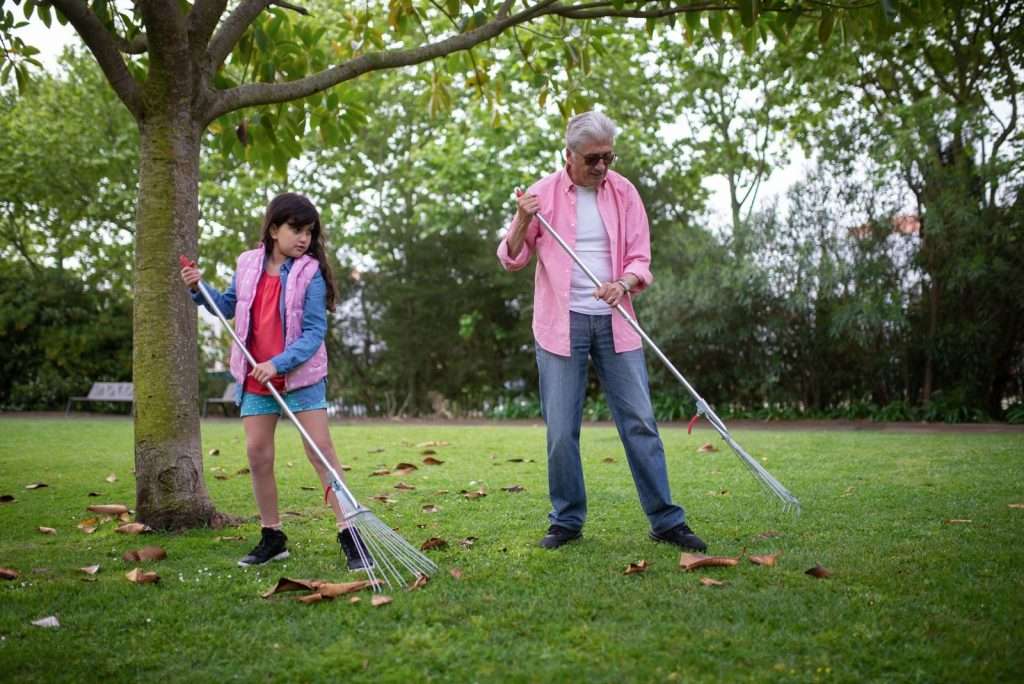
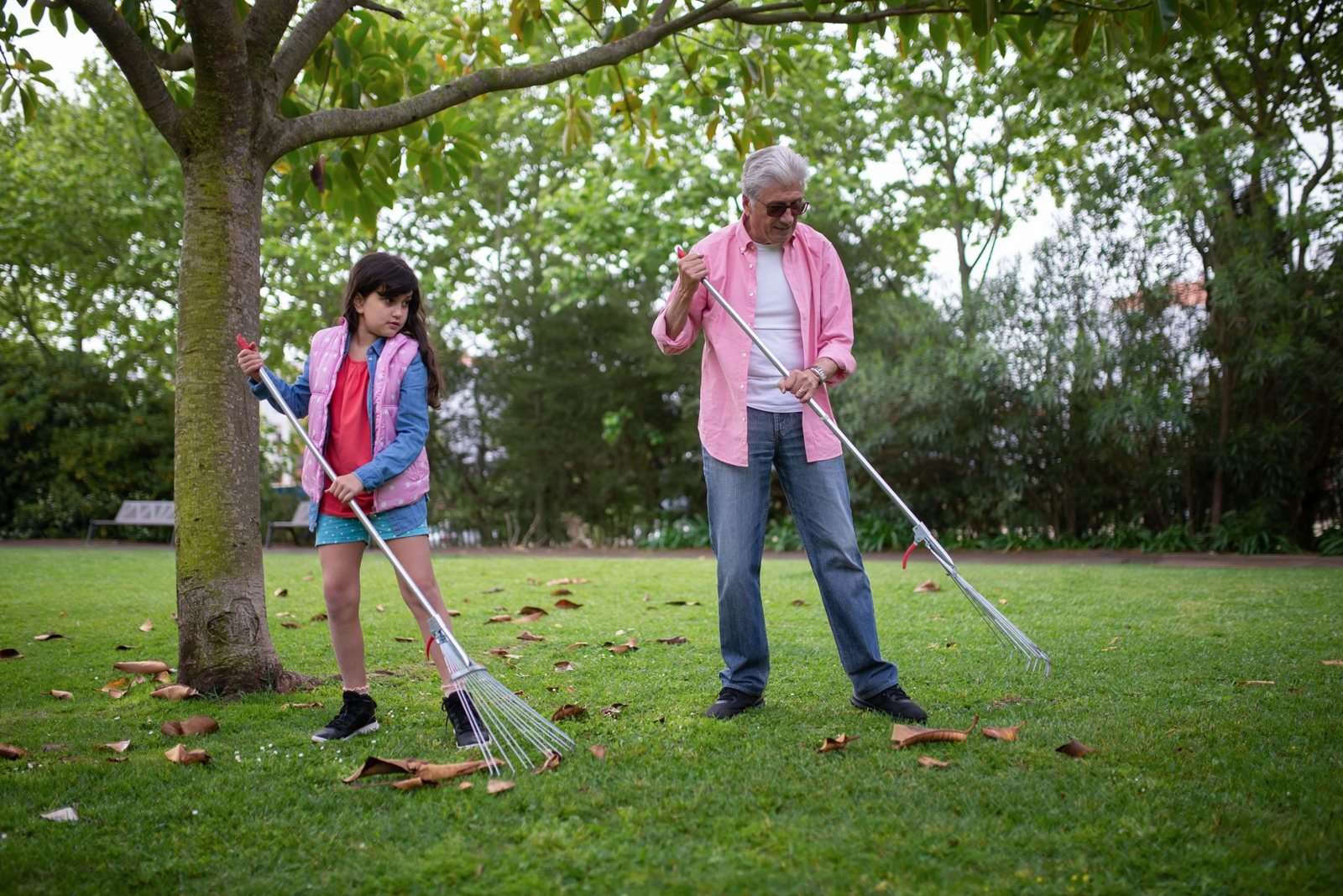
Raking, in particular, is a combination of three things at once: a forward bend, a twist, and a repeated pull. Do that a few hundred times and the muscles and joints around the lower back are working in one position for far longer than they are used to. Add bagging, lifting full bags and dragging a tarp, and the load climbs again.
Here are the most common reasons a back flares up after a big cleanup day:
- Too much, too soon. A summer of desk work or light activity, then four hours of yard work in one go. The back is not conditioned for that sudden jump in load.
- The same position for too long. Staying bent forward without a break keeps the same muscles switched on and tires them out.
- Bending and twisting together. Lifting while twisting can feel more demanding on the lower back than lifting straight ahead.
- Starting stiff. Going straight into heavy work when you are stiff can feel harder, so ease in.
- Lifting from far away. A heavy bag held out in front of the body is much harder on the back than one carried close.
The same back pain can have several different causes, and each one needs different treatment. That is why a stiff, sore back after yard work is common, but a pain that does not settle deserves a proper look rather than a guess.
Why does it hurt more the next morning?
Many people feel fine during the job and then feel it the next day. After a long bout of unaccustomed work, muscles and the tissues around them can become sore and protective a few hours later. Lying still overnight also lets everything stiffen up, so the first movements of the morning are often the worst.
This delayed pattern is common after unaccustomed work and often settles over days. If it does not, an assessment can tell you what is going on. It is also why the day-after plan below matters more than most people think.
How can I pace a fall cleanup so my back copes?
The biggest protection is not a clever lifting trick. It is how you structure the job. Think of it as a training session for your back, not a marathon.
Break the job into short blocks
A common rule of thumb is 20 to 30 minutes of one task, then switch to something different. Raking for 25 minutes, then walking the bags to the curb, then standing and sorting, uses your back in different ways and stops any one position from building up fatigue.
Use a simple break plan
- Ease in. Start with a short walk and some easy movement so the first minutes feel comfortable.
- Work 20 to 30 minutes. Set a timer on your phone so you do not lose track.
- Take a 2 to 5 minute reset. Stand tall, gently arch back a few times with your hands on your hips only if it feels comfortable, drink some water, and walk a lap.
- Switch tasks. Move from raking to carrying, from carrying to sorting.
- Stop before you are wrecked. Finishing a cleanup over two or three days is better than finishing it in one painful afternoon.
Spread the work across the weekend
If you have a big property, split it into zones. Do the front on Saturday morning and the back on Sunday. Leaves will still be there tomorrow, and your back will thank you for the gap.
What is the best technique for raking and lifting?
Good technique is about spreading the work around your body and keeping the load close. None of this has to be perfect. It just has to reduce the time you spend in one awkward position.
Raking
- Switch hands and sides regularly. Working one side only keeps the same twist going for the whole job.
- Take a split stance, with one foot slightly in front, and let your legs and hips move with the rake rather than only twisting your trunk.
- Use a rake with a handle long enough that you are not bent far forward to reach the ground.
- Pull in shorter, smaller strokes instead of one long reach.
Bagging and lifting
- Fill bags half to two-thirds full. A lighter bag you can carry easily beats a heavy one you strain to lift.
- Hold the bag close to your body, and turn by moving your feet instead of twisting your back.
- Use whichever lifting style feels comfortable and strong, such as bending the hips and knees, and keep the bag close. The research has not shown one lifting technique to be clearly safer, so the bigger protection is lighter loads, less time in one position, and more breaks.
- Kneel on a pad or sit on a low stool for ground-level garden work, instead of bending over from standing for long stretches.
Use the tools that save your back
A tarp lets you drag leaves to the bag instead of scooping repeatedly. A wheelbarrow or garden cart carries the weight for you. Leaf scoops, or “hands”, cut down on the repeated stoop. These are not luxuries, they are simply less work for your lower back.
“The goal is not a perfect back position. It is avoiding too long in any one position.”
What should I do the first few days if my back flares up?
Many flare-ups after yard work are short-lived and settle with sensible activity. A calm, sensible first week usually looks like this.
Day 1 to 2: stay gently moving
It can feel natural to lie down and wait for it to pass. The evidence points the other way. The 2018 Lancet low back pain series (Hartvigsen, Foster and colleagues) recommends reassurance, staying active and avoiding bed rest for a recent episode. A Cochrane review also found that advice to stay active gave small improvements in pain and everyday function compared with bed rest in acute low back pain. That does not mean pushing through hard. It means short, comfortable walks, normal daily tasks within what you can manage, and changing position often.
- Walk for 5 to 10 minutes, a few times a day.
- Avoid sitting for long stretches. Stand up and move every 30 minutes.
- If lying down feels best, rest for short spells, then get up again.
- Skip the heavy yard work for a few days, but do not cancel your whole life.
Day 3 to 7: build back gradually
As the sharpest pain eases, slowly add more. Longer walks, light chores, and gentle movement that feels comfortable are all good. A common mistake is going quiet for two days, feeling better, then finishing the whole job at once and flaring it up again. If you still have leaves to do, go back to the short-block plan above.
For a simple starting set of gentle movements, see our guide to back pain exercises and where to start. Think of them as a gentle starting point. They are not a replacement for an assessment if the pain is not settling.
Should I use heat or ice?
This is one of the most common questions, and the honest answer is that the evidence is modest either way. A 2006 Cochrane review found moderate evidence that heat wraps give a small short-term reduction in pain and disability, and too little evidence to judge cold. The 2017 American College of Physicians guideline also lists superficial heat as an option for acute and subacute back pain. Use whichever feels better. As a general safety tip, limit packs to about 15 to 20 minutes with a cloth between the pack and your skin. We break down the full reasoning in our post on whether to use ice or heat for pain.
What about massage?
Some people find that hands-on soft tissue work helps tight, guarded muscles ease off after a heavy weekend. Our registered massage therapists work with sore, overloaded backs, and you can read about how massage therapy in Oakville fits in. If you are not sure whether physiotherapy or massage suits you better, our comparison of physiotherapy vs massage therapy can help you decide.
How long does back pain after yard work usually last?
For many people, a sore back after a big cleanup eases over the first couple of weeks and is often much better within a month or so. That matches what the research shows about new episodes of back pain: the biggest gains tend to come early. It is not a promise for any one person, and everyone heals at a different pace.
What matters more than the exact number is the direction. If you are slowly getting better, you are most likely on a good track. If you are staying the same or getting worse after a week or two, that is the signal to get assessed instead of waiting it out.
When should I get my back assessed?
Most yard-work back pain is not an emergency, but a few signs need urgent medical care, and a few others call for an assessment rather than more waiting.
Seek urgent medical care right away if you have:
- Back pain with weakness in a leg, or a leg that gives way.
- Numbness or pins and needles in the saddle area (between the legs, around the genitals and back passage).
- New trouble starting or controlling urine, leaking, or loss of bowel control or sensation.
- A history of cancer, unexplained weight loss, long-term steroid use or osteoporosis, or constant pain that does not ease with any position.
- Fever or feeling unwell along with the back pain.
- Back pain after a significant injury or fall, including a fall from a ladder or while carrying a load.
These are uncommon, but they are the ones not to wait on. Go to an emergency department now. Do not wait for a booking.
Book an assessment if:
- The pain is not clearly improving after about a week or two.
- The pain keeps coming back each time you do yard work.
- It is constant and not eased by changing position, or keeps waking you at night, or stops you from doing normal daily tasks.
- Pain travels into your buttock or leg and is not settling. Our page on back pain and sciatica physiotherapy explains how we approach this.
- You are simply not sure what is going on and want a plan.
At Wellmax, a first assessment is a full 60 minutes. Our physiotherapists, led by Gurmeet Rai with more than 16 years of experience, look at how your back, hips and the rest of your body move to work out what is driving the pain, and we will talk through treatment options at that first visit, with a plan that has an end point. The aim is to get you back to what you need to do, with a plan that ends in discharge. Some people also prefer a chiropractic approach, and you can read about back pain care with our chiropractor.
Can I stop this happening next fall?
Some of it may be preventable. Research suggests regular exercise lowers the chance of a back pain episode, so keep it up through the year. The best preparation starts well before October.
- Stay generally active through summer. Walking, swimming, gardening in short bursts, and some basic strength work make your back more tolerant of a big weekend.
- Build your strength. Legs, hips and trunk that can carry load make the lower back’s job easier.
- Plan the cleanup. Decide on zones, tools and time blocks before you begin.
- Ask for help with the heavy part. Splitting the bag-hauling with someone is not a weakness, it is smart.
If your back has been a recurring problem rather than a one-off, it may help to read how a long-running pattern can be traced to its source in our chronic back and hip pain case study from Erin Mills.
Not sure where to start?
Book a free consultation and we will point you to the right care, with no pressure.
Frequently Asked Questions
Is it normal for my back to hurt after raking leaves?+
Yes, it is very common. Raking combines repeated bending, twisting and pulling, often for much longer than your back is used to. Soreness that eases over the following days is typical. Pain that is getting worse, spreading into the leg, or not improving after a week or two is worth having assessed.
Should I rest or keep moving with back pain after yard work?+
For most people, staying gently active is better than resting in bed. The 2018 Lancet low back pain series recommends staying active and avoiding bed rest for recent back pain. Short walks and normal light tasks are a good start. Take short rests as needed, then get moving again.
How long does back pain from yard work last?+
Many people notice improvement over the first couple of weeks and feel much better within a month or so. A 2003 BMJ review found pain fell by an average of 58 percent in the first month, though flare-ups are common. Everyone differs, so if you are not improving after one to two weeks, book an assessment.
Is heat or ice better for a sore back after gardening?+
The evidence for both is limited. A 2006 Cochrane review found moderate evidence that heat wraps give a small short-term reduction in pain and disability, and too little evidence to judge cold. The 2017 American College of Physicians guideline also lists superficial heat as an option for acute and subacute back pain. Use whichever feels better. As a general safety tip, limit packs to about 15 to 20 minutes with a cloth between the pack and your skin.
What is the safest way to rake leaves to protect my back?+
Use a split stance, switch hands and sides often, make shorter strokes, and let your legs and hips move with the rake instead of twisting from your back. A common rule of thumb is to work in 20 to 30 minute blocks with a short break between them, and stop before you are exhausted.
How do I lift a heavy bag of leaves without hurting my back?+
Fill bags only half to two-thirds full, hold them close to your body, use a comfortable bend at the hips and knees, and turn by stepping with your feet rather than twisting your trunk. A wheelbarrow or garden cart takes much of the load off for longer hauls.
When is back pain after yard work an emergency?+
Get urgent medical care if back pain comes with leg weakness, numbness or pins and needles in the saddle area, new trouble starting or controlling urine, loss of bowel control or sensation, or fever, or if it follows a significant injury or fall. The same goes for a history of cancer, unexplained weight loss, long-term steroid use or osteoporosis, or constant pain that does not ease with any position. These are uncommon but should not wait. Go to an emergency department now. Do not wait for a booking.
Do I need a referral to see a physiotherapist for back pain in Ontario?+
No. In Ontario you can book a physiotherapist directly without a doctor’s referral. At Wellmax in Oakville, you can book a free consultation first, and direct billing is available to most major insurers.
You Might Also Like




Gurmeet Rai, Registered Physiotherapist
Gurmeet is a Registered Physiotherapist with the College of Physiotherapists of Ontario and the Clinic Director and co-owner of Wellmax Physiotherapy in Oakville, with 16+ years of clinical experience. She focuses on complex, stubborn cases where earlier treatment has not worked, with advanced training in pelvic health, TMJ, vestibular, and sports and MSK rehab. Expect expert care from assessment to discharge, with honest guidance along the way.Read Gurmeet’s full profile or meet the team.
This article is for educational purposes only and does not replace a professional clinical assessment. Every body and condition is different. If you are experiencing pain or symptoms, book an assessment with a qualified clinician for advice specific to your situation. If you are experiencing a medical emergency, call 911 or visit your nearest emergency department.
