
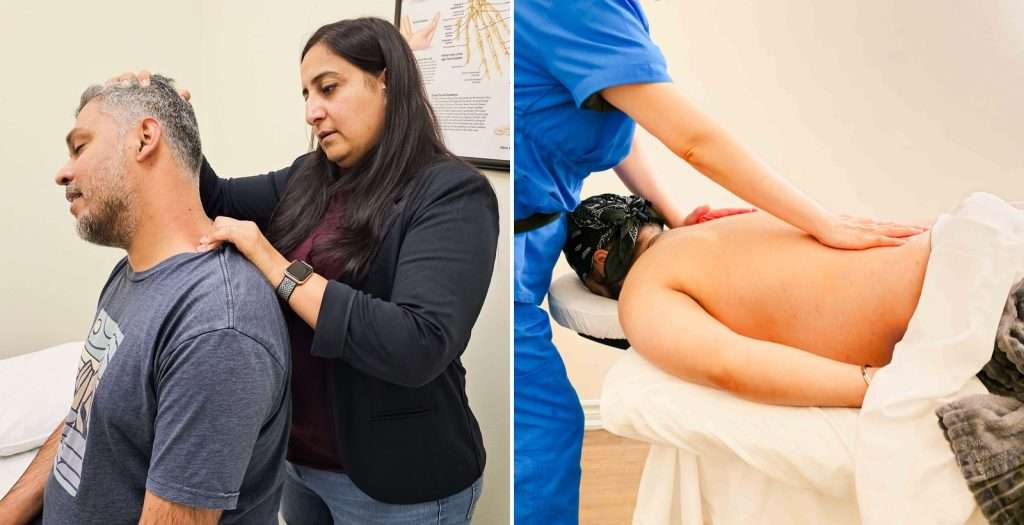
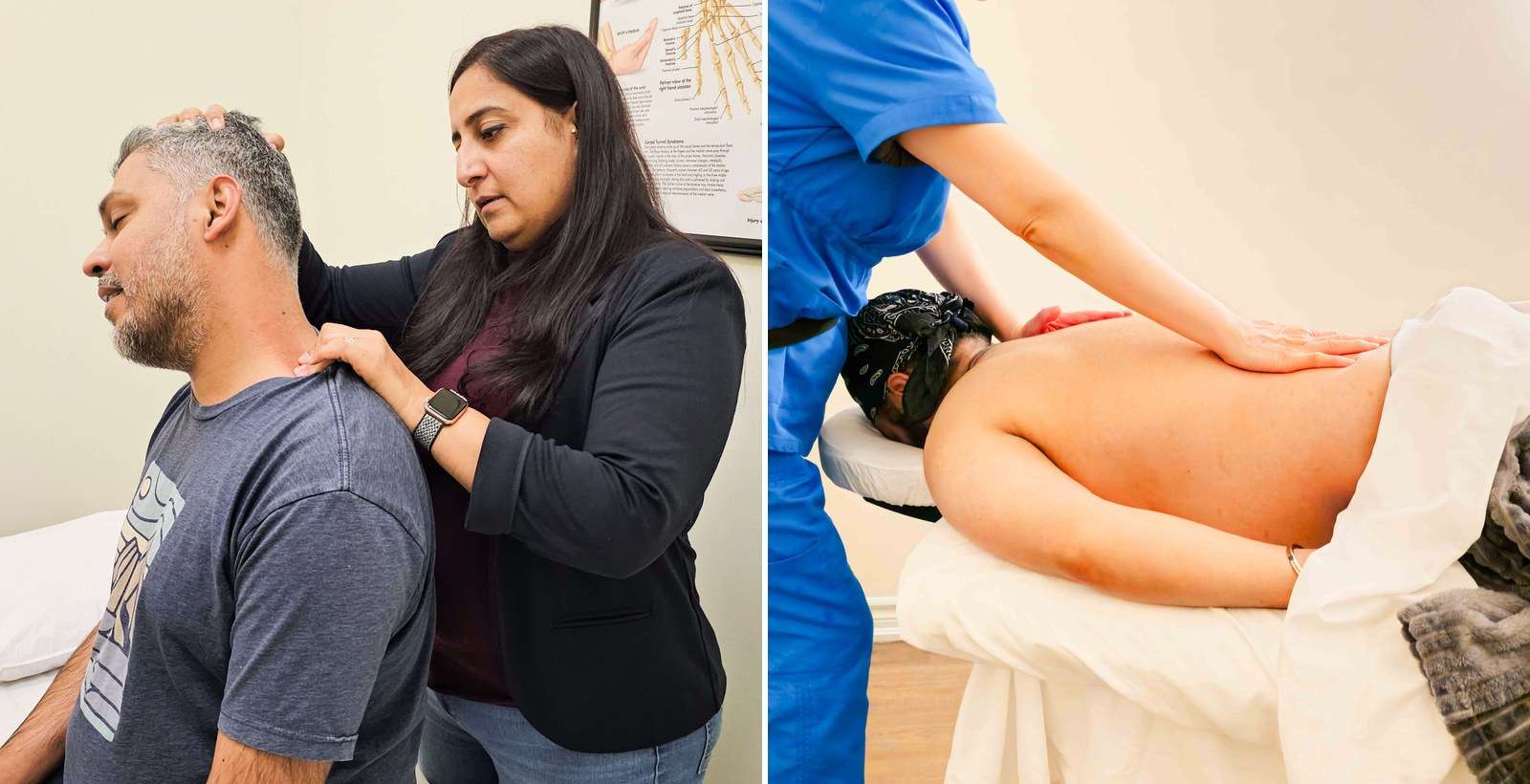
If you have a sore back, neck or shoulder and cannot decide between physiotherapy and massage therapy, here is the straight answer. Choose physiotherapy when you want to know why the pain started, get a diagnosis, and leave with a plan that pairs hands-on treatment with specific exercise. Choose registered massage therapy when tight, sore, overworked muscle is the main thing you feel and you want skilled soft tissue work to settle it. Both are regulated health professions in Ontario, both are genuinely hands-on, and neither one needs a doctor’s referral before you book.
One disclosure first. We offer both physiotherapy and registered massage therapy under one roof at Wellmax in Oakville, so this is not a pitch for one over the other. The point is to describe honestly what each profession does, so you book what fits your problem.
Key Takeaways
- Physiotherapy is assessment led. In Ontario a physiotherapist is authorised to communicate a diagnosis and build the treatment plan around it.
- Registered massage therapy is soft tissue led. The Massage Therapy Act, 1991 covers assessment and treatment of the soft tissue and joints.
- Neither profession needs a physician referral in Ontario. Some extended health plans still ask for one before they reimburse.
- Doing both is common. Many people get the assessment for the plan, then add massage between visits.
Short answer: See a physiotherapist when the problem is new, worsening, came from an injury, or you do not know what is going on, because assessment and diagnosis sit inside the physiotherapy scope of practice in Ontario. See a registered massage therapist when the complaint is muscular tightness, stiffness, stress tension or training soreness and you want focused hands-on soft tissue work. When pain keeps returning, the two together usually do more than either alone.
| Physiotherapy | Massage therapy | |
|---|---|---|
| Best for | New, worsening or unexplained pain, injuries, rehab, return to sport. | Muscular tightness, stiffness, stress tension, training recovery, general soreness. |
| What a session looks like | Assessment, hands-on manual therapy, then exercise you are taught and take home. | Focused soft tissue work on the table, plus stretches and self-care advice. |
| Typical session length | 60 minutes for a first assessment at Wellmax, shorter follow-ups after. | Booked by time, commonly 30, 45, 60 or 90 minutes. |
| Hands-on vs exercise | Both. Manual therapy plus prescribed exercise is the standard combination. | Mostly hands-on, with stretches and home care suggested afterwards. |
| Assessment included | Yes. Movement, strength, joint and nerve testing, plus a diagnosis. | Yes. Soft tissue and joint assessment, within the massage therapy scope. |
| Regulated in Ontario | Yes. College of Physiotherapists of Ontario. Protected title. | Yes. College of Massage Therapists of Ontario. Protected title. |
| Referral needed | No referral to book. Some insurance plans still ask for one. | No referral to book. Some insurance plans still ask for one. |
| Typical course of care | Varies. Reassessed as you go, visits taper off as you improve. | Varies. Often a short block of care, then as needed. |
| Insurance coverage | Commonly covered by extended health plans. Direct billing at Wellmax. | Commonly covered by extended health plans. Direct billing at Wellmax. |
Ontario costs and coverage as of September 2026.
What does a physiotherapy session actually involve?
A physiotherapy appointment starts with questions and testing, not with the table. Your physiotherapist asks how the problem started, what makes it worse and what you need to get back to, then screens your movement, strength, joint range and nerve signs.
In Ontario, communicating a diagnosis is a controlled act authorised to physiotherapists under the Physiotherapy Act, 1991. In plain terms, you should walk out knowing the working diagnosis, why it happened, and roughly how long it usually takes to settle.
Treatment then has two halves. The hands-on half can include joint mobilisation, soft tissue and trigger point work, muscle release, dry needling or acupuncture where appropriate, and taping. The active half is the exercise you are taught and repeat at home, which holds the change once the session ends.
Who is physiotherapy a good fit for?
Physiotherapy suits pain you cannot explain, pain that keeps worsening, a specific injury, post-surgical rehab, dizziness and balance problems, pelvic health concerns, and anything needing a return-to-work or return-to-sport plan.
At Wellmax, first physiotherapy assessments are a full 60 minutes, so there is time to test properly, treat on the same visit and explain what we found. Our lead physiotherapist, Gurmeet Rai, is a Registered Physiotherapist and Clinic Director with more than 16 years of experience, and she built the clinic around hands-on manual therapy that looks for the root cause. The goal is a pain-free graduation, not endless visits.
What does a registered massage therapy session actually involve?
A registered massage therapy appointment also starts with questions, then a hands-on assessment of the tissue itself. Your RMT asks about the area, your health history and your training load, then feels how the muscle and joints move.
The Massage Therapy Act, 1991 defines the profession as the assessment of the soft tissue and joints of the body and the treatment of pain and dysfunction in them, so assessment is genuinely part of the job. An RMT does not communicate a medical diagnosis, because that controlled act sits outside the scope in Ontario.
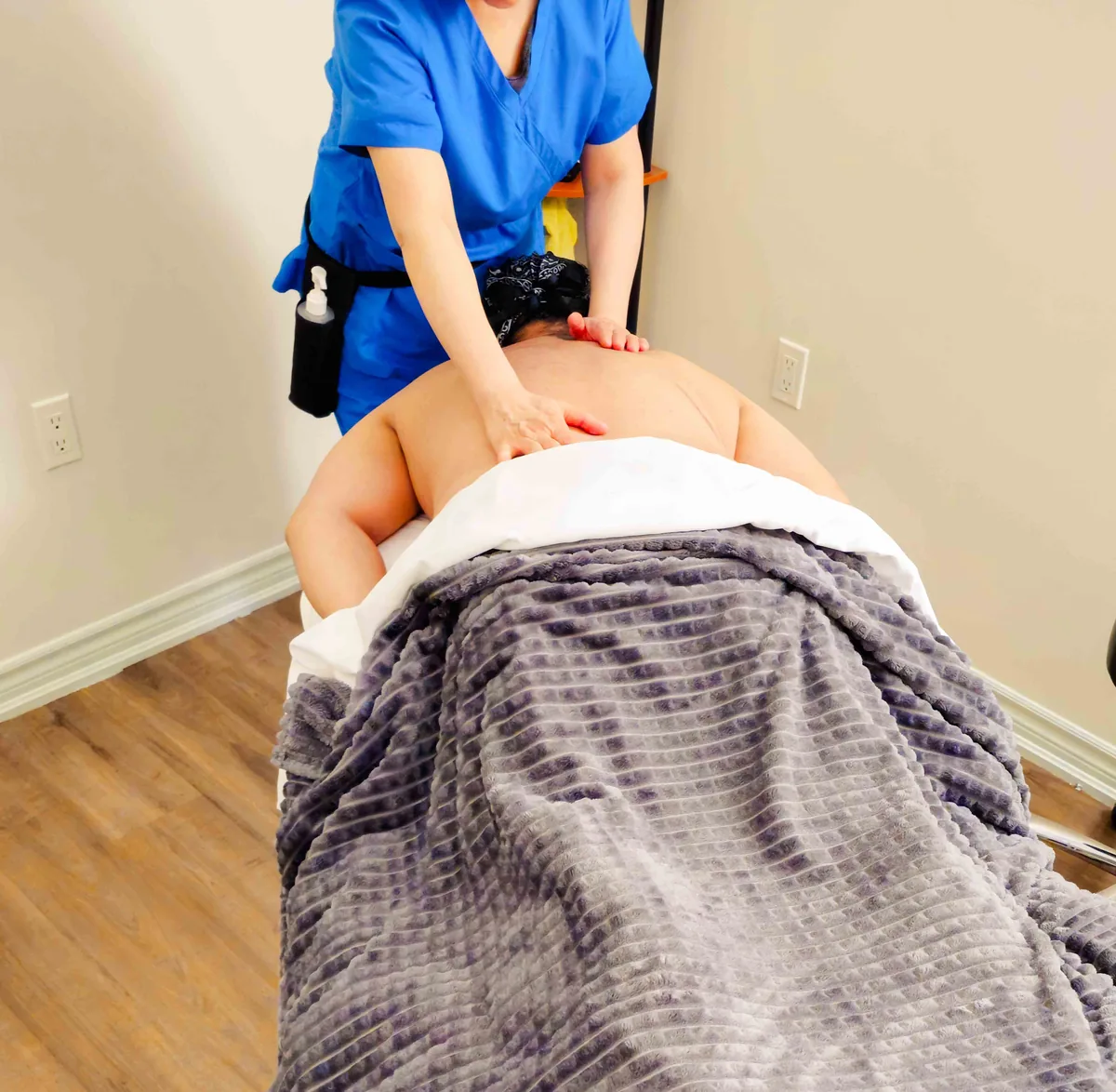
Treatment is skilled, specific hands-on work, and it is not the same thing as a spa massage. Depending on what is found, an RMT may use deep tissue technique, trigger point release, muscle release, stretching on the table, heat, and home care advice.
Who is massage therapy a good fit for?
Registered massage therapy suits muscular tightness and stiffness, the tension people carry in the neck and shoulders, headaches with a muscular component, training recovery, stress and sleep, and the ache that builds through a desk week.
It is a complete treatment in its own right, and plenty of our patients book only massage and do very well. Sessions are booked by time rather than by body part, so a 60 or 90 minute booking gives the therapist room to work properly. Our massage therapy in Oakville page lists our RMTs.
“The honest question is not which profession is better. It is which question you need answered today: why is this happening, or please help this muscle settle down.”
What is the real difference between physiotherapy and massage therapy?
The difference is the starting point. Physiotherapy starts from a diagnosis and works outward into treatment and loading. Massage therapy starts from the tissue and works directly on how it feels and moves.
That shows up in the room. A physiotherapy visit spends time on testing, explanation and exercise, so less of the hour has hands on you. A massage visit spends almost the whole booking on hands-on treatment.
Massage or physiotherapy for back pain?
For a sore lower back the useful split is not how bad it feels, it is which question you need answered. If the pain is new, followed a lift or a fall, travels into the buttock or leg, or has not improved in a couple of weeks, start with a physiotherapy assessment. Our back pain and sciatica physiotherapy page covers what that involves.
If it is the familiar end-of-week ache from sitting, driving or a heavy training block, and you have had it checked before, registered massage therapy is a reasonable first booking.
Neck and shoulder pain follows the same logic. Tension headaches and neck tightness respond well to both. More on our neck pain and headache physiotherapy page.
Can you do both?
Yes, and it is one of the most common ways our patients use the clinic. There is no rule against seeing a physiotherapist and a registered massage therapist for the same problem, and most Ontario benefit plans hold a separate annual maximum for each, so using one does not eat into the other.
A sequence that works for many: book the physiotherapy assessment first so there is a diagnosis and a plan, then slot massage in between visits to stop the muscles tightening back up while the exercises do their slower work.
Should massage come before or after physiotherapy?
Either works. Massage before physiotherapy can make stiff tissue easier to move. Massage after can be more comfortable if the session already included plenty of hands-on work. Book both on the same day and tell both therapists, and at Wellmax they can simply talk to each other.
Which one fits your situation?
These are general patterns, not a diagnosis of your problem. Only an assessment can tell you for certain.
An acute injury in the last few days
Start with physiotherapy. A fresh sprain, strain or fall needs someone to test what is injured, rule out anything serious, and tell you what is safe to load. Deep soft tissue work directly on a fresh injury is often not the first move.
Chronic tightness that never fully goes away
Either is reasonable, and many people use both. Massage gives reliable relief for long-standing tightness. If the same spot keeps tightening month after month, add a physiotherapy assessment, because how you load that area is usually feeding it.
After surgery
Physiotherapy leads here. Post-surgical rehab follows protocols for range of motion, loading and timelines, and your surgeon will usually expect it. Massage can be added later for surrounding muscle tightness, once your surgical team agrees.
Pregnancy and postpartum
Both, often together. Prenatal massage with a therapist experienced in pregnancy positioning helps hip, back and pelvic aching. Pelvic health physiotherapy covers pelvic girdle pain and recovery after birth. Tell whoever you book that you are pregnant or postpartum.
Desk and computer pain
This is where people can genuinely pick either. If the ache builds through the week and eases on holiday, massage is a sensible first booking. If you get headaches, arm tingling, or pain that no longer eases on weekends, book the assessment.
Sport and training
Use both, for different jobs. Physiotherapy handles the injury, the strength gap and the return-to-play progression. Massage handles recovery across a heavy training block. Runners and gym regulars across Oakville and Mississauga keep both in the rotation.
Are both regulated in Ontario, and do I need a referral?
Both are fully regulated health professions in Ontario. Physiotherapists are regulated by the College of Physiotherapists of Ontario, and registered massage therapists by the College of Massage Therapists of Ontario. Both titles are protected, and you can look up any practitioner on their college’s register.
Ontario is in the minority nationally for massage therapy. Only five provinces regulate it, so an Ontario RMT has completed a recognised programme, passed provincial certification and carries ongoing college requirements.
Neither profession needs a physician referral. The referral question here is almost always an insurance question, not a permission question. A small number of plans still want a doctor’s note on file before they reimburse.
Does insurance cover physiotherapy and massage therapy?
Most Ontario extended health plans cover both, with a separate annual maximum for each and sometimes a per-visit cap. OHIP does not cover private-clinic physiotherapy or massage therapy for most adults, so extended health benefits are the main route.
Motor vehicle accident and WSIB claims work differently again, and both services can form part of an approved plan. If your injury came from a car accident or from work, say so when you book.
Wellmax direct bills most major insurers for both services where your plan allows, so you often pay only the balance. Details are on our insurance and direct billing page.
When should you see a doctor first instead?
Some symptoms are not a physiotherapy or massage question at all. See your family doctor, a walk-in clinic or an emergency department first, before booking either therapy, if you have any of these.
- Numbness, pins and needles, or weakness in an arm or leg, especially if it is worsening
- Loss of bladder or bowel control, or numbness around the groin and inner thighs
- Unexplained weight loss alongside the pain
- Fever together with back pain
- Pain that started after significant trauma, such as a serious fall or a car crash
These are uncommon, but they need medical assessment first. If you are unsure whether any of them applies to you, call us and we will tell you honestly whether to book with us or see a doctor.
How we sort it out at Wellmax
Wellmax is in Oakville and we see patients from across Oakville and Mississauga. Because physiotherapy and registered massage therapy both run out of the same clinic, you do not need to guess correctly before you book. If you start on the wrong one, we move you.
Physiotherapy first assessments are a full 60 minutes because a rushed assessment leads to a vague plan, and every plan is built toward a finish line rather than a permanent slot in the schedule. If you are still unsure, come in for a free consultation, tell us what hurts, and we will point you at the right service.
Not sure where to start?
Book a free consultation and we will point you to the right care, with no pressure.
Frequently Asked Questions
Is physiotherapy better than massage therapy?+
Neither is better. They answer different questions. Physiotherapy is built around assessment, diagnosis and a plan that pairs hands-on work with exercise. Registered massage therapy is built around skilled soft tissue treatment for muscular pain and tension. If you need to know why something is happening, book physiotherapy. If you want muscle to settle, book massage.
Should I get a massage before or after physiotherapy?+
Both orders work. Massage before physiotherapy can loosen stiff tissue so movement testing and exercise feel easier. Massage after is often more comfortable when the session already included plenty of manual therapy. If you book both on one day, tell each therapist so they can adjust pressure.
Do I need a doctor’s referral for physiotherapy or massage therapy in Ontario?+
No. Physiotherapists and registered massage therapists are both primary contact practitioners in Ontario, so you can book directly without seeing a physician first. The referral question is usually about insurance, not access. A minority of extended health plans still require a doctor’s note before they reimburse, so check your benefits booklet.
Can a massage therapist diagnose my back pain?+
A registered massage therapist assesses the soft tissue and joints, which is written into the Massage Therapy Act, 1991, but communicating a medical diagnosis sits outside the massage therapy scope in Ontario. Physiotherapists are authorised to communicate a diagnosis under the Physiotherapy Act, 1991. If you want a name for the problem, book the physiotherapy assessment.
How many sessions will I need?+
It depends on what is going on, how long it has been there and what you need to get back to, so anyone quoting a fixed number before assessing you is guessing. In physiotherapy you should be reassessed as you go, with visits spacing out as you improve. Massage is often a short block, then as needed.
Is RMT massage covered by insurance in Ontario?+
Most extended health plans cover treatment by a registered massage therapist, usually with its own annual maximum separate from physiotherapy, and sometimes a per-visit limit. Massage from someone who is not an RMT is generally not covered, and OHIP does not cover private massage therapy. Wellmax direct bills most major insurers.
Can I book physiotherapy and massage on the same day?+
Yes. No clinical or insurance rule prevents it, and the two claims are normally billed under separate benefit categories. It is practical if you are travelling in from Mississauga or fitting appointments around work. Let both therapists know so the combined load is dialled appropriately and you leave feeling better.
Does massage therapy help sciatica or nerve pain?+
Massage therapy can ease the muscular tightness and guarding that often surrounds nerve-related leg pain, and many people find it comfortable alongside other care. Pain that travels down the leg, or comes with numbness or weakness, should be assessed first so the source is understood. Book a physiotherapy assessment, then add massage if it fits.
You Might Also Like


Gurmeet Rai, Registered Physiotherapist
Gurmeet is a Registered Physiotherapist with the College of Physiotherapists of Ontario and the Clinic Director and co-owner of Wellmax Physiotherapy in Oakville, with 16+ years of clinical experience. She focuses on complex, stubborn cases where earlier treatment has not worked, with advanced training in pelvic health, TMJ, vestibular, and sports and MSK rehab. Expect expert care from assessment to discharge, with honest guidance along the way. Read Gurmeet’s full profile or meet the team.
This article is for educational purposes only and does not replace a professional clinical assessment. Every body and condition is different. If you are experiencing pain or symptoms, book an assessment with a qualified clinician for advice specific to your situation. If you are experiencing a medical emergency, call 911 or visit your nearest emergency department.
