

Is Massage Therapy Covered by Insurance in Ontario?

If you have an extended health benefits plan in Ontario, there is a good chance you have massage therapy covered by insurance, but the details matter more than most people realize. Coverage almost always depends on seeing a Registered Massage Therapist (RMT), not a spa attendant, and your plan will have its own annual maximum, per-visit cap, and rules about whether a doctor’s note is required. The wrong receipt or the wrong provider can mean a denied claim, even when the treatment itself was helpful.
This guide explains how massage coverage actually works in Ontario, how to check your own benefits before you book, how direct billing and Health Spending Accounts fit in, and how often you realistically should go. It also covers what RMT massage genuinely helps with and how it pairs with physiotherapy and chiropractic care at our Oakville clinic. Nothing here replaces a clinical assessment, but it should help you spend your benefits wisely.
Key Takeaways
- Registered Massage Therapy is covered by most extended health plans, but not by OHIP.
- Some plans require a doctor’s note while many do not, so check your benefits booklet.
- HST applies to massage therapy in Ontario, and we direct bill most insurers.
- How often to go depends on whether you are treating an issue or maintaining.
Is Massage Therapy Covered by Insurance in Ontario?
For most working Ontarians the short answer is yes. Massage therapy is covered by insurance through extended health (also called paramedical) benefits, which usually come from an employer group plan, a union plan, or a private individual policy. These benefits are separate from OHIP. The provincial health plan does not pay for massage therapy at all, so your coverage comes entirely from your private or workplace plan.
The catch is that insurers reimburse Registered Massage Therapy specifically. To claim, your treatment must be performed by an RMT who is registered with the College of Massage Therapists of Ontario (CMTO), and your receipt must show that RMT’s name and registration number. A relaxation massage from a spa, a wellness centre, or a non-registered practitioner generally will not be reimbursed, no matter how good it felt. This is the single most common reason massage claims get denied.
“For coverage, the key is seeing a Registered Massage Therapist and keeping your receipts.”
RMT vs Non-Registered Massage: Why Coverage Requires an RMT
In Ontario, “massage therapist” is a protected title. Only someone registered with the CMTO can legally call themselves a Registered Massage Therapist or use the letters RMT. To earn that title, a therapist completes a recognized program (typically about 2,200 hours of training in anatomy, physiology, pathology, and hands-on technique) and passes the provincial certification exam. They also carry professional liability insurance and follow CMTO standards on consent, record-keeping, and scope of practice.
Insurers tie coverage to that regulation for a reason. A regulated health professional is accountable to a college that can investigate complaints and set standards. That is why your plan will pay for an RMT but not for an unregulated “massage” service. Always confirm the person treating you is an RMT and that your receipt lists their CMTO registration number. All of our registered massage therapists in Oakville are CMTO-registered, so every receipt we issue is ready to submit.
What a Compliant RMT Receipt Includes
- The clinic name, address, and contact information
- The patient’s name and the date of service
- The treating RMT’s full name and CMTO registration number
- The fee paid and the service described as “massage therapy”
- A receipt number and proof of payment
How Extended Health Plans Cover RMT Massage
Most extended health plans cover RMT massage, but every plan sets its own limits. Reimbursement is rarely unlimited. Instead, your plan defines how much it will pay and how it counts your visits. Understanding these terms before you book helps you plan your year and avoid surprises.
Annual Maximums
Plans usually cap massage therapy at a fixed dollar amount per calendar year or benefit year, commonly somewhere in the range of a few hundred dollars up to around a thousand or more. Once you hit your maximum, you pay out of pocket for the rest of the year. Some plans reset on January 1, others on a custom plan anniversary date, so check which applies to you.
Per-Visit Caps and Coinsurance
Many plans cap how much they reimburse per visit, for example a set dollar amount per treatment, or they pay a percentage of the fee (often 80 to 100 percent). If your plan pays 80 percent, you cover the remaining 20 percent yourself. A per-visit cap can also mean the plan pays up to a certain amount even if the treatment fee is higher, leaving you to cover the difference.
Combined Paramedical Limits
This is the detail people miss most often. Some plans give massage therapy its own separate pool of money. Others lump several paramedical services together under one shared limit, so massage, physiotherapy, chiropractic, acupuncture, and similar services all draw from the same annual maximum. If your plan is combined, using a lot of one service leaves less for the others. When you are doing both massage and physiotherapy at the same time, this matters, so plan your year accordingly.
Doctor’s Note or Prescription Requirements
Some plans require a doctor’s note or prescription before they will reimburse massage therapy, while many plans do not. The requirement, when it exists, is set by the insurer, not by the clinic. If your plan needs one, the note is usually inexpensive to obtain from your family doctor and is often valid for a full year of treatment. Importantly, you do not need a doctor’s referral to book or receive treatment from an RMT in Ontario. The referral question is purely about whether your insurer will pay, not about whether you are allowed to be treated.
How to Check Your Massage Therapy Benefits
Before your first visit, take ten minutes to confirm exactly what your plan covers. This small step prevents most billing headaches. Here is a practical order to follow.
- Log in to your insurer’s member portal or app, or read your benefits booklet, and find the paramedical or extended health section.
- Look for “massage therapy” and note the annual maximum, the per-visit cap, and the reimbursement percentage.
- Check whether massage shares a combined limit with physiotherapy, chiropractic, or other paramedical services.
- Confirm whether a doctor’s note or prescription is required, and whether direct billing is allowed.
- If anything is unclear, call the number on the back of your benefits card and ask directly.
When you call, a useful question is simply: “How much do I have remaining for registered massage therapy this benefit year, what is my per-visit limit, and do you require a doctor’s note?” Write down the answers and the date. Our front desk can also help you understand a receipt, but only your insurer can confirm your specific coverage. You can read more on our insurance and direct billing page.
How Does Direct Billing for Massage Work?
Direct billing means the clinic submits your claim to your insurance company at the time of your visit, so you only pay any portion the plan does not cover, rather than paying the full fee and waiting weeks for reimbursement. At our Oakville clinic, we offer direct billing to most major insurers for RMT massage, which makes your visits simpler and easier on your cash flow.
Direct billing depends on a few things. Your insurer must allow it, your specific plan must permit assignment of benefits, and you provide your policy and certificate numbers so we can submit electronically. In a typical visit, you confirm your details, receive treatment, and the claim is sent on the spot. The insurer responds with how much it will pay, and you settle any remaining balance, often a small coinsurance amount, before you leave.
When Direct Billing Is Not Available
Some plans do not support direct billing, or they require the patient to submit claims personally. In that case you pay the full fee, we give you a complete RMT receipt, and you upload it through your insurer’s app or portal for reimbursement. Coordinating benefits across two plans (for example, your plan and a spouse’s plan) sometimes also has to be done by manual submission. We will tell you up front which path applies to you.
Can I Use a Health Spending Account for Massage?
Yes. A Health Spending Account (HSA), sometimes called a Health Care Spending Account, is a pool of pre-set dollars your employer provides that you can spend on eligible health expenses, including registered massage therapy. HSAs are flexible. You can often use them to top up after your regular massage maximum runs out, or to cover the coinsurance portion your main plan does not pay.
To use an HSA, you usually pay or claim through your main plan first, then submit any remaining eligible amount to the HSA. Because RMT massage is a recognized health expense, it typically qualifies. Keep your RMT receipts, since the HSA administrator will want the same documentation showing the therapist’s name and CMTO registration number. Rules vary by employer, so confirm how your specific HSA handles massage and whether unused funds carry over or expire at year end.
Is There HST on RMT Massage Therapy?
Yes. In Ontario, 13 percent HST applies to massage therapy, including treatment from a Registered Massage Therapist. Unlike physiotherapy and chiropractic care, which are exempt from GST and HST, massage therapy is taxable, so HST is added to the treatment fee and shown on your receipt.
For your claim, submit the full receipt to your plan. Whether your plan reimburses the HST portion depends on your policy, so check your benefits booklet or ask your insurer. At Wellmax we direct bill most major insurers for massage therapy, so in most cases you only pay the part your plan does not cover.
What About MVA and WSIB Massage Coverage?
Massage therapy can also be funded through routes other than your everyday benefits plan, and these are worth knowing about because they often do not touch your annual extended health maximum.
Motor Vehicle Accident (MVA) Claims
If you were hurt in a car accident, your auto insurance may cover rehabilitation, and registered massage therapy is frequently part of a treatment plan for whiplash, neck pain and headaches, and back pain after a collision. Ontario’s accident benefits system funds approved treatment regardless of who was at fault, within set limits. We handle the paperwork and coordinate with your adjuster, so you can focus on recovery rather than billing. See our motor vehicle accident rehab page for how this works.
WSIB Pathways
If you were injured at work, some Workplace Safety and Insurance Board (WSIB) claims include massage therapy as part of an approved rehabilitation program, usually directed through a broader physiotherapy or assessment-based plan rather than standalone massage. Approval depends on your claim and the treatment plan your clinician submits. If you have an open WSIB claim, ask us and we will help you understand whether massage can be included.
How Often Should You Get a Massage?
There is no single correct frequency, because the right schedule depends on your goals, your symptoms, and your body. The honest answer is that frequency should match what you are trying to achieve, not a fixed prescription. Here is realistic guidance our RMTs use.
Treating an Acute Issue or Flare-Up
When you are dealing with a specific problem, such as muscle tension and tightness from a recent injury, ongoing shoulder pain, or a stiff neck that keeps returning, more frequent visits early on tend to help. Many people start with weekly or every-other-week sessions for a few weeks, then taper as symptoms settle. Your RMT will reassess as you go and adjust the plan based on how you respond, rather than committing you to a long fixed package.
Maintenance and Prevention
Once an issue has calmed down, or if your main goal is managing day-to-day stress and tension, a maintenance rhythm makes sense. Common patterns are once every two to four weeks, or monthly. People with physically demanding jobs, heavy desk-bound postures, or regular intense training sometimes benefit from more frequent sessions. The aim is to stay ahead of building tension rather than waiting for it to become a problem.
Listen to Your Body and Your Budget
Two practical limits shape frequency: how your body responds and how much coverage you have. Spreading visits across your benefit year, and pairing massage with home stretches or strengthening, often gets better long-term value than clustering many sessions and then stopping. If you are unsure what cadence is right for you, that is a perfect thing to discuss at a first appointment in Oakville.
What Does RMT Massage Genuinely Help With?
Registered massage therapy is most useful for soft-tissue and stress-related concerns. It can help reduce muscle tension and tightness, ease the discomfort of trigger points, support recovery after exercise, and lower the physical symptoms of stress. Many people find it improves how they feel, helps them sleep, and makes it easier to move comfortably through their week.
It is worth being honest about scope. Massage is one tool among several, and it works best as part of a broader plan rather than a cure-all. If you have pain that is severe, spreading, accompanied by numbness or weakness, or not improving, that is a sign to get assessed rather than relying on massage alone. Our RMTs will tell you when massage is a good fit and when another approach, or a medical referral, makes more sense. We do not diagnose conditions in a blog post, and we will never promise outcomes we cannot support.
How Massage Complements Physiotherapy and Chiropractic Care
One of the biggest advantages of a multidisciplinary clinic is that your care can be coordinated. Massage therapy and physiotherapy often work well together. Massage can ease muscle tension and tightness so that the active exercises and mobility work in physiotherapy are more comfortable and easier to do. Physiotherapy then builds the strength and movement patterns that help the benefits last.
The same logic applies to chiropractic care. Releasing tight muscles can make joint-focused treatment more comfortable, while the corrective and strengthening work addresses the underlying movement habits. When your therapists share notes and align your plan, you tend to get more out of each visit and out of your benefit dollars. At our Oakville clinic, we treat patients from across Oakville, Burlington, Milton, and Mississauga, and we coordinate massage, physiotherapy, and chiropractic care under one roof so the right hands are working toward the same goal.
One Multidisciplinary Team Under One Roof
What sets us apart is that you are not bouncing between separate clinics for separate problems. Our RMT massage, physiotherapy, chiropractic, naturopathy, and acupuncture providers are all part of one team working under the same roof, so when a problem needs more than one approach, we coordinate it internally rather than sending you elsewhere. Our massage is treatment-focused too. It works alongside a plan to address the root cause, not just a one-off rub that feels nice for an afternoon.
For a specific injury, that often starts with a physiotherapy assessment. Our initial assessment is a full 60 minutes and leads with hands-on manual therapy to find the root cause of the problem, and massage then supports that plan where it helps. Throughout, our focus is on getting you better and graduating you back to your normal life, rather than upselling endless ongoing visits or locking you into long packages. If you are weighing how to use your benefits, that coordinated approach often stretches each dollar further.
Not sure where to start?
Book a free consultation and we will point you to the right care, with no pressure.
Related Services at Wellmax
- Massage Therapy in Oakville
- Insurance Coverage and Direct Billing
- Physiotherapy
- Neck Pain and Headache Physiotherapy
- Back Pain and Sciatica Physiotherapy
- Motor Vehicle Accident Rehab
Book Your Free Consultation in Oakville
Not sure how your benefits work or whether massage is right for you? Book a free consultation and we will help you understand your coverage and the best path forward, with no pressure. You can also reach us through our contact page.
Wellmax Physiotherapy
1148 Winston Churchill Blvd, Unit B3, Oakville, ON L6J 0A3
Phone: (905) 829-1100
Email: info@wellmaxphysiotherapy.ca
We offer direct billing to most major insurers, and we accept WSIB and motor vehicle accident claims. No doctor’s referral is needed to book.
Hours: Monday to Friday 9am to 7pm, Saturday 9am to 2pm, Sunday 9am to 2pm (by appointment only).
You Might Also Like




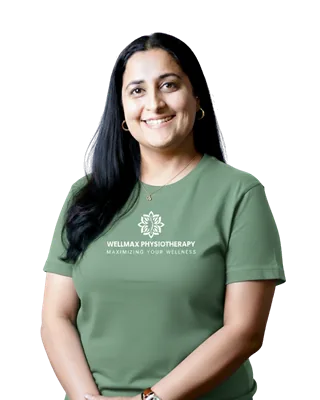
Gurmeet Rai, Registered Physiotherapist
Gurmeet is a Registered Physiotherapist with the College of Physiotherapists of Ontario and the Clinic Director and co-owner of Wellmax Physiotherapy in Oakville, with 16+ years of clinical experience. She focuses on complex, stubborn cases where earlier treatment has not worked, with advanced training in pelvic health, TMJ, vestibular, and sports and MSK rehab. Expect expert care from assessment to discharge, with honest guidance along the way. Read Gurmeet’s full profile or meet the team.
This article is for educational purposes only and does not replace a professional clinical assessment. Every body and condition is different. If you are experiencing pain or symptoms, book an assessment with a qualified clinician for advice specific to your situation. If you are experiencing a medical emergency, call 911 or visit your nearest emergency department.
