
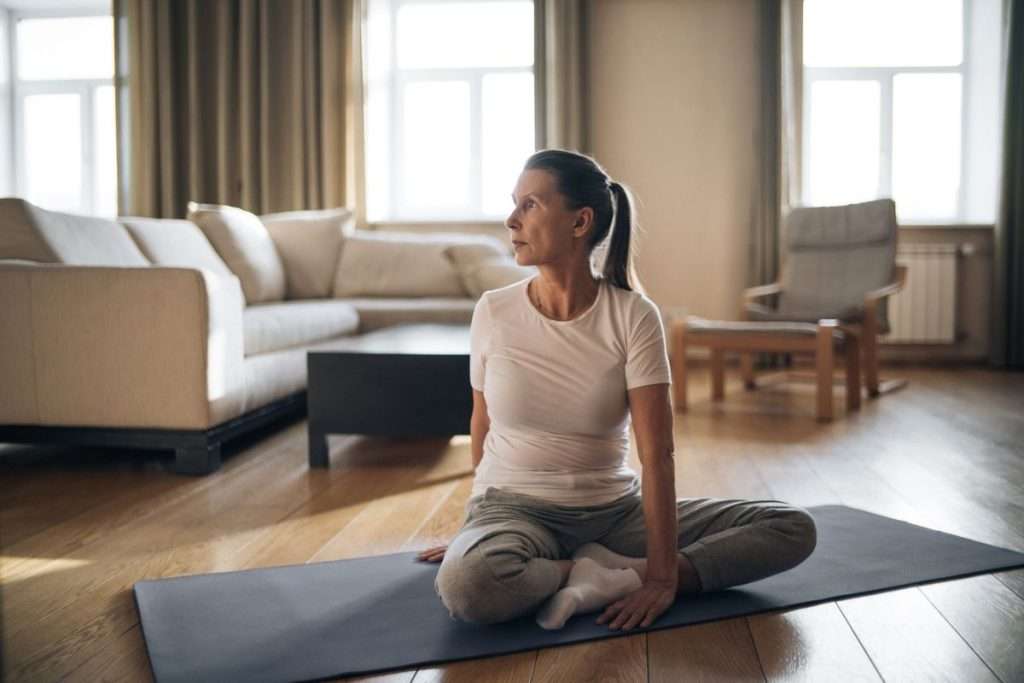
You wake up and your fingers feel stiff around your coffee mug. Your knees complain on the stairs, your shoulder aches reaching for the top shelf, and you are sore for days after an easy workout. Nothing about your routine has changed, except that your periods have become harder to predict.
If that sounds familiar, you are far from alone. This guide from Wellmax Physiotherapy in Oakville explains why perimenopause joint pain happens, which joints it tends to affect, what else can feel the same, what helps, and when to get checked.
The short answer: perimenopause joint pain is aching, stiffness or soreness in the joints and muscles that starts or gets worse in the years around your last period. Changing estrogen levels seem to play a part, along with age, sleep and activity. Regular strength training, daily movement, good sleep and a proper assessment can help many women move with less pain. Our menopause and perimenopause physiotherapy in Oakville is built around this kind of plan.
Key Takeaways
- Joint and muscle aches are among the most common physical changes in perimenopause. A 2020 meta-analysis estimated that 71 percent of perimenopausal women report musculoskeletal pain.
- Researchers have proposed the name “musculoskeletal syndrome of menopause” for this cluster of symptoms. It is an emerging idea, not yet an official diagnosis.
- Strength training at least twice a week, regular activity and good sleep are the best-supported starting points. Hormone therapy and supplements are a conversation for your doctor or pharmacist.
- A hot, swollen joint, fever, morning stiffness that lasts over an hour with swelling in several small joints, unexplained weight loss, or new weakness or numbness needs a doctor promptly.
Why do my joints ache during perimenopause?
Joint aches in perimenopause are very common, and changing hormone levels seem to be one important reason. Estrogen does much more than run your cycle. It also affects the bones, muscles, cartilage and tendons that keep you moving.
A 2024 review in the journal Climacteric (Wright and colleagues) describes how falling and fluctuating estrogen is linked with joint pain, loss of muscle mass, loss of bone density and the progression of osteoarthritis. In perimenopause, estrogen rises and dips unevenly for several years before periods stop.
In Canada the average age of menopause is 51, according to the Society of Obstetricians and Gynaecologists of Canada (SOGC), and perimenopause can begin 4 to 8 years before that. So aches often show up in your 40s, long before you think of yourself as “in menopause.”
What is the “musculoskeletal syndrome of menopause”?
In that 2024 Climacteric review, the authors proposed a new term, the “musculoskeletal syndrome of menopause,” to describe this cluster of joint pain, muscle loss, bone loss and worsening osteoarthritis. Their review reports that more than 70 percent of women have musculoskeletal symptoms during the menopause transition, and that about 25 percent are disabled by them.
Keep in mind that this is a proposed, emerging term, not an official diagnosis. Researchers are still working out how much of the pain comes from hormones and how much from age and other factors. What the name does is take seriously something many women were told was “just getting older.”
Is it hormones, or just getting older?
Probably both. The same 2020 meta-analysis found that perimenopausal women had higher odds of musculoskeletal pain than premenopausal women, and similar odds to postmenopausal women. Age, body weight, past injuries, stress, sleep and activity all add to the picture. The same joint pain can have several different causes, and each one needs different care.
Which joints and muscles are most often affected?
Perimenopause aches can show up almost anywhere, but a few areas come up again and again. Here is a quick overview, then a closer look at each with a safe starting point.
| Area | What women often describe | A safe starting point |
|---|---|---|
| Hands and fingers | Stiff fingers in the morning, achy knuckles, a weaker grip | Gentle open-and-close hand movements |
| Knees | Aching on stairs, stiffness after sitting, soreness after walking | Sit-to-stands and step-ups |
| Hips and outer hips | An ache on the side of the hip, worse lying on that side at night | Hip strengthening, guided by an assessment |
| Shoulders | Pain reaching overhead or behind the back, night pain, growing stiffness | Gentle range-of-motion work |
| Muscles in general | All-over aches, slower recovery after exercise, feeling weaker | Gradual strength training and better sleep |
Hands and fingers
Stiff, achy fingers are a common complaint, often first thing in the morning or after gardening or typing. Gentle movement usually helps.
Once or twice a day, rest your forearms on a table, spread the fingers of one hand wide and flat, then slowly curl them into a loose fist. Repeat 10 times on each hand, staying comfortable. If your hands stay painful or weak, our wrist and hand pain physiotherapy team can look at what is going on.
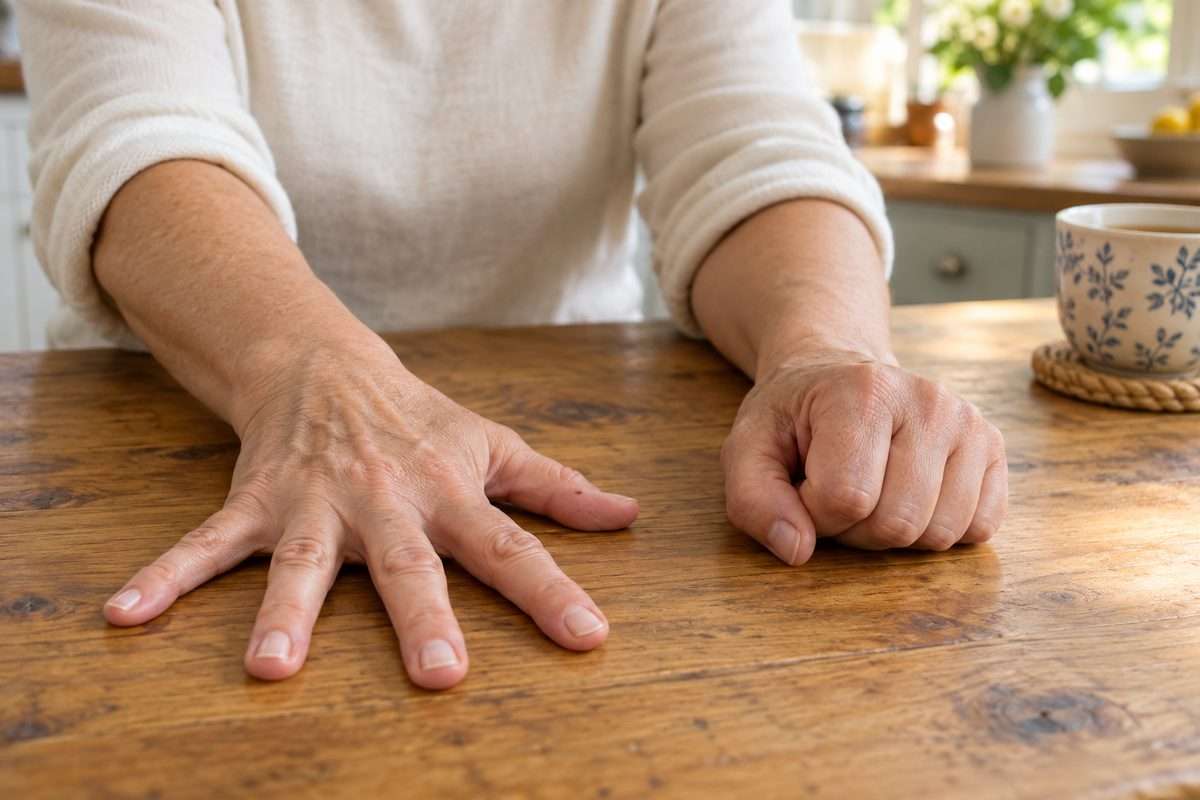
One exception: if your finger joints are swollen as well as stiff, and the stiffness lasts more than an hour each morning, see your doctor to check for inflammatory arthritis. Our guide to osteoarthritis vs rheumatoid arthritis explains why the two are treated so differently.
How does menopause affect your knees?
Your knees carry your body weight all day, so they often feel changes first. The 2024 Climacteric review links the menopause transition with the progression of osteoarthritis, and weaker thigh and hip muscles give the knee less support on stairs and when standing up from a low chair.
The encouraging part is that knees respond well to strength work. A 2015 Cochrane review of 54 trials found that land-based exercise reduces pain and improves physical function in people with knee osteoarthritis, with benefits lasting at least 2 to 6 months after treatment ended. Two simple starting exercises:
- Sit-to-stand. Sit near the front of a sturdy chair, feet flat and hip-width apart. Cross your arms, lean forward slightly, and stand up. Lower yourself back down slowly. Start with 8 to 10 repetitions.
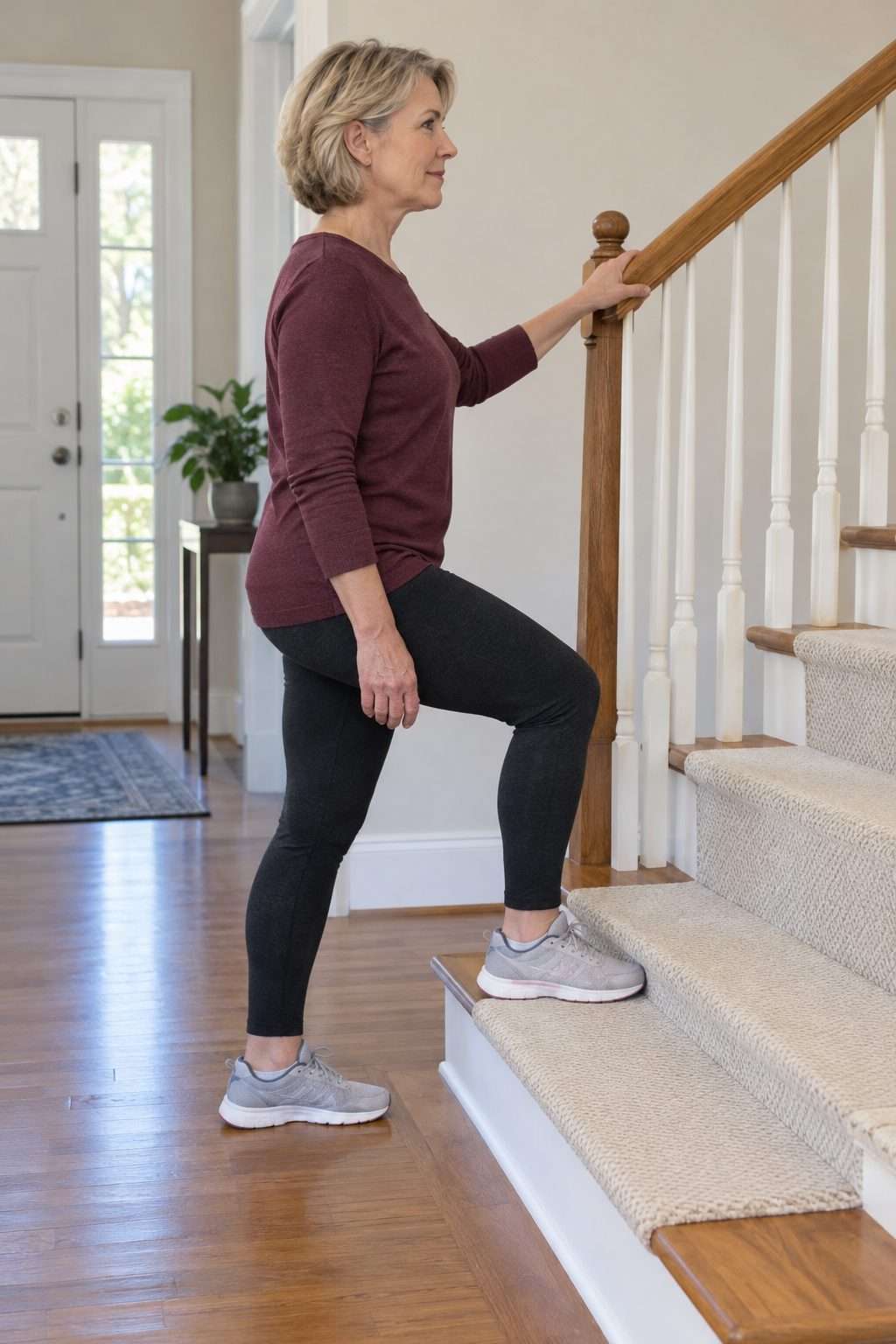
- Step-up. Hold the handrail and place one whole foot on the bottom stair. Push through that foot to step up, keeping your knee in line with your toes, then step down slowly. Repeat 8 to 10 times on each leg.
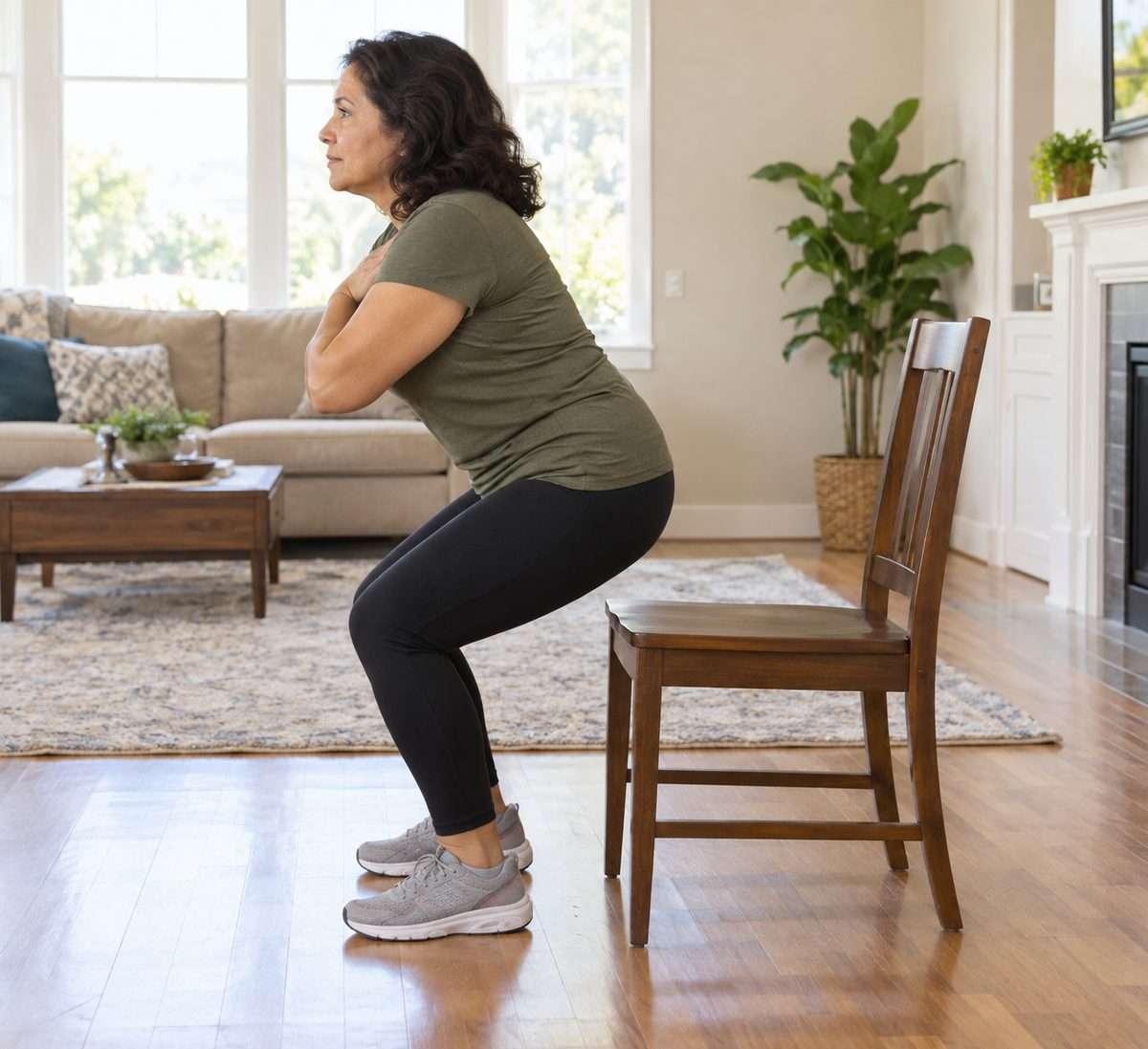
Our knee strengthening exercises guide has more options, and our knee pain physiotherapy page explains how we assess and treat knees.
Hips and outer hip pain at night
Pain on the outside of the hip that is worse lying on that side, climbing stairs or standing on one leg is a common pattern in midlife women. One frequent cause is irritation of the outer hip tendons, known as gluteal tendinopathy, but the hip joint and lower back can cause similar pain, so it is worth having assessed.
Our article on outer hip pain at night explains this pattern in depth, and our hip pain physiotherapy page outlines how we treat it. Some hip exercises need adjusting when tendons are irritated, so get guidance before pushing through outer hip pain.
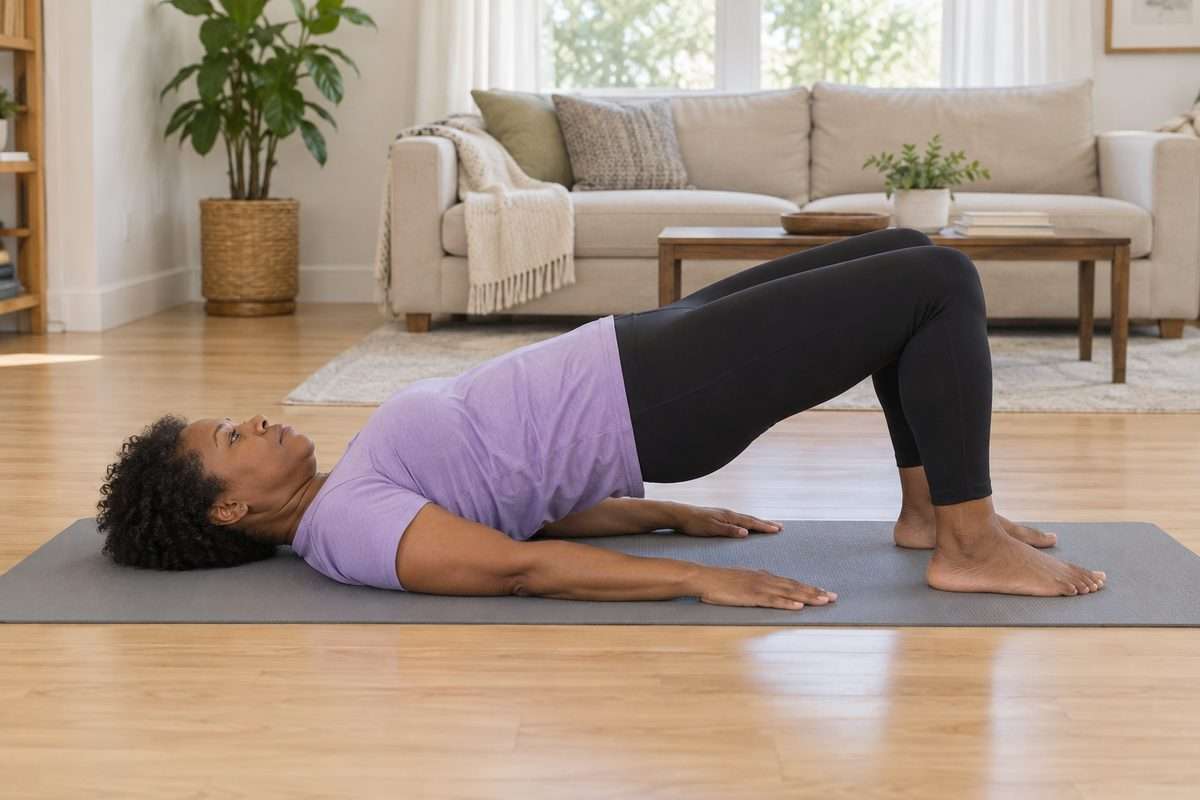
A glute bridge is a common starting point for hip strength. Lie on your back, knees bent and feet flat. Lift your hips until your body forms a line from shoulders to knees, hold for a breath, then lower slowly. Start with 8 to 10 repetitions.
Shoulders and frozen shoulder
One shoulder condition stands out for women in midlife: frozen shoulder, also called adhesive capsulitis. A 2017 review in Shoulder & Elbow notes that most people with frozen shoulder are between 40 and 59, that women are affected more often than men, and that people with diabetes are at higher risk.
Frozen shoulder usually starts with pain, then a gradual loss of movement, especially reaching up or behind your back, and it tends to move through stages over many months. Researchers are still studying whether menopause hormones play a role. Learn more on our frozen shoulder physiotherapy page and our guide to the stages of frozen shoulder.
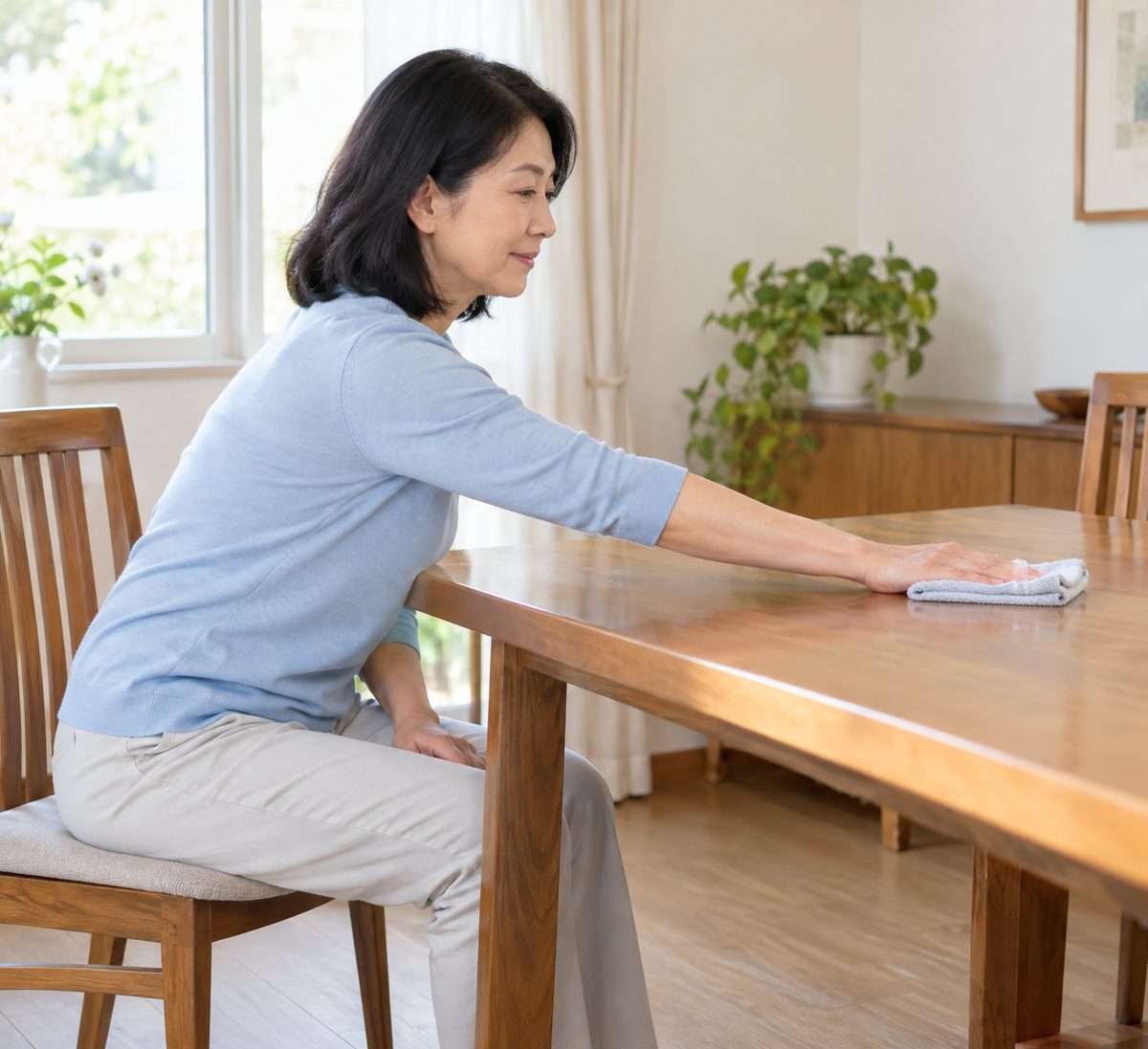
Not all shoulder pain is frozen shoulder, and treatment depends on the cause. A gentle movement many people find comfortable is the table slide: sit at a table, rest your hand on a small towel and slowly slide your arm forward to a gentle stretch, then back, 10 times. If your shoulder is getting stiffer week by week, book an assessment rather than waiting.
Why do my muscles ache and feel weaker?
Many women describe all-over muscle aches, slower recovery after exercise, or feeling weaker. Loss of muscle mass is one of the changes the 2024 Climacteric review lists.
Sleep plays a big part too. Night sweats and early waking cut into rest, and a 2013 review in The Journal of Pain (Finan and colleagues) found that poor sleep reliably predicts new and worsening pain, and is a stronger predictor of pain than pain is of poor sleep. Better sleep will not fix every ache, but it can lower how loud the pain feels.
What else can cause joint pain in perimenopause?
Not every ache in your 40s and 50s is hormonal. Several other conditions can feel similar, so check with your family doctor, especially if symptoms are new, severe or getting worse.
- Inflammatory arthritis, such as rheumatoid arthritis. The Public Health Agency of Canada notes that women are affected by most forms of arthritis more often than men, and that rheumatoid arthritis activity can change around menopause and pregnancy.
- Thyroid problems. An underactive thyroid can cause aches in the joints and muscles, tiredness and feeling cold, and it is much more common in women, according to the US National Institute of Diabetes and Digestive and Kidney Diseases.
- Osteoarthritis, which becomes more common with age and often affects the hands, knees and hips. Our arthritis physiotherapy page explains how exercise-based care helps.
- Medication side effects. Your pharmacist can review what you take.
Your doctor may suggest blood tests. A physiotherapist can then assess how your joints and muscles move and build a plan from there.
What helps perimenopause joint pain?
Movement is the best-supported starting point: regular strength training, daily activity, good sleep and a gradual plan. None is a quick fix, but together they help many women feel stronger and less sore.
Strength training at least twice a week
The Canadian 24-Hour Movement Guidelines from the Canadian Society for Exercise Physiology (CSEP) recommend muscle-strengthening activities using the major muscle groups at least twice a week. In perimenopause, strength training does double duty: it builds the muscle that supports your joints, and it helps your bones.
Start with a few basic moves: a squat or sit-to-stand, a pushing movement, a pulling movement and something for the hips. Choose a weight or band that lets you do about 8 to 12 smooth repetitions, with the last two feeling challenging but not painful. Progress gradually.
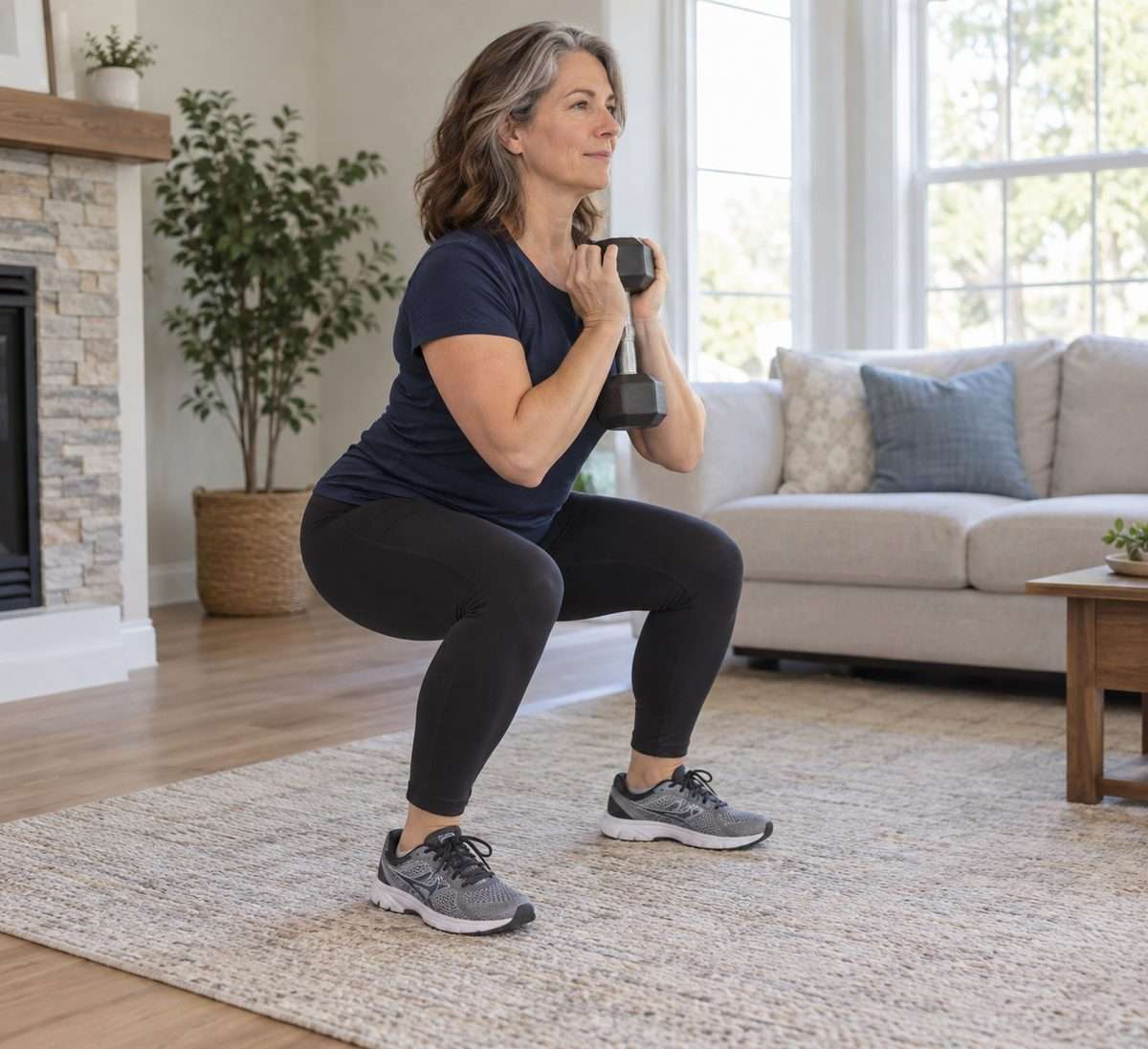
Goblet squat. Hold one dumbbell against your chest, feet about shoulder-width apart. Push your hips back and bend your knees as if sitting into a chair, keeping your chest up and knees in line with your toes. Stand back up.
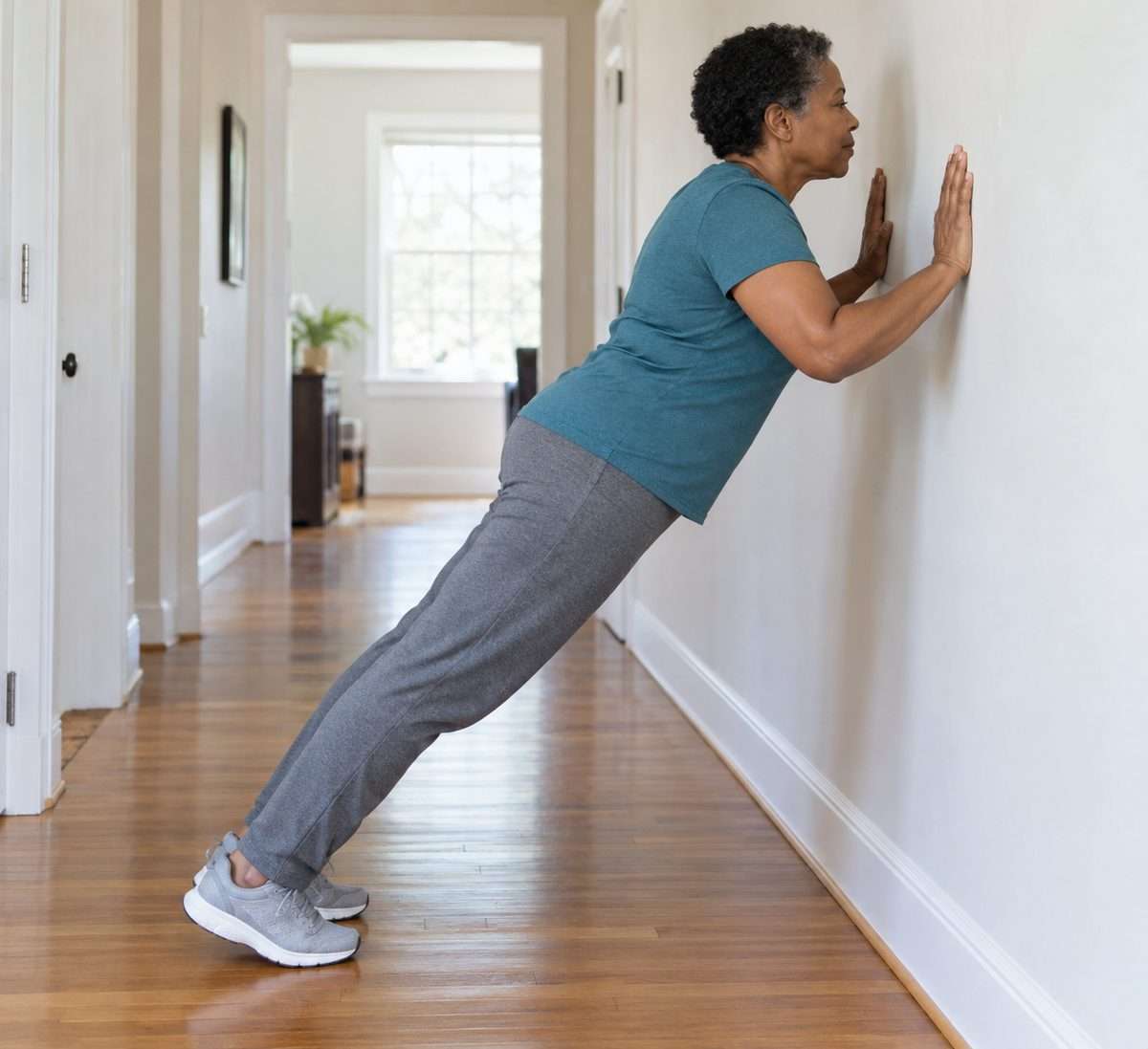
Wall push-up. Stand about an arm’s length from a wall, hands flat at shoulder height. Keep your body in one line as you bend your elbows to bring your chest toward the wall, then push back. Rising onto the balls of your feet is fine.
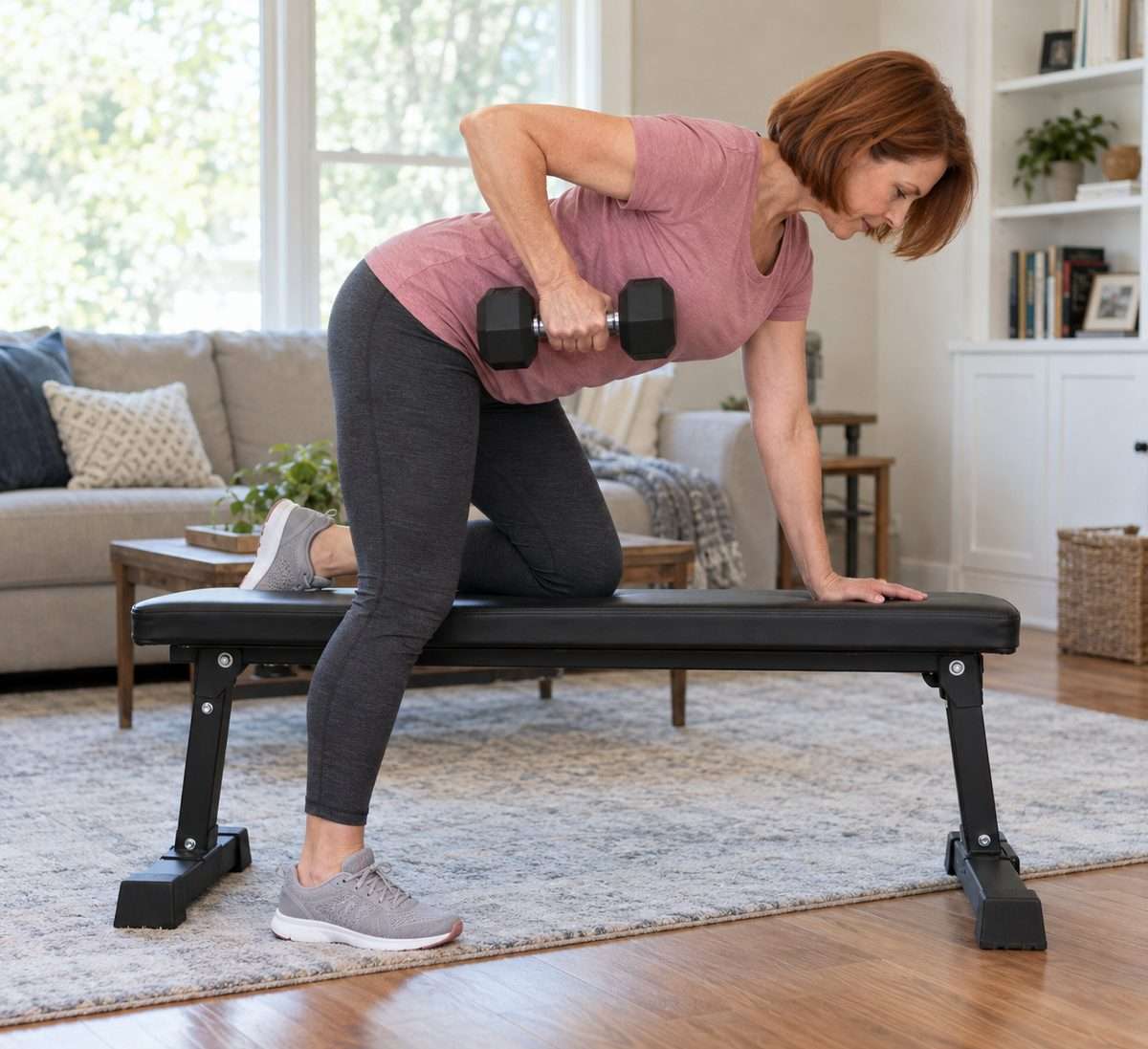
One-arm row. Rest one knee and the same-side hand on a sturdy bench, keeping your back long and straight. Pull a dumbbell up beside your ribs, then lower it slowly.
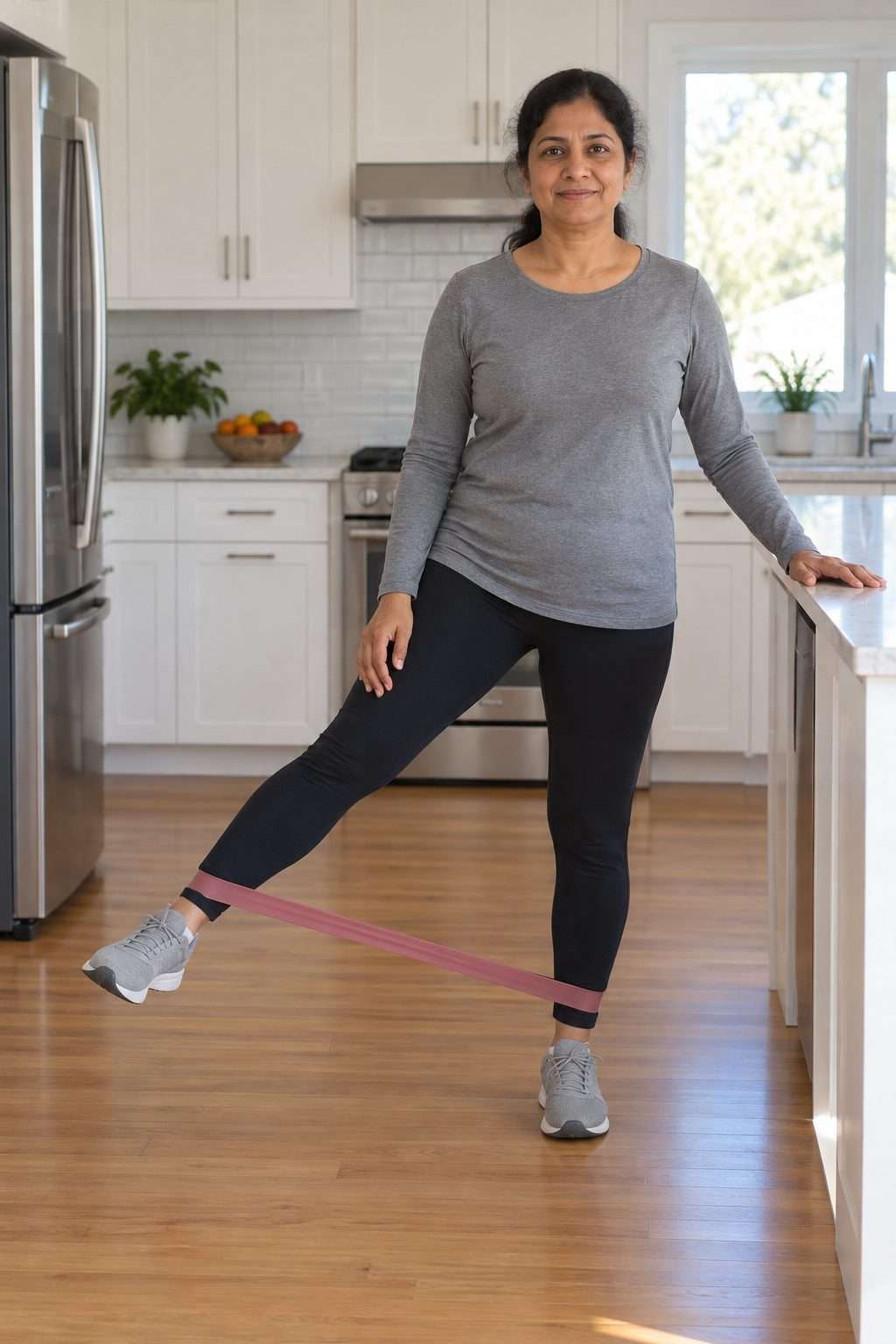
Standing side leg raise with a band. Hold a counter for balance, loop a light band around your ankles, and lift one straight leg out to the side without leaning your trunk. If you have outer hip pain, check with your physiotherapist first.
“Aching joints in perimenopause are common, but common does not mean you have to put up with them. Stronger muscles give your joints better support at any age.”
Keep moving most days
The same CSEP guidelines recommend at least 150 minutes a week of moderate to vigorous aerobic activity for adults, and brisk walking counts. It is one of the easiest ways to keep stiff joints moving.
If your knees or hips are sore, try shorter, flatter walks in supportive shoes. Stiffness that eases as you warm up is common; pain that builds the further you go is a sign to scale back and get advice.

Load your bones, not just your muscles
Bone density tends to fall fastest around your final period. A large US study that followed women through menopause (the Study of Women’s Health Across the Nation, published in 2012) found that bone loss was greatest from about one year before the last period to two years after it. Osteoporosis Canada’s Too Fit to Fracture exercise recommendations (Giangregorio and colleagues, 2014) advise people with osteoporosis to do a program that includes resistance training and balance exercise, rather than aerobic exercise alone.
If you have osteoporosis or a past spine fracture, get personalized advice before heavier lifting or impact exercise.
Mobility, stretching and gentle yoga
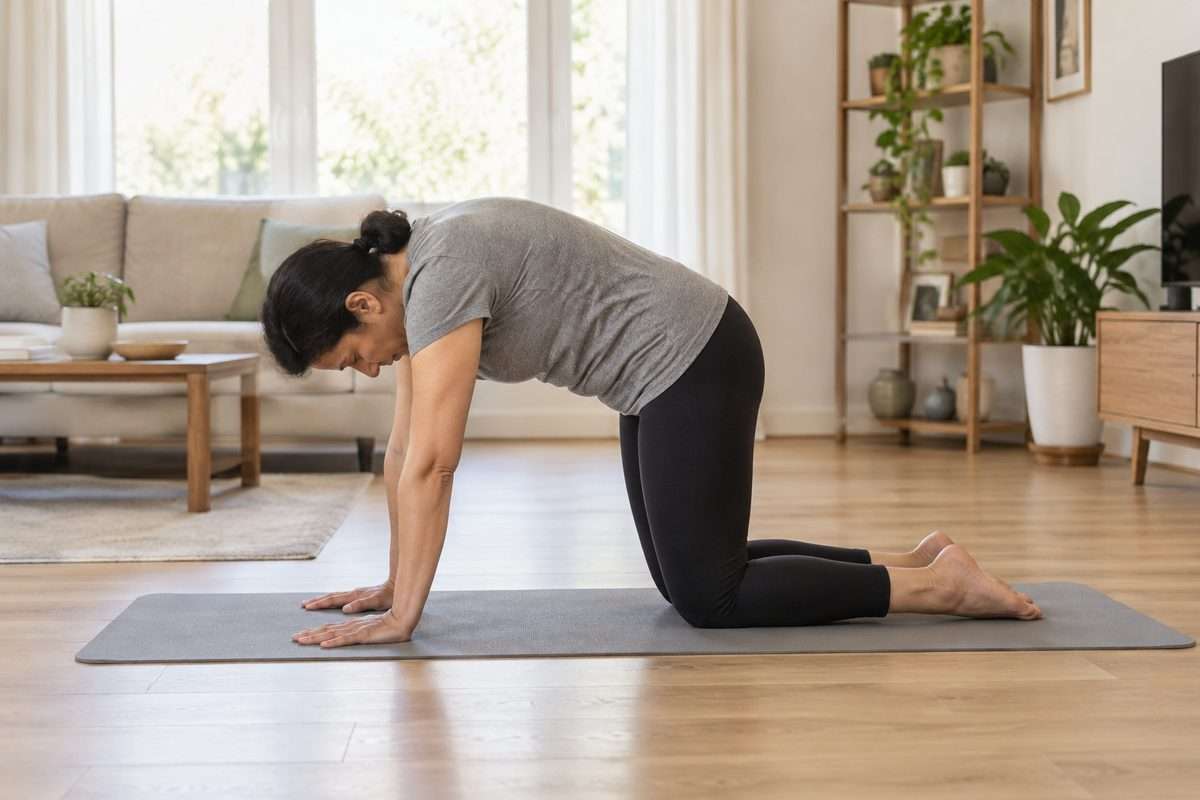
Gentle mobility work can ease morning stiffness and help you feel looser before a walk or workout. One simple option is the cat-cow. Start on your hands and knees, hands under your shoulders and knees under your hips. Slowly round your back up toward the ceiling, then let it gently dip as you look forward. Move 8 to 10 times, staying comfortable.
Protect your sleep
The CSEP guidelines recommend 7 to 9 hours of good-quality sleep for adults, with regular bed and wake times. If night sweats or insomnia are wrecking your sleep, talk to your doctor, because better sleep can make pain easier to manage.
How much pain is okay during exercise?
A little discomfort during exercise is common with achy joints. A rule of thumb many physiotherapists use: mild discomfort that settles within 24 hours and is not building week to week is generally okay. Sharp pain, pain that lingers into the next day, or new swelling means it is time to ease back and get advice.
Should I take hormone therapy or supplements for joint pain?
That is a decision to make with your doctor. The Menopause Society’s 2022 hormone therapy position statement (published under its former name, the North American Menopause Society) says hormone therapy is the most effective treatment for hot flashes and for genitourinary symptoms of menopause, and that it has been shown to prevent bone loss and fracture. Research on whether it eases joint pain is more limited.
Whether hormone therapy suits you depends on your age, health history and personal risks, so talk it through with your family doctor or gynaecologist. The same goes for supplements: check with your doctor or pharmacist before starting anything new.
Our physiotherapists focus on the physical side: strength, movement, joints and the pelvic floor. For whole-person support, our naturopathic doctor can also be part of your care team.
How can physiotherapy help perimenopause joint pain?
Physiotherapy helps by finding out which joints, muscles or tendons are driving your pain, then building a plan to make them stronger and less sensitive. It does not change your hormones, but it changes how well your body copes with daily life.
At Wellmax Physiotherapy in Oakville, your first visit is a 60-minute assessment. We take a full history, look at how you move, test strength and joint mobility, and talk about your goals. Then we start treatment the same day.
- Hands-on manual therapy to ease pain and stiffness so movement feels easier.
- A progressive strength plan you can do at home or in a gym, adjusted as you get stronger.
- Clear education on pacing and flare-ups.
- Pelvic floor care if bladder leakage or pelvic heaviness are part of your perimenopause picture, through our pelvic floor therapy.
Women’s health care at Wellmax is led by Gurmeet Rai, Registered Physiotherapist and Clinic Director, with more than 16 years of experience and Level 3 pelvic health certification. Our menopause and perimenopause physiotherapy page and our women’s health physiotherapy page explain the full range of care. The goal is to get you strong and graduated from care, not coming back forever. No referral is needed, we offer direct billing to most major insurers, and we see women from Oakville, Mississauga and nearby.
When should I see a doctor about joint pain?
Many perimenopause aches settle with the right activity, but some symptoms need a doctor rather than an exercise plan. See your doctor promptly, or get same-day urgent care, if you notice:
- A hot, red or swollen joint, especially if you feel unwell
- Fever along with joint or muscle pain
- Morning stiffness lasting more than an hour, with swelling in several small joints of the hands or feet
- Unexplained weight loss
- New weakness or numbness in an arm or leg
Book a menopause physiotherapy assessment if your pain has lasted more than a few weeks, is stopping you from exercising, working or sleeping, if a shoulder is getting steadily stiffer, or if you are simply unsure which exercises are safe for you. If this sounds like you, or you are not sure, book an assessment and we will find the cause properly.
Not sure where to start?
Book a free consultation and we will point you to the right care, with no pressure.
Read next: Outer hip pain at night: what gluteal tendinopathy is and what helps
Frequently Asked Questions
Can perimenopause cause joint pain?+
Yes, it can. Joint and muscle aches are among the most common physical symptoms of perimenopause. A 2020 meta-analysis estimated that 71 percent of perimenopausal women report musculoskeletal pain. Changing estrogen levels seem to play a part, along with age, sleep, activity and body weight. Because other conditions such as arthritis or thyroid problems can feel similar, new or worsening joint pain is worth discussing with your doctor and having assessed.
What does perimenopause joint pain feel like?+
Women often describe stiffness first thing in the morning or after sitting, aching knuckles or knees, soreness on stairs, a sore shoulder when reaching up, or general muscle aches and slower recovery after exercise. It can move around or come and go. Swelling, heat, redness, or stiffness that lasts more than an hour each morning is not typical and should be checked by a doctor.
How long does perimenopause joint pain last?+
It varies a lot. Perimenopause itself can begin 4 to 8 years before menopause, according to the SOGC, and a 2020 meta-analysis found postmenopausal women had similar odds of musculoskeletal pain to perimenopausal women, so aches do not always fade once periods stop. The good news is that strength training, regular activity and good sleep can help at any stage.
What is the musculoskeletal syndrome of menopause?+
It is a proposed term, introduced in a 2024 review in the journal Climacteric, for a cluster of symptoms linked to falling estrogen: joint pain, loss of muscle mass, loss of bone density and the progression of osteoarthritis. It is an emerging idea rather than an official diagnosis, and research is ongoing. Its main value is helping women and clinicians recognize these symptoms and act on them early.
Can menopause cause frozen shoulder?+
Frozen shoulder is most common between about 40 and 59 and affects women more often than men, so it often overlaps with perimenopause and menopause. Researchers are still studying whether hormones play a direct role. Diabetes is a known risk factor. If your shoulder is painful and getting steadily stiffer, especially reaching overhead or behind your back, a physiotherapy assessment can find the cause and guide treatment.
Why do my knees hurt during menopause?+
Knees carry your body weight, so they often feel changes first. Research links the menopause transition with the progression of osteoarthritis, and losing strength in the thigh and hip muscles leaves the knee with less support on stairs and hills. A 2015 Cochrane review found that exercise reduces pain and improves function in knee osteoarthritis. Sit-to-stands and step-ups are a good start, but persistent pain deserves an assessment.
What is the best exercise for menopause joint pain?+
There is no single best exercise, but strength training is the most useful foundation. Canada’s 24-Hour Movement Guidelines recommend muscle-strengthening activities at least twice a week, plus 150 minutes of moderate to vigorous activity every week. Squats or sit-to-stands, wall push-ups, rows and hip exercises cover the main muscle groups. Add brisk walking and gentle mobility, and progress slowly. A physiotherapist can tailor the plan to your joints.
Does hormone therapy help menopause joint pain?+
According to The Menopause Society’s 2022 position statement, hormone therapy is the most effective treatment for hot flashes and genitourinary symptoms of menopause, and it has been shown to prevent bone loss and fracture. Research on joint pain specifically is more limited. Whether hormone therapy is right for you depends on your age, health history and personal risks, so this is a conversation to have with your family doctor or gynaecologist.
Is walking good for menopause joint pain?+
Yes, for most women. Walking keeps joints moving, is a weight-bearing activity, and counts toward the 150 minutes of weekly activity recommended in Canada’s guidelines. If your knees or hips are sore, try shorter, flatter walks and supportive shoes. Pair walking with strength training, because walking on its own does not build much muscle strength.
When should I worry about joint pain in perimenopause?+
See a doctor promptly if a joint is hot, red or swollen, if you have a fever, if morning stiffness lasts more than an hour with swelling in several small joints, or if you have unexplained weight loss or new weakness or numbness. These are not typical perimenopause aches. Book a physiotherapy assessment if pain lasts more than a few weeks or stops you from being active.
Do I need a referral to see a physiotherapist in Ontario?+
No. In Ontario you can book a physiotherapist directly without a doctor’s referral. At Wellmax Physiotherapy in Oakville you can start with a free in-person consultation, and we offer direct billing to most major insurers. Some extended health plans ask for a doctor’s note before they reimburse, so it is worth checking your policy.
You Might Also Like

Gurmeet Rai, Registered Physiotherapist
Gurmeet is a Registered Physiotherapist with the College of Physiotherapists of Ontario and the Clinic Director and co-owner of Wellmax Physiotherapy in Oakville, with 16+ years of clinical experience. She focuses on complex, stubborn cases where earlier treatment has not worked, with advanced training in pelvic health, TMJ, vestibular, and sports and MSK rehab. Expect expert care from assessment to discharge, with honest guidance along the way.Read Gurmeet’s full profile or meet the team.
This article is for educational purposes only and does not replace a professional clinical assessment. Every body and condition is different. If you are experiencing pain or symptoms, book an assessment with a qualified clinician for advice specific to your situation. If you are experiencing a medical emergency, call 911 or visit your nearest emergency department.
