
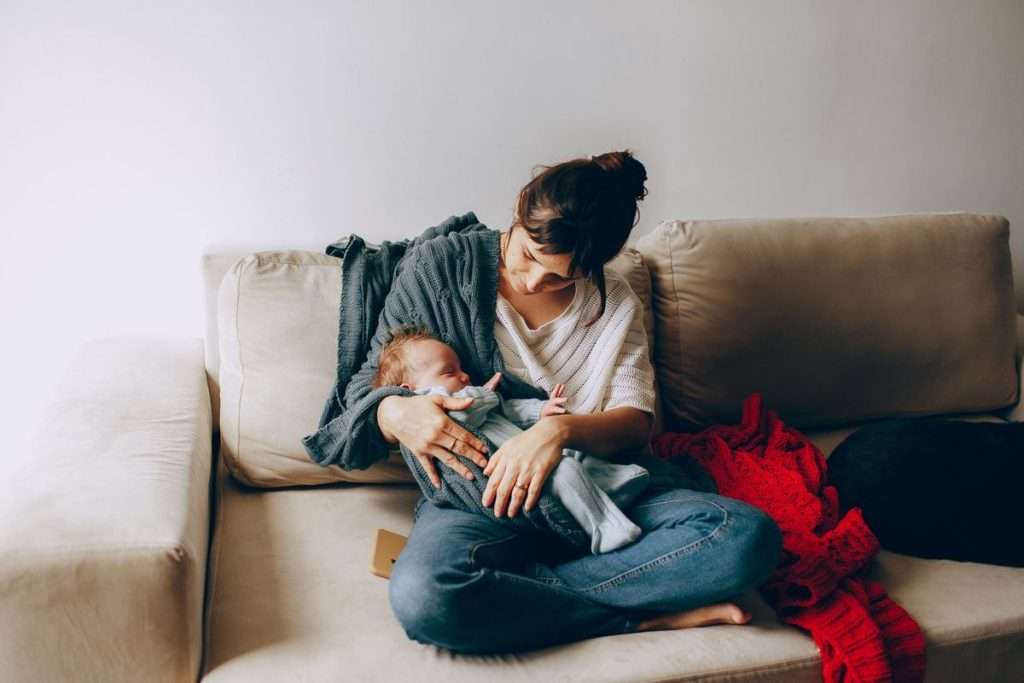
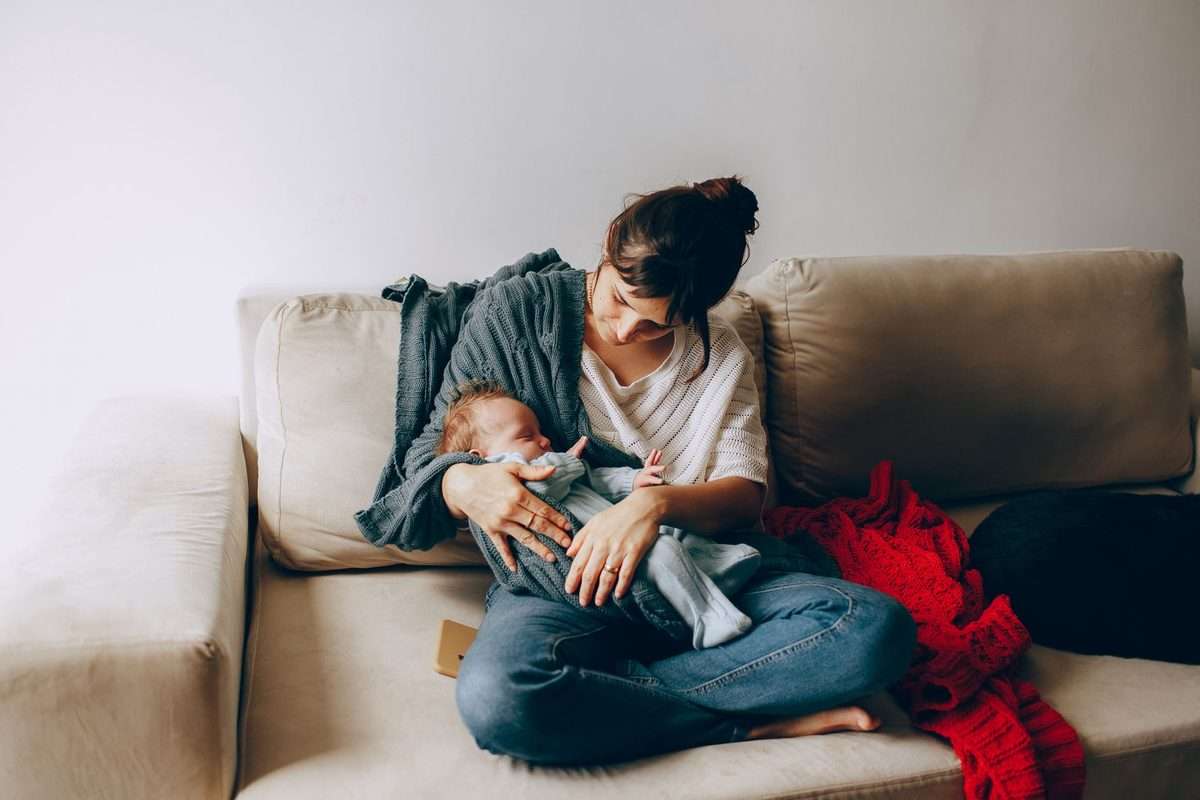
You are home with a brand new baby, and your belly feels like it belongs to someone else. Rolling over takes a plan, and everyone says “take it easy” without explaining what that means.
This guide walks through C-section recovery week by week, what to avoid, scar care, your pelvic floor, and the warning signs that need a doctor.
The short answer: recovery is different for everyone. Many people find daily life much easier by around six weeks, but full recovery takes longer. The skin closes in a few weeks, while the deeper tissue layers keep healing and slowly regaining strength for months. Go by how you feel, follow your own doctor’s or midwife’s advice, and build activity back up gradually. If you want a guided plan for scar care, your core and your pelvic floor, see our C-section recovery physiotherapy in Oakville.
Key Takeaways
- The first few days are usually the hardest. For many people daily tasks feel much easier by around six weeks, though everyone heals at their own pace.
- Walking, breathing and simple movement help early. Heavy lifting, driving and hard exercise return when you feel fully recovered, not on a fixed date.
- Your pelvic floor still matters after a C-section, because pregnancy itself loads it.
- Fever, a red or leaking wound, heavy bleeding, calf pain, chest pain or shortness of breath need urgent medical care, not a physio appointment.
How long does C-section recovery take?
There is no single timeline. Many people feel noticeably better by around six weeks, but everyone heals at their own pace, and running, heavy lifting and high-impact sport usually wait until at least three months after birth.
The American College of Obstetricians and Gynecologists (ACOG) says the abdomen takes a few weeks to heal and bleeding or discharge usually lasts about four to six weeks. The UK’s NICE caesarean birth guideline (NG192) sets no fixed dates: you return to driving, heavy lifting, formal exercise and sex when you feel fully recovered, including any pain or physical limits.
C-section recovery timeline at a glance
| Stage | What is common | What helps |
|---|---|---|
| Days 1 to 3 | Incision pain, gas pain, help needed to get up | Short walks, log rolling, pillow splinting |
| Weeks 1 to 2 | Soreness easing, bleeding, broken sleep | Rest, short walks, light lifting only |
| Weeks 2 to 6 | More energy, incision closing, numb skin near the scar | Longer walks, breathing, gentle core work |
| Weeks 6 to 12 | Postpartum check-up, more normal days | Gradual strength work, scar care once cleared |
| 3 to 6 months | Building fitness | Progressive strength, guided return to impact |
| 6 months and beyond | Scar still maturing | Keep strengthening; get help for lingering symptoms |
C-section recovery week by week: what to expect
Recovery moves in stages: the first days are about moving safely, the first six weeks about healing, and the months after about rebuilding strength.
Days 1 to 3: what are the hardest days of C-section recovery?
For many people, the first two or three days are the hardest. The anaesthetic wears off, the incision is most tender, and trapped gas can be surprisingly painful.
Hospitals encourage moving early. NICE says the catheter usually comes out once you are up and moving, and ACOG advises having a nurse or another adult help you the first few times you get out of bed. CIHI reports an average stay of 2.7 days after a C-section in Canada.
Weeks 1 to 2: settling in at home
Soreness eases a little each day, though pulling and numb skin near the scar are common. Rest when you can, accept help and keep short walks going.
Weeks 2 to 6: more energy, longer walks
Walks get longer, chairs get easier, and gentle breathing and light core activation can start when comfortable, unless your care team says otherwise. If you overdo it one day, pull back a little and build in small steps.

Weeks 6 to 12: the check-up and rebuilding
ACOG recommends contact with your obstetric care provider within three weeks of birth and a full postpartum visit by 12 weeks. In Ontario, many people have a postpartum check with their doctor or midwife around six weeks after birth. Being cleared means your incision looks on track, not that your core and pelvic floor are back, so this is a good time to start progressive strength work and scar care.
3 to 6 months, and beyond
The focus shifts to strength and, for some, running or sport, while the scar keeps softening for many months. A tugging scar, a weak-feeling belly, back pain or leaking are not things you have to live with, and it is never too late to get them assessed.
How long does a C-section take to heal inside?
The skin usually closes within a few weeks, but the deeper tissue layers heal more slowly and keep regaining strength for months.
A C-section passes through skin, fat, the tough sheath over the tummy muscles, the muscles themselves (which ACOG says are separated and may not need to be cut) and the wall of the uterus. The 2019 UK postnatal return-to-running guideline (Goom, Donnelly and Brockwell) notes that the deeper layers of the tummy wall have regained only part of their original strength six weeks after a caesarean, and that the scar in the uterus is still remodelling at that point. Each layer heals at its own pace, so let comfort and your own doctor’s or midwife’s advice guide you, not the calendar alone.
How do I get out of bed, cough and laugh comfortably after a C-section?
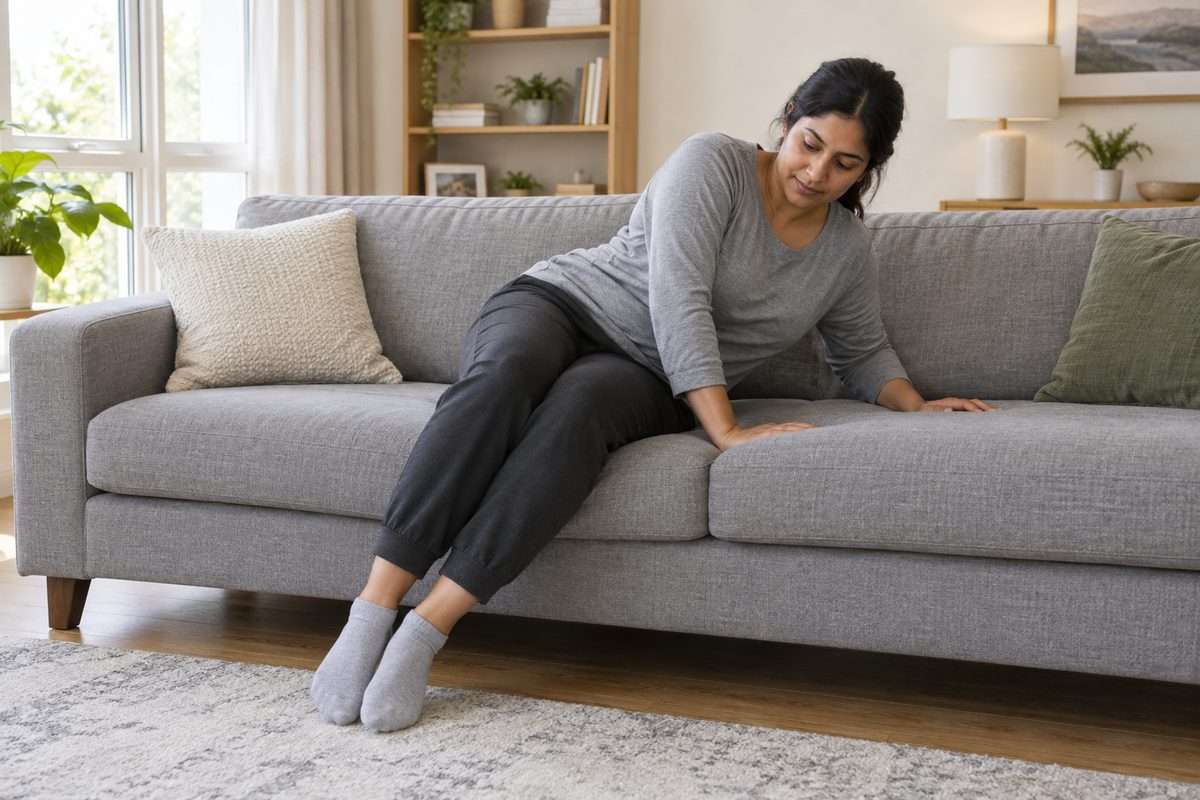
Use the log roll to get up, hug a pillow against your belly when you cough, sneeze or laugh, and rest on your side with pillows for support.
The log roll
- Bend your knees with your feet flat.
- Roll onto your side as one unit, shoulders and hips together.
- Let your lower legs slide over the edge.
- Push up sideways with your arms as your legs lower to the floor.
- Pause, breathe, then stand slowly.
Reverse the steps to lie down. Avoid sitting straight up like a sit-up.
Pillow splinting
Press a small firm pillow or folded towel against your lower belly as you cough, sneeze or laugh. This “splinting” supports the incision from the outside and takes the sharp edge off sudden movements. Keep one nearby for getting up and the car ride home too.
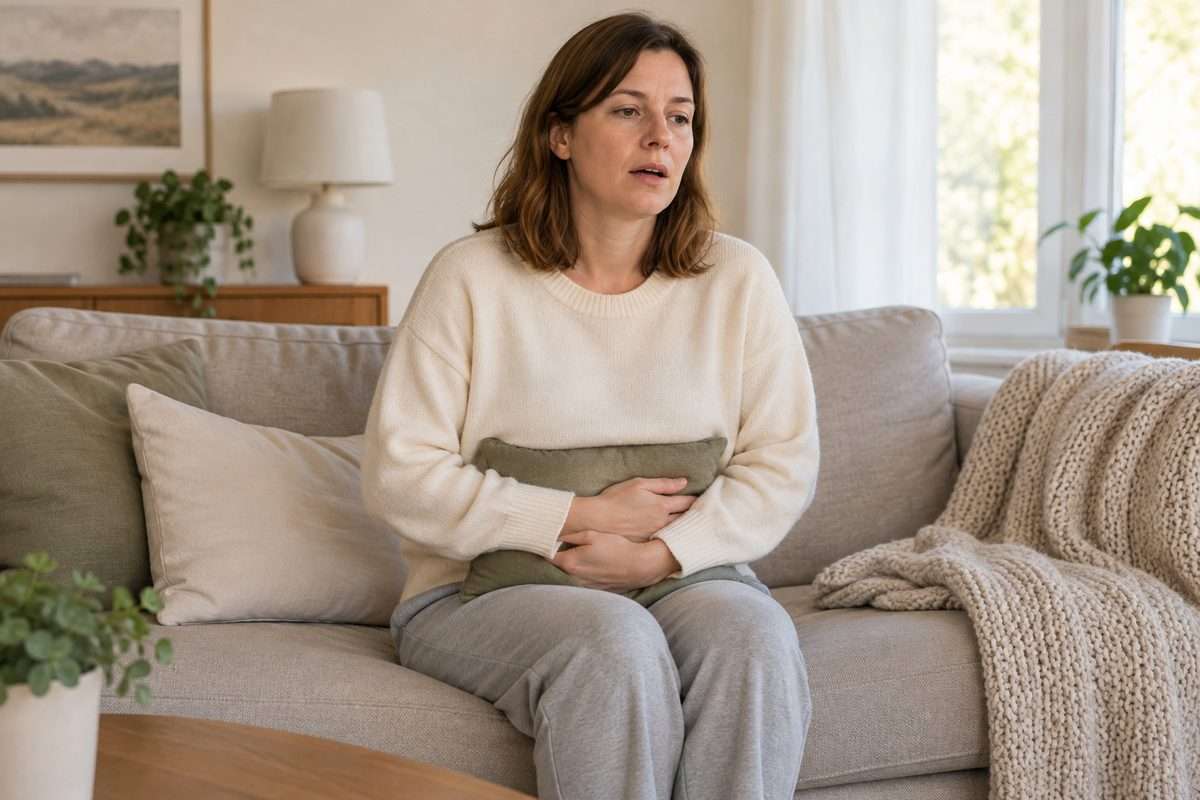
Comfortable resting positions
Side-lying with a pillow between the knees and a small cushion against the belly suits many people. On your back, a pillow under the knees takes tension off the incision. Change position often.

What is not allowed after a C-section?
Nothing is banned forever, but some things wait until you feel fully recovered. Early on, avoid heavy lifting, hard core exercise and anything that causes sharp pain at the incision.
- Heavy lifting. Many hospital discharge leaflets suggest lifting nothing heavier than your baby for about the first six weeks. This is common hospital guidance, not a fixed rule, so check with your own doctor or midwife about what applies to you.
- Sit-ups, crunches and planks can wait until you have rebuilt from the inside out.
- Tampons and sex for a few weeks. ACOG advises waiting to lower the risk of infection.
When you lift a car seat or laundry basket, use both hands, keep it close, bend at the hips and knees, and breathe out as you lift. A car seat hooked over one arm, out to the side, is much harder on a healing belly.

When can I drive after a C-section?
There is no single date. NICE says you can drive again when you feel fully recovered, including any pain or physical limits.
Many hospital leaflets suggest a simple self-check: can you wear a seatbelt comfortably, look over your shoulder to check your blind spot and do an emergency stop without pain? If not, wait. Do not drive if any medicine you are taking makes you drowsy, and check with your own doctor or midwife if you are unsure.
When can I exercise and start core work after a C-section?
Walking and breathing can usually start in the first days or weeks. Formal exercise returns gradually once you feel recovered, with core work moving from breathing, to gentle activation, to strength.
ACOG advises asking your obstetrician when to begin exercising after a C-section and calls walking a great way to start. The World Health Organization’s 2020 guidelines recommend postpartum women build up to at least 150 minutes of moderate activity a week.
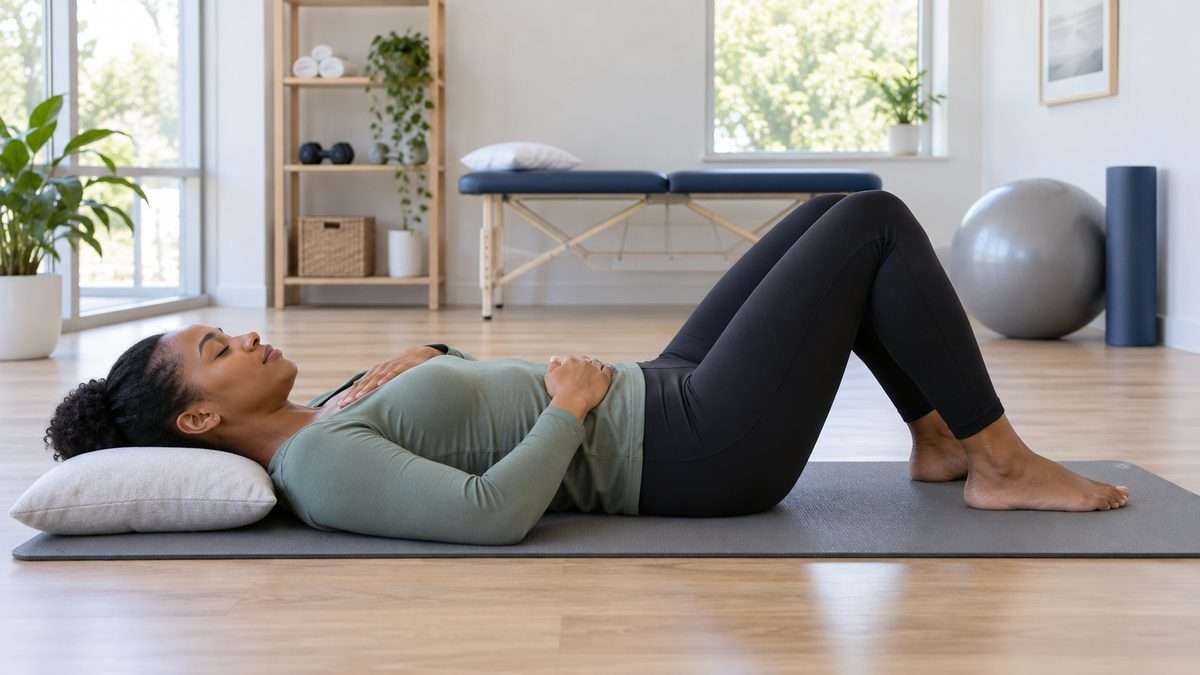
Step 1: breathing
Lie on your back with knees bent. Breathe in slowly and let your ribs and belly widen, then breathe out gently through pursed lips. This helps your ribs, belly and pelvic floor work together again.
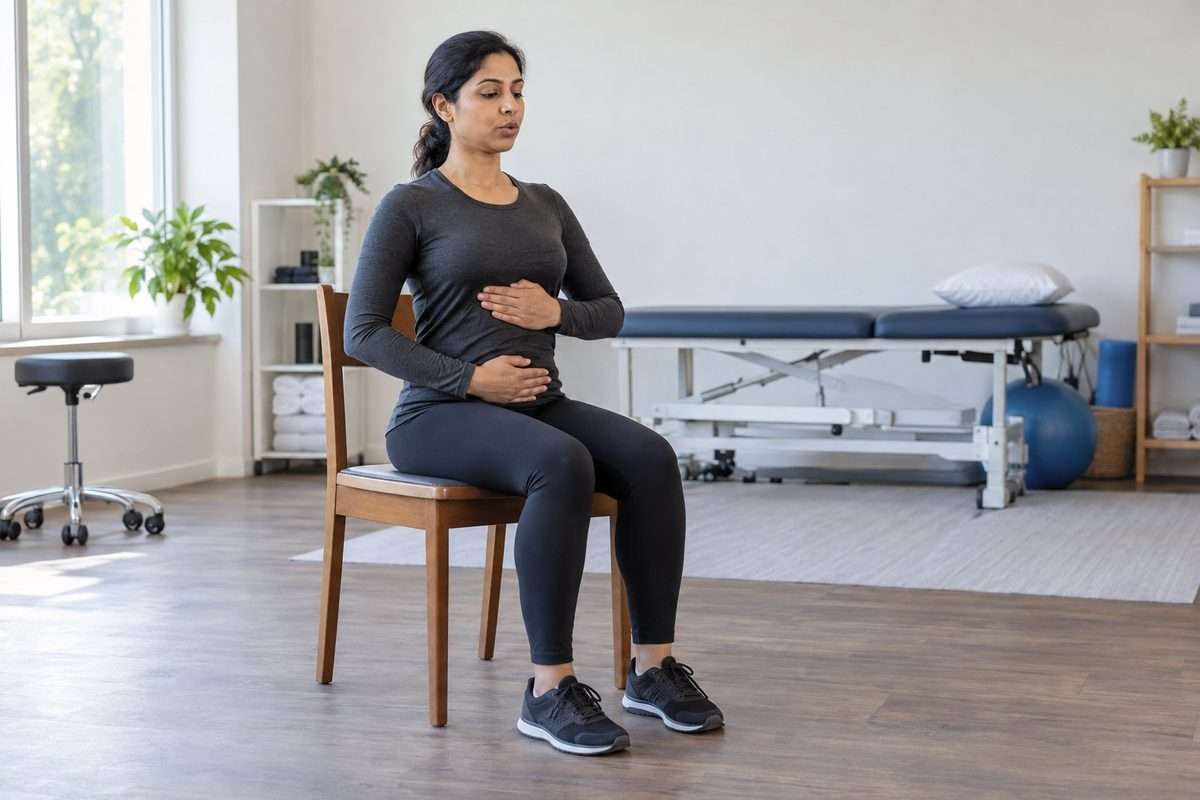
Step 2: gentle deep core activation
As you breathe out, gently draw in your lower belly, as if zipping up snug pants, and lightly lift your pelvic floor. Hold a few seconds, then relax. It should feel light, never painful. Use this breath-out pattern when you lift your baby.
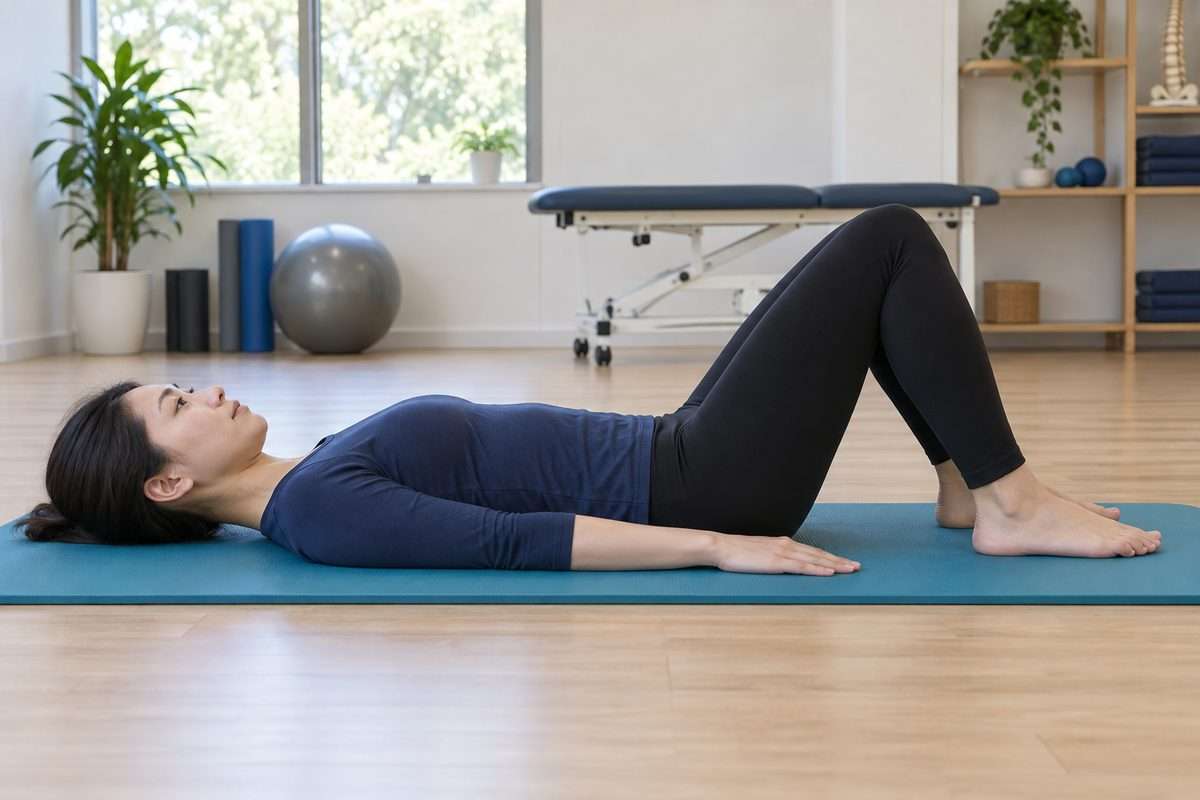
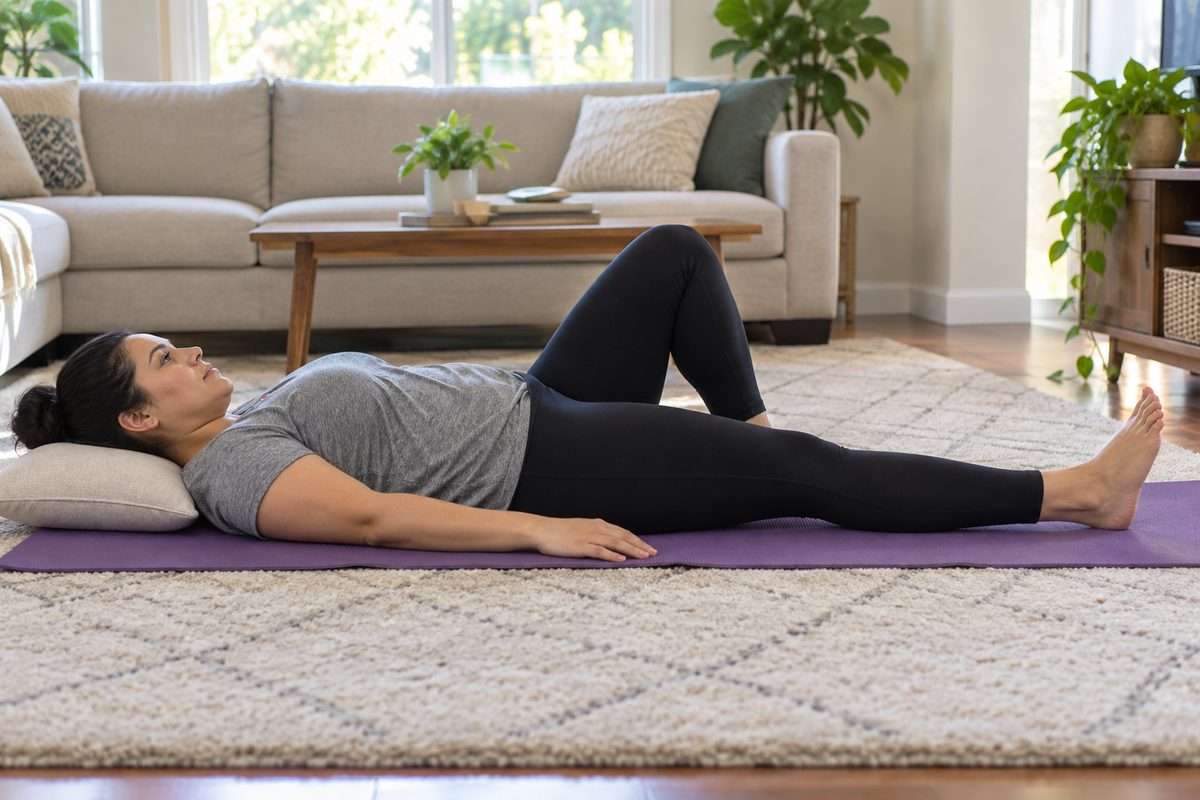
Step 3: pelvic tilts and heel slides
Pelvic tilts: lying with knees bent, gently flatten your lower back into the floor as you breathe out, then relax. Your hips stay down. Heel slides: breathe out and slowly slide one heel along the floor until the leg is straight, then slide it back, keeping your belly calm.
Start with a few slow repetitions. Stop and check in with your care team if you feel sharp pain, see a midline bulge, or leak.
What about diastasis recti?
A gap between the tummy muscles is very common after birth. A 2016 British Journal of Sports Medicine study of 300 first-time mothers found it in 60% at six weeks after birth and 32.6% at 12 months. If you notice doming along your midline, our page on diastasis recti physiotherapy explains how it is assessed.
When can I run again?
The 2019 UK postnatal return-to-running guideline advises against running before about three months after birth, with a graded return between three and six months at the earliest for those who pass its strength and impact tests. A 2024 international consensus in the British Journal of Sports Medicine favours an individual timeline with screening first. After a C-section, your surgeon’s advice comes first.
“Being cleared at six weeks means your incision looks on track. It does not mean your core and pelvic floor are ready for everything.”
Does the pelvic floor matter after a C-section?
Yes. Pregnancy itself loads the pelvic floor for nine months, so a C-section does not mean it was spared. Leaking, heaviness or pelvic pain are worth getting checked.
A large Norwegian study in the New England Journal of Medicine (Rortveit, 2003) found urinary incontinence in 15.9% of women who had only C-sections, compared with 10.1% of women who had never given birth and 21.0% after vaginal births only. Lower risk is not no risk.
Problems such as pelvic girdle pain after birth can follow a C-section too. The same symptom can have several causes, each needing different treatment, so pelvic floor physiotherapy starts with an assessment, not a guess.
C-section scar care: when can I start scar massage?
Early on, keep the incision clean and dry and watch for infection. Hands-on scar massage usually waits until the incision is fully closed and your doctor or midwife is happy with it, often from around six to eight weeks.
Numbness around the scar is common and often improves slowly. Once closed, gentle scar mobilisation can help the scar move more freely. Research is early: small studies in 2022 and 2024 reported better scar stiffness and comfort after hands-on scar work, but larger trials are needed. Never massage an open or weeping area. Our C-section recovery physiotherapy page explains how scar work is done, including for older scars.
What natural pain relief helps after a C-section?
Moving often, pillow splinting, good resting and feeding positions, and short walks all help. For medicine, follow your doctor’s or pharmacist’s advice.
- Short walks. ACOG suggests them to ease gas pain and constipation after birth.
- A supported feeding position. Sit upright with your back supported, feet on a stool, and baby raised on a firm pillow so you do not hunch.
- Belly support. ACOG mentions an abdominal binder as one option for incision pain. Ask whether one suits you.
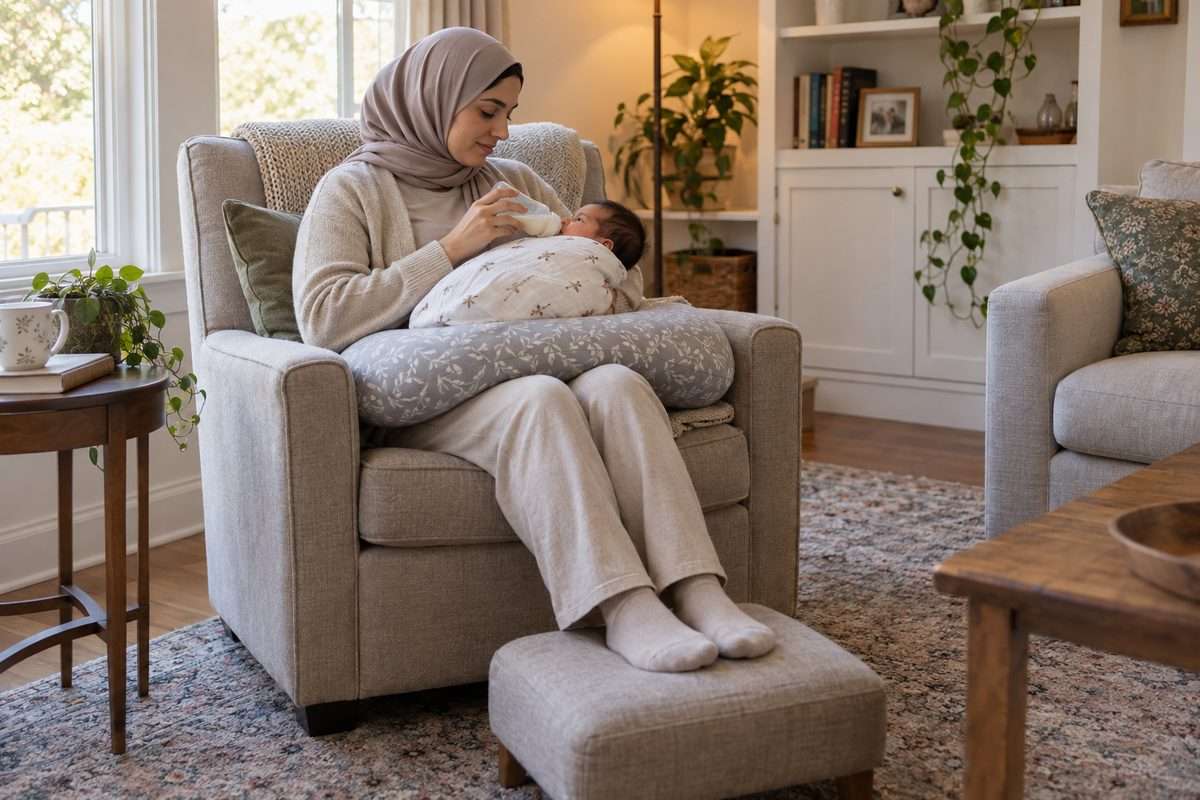
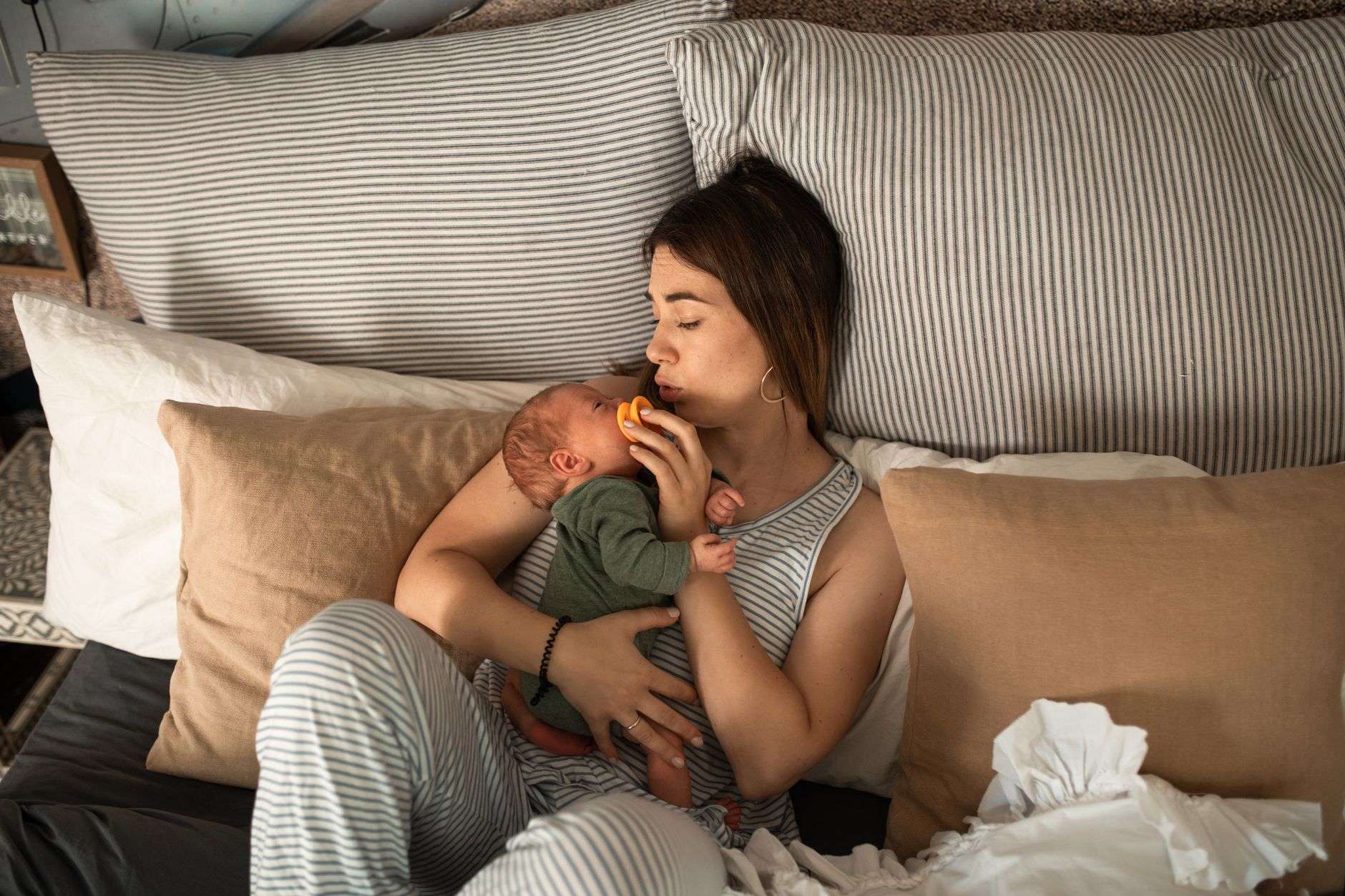
Neck and upper back aches from feeding are common. If they linger, a postnatal massage with one of our female RMTs or a physiotherapy assessment can help.
When should I see a pelvic floor physiotherapist after a C-section?
You can see a physiotherapist at any stage. An early postpartum assessment is safe for posture, feeding aches, breathing and gentle core work, while direct scar work waits until the incision is closed and cleared. Book an assessment if you notice:
- Leaking with coughing, sneezing, lifting or exercise
- Heaviness or dragging in the pelvis
- Pain with sex once you are cleared to resume it
- A scar that feels tight, tender or stuck months later
- Back, hip or pubic bone pain that is not settling
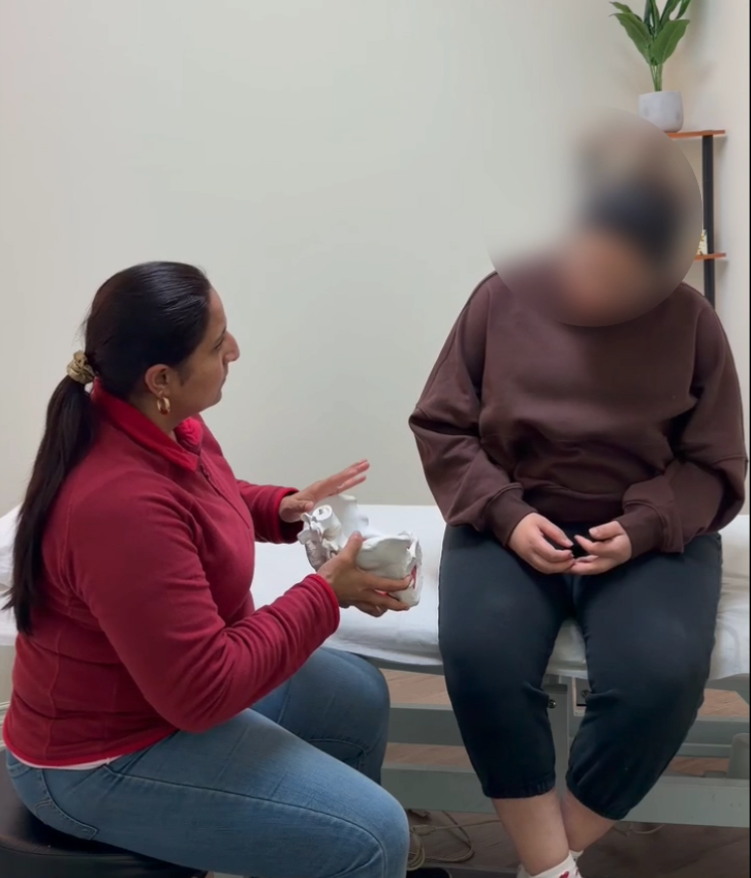
At Wellmax Physiotherapy in Oakville, pelvic and women’s health physiotherapy is with Gurmeet Rai, our Clinic Director and a Registered Physiotherapist with 16+ years of experience and Level 3 pelvic health certification. First assessments are 60 minutes, with time to check your core, scar and pelvic floor and start your plan the same day. An internal pelvic floor exam is optional: it is only done with your consent, after it has been explained, and scar and core work are entirely external. We see people from Oakville and Mississauga. Read more about postpartum physiotherapy or what happens at a first pelvic floor appointment.
When is pain after a C-section an emergency?
Some symptoms are not part of normal recovery and should not wait.
Call 911 or get emergency help right away for:
- Chest pain, trouble breathing or shortness of breath
- A seizure
- Thoughts of hurting yourself or your baby (you can also call or text 9-8-8, the Suicide Crisis Helpline, any time)
- Severe pain in your lower belly
- Pain, swelling, redness or warmth in one leg
Call your doctor or midwife right away (if you cannot reach them, call 911 or go to the nearest emergency department) for:
- Heavy bleeding, such as soaking through a pad in an hour, or clots the size of an egg or bigger
- A headache that does not get better, or a bad headache with vision changes
- A temperature of 38°C or higher, or chills
- An incision that is red, warm, swollen, leaking, opening or not healing
- Pain that is getting worse instead of better
These lists follow ACOG’s postpartum warning signs and the AWHONN POST-BIRTH warning signs, which can appear up to a year after birth. NICE notes that people who have had a caesarean birth may be at higher risk of blood clots in the legs or lungs. If you are unsure, trust your instincts and get checked, or call Health811 (dial 811) for free advice from a nurse, 24 hours a day.
When you are ready for guided help, our physiotherapy after a C-section covers scar care, core retraining and your pelvic floor, alongside our postpartum physiotherapy.
Not sure where to start?
Book a free consultation and we will point you to the right care, with no pressure.
Frequently Asked Questions
How long is C-section recovery time?+
It is different for everyone. Many people feel much better by around six weeks, but running, heavy lifting and impact sport usually wait until at least three months. The NICE caesarean birth guideline says to return to activities such as driving, heavy lifting and formal exercise when you feel fully recovered, not on a fixed date.
How long does a C-section take to heal inside?+
The skin usually closes within a few weeks, but the deeper tissue layers heal more slowly and keep regaining strength for months. That is why daily life can feel fine at six weeks while lifting or sit-ups still cause a pull. Build up gradually and follow your own doctor’s or midwife’s advice.
What are the hardest days of C-section recovery?+
For many people, the first two or three days. The anaesthetic wears off, the incision is most tender, trapped gas can be painful, and you are caring for a newborn on little sleep. Gentle walks, the log roll, pillow splinting and plenty of help make each day easier.
Is it safe to drive after a caesarean?+
There is no fixed date. NICE says you can drive when you feel fully recovered. Many hospital leaflets suggest a self-check: can you wear a seatbelt comfortably, look over your shoulder and do an emergency stop without pain? Do not drive if any medicine makes you drowsy, and check with your own doctor or midwife if unsure.
What is not allowed after a C-section?+
Early on, avoid heavy lifting, sit-ups and other hard core exercise, and anything that causes sharp pain at the incision. ACOG advises no tampons or sex for a few weeks to lower infection risk. Driving, lifting and formal exercise return gradually once you feel fully recovered.
When can I start exercising after a C-section?+
Gentle walking and breathing exercises can usually start in the first days or weeks. ACOG advises asking your obstetrician when to begin formal exercise. Core work should progress from breathing, to gentle activation such as pelvic tilts and heel slides, to strength work, before running or heavy lifting.
When can I start C-section scar massage?+
Usually once the incision is fully closed and your doctor or midwife is happy with it, often from around six to eight weeks. Before that, keep the wound clean and dry and watch for redness, discharge or worsening pain. Never massage an open or weeping area.
Is a second C-section more painful to recover from?+
It varies. Some people find a repeat recovery easier because they know what to expect. Others find it harder, often because they are also lifting an older child. ACOG notes the risk of some medical problems rises with each C-section, so ask your obstetrician what to expect.
Do I need pelvic floor physiotherapy after a C-section?+
Not everyone does, but pregnancy itself loads the pelvic floor. A 2003 New England Journal of Medicine study found urinary incontinence in 15.9% of women who had only C-sections, versus 10.1% of women who had never given birth. Leaking, heaviness or pelvic pain are good reasons to get assessed.
When should I worry about pain after a C-section?+
Call 911 for chest pain, trouble breathing, a seizure, thoughts of hurting yourself or your baby, severe lower belly pain, or a painful swollen leg. Call your doctor or midwife right away for heavy bleeding or large clots, a fever, a red, leaking or opening incision, a bad headache or vision changes, or pain that keeps getting worse. If you cannot reach them, go to emergency.
You Might Also Like

Gurmeet Rai, Registered Physiotherapist
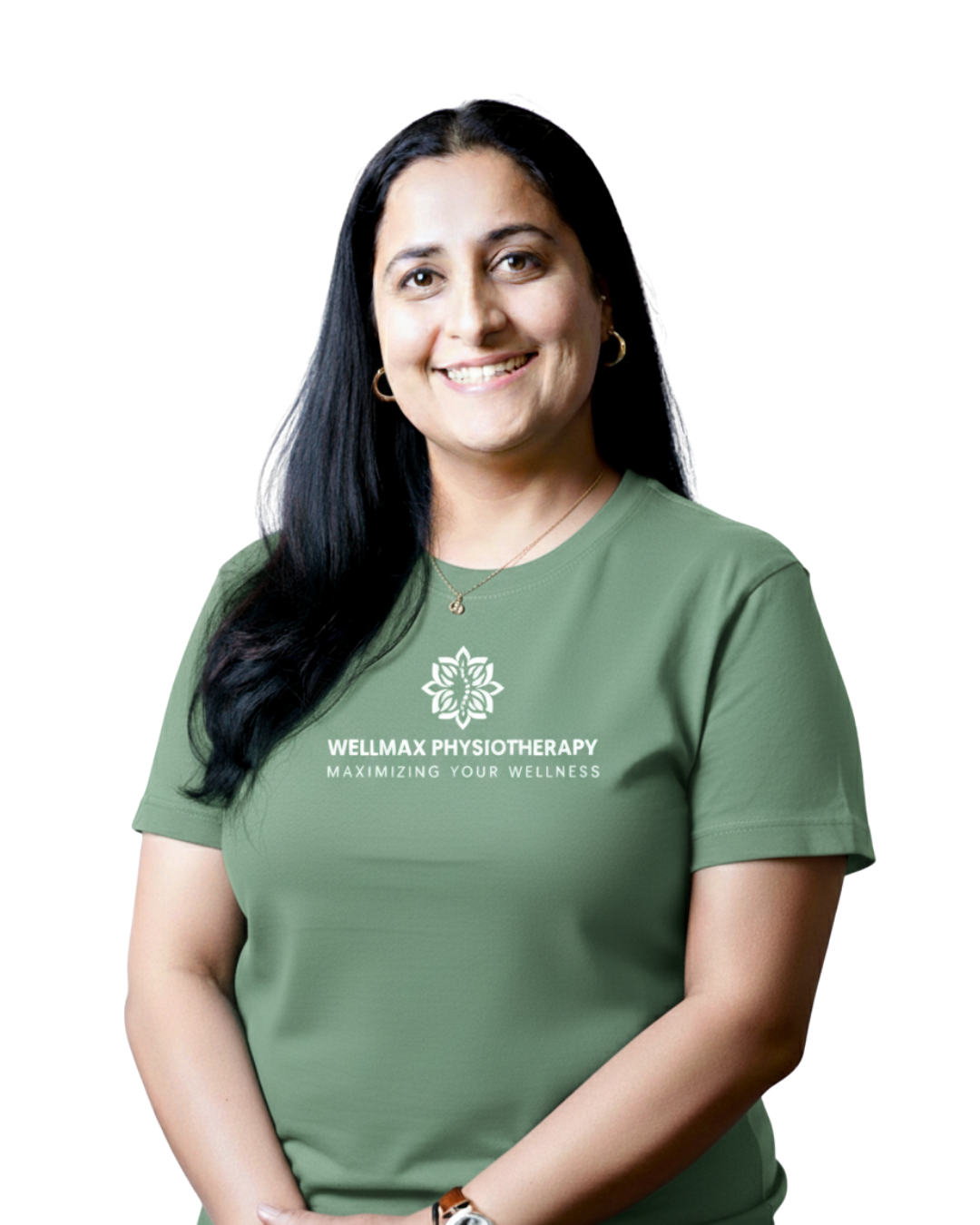
Gurmeet is a Registered Physiotherapist with the College of Physiotherapists of Ontario and the Clinic Director and co-owner of Wellmax Physiotherapy in Oakville, with 16+ years of clinical experience. She focuses on complex, stubborn cases where earlier treatment has not worked, with advanced training in pelvic health, TMJ, vestibular, and sports and MSK rehab. Expect expert care from assessment to discharge, with honest guidance along the way.Read Gurmeet’s full profile or meet the team.
This article is for educational purposes only and does not replace a professional clinical assessment. Every body and condition is different. If you are experiencing pain or symptoms, book an assessment with a qualified clinician for advice specific to your situation. If you are experiencing a medical emergency, call 911 or visit your nearest emergency department.
