
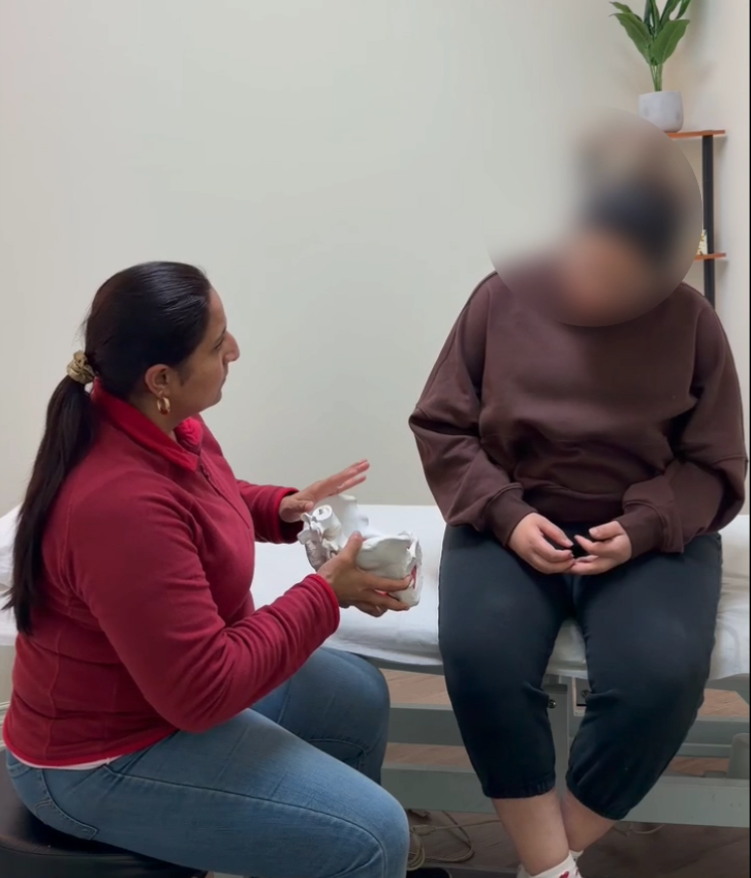
You have been meaning to book it for weeks. Maybe months. The leaking when you sneeze or jump. The urgency that sends you running to the bathroom. The pelvic pain that no one seems to have a clear answer for. The postpartum heaviness that your doctor said would “get better with time” but hasn’t. You know pelvic floor physiotherapy could help. But you are putting it off because you don’t know what the appointment actually involves, and the uncertainty feels like a bigger barrier than the symptoms.
That hesitation is a common reason people delay pelvic floor physiotherapy. Not because treatment is uncomfortable. Not because it doesn’t work. But because no one has explained what actually happens in the room. At Wellmax Physiotherapy, your first appointment for pelvic floor physiotherapy in Oakville is designed to be thorough, private, and completely within your control. Here is exactly what to expect, step by step, so there are no surprises.
The short answer: a first pelvic floor physiotherapy appointment at Wellmax is a 60-minute, one-on-one visit in a private room. It starts with a conversation, moves to an external assessment of your posture, breathing, hips and core, and includes an internal assessment only if you choose it. You stay in control throughout and can stop at any time. This care is part of our women’s health physiotherapy, and no referral is needed.
Key Takeaways
- A first visit lasts 60 minutes and is mostly conversation, education and external assessment. An internal exam is a small part of it, or not part of it at all.
- The internal assessment is always optional. In Ontario your physiotherapist must get your informed consent first, and you can say stop at any point, on that visit or any later one.
- Wear comfortable clothes, bring your questions, and come as you are. No special preparation or grooming is needed.
- You leave with a plain-language explanation of what was found, a realistic timeline and one or two exercises to start, not a long list.
What happens at a first pelvic floor physiotherapy appointment?
A first pelvic floor physiotherapy appointment has four parts: a conversation about your symptoms and history, an external assessment of how your body moves, an internal assessment only if you agree to it, and then a plain-language explanation and plan. The whole visit is 60 minutes, and most of that time is spent talking, assessing movement and explaining, not on the internal exam.
| Part of the visit | What happens | Roughly how long |
|---|---|---|
| 1. The conversation | Your symptoms, bladder and bowel habits, pregnancy and birth history, goals | 15 to 20 minutes |
| 2. External assessment | Posture, breathing, hips, core, abdominal wall and movement patterns | Part of the 60 minutes |
| 3. Internal assessment (optional) | A targeted check of the pelvic floor muscles, only with your consent | About 5 to 10 minutes, if you choose it |
| 4. Explanation and plan | What was found, what needs to change, a realistic timeline and a small home program | The rest of the visit |
Who is a pelvic floor physiotherapy appointment for?
It is for women who are dealing with a pelvic floor, bladder, bowel or pelvic pain concern, or who want to understand their body after pregnancy. People often come with leaking or urgency (see urinary incontinence treatment and overactive bladder physiotherapy), a feeling of heaviness or pressure (pelvic organ prolapse physiotherapy), pain in the pelvis or with intercourse (pelvic pain and painful sex physiotherapy), pain during pregnancy (pregnancy pelvic pain physiotherapy), or recovery after birth (postpartum physiotherapy). You do not need a diagnosis, a referral or a certain level of severity to come in. If you are not sure which of these fits you, that is what the assessment is for.
Before You Arrive: How to Prepare
What to Wear
Wear comfortable clothing that you can move in easily. Leggings, athletic wear, or loose pants are all fine. You do not need to wear anything special. If you choose an internal assessment, you will be given privacy to change and will be covered with a sheet.
What to Bring
Add your insurance plan in the Jane booking form so we can check direct billing, and bring any referral or test results if you have them (though no referral is needed to start physiotherapy in Ontario, and some insurers do ask for one, so check your plan). If you have seen a gynecologist, urologist, or another doctor for your symptoms, their notes can be helpful but are not required.
Write Down Your Symptoms
It can be helpful to jot down your main concerns before the appointment. When did the symptoms start? What makes them better or worse? How are they affecting your daily life, exercise, work, or relationships? Having this written down means you won’t forget anything important once the conversation starts.
No Special Grooming Needed
This comes up frequently and the answer is simple: come as you are. This is a clinical appointment with a trained healthcare professional. No preparation is needed beyond basic hygiene.
Part 1: The Conversation (15 to 20 Minutes)
Your appointment starts with a conversation in a private treatment room. This is not a rushed intake form. Your physiotherapist will sit with you and listen to your full history. The questions will cover:
- Your symptoms: what is happening, when it started, and how it affects your life
- Bladder and bowel habits: frequency, urgency, leaking patterns, constipation
- Pregnancy and birth history if relevant: type of delivery, tearing, complications, recovery
- Sexual health: pain during intercourse, changes in sensation (only if relevant to your concerns)
- Exercise and activity levels: what you are doing now and what you want to get back to
- Previous treatments: what you have tried, what helped, what didn’t
- Medical history: surgeries, medications, other health conditions
These questions can feel personal. That is expected. Your physiotherapist has heard it all before, nothing you share will be surprising or uncomfortable for them, and everything stays confidential. Many patients tell us that simply being asked these questions, and being listened to without being rushed, is one of the most validating parts of the experience.
What should you say to your pelvic floor physiotherapist?
You do not need medical words or a prepared speech. Use your own words, and share as much as you are comfortable with. These are the things that help most:
- What brought you in and what you most want to get back to, such as running, lifting your toddler or sleeping through the night.
- When it happens: with coughing, jumping, a full bladder, certain movements, or at certain times of the day or month.
- What you have already tried, including any exercises you were told to do and how they felt.
- What you do not want to happen. Say it early and plainly, for example: “I would like to start without an internal exam.”
- Your questions. You can ask why something is being done, what it will tell your physiotherapist, and what your options are.
Part 2: The External Assessment
After the conversation, your physiotherapist will assess how the rest of your body connects to your pelvic floor. This is not an internal exam. This is a standard musculoskeletal assessment that includes:
- Posture and alignment: how you stand, sit, and distribute weight
- Breathing patterns: diaphragmatic breathing is connected to pelvic floor function
- Hip, lower back, and core strength: weakness in these areas can contribute to pelvic floor problems
- Abdominal wall assessment: checking for diastasis recti (abdominal separation) if relevant
- Movement patterns: squatting, bending, and functional tasks that load the pelvic floor
The pelvic floor does not work in isolation. It functions as part of a system that includes the diaphragm, the deep core muscles, and the hip stabilizers. Assessing these connections tells us whether pelvic floor symptoms are coming from the pelvic floor itself, from surrounding structures, or from a combination of both. This is why pelvic health physiotherapy at Wellmax involves a full body assessment, not just a pelvic exam. Learn more about our pelvic floor physiotherapy program.
Part 3: The Internal Assessment (Only With Your Consent)
This is the part most people have questions about. Here is the straightforward answer.
An internal pelvic floor assessment involves one gloved, lubricated finger (sometimes two) inserted vaginally to directly assess the pelvic floor muscles. There is no speculum. There are no stirrups. It is not a gynecological exam. It is a targeted musculoskeletal assessment of the muscles, tissue, and coordination of the pelvic floor.
What the Physiotherapist Is Assessing
- Muscle tone: Are the pelvic floor muscles too tight (hypertonic), too weak (hypotonic), or a combination?
- Strength and endurance: Can you contract the pelvic floor effectively? Can you hold the contraction?
- Coordination: Can you contract and fully relax on command? Many people cannot fully relax, which is a significant finding.
- Trigger points and tenderness: Specific areas of muscle tightness or pain that may be causing symptoms
- Tissue integrity: Scar tissue from tearing, episiotomy, or surgery that may be contributing to pain or dysfunction
- Prolapse assessment: Checking the position of pelvic organs if heaviness or pressure is a concern
You Are Always in Control
The internal assessment only happens with your informed consent. Your physiotherapist will explain exactly what they are going to do before doing it. You can stop at any time. You can decline entirely. If you are not comfortable with an internal exam at your first visit, that is completely fine. There are external assessment techniques that provide useful information, and the internal component can happen at a later visit when you feel ready. Many patients tell us that once the process is explained clearly, they feel more at ease.
The internal exam typically takes 5 to 10 minutes. For context, the entire first appointment is 60 minutes. The majority of the visit is conversation, education, and external assessment.
An internal assessment is offered only if it would add something useful, and only if you agree to it. You can also stop at any point once it has started.
“You set the pace. Every step is explained before it happens, and you can say stop at any point.”
Is an internal pelvic floor exam required?
No. Many pelvic health physiotherapists see the internal assessment as the most direct way to check how the pelvic floor muscles are working, which is why it is offered. But it is your choice, and a first visit can be useful without it. The conversation and external assessment often give your physiotherapist plenty to work with, and the internal part can wait until you feel ready, or be skipped.
What does the College of Physiotherapists of Ontario require?
In Ontario, an internal pelvic exam is a regulated “controlled act.” According to the College of Physiotherapists of Ontario, a physiotherapist must be on the College’s roster to perform it, must obtain your informed consent first (including explaining its risks and benefits), and must document that consent. The College also states that patients are entitled to refuse or withdraw consent at any time, and that consent should be an ongoing conversation. In practice, agreeing to an internal assessment on one visit does not commit you to it on the next. Pelvic Health Solutions, the Canadian pelvic health education organization, describes the same approach: your clinician gives you alternative options, obtains your consent, and you may withdraw it at any time.
External vs internal assessment: what is the difference?
| External assessment | Internal assessment | |
|---|---|---|
| What it involves | Posture, breathing, hips, core, abdominal wall and movement patterns | One gloved, lubricated finger (sometimes two) to assess the pelvic floor muscles directly |
| Is it optional? | It is part of every first visit | Yes, always, and you can stop at any point |
| What it shows your physiotherapist | How your breathing, hips, back and core affect the pelvic floor | Muscle tone, strength, coordination, tender spots, scar tissue, and organ position if heaviness is a concern |
| How long | Part of the 60-minute visit | Typically 5 to 10 minutes |
Part 4: Explanation and Treatment Plan
After the assessment, your physiotherapist will explain what they found in plain language. Not medical jargon. Clear, straightforward answers to: what is causing your symptoms, what needs to change, and how long it is likely to take.
Your treatment plan will typically include:
- Pelvic floor exercises: These are not always Kegels. If your pelvic floor is too tight (hypertonic), strengthening exercises are not where treatment starts, because tension is usually addressed before weakness. Many people are doing Kegels incorrectly or when they shouldn’t be doing them at all. Your physiotherapist prescribes the right exercises for your specific findings.
- Breathing and relaxation techniques: Diaphragmatic breathing retrains the pelvic floor to coordinate properly with the rest of the core system.
- Core and hip strengthening: Building support from the muscles that work alongside the pelvic floor.
- Behavioural strategies: Bladder retraining for urgency, bowel habit modification for constipation, fluid intake guidance.
- Manual therapy: Internal or external soft tissue work to release trigger points, mobilize scar tissue, or reduce muscle tension.
- Home program: One or two exercises to start. Not a long, overwhelming list. A small program you can keep up is easier to stick with than a long list.
What happens after your first pelvic floor physiotherapy appointment?
You leave with an explanation of what your physiotherapist found, a realistic timeline, and one or two exercises to start. Your follow-up visits build on that plan, and you can book the next one before you go or when you are ready.
- Keep a few simple notes. Jot down when symptoms happen, what you notice with the new exercises, and any questions that come up. They make the next visit more useful.
- Ask if you are unsure. If something in your plan was unclear, or you are not sure whether an activity is fine that day, call the clinic and ask rather than guessing.
- Tell us if something feels wrong. If you have sharp pain, any bleeding, or trouble passing urine after a visit, tell your physiotherapist or doctor promptly. For heavy bleeding or severe pain, go to an emergency department.
Common Concerns That Keep People From Booking
“Will it be painful?”
The assessment should not be painful. If you have a condition that involves pelvic pain (such as vaginismus, vulvodynia, or painful intercourse), your physiotherapist will be extremely gentle and will stop if discomfort becomes too much. The goal of the first visit is assessment and understanding, not pushing through pain.
Many people say the assessment turned out to be far easier than they had pictured once it was explained step by step. Tell your therapist what you are feeling as you go.
“I’m embarrassed to talk about these issues”
Pelvic health physiotherapists hear about bladder leaking, bowel dysfunction, sexual pain, and every other pelvic concern every single day. Nothing you share will be surprising, awkward, or uncomfortable for your therapist. For most patients, the relief of finally talking openly about these symptoms to someone who understands them is one of the most powerful parts of the first appointment.
“I’ve been told this is just normal after having a baby”
Leaking urine after childbirth is common. It is not normal. There is a difference. Common means it happens frequently. Normal means it should be accepted as permanent. Pelvic floor physiotherapy is a common first step for it, and support is still available years after delivery. Learn about our postpartum physiotherapy program. If you had a caesarean, our C-section recovery and scar physiotherapy covers that side of healing too.
“I’m not sure my issue is bad enough to need treatment”
If it is affecting your quality of life, it is worth assessing. If you are wearing pads “just in case,” if you are avoiding exercises you used to enjoy, if you are planning your day around bathroom access, if intimacy has become something you dread rather than enjoy, those are not minor inconveniences. Help is available.
“Do I need a referral?”
No. Physiotherapy is direct access in Ontario. You do not need a doctor’s referral to book a pelvic floor assessment. You can self-refer at any time. Insurance information and direct billing details here.
Is a pelvic floor physiotherapy appointment covered by insurance?
Pelvic floor physiotherapy is physiotherapy, so many extended health plans cover it under their physiotherapy benefits. How much is covered depends on your plan, such as your yearly limit and the percentage covered, so it is worth checking your benefits summary. We offer direct billing to most major insurers, and our team can help you check how your plan applies.
What Conditions Does Pelvic Floor Physiotherapy Treat?
The range is broader than most people realize:
- Stress urinary incontinence: Leaking with coughing, sneezing, laughing, jumping, or running (bladder leakage treatment)
- Urge incontinence: Sudden, intense urge to urinate with leaking before reaching the bathroom (overactive bladder and urgency)
- Pelvic organ prolapse: Feeling of heaviness, pressure, or bulging in the vaginal area (prolapse physiotherapy)
- Pelvic pain: Chronic or recurring pain in the pelvic region, groin, or perineum
- Painful intercourse (dyspareunia): Pain during or after sexual activity (pelvic pain and painful sex)
- Vaginismus: Involuntary muscle tightening that makes penetration difficult or impossible
- Postpartum recovery: Diastasis recti, perineal tearing recovery, return to exercise after childbirth (postpartum physiotherapy)
- Pregnancy-related pelvic pain: SI joint pain, pubic symphysis dysfunction, low back pain during pregnancy (pregnancy pelvic pain)
- Constipation and bowel dysfunction: Difficulty emptying, straining, or fecal incontinence
- Pre and post-surgical pelvic rehabilitation: Before and after hysterectomy, prolapse repair, or other pelvic surgery (pre and post-surgical rehabilitation)
How Many Sessions Will I Need?
It depends on the condition and severity. Most patients attend once weekly for 6 to 8 weeks, then transition to every other week, then to independent self-management. Some conditions like mild stress incontinence often improve in around 4 to 6 sessions. More complex conditions like chronic pelvic pain or significant prolapse usually need longer, often in the range of 10 to 16 sessions. Your physiotherapist gives you a realistic timeline at your first visit so you know what to expect.
The goal is always self-management. We are not building ongoing dependence on clinic visits. We are building your knowledge, strength, and confidence to manage your pelvic health independently for the long term.
Pelvic Floor Physiotherapy at Wellmax in Oakville
Every pelvic health appointment at Wellmax is one-on-one in a private treatment room, with careful, one-on-one care from assessment through discharge. We treat bladder, bowel, pregnancy, postpartum, pain, and prolapse concerns with hands-on, evidence-based care. Your comfort sets the pace. Nothing happens without your explicit consent. And many patients tell us the hardest part was booking the appointment, not the appointment itself.
Our pelvic health physiotherapist is Gurmeet Rai, a Registered Physiotherapist with the College of Physiotherapists of Ontario, rostered for pelvic health, Level 3 pelvic health certified, with advanced training through Pelvic Health Solutions. If you would like to talk it through before committing, book a free consultation at the clinic. When you are ready, you can book your pelvic floor physiotherapy assessment or call (905) 829-1100.
Not sure where to start?
Book a free consultation and we will point you to the right care, with no pressure.
Read next: Overactive Pelvic Floor: Why Kegels Can Make It Worse
Frequently Asked Questions
Do I have to get undressed for a pelvic floor physiotherapy appointment?+
Not for the conversation, and not for most of the external assessment. If you choose an internal assessment, you remove your lower clothing in private and are covered with a sheet. You are given privacy to change, and you can keep your clothes on and skip the internal part entirely. Tell your physiotherapist what you are comfortable with before anything starts.
Can I go to a pelvic floor physiotherapy appointment on my period?+
Yes. Your period is not a medical reason to cancel, and the conversation and external assessment can go ahead as planned. If you would rather skip an internal assessment that day, say so and your physiotherapist will work externally instead. If you would simply feel more comfortable coming another day, call the clinic and move the appointment.
Can I see a pelvic floor physiotherapist while pregnant?+
Yes. Prenatal pelvic floor physiotherapy helps with pregnancy-related pelvic and back pain and with preparing for labour, and any point in pregnancy is worth coming in, though many people start in the second trimester. An internal assessment is optional and is only offered if it makes sense for you. If your doctor or midwife has advised against anything internal, or you have had a miscarriage, recent bleeding, or been told to avoid intercourse, tell us before your visit.
How soon after having a baby can I book a pelvic floor physiotherapy appointment?+
A formal assessment can usually begin at about six weeks after birth, depending on how you are healing, and sometimes a little later after a caesarean. An earlier consultation is welcome if you have questions or concerns. There is no too late either: many people come months or years after delivery.
What if I feel nervous, upset or freeze up during the appointment?+
That is common, and your physiotherapist expects it. Say so and the visit slows down, pauses or changes direction. You can stop an exam, skip a part, or simply talk. Nothing has to be rushed, and you can take a break at any point.
What questions should I ask my pelvic floor physiotherapist?+
Good ones to bring: What are you checking and why? Is an internal assessment needed today, and what are the alternatives? What did you find, in plain words? Which exercises should I do, how often, and which should I avoid? How many visits should I expect, and how will we know it is working? There are no silly questions.
Should I do Kegels before my first pelvic floor physiotherapy appointment?+
There is no need to practise beforehand, and it is best not to start a new routine just to prepare. Kegels are not right for everyone, especially if the pelvic floor is already too tight, and many people do them incorrectly. Carry on as normal, note what you have tried, and let your physiotherapist check first and prescribe what fits.
Will I be sore after a pelvic floor physiotherapy appointment?+
Most of the visit is conversation and external assessment, so many people feel fine afterwards. Some people notice mild tenderness or light spotting afterwards. If you have sharp pain, any bleeding, or trouble passing urine, tell your physiotherapist or doctor promptly. For heavy bleeding or severe pain, go to an emergency department.
Who will I see for a pelvic floor physiotherapy appointment at Wellmax?+
Our pelvic health physiotherapist is Gurmeet Rai, a Registered Physiotherapist rostered for pelvic health, Level 3 pelvic health certified, with advanced training through Pelvic Health Solutions. Appointments are one-on-one in a private treatment room, and our pelvic floor care is for women. A free consultation at the clinic is a low-pressure way to meet us first.
You Might Also Like




Gurmeet Rai, Registered Physiotherapist
Gurmeet is a Registered Physiotherapist with the College of Physiotherapists of Ontario and the Clinic Director and co-owner of Wellmax Physiotherapy in Oakville, with 16+ years of clinical experience. She focuses on complex, stubborn cases where earlier treatment has not worked, with advanced training in pelvic health, TMJ, vestibular, and sports and MSK rehab. Expect expert care from assessment to discharge, with honest guidance along the way.Read Gurmeet’s full profile or meet the team.
This article is for educational purposes only and does not replace a professional clinical assessment. Every body and condition is different. If you are experiencing pain or symptoms, book an assessment with a qualified clinician for advice specific to your situation. If you are experiencing a medical emergency, call 911 or visit your nearest emergency department.
