

Shoulder Pain When Sleeping on Your Side
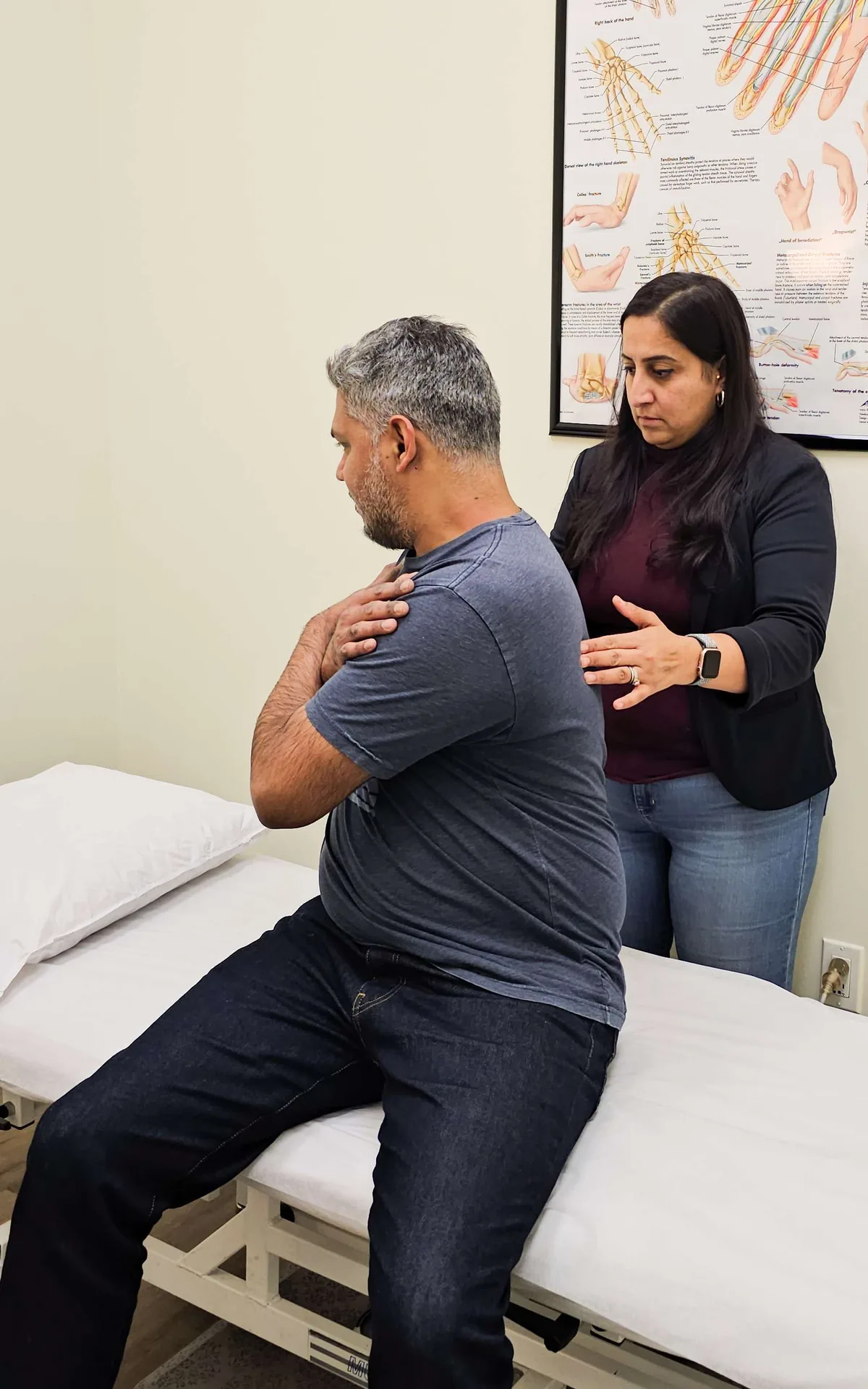
Your Shoulder Hurts When You Sleep on It. Here Is Why It Happens and How to Fix It.
It starts the same way every night. You fall asleep feeling fine. Then at 2am you wake up with a deep, throbbing ache in your shoulder. You roll to the other side. It settles for a while. Then it comes back. By morning your shoulder is stiff, sore, and you feel like you barely slept. This has been going on for weeks, maybe months, and it is getting worse.
Shoulder pain when sleeping on your side is one of the most common complaints we hear at Wellmax Physiotherapy in Oakville. It is also one of the most misunderstood. Most people assume they just “slept wrong” and wait for it to pass. But if it happens repeatedly, night after night, on the same shoulder, something specific is going on inside the joint. And research now shows that the way you sleep may actually be contributing to the problem, not just aggravating it.
Quick answer: Shoulder pain after sleeping usually comes from hours of pressure on the rotator cuff tendons and the bursa while you lie on that side. A one-off sore morning normally settles within a day or two. Pain that returns night after night, wakes you, or limits reaching means the shoulder was already irritated and needs an assessment, not just a new pillow.
Why Side Sleeping Hurts Your Shoulder
The Compression Problem
When you lie on your side, your full upper body weight presses down through the shoulder joint. This compresses the rotator cuff tendons and the subacromial bursa (a fluid-filled sac that cushions the tendons) between the head of the arm bone (humerus) and the shoulder blade (scapula). Research published in the Journal of Shoulder and Elbow Surgery measured subacromial pressures during different sleep positions and found that the side-lying position produces the highest compression forces on the rotator cuff (Werner et al., 2010).
For 6 to 8 hours every night, the rotator cuff is being squeezed. If you sleep on the same side most nights (and research shows that most people do), that is thousands of hours of cumulative compression over years. It is not surprising that the shoulder eventually starts to protest.
The Sleep-Side Connection
A study published in BMC Musculoskeletal Disorders examined over 700 workers and found a significant association between preferred sleeping side and the side of shoulder pain (Holdaway et al., 2018). A separate study by Kempf and Kongsted confirmed that the side of unilateral shoulder pain was strongly associated with the preferred sleeping side. And a 2024 study in the Journal of Shoulder and Elbow Surgery found that 52 out of 58 patients with rotator cuff tears were side sleepers, with the tear on their preferred sleeping side.
This does not mean side sleeping causes rotator cuff tears in everyone. But it does mean that if you already have some rotator cuff irritation or degeneration (which is increasingly common after age 40), sleeping on that shoulder amplifies the problem.
Why It Hurts More at Night
There are several reasons shoulder pain is often worse during sleep than during the day:
- Reduced blood flow: When you are inactive during sleep, blood circulation to the shoulder decreases. Less blood flow means less oxygen delivery to the tendons and more sensitivity to compression.
- Inflammatory cycle: Research shows that proinflammatory proteins increase during nighttime hours, which can heighten pain perception in already-irritated shoulder structures.
- Loss of muscle support: During the day, the muscles around your shoulder are active and provide dynamic support to the joint. During sleep, these muscles relax, and the joint relies more on passive structures (tendons, ligaments, bursa) that are already under stress.
- Sustained compression: During daily activities, your shoulder moves through many positions. During sleep, you may stay in one compressed position for hours without moving, concentrating the load on the same spot.
What Is Actually Wrong with the Shoulder
Rotator Cuff Tendinopathy or Tear
The most common cause of shoulder pain that wakes you at night. The rotator cuff is a group of four muscles and their tendons that stabilize the shoulder joint and control arm movements. When these tendons become irritated (tendinopathy) or torn, night pain is one of the earliest and most persistent symptoms. Many patients with rotator cuff problems report that they can function reasonably well during the day but cannot sleep on the affected side. Our rotator cuff page covers this condition in detail.
Subacromial Bursitis
The bursa sits between the rotator cuff tendons and the bone above (the acromion). When compressed repeatedly, it becomes inflamed and swollen. Bursitis pain is typically sharp when you roll onto the shoulder and settles to a dull throb after you reposition. It is commonly associated with rotator cuff tendinopathy because the same compression mechanism affects both structures.
Shoulder Impingement
Impingement occurs when the rotator cuff tendons and bursa get pinched in the subacromial space during certain movements. Side sleeping effectively creates a sustained impingement position. If you notice that your shoulder also hurts when reaching overhead during the day, impingement is a likely contributor. Our shoulder pain page explains impingement and treatment options.
Frozen Shoulder (Adhesive Capsulitis)
Frozen shoulder causes progressively worsening stiffness and pain. Night pain is a hallmark of the freezing stage and is often the symptom that drives patients to seek help. If your shoulder is not only painful at night but also getting progressively stiffer (difficulty reaching behind your back, overhead, or to the side), frozen shoulder should be assessed. Our frozen shoulder page covers the three stages and treatment approach.
Shoulder Osteoarthritis
Wear and tear of the shoulder joint cartilage can cause aching that is worse with sustained positions and worse at night. This is more common after age 60 and is often accompanied by stiffness and grinding sensations during movement. Our arthritis page explains exercise-based joint management.
Referred Pain from the Neck
Here is something most people do not consider: shoulder pain at night can actually be coming from the neck. The cervical spine can refer pain into the shoulder and upper arm, and certain sleeping positions (particularly with the neck in an awkward angle on the pillow) can irritate the cervical joints or nerve roots. If your shoulder pain is accompanied by neck stiffness, headaches, or pain that travels down the arm past the elbow, the neck should be assessed as part of the picture. Our neck pain page covers cervical referral patterns.
Why Did I Wake Up With a Sore Shoulder When Nothing Happened?
This is the question we hear most often, and the honest answer is that something did happen, it just happened slowly. During deep sleep you change position far less than you think. If your arm ends up trapped under your body, pushed forward across your chest, or tucked up under the pillow, the rotator cuff tendons and the bursa are squeezed between bone for hours. Tendons do not complain much while they are being compressed. They complain once the irritation builds, which is why the pain seems to arrive out of nowhere when you wake up.
A first-time sore shoulder with no injury usually calms within 48 hours. If it keeps coming back on the same side, or now wakes you most nights, that is a pattern worth assessing. The same symptom can have several different causes, and each one needs different treatment.
Why Does My Right Shoulder Ache More Than My Left?
Most people have a preferred sleeping side, and the studies above link the painful shoulder to that side. Right-handed people also load the right shoulder all day: the mouse hand, the driving arm, the side that carries bags and lifts children. By bedtime it is already tired, and then it spends the night underneath you. The side that hurts is a clue your physiotherapist uses alongside strength and movement testing, not a diagnosis on its own.
Two Sleep Position Rules That Take Pressure Off the Shoulder
- The quarter turn. If you must lie on the sore side, roll a quarter turn back toward your back so your weight rests on the shoulder blade rather than the point of the shoulder. A pillow wedged behind you stops you rolling forward again.
- Elbow below the shoulder. Keep the elbow of the bottom arm lower than the shoulder joint, never tucked up under your head or the pillow. Arm overhead positions squeeze the rotator cuff the hardest, in any sleeping position.
Pillow and Position Guide
| Sleep position | Pressure on the sore shoulder | What to try tonight |
|---|---|---|
| On the painful side | Highest | Quarter turn onto the shoulder blade, pillow behind your back, elbow below the shoulder |
| On the other side | Low, but the sore arm rolls forward | Hug a pillow at chest height so the sore arm rests on it |
| On your back | Lowest | Small folded towel under the upper arm so it does not drop backward |
| On your stomach, arm overhead | High, and the neck is twisted | Avoid if you can, or keep both arms down by your sides |
These are safe starting points while the cause is treated, not a substitute for an assessment.
Other Reasons a Shoulder Hurts in the Morning
A stiff mid-back (the thoracic spine) stops the shoulder blade gliding freely, so the arm bone rides higher in the socket and pinches the tendons every time you reach. Weak or poorly timed shoulder blade muscles have the same effect from the inside. Hours of rounded desk posture and looking down at screens feed both problems, which is why we assess the neck, mid-back and shoulder blade together rather than treating the shoulder on its own. If your shoulder is also getting stiffer week by week, read about the stages of frozen shoulder, and if you have been told you have a tear, see our guide to rotator cuff tears: surgery or physiotherapy.
One safety line. Shoulder or arm pain that comes with chest pressure, sweating, shortness of breath, nausea or a feeling of being unwell is not a sleeping problem. Heart attacks are more common in the early morning hours. Call 911 and get your heart checked. Everything else in this article applies only once that has been ruled out.
How to Sleep with Shoulder Pain Tonight
These are practical adjustments you can make right away while you work on fixing the underlying problem with physiotherapy.
Sleep on Your Back
Back sleeping produces the lowest subacromial pressure of any sleep position. Place a small pillow or folded towel under the affected arm to keep it slightly elevated and prevent it from dropping to the side. This reduces tension on the rotator cuff and takes pressure off the bursa.
Sleep on the Opposite Side
If you cannot sleep on your back, sleep on the non-painful side. Place a pillow in front of you at chest height and rest the affected arm on it. This prevents the painful shoulder from rolling forward and compressing against the mattress. The pillow essentially creates a shelf that supports the arm in a neutral position.
Avoid the Arms-Overhead Position
Sleeping with your arm above your head (whether on your back or side) increases subacromial compression significantly. Keep your arms at your sides or below shoulder height. If you tend to drift into an arms-overhead position during the night, a body pillow can help anchor your arm position.
Use Heat Before Bed
A heat pack applied to the shoulder for 15 to 20 minutes before sleeping (see our guide to ice or heat for pain) increases blood flow, relaxes the muscles, and can reduce the initial stiffness when you lie down. This is a simple strategy that many patients find makes falling asleep easier.
Check Your Pillow Height
If your pillow is too high or too low, your neck is positioned at an angle that can change how the shoulder sits in its socket. A pillow that keeps your neck in a neutral position (ears aligned with shoulders) reduces strain on both the neck and shoulder. Side sleepers generally need a thicker pillow than back sleepers.
How Physiotherapy Fixes the Underlying Problem
Changing your sleep position manages the symptoms. Physiotherapy fixes the cause. Here is what treatment involves:
Assessment
The first step is determining exactly what is causing the night pain. Is it rotator cuff tendinopathy? Bursitis? Impingement? Frozen shoulder? Referred pain from the neck? Each requires a different treatment approach. Our physiotherapists test shoulder range of motion, rotator cuff strength, impingement signs, cervical spine involvement, and scapular stability to identify the specific driver.
Rotator Cuff and Scapular Strengthening
This is the most important part of treatment. Strengthening the rotator cuff muscles improves how the humeral head sits in the socket, which directly reduces the compression on tendons and bursa during side sleeping. Scapular stabilization exercises ensure the shoulder blade provides a stable base for the arm to move from. Research consistently shows that targeted strengthening is the most effective treatment for rotator cuff tendinopathy, impingement, and bursitis.
Manual Therapy
Hands-on joint mobilization of the shoulder and thoracic spine improves mobility, reduces stiffness, and creates space in the subacromial area. Soft tissue work around the rotator cuff, deltoid, and upper trapezius reduces muscle tension that contributes to compression. Manual therapy provides immediate pain relief that makes the exercise program easier to perform.
Posture and Workplace Assessment
If you spend hours at a desk with rounded shoulders and a forward head position, this changes the resting position of the shoulder blade and increases impingement risk throughout the day. By the time you lie down at night, the shoulder is already irritated. Correcting the daytime posture reduces the cumulative load on the shoulder and allows it to tolerate sleep positions better.
Laser Therapy for Acute Inflammation
When night pain is severe and limiting sleep significantly, Deep tissue laser therapy reduces inflammation in the subacromial space and provides pain relief that helps patients sleep better while the strengthening program takes effect.
How Long Until the Night Pain Stops?
Most patients notice a reduction in night pain within 3 to 4 weeks of starting a targeted physiotherapy program. Sleep position modifications often provide relief within the first week. Full resolution of the underlying condition (rotator cuff tendinopathy, impingement, bursitis) typically takes 8 to 12 weeks of consistent physiotherapy and adherence to the home exercise program. Frozen shoulder follows a different timeline and is covered in detail on our frozen shoulder page.
When to Get It Assessed
See a physiotherapist if shoulder pain is waking you up more than twice a week, if the pain has been present for more than 2 weeks and is not improving, if you are losing range of motion (difficulty reaching overhead or behind your back), if you notice weakness in the arm, or if the pain started after a fall or injury.
You do not need a doctor’s referral. Physiotherapy is direct access in Ontario. Most insurance plans cover physiotherapy with no referral needed.
Shoulder Sleep Pain at Wellmax Physiotherapy in Oakville
We treat shoulder pain disrupting sleep every week. Our physiotherapists will identify the specific cause, give you immediate sleep positioning advice, and build a strengthening program that addresses the underlying problem so you can get back to sleeping on whichever side you prefer. Hands-on treatment in every session, with honest guidance on your progress.
Frequently Asked Questions About Shoulder Pain at Night
Why does my shoulder only hurt at night?
Several things stack up at night. Blood flow to the shoulder drops when you are still, so the tendons get less oxygen. Inflammatory activity rises during the night hours. The muscles that support the joint all day relax, leaving more load on the tendons and bursa. And you can hold one compressed position for hours without moving. Together that can turn a shoulder you barely notice by day into one that wakes you at 2am.
Is sleeping on my side what caused this?
It is one of the factors, not the whole story. Research measuring pressure inside the shoulder found side lying produces the highest compression on the rotator cuff, and studies have linked the painful shoulder to the side people prefer to sleep on. That does not mean side sleeping causes shoulder problems in everyone. More often an already irritated shoulder is being loaded for hours every night. The same symptom can have several different causes.
What is the best position to sleep in?
Back sleeping produces the lowest pressure inside the shoulder. Put a small pillow or folded towel under the sore arm so it does not drop backwards. If back sleeping is not for you, lie on the other side and hug a pillow at chest height so the painful arm rests on it instead of rolling forward. Avoid sleeping with your arm above your head, which increases compression in either position.
Will a new mattress or pillow fix it?
It can help, but on its own it usually is not enough. Pillow height matters, because a pillow that is too high or too low tilts your neck and changes how the shoulder sits in its socket. Side sleepers generally need a thicker pillow than back sleepers. Position and support change the load on the joint. They do not build the strength that keeps the shoulder off its own tendons, which is what treatment is for.
How long until the night pain stops?
Most people notice less night pain within three to four weeks of starting a targeted physiotherapy program. Sleep position changes often help within the first week. Fully settling the underlying problem usually takes eight to twelve weeks of consistent treatment plus the home exercises. A stiffening shoulder capsule follows its own longer timeline. Your physiotherapist will give you a realistic timeline once the assessment shows what is driving the pain.
Does heat or ice help before bed?
Heat is the simpler option for most people at bedtime. A heat pack on the shoulder for 15 to 20 minutes before sleeping increases blood flow, relaxes the muscles, and reduces the stiffness you feel when you first lie down. Many patients find it makes falling asleep easier. It is a comfort strategy rather than a fix, so use it alongside the exercise plan, not instead of it.
Does pain at night mean I have a rotator cuff tear?
Not on its own. Night pain is a common early sign of rotator cuff irritation, but bursitis, an impingement pattern, a stiffening capsule, shoulder arthritis and referred pain from the neck can all wake you the same way. The same symptom can have several different causes, and each needs different treatment. That is why an assessment tests range, rotator cuff strength, impingement signs, the neck and shoulder blade control before any plan is set.
Could the pain actually be coming from my neck?
It can be. The neck can refer pain into the shoulder and upper arm, and an awkward pillow angle can irritate the neck joints overnight. Signs that make the neck worth checking include neck stiffness, headaches, or pain that travels down the arm past the elbow. A thorough shoulder assessment includes the neck for exactly this reason, so treatment goes to the right place instead of chasing the sore spot.
When should I get this assessed?
Book an assessment if the shoulder wakes you more than twice a week, if it has been sore for more than two weeks without improving, if you are losing range such as reaching overhead or behind your back, if the arm feels weak, or if it started after a fall. Broken sleep also raises how sensitive you are to pain, so the problem tends to feed itself. Earlier assessment usually means a shorter plan.
Will my benefits cover treatment for shoulder pain?
Most extended health plans cover physiotherapy, and Wellmax direct bills most major insurers, so in many cases there is nothing to pay up front. You can book without a referral, though some plans still ask for one before they reimburse, so check your policy. If the shoulder problem came from work, WSIB covers work injuries at no cost to the worker. A free 15 minute consult is available if you want to ask first.
Why did I wake up with shoulder pain for no reason?
Usually because your arm spent hours in a position that squeezed the rotator cuff tendons and the bursa against bone, most often lying on that side with the arm trapped or pushed forward. The irritation builds overnight and peaks when you wake. A one-off episode normally settles within 48 hours. If it returns on the same side most nights, the shoulder was already irritated and the sleep position is exposing it, so book an assessment.
Why does my right shoulder ache more than my left?
Most people sleep on a preferred side, and research links the painful shoulder to that side. Right-handed people also load the right shoulder all day with the mouse, driving, lifting and carrying, so it arrives at bedtime already tired and then spends the night underneath you. The side that hurts is a clue, not a diagnosis. Strength and movement testing tells your physiotherapist what is actually irritated.
Can shoulder pain in the morning be a sign of a heart attack?
Rarely, but it is the first thing to rule out. Arm or shoulder pain that comes with chest pressure, sweating, shortness of breath, nausea or feeling generally unwell can be cardiac, and heart attacks are more common in the early morning. Call 911 if that describes you. Shoulder pain that changes with arm movement, is tender to press on, and eases when you change position is far more likely to be a tendon, bursa or joint problem.
Related Conditions and Services
Shoulder Pain Physiotherapy: Comprehensive shoulder treatment including impingement, bursitis, and instability.
Rotator Cuff Injury: Tendinopathy, tears, and return to function.
Frozen Shoulder: Adhesive capsulitis stages and treatment approach.
Neck Pain & Headaches: Cervical conditions that refer pain to the shoulder.
Arthritis: Shoulder osteoarthritis and exercise-based management.
Deep Tissue Laser Therapy: Inflammation reduction for acute shoulder pain.
Physiotherapy Services: Overview of all physiotherapy services at Wellmax.
Massage Therapy: Registered massage for the tight upper trapezius and chest muscles that pull the shoulder forward.
Free Consult: 15 minutes in person with a physiotherapist to find out whether your night shoulder pain needs treatment.
Wellmax Physiotherapy
1148 Winston Churchill Blvd, Unit B3, Oakville, ON L6J 0A3
Phone: (905) 829-1100
Email: info@wellmaxphysiotherapy.ca
Proudly Serving Our Local Communities:
- East Oakville: Winston Park, Clearview, and the QEW/403 Corridor.
- South Oakville: Eastlake, Maple Grove, and Old Oakville.
- North Oakville: Joshua Creek, Falgarwood, and Upper Middle Road.
- Mississauga Border: Clarkson, Sheridan Park, and Sheridan Homelands.
Insurance: Direct billing to most major providers. WSIB and MVA claims accepted. No referral needed.
Hours: Monday to Friday: 9am to 7pm | Saturday: 9am to 2pm | Sunday: 9am to 2pm (by appointment only)
You Might Also Like



Gurmeet Rai, Registered Physiotherapist
Gurmeet is a Registered Physiotherapist with the College of Physiotherapists of Ontario and the Clinic Director and co-owner of Wellmax Physiotherapy in Oakville, with 16+ years of clinical experience. She focuses on complex, stubborn cases where earlier treatment has not worked, with advanced training in pelvic health, TMJ, vestibular, and sports and MSK rehab. Every plan starts with a full assessment and ends with a clear path to graduation. Read Gurmeet’s full profile or meet the team.
This article is for educational purposes only and does not replace a professional clinical assessment. Every injury and condition is different. If you are experiencing pain or symptoms, book an assessment with a qualified physiotherapist to get advice specific to your situation. If you are experiencing a medical emergency, call 911 or visit your nearest emergency department.
