

Ice or Heat for Pain? A Simple, Evidence-Informed Guide

You tweak your back lifting a box, or you wake up with a stiff, achy neck, and the first question is almost always the same: should you reach for ice or heat? It feels like it should be simple, yet half the internet says one thing and your neighbour swears by the other.
The good news is that the choice between ice or heat for pain follows a few clear, evidence-informed rules. Once you understand what each one actually does to your body, you can pick the right tool with confidence. This guide walks you through when to use each, how long to apply it, the mistakes that quietly slow your recovery, and when it is time to stop guessing and get assessed.
Key Takeaways
- Use ice for fresh injuries with swelling, bruising, or sharp pain, especially in the first 48 to 72 hours.
- Use heat for stiffness, chronic aches, muscle tension, and to loosen up before gentle movement.
- Apply either for about 15 to 20 minutes at a time, with a thin cloth between the pack and your skin.
- Ice and heat ease symptoms, but they do not fix the cause. Gentle movement and a proper assessment do.
What is the simple rule for ice or heat for pain?
Here is the shortest honest answer: ice calms things down, and heat loosens things up.
Ice narrows blood vessels, which helps settle swelling and dulls sharp pain. That makes it the right choice for a fresh injury where the area feels hot, puffy, or angry. Heat does the opposite. It opens blood vessels and increases blood flow, which relaxes tight muscles and eases that deep, stiff ache. That makes it better for long-standing tension and chronic stiffness.
“Ice for a fresh, swollen injury. Heat for an old, stiff ache. When in doubt, ice for the first two days, then switch.”
If you remember nothing else, remember that line. Most of the time it points you in the right direction.
When should you use ice for pain?
Ice is your go-to for acute problems, meaning something that just happened. Think rolled ankle, a strained muscle, a fresh bruise, or a flare-up where the area is swollen, warm, or throbbing.
In the first 48 to 72 hours after an injury, ice helps in two ways. It slows blood flow to the area, which keeps swelling in check, and it numbs the nerves nearby, which takes the edge off the pain. That early window is exactly when swelling and sharp pain tend to be at their worst.
Good situations for ice
- A freshly twisted ankle or knee, like an ankle sprain
- A sudden muscle strain or pull during sport or lifting
- A flare-up of back pain or sciatica where the area feels hot and inflamed
- Visible swelling, bruising, or a sharp, stabbing kind of pain
Athletes and weekend warriors lean on ice a lot for these exact reasons, which is part of why it is a staple in sports physiotherapy.
When should you use heat for pain?
Heat is your go-to for chronic or stiff problems, meaning aches that have been hanging around or tension that builds over time. Heat increases blood flow, relaxes tight muscle, and makes stiff joints feel looser and easier to move.
Good situations for heat
- A stiff, achy neck or shoulders after a long day at a desk, the kind tied to neck pain and headaches
- Tight, knotted muscles and ongoing muscle tension
- Long-standing low back stiffness with no new swelling
- Warming up tissue before gentle stretching or light activity
One important caution: do not put heat on a fresh injury or anywhere that is swollen. Swelling involves extra fluid and bleeding in the tissue, and heat draws even more blood to the area. That can make swelling worse and slow your recovery. If it is hot and puffy, choose ice, not heat.
Ice versus heat at a glance
| Use ICE when… | Use HEAT when… |
|---|---|
| The injury is new (first 48 to 72 hours) | The ache is old or keeps coming back |
| There is swelling, bruising, or puffiness | There is no swelling, just stiffness |
| The area feels hot or inflamed | Muscles feel tight, knotted, or tense |
| Pain is sharp or throbbing | Pain is a dull, deep ache |
| Right after a sprain, strain, or fall | Before gentle stretching or movement |
How long should you apply ice or heat?
For both ice and heat, the magic number is roughly 15 to 20 minutes at a time. You can repeat it every couple of hours through the day if it helps.
More is not better. Leaving an ice pack or heating pad on for too long is one of the most common mistakes, and it can lead to skin irritation, ice burn, frostbite, or even temporary nerve irritation. Set a timer, take it off, and let your skin return to normal before going again.
How to apply it safely
- Never put ice or a heat source directly on bare skin. Wrap it in a thin towel or cloth.
- Check your skin partway through. If it looks very red, blotchy, or numb, take the pack off.
- Do not sleep on a heating pad or fall asleep with ice on. You lose track of time and risk a burn.
- Avoid heat on areas with poor sensation or circulation, and be cautious if you have diabetes.
What about contrast therapy, alternating ice and heat?
Some people like to alternate ice and heat, often called contrast therapy, to ease stiffness and encourage blood flow once the early swelling has settled. A common pattern is a few minutes of heat, then a few minutes of ice, repeated, usually finishing on ice.
Contrast can feel good for lingering stiffness in the subacute phase, a few days to a couple of weeks after an injury. It is a comfort tool, though, not a cure. If you are reaching for it again and again for the same nagging spot, that is a sign the underlying problem needs a proper look rather than another round of packs.
Has the advice changed? RICE, PEACE and LOVE
For decades the standard advice for a fresh injury was RICE: Rest, Ice, Compression, Elevation. The thinking has shifted. Newer guidance, summarized as PEACE and LOVE, came out of the British Journal of Sports Medicine and reflects a more current, movement-based approach.
The big change is this: total rest and aggressive, non-stop icing are no longer seen as the goal. Some inflammation is actually part of how your body heals, so the modern aim is to protect early, then gently get moving rather than wrap up and stay still for a week.
That does not mean ice is useless. Short bouts of ice are still completely fine for managing pain and comfort in those first days. It simply means ice is a comfort tool to help you move, not the whole treatment plan. The real recovery comes from gradual, guided loading and movement, which is the heart of how we treat injuries at Wellmax.
Does ice or heat actually fix the problem?
This is the part most people miss. Ice and heat are excellent at managing symptoms. They make you more comfortable, calm a flare-up, and help you move a little easier. What they do not do is correct why the pain showed up in the first place.
A stiff neck that keeps returning, a back that flares every few weeks, or an ankle that never feels quite stable again is telling you something. Heat might soothe it for an evening, but the pattern keeps coming back because the root cause, how you move, load, and recover, has not changed.
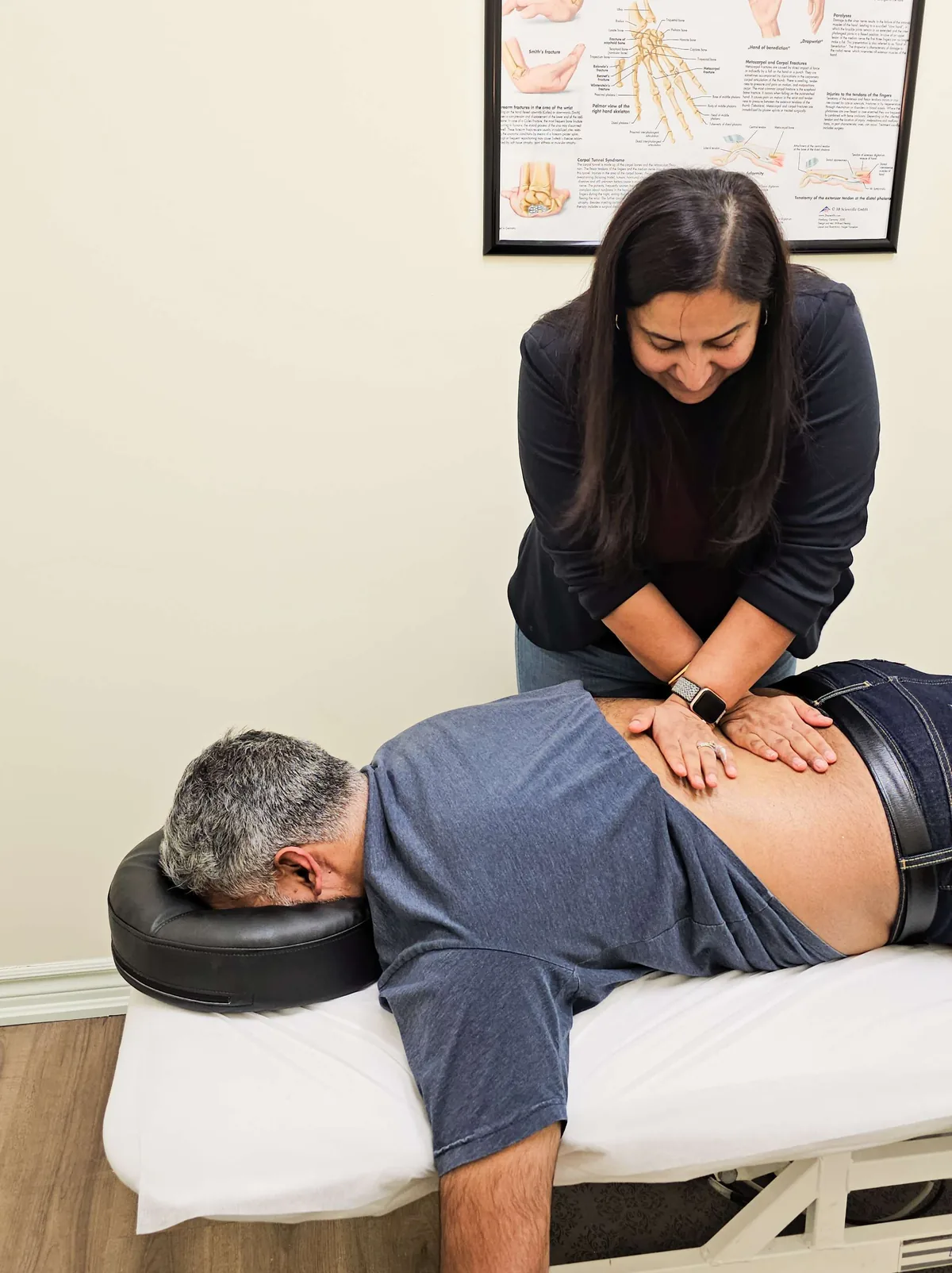
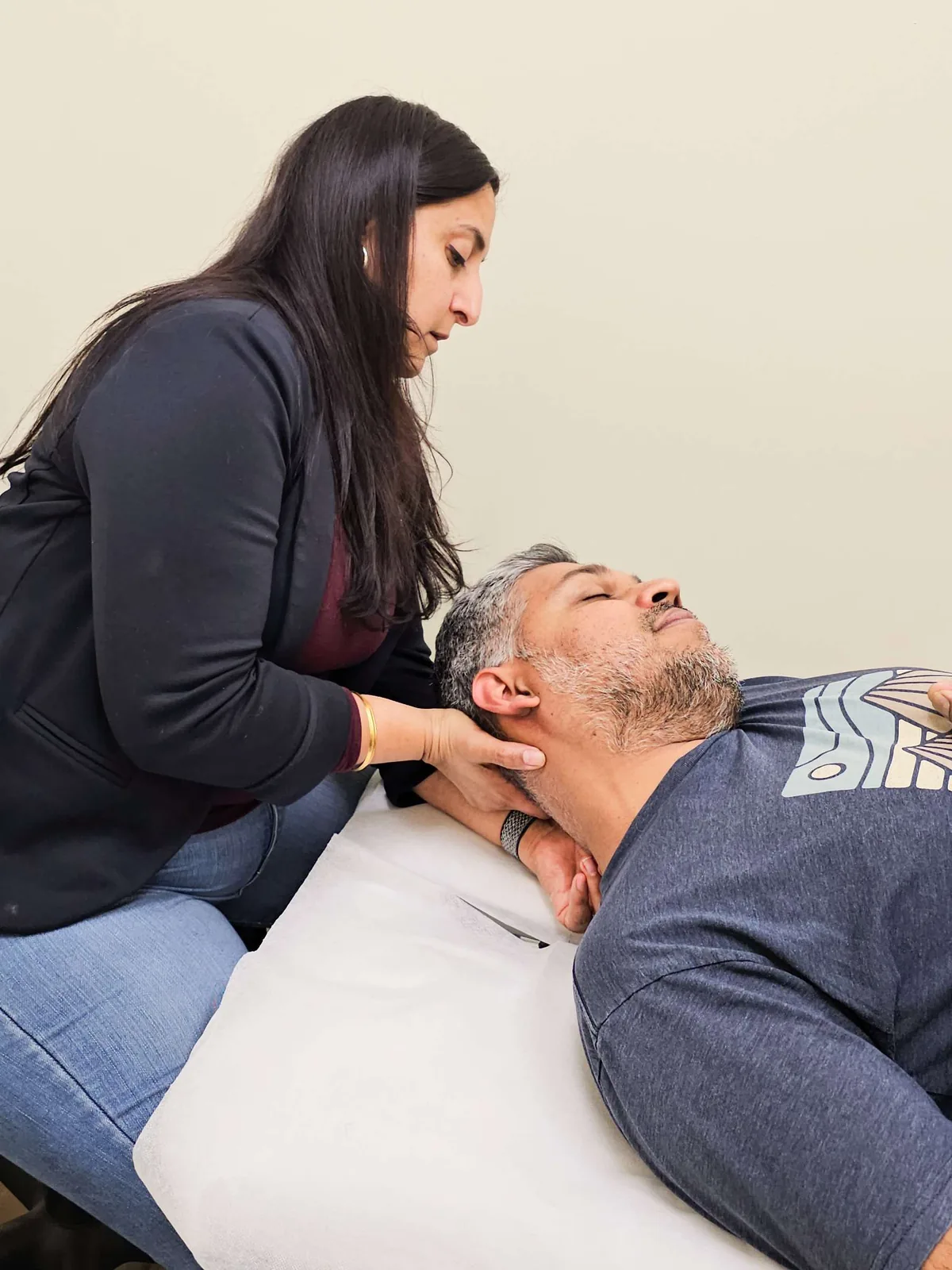
That is exactly where hands-on physiotherapy comes in. At Wellmax Physiotherapy in Oakville and Mississauga, every new client starts with a thorough 60-minute assessment. We look at the whole picture, not just the sore spot, so we can find what is actually driving your pain. Clinic founder Gurmeet Rai brings more than 16 years of experience, blending hands-on manual therapy with a clear, root-cause plan. Our goal is graduation, getting you better and independent, not endless visits.
Not sure where to start?
Book a free consultation and we will point you to the right care, with no pressure.
Frequently Asked Questions
Is ice or heat better for back pain?+
It depends on the type of back pain. If your back was just injured and feels hot, swollen, or sharply painful, ice is the better first choice for the first 48 to 72 hours. If your back is chronically stiff, tight, or achy with no new swelling, heat usually feels better because it relaxes the muscles. Recurring back pain deserves a proper assessment, since neither pack fixes the underlying cause.
Should I use ice or heat for a pulled muscle?+
For a freshly pulled or strained muscle, start with ice. In the first day or two there is often swelling and sharp pain, and ice helps settle both. Once the swelling calms down and the area feels stiff rather than inflamed, you can switch to heat to relax the muscle and ease tension. If the strain is severe or not improving after a few days, get it assessed.
How long should I leave ice or heat on?+
About 15 to 20 minutes at a time is the sweet spot for both ice and heat. You can repeat it every couple of hours if it helps. Avoid leaving either on much longer, because too much time can cause skin irritation, ice burn, or a heat burn. Always place a thin cloth between the pack and your skin, and check your skin partway through.
Can I use both ice and heat on the same injury?+
Yes, but usually at different stages. Use ice in the early days when there is swelling and sharp pain, then move to heat later once the area is stiff rather than inflamed. Some people alternate the two, called contrast therapy, for lingering stiffness after the initial swelling has settled. Just avoid putting heat on anything that is still freshly swollen, since that can make swelling worse.
Why does heat feel good but seem to make swelling worse?+
Heat feels comforting because it relaxes tense muscles and boosts blood flow, which eases stiffness. The catch is that more blood flow to a freshly injured, swollen area can increase the swelling and slow healing. So heat is great for tight, achy, older complaints, but for a new injury that is hot and puffy, ice is the safer choice until the swelling settles down.
Is icing an injury still recommended, or is it outdated?+
Icing is not outdated, but the thinking has evolved. The older RICE advice leaned heavily on rest and constant ice. Newer guidance, known as PEACE and LOVE, treats short bouts of ice as a comfort tool while encouraging gentle, early movement rather than complete rest. So feel free to use ice for pain relief in the first days, then focus on guided movement to actually recover.
What if ice and heat are not helping my pain?+
If your pain keeps returning, is not improving after a week or two, or comes with numbness, weakness, or giving way, it is time for a professional assessment. Ice and heat manage symptoms, but they do not address why the pain started. At Wellmax in Oakville and Mississauga, our 60-minute assessment looks for the root cause so we can build a plan that lasts, not just another temporary fix.
You Might Also Like

Gurmeet Rai, Registered Physiotherapist
Gurmeet is a Registered Physiotherapist with the College of Physiotherapists of Ontario and the Clinic Director and co-owner of Wellmax Physiotherapy in Oakville, with 16+ years of clinical experience. She focuses on complex, stubborn cases where earlier treatment has not worked, with advanced training in pelvic health, TMJ, vestibular, and sports and MSK rehab. Expect expert care from assessment to discharge, with honest guidance along the way. Read Gurmeet’s full profile or meet the team.
This article is for educational purposes only and does not replace a professional clinical assessment. Every body and condition is different. If you are experiencing pain or symptoms, book an assessment with a qualified clinician for advice specific to your situation. If you are experiencing a medical emergency, call 911 or visit your nearest emergency department.
