

Knee Strengthening Exercises a Physiotherapist Actually Prescribes (8 Moves, Dosing and Mistakes)
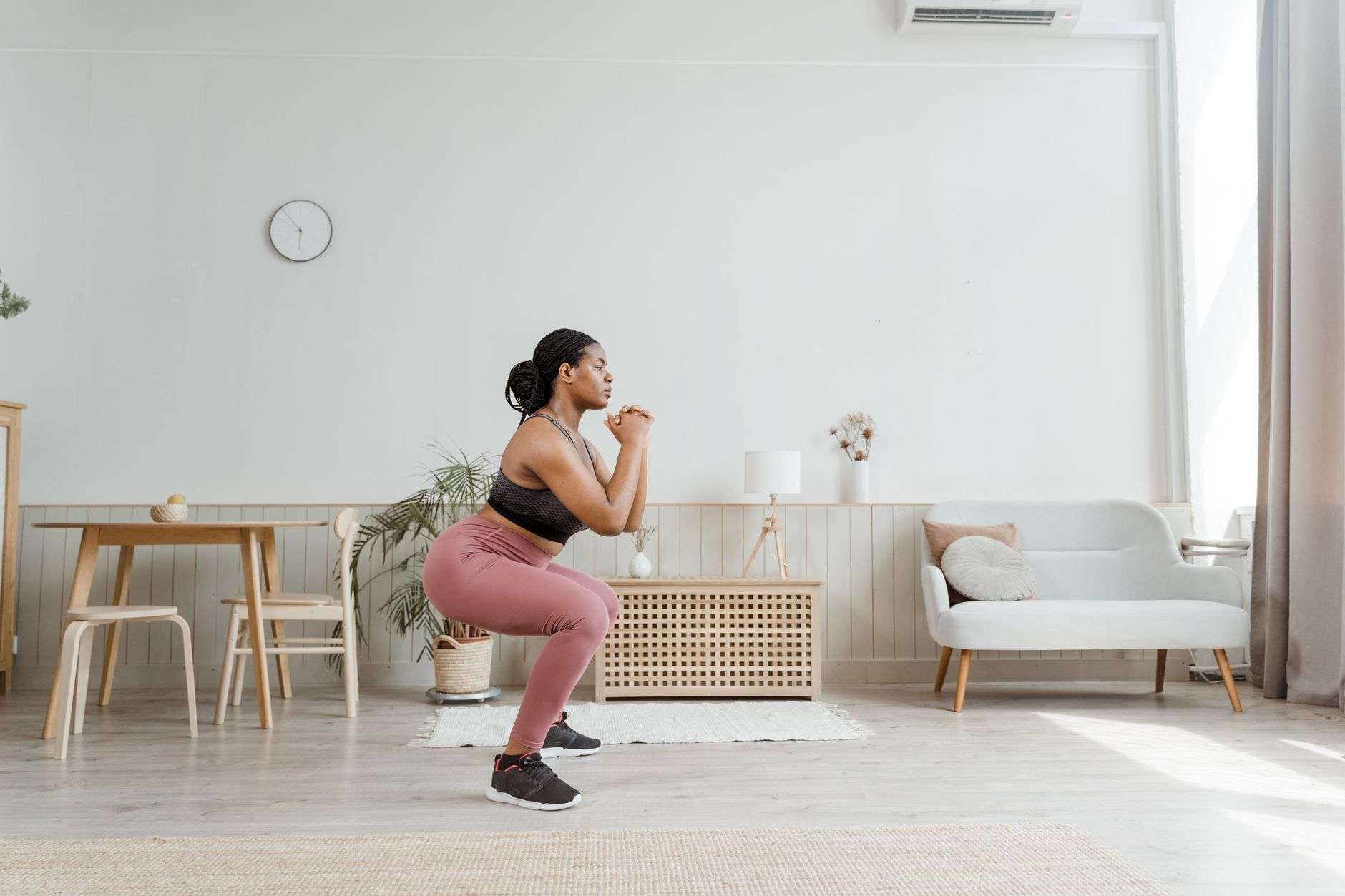
If your knees ache on stairs, feel stiff after sitting, or just do not feel as reliable as they used to, the instinct is usually to rest and wait it out. For most ongoing knee pain, that is the opposite of what the research supports. The single best-backed treatment is strengthening the muscles that support the knee, done gradually and consistently.
This guide walks through the knee strengthening exercises physiotherapists commonly prescribe, why the hips matter as much as the thighs, exactly how to dose the work, and the honest signs that a generic list is not enough. It is the same plain-English explanation we give every day at Wellmax Physiotherapy in Oakville, serving Oakville and Mississauga.
Quick answer: The best knee strengthening exercises for most achy or injured knees are sit-to-stands, glute bridges, step-ups, wall sits, side-lying hip abduction, calf raises, split squats and hamstring bridge walkouts. Do 2 to 3 sets of 8 to 15, 2 to 3 times a week, keep discomfort under 3 out of 10, and expect real strength change in 6 to 12 weeks.
Key Takeaways
- Exercise therapy is the first-line treatment for knee osteoarthritis and patellofemoral (kneecap) pain in every major guideline, ahead of rest, scans and injections.
- The muscles that protect a knee include the hips: quadriceps, glutes and hip abductors, hamstrings and calves all share the load with the joint.
- Mild discomfort up to about 3 out of 10 that settles within 24 hours is generally acceptable during knee strengthening. Sharp, worsening or lingering pain is your signal to scale back.
- Persistent swelling, locking, giving way, or pain that is not improving after a few weeks means it is time for an assessment, not a bigger exercise list.
- A free printable PDF of all eight exercises, with dosing and progressions, is available further down this page.
Why does strengthening beat rest for most achy knees?
Every major treatment guideline lands in the same place. The UK’s NICE osteoarthritis guideline and the international OARSI recommendations both name therapeutic exercise as a core, first-line treatment for knee osteoarthritis, offered to everyone with the condition. For pain around the kneecap, the clinical practice guidelines from the Academy of Orthopaedic Physical Therapy give their strongest recommendation to a combination of hip and knee strengthening.
The logic is simple. Your quadriceps, glutes, hamstrings and calves act as the knee’s shock absorbers, sharing every step, squat and stair with the joint itself. When you rest for weeks, those muscles weaken, so the joint takes a bigger share of the same daily load. Cartilage and tendon also adapt to sensible loading. Movement is not just safe for most sore knees, it is the treatment.
“Strong quads and hips work like shock absorbers for the knee. Long rest quietly removes the very support the joint relies on.”
Which muscles matter most for a painful knee?
A good knee program never trains the knee in isolation. Four muscle groups do most of the protective work, and the ones people skip are usually the ones that matter most.
Quadriceps: the knee’s main engine
The quads straighten the knee and control it as you lower onto a chair or descend stairs. Quadriceps weakness is one of the most consistent findings in people with knee osteoarthritis and kneecap pain, which is why almost every physiotherapy knee program is built around loading them.
Glutes and hip abductors: why your hips matter for your knees
The muscles on the side and back of your hip steer your thigh bone. When they are weak, the thigh tends to drift inward as you squat, climb or land, which changes how the kneecap tracks and how load spreads through the joint. That is why hip strengthening carries the strongest evidence for kneecap pain, and why weak hips are a common thread in runners dealing with IT band syndrome at the outside of the knee.
Hamstrings: the brakes at the back
The hamstrings bend the knee and help stabilise it, working with the ligaments to control the shin bone. Balanced hamstring strength matters for anyone whose knee feels untrustworthy, and it is a staple of rehab after ligament injuries.
Calves: the forgotten shock absorbers
Your calf muscles absorb force at every step before it ever reaches the knee. Weak calves shift more work upward. Strong ones make walking, running and stairs noticeably easier on an irritable knee.
The 8 knee strengthening exercises physiotherapists commonly prescribe
These are commonly prescribed exercises, not a personal prescription. The right selection, depth and dose for your knee depends on an assessment, so treat this as a starting template and adjust to the pain rules further down. If any exercise causes sharp pain, skip it and get the knee looked at.
1. Sit-to-stand
Sit toward the front of a sturdy chair, feet hip-width apart. Lean forward from the hips, push through your whole foot to stand tall, then take three slow seconds to lower back down. No hands unless you need them.
- Dose: 3 sets of 8 to 12, every other day.
- Progress: use a lower chair, slow the lowering, then shift more weight onto one leg.
2. Glute bridge
Lie on your back, knees bent, feet flat. Push through your heels and lift your hips until your body forms a straight line from knees to shoulders. Squeeze the glutes at the top for two seconds, then lower with control.
- Dose: 3 sets of 10 to 15, every other day.
- Progress: hold a weight on your hips, march at the top, or work up to a single-leg bridge.
3. Step-up
Stand facing a low step. Place one foot fully on it, press through that heel and bring the other foot up, keeping your knee tracking over your middle toes rather than caving inward. Step down slowly, that lowering is where the strength is built.
- Dose: 3 sets of 8 to 10 per leg, 2 to 3 days per week.
- Progress: raise the step height, slow the step-down, then add dumbbells.
4. Wall sit
Slide your back down a wall until your knees are comfortably bent, somewhere between a quarter and half squat. Keep your whole foot planted and breathe. Holds like this are often well tolerated by sore, tendon-related knees because nothing is moving.
- Dose: 3 to 5 holds of 30 to 45 seconds, most days if it stays comfortable.
- Progress: sink slightly deeper, hold longer, or hold a weight against your chest.
5. Side-lying hip abduction
Lie on your side, bottom knee bent, top leg straight and in line with your body. Lift the top leg about 30 to 45 centimetres, leading with the heel and keeping your hips stacked so you do not roll backward. Lower slowly.
- Dose: 3 sets of 10 to 15 per side, every other day.
- Progress: add an ankle weight or a resistance band above the knees, or hold at the top for three seconds.
6. Calf raises
Stand tall with fingertips on a counter for balance. Rise up onto the balls of both feet, pause, then lower over three slow seconds. Keep your weight even across the big-toe side of each foot.
- Dose: 3 sets of 12 to 15, every other day.
- Progress: move to single-leg raises, then do them off the edge of a step for extra range.
7. Split squat
Take a comfortable stride stance, one foot forward, one back, hips facing front. Lower straight down until the back knee hovers near the floor, or as far as stays comfortable, keeping the front knee over the middle of the foot. Push back up through the front heel.
- Dose: 2 to 3 sets of 8 to 10 per side, 2 to 3 days per week.
- Progress: increase depth first, then add dumbbells, then elevate the back foot.
8. Hamstring bridge walkout
Set up like a glute bridge, but with your feet farther from your hips so the hamstrings do the work. Lift your hips, then slowly walk your heels out a few small steps and back in while keeping the hips up. You should feel the back of your thighs working, not cramping.
- Dose: 3 sets of 6 to 8 walkouts, every other day.
- Progress: straighter legs, slower steps, or slide your heels on a towel on a smooth floor instead.
Download the free printable PDF
All eight exercises with dosing, progressions and a weekly tick box, on two pages. Print it, stick it on the fridge, and bring it to your assessment.
How should you dose knee strengthening exercises?
Strength changes come from consistent, progressively harder work, not from marathon sessions. A realistic template for most adults is 2 to 3 strengthening sessions per week on non-consecutive days, using 2 to 3 sets of 8 to 15 repetitions where the last two reps feel genuinely effortful. That mirrors structured programs like GLA:D, which runs supervised sessions twice a week for six weeks.
Some discomfort during rehab is normal and even expected. The pain-monitoring approach used in patellofemoral and tendon research draws the line clearly: discomfort up to about 3 out of 10 during exercise is generally acceptable, provided it settles back to your usual baseline within 24 hours. Pain above that level, sharp pain, or a knee that is more swollen or more sore the next morning means the dose was too high, so reduce depth, weight or reps rather than quitting altogether.
Then give it time. Early improvements come from your nervous system coordinating better, but true muscle strength takes roughly 6 to 12 weeks of consistent work. Most people notice meaningful change in day-to-day symptoms somewhere in that window, which is exactly why guideline programs run at least six weeks.
Should you stretch and foam roll your quads as well?
Tight quadriceps and hip flexors are common in people who sit for most of the day, cycle, or run, and they can make the front of the knee feel stiff and cranky. Stretching and foam rolling help with that feeling. What they do not do is change the strength deficit that drives most stubborn knee pain, which is why they belong alongside the exercises above, not instead of them.
- Standing quad stretch. Hold a wall, bend one knee and bring the heel toward your buttock, keeping the knees together and the pelvis tucked under so the stretch stays in the front of the thigh. Hold 30 seconds, 2 to 3 times per side, most days. It should pull, never pinch at the knee.
- Foam rolling the quads. Lie face down with the roller under the front of one thigh and roll slowly from just above the kneecap to the top of the thigh for 60 to 90 seconds per side. Stay off the kneecap itself and ease off any spot that is sharply painful rather than grinding through it.
- Hip flexor stretch. Kneel on one knee, tuck the tailbone under and shift forward slightly until you feel the front of the hip. Hold 30 seconds per side.
Treat these as a safe starting point for comfort. If stretching feels like the only thing that helps and the knee keeps returning to the same pain, the missing piece is usually strength, and sometimes a knee assessment to find out which structure is actually complaining. The same knee pain can have several different causes, and each needs different treatment.
What mistakes make knee strengthening backfire?
When a knee program fails, it is usually the plan, not the knee. These are the patterns we see most often at the clinic.
- Too much, too soon. Going from nothing to daily deep squats flares the joint, and the flare gets blamed on exercise itself. Start below what you think you can do and build weekly.
- Only stretching. Stretching can feel nice, but flexibility alone does not change the strength deficit driving most stubborn knee pain. Stretch if you like it, strengthen because you need it.
- Avoiding bending entirely. Knees are built to bend under load. Endlessly avoiding stairs, squatting and kneeling keeps the joint sensitive and the muscles weak. The goal is graded exposure, not permanent avoidance.
- Skipping the hips and calves. Training only the quads leaves the knee poorly steered from above and poorly cushioned from below.
- Stopping the moment it feels better. Symptoms improve before strength peaks. Stopping at week four is the most common reason pain returns by week ten.
When is a generic exercise list not enough?
A general strengthening list works well for a general achy knee. It is the wrong tool when something more specific is going on. Get assessed rather than pushing on if you notice persistent swelling, a knee that catches or locks, a knee that gives way underneath you, or pain that is simply not improving after three to four weeks of consistent, sensible work.
Those patterns matter because they can point to problems that need a tailored plan. A knee that locks or catches can involve a meniscus injury, and a knee that buckles or gives way, especially after a twist or pivot, can involve a ligament problem such as an ACL injury. We are not saying that is what you have, only that these signs deserve a proper look before you load them harder. One clear safety line: a knee that locks solid, gives way with sharp pain and swelling, or becomes hot, red and swollen with a fever needs medical assessment before any exercise program.
An assessment also answers the question no list can: which exercises, at what depth and dose, for your knee. That is the whole point of knee pain physiotherapy in Oakville, matching the program to the person instead of the other way around.
How does Wellmax approach knee pain in Oakville?
Every new patient at Wellmax Physiotherapy starts with a full 60-minute assessment. That hour lets us watch how you actually move, test the strength of your quads, hips and calves, and find the root cause of the pain rather than handing you a photocopied sheet. From there, treatment blends hands-on manual therapy to settle the knee and free up how it moves with a progressive strengthening plan built around your life and goals.
Our lead physiotherapist, Gurmeet Rai, brings more than 16 years of experience, and the whole team works toward the same finish line: a pain-free graduation, not endless visits. You leave strong, confident and self-managing. We serve Oakville and Mississauga, and if you are not sure whether your knee needs a program or just a few tweaks, that is exactly what a free consultation is for.
Not sure where to start?
Book a free consultation and we will point you to the right care, with no pressure.
Frequently Asked Questions
Is walking good for knee pain?+
For most achy knees, yes. Walking is a low-impact way to keep the joint moving, nourish cartilage and maintain leg strength, and it is recommended in osteoarthritis guidelines. Start with a distance that leaves your knee no worse the next day and build gradually. Walking works best alongside strengthening, not instead of it, because it maintains muscle more than it builds it. If walking consistently increases pain or swelling, get the knee assessed.
Should I exercise a painful knee or rest it?+
For most ongoing knee pain, guided exercise beats rest. Guidelines for knee osteoarthritis and kneecap pain name exercise therapy as the first-line treatment, because strong muscles take load off the joint. The useful rule is the pain-monitoring approach: discomfort up to about 3 out of 10 that settles within 24 hours is generally acceptable. A knee that is hot, very swollen, locking or giving way is the exception, and should be assessed before you load it.
How long until knee strengthening exercises start working?+
Expect early wins within 2 to 3 weeks as your coordination and confidence improve, and meaningful strength change over roughly 6 to 12 weeks of consistent work. That is why structured programs like GLA:D run supervised sessions twice a week for six weeks, and why large GLA:D analyses report average pain reductions of 26 to 33 per cent by the end of the program. If nothing has shifted after three to four honest weeks, have the program reviewed rather than repeating it harder.
Are squats bad for your knees?+
No, squatting is a normal human movement and, dosed sensibly, it strengthens the exact muscles that protect the knee. Problems come from doing too much depth or load too soon on a sensitive knee, not from squatting itself. Start shallow, keep the knee tracking over the middle of the foot, and progress depth as comfort allows. If squatting causes sharp pain, catching or swelling, get it assessed before continuing.
Can strengthening exercises help knee arthritis?+
Yes, and it is the best-supported treatment available. NICE and OARSI guidelines recommend therapeutic exercise for everyone with knee osteoarthritis, and a 28,370-patient analysis of the GLA:D exercise and education program found pain fell by 26 to 33 per cent on average after six weeks. Strengthening does not wear the joint out. It builds the muscular support that lets an arthritic knee do more with less pain.
How often should I do knee strengthening exercises?+
Two to three sessions per week on non-consecutive days is the sweet spot for building strength, using 2 to 3 sets of 8 to 15 repetitions where the last couple of reps feel hard. Gentle options like wall sits or easy bridges can be done more often if the knee tolerates them. Rest days are part of the program, since muscle adapts between sessions, not during them. Consistency over 6 to 12 weeks matters far more than any single perfect workout.
What should I do if the exercises make my knee hurt more?+
First, check the dose. If pain during exercise stays under about 3 out of 10 and settles within 24 hours, you are generally within safe territory. If pain runs higher, lingers into the next day, or the knee swells, reduce the depth, weight or number of reps and retest. If a scaled-back version still flares the knee after a couple of weeks, or you notice locking, giving way or persistent swelling, stop guessing and book an assessment so the program can be matched to your knee.
Can I do these knee strengthening exercises at home without equipment?+
Yes. All eight exercises in this guide use your body weight, a chair, a wall and a step, so they can be done at home with no equipment. A resistance band, ankle weight or a pair of dumbbells only come in later as progressions once the basic version feels easy. The free printable PDF on this page lists every exercise with its dose and progression so you can tick off each week. If any exercise causes sharp pain, skip it and have the knee assessed.
Should I stretch or foam roll my quads for knee pain?+
Stretching and foam rolling the quadriceps can ease the tight, stiff feeling at the front of the knee, especially if you sit a lot, cycle or run. Hold a standing quad stretch for 30 seconds, 2 to 3 times per side, and roll the front of the thigh for 60 to 90 seconds, staying off the kneecap. They work best as a warm-up or wind-down around strengthening, because flexibility alone does not fix the strength deficit behind most ongoing knee pain.
What exercises should I avoid with a knee injury?+
In the early weeks after a knee injury, avoid jumping, sprinting, cutting and pivoting sports, deep loaded squats, and anything that makes the knee swell or feel unstable. A knee that locks, gives way, or swells after activity needs an assessment before loading, because injuries such as a meniscus tear or a ligament sprain are managed differently from a sore, out-of-shape knee. For most other knee pain, gentle strengthening is safe and recommended, with discomfort kept under about 3 out of 10.
You Might Also Like



Gurmeet Rai, Registered Physiotherapist
Gurmeet is a Registered Physiotherapist with the College of Physiotherapists of Ontario and the Clinic Director and co-owner of Wellmax Physiotherapy in Oakville, with 16+ years of clinical experience. She focuses on complex, stubborn cases where earlier treatment has not worked, with advanced training in pelvic health, TMJ, vestibular, and sports and MSK rehab. Expect expert care from assessment to discharge, with honest guidance along the way. Read Gurmeet’s full profile or meet the team.
This article is for educational purposes only and does not replace a professional clinical assessment. Every body and condition is different. If you are experiencing pain or symptoms, book an assessment with a qualified clinician for advice specific to your situation. If you are experiencing a medical emergency, call 911 or visit your nearest emergency department.
